 YardMate
Bird's-Foot Trefoil
Lotus corniculatus
Hard · Experienced growersAbout Bird's-Foot Trefoil
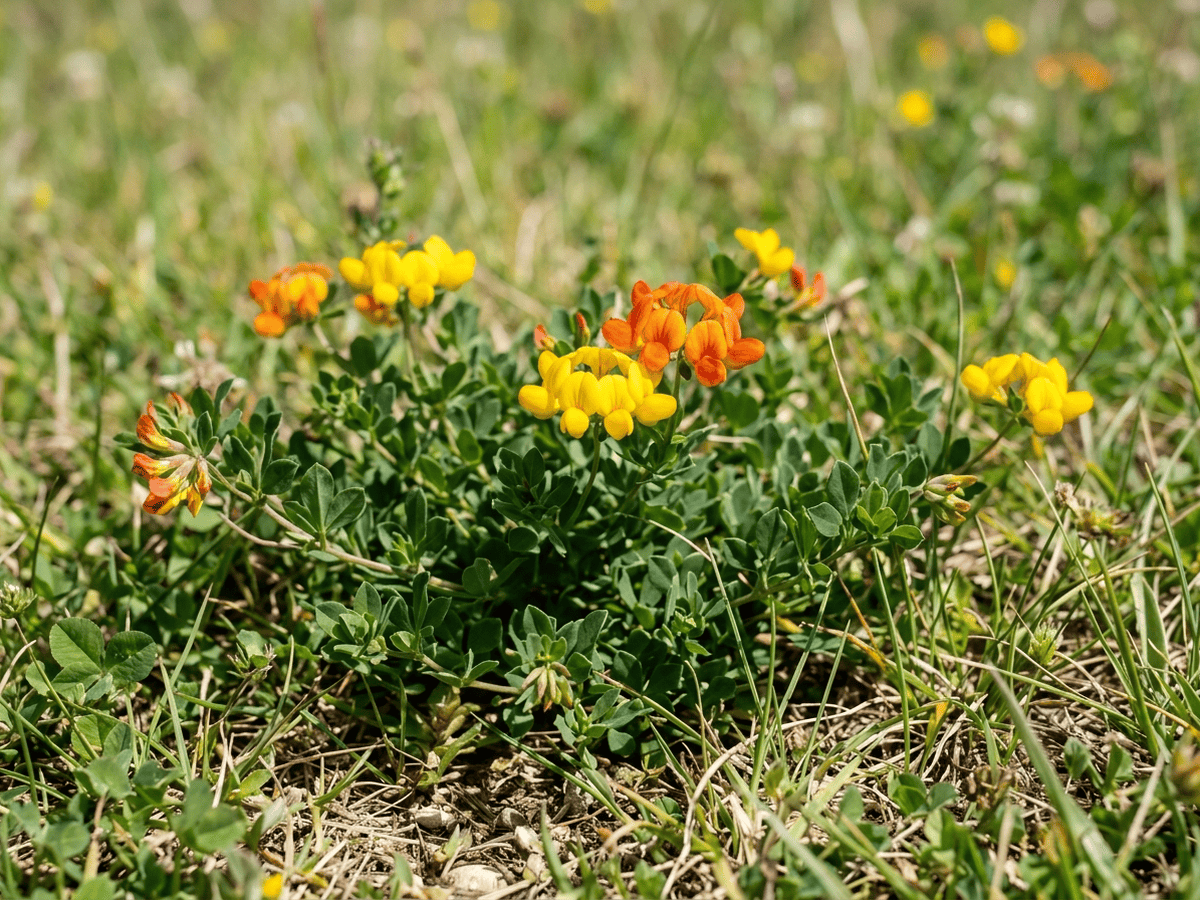
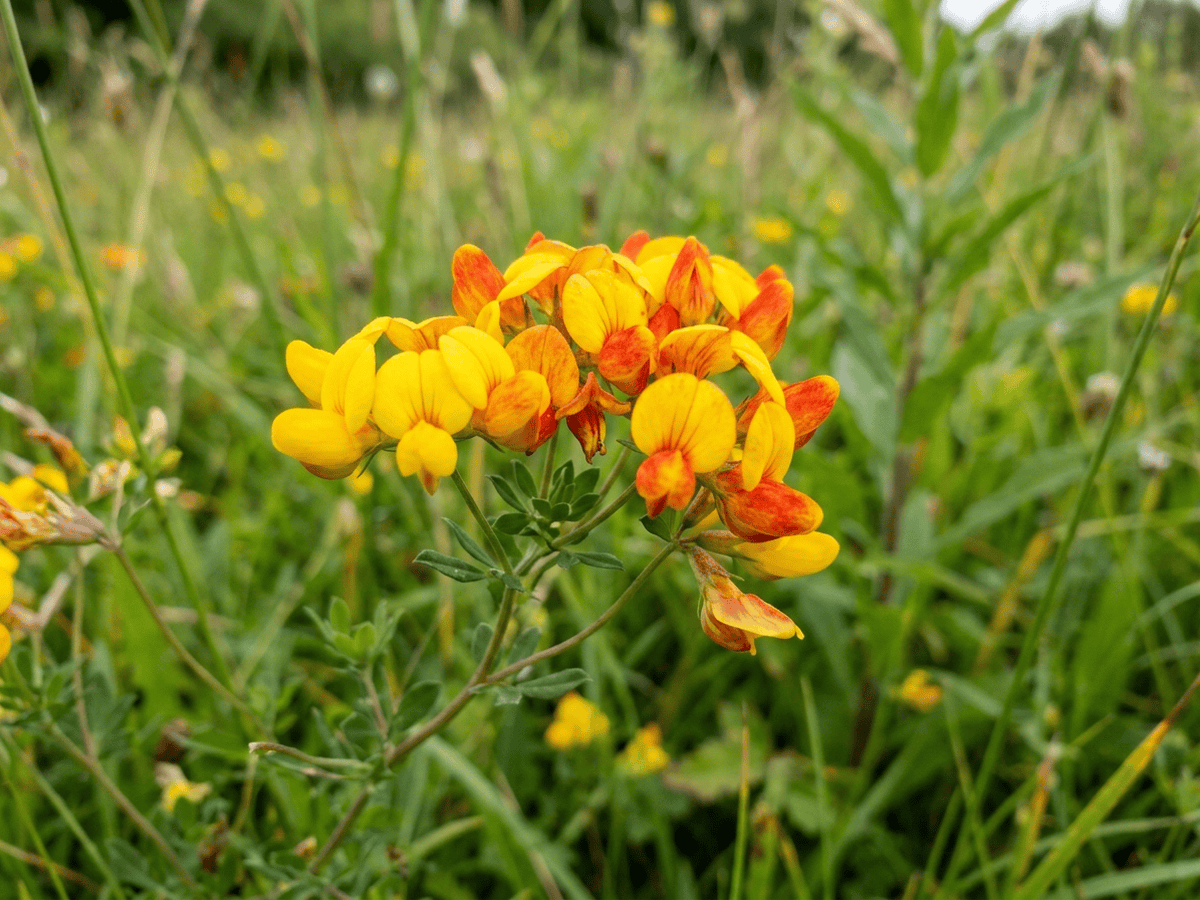
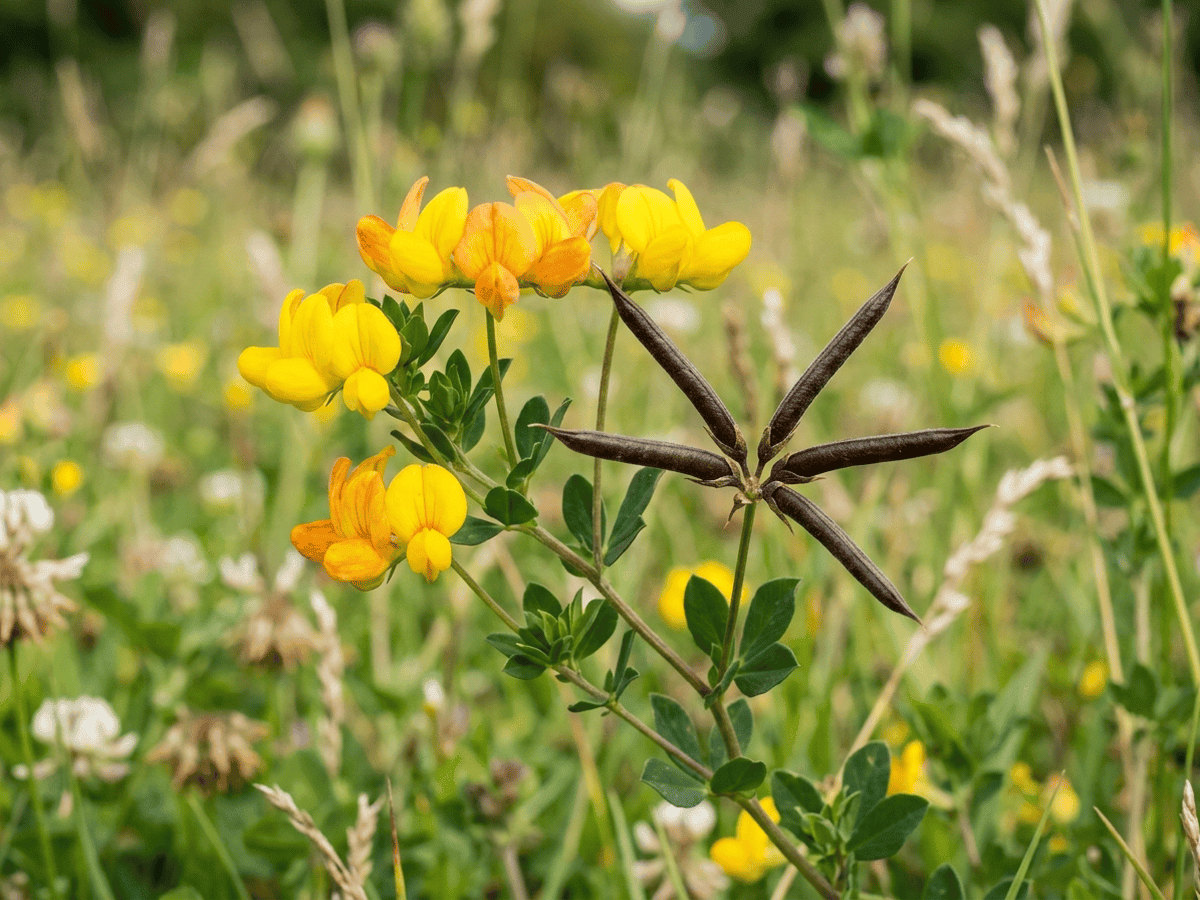
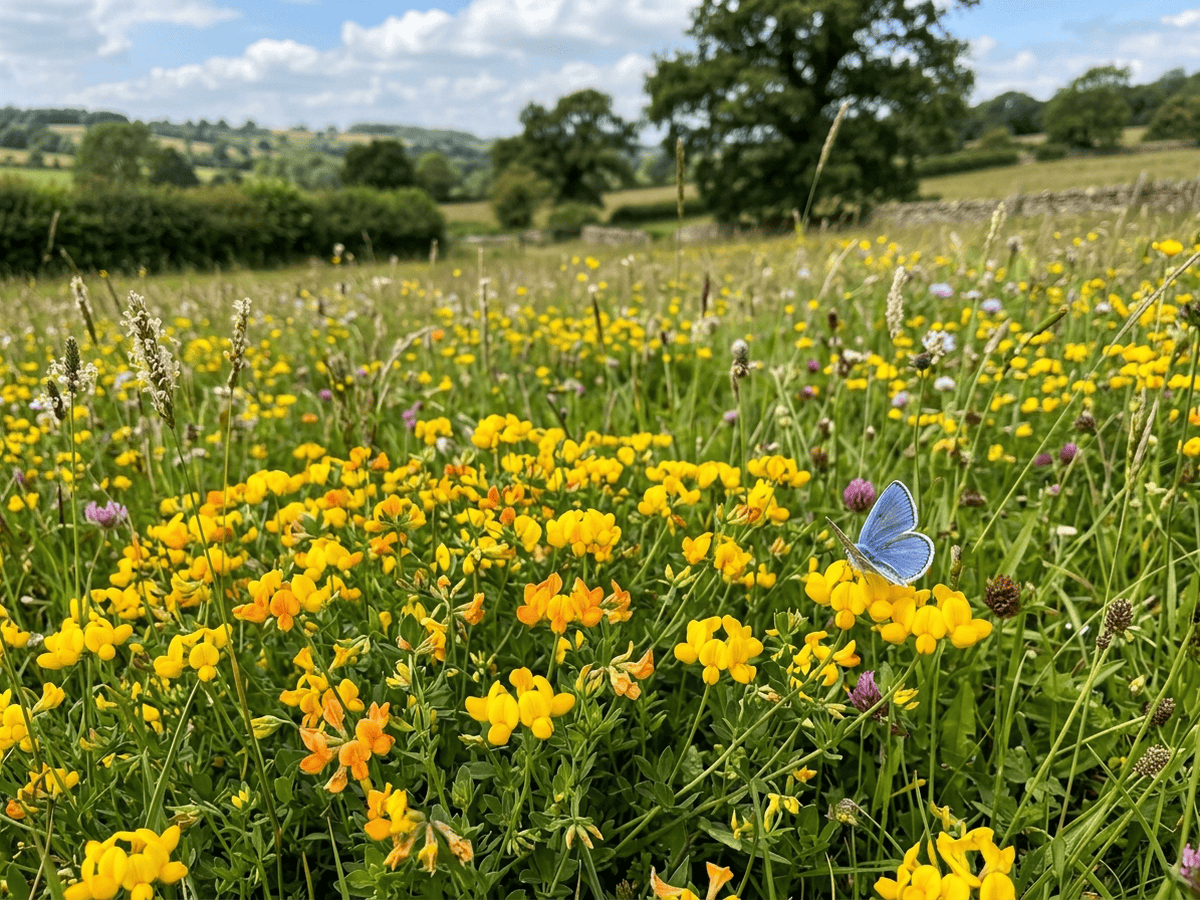
Lotus corniculatus, bird's-foot trefoil, is a cheerful low-growing perennial wildflower native to Eurasia and North Africa—now naturalized across temperate grasslands worldwide. Its clusters of bright yellow flowers are often flushed with red or orange, giving rise to the nickname 'eggs-and-bacon.' When the flowers are spent, slender seed pods radiate from the stem like the toes of a bird's foot—the origin of its most familiar name. This compact nitrogen-fixing legume thrives in poor, well-drained soils and blooms prolifically from early summer through fall, making it a mainstay of wildflower meadows, cottage gardens, and ecological restoration projects. It is the exclusive larval host plant for the Common Blue butterfly and several related species.
- Deciduous
- Drought-tolerant
- Pollinator-friendly
- Long-blooming
- Compact
How to care for Bird's-Foot Trefoil
Watering
- Springevery 10 days
- Summerevery 5 days
- Fallevery 20 days
- Winterevery 30 days
Soil · Well-draining
- Top dressingPine bark mulch10%
- Main mixPotting soil + perlite 2:170%
- DrainageLECA / gravel20%
Never skip the drainage layer — standing water is the top cause of root rot.
FERTILIZER
- Springevery 30 days
- Summerevery 30 days
At a Glance
- NativeEurope
- Height1–1.5 ft (0.3–0.5 m)
- Spread1–2 ft (0.3–0.6 m)
- Flower colorYellow
- Foliage colorGreen
- SoilWell-drained, Moist, Sandy
- LocationsYard · Balcony
Bloom time
BLOOM CYCLE
Peak bloom
Jun–Aug
Flowers appear in clusters from late spring to summer, attracting various pollinators.
Fragrance
NO FRAGRANCE
Unscented flowers; pollinated by bumblebees and other native bees attracted by color and nectar.
Toxicity
No toxicity has been reported for this plant. Still, it is wise to keep pets from chewing on any houseplant.
Educational information, not medical or veterinary advice. If exposure is suspected, contact a doctor or veterinarian.
DISTRIBUTION

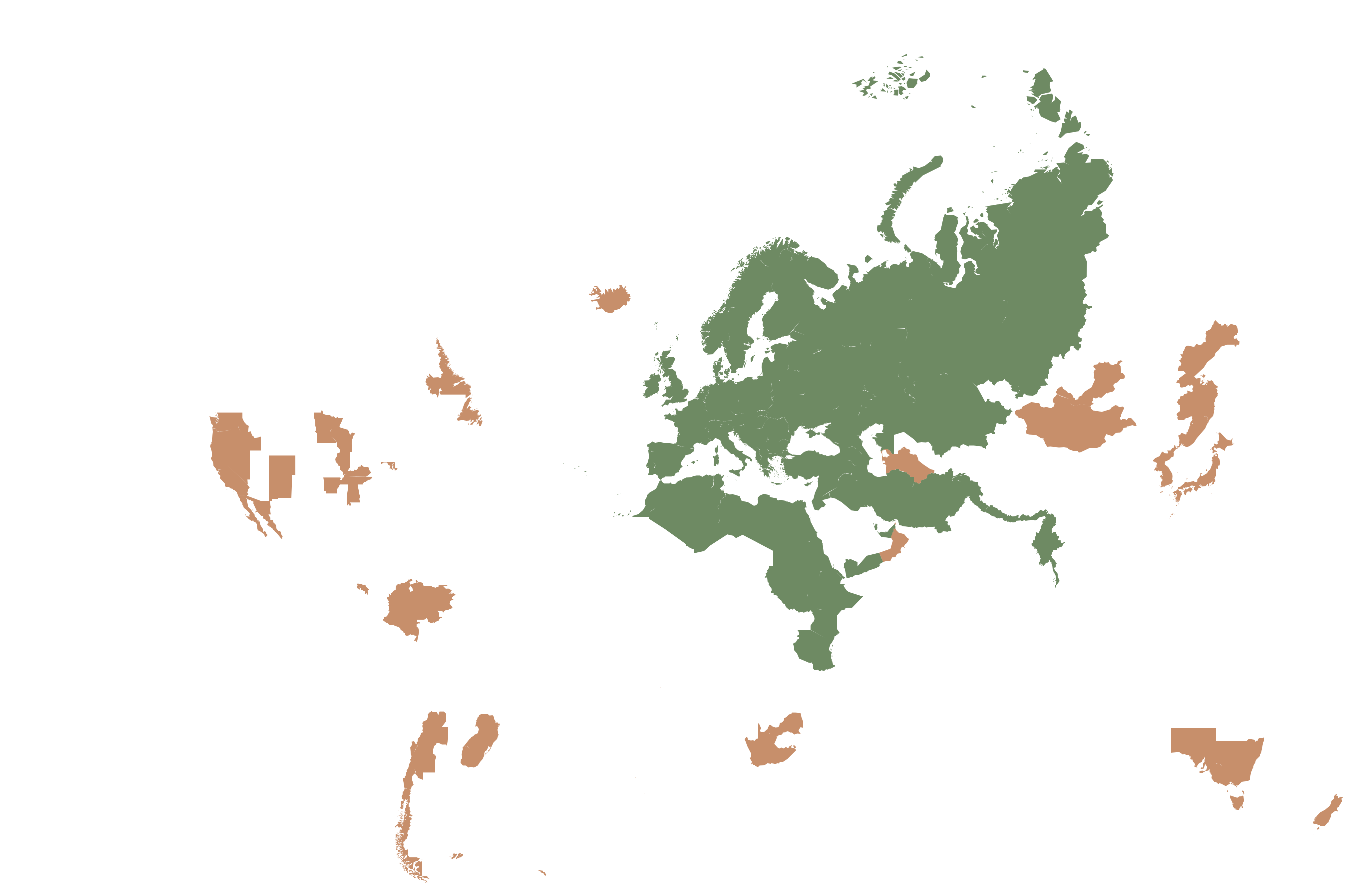
- Native
- Introduced
- Europe
History
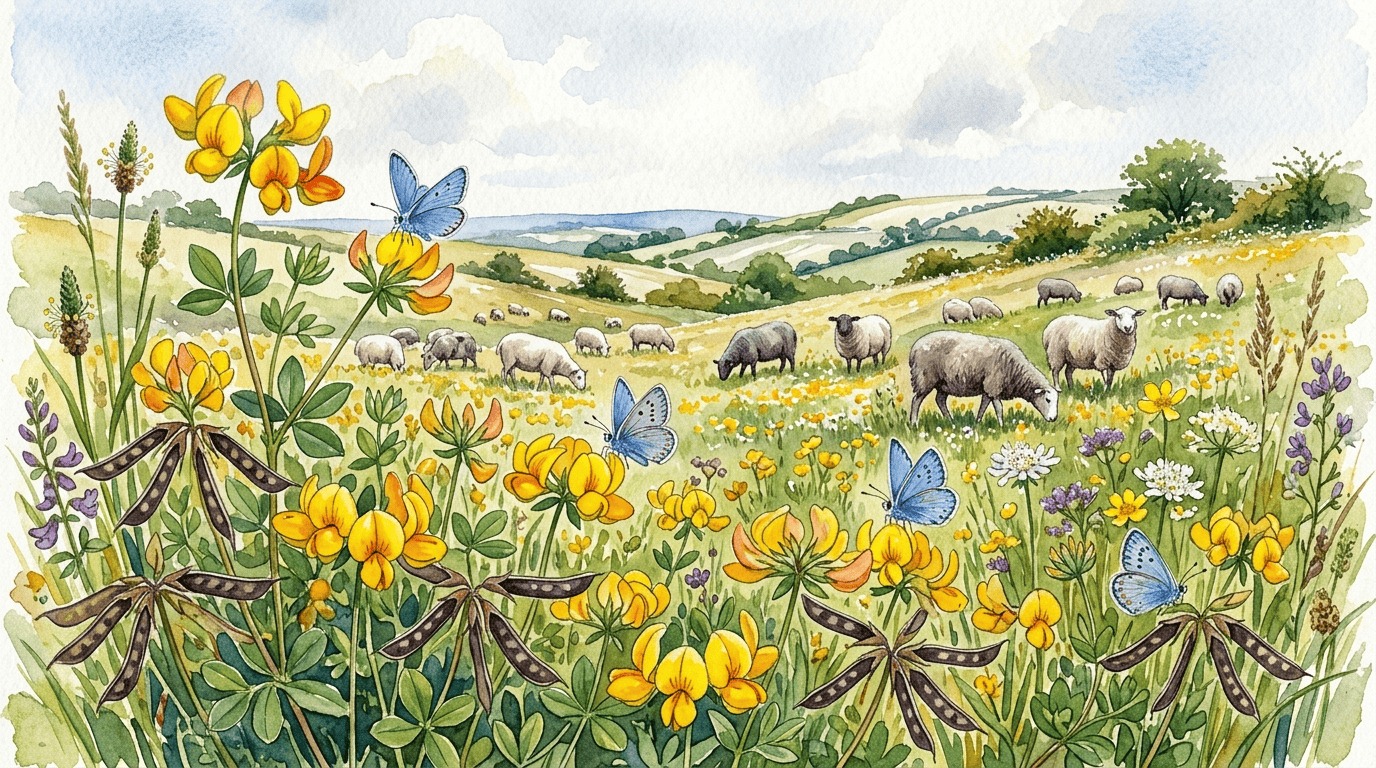
The name 'bird's-foot trefoil' appears in English botanical writing as early as the 16th century, when herbalists noted the distinctive splayed seed pods. John Gerard's Herbal of 1597 described it and noted its livestock grazing value. For centuries it was regarded primarily as a useful pasture plant—a nitrogen-fixer that enriched thin chalk and limestone soils while providing nutritious fodder for sheep and cattle.
The ecological significance of Lotus corniculatus only became fully apparent in the 20th century, when entomologists began documenting butterfly larvae with precision. It emerged that bird's-foot trefoil is the exclusive or preferred larval host plant for several British butterflies, most importantly the Common Blue (Polyommatus icarus), the Silver-studded Blue, and the Dingy Skipper. As traditional hay meadows across Britain were converted to improved grassland after World War II, these butterfly populations collapsed—and their decline tracked almost exactly the disappearance of bird's-foot trefoil from the landscape.
The wildflower meadow restoration movement that gained force in the 1980s, championed by organizations like Plantlife and Butterfly Conservation, placed Lotus corniculatus at the center of most restoration seed mixes. Ecologists found that simply reintroducing it to degraded grasslands could trigger the return of butterfly communities within three to five years. Today it is sold in wildflower seed packets across Europe and North America, recognized not just as a pretty meadow flower but as a keystone species for grassland invertebrate communities.
Symbolism & meaning
What It Symbolizes
Small and overlooked in any meadow, bird's-foot trefoil turned out to be holding the whole thing together. When it disappeared from British grasslands, the butterflies went with it. When it came back, so did they.
- butterfly lifeline — When British meadows lost bird's-foot trefoil to agricultural improvement, their butterflies vanished with it—revealing a flower whose significance stretched far beyond what the eye could see.
- hidden richness — Thriving in soils too poor for most plants, it enriches what surrounds it—fixing nitrogen underground while feeding pollinators above.
Where the Name Comes From
The genus Lotus traces to ancient Greek, used broadly for various plants associated with honey and sweetness. The species epithet corniculatus is Latin for 'with small horns,' referring to the narrow, horn-like seed pods that radiate from the stem like the toes of a bird's foot—the basis for the familiar common name 'bird's-foot trefoil.'
Uses & Fun Facts
- Rich nectar source for bumblebees and native bees; exclusive larval host plant for the Common Blue butterfly and several other blue butterfly species
- Cheerful yellow and orange-flushed flowers suit wildflower meadows, cottage garden borders, and lawn alternatives in poor, well-drained soils; blooms prolifically from summer through fall
- Nitrogen-fixing root nodules improve poor soils; keystone species for grassland invertebrate communities; seeds and foliage used by birds and small mammals
Related plants
More Lotus plants
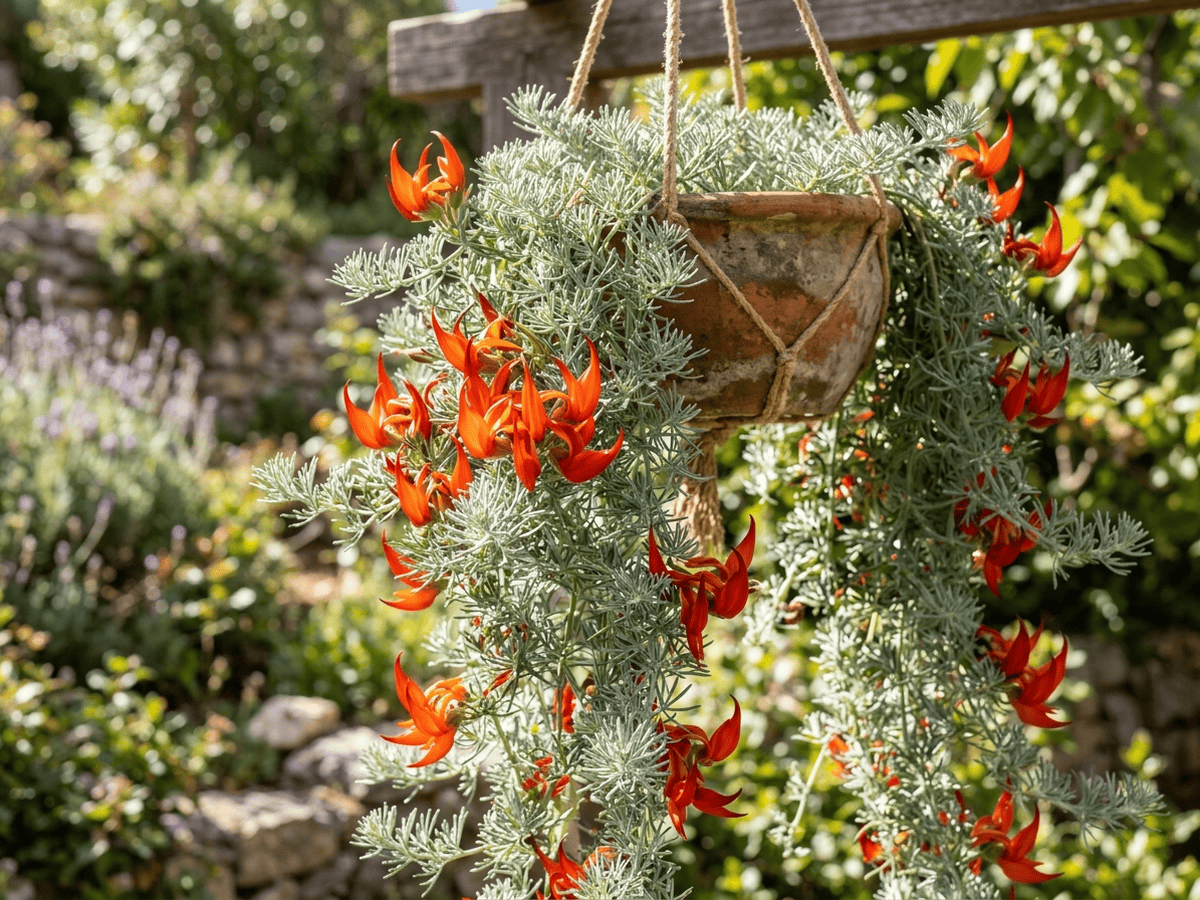
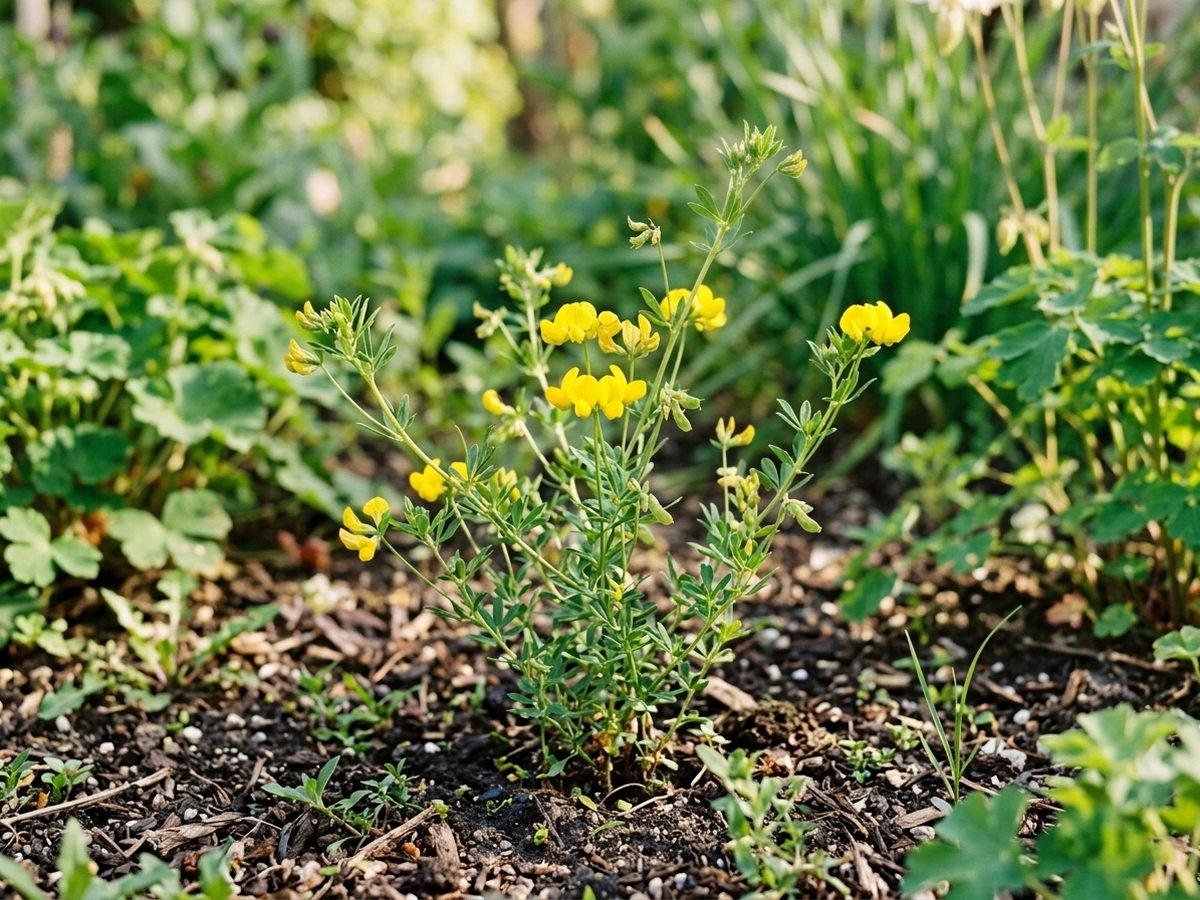
Plants with similar care
 African LilyAgapanthus africanus
 Bell AgapanthusAgapanthus campanulatus
 Common AgapanthusAgapanthus praecox
 False Queen Anne's LaceAmmi majus glaucifolium
Frequently asked questions
How often should I water Bird's-Foot Trefoil?
In summer, water about every 5 days; in winter, about every 30 days. Adjust for heat, pot size and drainage.
How much light does Bird's-Foot Trefoil need?
Part sun: 4–6 hrs direct. Watch the leaves — scorching or stretching means the light needs adjusting.
Is Bird's-Foot Trefoil toxic to cats or dogs?
No toxicity has been reported for this plant. Still, it is wise to keep pets from chewing on any houseplant. Educational information, not medical or veterinary advice. If exposure is suspected, contact a doctor or veterinarian.
Is Bird's-Foot Trefoil easy to grow?
It is considered challenging and rewards experienced growers.
When does Bird's-Foot Trefoil bloom?
It typically blooms Jun–Aug in the Northern Hemisphere.
YardMate
Identify any plant in seconds
Snap a photo — YardMate names the plant, diagnoses problems, and reminds you when to water.
Download on the App Store