 YardMate

White Sweetclover
Melilotus albus
Hard · Experienced growersAbout White Sweetclover
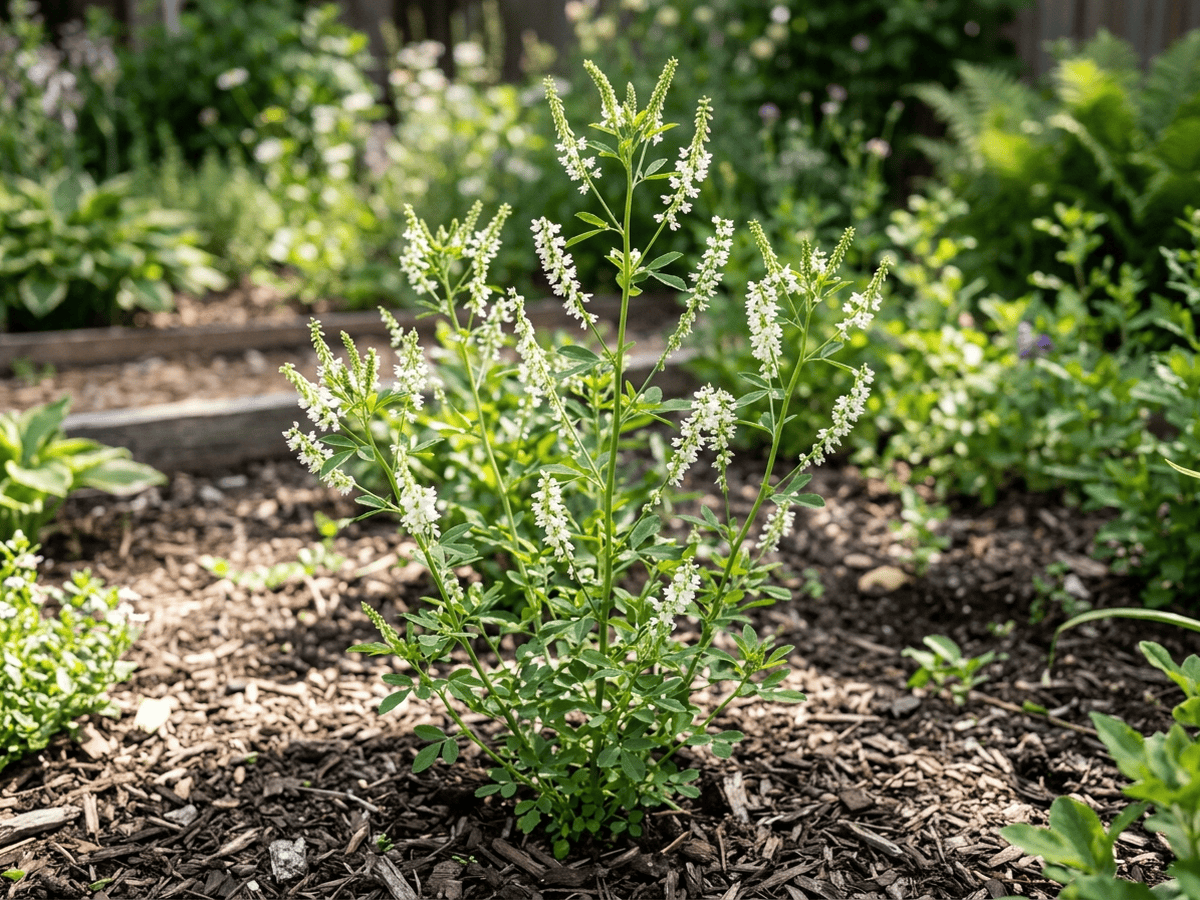
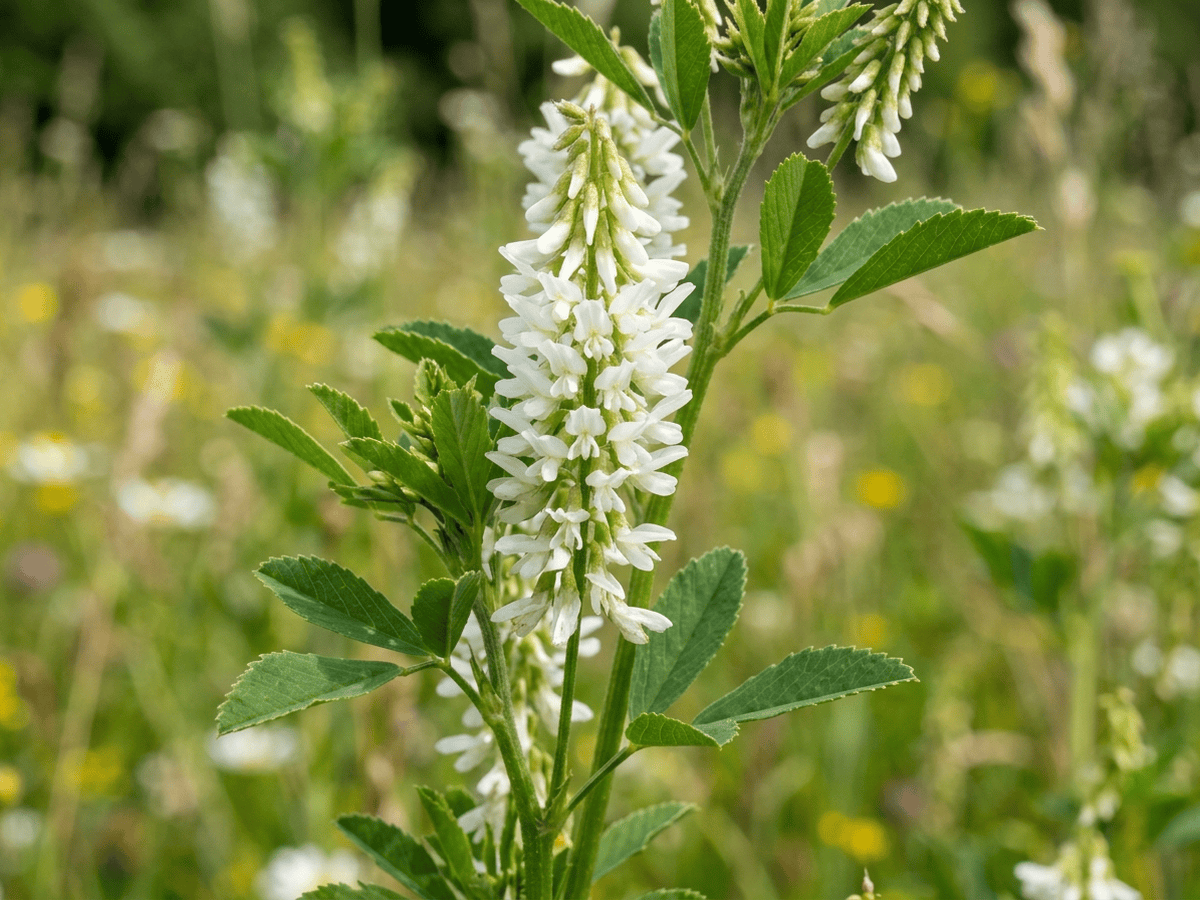
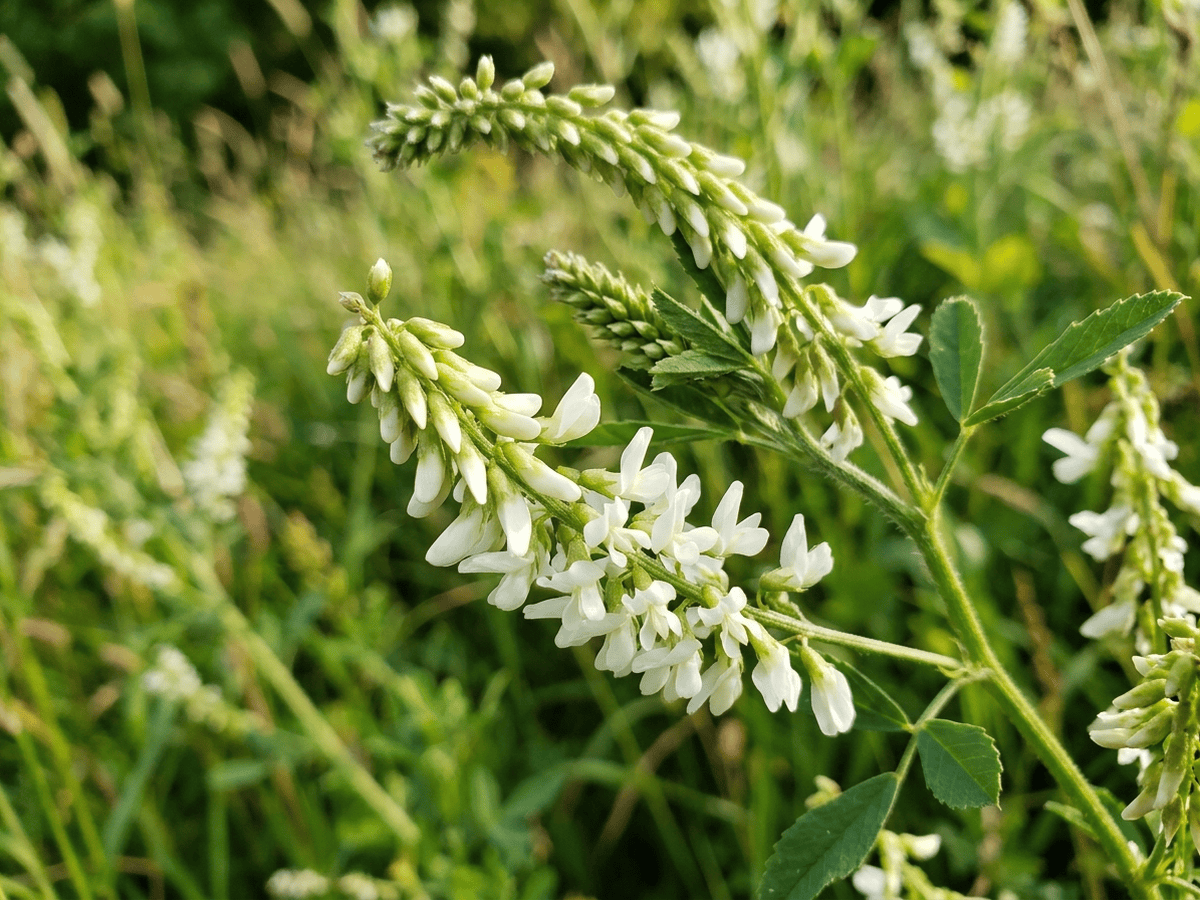
Melilotus albus, White Sweetclover, is a tall biennial or annual herb of European and Asian origin, now naturalized across North America. Growing 2–4 feet on upright branching stems, it produces long racemes of tiny fragrant white flowers from June through August, followed by small pods. Its entire aerial structure carries a fresh, hay-like coumarin scent—strongest when cut or dried—and the dried plant was historically used to scent linen. A nitrogen-fixing legume, it thrives in poor, disturbed soils and is widely valued as a forage crop, green manure, and exceptional bee plant.
- Fragrant
- Drought-tolerant
- Deciduous
- Pollinator-friendly
- Fast-growing
How to care for White Sweetclover
Watering
- Springevery 15 days
- Summerevery 10 days
- Fallevery 20 days
- Winterpause watering
Soil · Well-draining
- Top dressingPine bark mulch10%
- Main mixPotting soil + perlite 2:170%
- DrainageLECA / gravel20%
Never skip the drainage layer — standing water is the top cause of root rot.
FERTILIZER
- Springevery 30 days
- Summerevery 30 days
At a Glance
- NativeEurope, Asia
- Height2–4 ft (0.6–1.2 m)
- Spread2–3 ft (0.6–0.9 m)
- Flower colorWhite
- Foliage colorGreen
- SoilWell-drained, Loamy
- LocationsYard · Balcony
Bloom time
BLOOM CYCLE
Peak bloom
Jun–Aug
Produces clusters of small, fragrant white flowers from June to August.
Fragrance
STRONG FRAGRANCE
Fresh new-mown hay scent from coumarin; distinctive and sweet. Intensifies when cut or dried. Used historically to scent linen and repel moths.
Toxicity
Toxicity unknown
None reported
Unknown
EXPOSURE No exposure route is reported.
EFFECT No toxic effect is reported.
NOTE Toxicity for humans is not well documented; use caution until verified.
Unknown
EXPOSURE No exposure route is reported.
EFFECT No toxic effect is reported.
NOTE Toxicity for dogs is not well documented; use caution until verified.
Unknown
EXPOSURE No exposure route is reported.
EFFECT No toxic effect is reported.
NOTE Toxicity for cats is not well documented; use caution until verified.
Educational information, not medical or veterinary advice. If exposure is suspected, contact a doctor or veterinarian.
DISTRIBUTION


- Native
- Introduced
- Europe
- Asia
History
Melilotus albus arrived in North America as an agricultural introduction from Europe and Asia, quickly colonizing roadsides, abandoned fields, and disturbed ground throughout the continent. Its coumarin content—responsible for the plant's characteristic sweet, hay-like fragrance—made it both beloved and consequential.
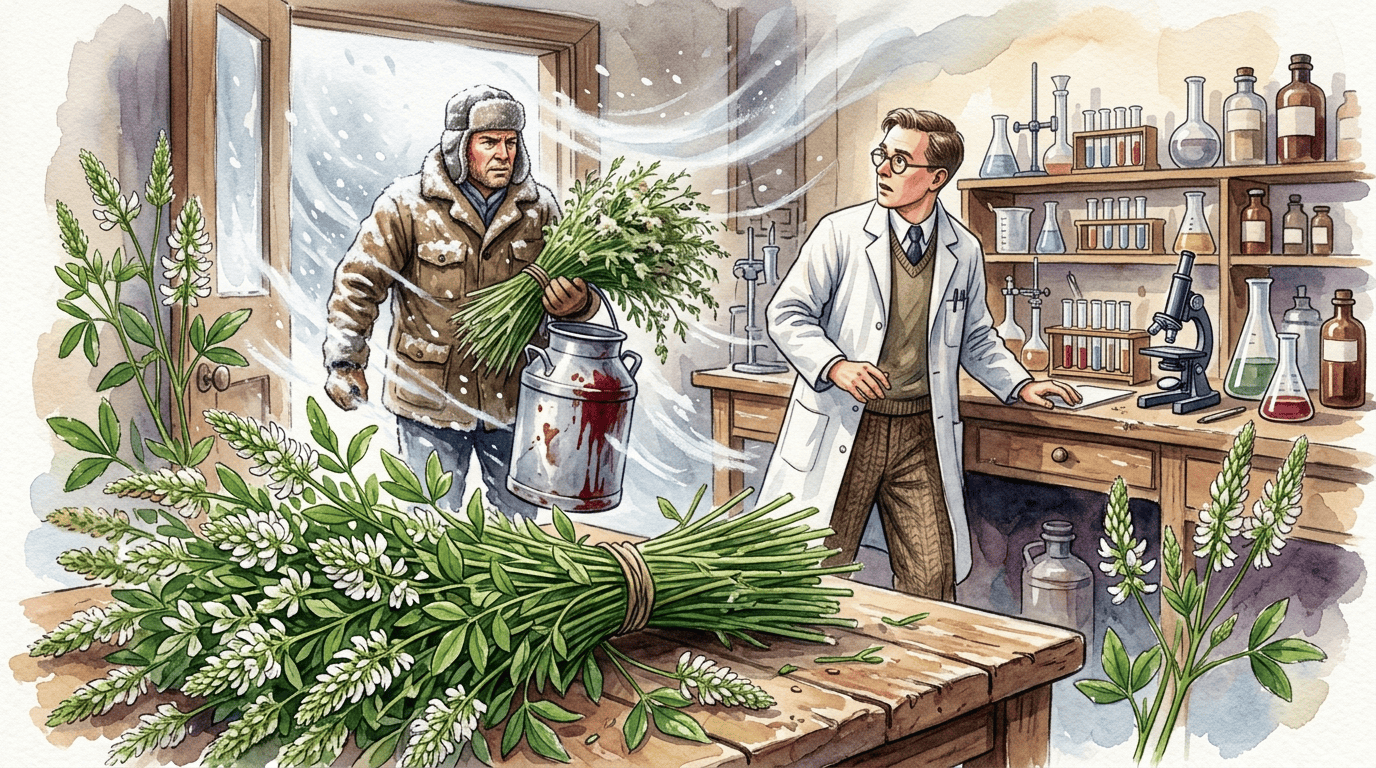
In the early 1920s, a hemorrhagic disease began killing cattle on farms across the northern United States and Canada. Ranchers noticed the deaths occurred when animals ate sweetclover hay that had spoiled or molded during storage. In 1933, during a fierce Wisconsin blizzard, a farmer named Ed Carlson drove to the University of Wisconsin Agricultural Experiment Station carrying a dead heifer, a milk can of unclotted blood, and a load of moldy White Sweetclover hay. He presented them to biochemist Karl Paul Link, asking simply: why is my hay killing my cows?
Link and his team—particularly assistant Mark Stahmann—spent six years isolating the toxic agent. In 1940, they identified it as dicoumarol: a compound formed when coumarin in the hay converts during fungal fermentation. Dicoumarol proved to be a potent anticoagulant, blocking vitamin K and preventing blood from clotting.
The team then synthesized a more potent version in 1948, naming it warfarin after the Wisconsin Alumni Research Foundation (WARF) that funded the research. Initially licensed as a rodenticide, warfarin entered clinical medicine in 1954 and became the world's most widely prescribed anticoagulant—used for decades to prevent strokes and blood clots.
In the garden, White Sweetclover serves as a premier pollinator plant, providing abundant nectar that yields a prized mild-flavored honey.
Symbolism & meaning
What It Symbolizes
It smells like summer and mown fields and something safe and good. White Sweetclover is the scent of hay and honey. And it's also the plant that, through a chain of blizzards and dead cattle and six years of lab work, gave us warfarin—one of the most-prescribed drugs in human history.
- hidden danger — The sweetest-smelling plant in the field, yet its moldy hay can stop blood from clotting—a reminder that nature's most generous gifts sometimes conceal consequences.
- accidental discovery — A dead cow, a can of unclotted blood, and a blizzard-drive to a university lab—how one farmer's crisis became a lifesaving medicine for millions.
Where the Name Comes From
Melilotus derives from Greek meli (honey) and lotos (clover or trefoil), meaning 'honey clover'—reflecting the intense sweetness of the nectar and the plant's historical importance to beekeeping. The species epithet albus is Latin for 'white,' describing the flower color.
Uses & Fun Facts
- Premier bee plant producing abundant nectar; widely grown as a honey crop, yielding a prized mild white honey prized by apiarists across North America
- Nitrogen-fixing legume used as green manure and cover crop; dramatically improves depleted soils and is a mainstay of prairie restoration and roadside stabilization
- Coumarin-rich foliage and flowers used historically to scent linen, sachets, and snuff; dried stems repel clothes moths and impart a fresh hay fragrance to wardrobes
Related plants
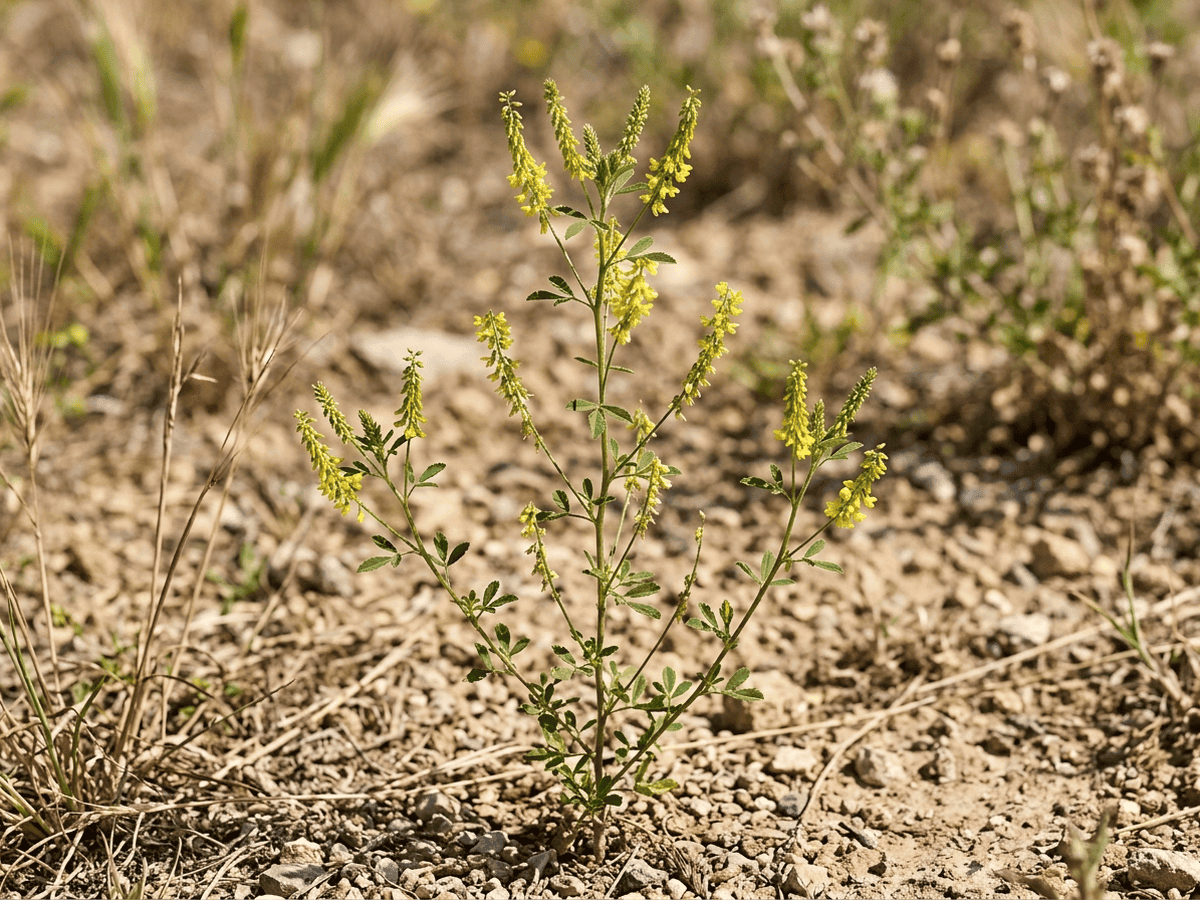
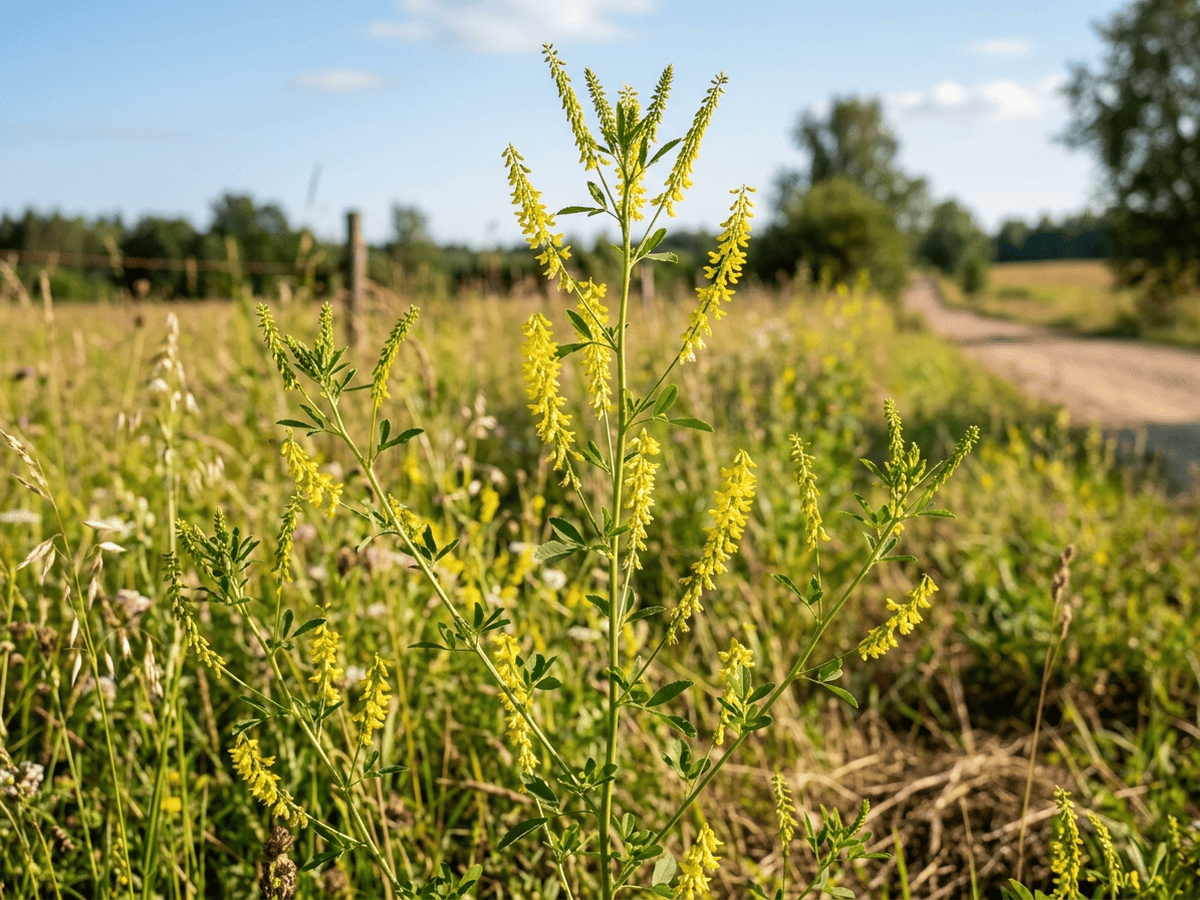
More Melilotus plants
Plants with similar care
 Pink Sand VerbenaAbronia umbellata
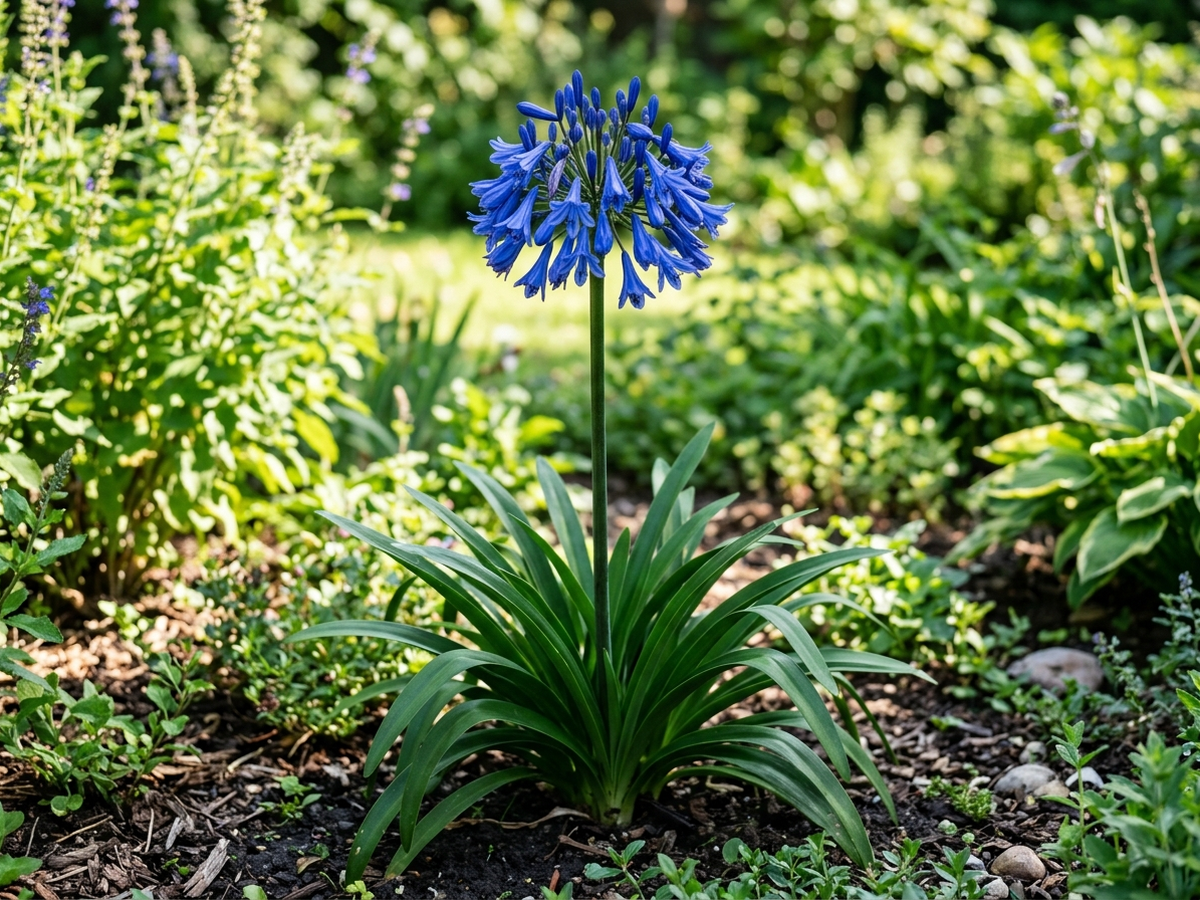 Drooping AgapanthusAgapanthus inapertus
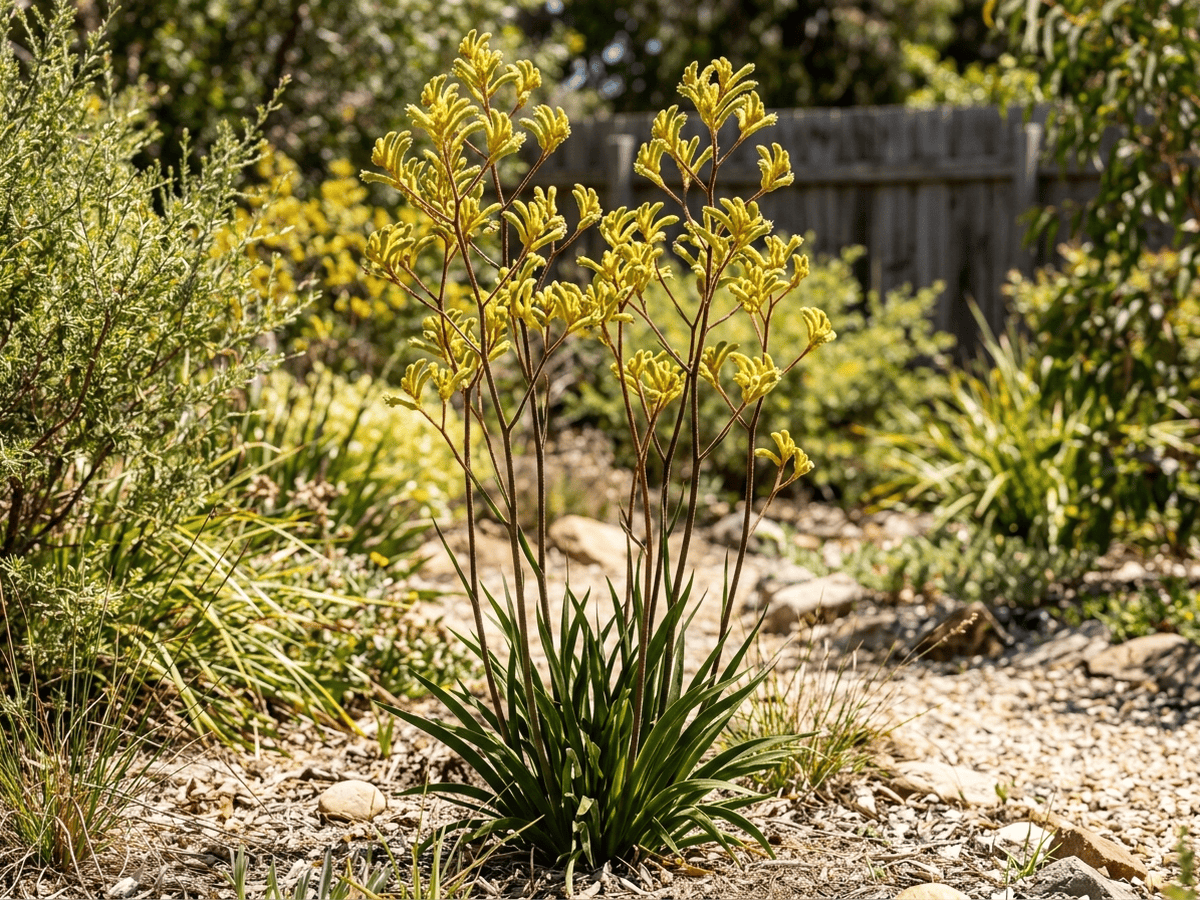 Tall Kangaroo PawAnigozanthos flavidus
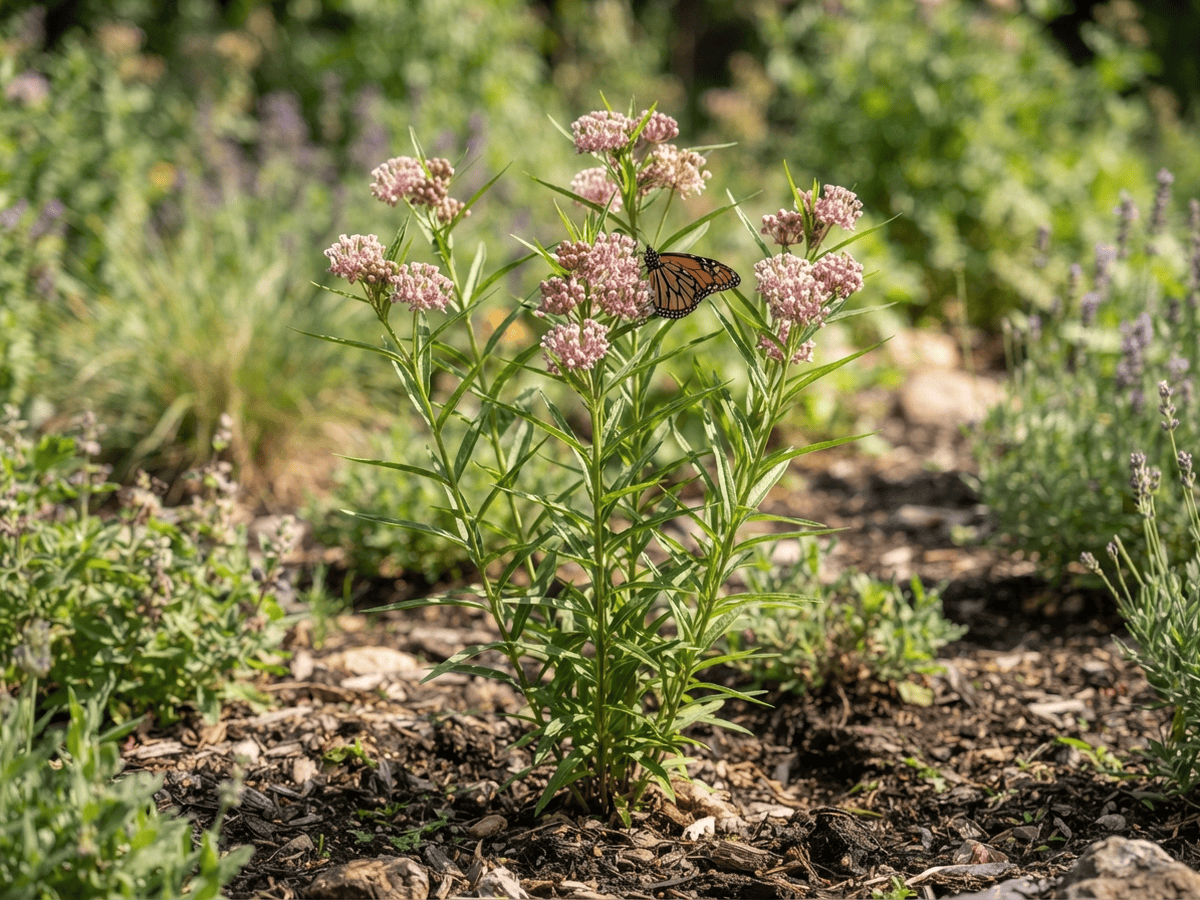 Narrowleaf MilkweedAsclepias fascicularis
Frequently asked questions
How often should I water White Sweetclover?
Water about every 15 days during the growing season, and always let excess water drain away.
How much light does White Sweetclover need?
Full sun: 6+ hrs direct. Watch the leaves — scorching or stretching means the light needs adjusting.
Is White Sweetclover toxic to cats or dogs?
Pets Unknown (Dogs Unknown · Cats Unknown) Educational information, not medical or veterinary advice. If exposure is suspected, contact a doctor or veterinarian.
Is White Sweetclover easy to grow?
It is considered challenging and rewards experienced growers.
When does White Sweetclover bloom?
It typically blooms Jun–Aug in the Northern Hemisphere.
YardMate
Identify any plant in seconds
Snap a photo — YardMate names the plant, diagnoses problems, and reminds you when to water.
Download on the App Store