 YardMate
Yellow Sweetclover
Melilotus officinalis
Hard · Experienced growersAbout Yellow Sweetclover
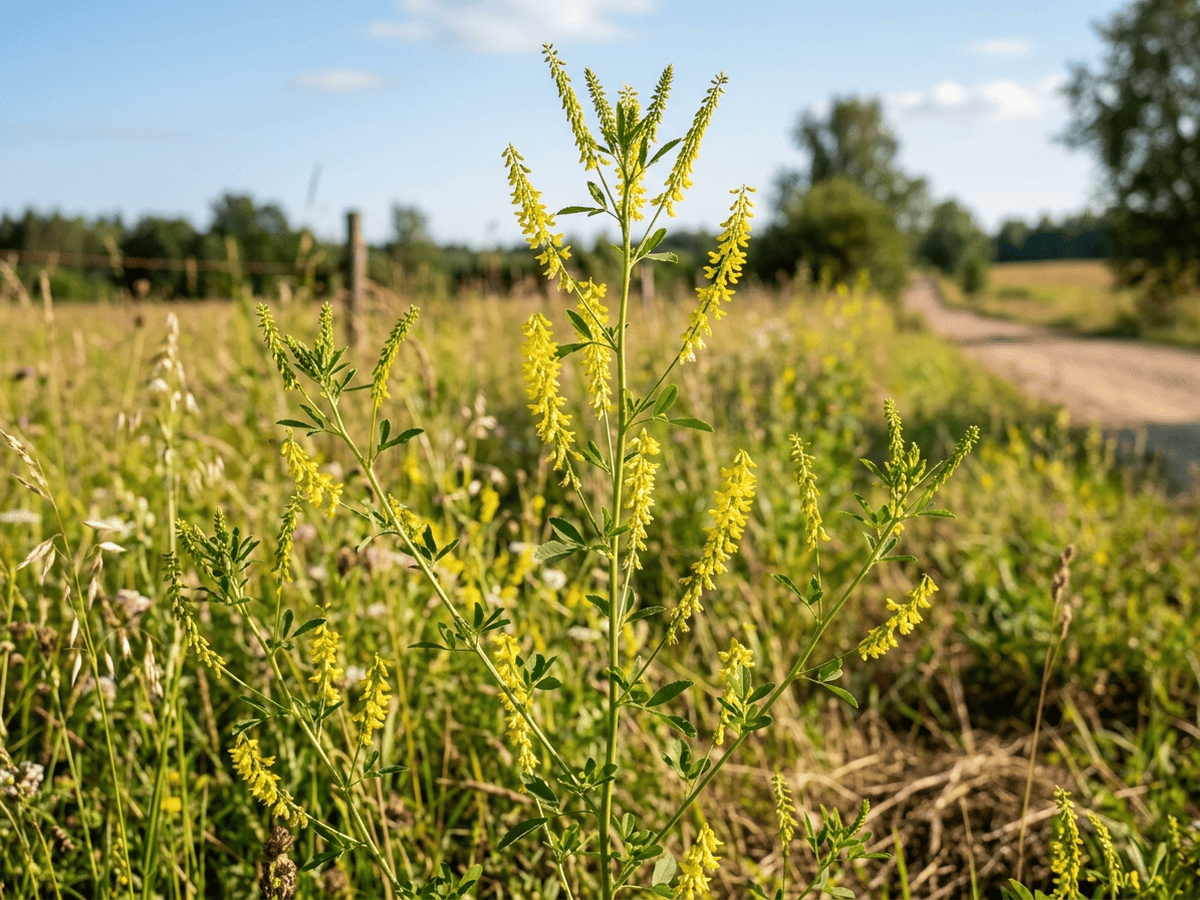
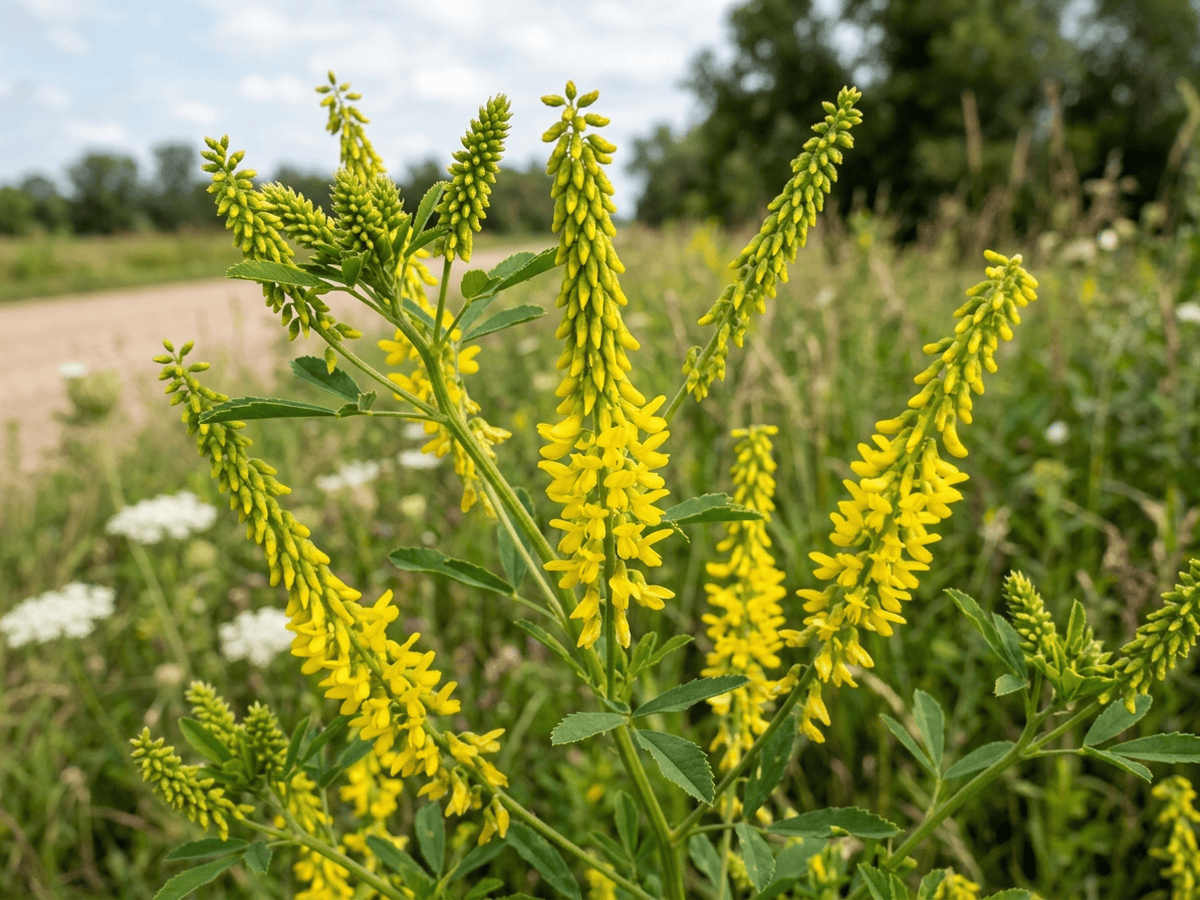
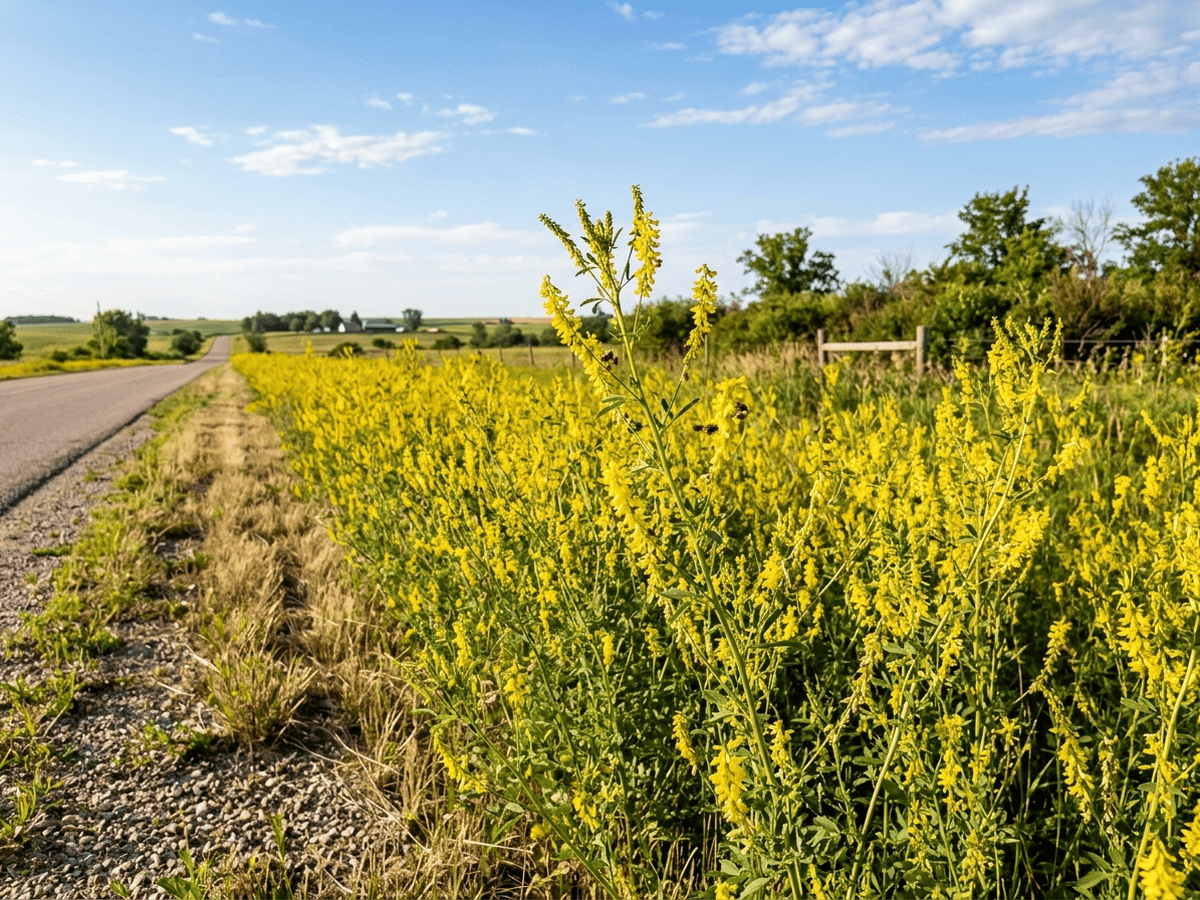
Melilotus officinalis, Yellow Sweetclover, is a tall biennial or annual of Eurasian origin that has colonized roadsides, fields, and disturbed ground across temperate North America and beyond. Growing 2–5 feet tall, it produces long racemes of tiny yellow flowers from June through August that fill the air with the unmistakable sweet coumarin fragrance of new-mown hay. One of the most important honey plants of the American prairies, it also holds a remarkable place in medical history: its coumarin chemistry—transformed by mold—led directly to the discovery of the anticoagulant warfarin.
- Fragrant
- Deciduous
- Drought-tolerant
- Pollinator-friendly
- Fast-growing
How to care for Yellow Sweetclover
Watering
- Springevery 15 days
- Summerevery 15 days
- Fallevery 20 days
- Winterpause watering
Soil · Well-draining
- Top dressingPine bark mulch10%
- Main mixPotting soil + perlite 2:170%
- DrainageLECA / gravel20%
Never skip the drainage layer — standing water is the top cause of root rot.
FERTILIZER
- Springevery 30 days
- Summerevery 30 days
- Fallevery 30 days
At a Glance
- NativeEurope, Asia, North America
- Height2–3 ft (0.6–0.9 m)
- Spread2–3 ft (0.6–0.9 m)
- Flower colorYellow
- Foliage colorGreen
- SoilWell-drained, Moist, Alkaline
- LocationsYard · Balcony
Bloom time
BLOOM CYCLE
Peak bloom
Jun–Aug
Yellow Sweetclover produces fragrant, yellow flowers from June to August.
Fragrance
STRONG FRAGRANCE
Classic coumarin 'new-mown hay' fragrance; strongest from dried or bruised stems and leaves, also noticeable from the flowers. One of the most aromatic plants in disturbed habitats.
Toxicity
No toxicity has been reported for this plant. Still, it is wise to keep pets from chewing on any houseplant.
Educational information, not medical or veterinary advice. If exposure is suspected, contact a doctor or veterinarian.
DISTRIBUTION

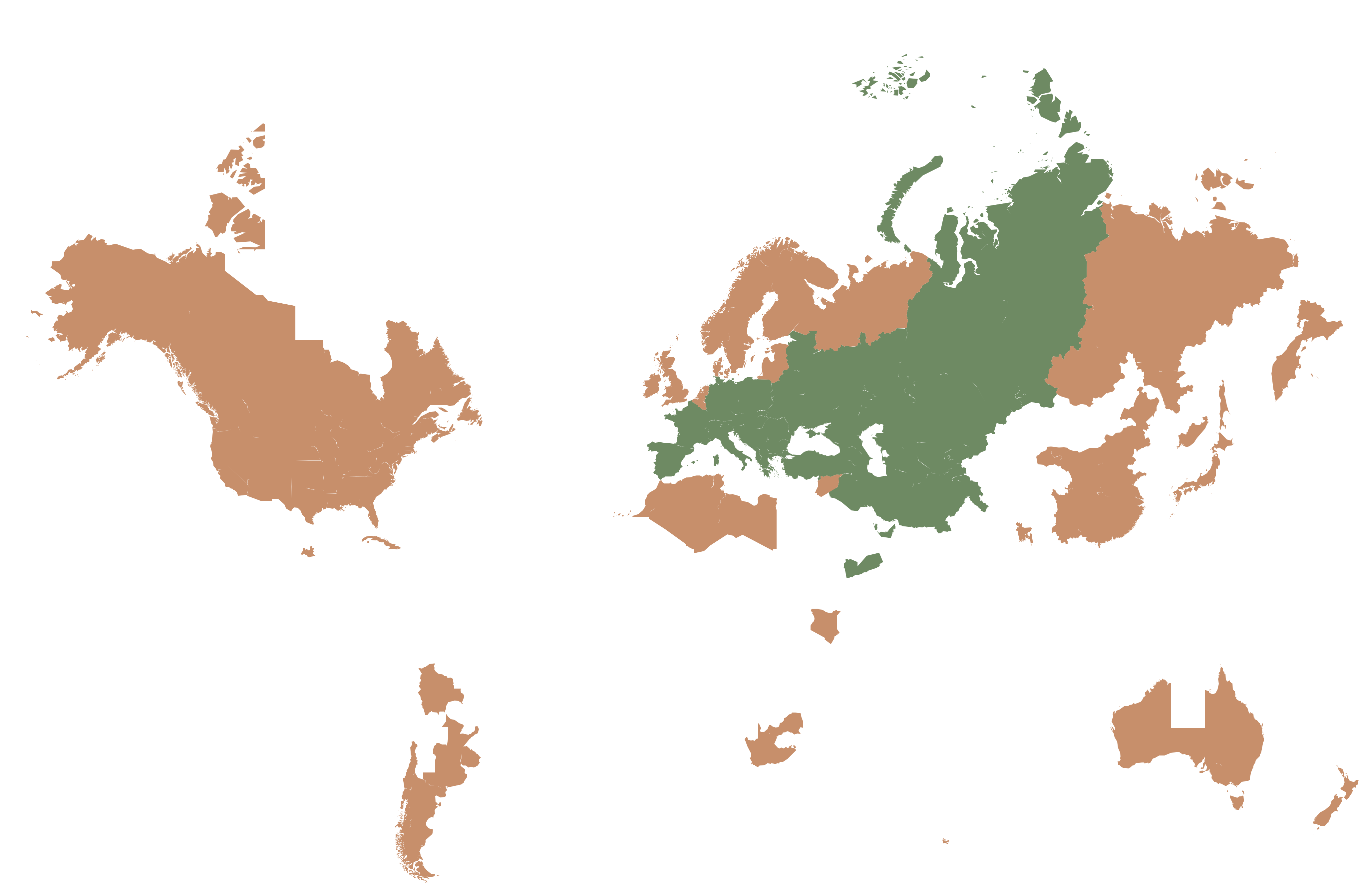
- Native
- Introduced
- Europe
- Asia
- North America
History
Melilotus officinalis is native to Eurasia, where it has grown as a roadside and field plant since antiquity. The 'officinalis' epithet marks it as a pharmacopoeia herb—historical uses included poultices for swollen joints, teas as a sedative, and dried stems as a moth repellent and flavoring in herbal tobaccos and cheeses.
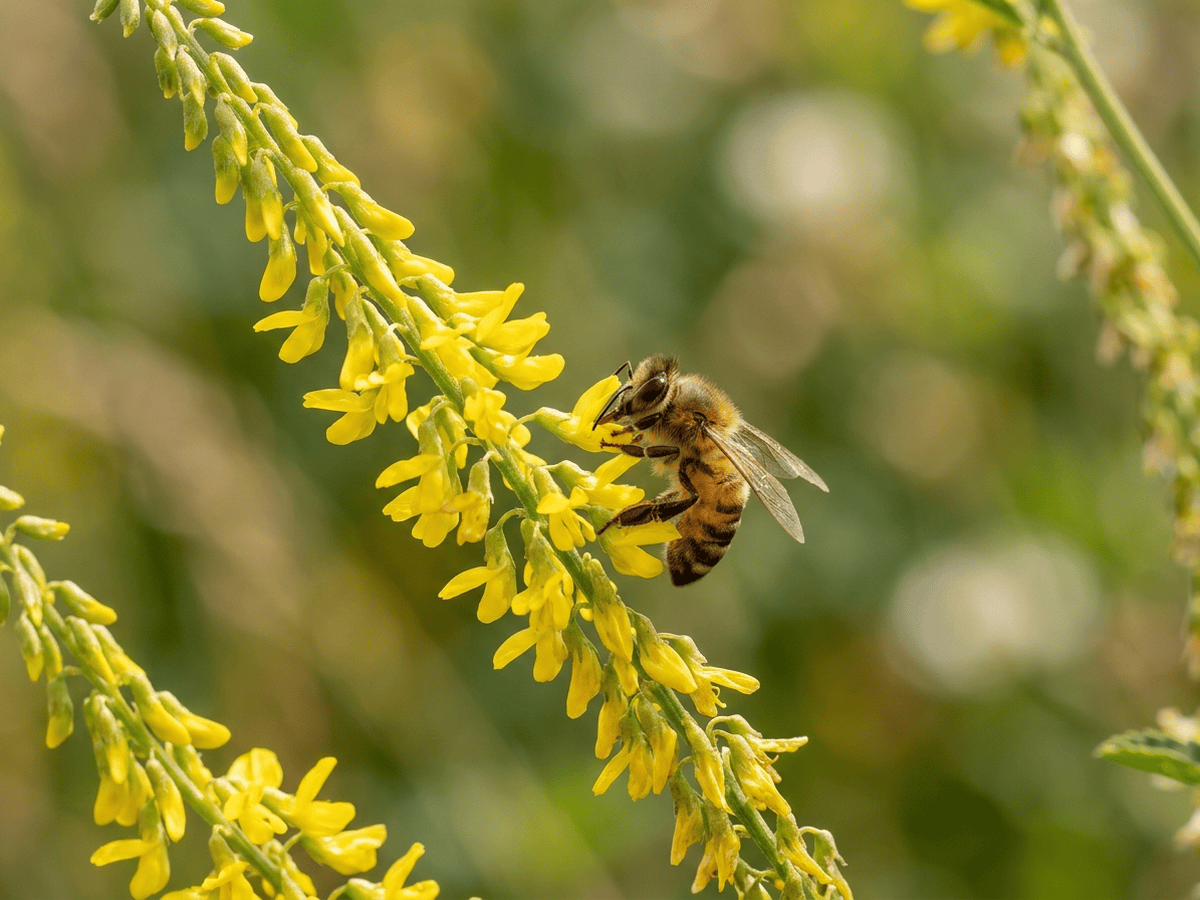
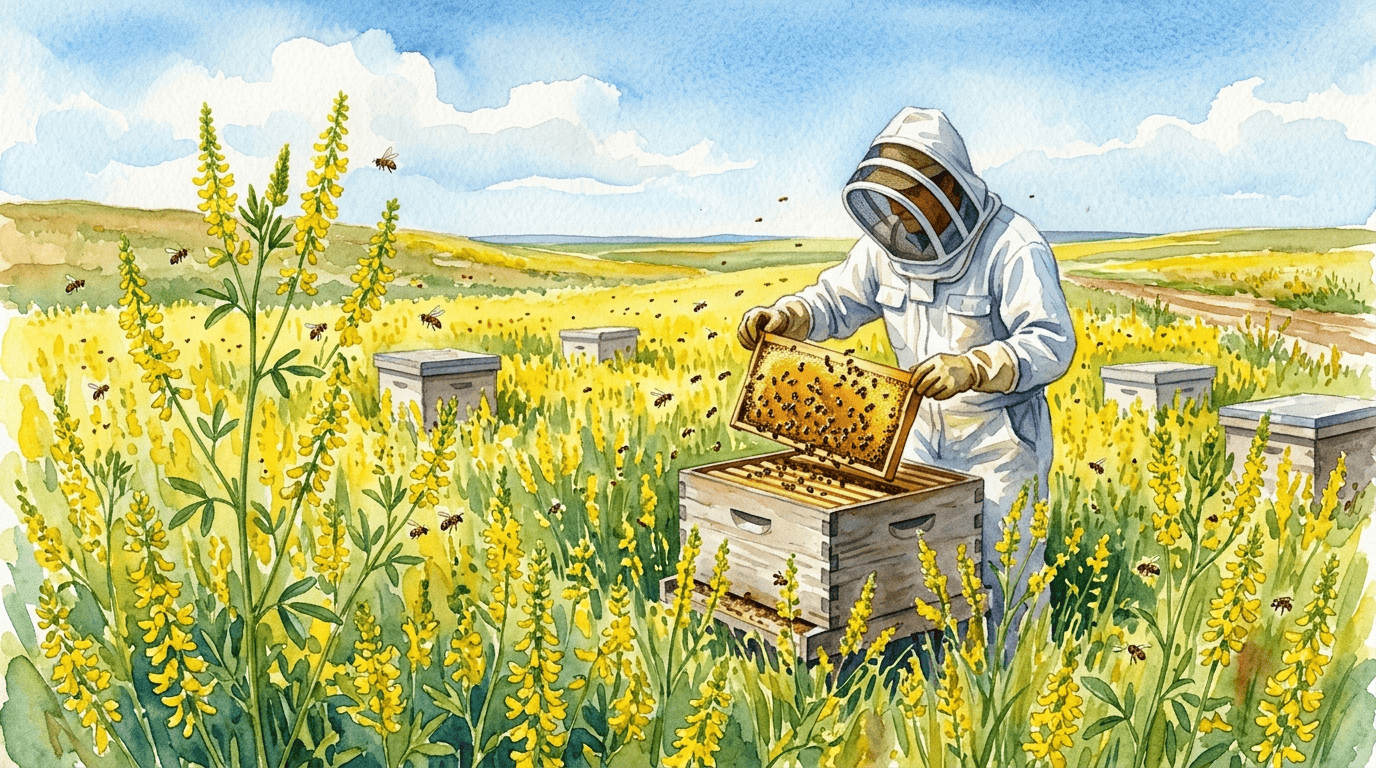
Introduced to North America as a forage crop and soil improver in the 19th century, Yellow Sweetclover spread rapidly across the continent, becoming one of the dominant roadside and prairie plants of the American Midwest and Great Plains. In this new range it became, and remains, one of the most important honey plants in North America—sweetclover honey is a pale, mildly flavored honey prized by beekeepers from Manitoba to Texas.
The plant's most consequential story, however, began on cattle farms in the 1920s. Animals fed on moldy sweetclover hay began dying of mysterious internal hemorrhage. In 1922 Frank Schofield in Saskatchewan identified the cause: a compound in the moldy hay that prevented blood from clotting. Two decades later, biochemist Karl Paul Link and his team at the University of Wisconsin identified the culprit—dicoumarol, formed when coumarin in the plant is converted by mold fungi. From dicoumarol they synthesized warfarin (named for the Wisconsin Alumni Research Foundation), introduced as a rat poison in 1948 and approved as a human anticoagulant in 1954. Yellow Sweetclover's chemistry thus underpins one of the most prescribed drugs of the 20th century.
Symbolism & meaning
What It Symbolizes
Yellow Sweetclover grew along every road across the American prairies and nobody thought much about it until cattle started dying. A farmer noticed the hay had gone moldy. A scientist noticed the blood wouldn't clot. Another scientist named a drug after a university foundation. Now warfarin is in medicine cabinets around the world, and sweetclover still blooms in July along every interstate in the Midwest, smelling of honey and summer.
- hidden power — A roadside weed whose chemistry—transformed by accident and mold—became one of the most important drugs in modern medicine.
- sweetness — Of all the plains wildflowers, sweetclover is the one you can smell from a car window at 60 miles per hour. That fragrance is coumarin—the same molecule that became warfarin.
Where the Name Comes From
Melilotus derives from Greek meli (honey) and lotos (garden plant/clover), reflecting the genus' ancient importance as honey plants. The species epithet officinalis is Latin for 'of the apothecary shop,' marking Yellow Sweetclover as a traditional medicinal herb.
Uses & Fun Facts
- One of the most important honey plants in North America; prized by beekeepers across the prairies for producing pale, mildly flavored sweetclover honey with long summer bloom
- Historical herb used for poultices and tonics; the coumarin chemistry of the plant underpins the anticoagulant drug warfarin, derived from compounds isolated from moldy sweetclover hay in 1940
- Powerful sweet 'new-mown hay' coumarin fragrance from flowers, leaves, and stems; once used to flavor herbal tobacco and Alpine cheeses
Related plants
More Melilotus plants
Plants with similar care
 African LilyAgapanthus africanus
 Bell AgapanthusAgapanthus campanulatus
 Common AgapanthusAgapanthus praecox
 False Queen Anne's LaceAmmi majus glaucifolium
Frequently asked questions
How often should I water Yellow Sweetclover?
Water about every 15 days during the growing season, and always let excess water drain away.
How much light does Yellow Sweetclover need?
Part sun: 4–6 hrs direct. Watch the leaves — scorching or stretching means the light needs adjusting.
Is Yellow Sweetclover toxic to cats or dogs?
No toxicity has been reported for this plant. Still, it is wise to keep pets from chewing on any houseplant. Educational information, not medical or veterinary advice. If exposure is suspected, contact a doctor or veterinarian.
Is Yellow Sweetclover easy to grow?
It is considered challenging and rewards experienced growers.
When does Yellow Sweetclover bloom?
It typically blooms Jun–Aug in the Northern Hemisphere.
YardMate
Identify any plant in seconds
Snap a photo — YardMate names the plant, diagnoses problems, and reminds you when to water.
Download on the App Store