 YardMate



Bitter Melon
Momordica charantia
Easy · Beginner friendlyAbout Bitter Melon
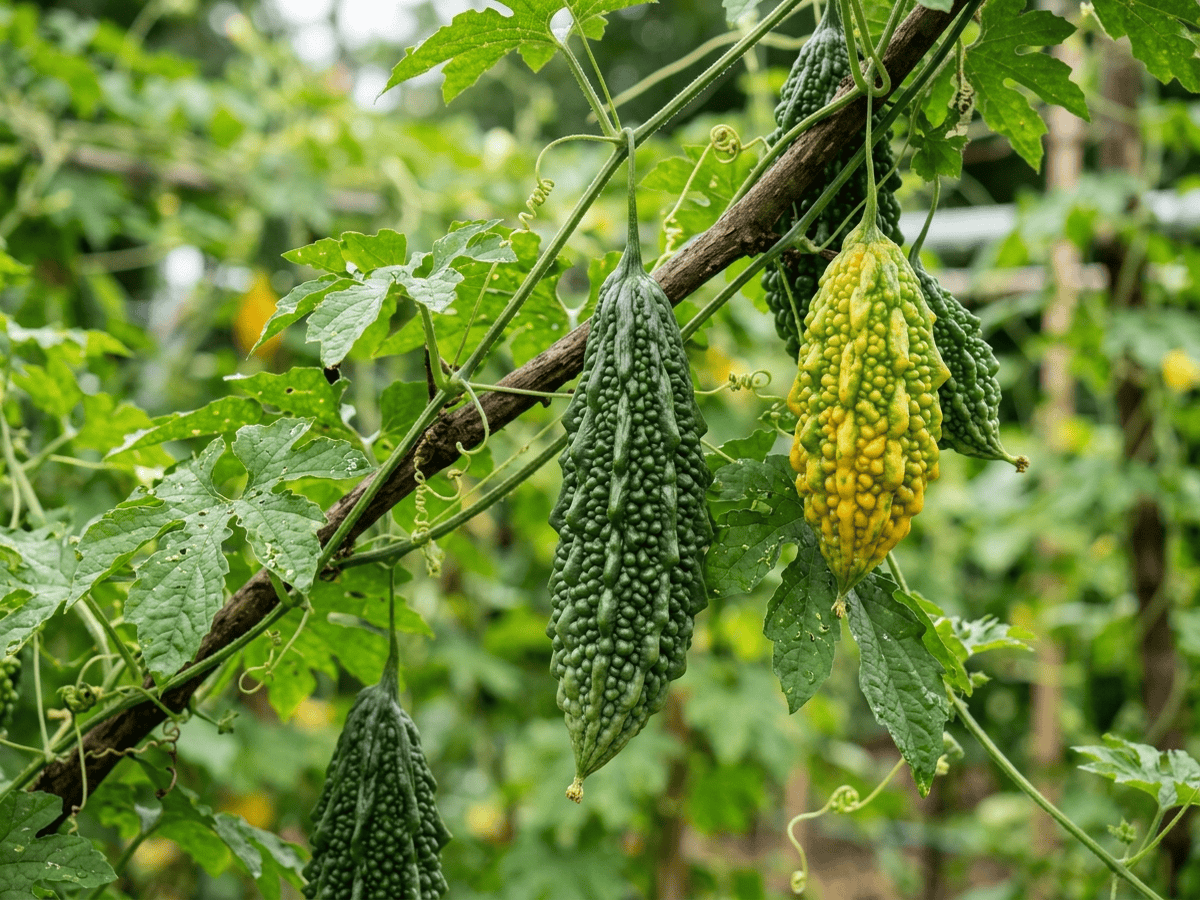
Bitter Melon or Bitter Gourd is a tropical Asian vining annual reaching 10-15 feet, producing distinctive warty cucumber-like green fruits with intensely bitter flavor. Essential in Chinese, Indian, Filipino, and Caribbean cuisines, and used in traditional medicine for blood sugar regulation. The fruits can be stir-fried, stuffed, pickled, or juiced. Increasingly grown in American gardens by Asian and Caribbean diaspora communities and adventurous home gardeners.
- Edible
- Medicinal
- Climbing
How to care for Bitter Melon
Watering
- Springevery 3 days
- Summerevery 3 days
- Fallevery 5 days
- Winterpause watering
Soil · Rich & well-draining
- Top dressingCompost10%
- Main mixPotting soil + compost 3:180%
- DrainageGravel10%
Top up the compost layer each season.
FERTILIZER
Balanced Feed 14-14-14
An even feed covers all three needs at once, keeping leaves, roots and blooms moving together with nothing pushed out of balance.
- Nitrogen · Leaves
- Phosphorus · Roots + Blooms
- Potassium · Strength
- Springevery 30 days
- Summerevery 30 days
At a Glance
- NativeSouth Asia, East Asia
- Height10–15 ft (3–4.6 m)
- Spread3–6 ft (0.9–1.8 m)
- Flower colorYellow
- Foliage colorGreen
- Fruit colorGreen, Yellow, Orange
- SoilLoamy, Well-drained, Rich
- LocationsYard
Bloom time
BLOOM CYCLE
Peak bloom
Jun–Aug
Small yellow flowers in summer
Toxicity
Humans Moderate · Pets Moderate
vicine, momordin, and charantin
Moderate
- Seed
- Ripe fruit aril
- Ingestion
EXPOSURE Eating seeds and ripe fruit aril.
EFFECT Hemolytic anemia (G6PD deficient) and hypoglycemia.
NOTE Green immature fruit is culinary-safe; ripe red fruit and seeds contain toxic vicine and saponins.
Moderate
- Seed
- Fruit
- Ingestion
EXPOSURE Eating seeds and fruit.
EFFECT Vomiting, diarrhea, and hypoglycemia.
NOTE Green immature fruit is culinary-safe; ripe red fruit and seeds contain toxic vicine and saponins.
Moderate
- Seed
- Fruit
- Ingestion
EXPOSURE Eating seeds and fruit.
EFFECT Vomiting and diarrhea.
NOTE Green immature fruit is culinary-safe; ripe red fruit and seeds contain toxic vicine and saponins.
Educational information, not medical or veterinary advice. If exposure is suspected, contact a doctor or veterinarian.
DISTRIBUTION

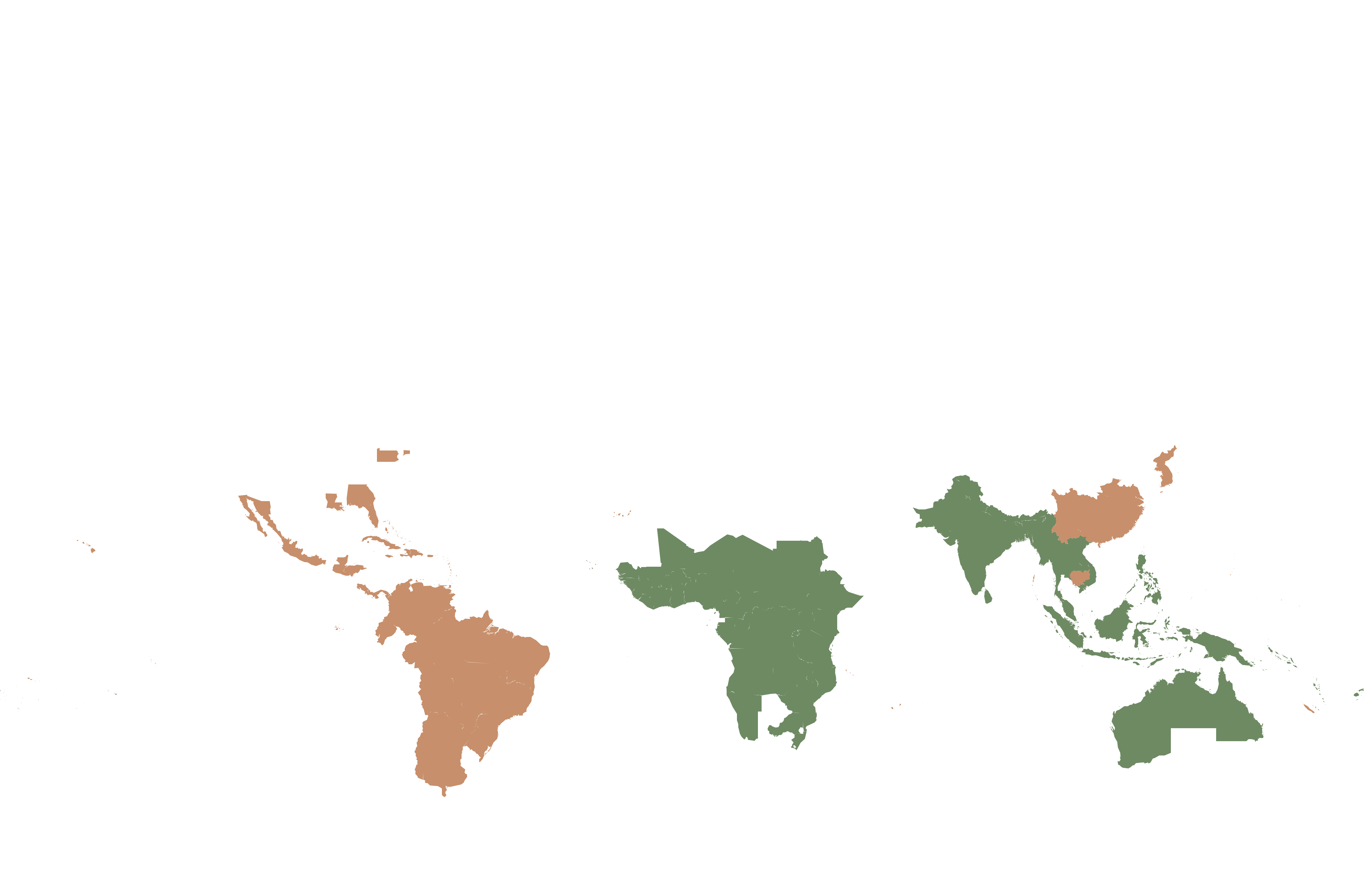
- Native
- Introduced
- South Asia
- East Asia
History
Momordica charantia, commonly called bitter melon, bitter gourd, karela (Hindi), kǔguā (Mandarin), ampalaya (Filipino), or balsam pear, is an annual climbing vine in the gourd family (Cucurbitaceae) native to the Indian subcontinent and Southeast Asia, widely naturalized across tropical and subtropical regions worldwide. Carl Linnaeus described it in Species Plantarum in 1753. The genus name Momordica derives from Latin mordere (to bite), referring to the seeds that look bitten.
The species has been cultivated across Asia for over 1000 years as both a vegetable and traditional medicine. Plants grow as tendrilled vines 2-5 meters long with deeply lobed bright green leaves and small yellow flowers, followed by distinctive warty oblong green to yellow fruits 10-25 cm long. The intensely bitter green immature fruits are stir-fried, stuffed, or curried throughout Asian cuisines.
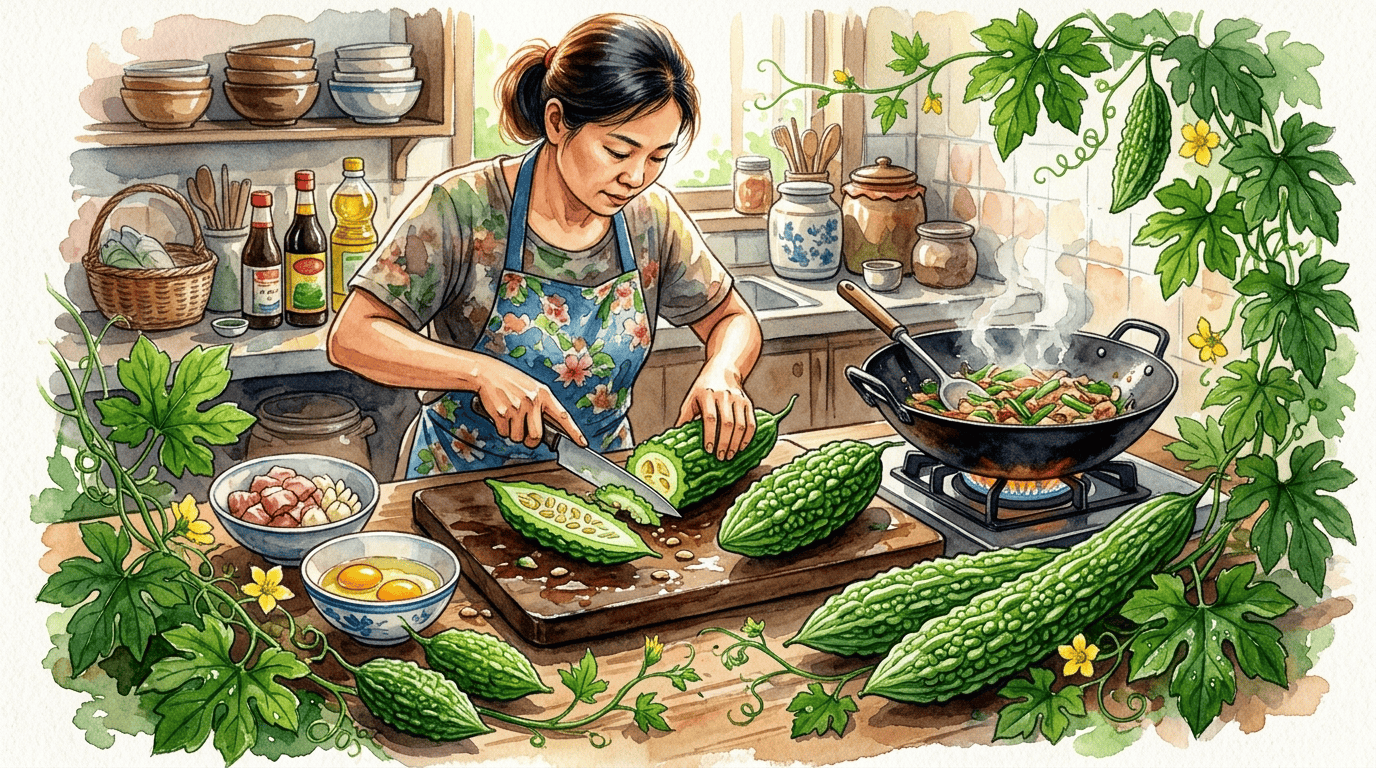
In Ayurveda and traditional Chinese medicine, the fruit and seeds are extensively used to lower blood sugar in diabetes management—modern research has confirmed hypoglycemic activity (charantin, polypeptide-p, vicine). Ripe fruits and seed arils are toxic—vicine causes hemolytic anemia in G6PD-deficient individuals. Essential in Chinese stir-fries, Indian karela curries, Filipino ampalaya dishes, and Okinawan goya champuru.
Symbolism & meaning
What It Symbolizes
Bitter Melon turns bitterness into inheritance. Its ridged green fruit links South Asian, Southeast Asian, African, and Caribbean kitchens, where difficult flavor becomes comfort through memory and skill. Its symbolism is acquired taste: the wisdom of a plant that asks the tongue to grow up before it rewards it.
- Healing — traditional remedy for diabetes and digestive health
- Heritage — essential ingredient across Asian cuisines
Where the Name Comes From
'Momordica' from Latin meaning to bite (the warty surface); 'charantia' likely from Sinhalese.
Uses & Fun Facts
- Bitter warty fruits star in Asian and Caribbean stir-fries
- Traditional remedy researched for blood sugar regulation properties
- Annual vine trellises easily on garden fences and arches
Related plants
Plants with similar care
 Chinese AbeliaAbelia chinensis
 Fragrant AbeliaAbelia mosanensis
 Large-Flowered AbeliaAbelia uniflora
 Glossy AbeliaAbelia x grandiflora
Frequently asked questions
How often should I water Bitter Melon?
Water about every 3 days during the growing season, and always let excess water drain away.
How much light does Bitter Melon need?
Full sun: 6+ hrs direct. Watch the leaves — scorching or stretching means the light needs adjusting.
Is Bitter Melon toxic to cats or dogs?
Pets Moderate (Dogs Moderate · Cats Moderate) Educational information, not medical or veterinary advice. If exposure is suspected, contact a doctor or veterinarian.
Is Bitter Melon easy to grow?
Yes — it is considered an easy, beginner-friendly plant.
When does Bitter Melon bloom?
It typically blooms Jun–Aug in the Northern Hemisphere.
YardMate
Identify any plant in seconds
Snap a photo — YardMate names the plant, diagnoses problems, and reminds you when to water.
Download on the App Store