 YardMate


Monstera standleyana
Monstera standleyana
Easy · Beginner friendlyAbout Monstera standleyana
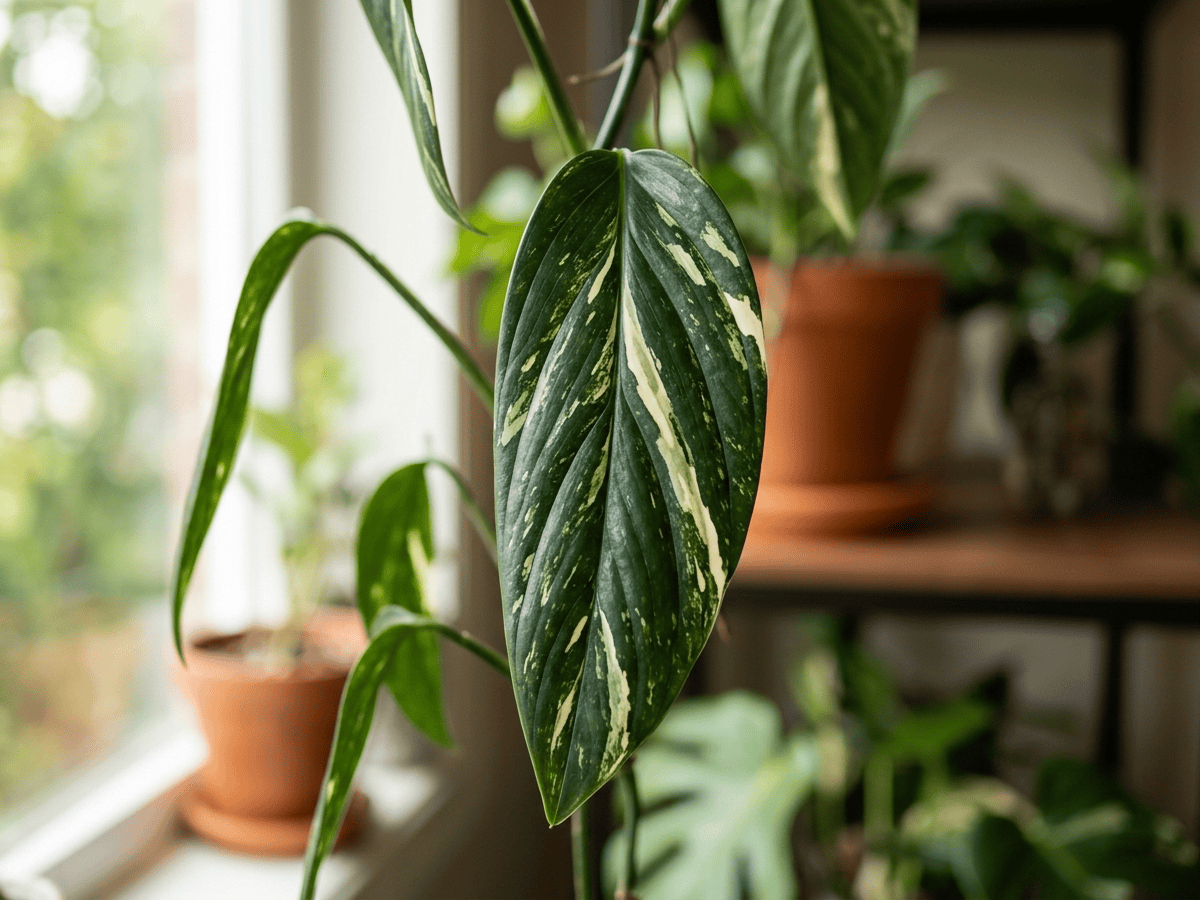
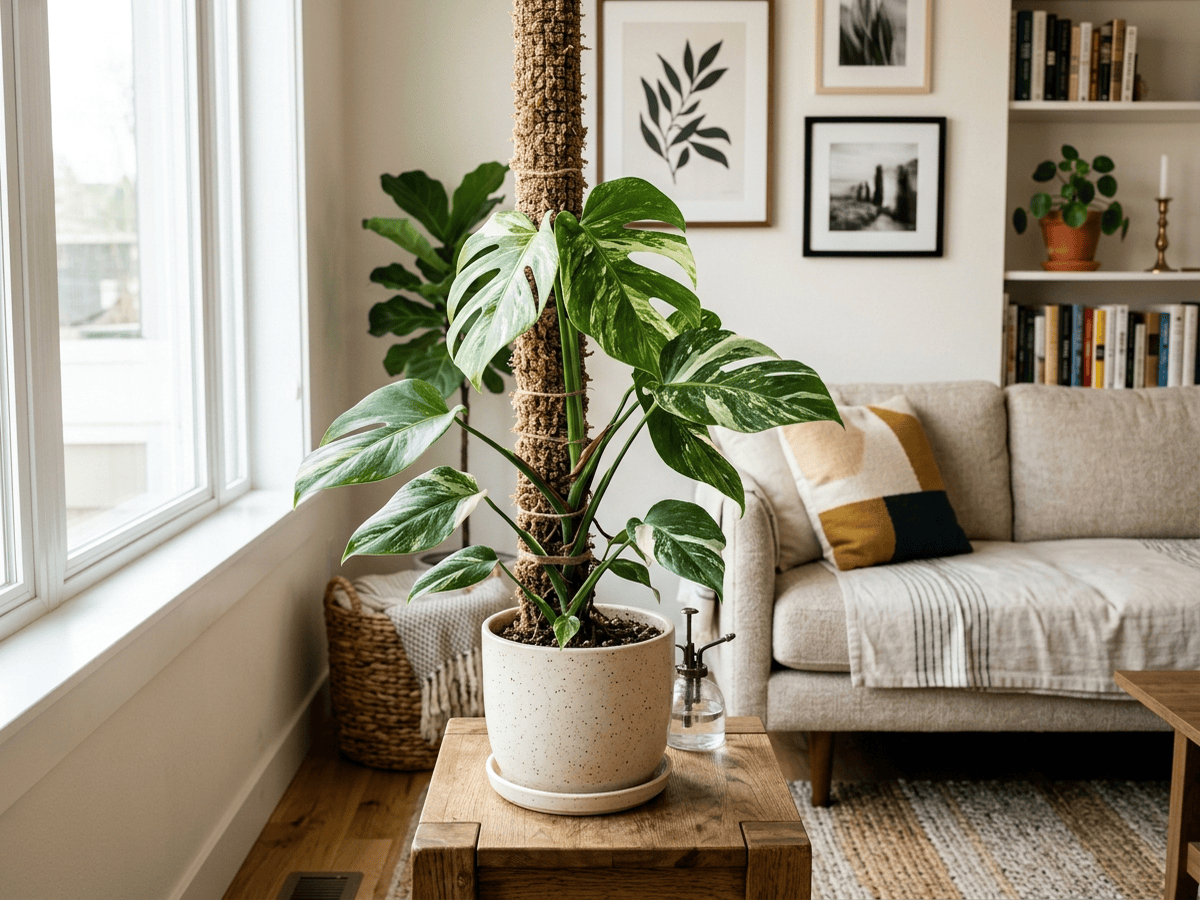
Five Holes Plant or Monstera Standleyana is a Central American climbing aroid with elongated narrow dark green leaves heavily streaked with cream-white variegation. A petite-leaved cousin to the famous Swiss Cheese Plant, it climbs 4-8 feet on a moss pole or trails attractively from a hanging basket. The variegated form has become one of the most sought-after houseplants of the modern American houseplant boom, prized for its compact form and bright striping.
- Evergreen
- Climbing
- Container-friendly
How to care for Monstera standleyana
Watering
- Springevery 7 days
- Summerevery 7 days
- Fallevery 10 days
- Winterevery 14 days
Soil · Chunky & airy
- Top dressingBark chips10%
- Main mixBark + potting soil + perlite 1:1:170%
- DrainageLECA20%
Chunky pieces hold air pockets open so thick roots don't suffocate.
FERTILIZER
Balanced Feed 14-14-14
An even feed covers all three needs at once, keeping leaves, roots and blooms moving together with nothing pushed out of balance.
- Nitrogen · Leaves
- Phosphorus · Roots + Blooms
- Potassium · Strength
- Springevery 30 days
- Summerevery 30 days
- Fallevery 60 days
At a Glance
- NativeNorth America, Central America
- Height4–8 ft (1.2–2.4 m)
- Spread2–3 ft (0.6–0.9 m)
- Flower colorWhite, Cream
- Foliage colorDark-green, Variegated
- SoilLoamy, Well-drained, Rich
- LocationsIndoor
Bloom time
BLOOM CYCLE
Peak bloom
Jun–Aug
Aroid spadix flowers (rare indoors)
Toxicity
Humans Moderate · Pets Moderate
calcium oxalate raphides
Moderate
- Leaf
- Stem
- Sap
- Ingestion
EXPOSURE Eating leaves, stems, and sap.
EFFECT Oral irritation, drooling, and difficulty swallowing.
NOTE Documented concern for humans: Oral irritation, drooling, and difficulty swallowing.
Moderate
- Leaf
- Stem
- Ingestion
EXPOSURE Eating leaves and stems.
EFFECT Oral irritation, drooling, and vomiting.
NOTE ASPCA lists Monstera as toxic due to insoluble calcium oxalate crystals.
Moderate
- Leaf
- Stem
- Ingestion
EXPOSURE Eating leaves and stems.
EFFECT Oral irritation, drooling, and vomiting.
NOTE ASPCA lists Monstera as toxic due to insoluble calcium oxalate crystals.
Educational information, not medical or veterinary advice. If exposure is suspected, contact a doctor or veterinarian.
DISTRIBUTION


- Native
- North America
- Central America
History
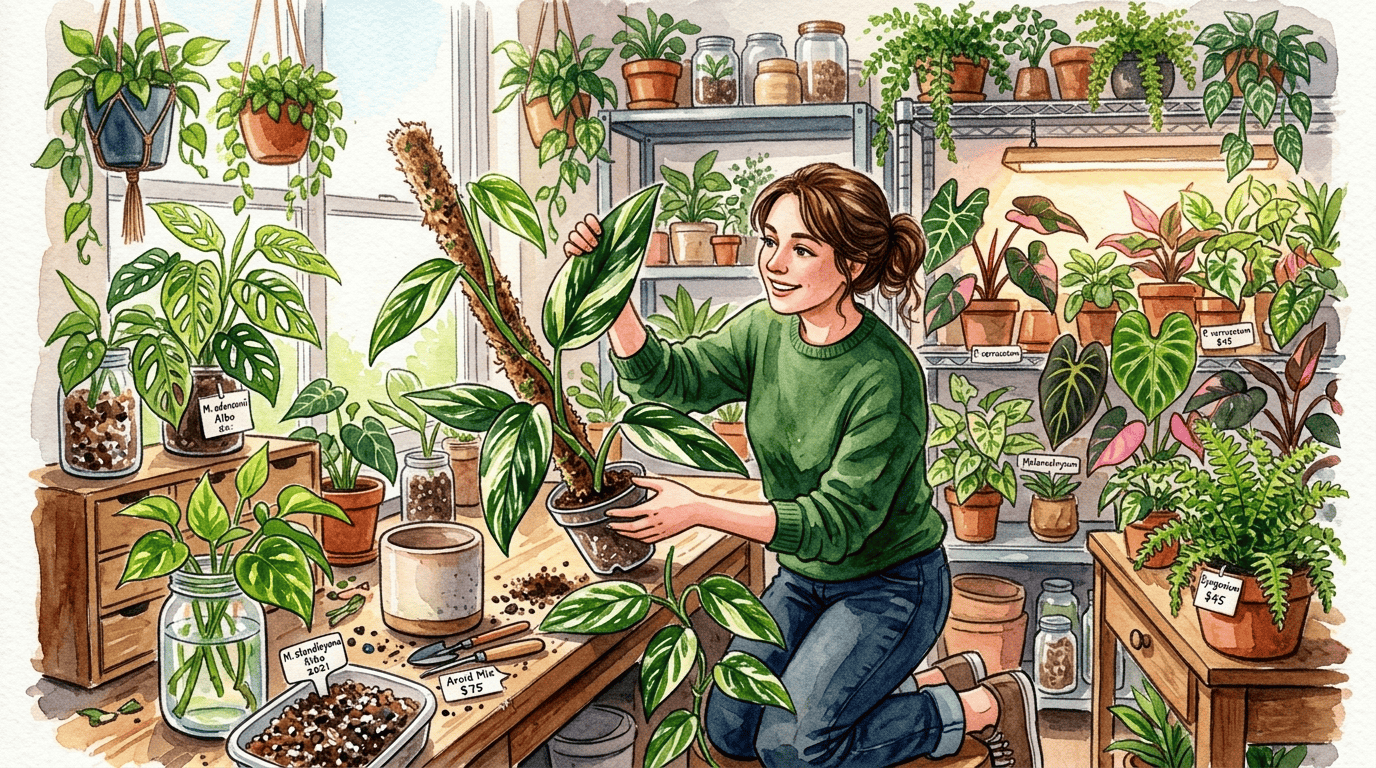
Monstera standleyana, commonly called Standley's monstera and often sold as 'Philodendron Cobra' or 'Philodendron Guttifera', is a climbing aroid in the family Araceae native to lowland tropical rainforests from southern Mexico through Guatemala, Honduras, Nicaragua, and Costa Rica. American botanist Paul Carpenter Standley first described it as Philodendron standleyi in 1940 (the epithet standleyi was later replaced with standleyana when transferred). George Sydney Bunting transferred the species to Monstera in 1968.
Despite its trade names, the plant is a true Monstera, not a Philodendron. Unlike the fenestrated M. deliciosa, this species has narrow elliptic-oblong dark glossy green leaves 10-25 cm long without leaf perforations. The normally solid-green form and the widely-sold variegated form with cream, yellow, or white streaks and sectors are both in cultivation.
The variegated form was introduced to the Western houseplant market in the 1970s and experienced a popularity surge during the 2020 pandemic-driven houseplant boom. Native to the rainforests of Central America from Belize to Panama. Once an obscure rainforest aroid, it surged to fame during the 2010s-2020s American houseplant craze, with variegated forms commanding high prices among collectors.
Symbolism & meaning
What It Symbolizes
Monstera standleyana is growth made vine — a vigorous climber that, given a moss pole or a tree, reaches steadily upward toward the canopy as its ancestors do in Central American jungles. Its beauty lies in the variegation that collectors prize, every leaf splashed in cream against deep green. It is the houseplant whose ambition you can almost feel in the room, always reaching for one more inch of light.
- Growth — vigorous climber reaching for the canopy
- Beauty — striking variegation prized by collectors
Where the Name Comes From
'Monstera' from Latin meaning monstrous (for unusual leaves); 'standleyana' honors Paul C. Standley (1884-1963).
Uses & Fun Facts
- Variegated trailing aroid for hanging baskets and shelves
- Climbs moss poles indoors developing larger mature leaves
Related plants
More Monstera plants
 Swiss Cheese-PlantMonstera adansonii
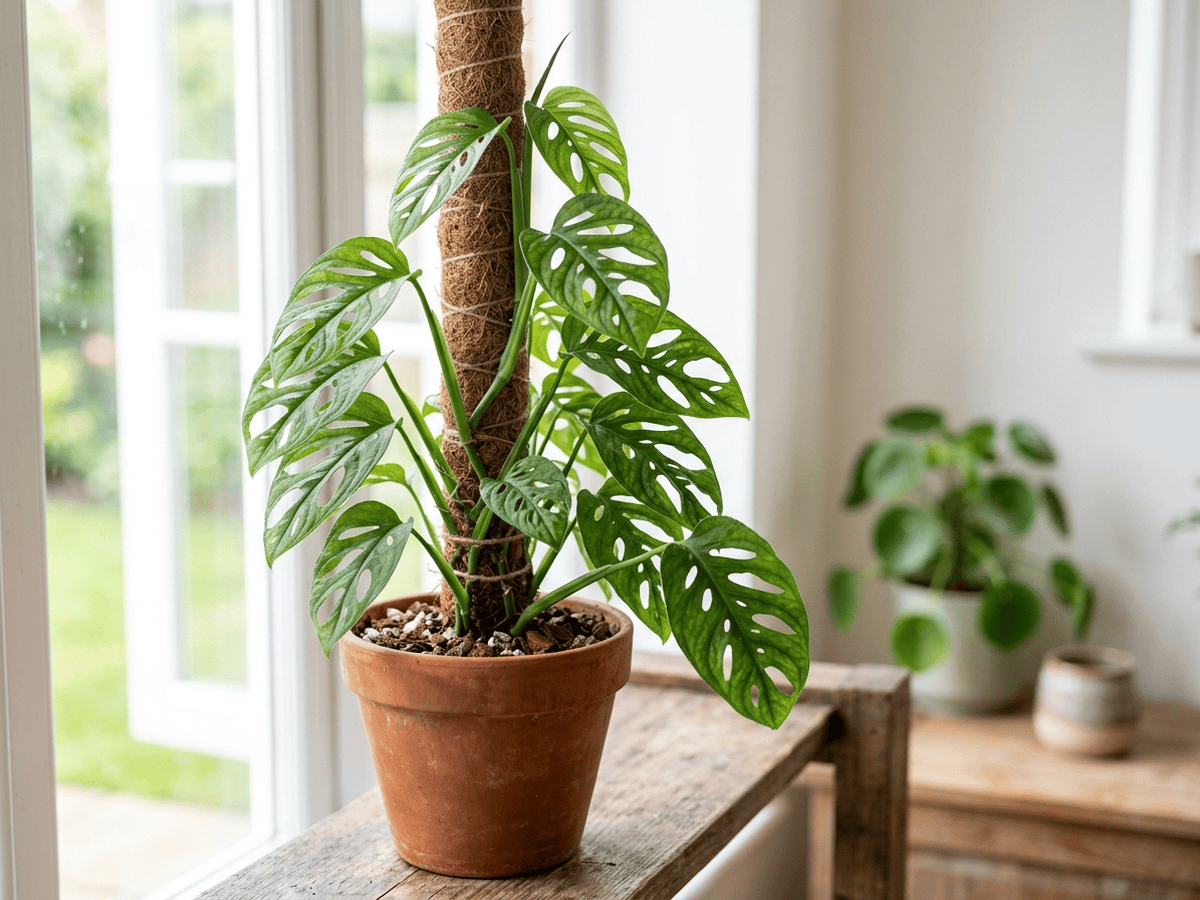 Swiss Cheese VineMonstera adansonii adansonii
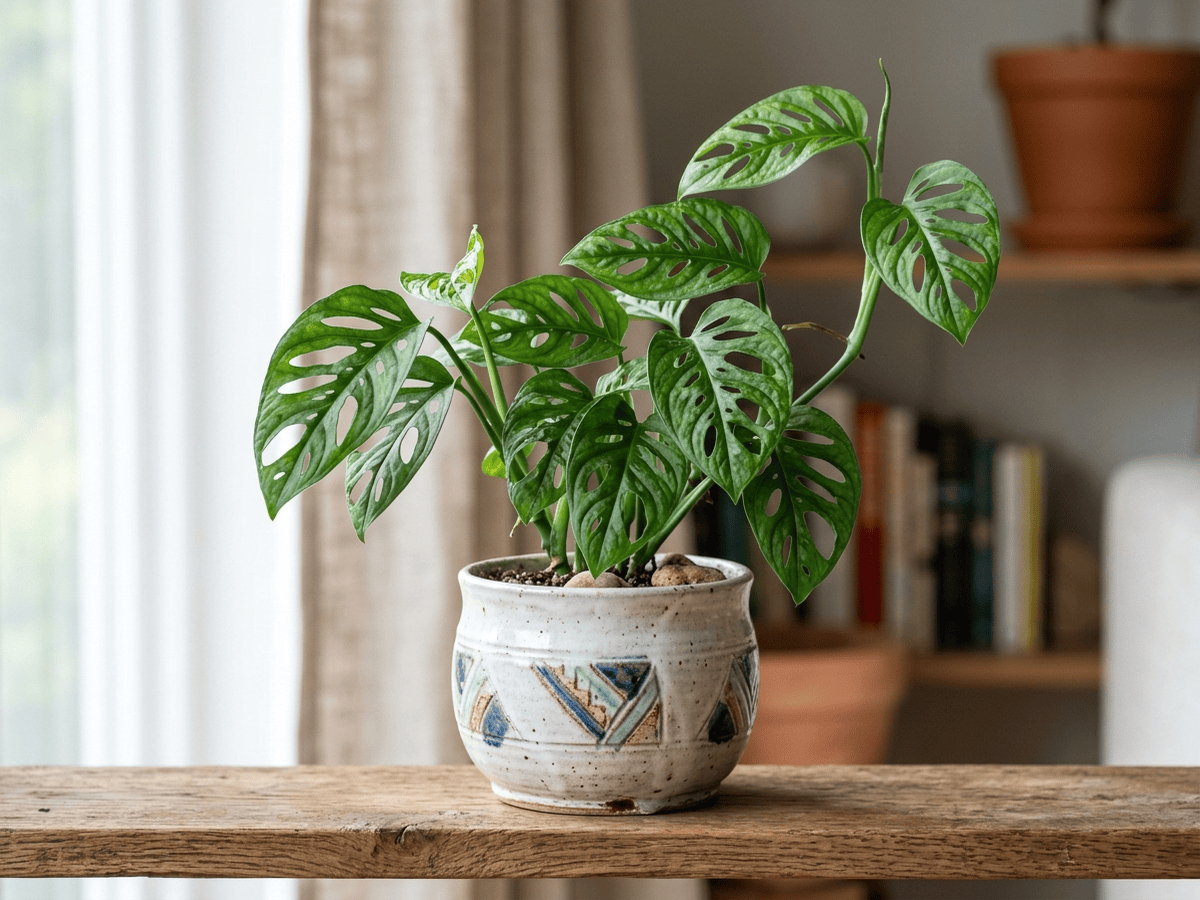 Blanchet's Swiss Cheese VineMonstera adansonii blanchetii
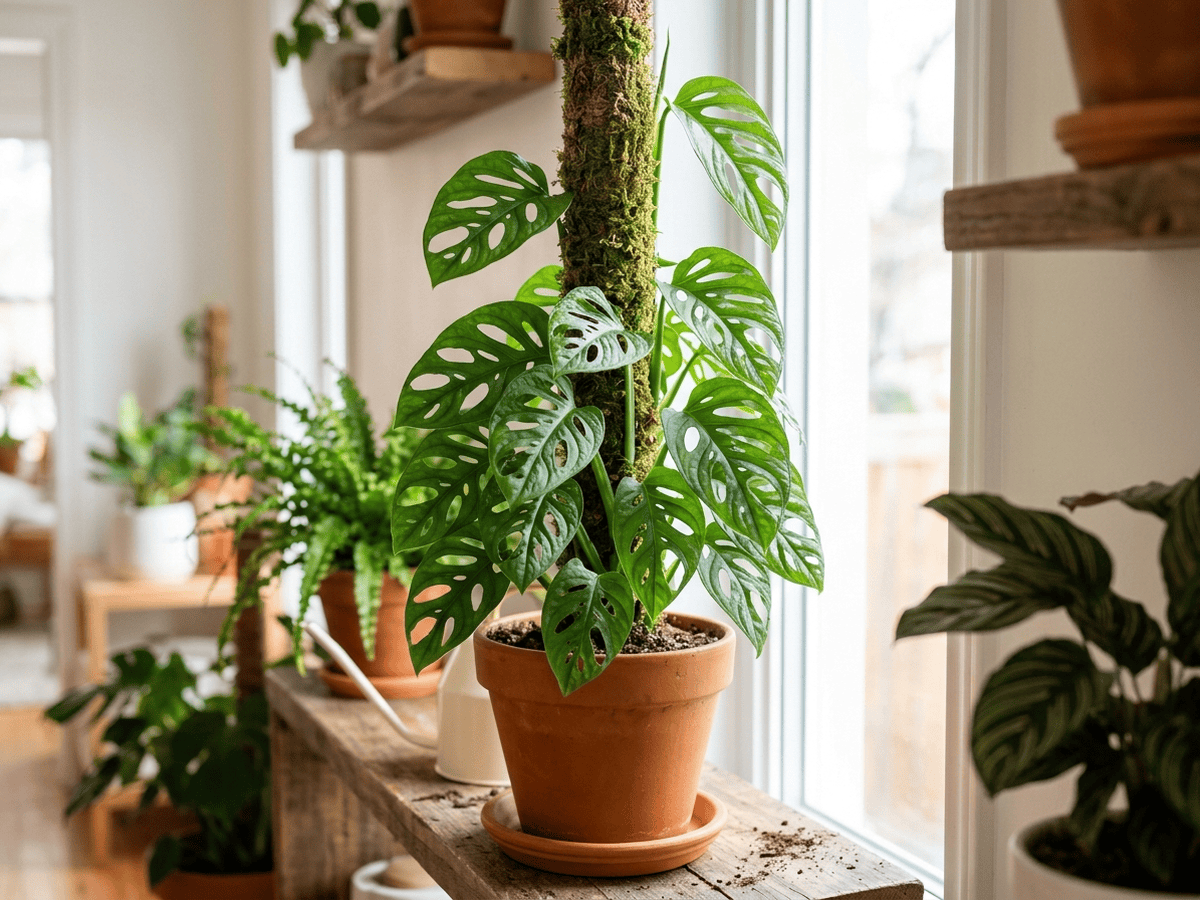 Klotzsch's Swiss Cheese VineMonstera adansonii klotzschiana
Plants with similar care
 Giant TaroAlocasia macrorrhizos
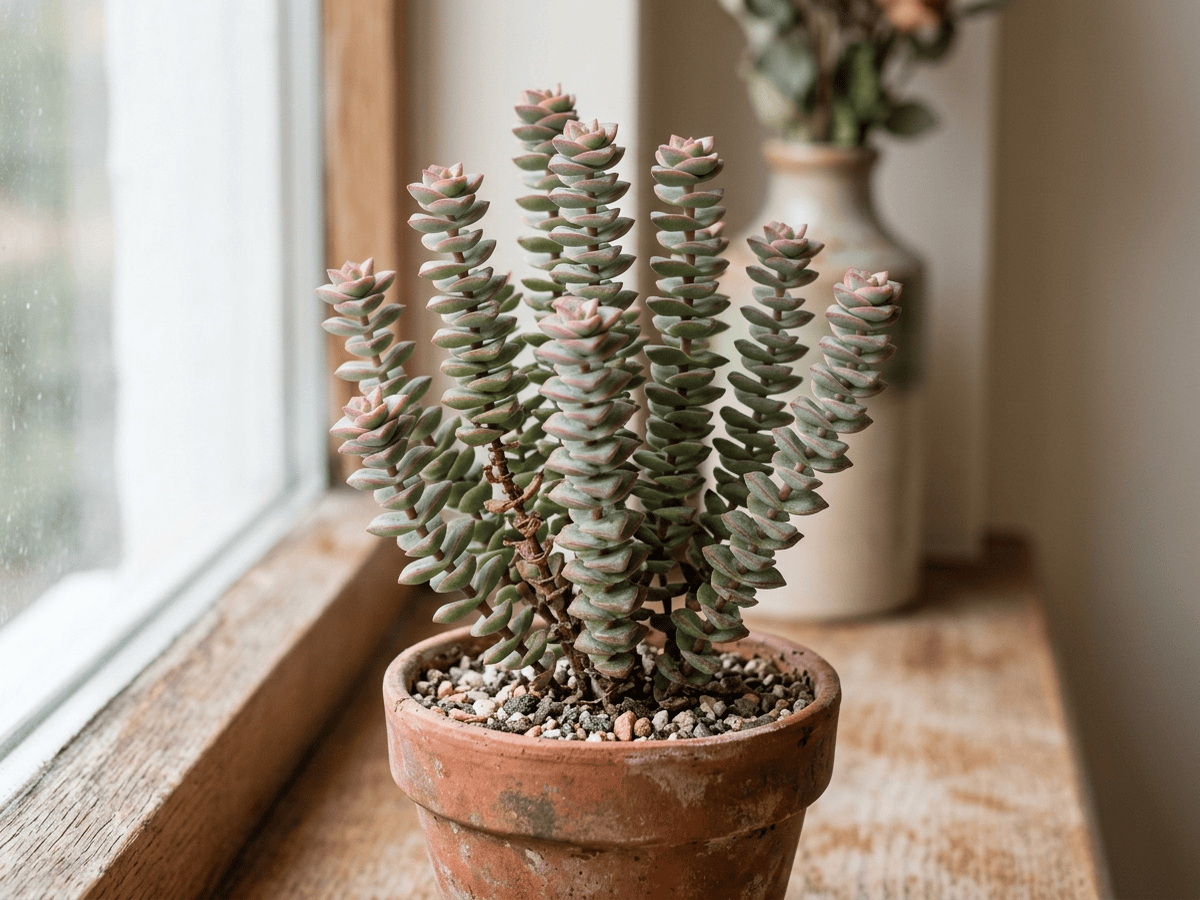 Concertina PlantCrassula perforata
 Song Of IndiaDracaena reflexa
 Snake PlantDracaena trifasciata
Frequently asked questions
How often should I water Monstera standleyana?
In summer, water about every 7 days; in winter, about every 14 days. Adjust for heat, pot size and drainage.
How much light does Monstera standleyana need?
Indirect: Filtered light. Watch the leaves — scorching or stretching means the light needs adjusting.
Is Monstera standleyana toxic to cats or dogs?
Pets Moderate (Dogs Moderate · Cats Moderate) Educational information, not medical or veterinary advice. If exposure is suspected, contact a doctor or veterinarian.
Is Monstera standleyana easy to grow?
Yes — it is considered an easy, beginner-friendly plant.
Can Monstera standleyana be grown indoors?
Yes, it adapts well to indoor growing given the right light.
When does Monstera standleyana bloom?
It typically blooms Jun–Aug in the Northern Hemisphere.
YardMate
Identify any plant in seconds
Snap a photo — YardMate names the plant, diagnoses problems, and reminds you when to water.
Download on the App Store