 YardMate

Catmint
Nepeta x faassenii
Easy · Beginner friendlyAbout Catmint
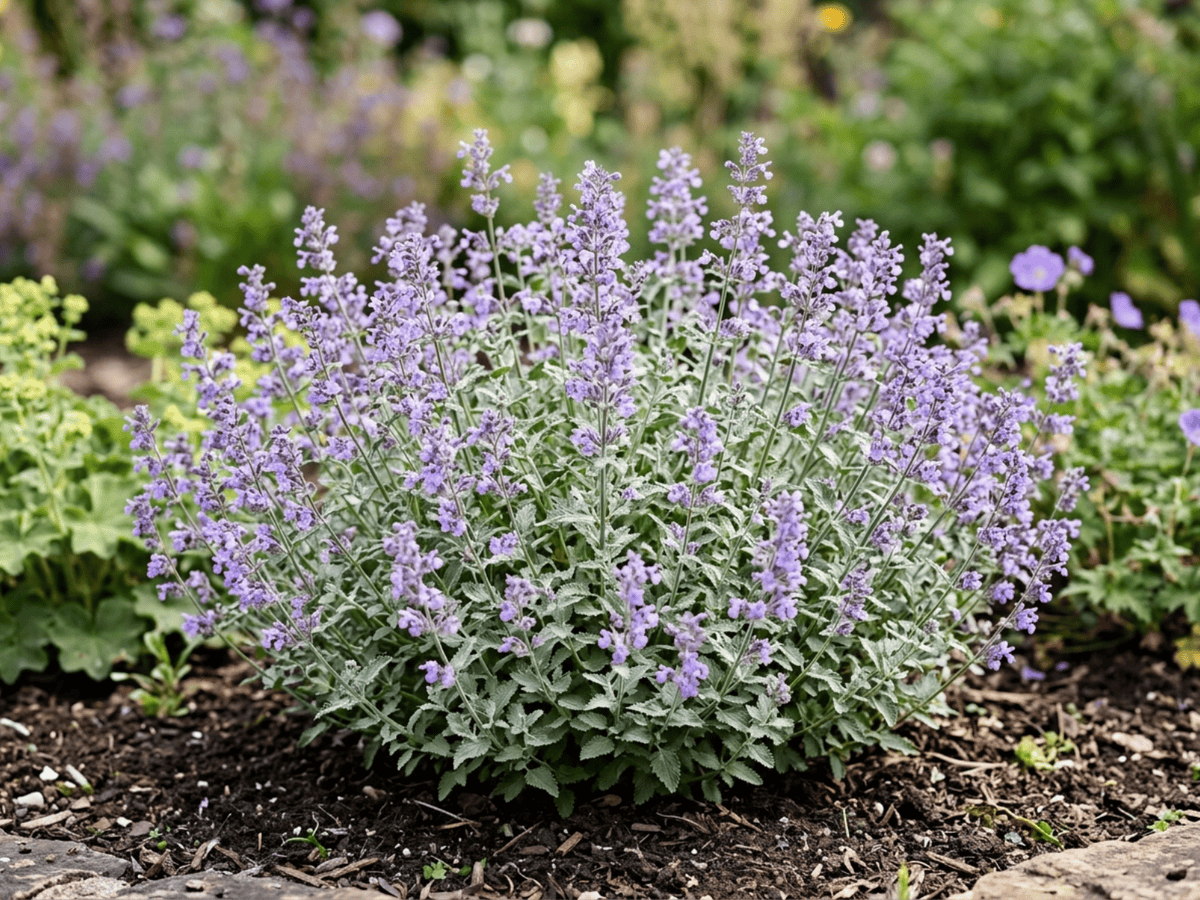
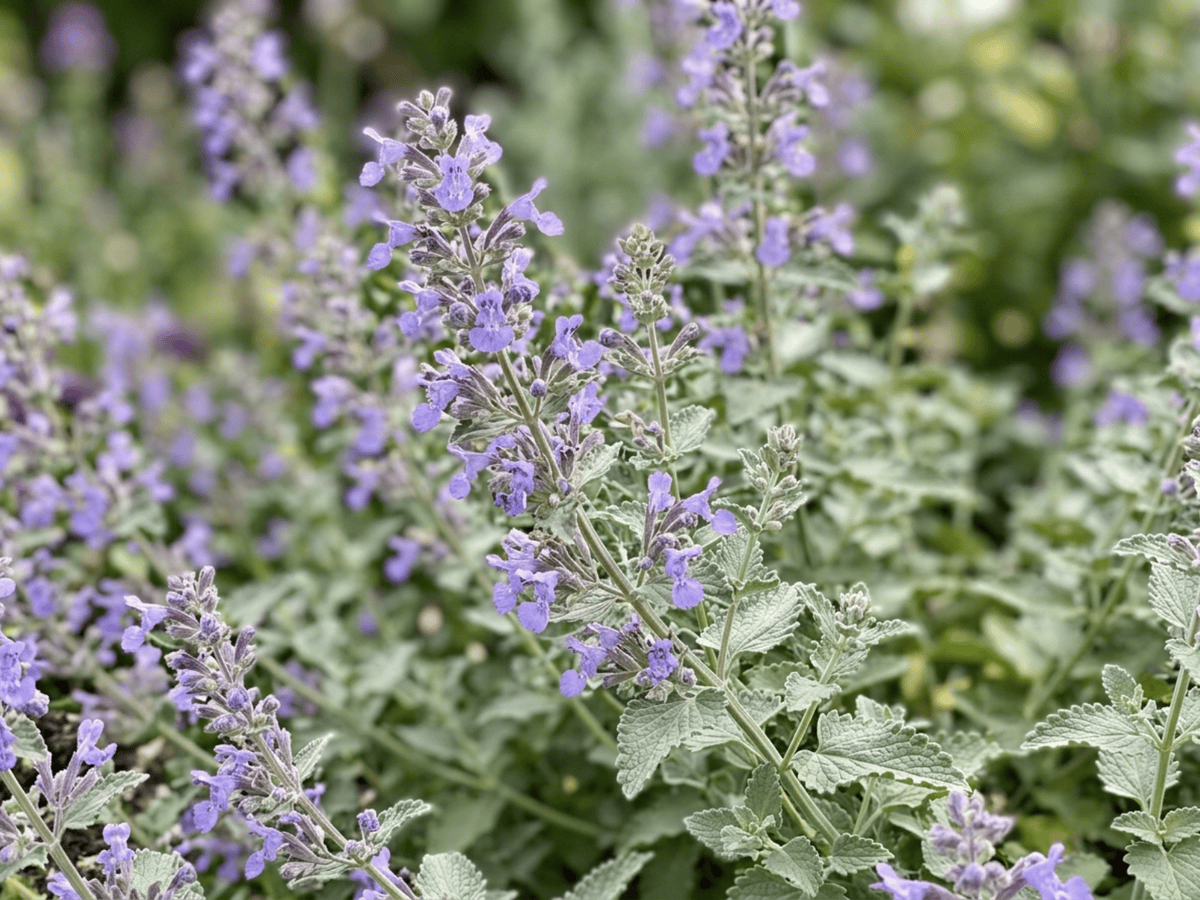
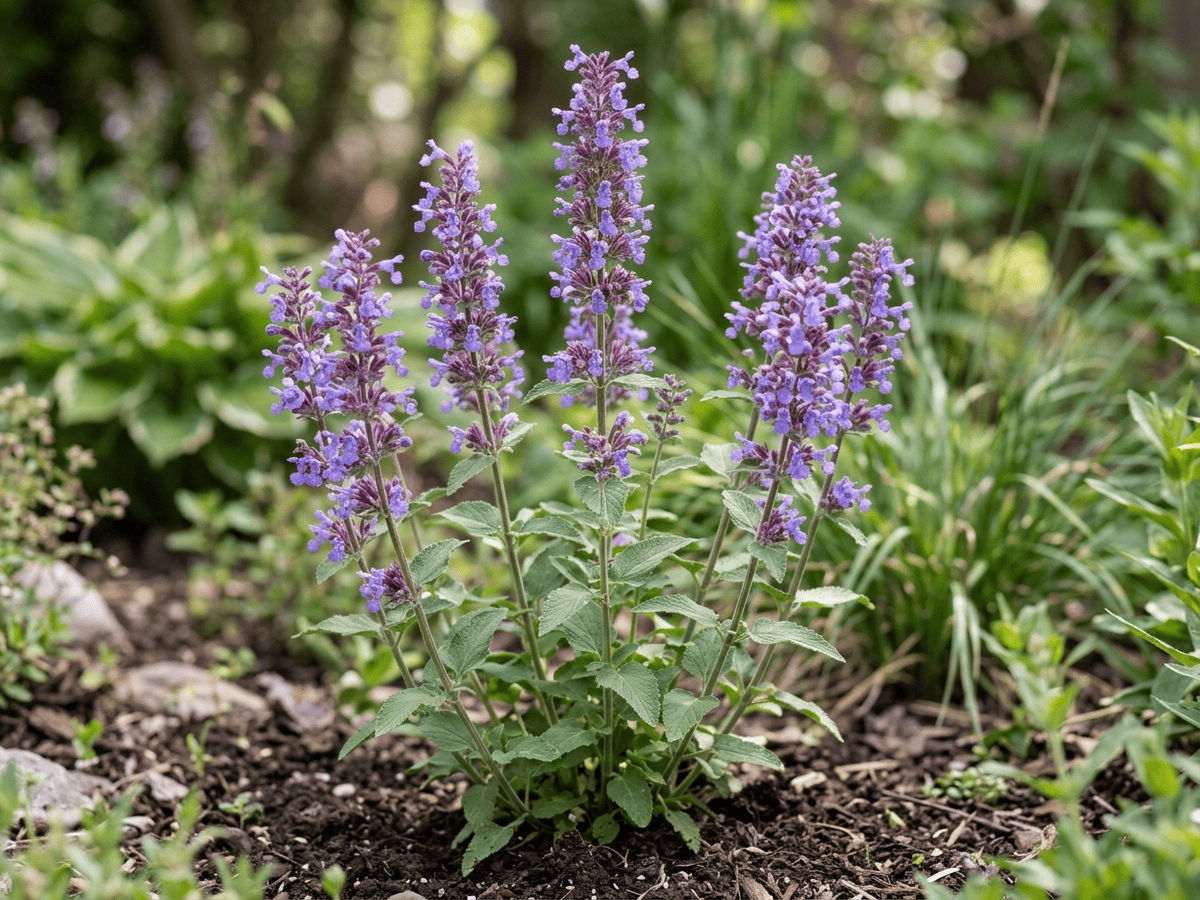
Faassen's Catmint is a hybrid perennial beloved across American gardens for its billowing mounds of gray-green aromatic foliage and long-lasting spikes of soft lavender-blue flowers. Reaching 12-24 inches tall, it blooms prolifically from late spring through summer, especially if sheared back after the first flush. Drought-tolerant once established, it is a staple of cottage borders, pollinator gardens, and low-maintenance landscapes throughout USDA zones 4-8.
- Fragrant
- Drought-tolerant
- Deer-resistant
- Long-blooming
How to care for Catmint
Watering
- Springevery 7 days
- Summerevery 5 days
- Fallevery 10 days
- Winterpause watering
Soil · Well-draining
- Top dressingPine bark mulch10%
- Main mixPotting soil + perlite 2:170%
- DrainageLECA / gravel20%
Never skip the drainage layer — standing water is the top cause of root rot.
FERTILIZER
- Springevery 30 days
- Summerevery 30 days
At a Glance
- Height1–2 ft (0.3–0.6 m)
- Spread1–3 ft (0.3–0.9 m)
- Flower colorBlue, Purple
- Foliage colorGreen
- SoilLoamy, Well-drained
- LocationsYard
Bloom time
BLOOM CYCLE
Peak bloom
May–Sep
Lavender-blue spikes May to September
Fragrance
MODERATE FRAGRANCE
The foliage has a minty, catnip-like scent.
Toxicity
No toxicity has been reported for this plant. Still, it is wise to keep pets from chewing on any houseplant.
Educational information, not medical or veterinary advice. If exposure is suspected, contact a doctor or veterinarian.
History

Nepeta x faassenii originated as a spontaneous hybrid between N. racemosa and N. nepetella in the nursery of Dutch plantsman J.H. Faassen of Tegelen, where it was noticed in the early 20th century. Being sterile, it produces no seed and reblooms prolifically from summer through fall. British plantsmen including Margery Fish and later American nurseries spread it widely.
The cultivar 'Walker's Low' (actually medium-tall despite its name) was named Perennial Plant of the Year in 2007 by the Perennial Plant Association, triggering massive commercial success across American gardens. It has become one of the most planted perennials for hot dry sunny borders, attracting bees and being deer-resistant due to its aromatic leaves.
Additional selections include 'Six Hills Giant' and 'Blue Wonder'. A sterile hybrid between Nepeta racemosa and Nepeta nepetella that arose at the Faassen Nursery in the Netherlands in the early 20th century. Its sterility makes it long-blooming and non-invasive.
Symbolism & meaning
What It Symbolizes
Catmint is happiness in soft purple haze, its summer-long bloom threading through cottage borders without ever quite stopping. Resilient to drought, heat, and indifferent soil, it pairs cheerful color with effortless toughness. In its hovering cloud of flowers and humming bees, the easiest pleasures of a sunny afternoon seem almost guaranteed.
- Happiness — cheerful summer-long bloom
- Resilience — tolerates heat, drought, and poor soil
Where the Name Comes From
The name Catmint describes its mint-family scent or habit. 'Nepeta' is an ancient Latin name possibly derived from the town of Nepi in Italy; named after Dutch nurseryman J.H. Faassen.
Uses & Fun Facts
- Lavender-blue flower spikes draw bees throughout summer
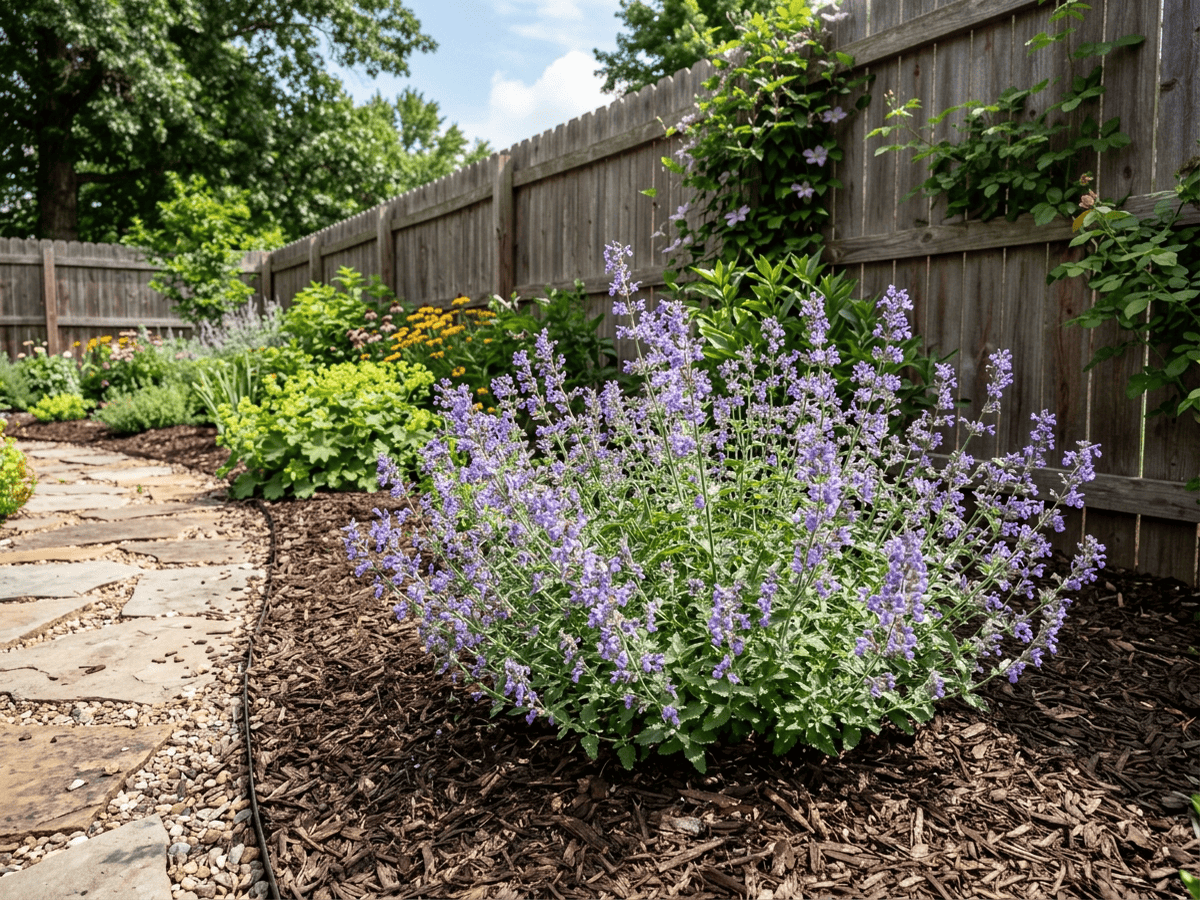
- Soft gray leaves give off a clean mint scent beside paths
- Billowing mounds soften border edges and pathway corners
- Long-blooming deer-resistant perennial for sunny dry borders
Related plants
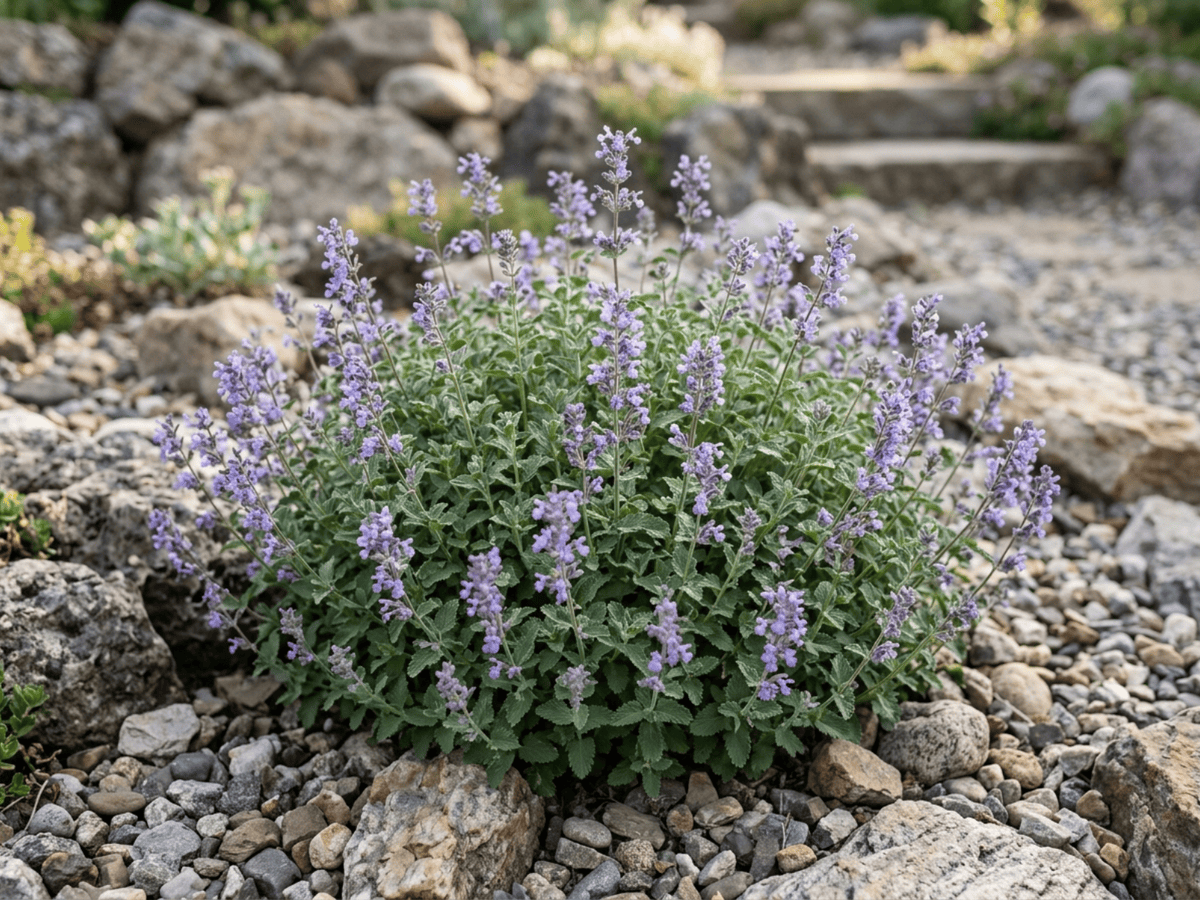
More Nepeta plants

Plants with similar care
 Chinese AbeliaAbelia chinensis
 Fragrant AbeliaAbelia mosanensis
 Large-Flowered AbeliaAbelia uniflora
 Glossy AbeliaAbelia x grandiflora
Frequently asked questions
How often should I water Catmint?
Water about every 7 days during the growing season, and always let excess water drain away.
How much light does Catmint need?
Full sun: 6+ hrs direct. Watch the leaves — scorching or stretching means the light needs adjusting.
Is Catmint toxic to cats or dogs?
No toxicity has been reported for this plant. Still, it is wise to keep pets from chewing on any houseplant. Educational information, not medical or veterinary advice. If exposure is suspected, contact a doctor or veterinarian.
Is Catmint easy to grow?
Yes — it is considered an easy, beginner-friendly plant.
When does Catmint bloom?
It typically blooms May–Sep in the Northern Hemisphere.
YardMate
Identify any plant in seconds
Snap a photo — YardMate names the plant, diagnoses problems, and reminds you when to water.
Download on the App Store