 YardMate

Clockweed
Oenothera lindheimeri
Easy · Beginner friendlyAbout Clockweed
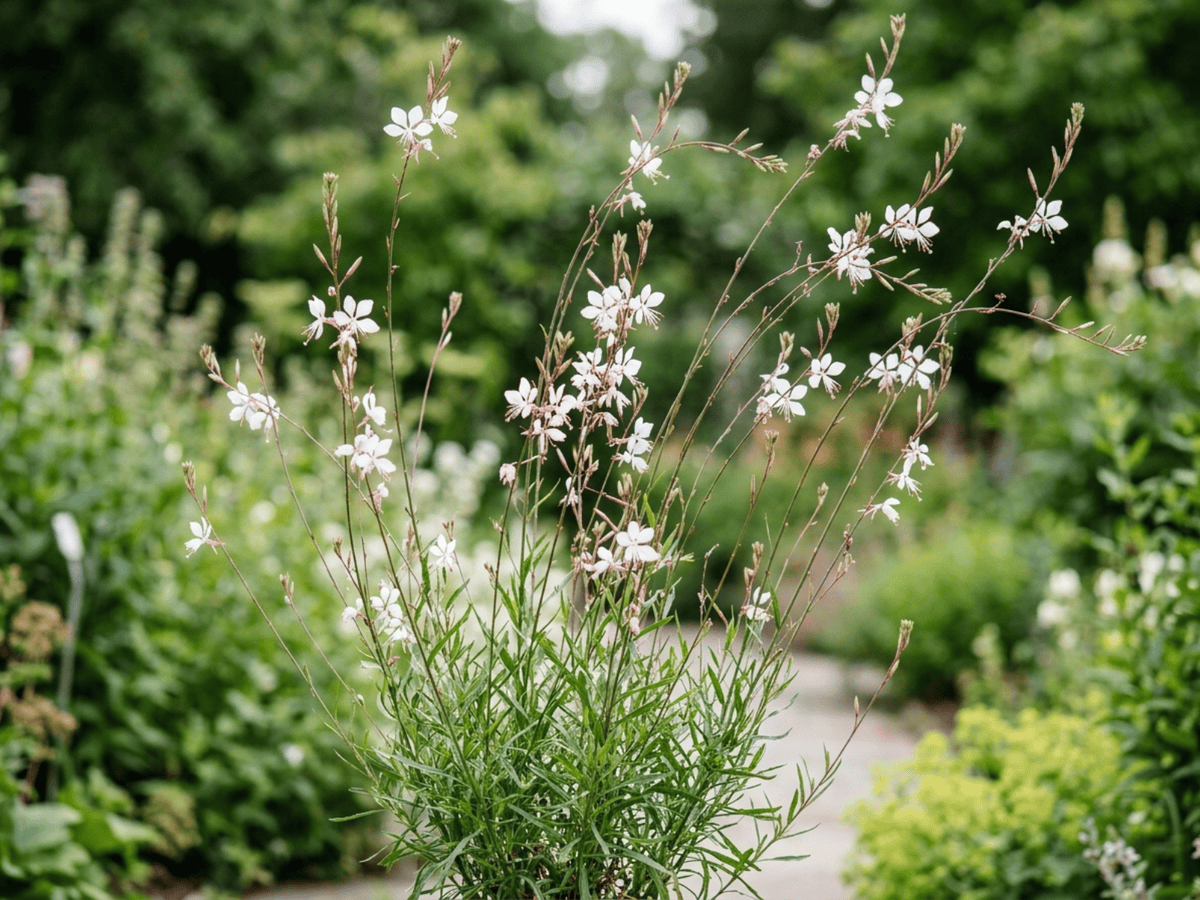
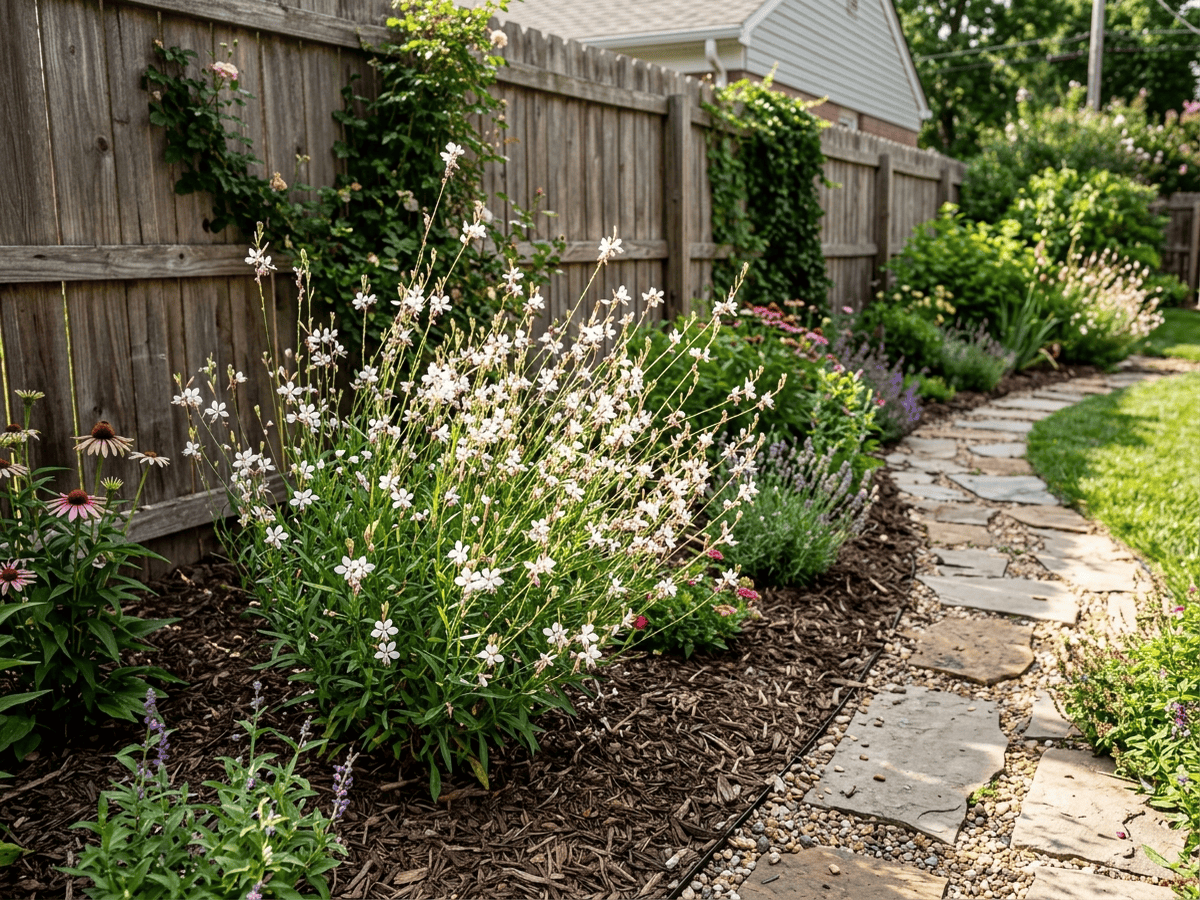
Gaura, or Lindheimer's Beeblossom, is a native Texas perennial (formerly Gaura lindheimeri) forming airy 3–4 foot clouds of pink or white butterfly-like flowers dancing on wiry stems. Native to Texas and Louisiana, it is extraordinarily heat- and drought-tolerant and has become a landscape standard across the US Southwest, Southern California, and southern gardens from coast to coast. Long bloom from late spring to frost. Deer- and rabbit-resistant.
- Drought-tolerant
- Heat-tolerant
- Deer-resistant
- Native
How to care for Clockweed
Watering
- Springevery 7 days
- Summerevery 5 days
- Fallevery 14 days
- Winterevery 30 days
Soil · Well-draining
- Top dressingPine bark mulch10%
- Main mixPotting soil + perlite 2:170%
- DrainageLECA / gravel20%
Never skip the drainage layer — standing water is the top cause of root rot.
FERTILIZER
- Springevery 30 days
At a Glance
- NativeNorth America
- Height2–4 ft (0.6–1.2 m)
- Spread2–3 ft (0.6–0.9 m)
- Flower colorWhite, Pink, Purple
- Foliage colorGreen, Red, Variegated
- SoilSandy, Well-drained
- LocationsYard
Bloom time
BLOOM CYCLE
Peak bloom
May–Nov
Butterfly-like flowers late spring to frost
Fragrance
LIGHT FRAGRANCE
The flowers have a light delicate scent.
Toxicity
No toxicity has been reported for this plant. Still, it is wise to keep pets from chewing on any houseplant.
Educational information, not medical or veterinary advice. If exposure is suspected, contact a doctor or veterinarian.
DISTRIBUTION


- Native
- Introduced
- North America
History
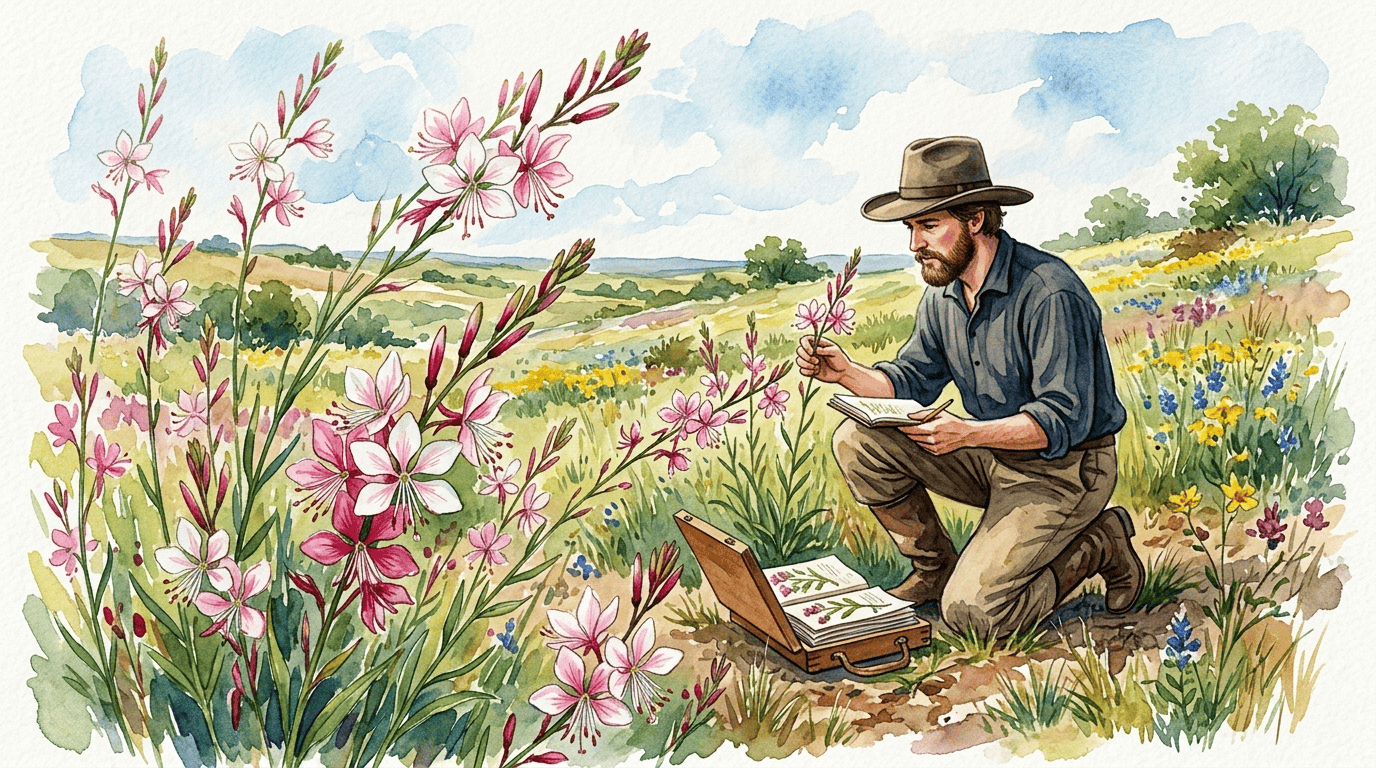
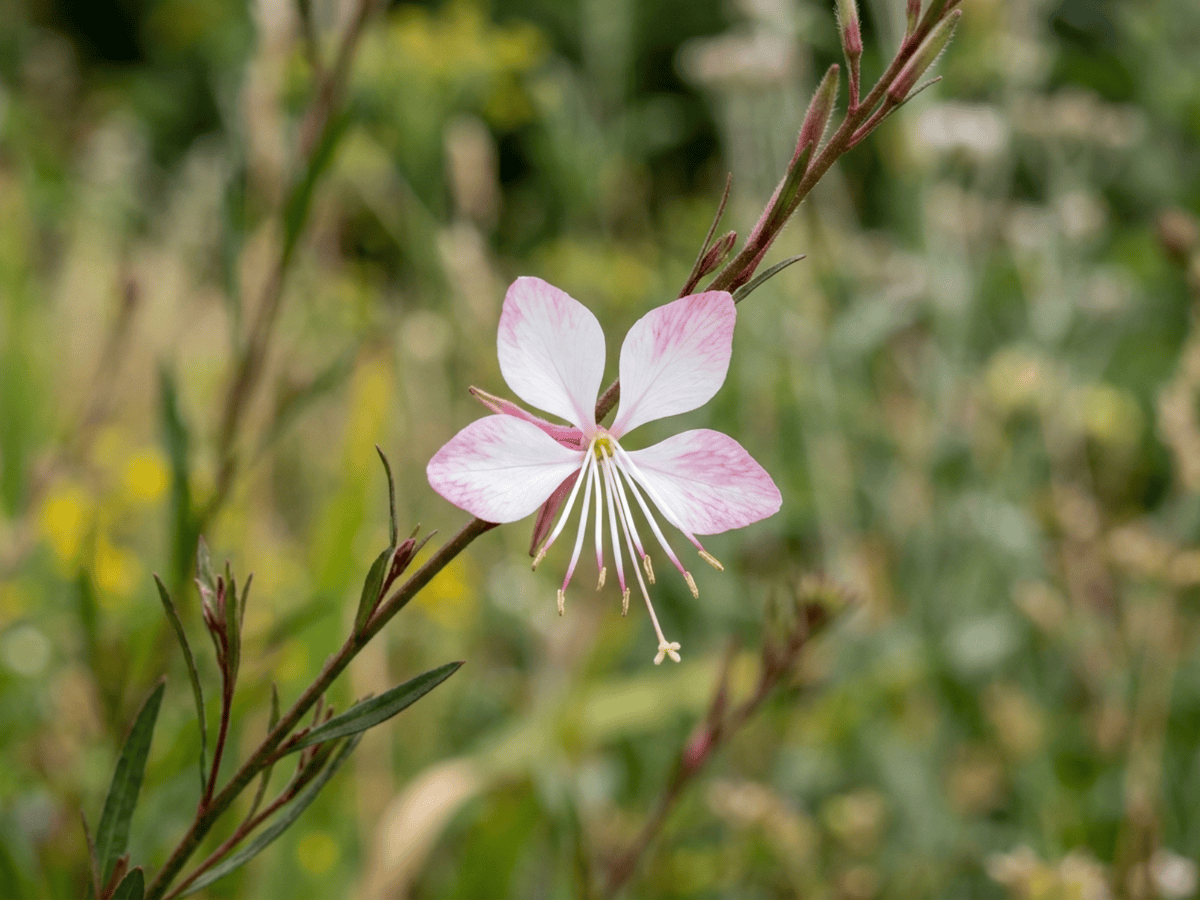
Oenothera lindheimeri (formerly and widely still Gaura lindheimeri — recent molecular phylogenetic work moved the genus Gaura into Oenothera in 2007) is native to Texas and Louisiana, growing in prairies, roadsides, and open woodland. The species was named for Ferdinand Jacob Lindheimer (1801-1879), a German revolutionary who fled to Texas in 1836 and became the "father of Texas botany" — Lindheimer collected extensively across Texas for 15 years for Harvard botanist Asa Gray and Missouri Botanical Garden founder George Engelmann, naming hundreds of Texas native plants. The plant grows as a clump-forming perennial 60-150 cm tall with narrow willow-like leaves and produces in late spring through summer and autumn airy wands of small 2-3 cm four-petaled pink-and-white flowers on branching upright flower stalks.
Individual flowers have a distinctive delicate architecture — four spoon-shaped petals spread above prominent red-pink stamens — that, when blown by breeze on the slender stalks, creates the impression of small butterflies in flight, giving rise to common names "whirling butterflies" and "wand flower." Since the 1990s, horticultural selection has produced many garden-worthy cultivars with improved bloom performance, compact habit, and extended color range: "Siskiyou Pink" (darker pink, 1994), "Whirling Butterflies" (taller, pure white), "Crimson Butterflies" (burgundy foliage and deep-pink flowers), "Passionate Rainbow" (variegated), and "Karalee" series (compact bedding).
Exceptionally drought-tolerant once established, and one of the most widely-planted drought-tolerant perennials in American water-wise landscape design. Widely adopted in mainstream American horticulture in the 1990s after the cultivar 'Siskiyou Pink' won the Royal Horticultural Society Award. A signature plant of modern Texas and California landscape design.
Symbolism & meaning
What It Symbolizes
Clockweed carries joyful dance in its airy stems, where small white-and-pink flowers flutter on the breeze like butterflies that never quite settle. Resilience underwrites the show — it thrives on neglect in hot, dry sites where pampered perennials would collapse. Its meaning is unforced delight: motion and bloom offered freely from a plant content with the worst the garden can give.
- Joyful dance — flowers flutter like butterflies in breeze
- Resilience — thrives on neglect in hot, dry sites
Where the Name Comes From
Genus from Greek 'oinotheras' (wine-seeker); 'lindheimeri' honors botanist Ferdinand Lindheimer.
Uses & Fun Facts
- Airy white flowers feed bees and small butterflies
- Wand-like stems dance over native Texas borders
Related plants
More Oenothera plants
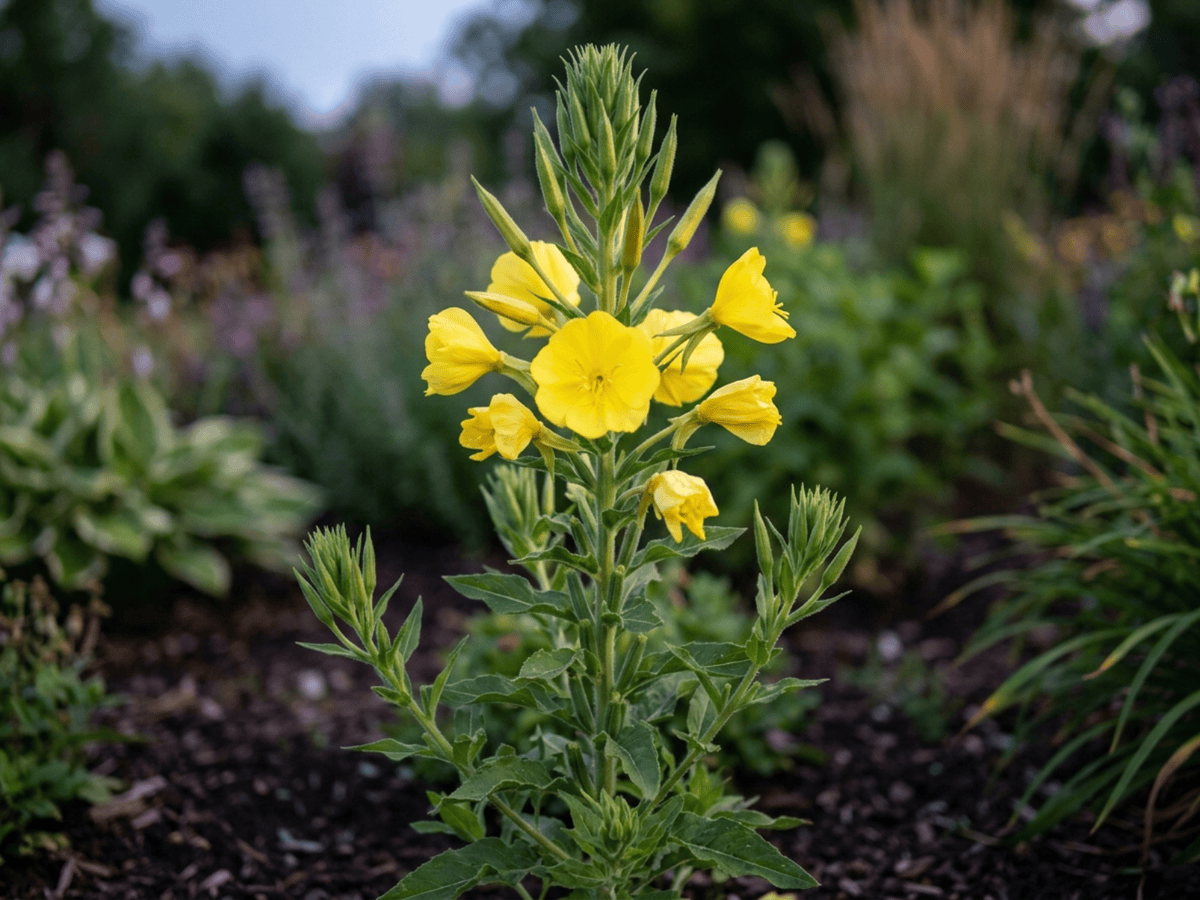 Common Evening-PrimroseOenothera biennis
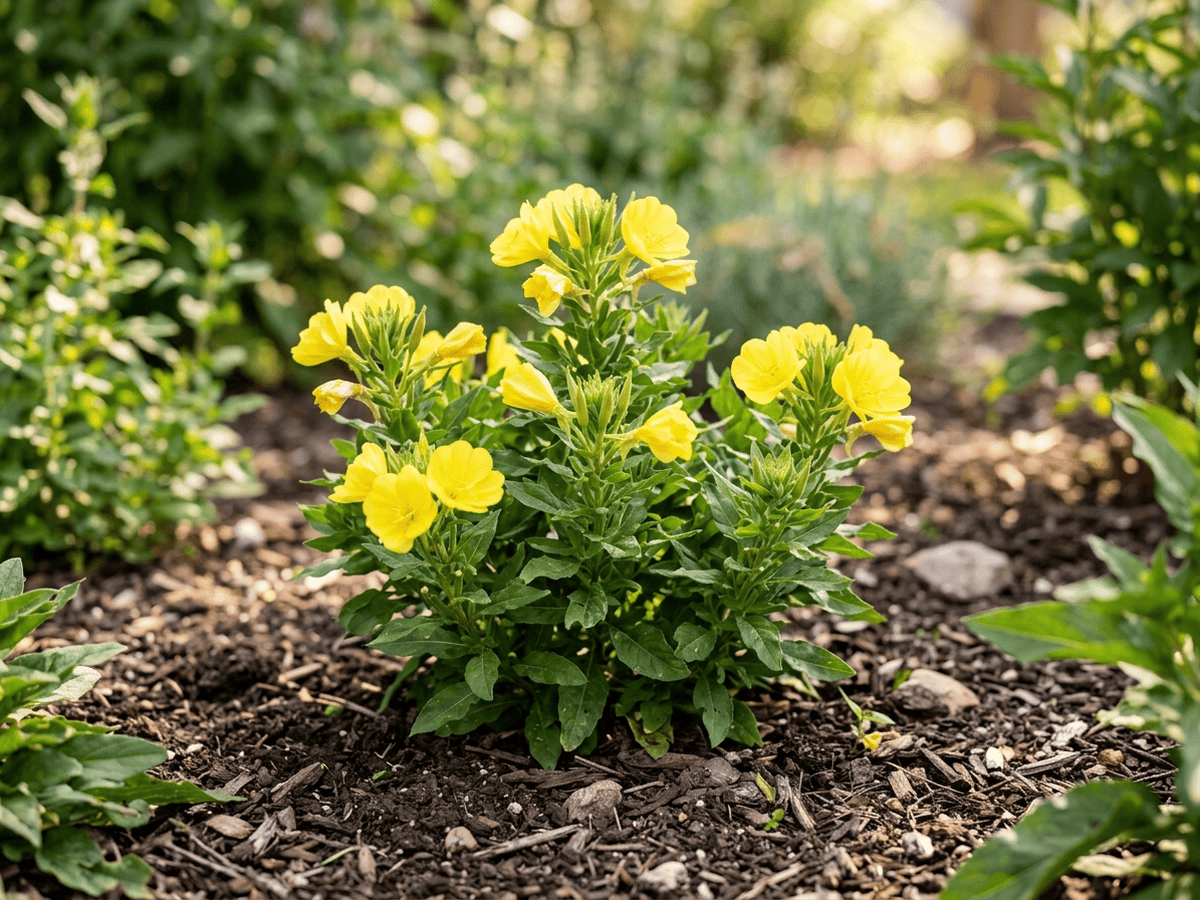 Hartweg's SundropsOenothera hartwegii
 Pink Evening PrimroseOenothera speciosa
Plants with similar care
 Chinese AbeliaAbelia chinensis
 Fragrant AbeliaAbelia mosanensis
 Large-Flowered AbeliaAbelia uniflora
 Glossy AbeliaAbelia x grandiflora
Frequently asked questions
How often should I water Clockweed?
In summer, water about every 5 days; in winter, about every 30 days. Adjust for heat, pot size and drainage.
How much light does Clockweed need?
Full sun: 6+ hrs direct. Watch the leaves — scorching or stretching means the light needs adjusting.
Is Clockweed toxic to cats or dogs?
No toxicity has been reported for this plant. Still, it is wise to keep pets from chewing on any houseplant. Educational information, not medical or veterinary advice. If exposure is suspected, contact a doctor or veterinarian.
Is Clockweed easy to grow?
Yes — it is considered an easy, beginner-friendly plant.
When does Clockweed bloom?
It typically blooms May–Nov in the Northern Hemisphere.
YardMate
Identify any plant in seconds
Snap a photo — YardMate names the plant, diagnoses problems, and reminds you when to water.
Download on the App Store