 YardMate

Common Evening-Primrose
Oenothera biennis
Easy · Beginner friendlyAbout Common Evening-Primrose
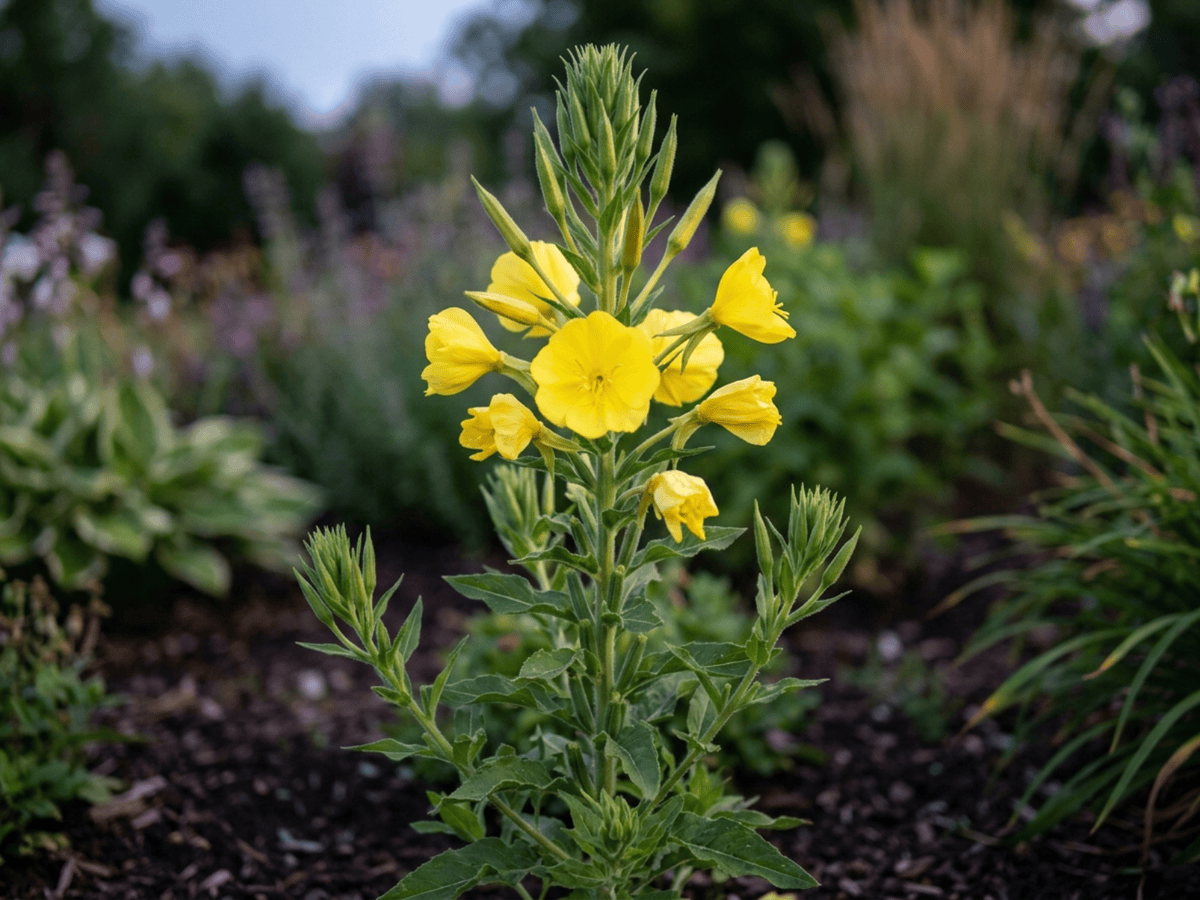
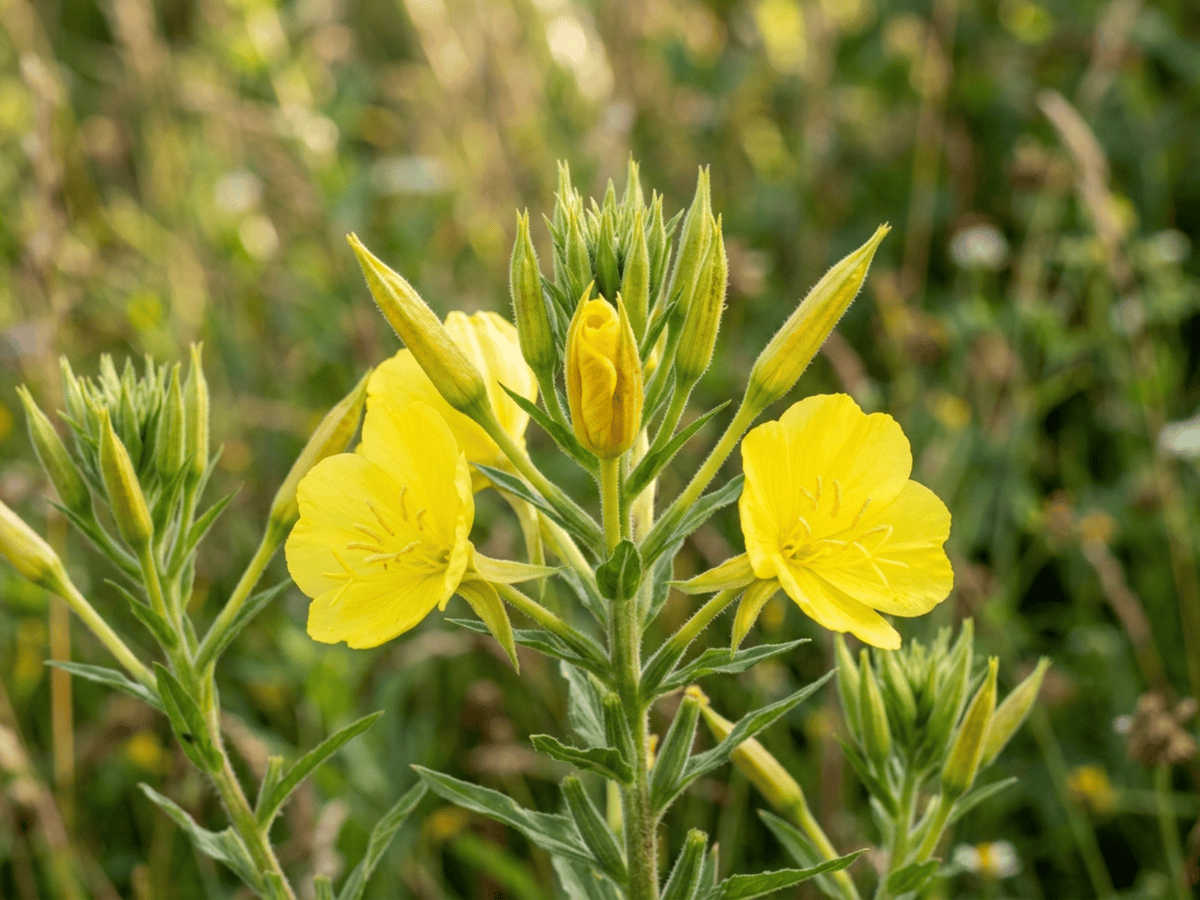
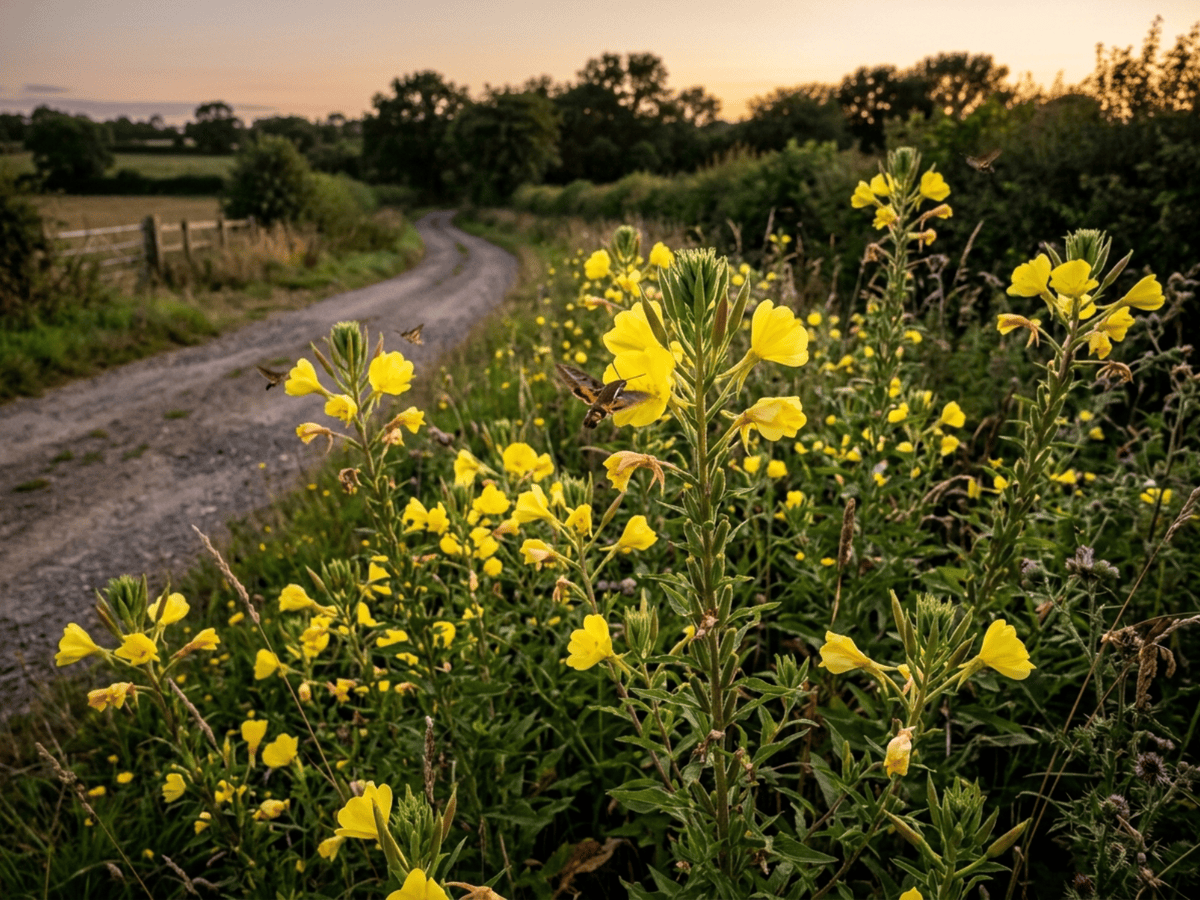
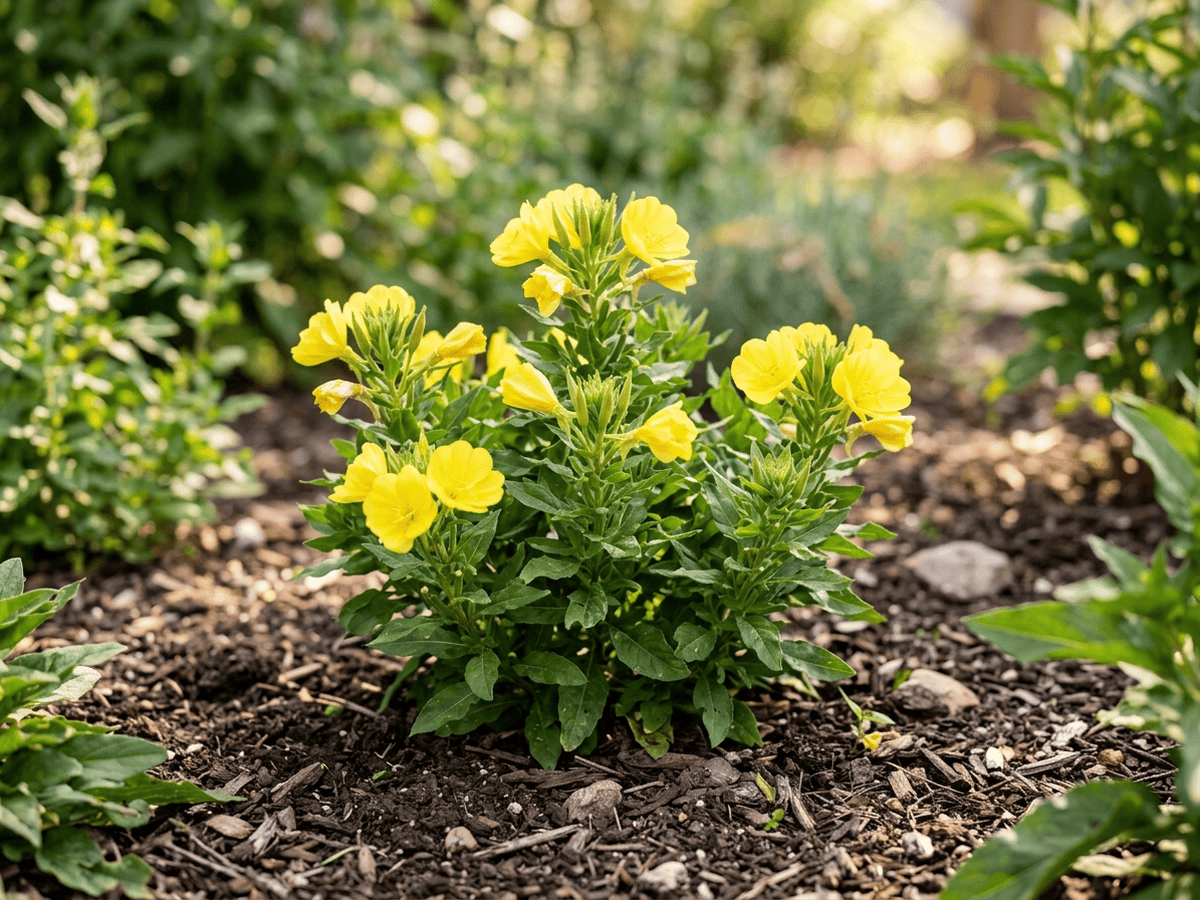
Oenothera biennis, the common evening primrose, is a biennial wildflower native to eastern North America. Its bright lemon-yellow flowers open dramatically at dusk, unfurling in just a few minutes — a spectacle that delights gardeners and attracts nocturnal pollinators like hawk moths. Each flower lasts only one night, wilting by the following afternoon, but the plant produces new blooms continuously from midsummer through fall. Growing 90 to 150 cm tall, it forms a basal rosette of lance-shaped leaves in its first year, then sends up flowering stalks in its second year. The entire plant is edible: roots can be cooked like parsnips, young leaves eaten as greens, and the oil extracted from seeds is a globally important herbal supplement rich in gamma-linolenic acid (GLA). Evening primrose oil is widely used in skincare and for managing inflammation. The plant self-sows prolifically and colonizes disturbed ground, roadsides, and railway embankments. It tolerates poor, dry soils and requires little care.
- Edible
- Medicinal
How to care for Common Evening-Primrose
Watering
- Springevery 7 days
- Summerevery 5 days
- Fallevery 14 days
- Winterevery 30 days
Soil · Rich & well-draining
- Top dressingCompost10%
- Main mixPotting soil + compost 3:180%
- DrainageGravel10%
Top up the compost layer each season.
FERTILIZER
This plant needs little to no feeding.
At a Glance
- NativeNorth America
- Height3–5 ft (0.9–1.5 m)
- Spread1–2 ft (0.3–0.6 m)
- Flower colorYellow
- Foliage colorGreen
- SoilSandy, Well-drained
- LocationsYard
Bloom time
BLOOM CYCLE
Peak bloom
Jun–Aug
Flowers open at dusk — plant near evening seating areas to enjoy the show; self-sows freely
Fragrance
STRONG FRAGRANCE
Intense sweet lemon-vanilla scent at dusk, timed for hawkmoth pollination.
Toxicity
No toxicity has been reported for this plant. Still, it is wise to keep pets from chewing on any houseplant.
Educational information, not medical or veterinary advice. If exposure is suspected, contact a doctor or veterinarian.
DISTRIBUTION


- Native
- Introduced
- North America
History
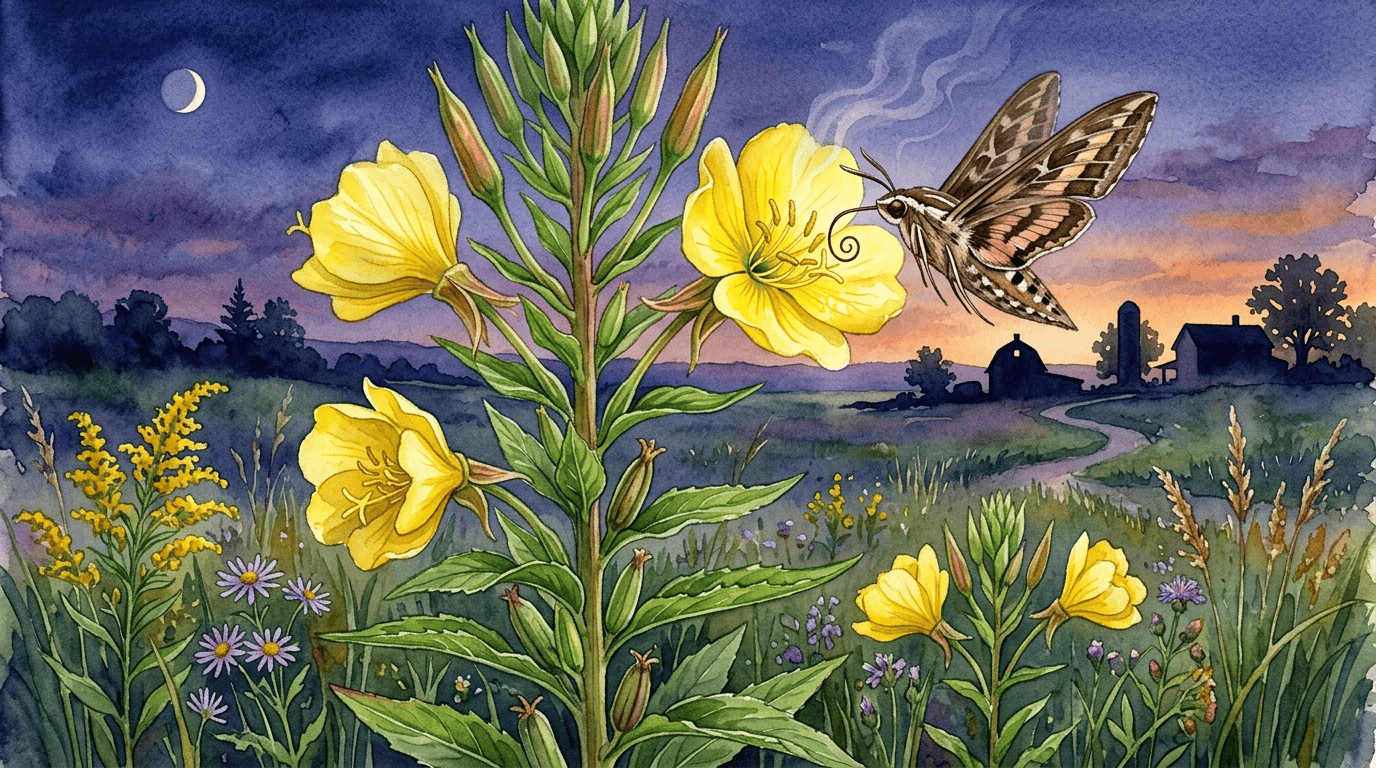
Oenothera biennis is native to eastern and central North America and was introduced to Europe in the early 17th century (reportedly to England around 1619 in a ballast of soil accompanying timber imports). It has since naturalized widely across Europe, Asia, and elsewhere. The species is a biennial — producing a basal rosette of leaves in its first year and a tall flowering stalk (0.9-2 meters) in its second year, followed by death. The flowers are a spectacular evolutionary adaptation to nocturnal pollination: they open dramatically at dusk in a time-lapse-visible few minutes, release an intense sweet lemon-vanilla scent, and attract sphingid hawkmoths that pollinate them through the night.
The plant's seeds are rich in gamma-linolenic acid (GLA, 18:3 ω-6), an unusual essential fatty acid. Evening primrose oil (EPO) was commercialized in the late 20th century as one of the first mass-market herbal supplements — significant research on EPO for atopic eczema, cyclic mastalgia, and premenstrual syndrome has been done; meta-analyses show modest but real benefit for mastalgia and mixed results for eczema. EPO was a top-20 UK herbal supplement throughout the 1990s-2010s.
The young roots, shoots, and flowers are all edible — some Indigenous North American peoples used the roots as a root vegetable. Plant biologist Hugo de Vries's early-20th-century work on O. lamarckiana (a related European cultivated form) was foundational to the development of mutation theory and modern genetics. Native Americans used all parts of the plant medicinally — poultices for bruises, root tea for coughs, and leaf preparations for digestive complaints. European colonists brought it back to the Old World in the 17th century, where it became known as 'king's cure-all.' In the 20th century, scientists discovered that its seeds contain up to 25% GLA (gamma-linolenic acid), launching a multi-million-dollar supplement industry. Today evening primrose oil capsules are among the best-selling herbal supplements worldwide, used for eczema, PMS, and joint inflammation.
Symbolism & meaning
What It Symbolizes
Common Evening-Primrose belongs to twilight. Lemon-yellow flowers loosen open as the sun drops, drawing night insects into a small evening performance. Its seed oil history gives the plant a modern human layer, but its deeper symbolism is mystery: brightness that waits for dusk before revealing itself.
- Mystery — Its twilight blooming habit evokes the enchantment of nightfall
- Healing — Centuries of medicinal use make it a symbol of natural remedy and restoration
Where the Name Comes From
The name Common Evening-Primrose describes its rose-like blooms. Oenothera possibly from Greek 'oinos' (wine) and 'thera' (hunt), as the root was once thought to stimulate wine appetite. Biennis means 'biennial,' describing its two-year life cycle.
Uses & Fun Facts
- Seed oil sold as evening primrose oil supplement
- Evening flowers pollinated by hawk moths and night bees
- Young roots and leaves historically eaten as wild greens
Related plants
More Oenothera plants
 Hartweg's SundropsOenothera hartwegii
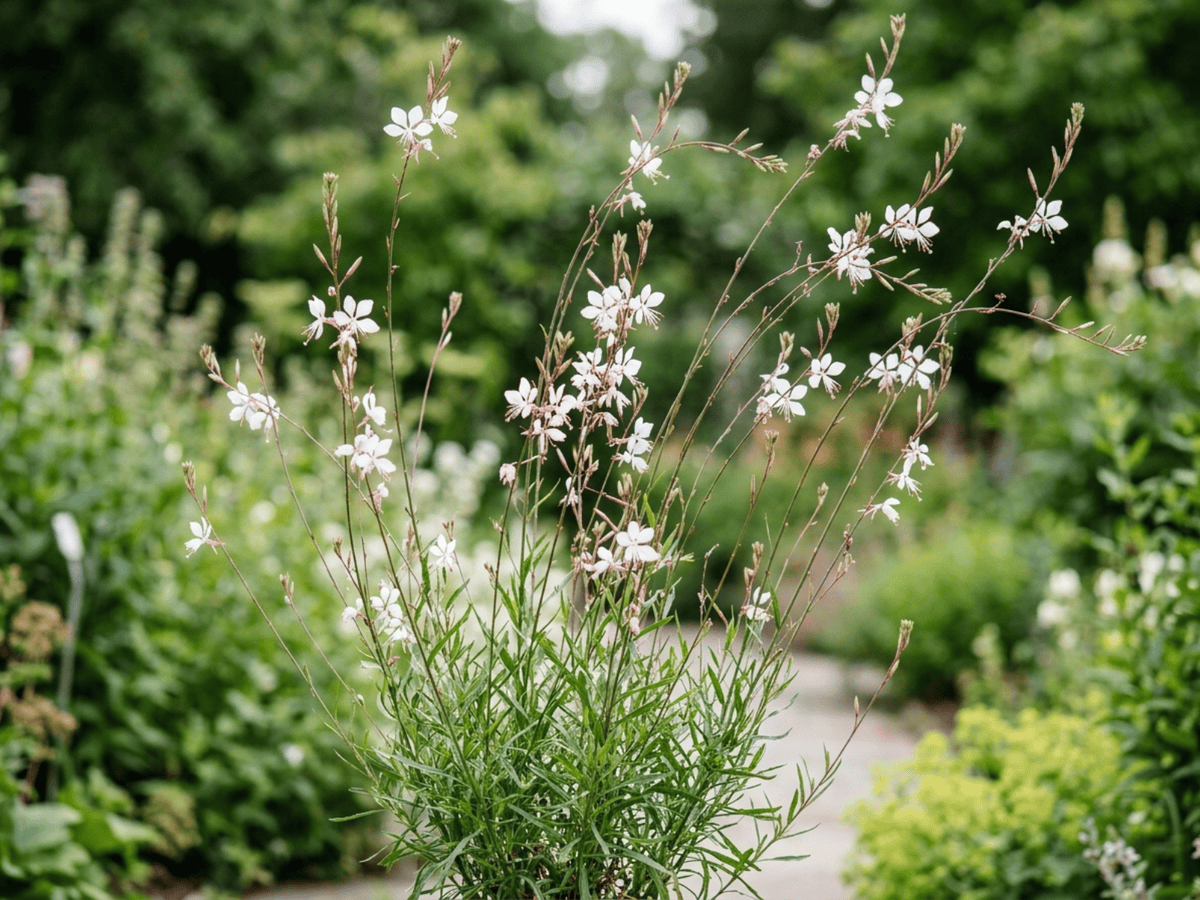 ClockweedOenothera lindheimeri
 Pink Evening PrimroseOenothera speciosa
Plants with similar care
 Chinese AbeliaAbelia chinensis
 Fragrant AbeliaAbelia mosanensis
 Large-Flowered AbeliaAbelia uniflora
 Glossy AbeliaAbelia x grandiflora
Frequently asked questions
How often should I water Common Evening-Primrose?
In summer, water about every 5 days; in winter, about every 30 days. Adjust for heat, pot size and drainage.
How much light does Common Evening-Primrose need?
Full sun: 6+ hrs direct. Watch the leaves — scorching or stretching means the light needs adjusting.
Is Common Evening-Primrose toxic to cats or dogs?
No toxicity has been reported for this plant. Still, it is wise to keep pets from chewing on any houseplant. Educational information, not medical or veterinary advice. If exposure is suspected, contact a doctor or veterinarian.
Is Common Evening-Primrose easy to grow?
Yes — it is considered an easy, beginner-friendly plant.
When does Common Evening-Primrose bloom?
It typically blooms Jun–Aug in the Northern Hemisphere.
YardMate
Identify any plant in seconds
Snap a photo — YardMate names the plant, diagnoses problems, and reminds you when to water.
Download on the App Store