 YardMate
Regal Pelargonium
Pelargonium × domesticum
Hard · Experienced growersAbout Regal Pelargonium
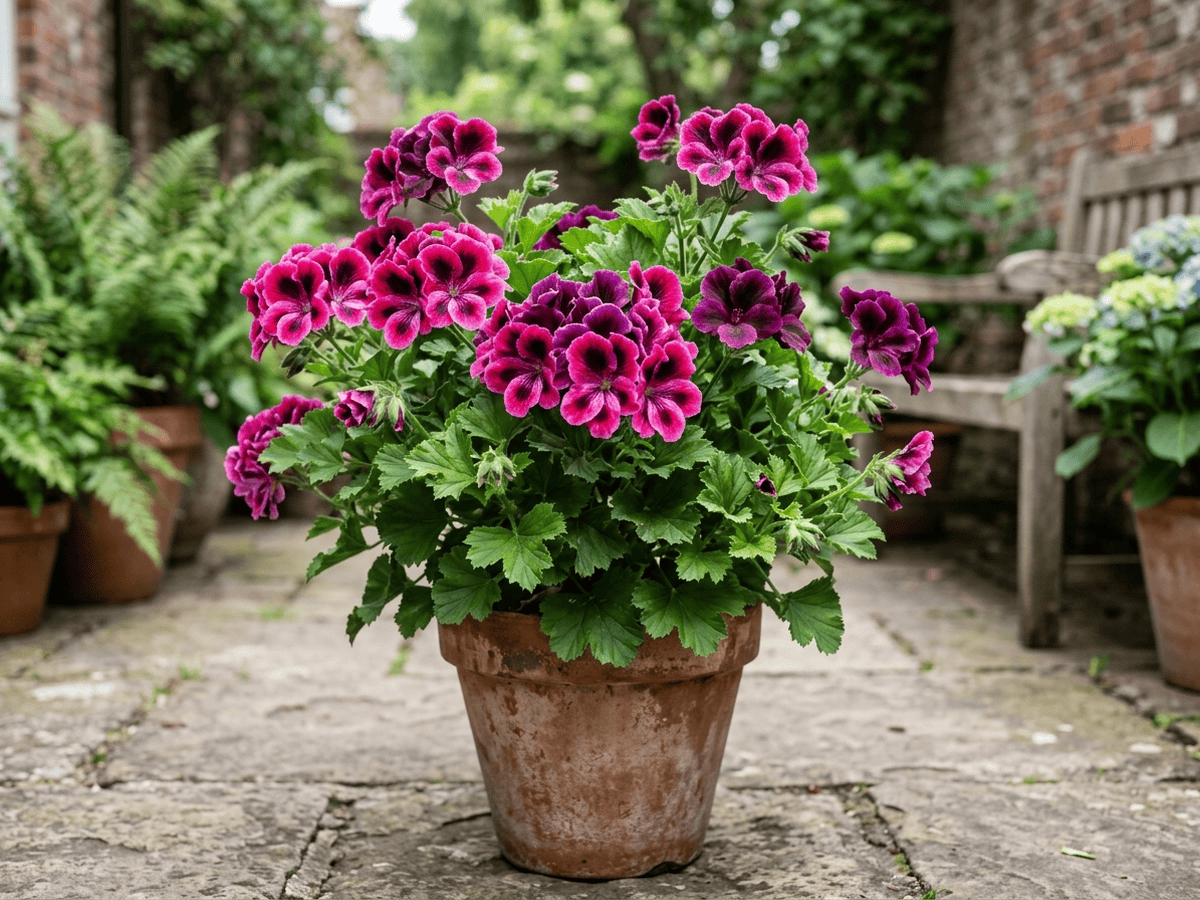
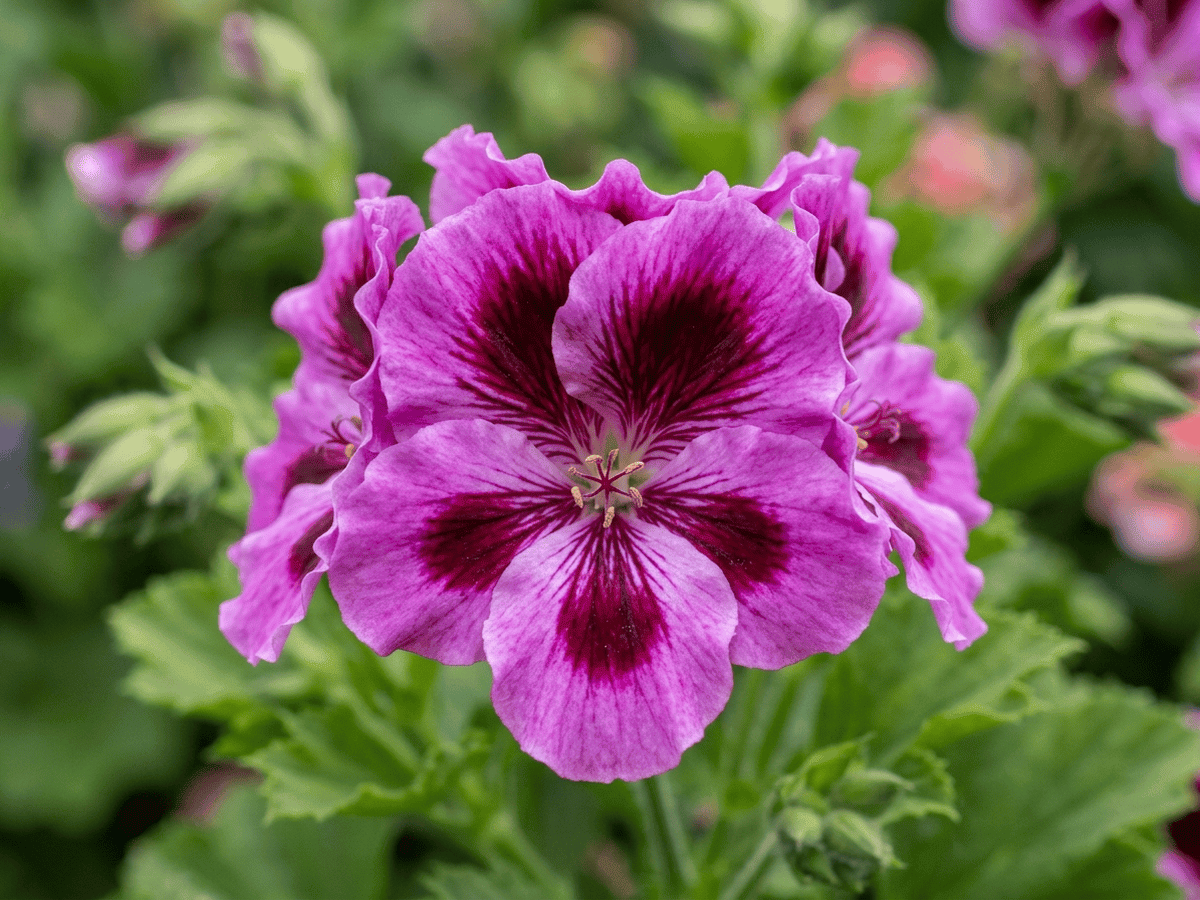
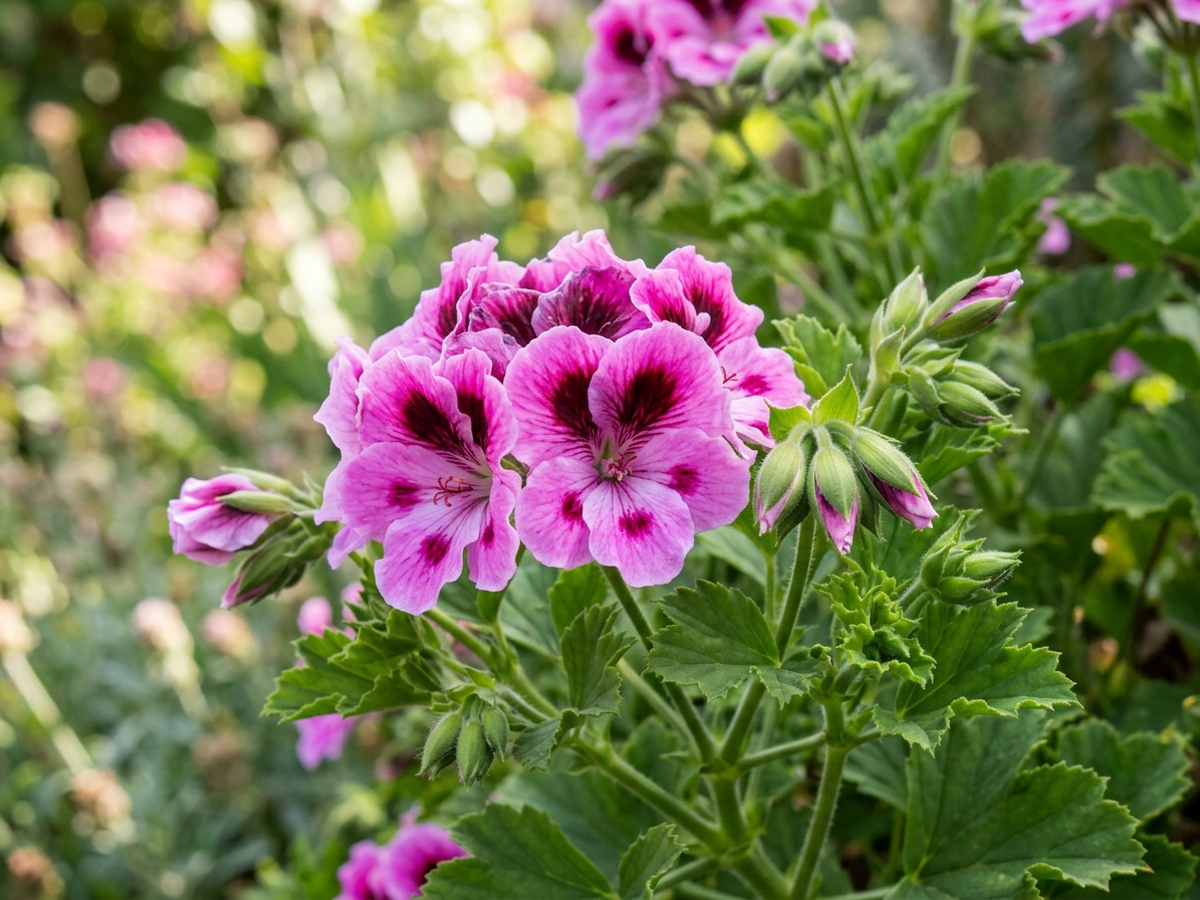
Pelargonium × domesticum, the Regal Pelargonium or Martha Washington Geranium, is a complex South African hybrid prized for its large, velvety flowers in shades of pink, red, purple, and white—often with dramatic dark blotches at the petal bases. Compact and bushy, it blooms prolifically in spring and early summer, then rests in the heat of high summer. The aromatic, lobed leaves release a pleasant herbal scent when brushed. A classic container and window-box plant in temperate climates, it is grown year-round in frost-free zones 10–11.
- Fragrant
- Long-blooming
- Compact
- Container-friendly
- Pollinator-friendly
How to care for Regal Pelargonium
Watering
- Springevery 15 days
- Summerevery 7 days
- Fallevery 30 days
- Winterpause watering
Soil · Well-draining
- Top dressingPine bark mulch10%
- Main mixPotting soil + perlite 2:170%
- DrainageLECA / gravel20%
Never skip the drainage layer — standing water is the top cause of root rot.
FERTILIZER
Bloom Booster 10-52-10
A phosphorus-forward feed fuels abundant blooms, with just enough nitrogen and potassium to keep foliage and roots steady.
- Nitrogen · Leaves
- Phosphorus · Roots + Blooms
- Potassium · Strength
- Springevery 30 days
- Summerevery 30 days
- Fallevery 30 days
At a Glance
- NativeSouth Africa
- Height1–3 ft (0.3–0.9 m)
- Spread1–2 ft (0.3–0.6 m)
- Flower colorPink, Red, Purple
- Foliage colorGreen
- SoilLoamy, Well-drained
- LocationsYard · Balcony · Indoor
Bloom time
BLOOM CYCLE
Peak bloom
Jan–Dec
This plant's flowers are elegant and diverse, with a blooming period from spring to autumn.
Fragrance
LIGHT FRAGRANCE
Pleasant herbal-resinous scent released when the lobed leaves are brushed or crushed.
Toxicity
Humans Moderate · Pets Slight
linalool, geraniol, and limonene
Moderate
EXPOSURE Unspecified plant material.
EFFECT Toxic effects are reported, but specific signs are not listed.
NOTE Authoritative sources report this plant as toxic; severity conservatively set to moderate pending finer data.
Slight
- Leaf
- Stem
- Flower
- Ingestion
- Contact
EXPOSURE Eating leaves, stems, and flowers. Touching leaves, stems, and flowers.
EFFECT Vomiting, diarrhea, skin irritation, and lethargy.
NOTE Mildly toxic to dogs and cats; can cause gastrointestinal upset and skin irritation.
Slight
- Leaf
- Stem
- Flower
- Ingestion
- Contact
EXPOSURE Eating leaves, stems, and flowers. Touching leaves, stems, and flowers.
EFFECT Vomiting, diarrhea, skin irritation, and lethargy.
NOTE Mildly toxic to dogs and cats; can cause gastrointestinal upset and skin irritation.
Educational information, not medical or veterinary advice. If exposure is suspected, contact a doctor or veterinarian.
DISTRIBUTION


- Native
- South Africa
History
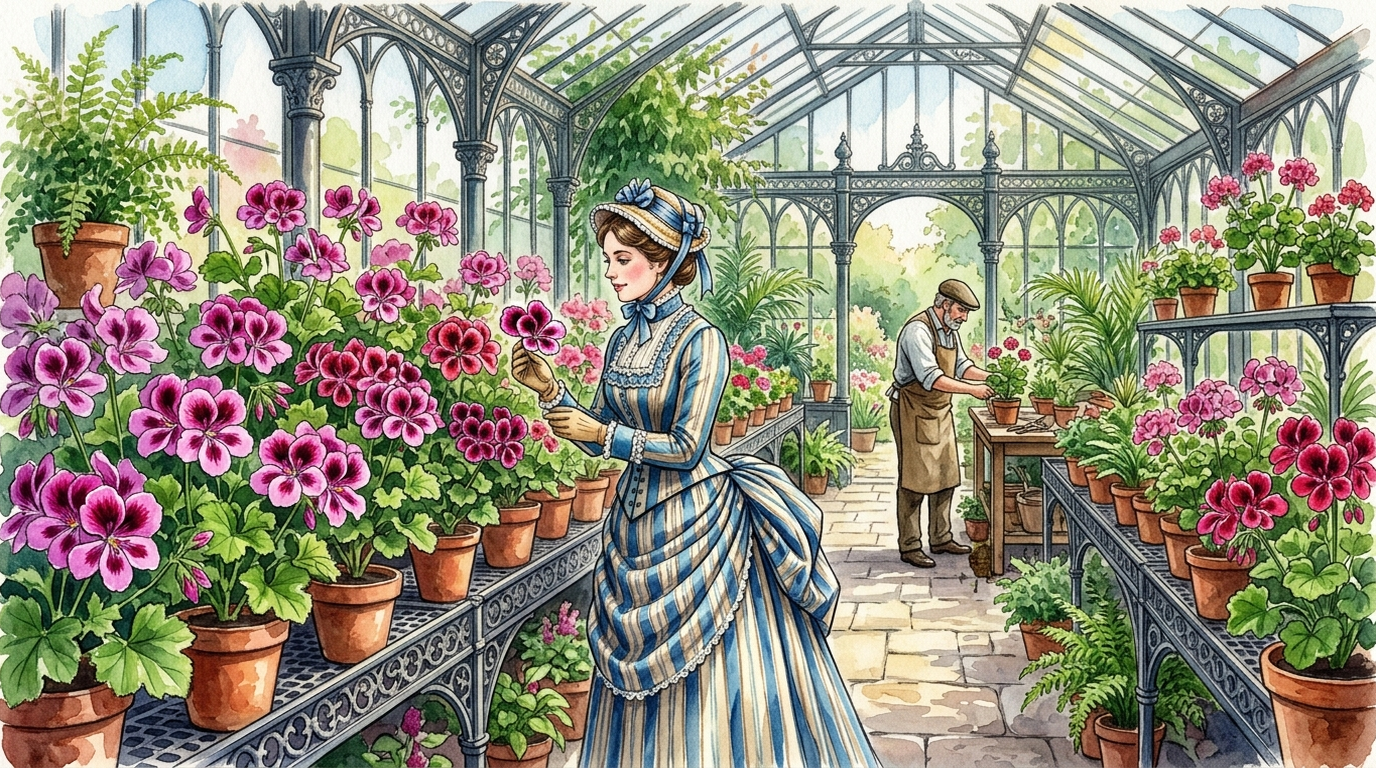
The story of Pelargonium × domesticum begins at the Cape of Good Hope, where Dutch traders and naturalists collected the first South African pelargonium species in the 17th century. These plants—completely unlike any European flora—were shipped to Amsterdam and then to England, where curious gardeners and botanists began crossing them almost immediately.
By the mid-18th century, British and Dutch horticulturalists had created early hybrid pelargoniums by crossing Pelargonium cucullatum, P. fulgidum, P. grandiflorum, and other Cape species. These hybrids—collectively called 'Show' or 'Regal' pelargoniums—produced flowers far showier than any parent species, with large petals in rich reds, purples, and whites marked with prominent dark blotches.
The Victorian era was the golden age of the Regal Pelargonium. Wealthy households maintained heated conservatories specifically to overwinter them, and specialist growers in Britain competed to exhibit new named varieties at the Royal Horticultural Society. In North America the plant acquired the name 'Martha Washington Geranium,' possibly because an early popular variety was named after the first US First Lady.
Throughout the 20th century, Regal Pelargoniums were somewhat overshadowed by the more heat-tolerant Zonal Pelargoniums (P. × hortorum) for summer bedding, but remained beloved container plants for sheltered patios and window boxes in cooler climates. Modern breeders have extended the bloom season and produced compact cultivars suited to indoor windowsill culture.
Symbolism & meaning
What It Symbolizes
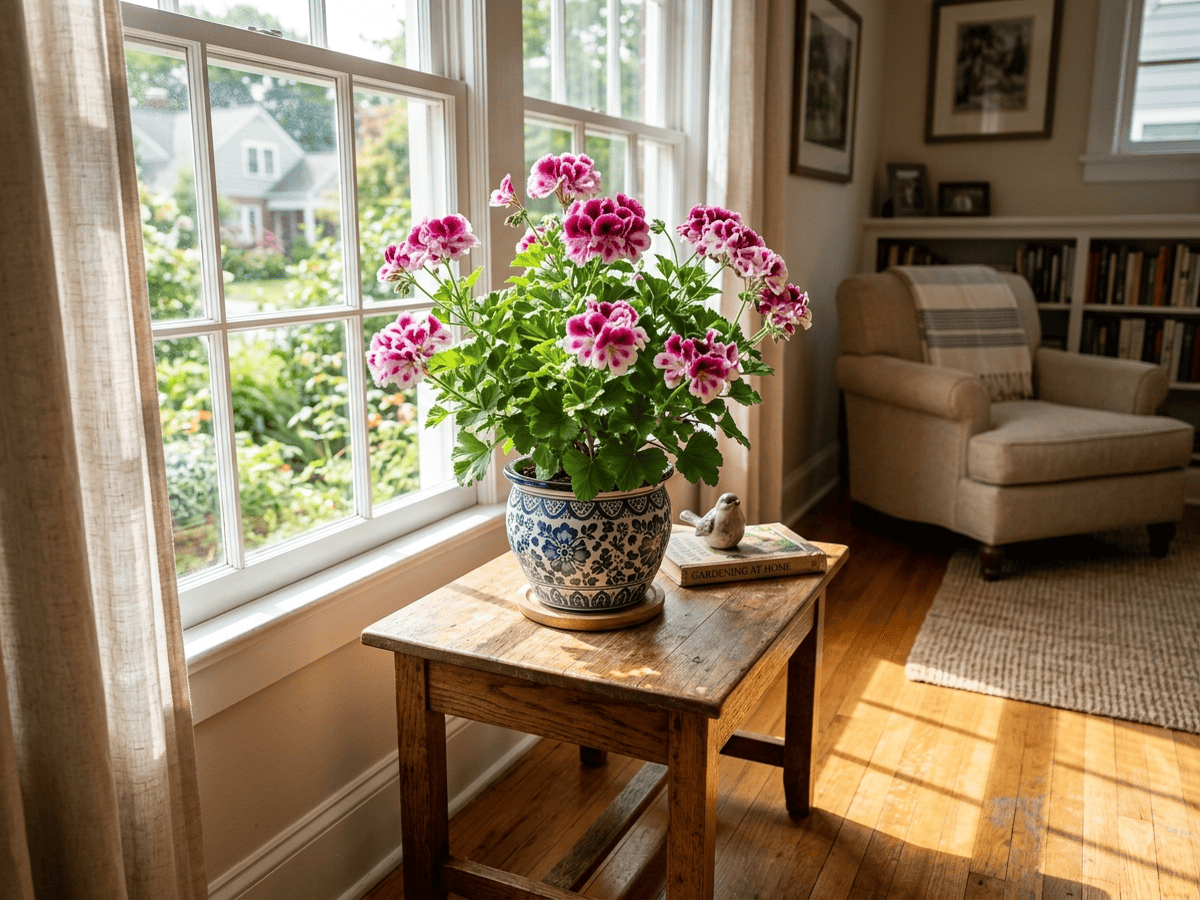
In Victorian Britain, a potted Regal Pelargonium on the parlor windowsill was a statement of refined domesticity—a plant that required a warm home to survive and rewarded careful tending with lavish blooms. Its name, × domesticum, could hardly be more fitting: it is the quintessential houseplant, inseparable from the culture of the Victorian interior.
- elegance — Its elaborate patterned blooms and Victorian greenhouse heritage represent refined taste and domestic grace.
- comfort — Long associated with home gardens and window boxes, it symbolizes the warmth and familiarity of well-tended domestic spaces.
Where the Name Comes From
The genus name Pelargonium comes from the Greek pelargos (stork), describing the beak-like shape of the seed capsule. The hybrid epithet domesticum means 'of the household' in Latin, reflecting its long history as a cultivated garden and pot plant.
Uses & Fun Facts
- Large velvety patterned flowers make it a showpiece in containers and window boxes
- Lobed leaves release a pleasant herbal scent when brushed
- Large open flowers attract bees and butterflies in temperate gardens
Related plants
More Pelargonium plants
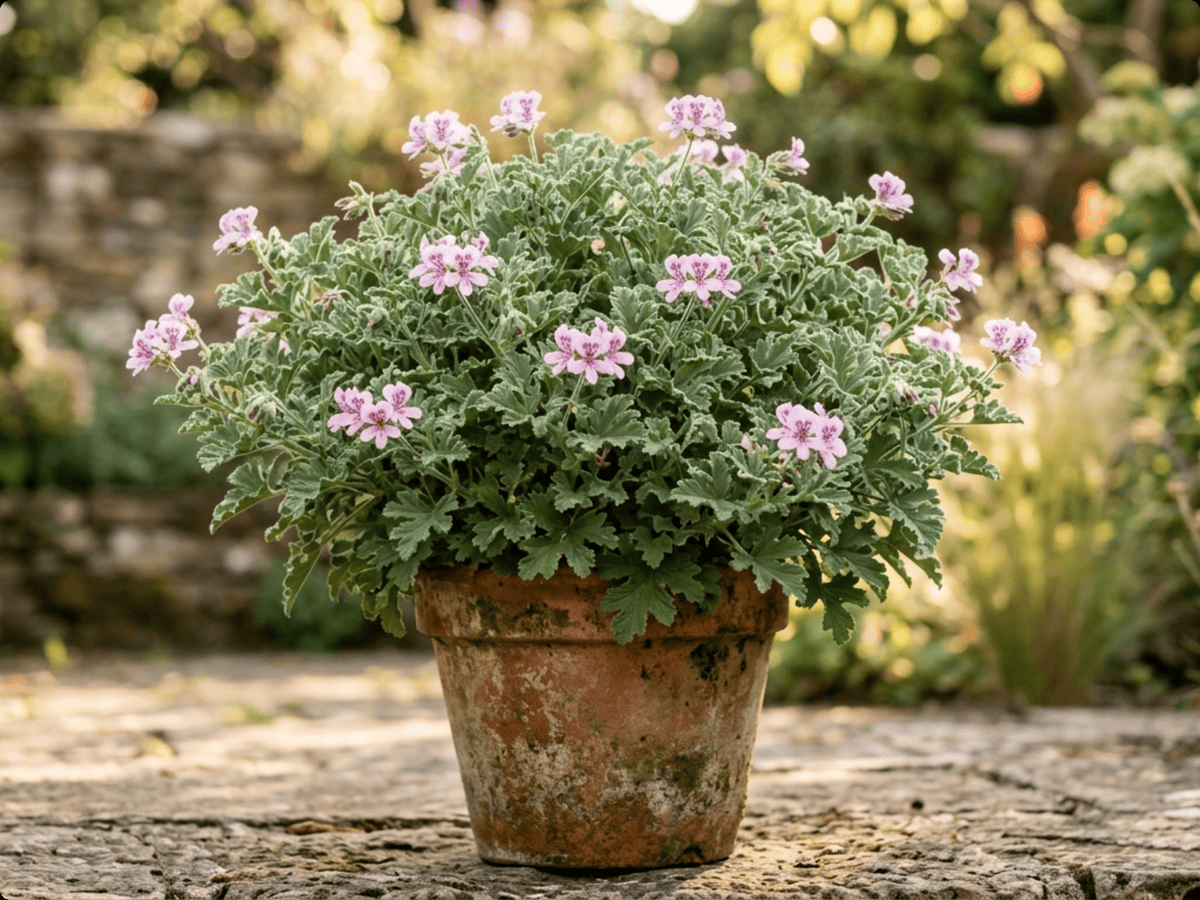 Rose-Scented GeraniumPelargonium graveolens
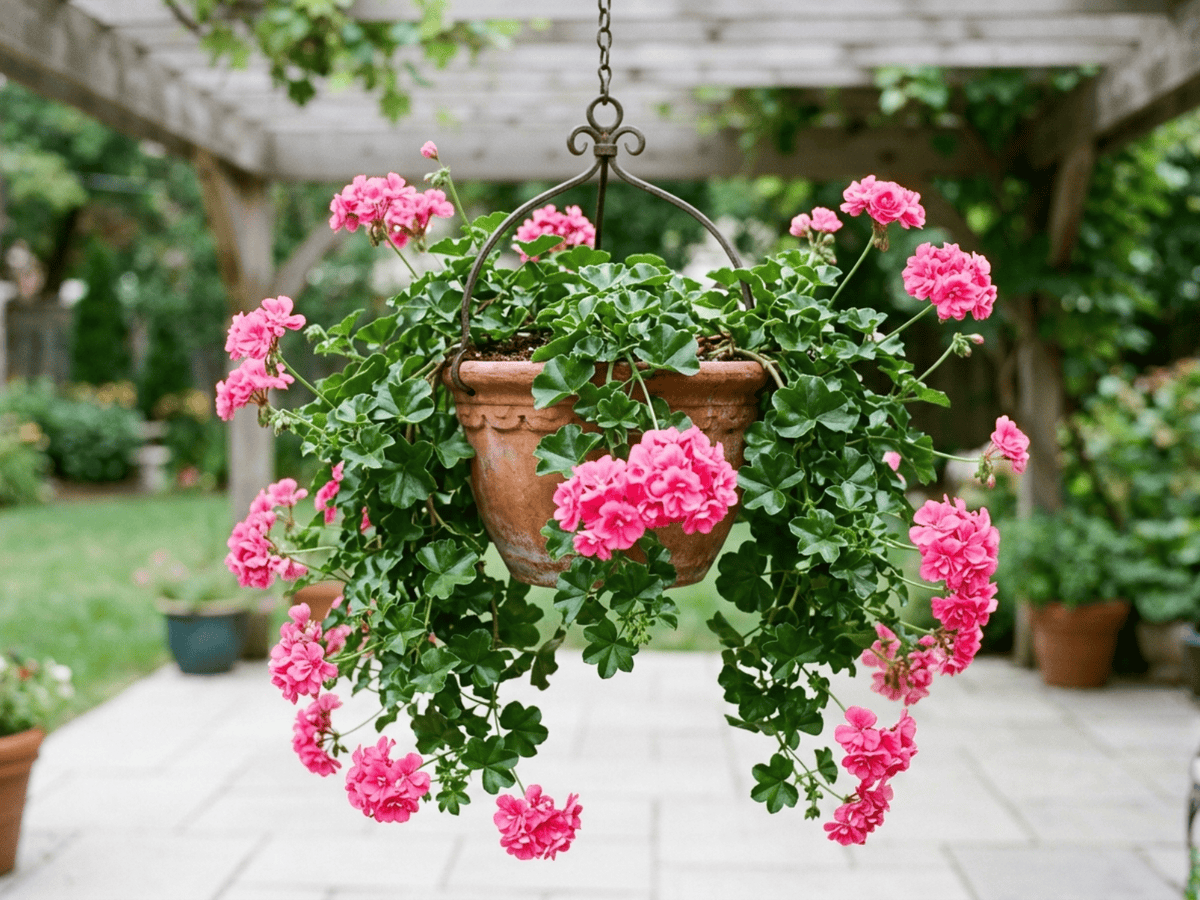 Ivy GeraniumPelargonium peltatum
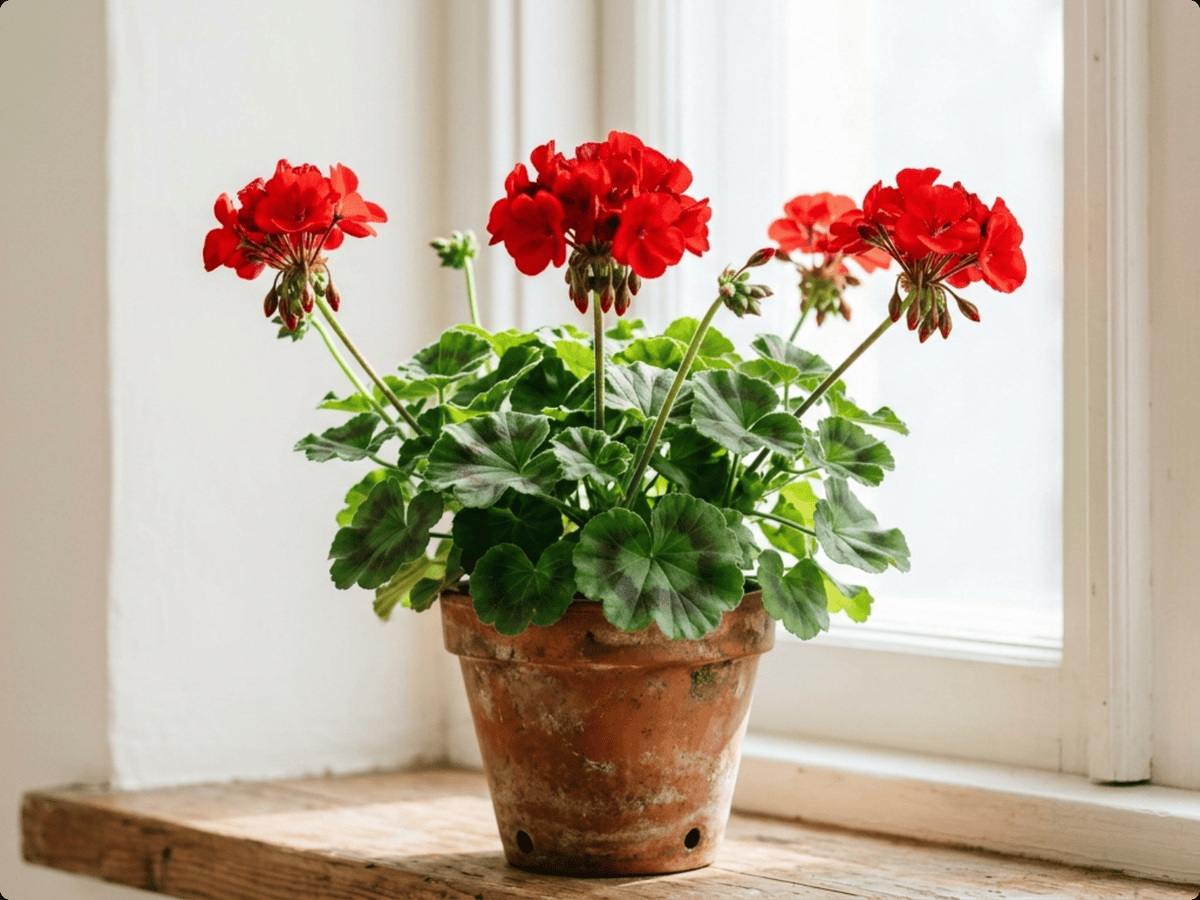 Zonal GeraniumPelargonium x hortorum
Plants with similar care
 Lipstick PlantAeschynanthus longicaulis
 African LilyAgapanthus africanus
 Bell AgapanthusAgapanthus campanulatus
 Common AgapanthusAgapanthus praecox
Frequently asked questions
How often should I water Regal Pelargonium?
Water about every 15 days during the growing season, and always let excess water drain away.
How much light does Regal Pelargonium need?
Part sun: 4–6 hrs direct. Watch the leaves — scorching or stretching means the light needs adjusting.
Is Regal Pelargonium toxic to cats or dogs?
Pets Slight (Dogs Slight · Cats Slight) Educational information, not medical or veterinary advice. If exposure is suspected, contact a doctor or veterinarian.
Is Regal Pelargonium easy to grow?
It is considered challenging and rewards experienced growers.
Can Regal Pelargonium be grown indoors?
Yes, it adapts well to indoor growing given the right light.
When does Regal Pelargonium bloom?
It typically blooms Jan–Dec in the Northern Hemisphere.
YardMate
Identify any plant in seconds
Snap a photo — YardMate names the plant, diagnoses problems, and reminds you when to water.
Download on the App Store