 YardMate
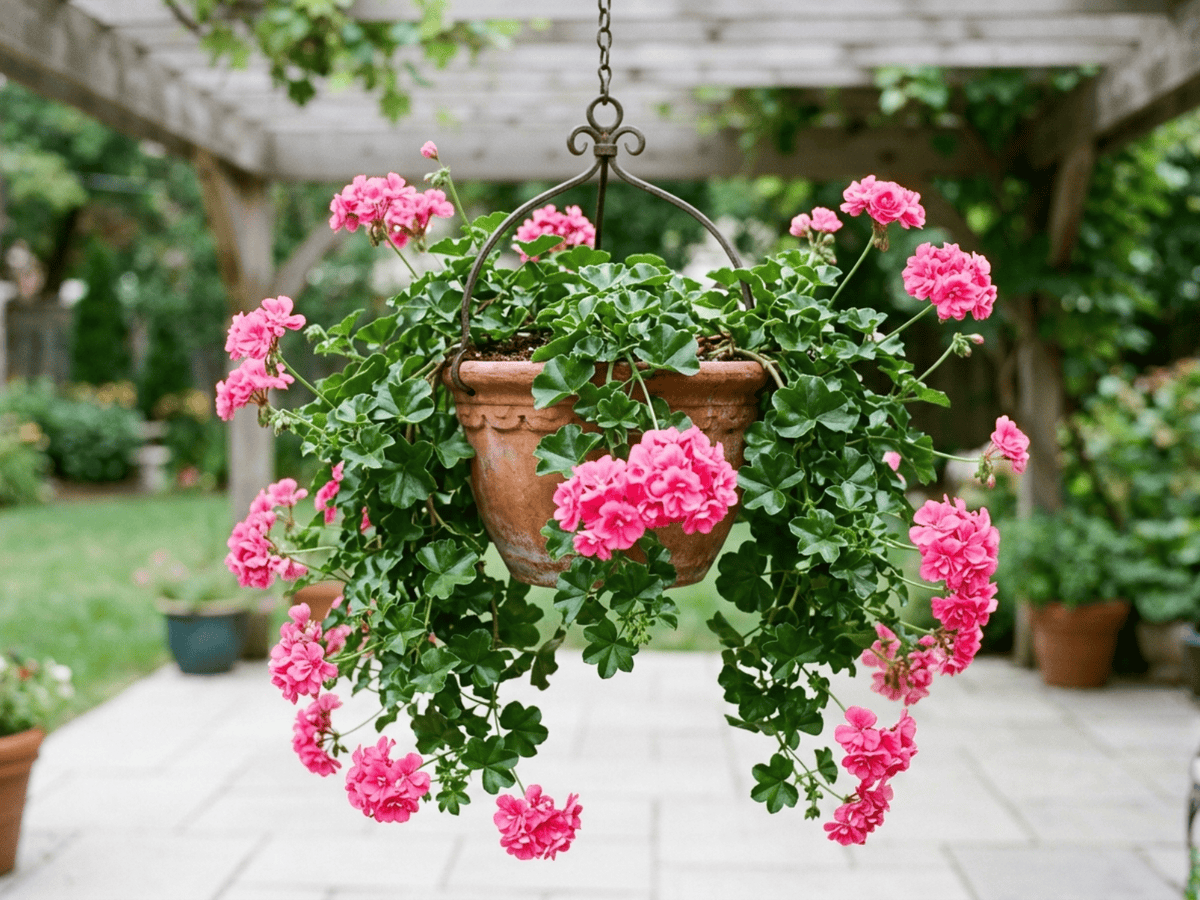
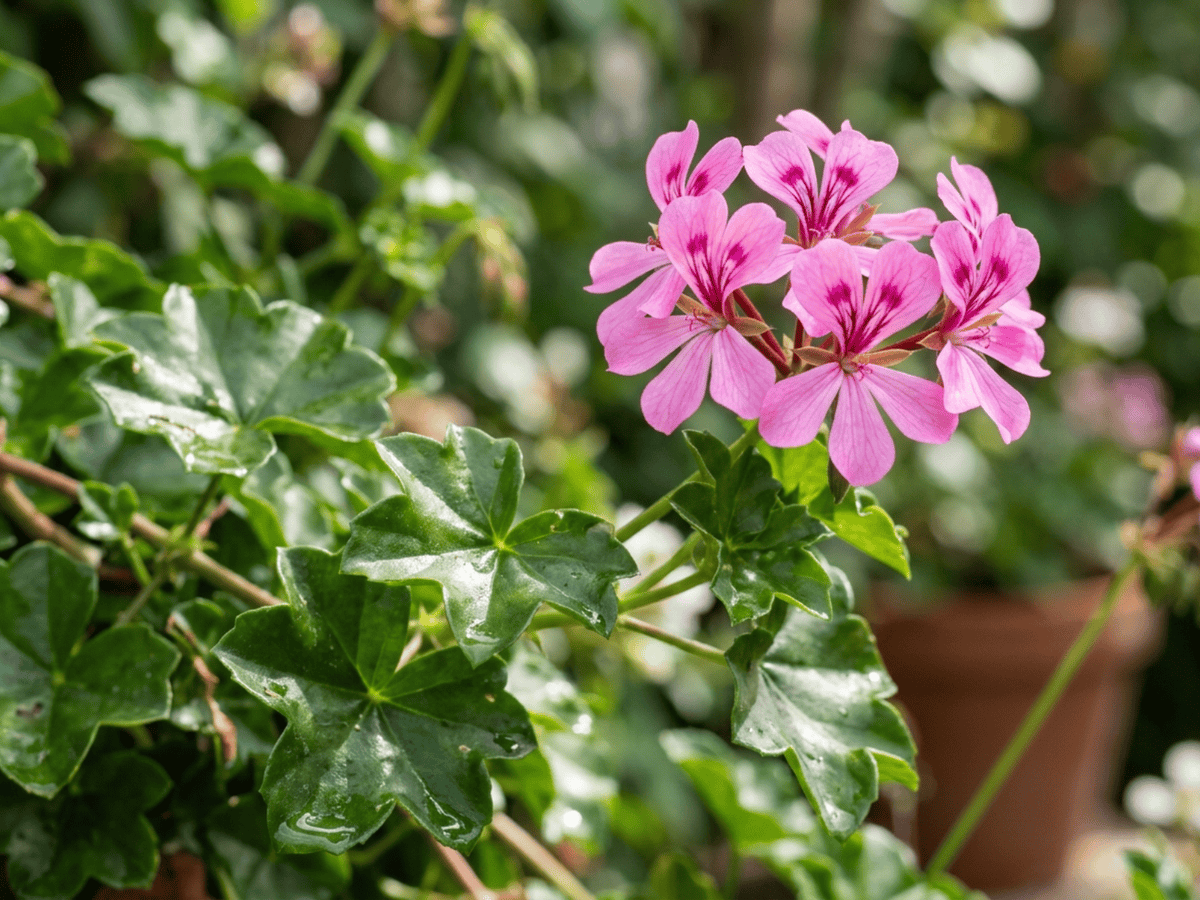


Ivy Geranium
Pelargonium peltatum
Easy · Beginner friendlyAbout Ivy Geranium
Ivy Geranium is a tender perennial grown as an annual in most US zones, producing trailing stems 18–36 inches long with glossy, ivy-shaped leaves and clusters of single or double flowers in pink, red, lavender, and white. Spectacular in window boxes, hanging baskets, and balcony railings—especially iconic in Alpine-style window box displays popular from Colorado to the California coast. Blooms continuously from late spring until frost when deadheaded and fed regularly.
- Drought-tolerant
- Heat-tolerant
- Trailing
- Container-friendly
How to care for Ivy Geranium
Watering
- Springevery 5 days
- Summerevery 4 days
- Fallevery 10 days
- Winterevery 21 days
Soil · Well-draining
- Top dressingPine bark mulch10%
- Main mixPotting soil + perlite 2:170%
- DrainageLECA / gravel20%
Never skip the drainage layer — standing water is the top cause of root rot.
FERTILIZER
Balanced Feed 14-14-14
An even feed covers all three needs at once, keeping leaves, roots and blooms moving together with nothing pushed out of balance.
- Nitrogen · Leaves
- Phosphorus · Roots + Blooms
- Potassium · Strength
- Springevery 14 days
- Summerevery 14 days
- Fallevery 30 days
At a Glance
- NativeAfrica
- Height1–3 ft (0.3–0.9 m)
- Spread2–3 ft (0.6–0.9 m)
- Flower colorRed, Pink, Coral, White
- Foliage colorGreen, Variegated
- SoilLoamy, Well-drained
- LocationsYard · Balcony · Indoor
Bloom time
BLOOM CYCLE
Peak bloom
Mar–Nov
Cascading flower clusters spring to frost
Fragrance
LIGHT FRAGRANCE
Mild herbaceous scent from crushed leaves.
Toxicity
Humans Slight · Pets Moderate
geraniol and linalool
Slight
- Leaf
- Stem
- Ingestion
- Contact
EXPOSURE Eating leaves and stems. Touching leaves and stems.
EFFECT Geraniol and linalool essential oils can cause mild skin irritation in sensitive individuals.
NOTE Documented concern for humans: Geraniol and linalool essential oils can cause mild skin irritation in sensitive individuals.
Moderate
- All
- Ingestion
EXPOSURE Eating any part of the plant.
EFFECT Vomiting, anorexia, skin irritation, depression.
NOTE ASPCA lists Pelargonium as toxic to dogs and cats.
Moderate
- All
- Ingestion
EXPOSURE Eating any part of the plant.
EFFECT Same as dogs.
NOTE ASPCA lists Pelargonium as toxic to dogs and cats.
Educational information, not medical or veterinary advice. If exposure is suspected, contact a doctor or veterinarian.
DISTRIBUTION


- Native
- Introduced
- Africa
History
Pelargonium peltatum is native to the Eastern Cape and KwaZulu-Natal provinces of South Africa, growing as a scrambling climber in coastal bush, riverbanks, and sheltered forest edges where it climbs over shrubs and rocks using its weak trailing stems for support. The species was introduced to European horticulture in 1701 by Simon van der Stel, Dutch governor of the Cape Colony (1679-1699), who sent specimens to the Leiden Botanical Garden. The species epithet "peltatum" means "shield-shaped" referring to the leaf architecture where the petiole attaches not to the leaf margin but to the back-center of the leaf (a peltate leaf — compare lotus leaves), a distinctive feature that distinguishes ivy-leaf geraniums from the more common upright-growing Pelargonium x hortorum zonal geraniums.
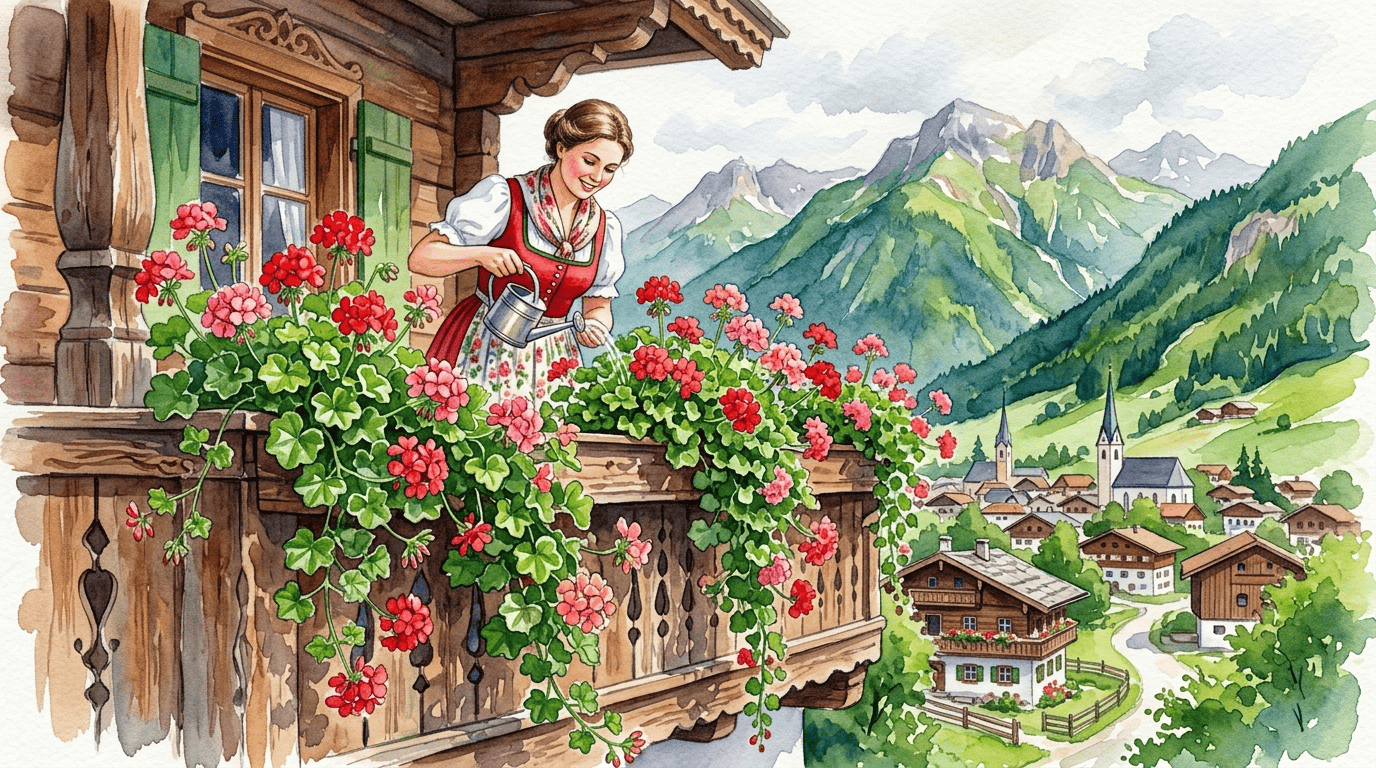
The trailing branching stems and vigorous cascade habit make ivy-leaf geranium the signature hanging-basket and window-box plant of Mediterranean Europe. It is particularly iconic in the flower-box tradition of Swiss and Bavarian Alpine village architecture — the endless summer window-box displays of geraniums spilling from every available ledge in villages throughout Tirol, Bavaria, the Italian Dolomites, and Switzerland have been a defining feature of Alpine tourism aesthetic since the 19th century.
Hybrid breeding has produced many modern cultivar series including "Cascade," "Decora," "Balcon," and intersectional hybrids with the zonal geraniums (P. x hortorum x P. peltatum). Flower colors include red, pink, salmon, white, purple, and burgundy, with many modern double-flowered and bicolored forms.
Symbolism & meaning
What It Symbolizes
The Ivy Geranium carries the geranium meaning of true friendship, the kind of genuine companionship celebrated in the Victorian language of flowers. Paired with comfort, its cottage-window cascades evoke a homey warmth — windowboxes spilling pink and red across a quiet street. It is a flower that anchors itself, both literally and emotionally, to the threshold of home.
- True friendship — geraniums symbolize genuine companionship
- Comfort — cottage-window charm evokes homey warmth
Where the Name Comes From
Genus from Greek 'pelargos' (stork) for the beaked seed pod; 'peltatum' means 'shield-shaped', describing the leaves.
Uses & Fun Facts
- Trailing Ivy Geranium classic for window boxes and balcony rails
- Cascading stems with ivy-shaped leaves and pink-red blooms
Related plants
More Pelargonium plants
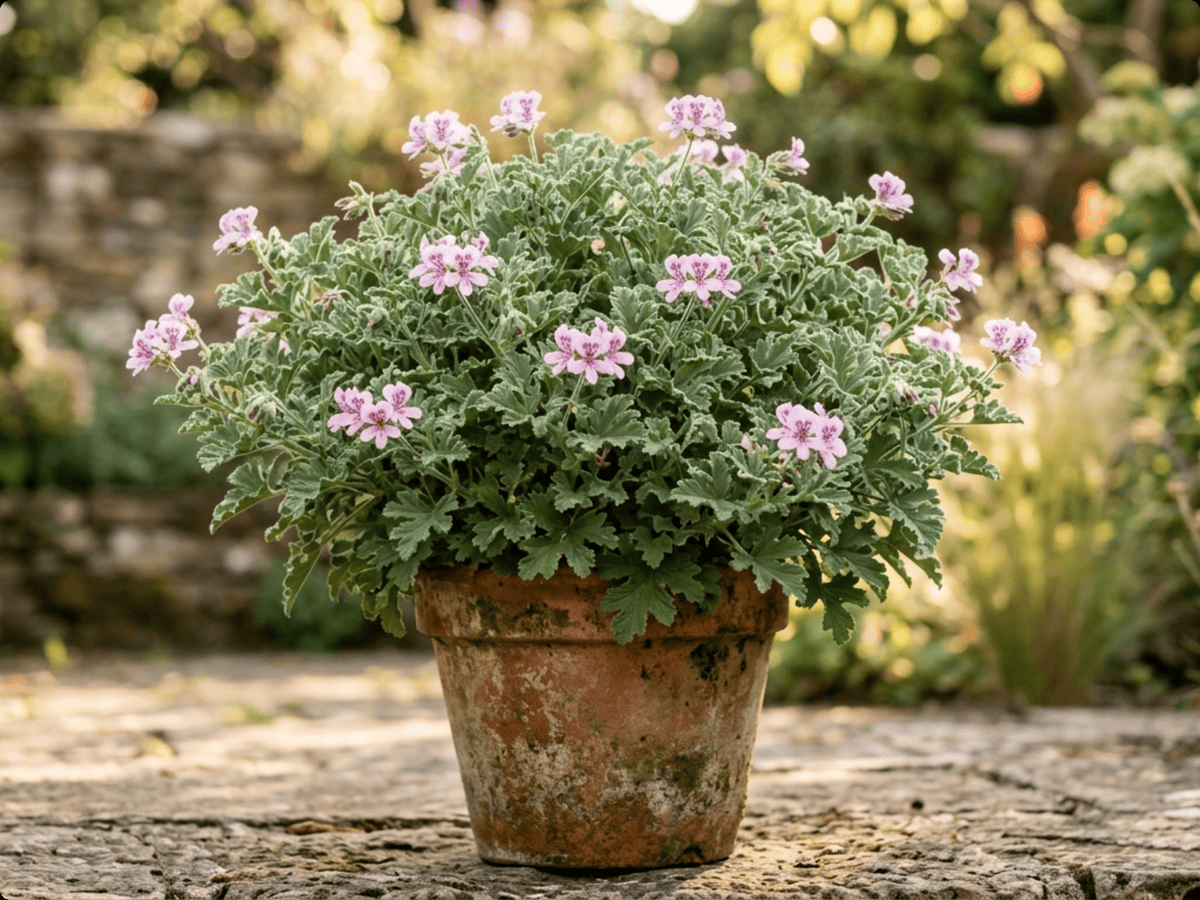 Rose-Scented GeraniumPelargonium graveolens
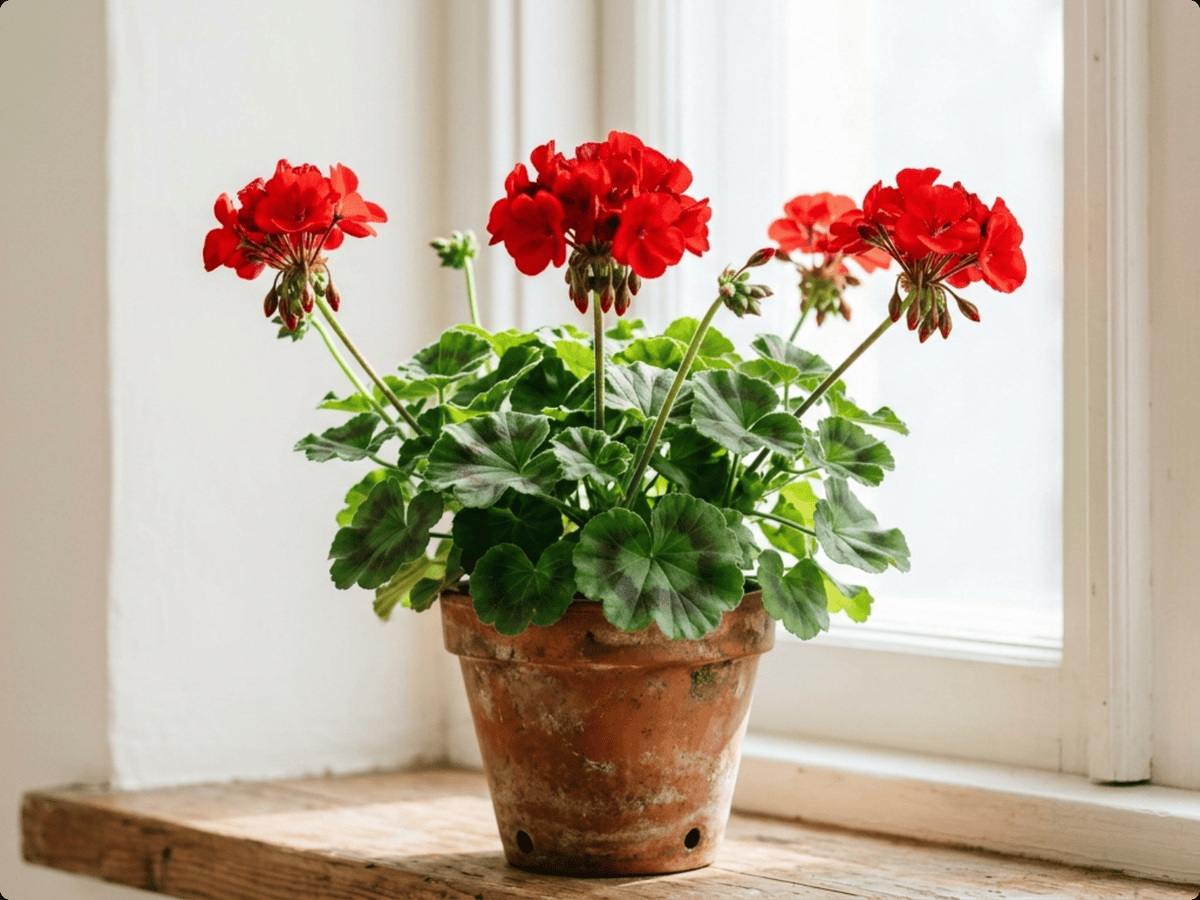 Zonal GeraniumPelargonium x hortorum
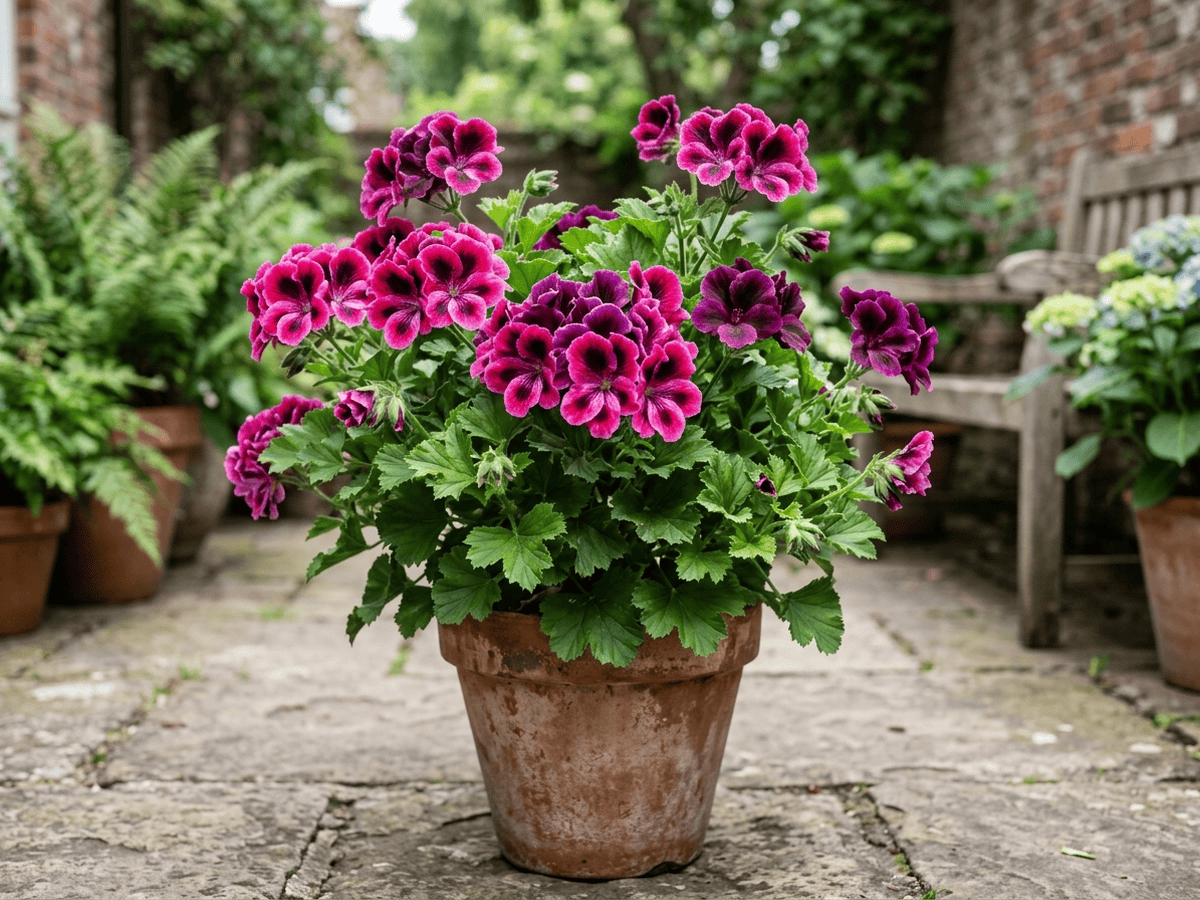 Regal PelargoniumPelargonium × domesticum
Plants with similar care
 Chinese AbeliaAbelia chinensis
 Fragrant AbeliaAbelia mosanensis
 Large-Flowered AbeliaAbelia uniflora
 Glossy AbeliaAbelia x grandiflora
Frequently asked questions
How often should I water Ivy Geranium?
In summer, water about every 4 days; in winter, about every 21 days. Adjust for heat, pot size and drainage.
How much light does Ivy Geranium need?
Full sun: 6+ hrs direct. Watch the leaves — scorching or stretching means the light needs adjusting.
Is Ivy Geranium toxic to cats or dogs?
Pets Moderate (Dogs Moderate · Cats Moderate) Educational information, not medical or veterinary advice. If exposure is suspected, contact a doctor or veterinarian.
Is Ivy Geranium easy to grow?
Yes — it is considered an easy, beginner-friendly plant.
Can Ivy Geranium be grown indoors?
Yes, it adapts well to indoor growing given the right light.
When does Ivy Geranium bloom?
It typically blooms Mar–Nov in the Northern Hemisphere.
YardMate
Identify any plant in seconds
Snap a photo — YardMate names the plant, diagnoses problems, and reminds you when to water.
Download on the App Store