 YardMate
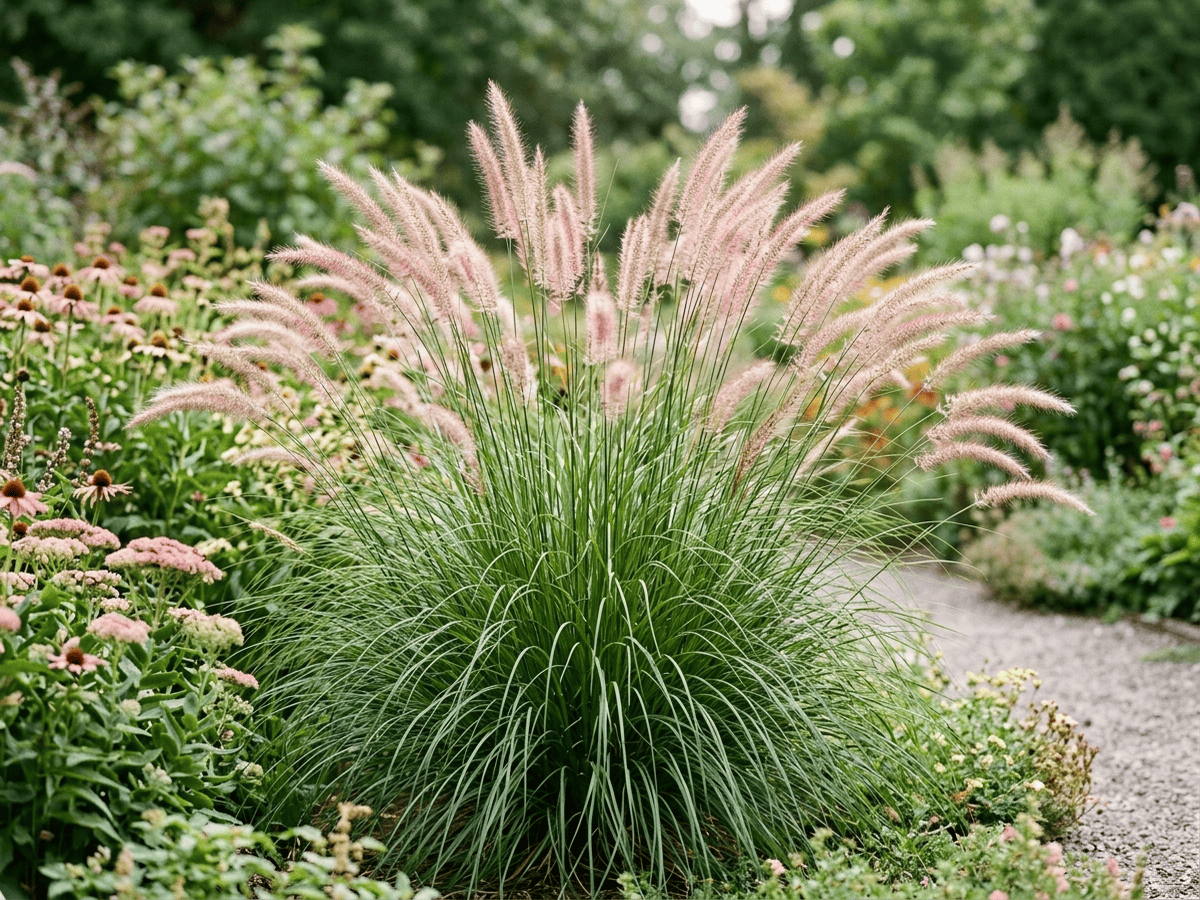


Oriental Fountain Grass
Pennisetum orientale
Easy · Beginner friendlyAbout Oriental Fountain Grass
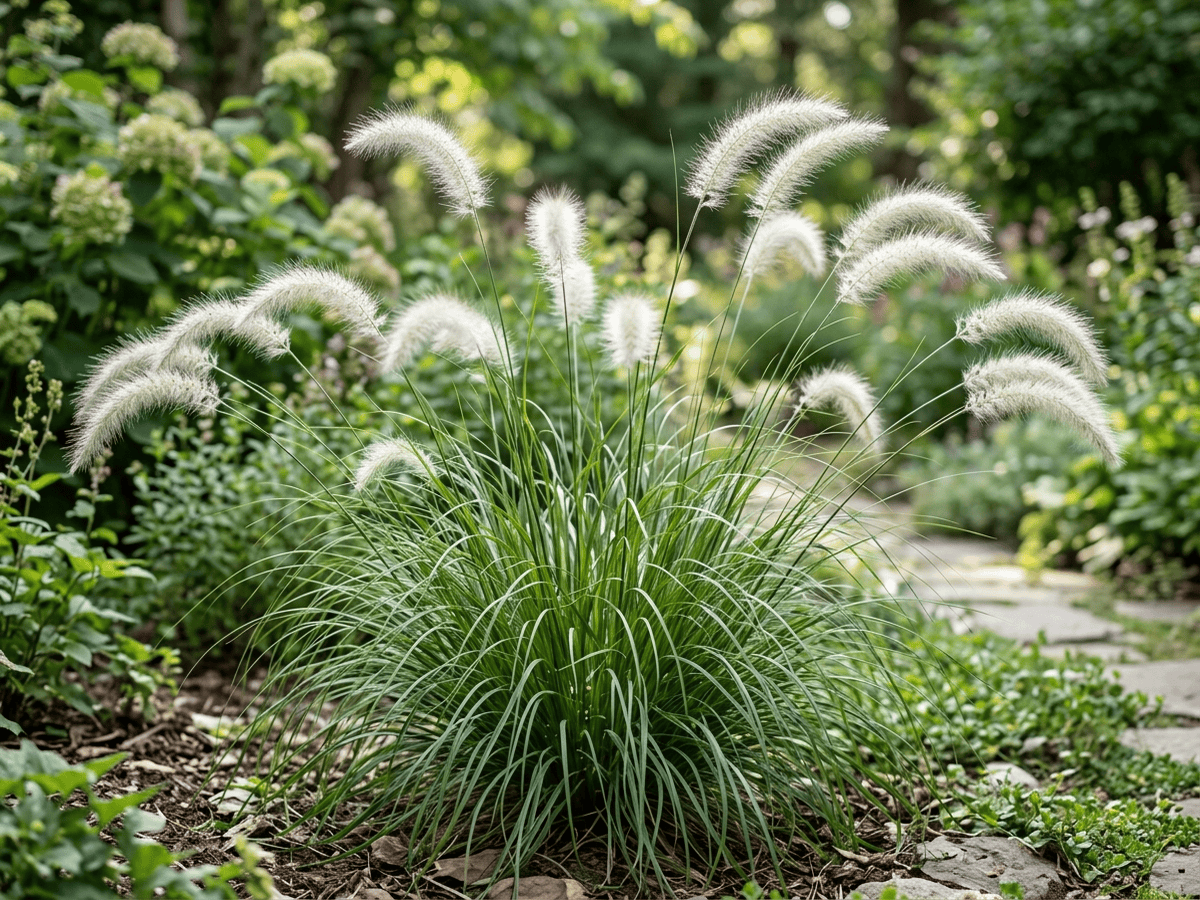
Oriental Fountain Grass is a refined ornamental grass from southern Asia reaching 18-30 inches tall, with fine green foliage topped by long-lasting soft pinkish-white bottlebrush plumes from early summer through fall. Sterile and non-invasive, it is widely recommended as a safer alternative to the invasive Pennisetum setaceum in California and the Southwest. The cultivar 'Karley Rose' is among the most popular selections in American gardens.
- Drought-tolerant
How to care for Oriental Fountain Grass
Watering
- Springevery 14 days
- Summerevery 14 days
- Fallevery 21 days
- Winterevery 30 days
Soil · Well-draining
- Top dressingPine bark mulch10%
- Main mixPotting soil + perlite 2:170%
- DrainageLECA / gravel20%
Never skip the drainage layer — standing water is the top cause of root rot.
FERTILIZER
- Springevery 60 days
At a Glance
- NativeMediterranean, Western Asia, South Asia
- Height2–3 ft (0.6–0.9 m)
- Spread2–3 ft (0.6–0.9 m)
- Flower colorPink, Purple
- Foliage colorGreen
- SoilSandy, Well-drained
- LocationsYard
Bloom time
BLOOM CYCLE
Peak bloom
May–Nov
Soft pinkish-white plumes early summer through fall
Toxicity
Humans Safe · Pets Safe
None reported
Safe
EXPOSURE No exposure route is reported.
EFFECT No toxic effect is reported.
NOTE Listed as non-toxic for humans; avoid eating ornamental plants unless confirmed edible.
Safe
EXPOSURE No exposure route is reported.
EFFECT No toxic effect is reported.
NOTE Listed as non-toxic for dogs; avoid eating ornamental plants unless confirmed edible.
Safe
EXPOSURE No exposure route is reported.
EFFECT No toxic effect is reported.
NOTE Listed as non-toxic for cats; avoid eating ornamental plants unless confirmed edible.
Educational information, not medical or veterinary advice. If exposure is suspected, contact a doctor or veterinarian.
DISTRIBUTION

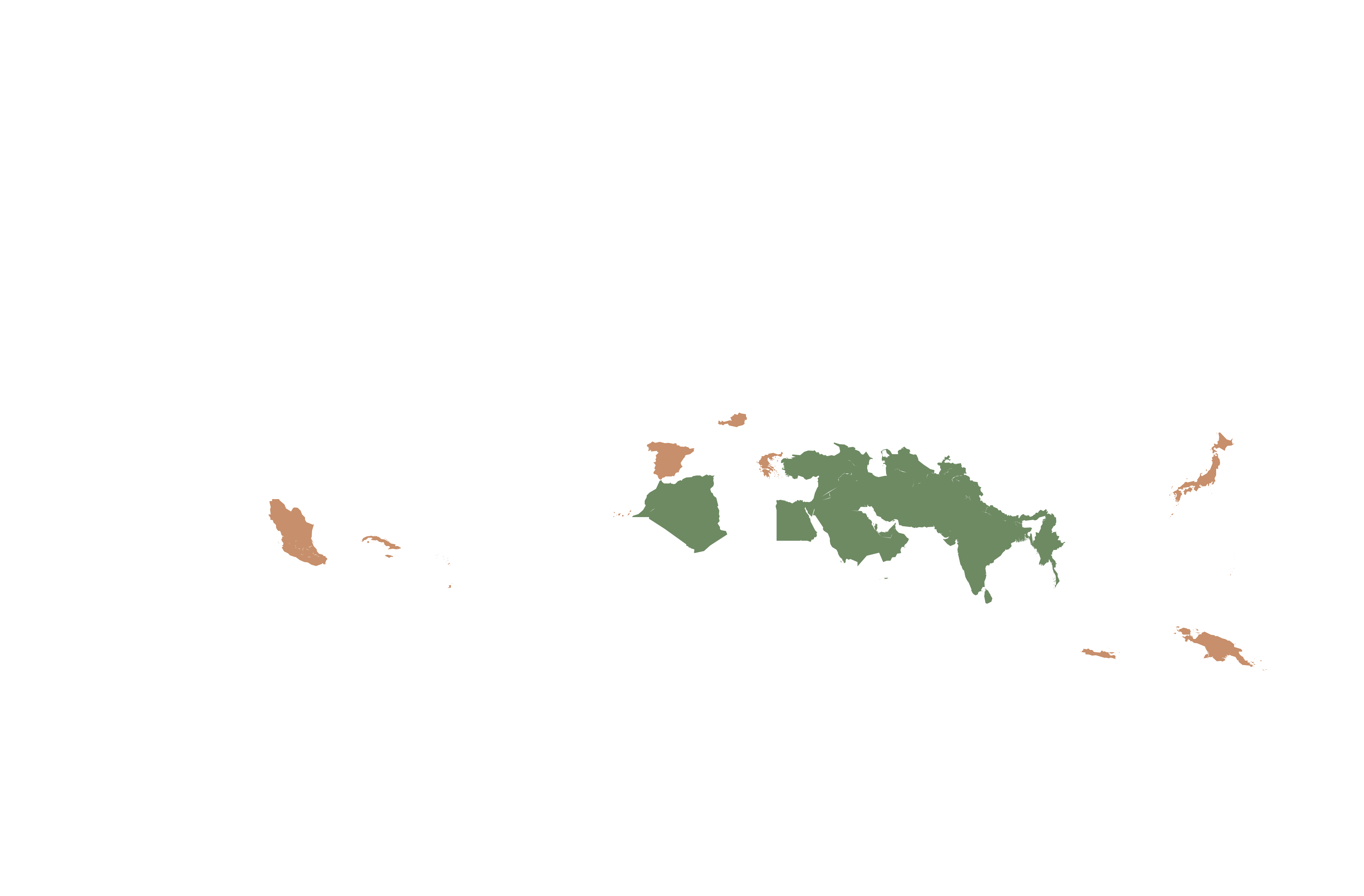
- Native
- Introduced
- Mediterranean
- Western Asia
- South Asia
History
Pennisetum orientale, commonly called oriental fountain grass, is a clumping warm-season perennial grass in the family Poaceae native to a broad dry-climate range from the eastern Mediterranean (Greece, Turkey, Syria) through the Caucasus, Iran, Iraq, Afghanistan, Pakistan, and into the western Himalayas. French botanist Louis Claude Marie Richard formally described the species in 1805. Following recent phylogenetic revisions, some authorities treat this species under Cenchrus orientalis, but horticultural trade retains Pennisetum.
Plants form more refined and smaller clumps than the ubiquitous P. setaceum—typically 45-75 cm (including flowers) tall mounds of narrow gray-green arching leaves producing elegant 10-15 cm soft pinkish-white to pale purple bottle-brush plumes that blush deeper rose with age, from early summer well into fall. Cultivated selections include 'Karley Rose' (deeper pink plumes, taller habit), 'Tall Tails' (longer slender plumes), and 'Flamingo'. Less drought-tolerant than P. setaceum but sterile or nearly so, making it non-invasive in most climates.
Hardier than setaceum. Native to southern Asia from the Caucasus to India. Introduced to American horticulture as a non-invasive alternative to Pennisetum setaceum, it has become a defining ornamental grass for California waterwise gardens and Sun Belt landscapes since the 1990s.
Symbolism & meaning
What It Symbolizes
Oriental Fountain Grass carries grace in its elegant pinkish plumes, which arch and wave above fine foliage like soft banners catching the breeze. Responsibility is its other modern meaning — unlike its more aggressive cousins, this species stays well-behaved, making it a non-invasive choice for ecological gardening. Its message is gentle and considered: beauty that does not stake its claim at the expense of native ground.
- Grace — elegant pinkish plumes wave above fine foliage
- Responsibility — non-invasive choice for ecological gardening
Where the Name Comes From
'Orientale' from Latin meaning eastern, referring to its native range.
Uses & Fun Facts
- Pink fluffy flower plumes wave above arching grass mounds
- Compact ornamental grass works in large patio containers
Related plants
More Pennisetum plants
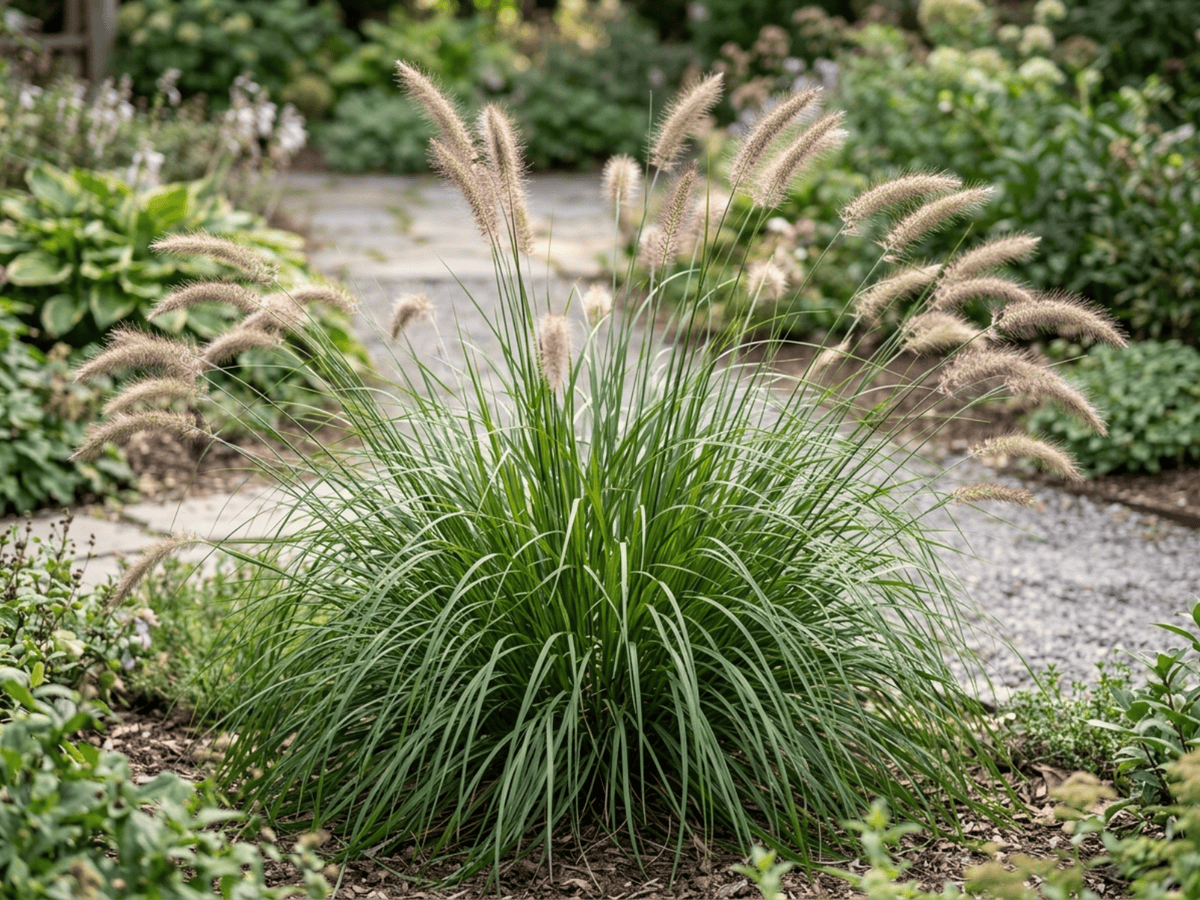 Chinese PennisetumPennisetum alopecuroides
 Fountain GrassPennisetum setaceum
 FeathertopPennisetum villosum
Plants with similar care
 Chinese AbeliaAbelia chinensis
 Fragrant AbeliaAbelia mosanensis
 Large-Flowered AbeliaAbelia uniflora
 Glossy AbeliaAbelia x grandiflora
Frequently asked questions
How often should I water Oriental Fountain Grass?
In summer, water about every 14 days; in winter, about every 30 days. Adjust for heat, pot size and drainage.
How much light does Oriental Fountain Grass need?
Full sun: 6+ hrs direct. Watch the leaves — scorching or stretching means the light needs adjusting.
Is Oriental Fountain Grass toxic to cats or dogs?
Pets Safe (Dogs Safe · Cats Safe) Educational information, not medical or veterinary advice. If exposure is suspected, contact a doctor or veterinarian.
Is Oriental Fountain Grass easy to grow?
Yes — it is considered an easy, beginner-friendly plant.
When does Oriental Fountain Grass bloom?
It typically blooms May–Nov in the Northern Hemisphere.
YardMate
Identify any plant in seconds
Snap a photo — YardMate names the plant, diagnoses problems, and reminds you when to water.
Download on the App Store