 YardMate


Fountain Grass
Pennisetum setaceum
Easy · Beginner friendlyAbout Fountain Grass
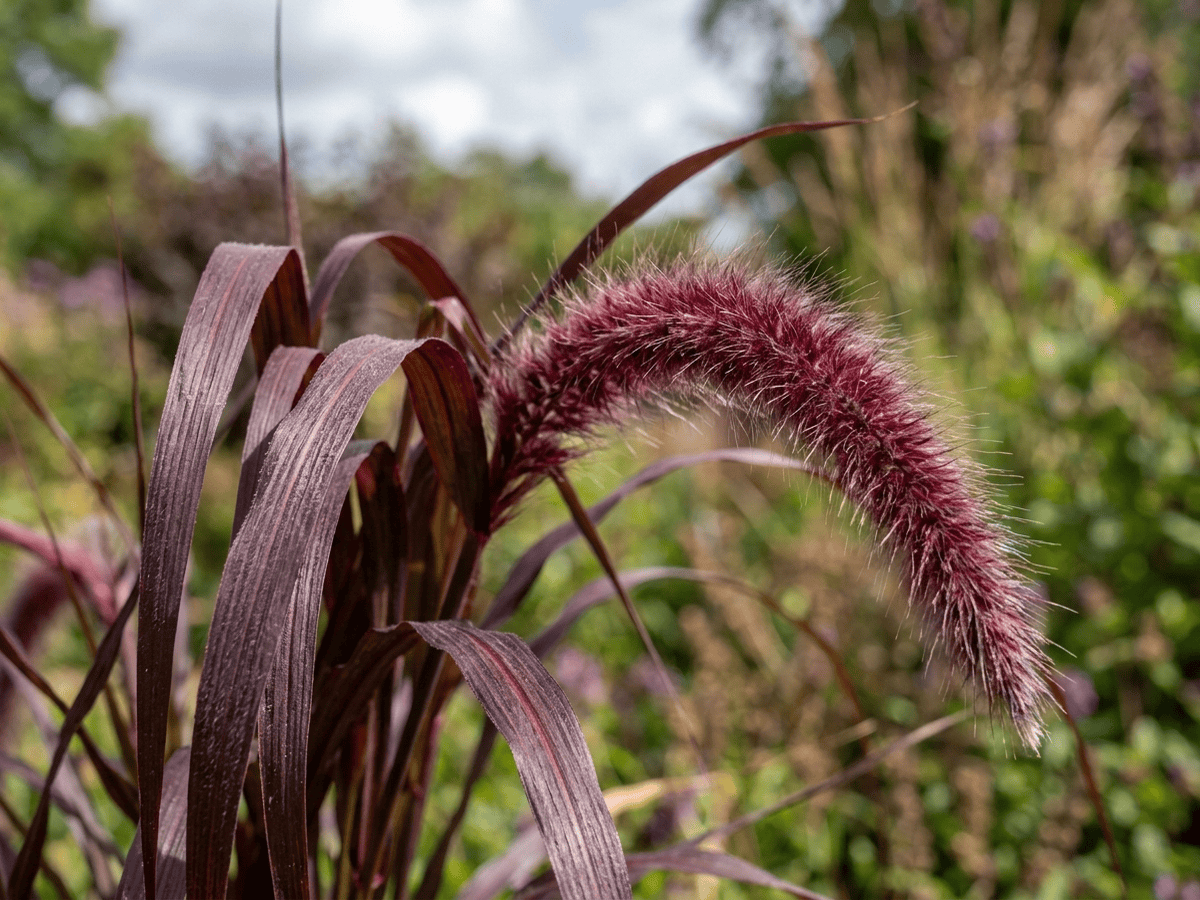
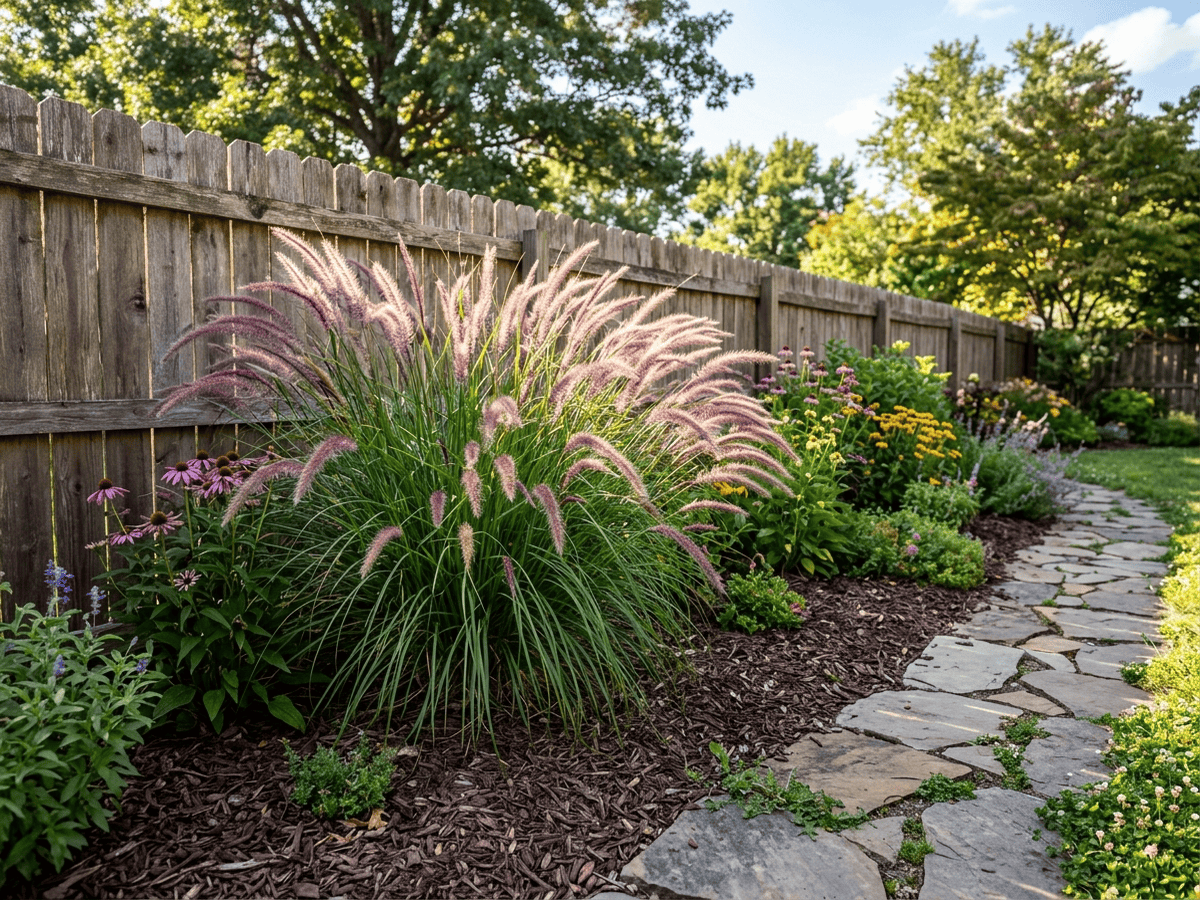
Fountain Grass is a popular African ornamental grass reaching 3-5 feet tall, forming tidy fountain-like clumps of fine arching foliage topped by graceful pink-purple bottlebrush plumes from summer through fall. The purple-leaved cultivar 'Rubrum' is among the most planted ornamental grasses in California and the Sun Belt. Note that the wild green species has become invasive in California, Hawaii, and Arizona—use sterile cultivars only.
- Drought-tolerant
How to care for Fountain Grass
Watering
- Springevery 14 days
- Summerevery 14 days
- Fallevery 21 days
- Winterevery 30 days
Soil · Well-draining
- Top dressingPine bark mulch10%
- Main mixPotting soil + perlite 2:170%
- DrainageLECA / gravel20%
Never skip the drainage layer — standing water is the top cause of root rot.
FERTILIZER
- Springevery 60 days
At a Glance
- NativeAfrica, Western Asia
- Height2–4 ft (0.6–1.2 m)
- Spread2–3 ft (0.6–0.9 m)
- Flower colorPink, Purple
- Foliage colorGreen, Purple
- SoilLoamy, Well-drained, Sandy
- LocationsYard · Balcony
Bloom time
BLOOM CYCLE
Peak bloom
Jun–Nov
Pink-purple bottlebrush plumes summer through fall
Toxicity
Humans Safe · Pets Safe
None reported
Safe
EXPOSURE No exposure route is reported.
EFFECT No toxic effect is reported.
NOTE Listed as non-toxic for humans; avoid eating ornamental plants unless confirmed edible.
Safe
EXPOSURE No exposure route is reported.
EFFECT No toxic effect is reported.
NOTE Listed as non-toxic for dogs; avoid eating ornamental plants unless confirmed edible.
Safe
EXPOSURE No exposure route is reported.
EFFECT No toxic effect is reported.
NOTE Listed as non-toxic for cats; avoid eating ornamental plants unless confirmed edible.
Educational information, not medical or veterinary advice. If exposure is suspected, contact a doctor or veterinarian.
DISTRIBUTION

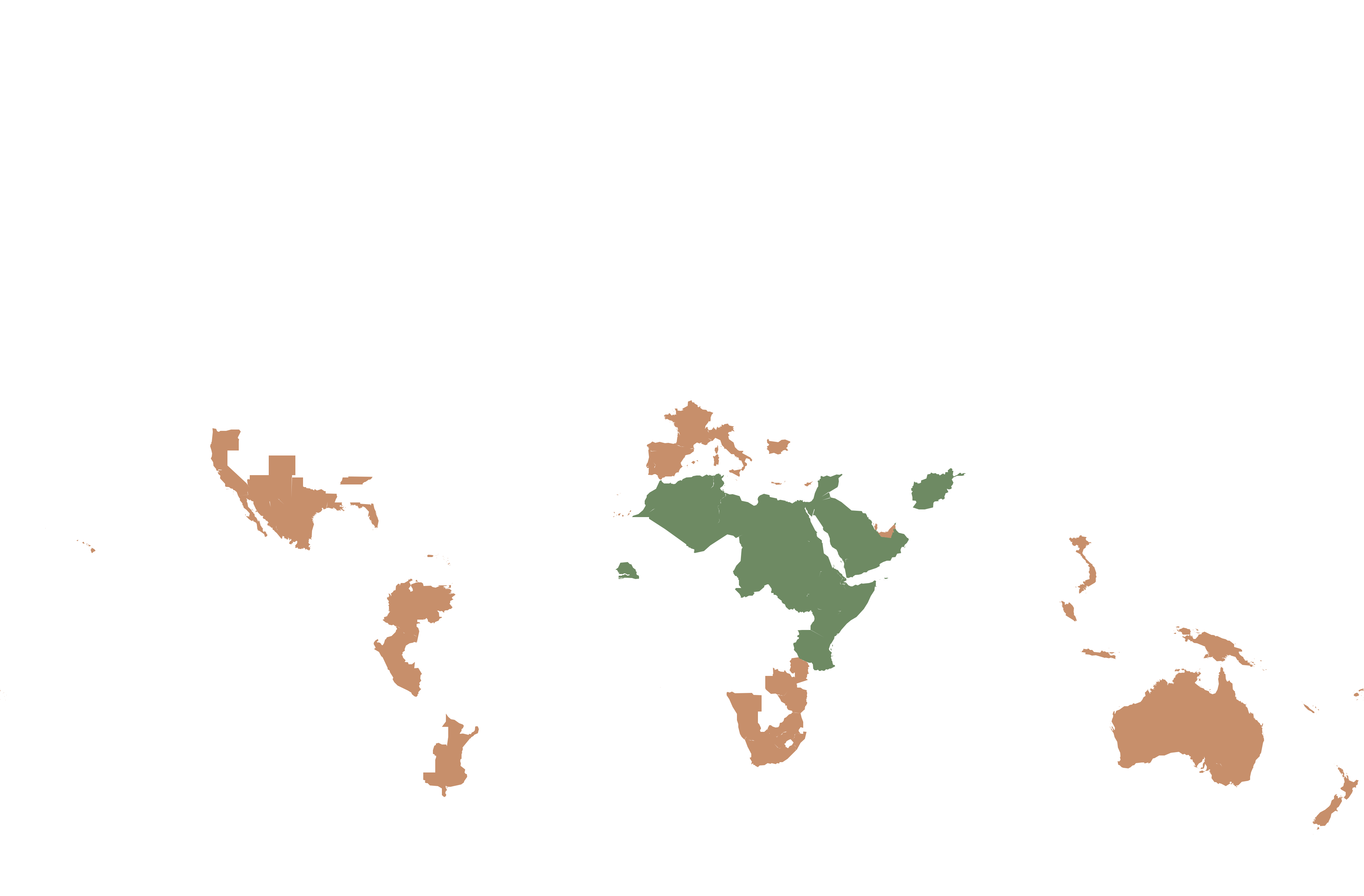
- Native
- Introduced
- Africa
- Western Asia
History

Pennisetum setaceum, commonly called fountain grass, is a tufted perennial (often grown as annual) grass in the family Poaceae native to tropical and subtropical North Africa, the Middle East, and southwestern Asia from Algeria and Sudan through Egypt and the Arabian Peninsula. Danish botanist Peter Forsskål originally described it as Phalaris setacea in 1775 from Yemen collections; Italian botanist Emilio Chiovenda transferred it to Pennisetum in 1923. Following the phylogenetic revision of Pennisetum and Cenchrus by Chemisquy and colleagues in 2010, the species was transferred to Cenchrus setaceus, though the horticulture trade retains Pennisetum.
Plants form dense 90-120 cm arching fountain-like mounds of narrow medium-green leaves with distinctive showy bottle-brush or foxtail-like 15-30 cm plumes in pink, purple-red, or copper tints from midsummer through fall. The purple-foliaged cultivar 'Rubrum' is ubiquitous as annual or tender perennial bedding.
The species has become notoriously invasive across Hawaii, California, South Africa, Mediterranean Europe, and Australia. Introduced to American horticulture in the 19th century. The wild green form has become highly invasive in California, Hawaii, and the Southwest, displacing native vegetation and increasing wildfire risk—plant only sterile selections like 'Rubrum' or 'Fireworks'.
Symbolism & meaning
What It Symbolizes
Fountain Grass is movement caught in plumes — graceful arching seedheads sway with every breeze, turning a still border into something always quietly in motion. Yet caution belongs in its story too: in the American West and Hawaii its wild green form has become an aggressive invader, fueling fires and crowding native flora. It is beauty kept in bounds by a single careful cultivar choice.
- Movement — graceful plumes sway in every breeze
- Caution — wild form invasive in the American West
Where the Name Comes From
The name Fountain Grass describes its fountain-like habit. 'Pennisetum' from Latin 'penna' (feather) and 'seta' (bristle); 'setaceum' means bristle-like.
Uses & Fun Facts
- Purple-leaved 'Rubrum' fountains anchor sunny landscape mass plantings
- Arching plumes star as thriller in large summer pots
Related plants
More Pennisetum plants
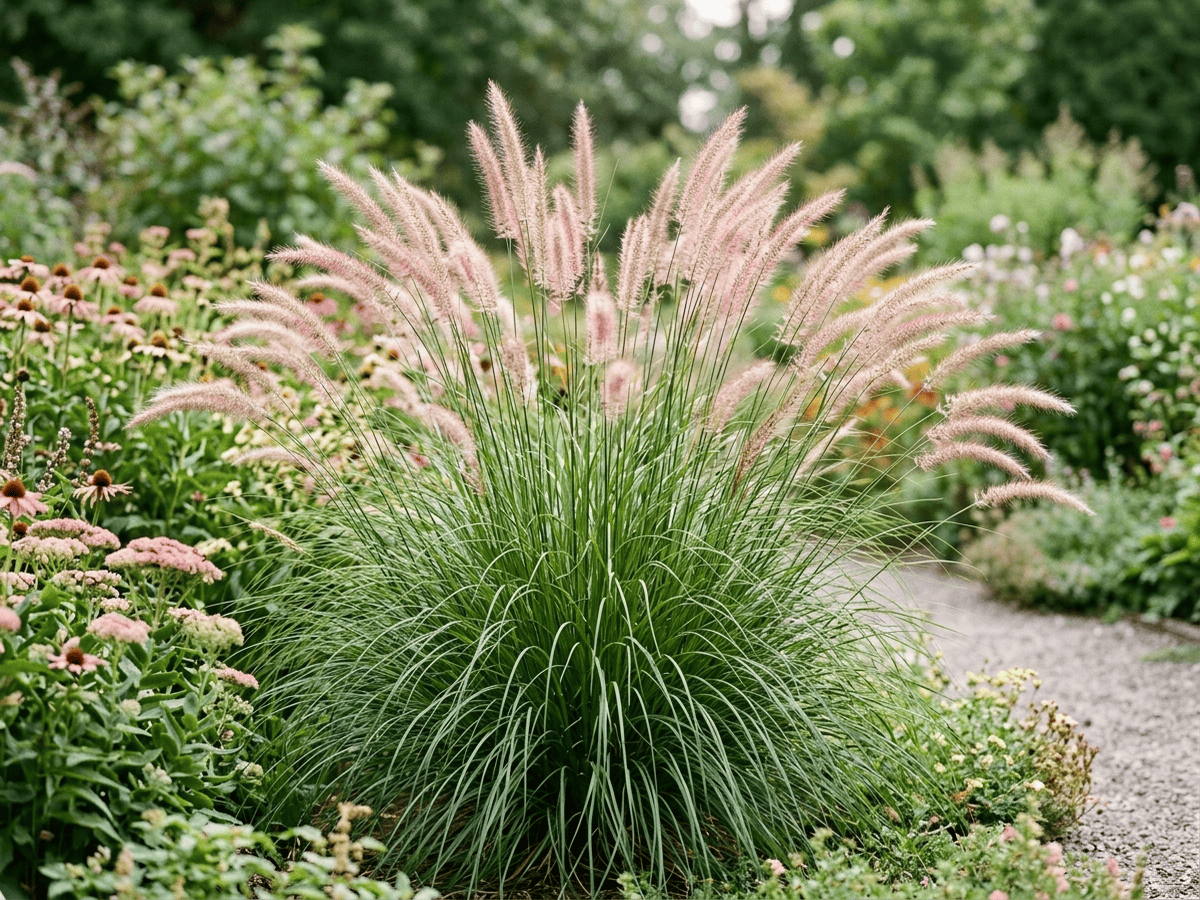
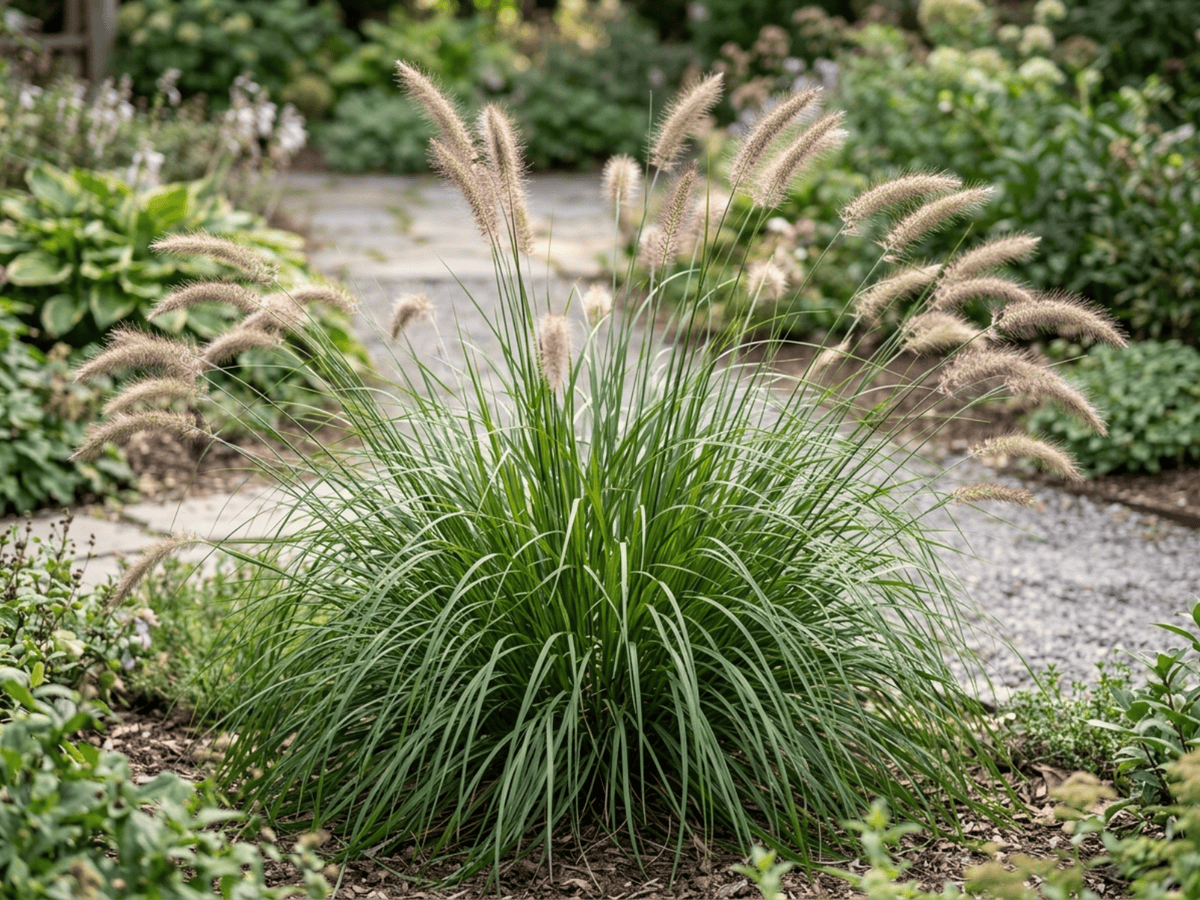 Chinese PennisetumPennisetum alopecuroides
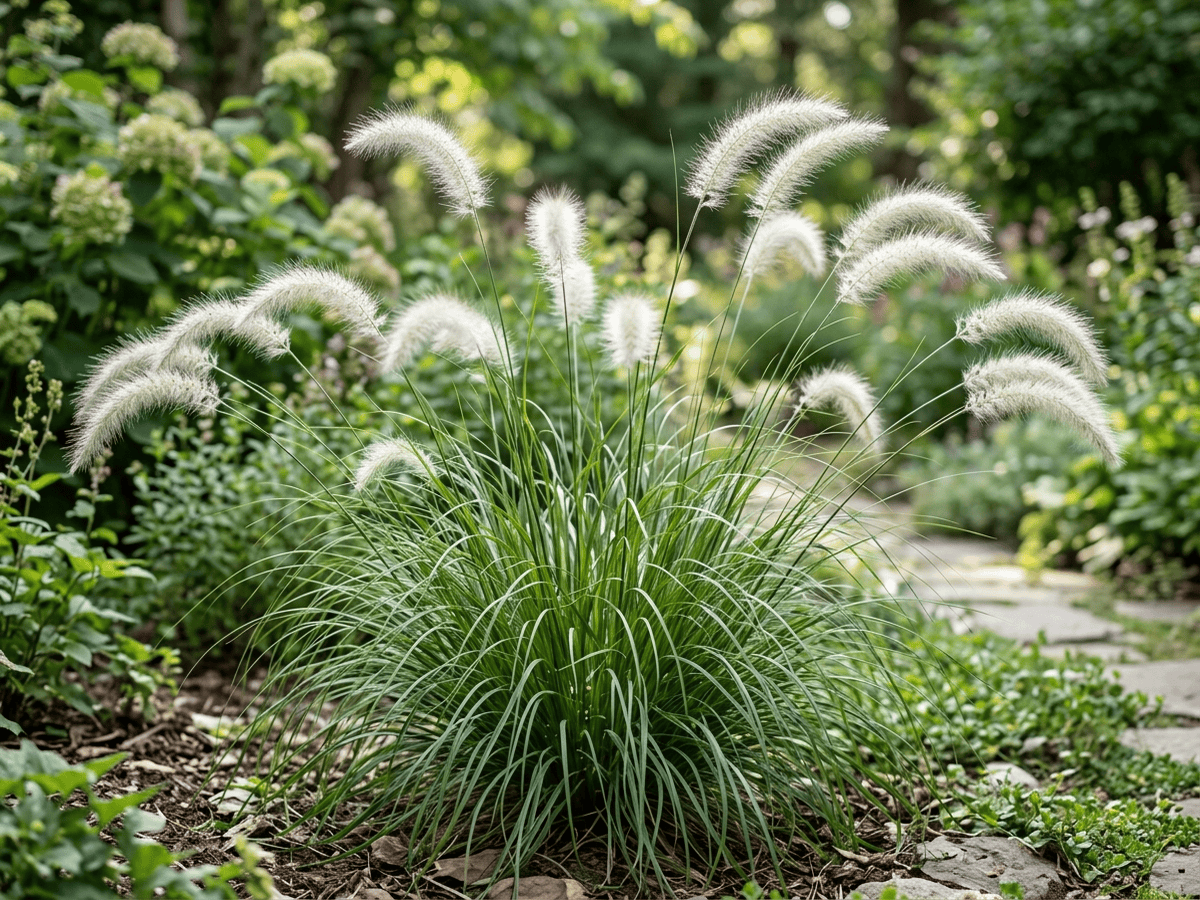
 Oriental Fountain GrassPennisetum orientale
 FeathertopPennisetum villosum
Plants with similar care
 Chinese AbeliaAbelia chinensis
 Fragrant AbeliaAbelia mosanensis
 Large-Flowered AbeliaAbelia uniflora
 Glossy AbeliaAbelia x grandiflora
Frequently asked questions
How often should I water Fountain Grass?
In summer, water about every 14 days; in winter, about every 30 days. Adjust for heat, pot size and drainage.
How much light does Fountain Grass need?
Full sun: 6+ hrs direct. Watch the leaves — scorching or stretching means the light needs adjusting.
Is Fountain Grass toxic to cats or dogs?
Pets Safe (Dogs Safe · Cats Safe) Educational information, not medical or veterinary advice. If exposure is suspected, contact a doctor or veterinarian.
Is Fountain Grass easy to grow?
Yes — it is considered an easy, beginner-friendly plant.
When does Fountain Grass bloom?
It typically blooms Jun–Nov in the Northern Hemisphere.
YardMate
Identify any plant in seconds
Snap a photo — YardMate names the plant, diagnoses problems, and reminds you when to water.
Download on the App Store