 YardMate

Foxglove Beardtongue
Penstemon digitalis
Easy · Beginner friendlyAbout Foxglove Beardtongue
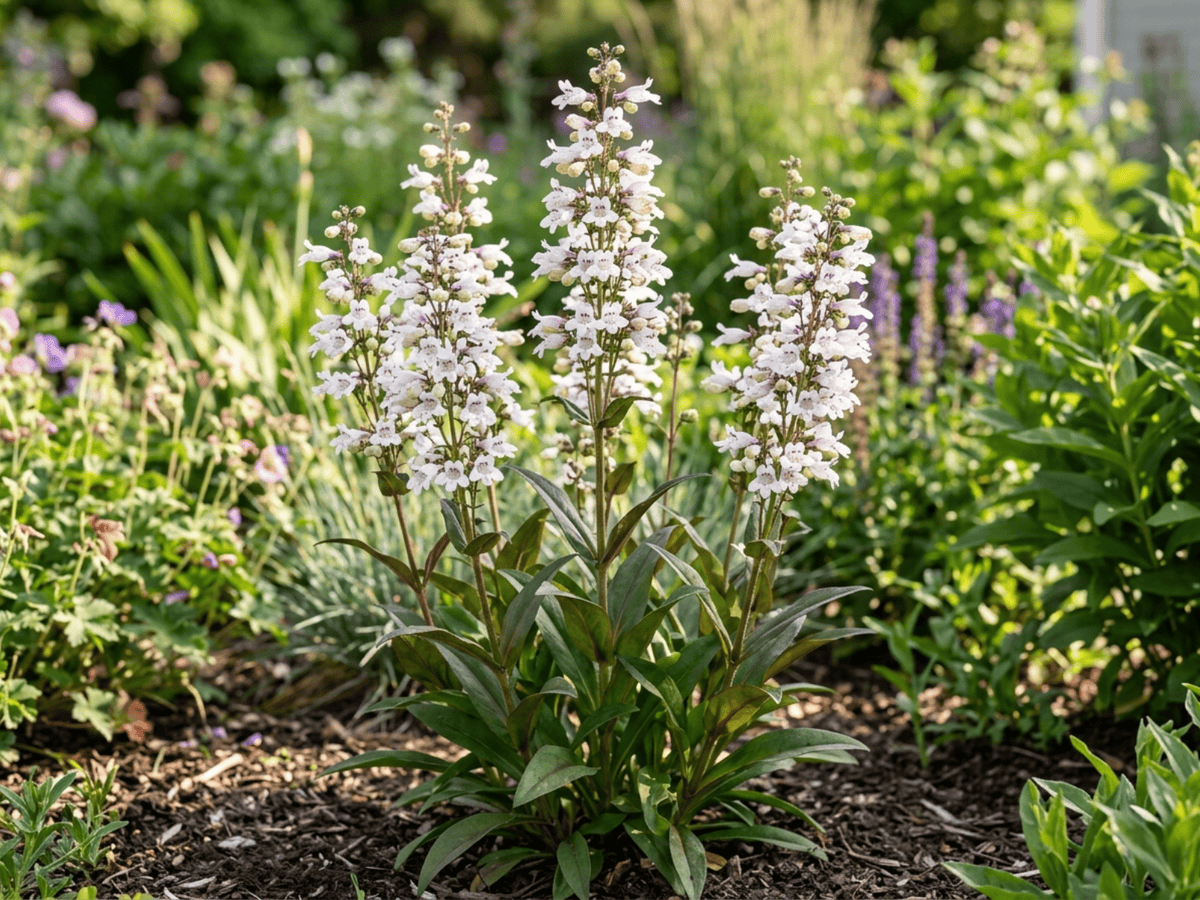
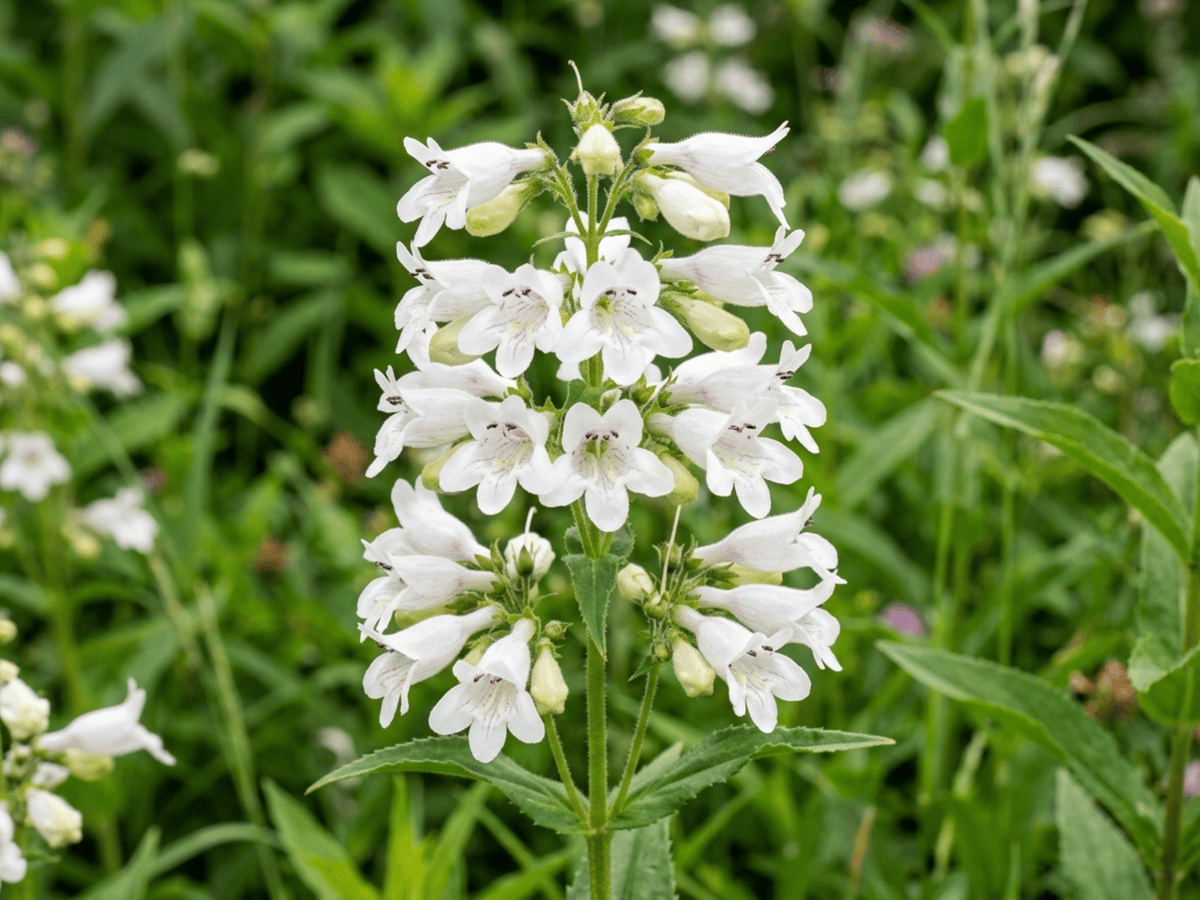
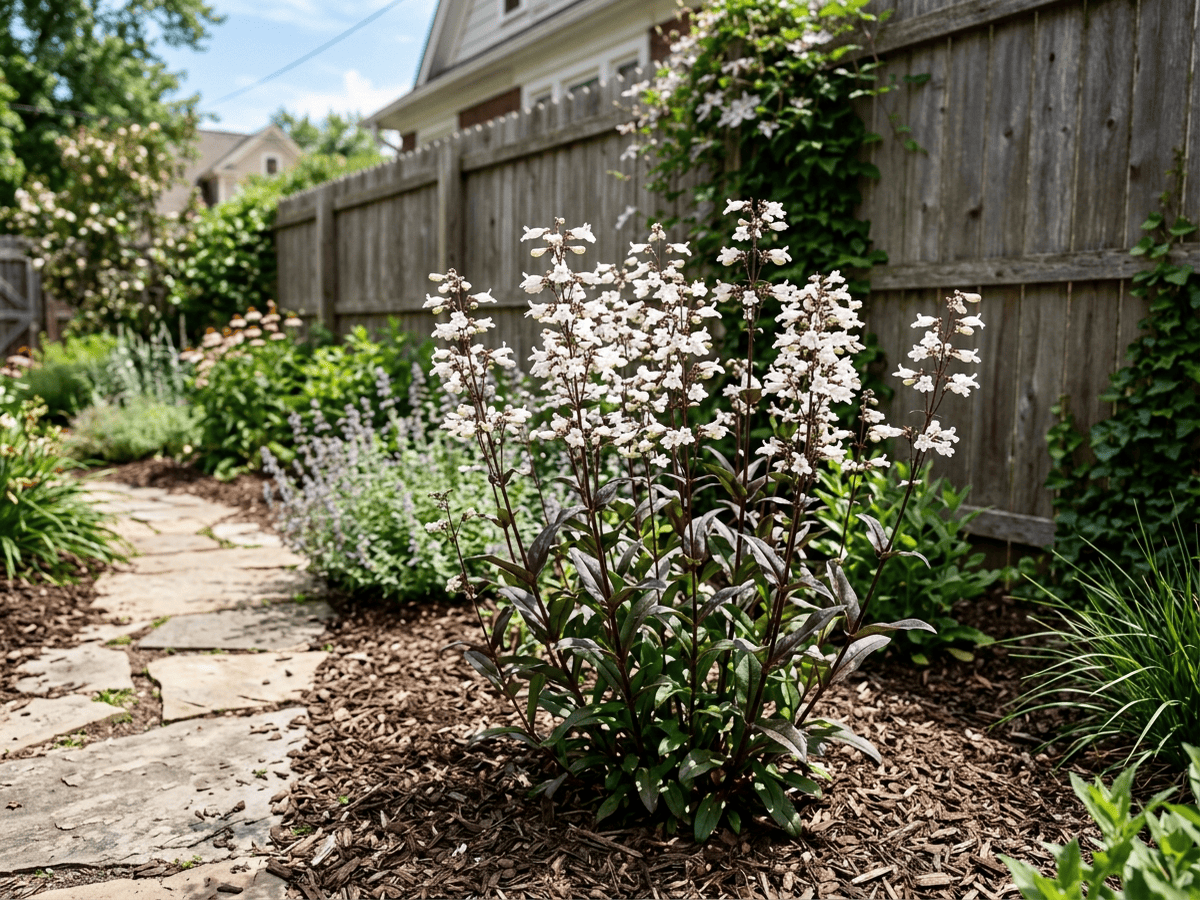
Penstemon digitalis, foxglove beardtongue, is an upright perennial wildflower native to eastern North America. It produces airy clusters of tubular white flowers, sometimes blushed with pink or lavender, on sturdy stems reaching 90 to 120 cm tall. The flowers resemble foxglove blooms and feature a fuzzy, tongue-like staminode inside — the 'beard' that gives the genus its common name. Hummingbirds are strongly attracted to the tubular flowers, making this plant essential for wildlife gardens. The cultivar 'Husker Red' won the Perennial Plant of the Year award in 1996, featuring dark burgundy foliage that contrasts dramatically with white flowers. Penstemon digitalis tolerates clay soil and moderate moisture better than most penstemons, which typically demand sharp drainage. It blooms in early summer and can be cut back afterward to encourage a second flush. The plant self-sows moderately and forms attractive basal rosettes through winter. It is deer-resistant and requires very little maintenance.
- Deer-resistant
- Native
How to care for Foxglove Beardtongue
Watering
- Springevery 7 days
- Summerevery 5 days
- Fallevery 14 days
- Winterevery 30 days
Soil · Well-draining
- Top dressingPine bark mulch10%
- Main mixPotting soil + perlite 2:170%
- DrainageLECA / gravel20%
Never skip the drainage layer — standing water is the top cause of root rot.
FERTILIZER
- Springevery 60 days
At a Glance
- NativeNorth America
- Height3–5 ft (0.9–1.5 m)
- Spread1.5–2 ft (0.5–0.6 m)
- Flower colorWhite, Pink
- Foliage colorGreen, Red, Purple
- SoilLoamy, Well-drained
- LocationsYard
Bloom time
BLOOM CYCLE
Peak bloom
Jun–Aug
Cut back after first bloom for a possible second flush; 'Husker Red' cultivar offers stunning burgundy foliage
Fragrance
NO FRAGRANCE
No notable fragrance.
Toxicity
No toxicity has been reported for this plant. Still, it is wise to keep pets from chewing on any houseplant.
Educational information, not medical or veterinary advice. If exposure is suspected, contact a doctor or veterinarian.
DISTRIBUTION


- Native
- Introduced
- North America
History
Penstemon digitalis is native to the central and eastern United States, from Maine and Quebec west to the Dakotas and south to Texas, growing in prairie, meadow, open woodland, and roadside habitats. It is one of the largest-flowered and most garden-adapted of the many eastern Penstemon species, producing upright 75-120 cm flowering spikes bearing loose panicles of 2.5-3 cm white (occasionally with a pink blush) tubular flowers from late spring through early summer. The common name "foxglove beardtongue" reflects two features: the flower shape and size broadly suggest the unrelated English foxglove (Digitalis, which gives the species epithet), and the presence of a prominent fifth sterile "beard-like" staminode inside each flower (the "beardtongue" character that names the entire Penstemon genus — Penstemon means "five stamens" in Greek).
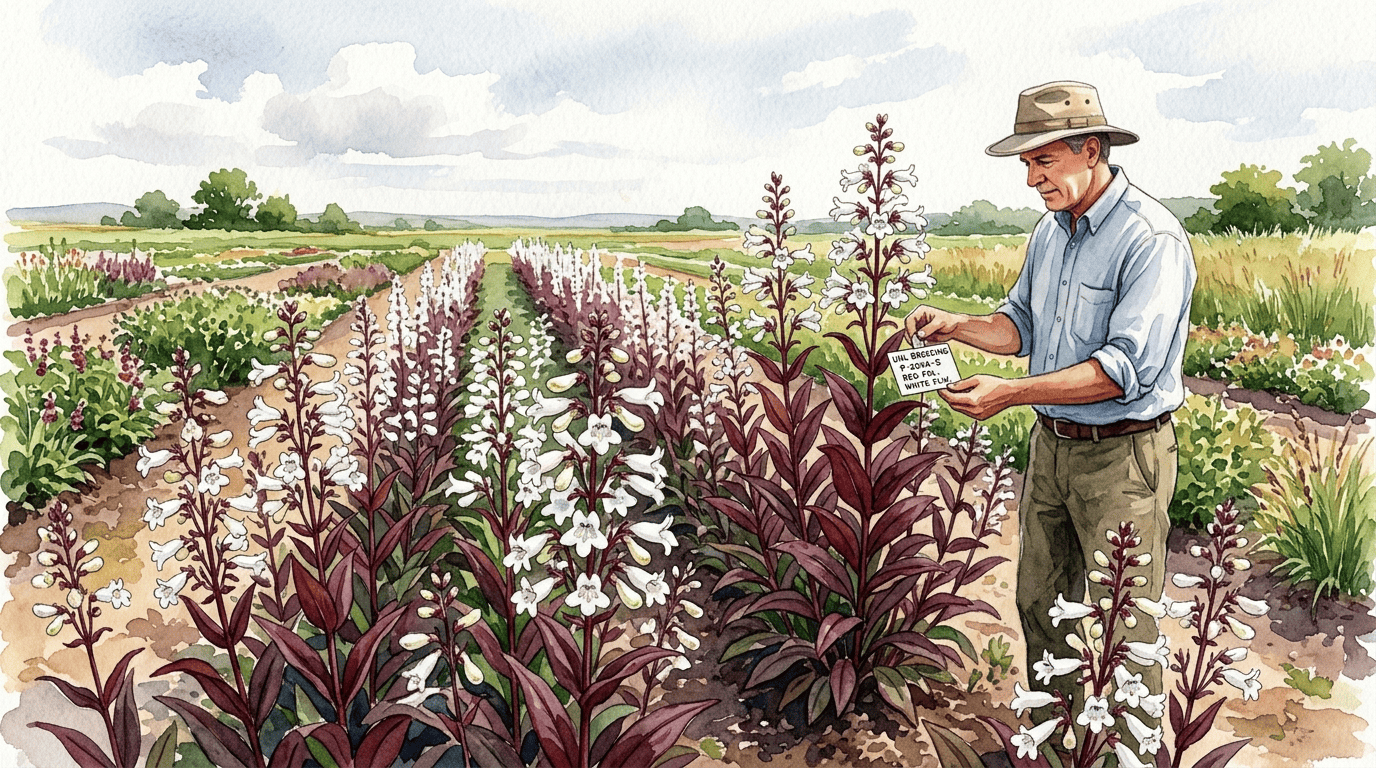
The species was dramatically elevated in garden horticulture by the 1983 release of "Husker Red," a burgundy-maroon-foliage selection made from University of Nebraska research plantings by Dr. Dale Lindgren. "Husker Red" was named the Perennial Plant Association Plant of the Year in 1996, the first native plant to receive that recognition, and launched a surge in broader interest in native Penstemon as garden plants.
The genus Penstemon is the largest genus of flowering plants endemic to North America, with over 250 species. More recent cultivars including "Dark Towers," "Midnight Masquerade," and "Onyx and Pearls" have extended the dark-leaved Penstemon category.
Symbolism & meaning
What It Symbolizes
Foxglove Beardtongue suggests grace, its elegant tubular flowers swaying on slender stems like a meadow's quiet courtesy. Paired with generosity, it freely offers nectar to hummingbirds and pollinators throughout summer, never stinting on its bell-shaped gifts. It is a native that makes giving look easy — beauty and abundance in the same long, leaning stalk.
- Grace — Elegant tubular flowers swaying on slender stems embody effortless beauty
- Generosity — Freely offers nectar to hummingbirds and pollinators throughout summer
Where the Name Comes From
Penstemon from Greek 'pente' (five) and 'stemon' (stamen), referring to the five stamens. Digitalis means 'finger-like,' comparing the flowers to foxglove (Digitalis).
Uses & Fun Facts
- White tubular flowers feed bumblebees and ruby-throated hummingbirds
- Burgundy-leaved selections give striking dark foliage all season
- Tall white flower spikes long-lasting in early-summer bouquets
Related plants
More Penstemon plants
 Rock PenstemonPenstemon baccharifolius
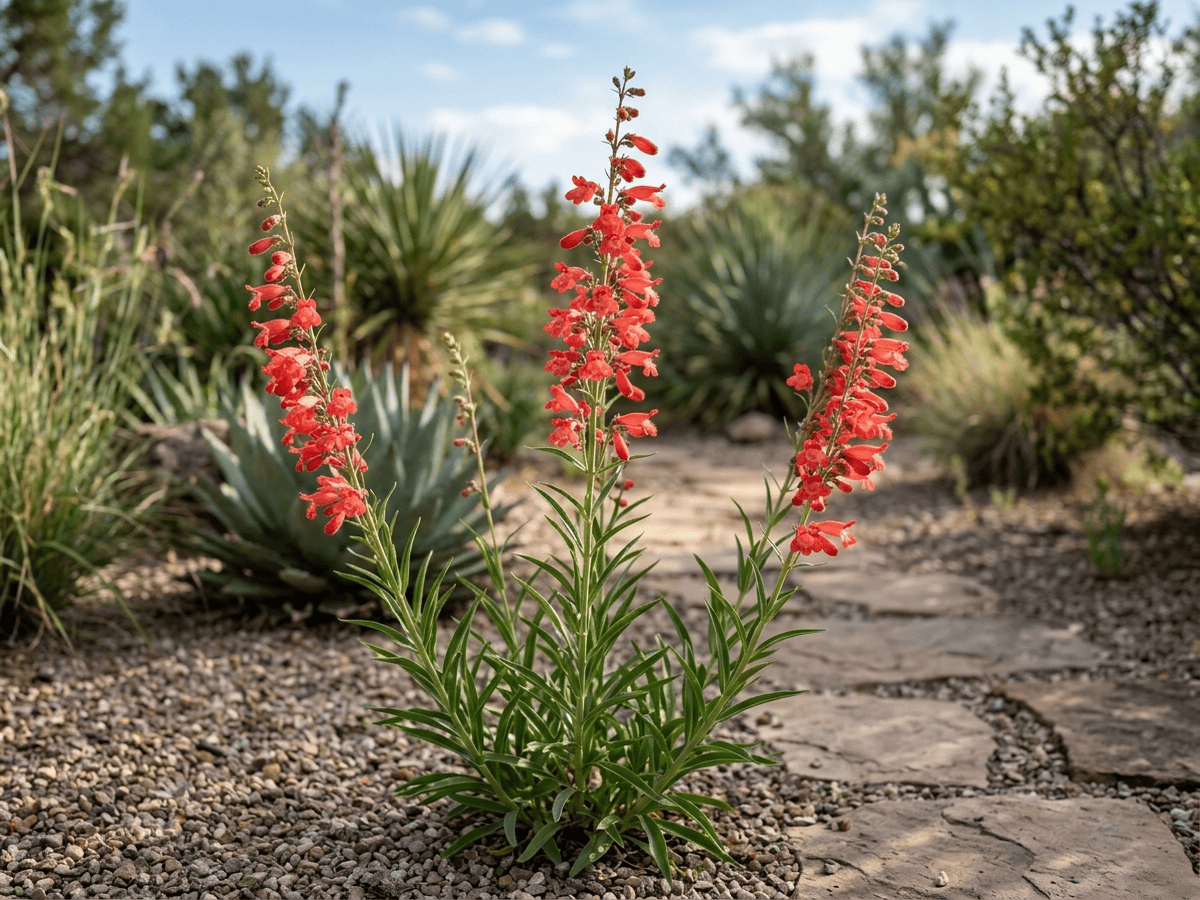 Beardlip PenstemonPenstemon barbatus
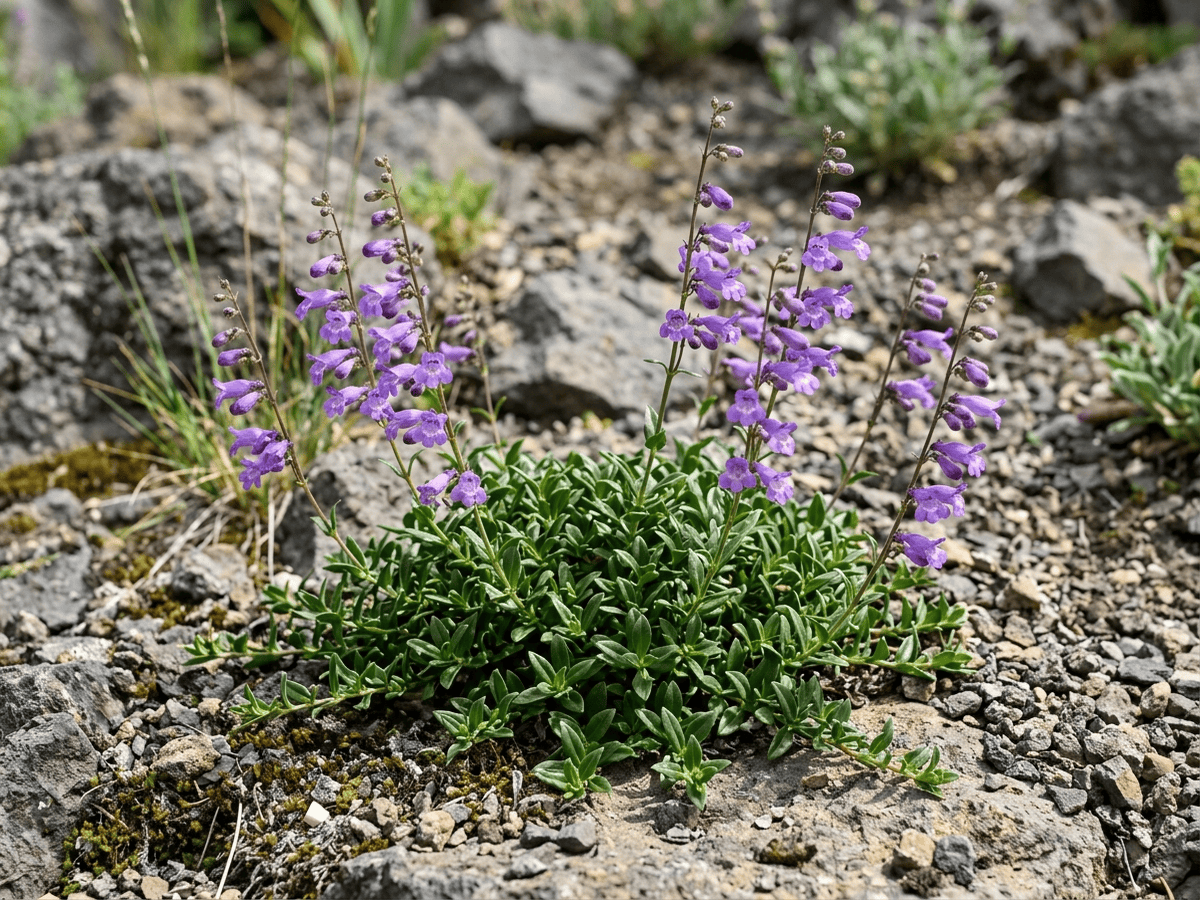 Cardwell's BeardtonguePenstemon cardwellii
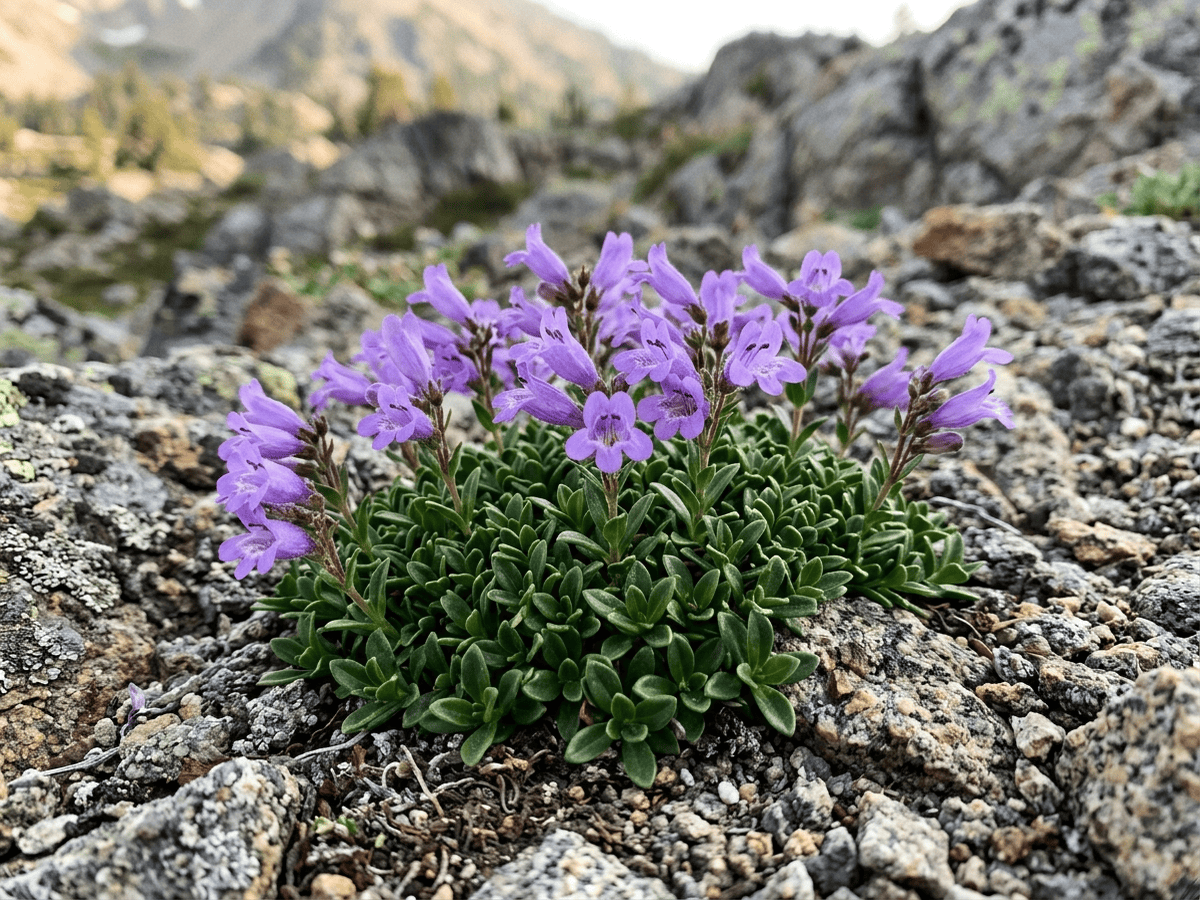 Davidson's PenstemonPenstemon davidsonii
Plants with similar care
 Chinese AbeliaAbelia chinensis
 Fragrant AbeliaAbelia mosanensis
 Large-Flowered AbeliaAbelia uniflora
 Glossy AbeliaAbelia x grandiflora
Frequently asked questions
How often should I water Foxglove Beardtongue?
In summer, water about every 5 days; in winter, about every 30 days. Adjust for heat, pot size and drainage.
How much light does Foxglove Beardtongue need?
Full sun: 6+ hrs direct. Watch the leaves — scorching or stretching means the light needs adjusting.
Is Foxglove Beardtongue toxic to cats or dogs?
No toxicity has been reported for this plant. Still, it is wise to keep pets from chewing on any houseplant. Educational information, not medical or veterinary advice. If exposure is suspected, contact a doctor or veterinarian.
Is Foxglove Beardtongue easy to grow?
Yes — it is considered an easy, beginner-friendly plant.
When does Foxglove Beardtongue bloom?
It typically blooms Jun–Aug in the Northern Hemisphere.
YardMate
Identify any plant in seconds
Snap a photo — YardMate names the plant, diagnoses problems, and reminds you when to water.
Download on the App Store