 YardMate


Watermelon Peperomia
Peperomia argyreia
Easy · Beginner friendlyAbout Watermelon Peperomia
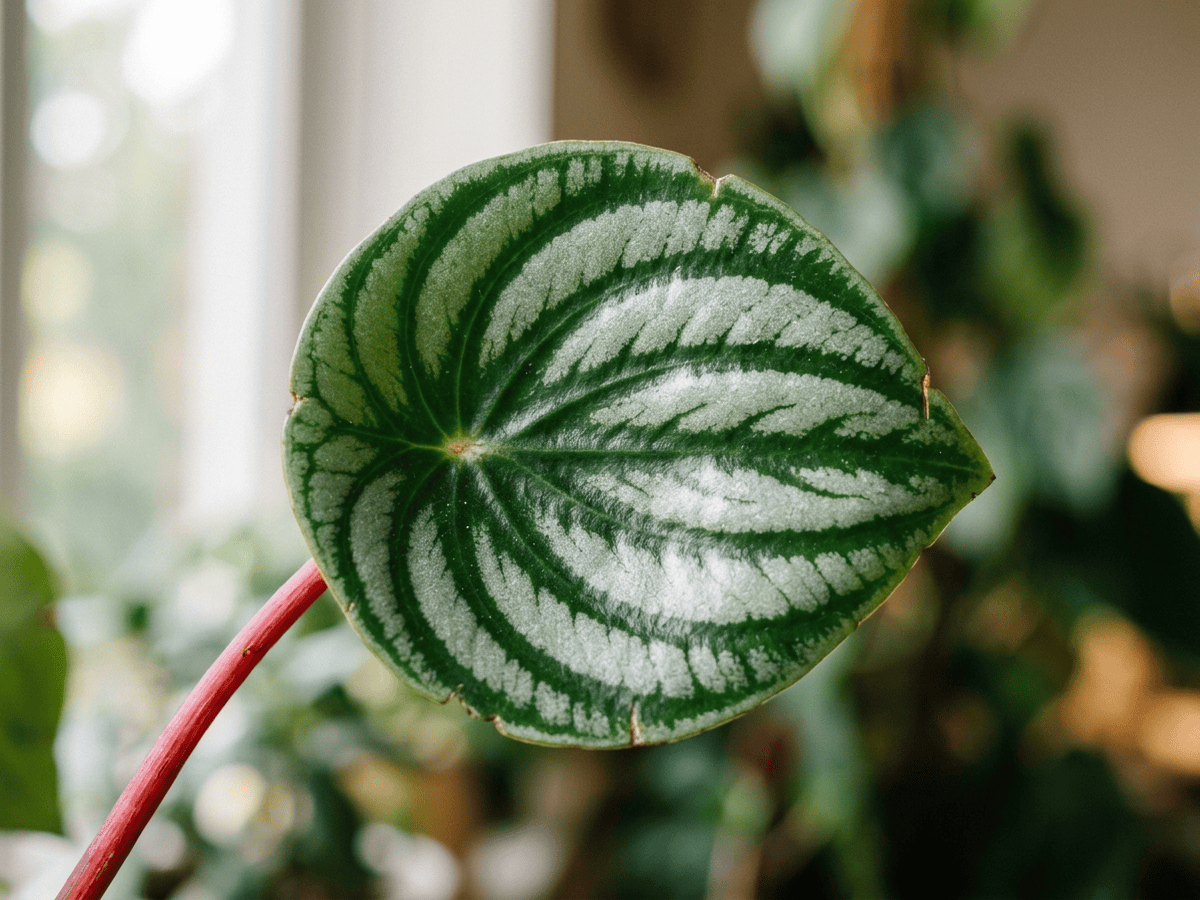
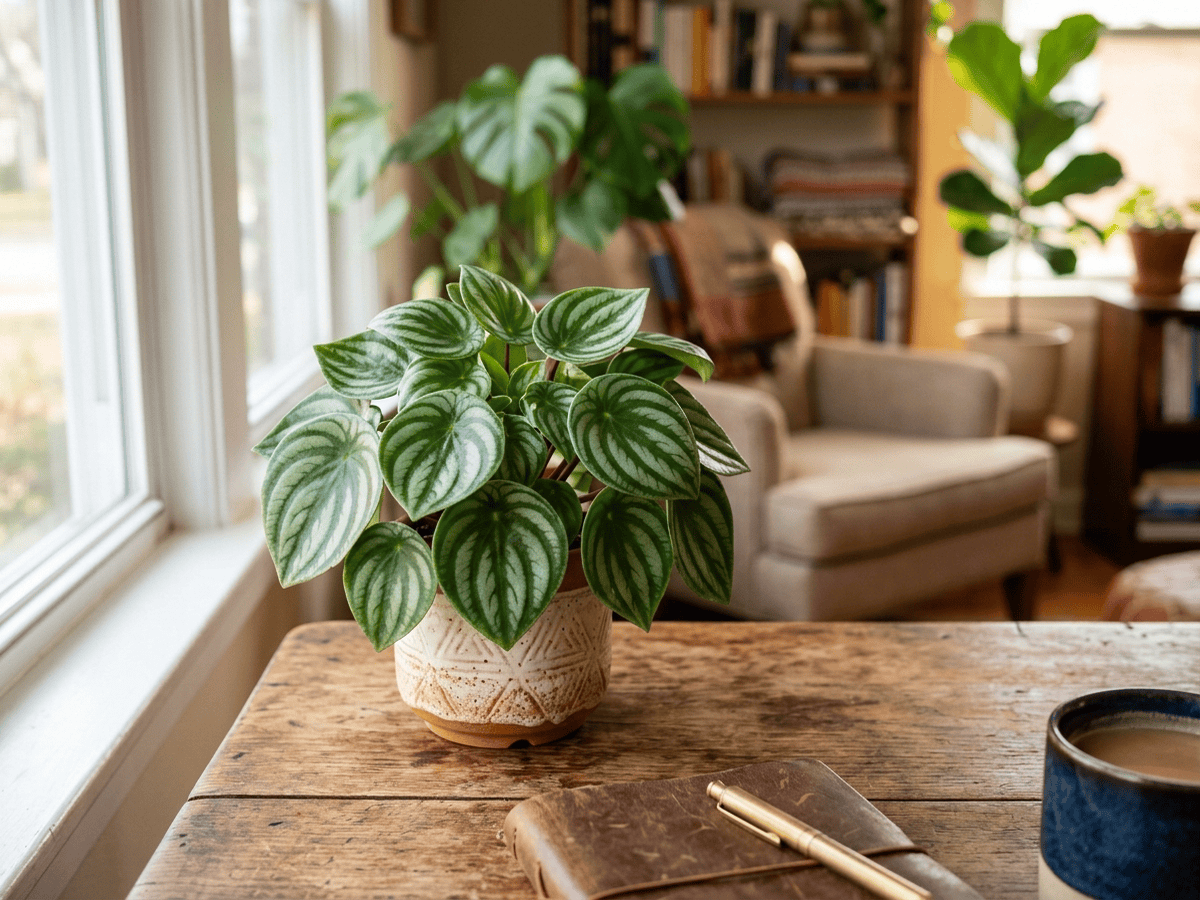
Watermelon Peperomia is a charming Brazilian rainforest perennial with thick succulent oval leaves striped in dark and silver green like a watermelon rind, on contrasting red stems. Reaching only 6-12 inches tall, its compact form and striking foliage make it a beloved tabletop houseplant. Pet-safe and easy to grow, it is one of the most popular small foliage plants in modern American homes.
- Evergreen
- Compact
How to care for Watermelon Peperomia
Watering
- Springevery 10 days
- Summerevery 10 days
- Fallevery 14 days
- Winterevery 21 days
Soil · Fast-draining
- Main mixSand + pumice + soil 1:1:150%
- DrainagePumice / gravel50%
Keep grit at half the mix or more — this soil is meant to dry out fast.
FERTILIZER
Balanced Feed 14-14-14
An even feed covers all three needs at once, keeping leaves, roots and blooms moving together with nothing pushed out of balance.
- Nitrogen · Leaves
- Phosphorus · Roots + Blooms
- Potassium · Strength
- Springevery 45 days
- Summerevery 45 days
At a Glance
- NativeSouth America
- Height0.5–1 ft (0.2–0.3 m)
- Spread0.5–1 ft (0.2–0.3 m)
- Flower colorWhite, Green
- Foliage colorDark-green, Variegated
- SoilLoamy, Well-drained
- LocationsIndoor
Bloom time
BLOOM CYCLE
Peak bloom
Jun–Aug
Slender white-green flower spikes (uncommon and unspectacular)
Toxicity
Pets Safe
None reported
Not reported
EXPOSURE No exposure route is reported.
EFFECT No toxic effect is reported.
NOTE No human toxicity is reported in this catalog; avoid eating ornamental plants unless confirmed edible.
Safe
EXPOSURE No exposure route is reported.
EFFECT No toxic effect is reported.
NOTE Listed as non-toxic for dogs; avoid eating ornamental plants unless confirmed edible.
Safe
EXPOSURE No exposure route is reported.
EFFECT No toxic effect is reported.
NOTE Listed as non-toxic for cats; avoid eating ornamental plants unless confirmed edible.
Educational information, not medical or veterinary advice. If exposure is suspected, contact a doctor or veterinarian.
DISTRIBUTION


- Native
- Introduced
- South America
History
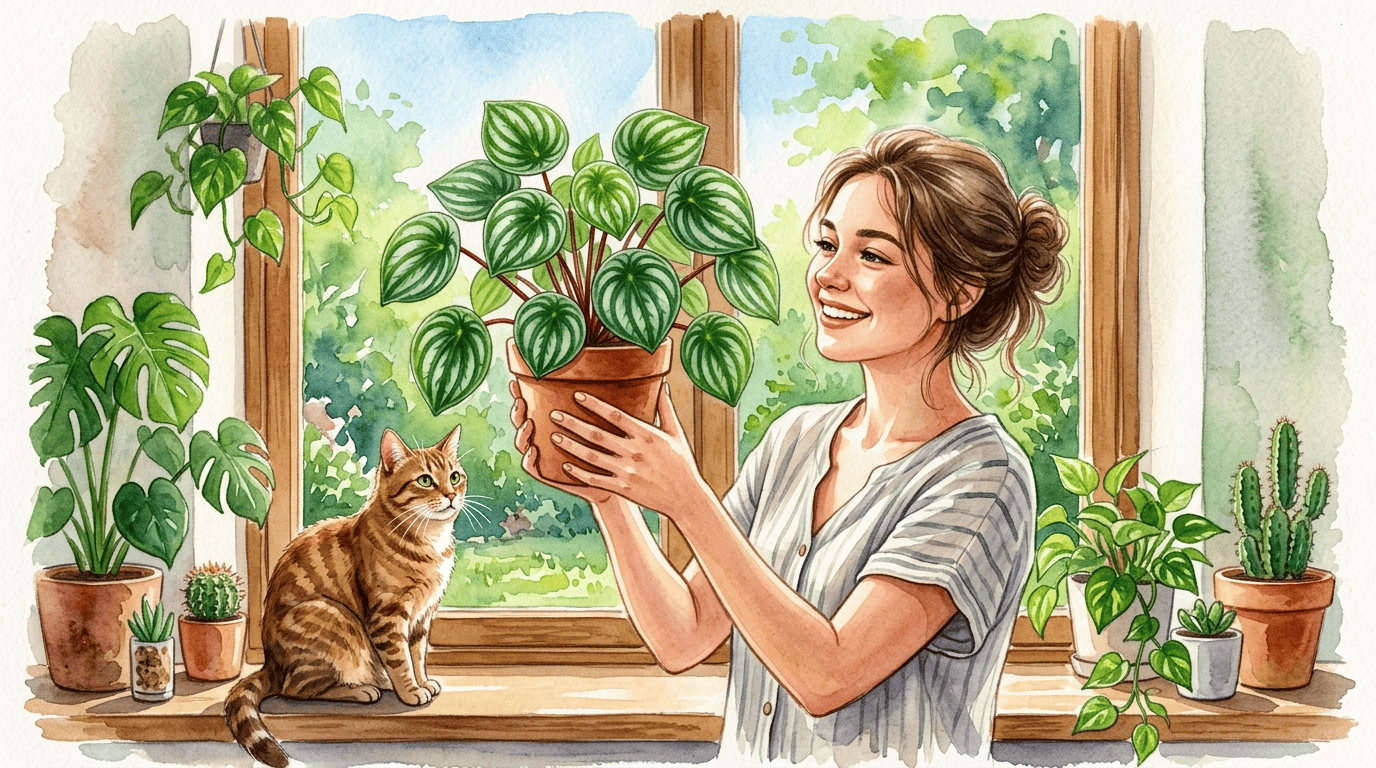
Peperomia argyreia, commonly called watermelon peperomia or watermelon begonia, is a small rhizomatous perennial in the pepper family (Piperaceae) native to rainforest understory of northern South America, particularly Brazil, Bolivia, Venezuela, Peru, and Ecuador. British botanist Thomas Moore described it as Peperomia arifolia var. argyreia in 1863; Belgian botanist Édouard Morren later elevated it to species rank. The epithet argyreia derives from Greek argyros meaning silver, referring to the signature silver stripes on the foliage.
Plants grow as compact 20-30 cm clumps with distinctive rounded shield-shaped (peltate) leaves 6-10 cm across held on slender reddish petioles attached centrally to the underside of the leaf. The glossy dark green leaf surface displays radiating silvery-green stripes arranged like the rind pattern of a watermelon, for which the common name was coined.
Tiny inconspicuous rat-tail-like cream-colored flower spikes appear in spring. Widely sold houseplant since the 1950s, valued for its distinctive foliage, ease of care, and non-toxicity to pets. Long popular as a houseplant for its distinctive watermelon-rind patterning, it became a defining small foliage plant of the modern American houseplant boom as collectors sought pet-safe alternatives to common toxic species.
Symbolism & meaning
What It Symbolizes
Watermelon Peperomia is domestic cheer in a pot. Round striped leaves look like tiny watermelons, bringing humor and freshness to shelves where most foliage plants rely on seriousness. Its symbolism is playful comfort: a compact houseplant that makes the room feel lighter without asking for much space.
- Joy — playful watermelon-pattern foliage
- Safety — pet-safe foliage with watermelon striping for desks and shelves
Where the Name Comes From
'Peperomia' from Greek meaning resembling pepper; 'argyreia' from Greek meaning silver.
Uses & Fun Facts
- Pet-safe tabletop houseplant for medium indirect indoor light
- Watermelon-striped succulent leaves on contrasting red stems
Related plants
More Peperomia plants
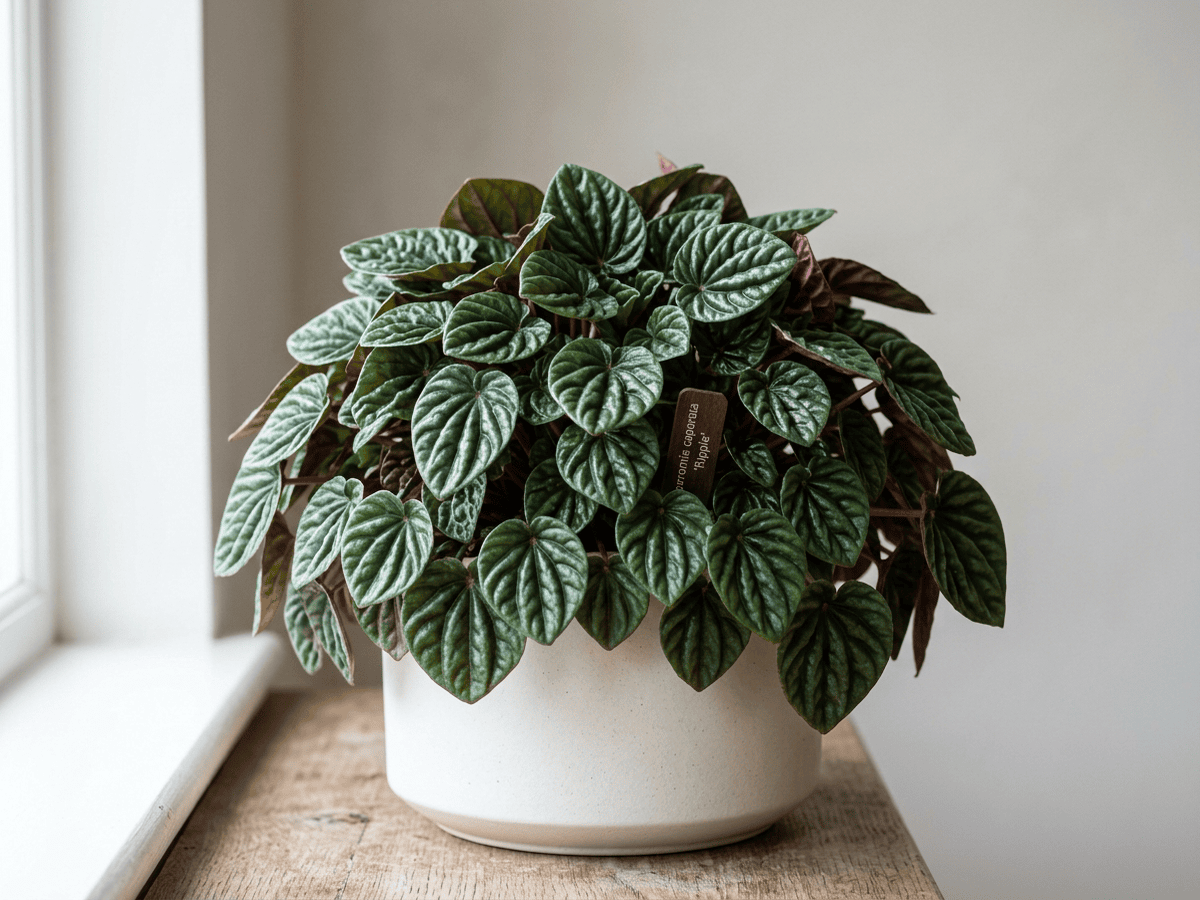 Emerald-Ripple PeperomiaPeperomia caperata
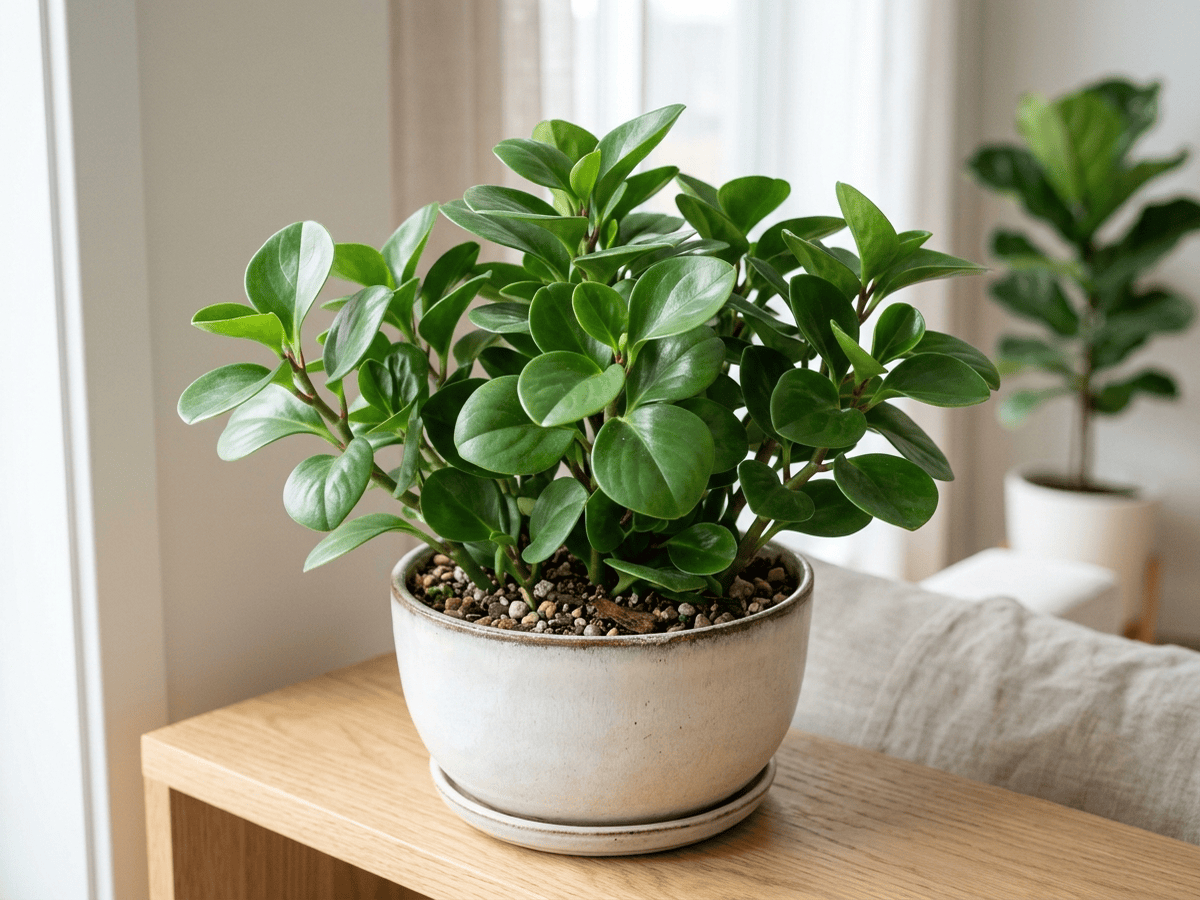 Baby Rubber PlantPeperomia obtusifolia
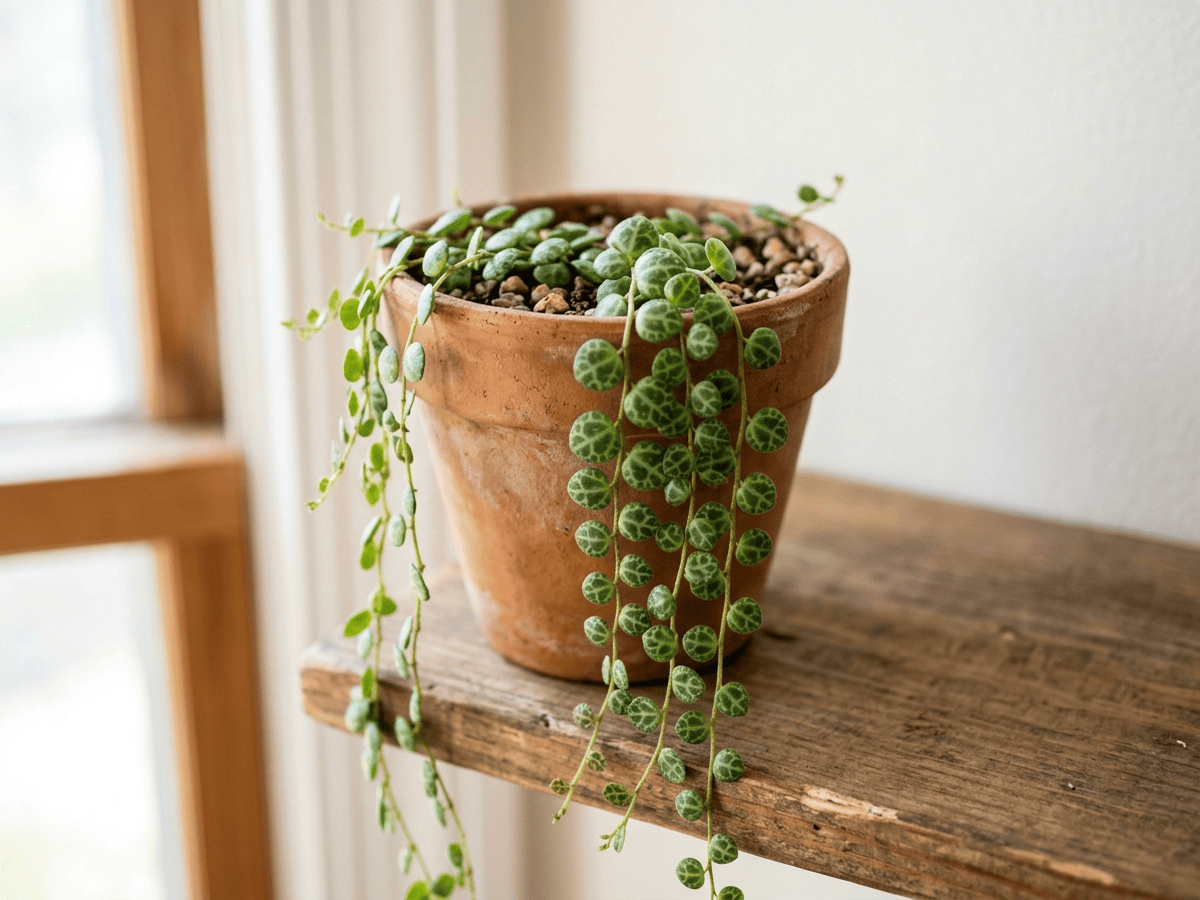 String-Of-TurtlesPeperomia prostrata
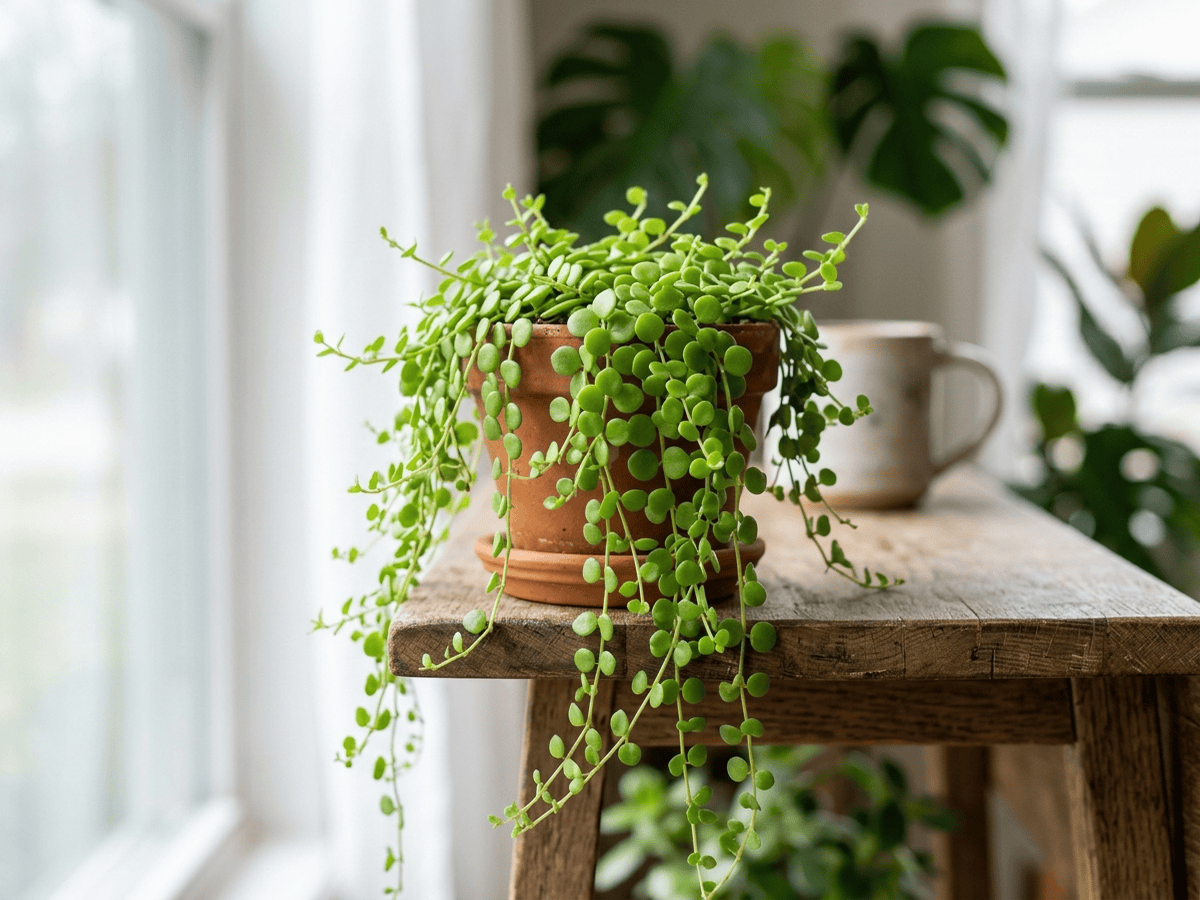 Jade NecklacePeperomia rotundifolia
Plants with similar care
 Giant TaroAlocasia macrorrhizos
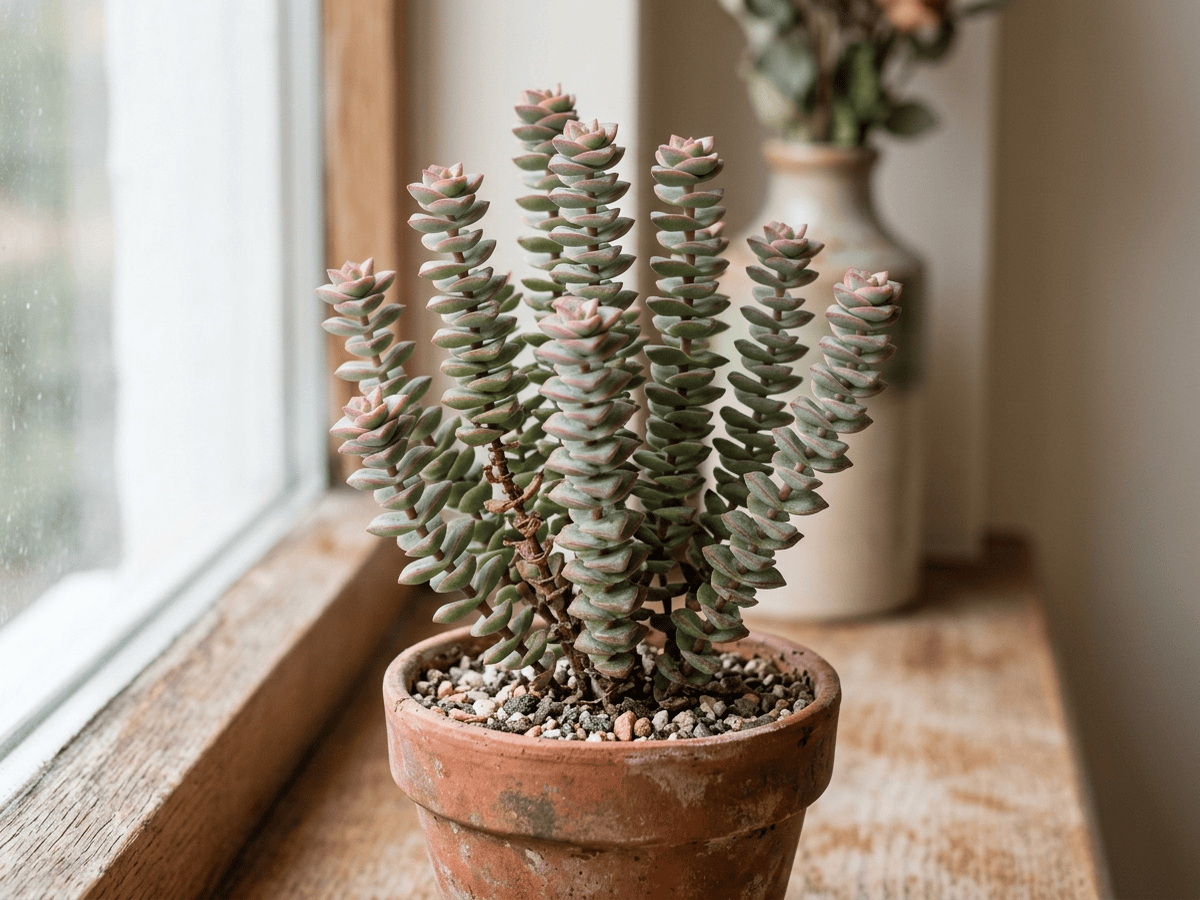 Concertina PlantCrassula perforata
 Song Of IndiaDracaena reflexa
 Snake PlantDracaena trifasciata
Frequently asked questions
How often should I water Watermelon Peperomia?
In summer, water about every 10 days; in winter, about every 21 days. Adjust for heat, pot size and drainage.
How much light does Watermelon Peperomia need?
Indirect: Filtered light. Watch the leaves — scorching or stretching means the light needs adjusting.
Is Watermelon Peperomia toxic to cats or dogs?
Pets Safe (Dogs Safe · Cats Safe) Educational information, not medical or veterinary advice. If exposure is suspected, contact a doctor or veterinarian.
Is Watermelon Peperomia easy to grow?
Yes — it is considered an easy, beginner-friendly plant.
Can Watermelon Peperomia be grown indoors?
Yes, it adapts well to indoor growing given the right light.
When does Watermelon Peperomia bloom?
It typically blooms Jun–Aug in the Northern Hemisphere.
YardMate
Identify any plant in seconds
Snap a photo — YardMate names the plant, diagnoses problems, and reminds you when to water.
Download on the App Store