 YardMate

Emerald-Ripple Peperomia
Peperomia caperata
Easy · Beginner friendlyAbout Emerald-Ripple Peperomia
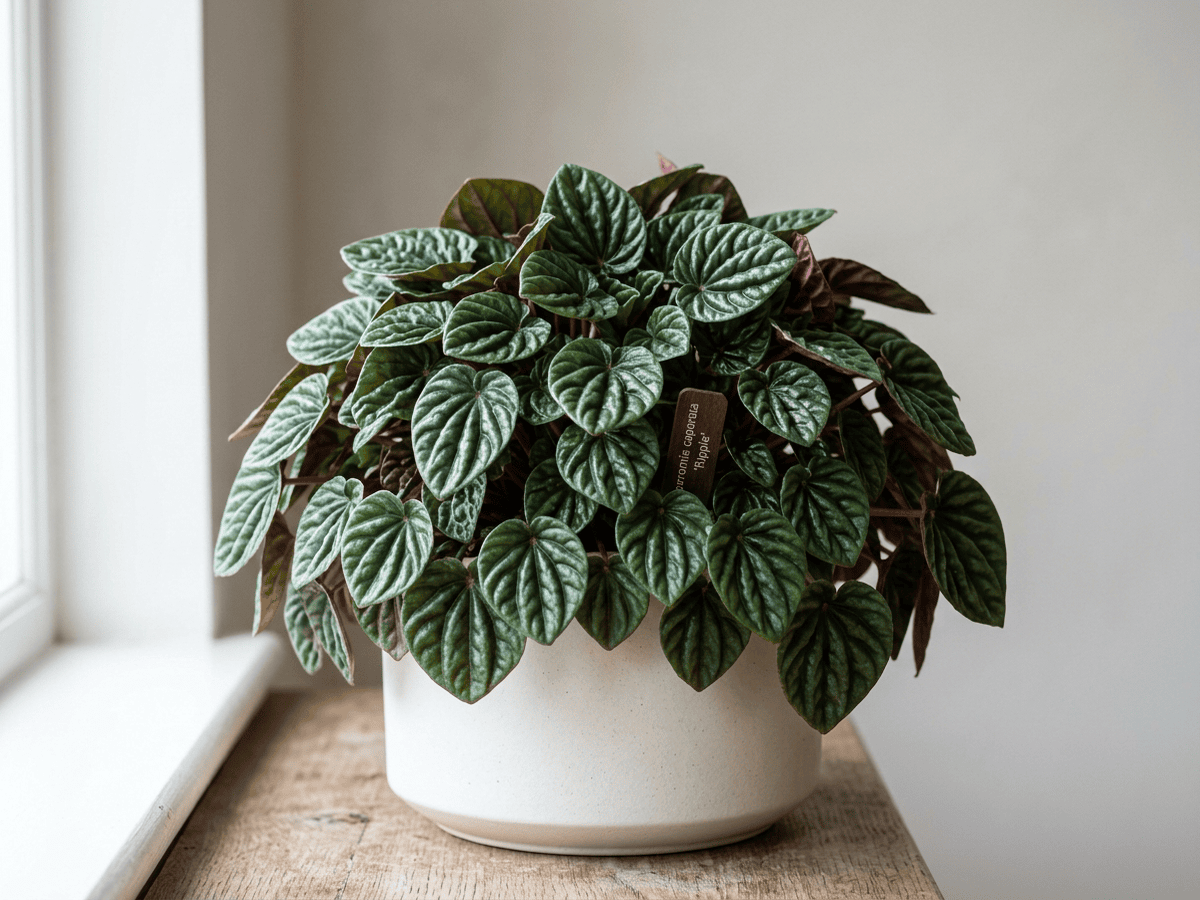
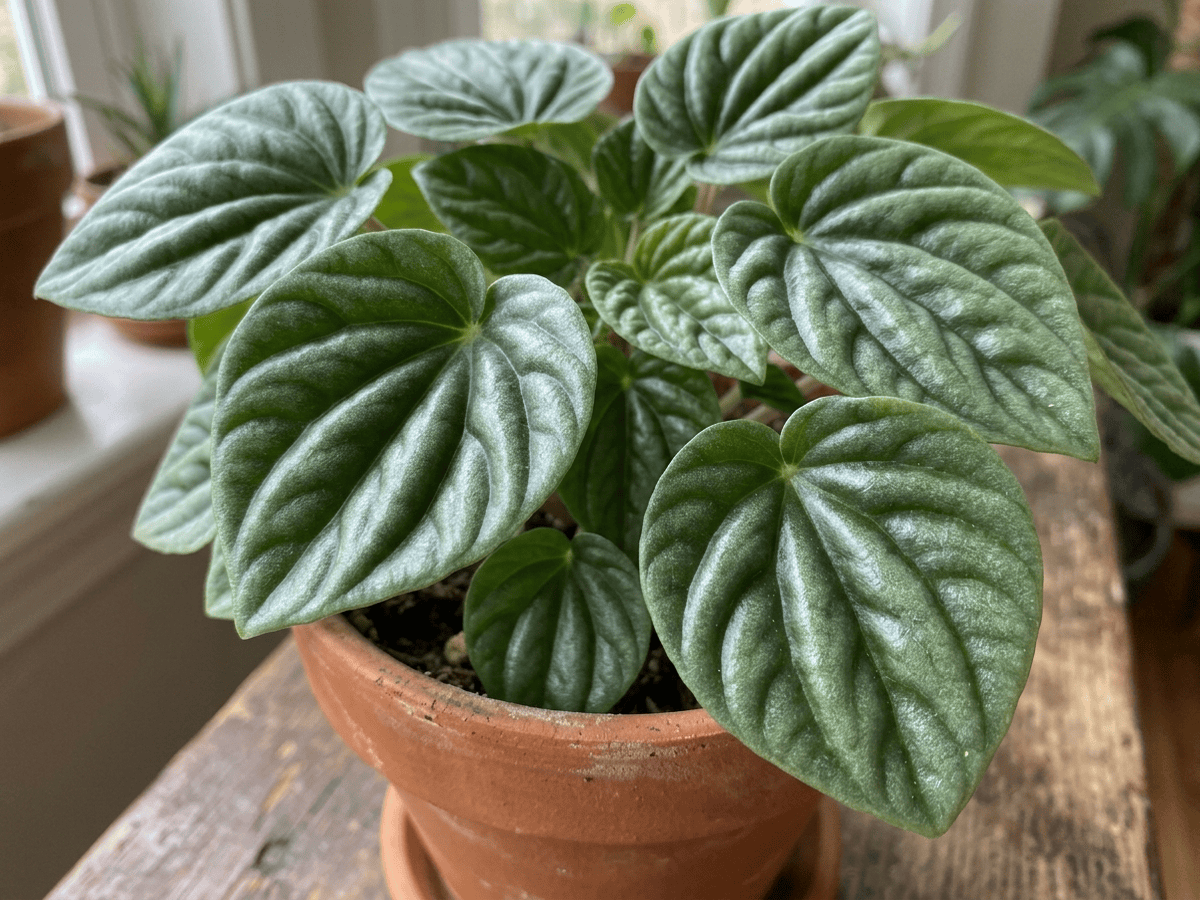
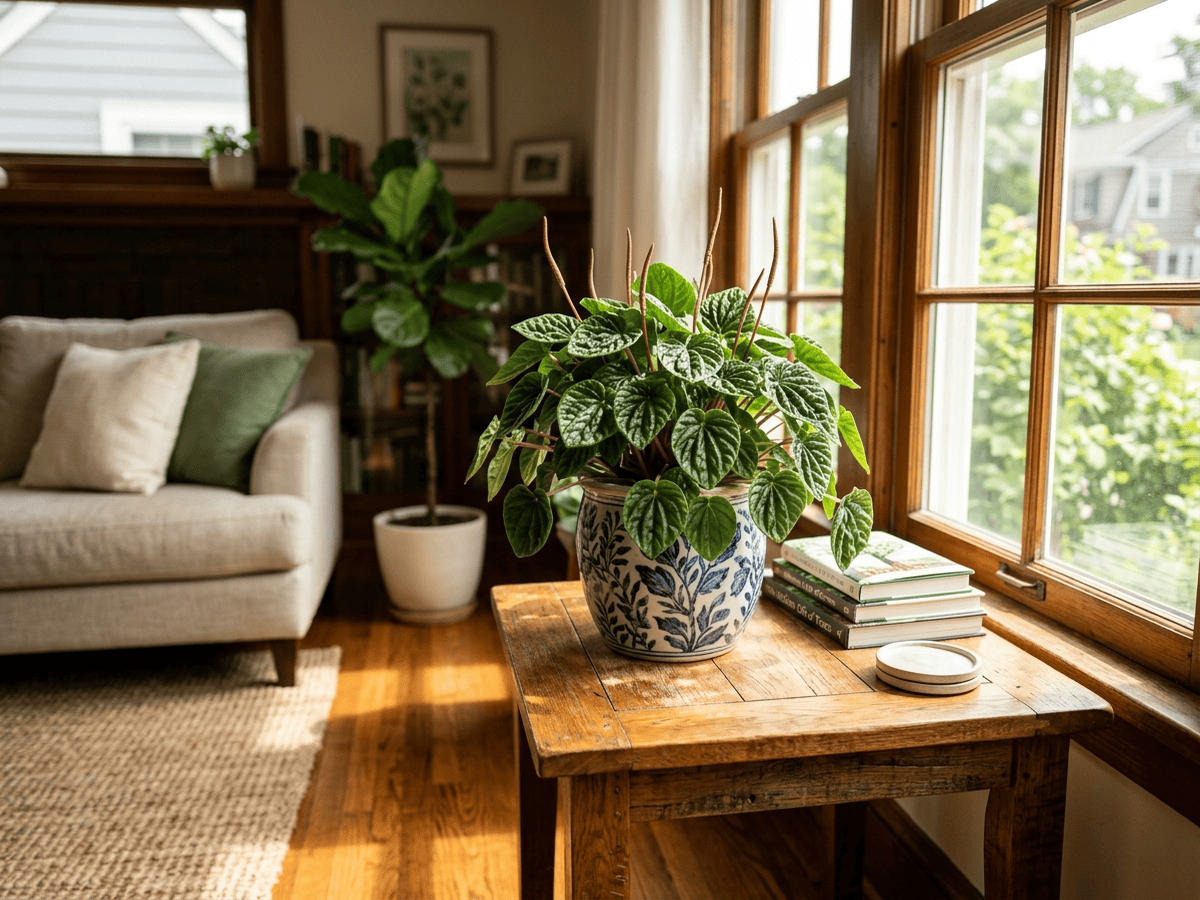
Peperomia caperata, the emerald ripple peperomia, features deeply corrugated, heart-shaped leaves with a metallic sheen in shades of green, red, or silver. The dramatic texture is unique among houseplants — each leaf looks sculpted with deep ridges and valleys. Native to Brazilian rainforests, it stays compact at 15–25 cm and produces slender white flower spikes that contrast beautifully against the dark foliage. It is easy to propagate from leaf cuttings and thrives in moderate light. Popular cultivars include 'Rosso' with red undersides and 'Silver Ripple' with metallic grey leaves.
- Compact
How to care for Emerald-Ripple Peperomia
Watering
- Springevery 10 days
- Summerevery 7 days
- Fallevery 14 days
- Winterevery 21 days
Soil · Fast-draining
- Main mixSand + pumice + soil 1:1:150%
- DrainagePumice / gravel50%
Keep grit at half the mix or more — this soil is meant to dry out fast.
FERTILIZER
Balanced Feed 14-14-14
An even feed covers all three needs at once, keeping leaves, roots and blooms moving together with nothing pushed out of balance.
- Nitrogen · Leaves
- Phosphorus · Roots + Blooms
- Potassium · Strength
- Springevery 45 days
- Summerevery 45 days
- Fallevery 60 days
At a Glance
- NativeSouth America
- Height0.5–0.8 ft (0.2–0.2 m)
- Spread0.5–0.8 ft (0.2–0.2 m)
- Flower colorWhite, Cream
- Foliage colorGreen, Red, Silver
- SoilWell-drained, Loamy, Rich
- LocationsIndoor
Bloom time
BLOOM CYCLE
Peak bloom
Jun–Aug
White rat-tail flower spikes; charming contrast
Fragrance
NO FRAGRANCE
Not fragrant.
Toxicity
No toxicity has been reported for this plant. Still, it is wise to keep pets from chewing on any houseplant.
Educational information, not medical or veterinary advice. If exposure is suspected, contact a doctor or veterinarian.
DISTRIBUTION


- Native
- Introduced
- South America
History
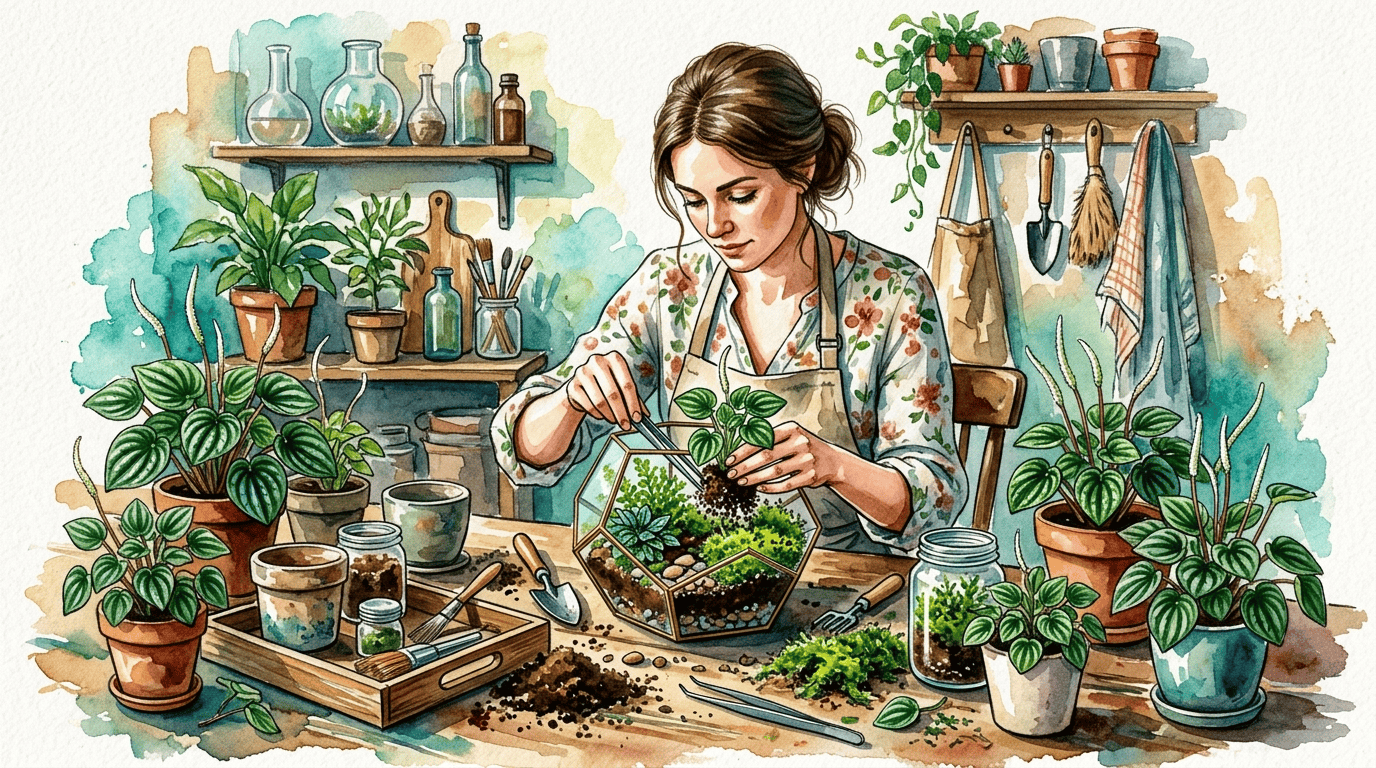
Peperomia caperata is native to the Atlantic rainforest of southeastern Brazil, where it grows on humid mossy rocks and tree bases. Described in 1958, it reached Western commercial horticulture in the 1960s and quickly became a favorite of the mid-century terrarium and dish-garden craze thanks to its compact size, deeply textured heart-shaped leaves, and slender white flower spikes that look like thin rat tails. The cultivar 'Emerald Ripple' is the dominant form in the trade, but recent breeding has produced red, silver, and near-black selections ('Rosso', 'Luna', 'Schumi Red').
The entire Peperomia genus is listed as non-toxic to cats and dogs by the ASPCA. The deeply corrugated leaves of Peperomia caperata are an adaptation to its rainforest understory habitat.
The ridged surface channels water droplets away from the leaf center, preventing fungal growth in the perpetually humid environment. Botanists believe the texture also increases the leaf's surface area for light capture in dim conditions. The cultivar 'Emerald Ripple' won the Royal Horticultural Society's Award of Garden Merit, a recognition of its outstanding garden performance.
Symbolism & meaning
What It Symbolizes
Emerald-Ripple Peperomia suggests Appreciation — rewarding a closer look with deeply furrowed, almost corrugated leaves whose detail is invisible from across the room. To grow one is to develop a small habit of attention, of bending in for the second look. The plant flatters whoever takes the time to really see it.
- Appreciation — Its intricate leaf texture rewards close observation, symbolizing attention to detail
Where the Name Comes From
Peperomia from Greek 'peperi' (pepper) and 'homoios' (resembling). Caperata means 'wrinkled' in Latin, describing the corrugated leaf surface.
Uses & Fun Facts
- Deeply rippled heart-shaped leaves prized as houseplant
- Compact size ideal for desks and terrariums
Related plants
More Peperomia plants
 Watermelon PeperomiaPeperomia argyreia
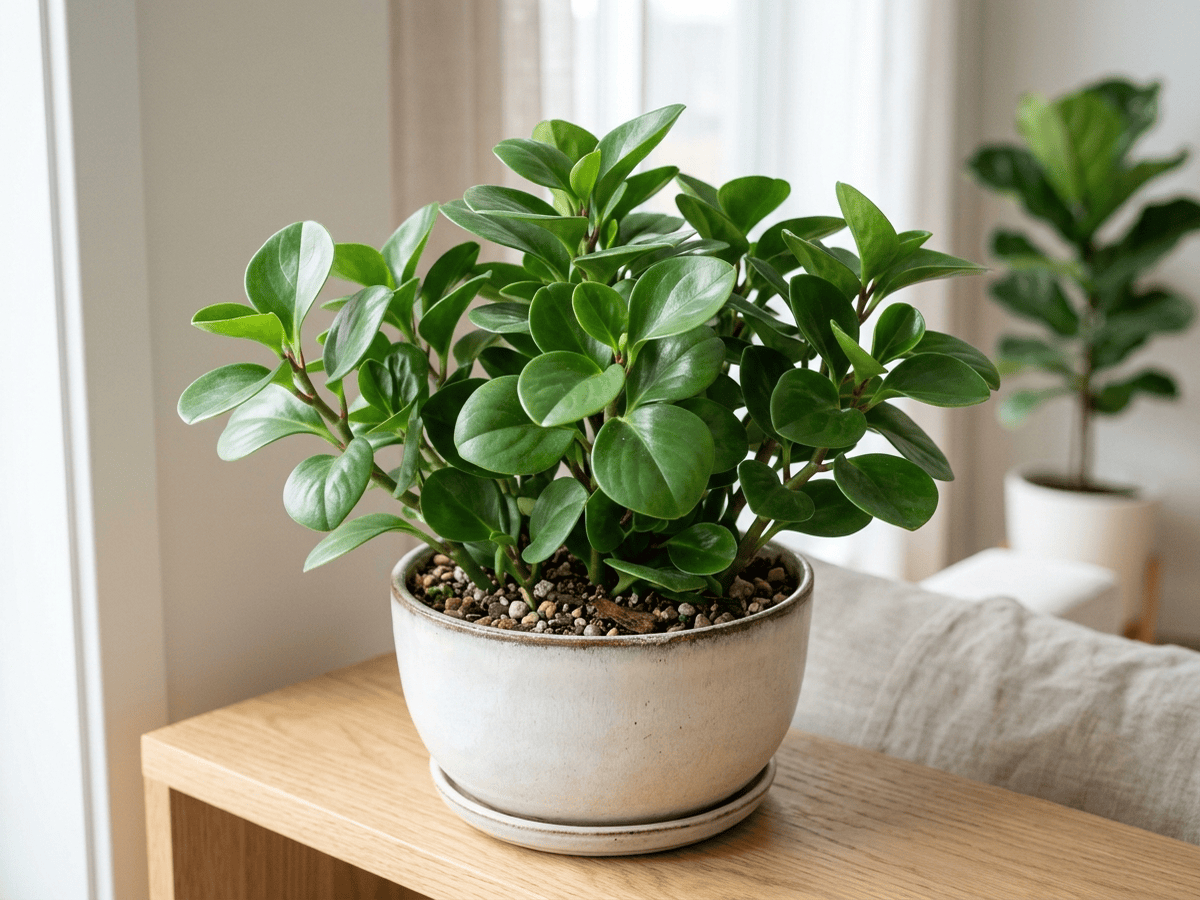 Baby Rubber PlantPeperomia obtusifolia
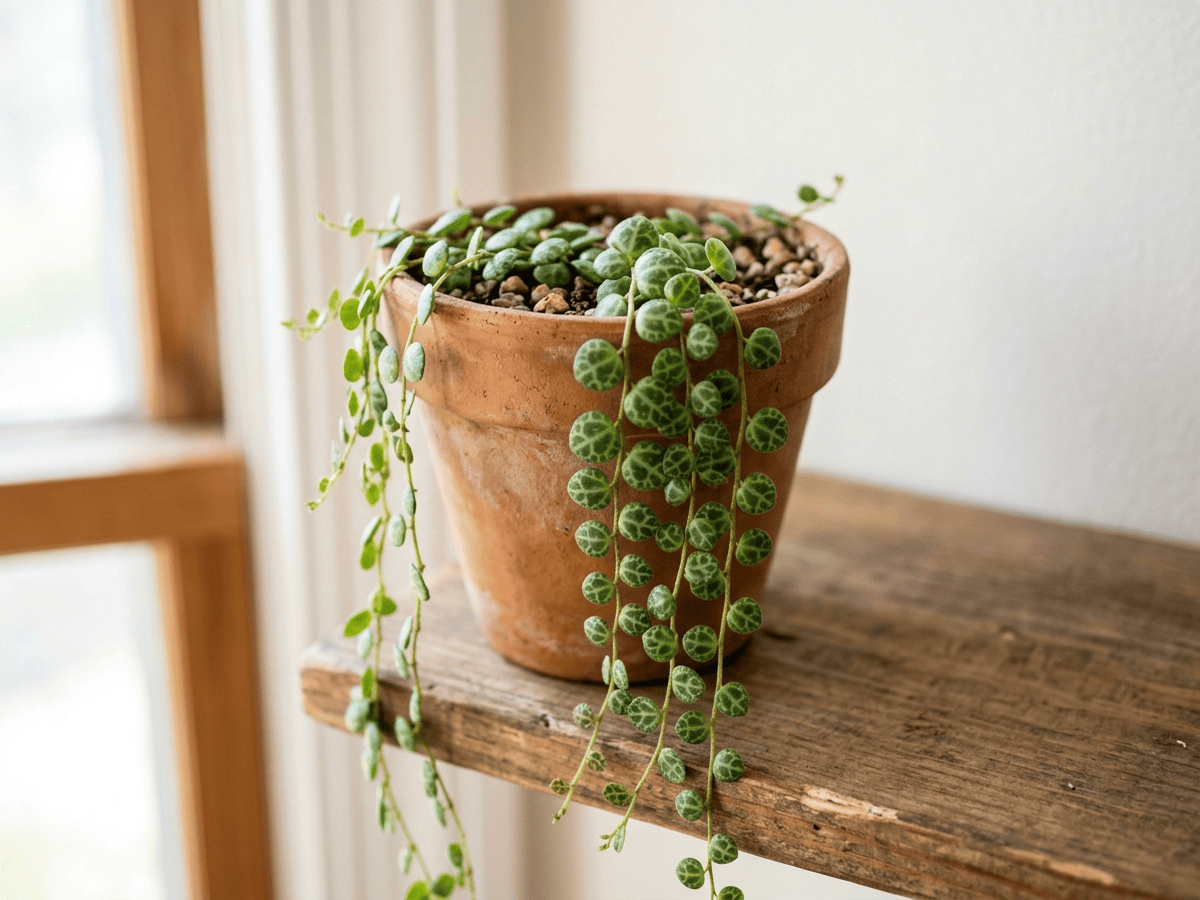 String-Of-TurtlesPeperomia prostrata
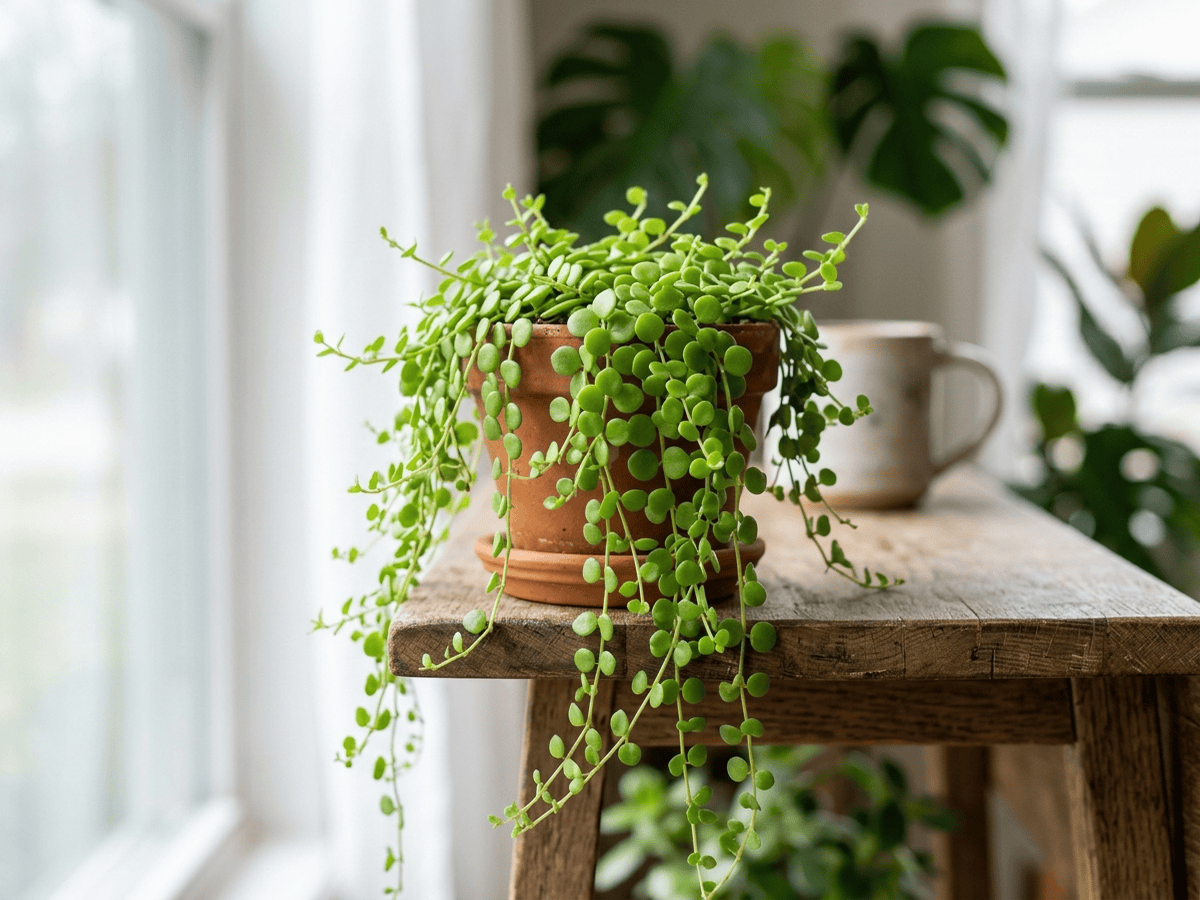 Jade NecklacePeperomia rotundifolia
Plants with similar care
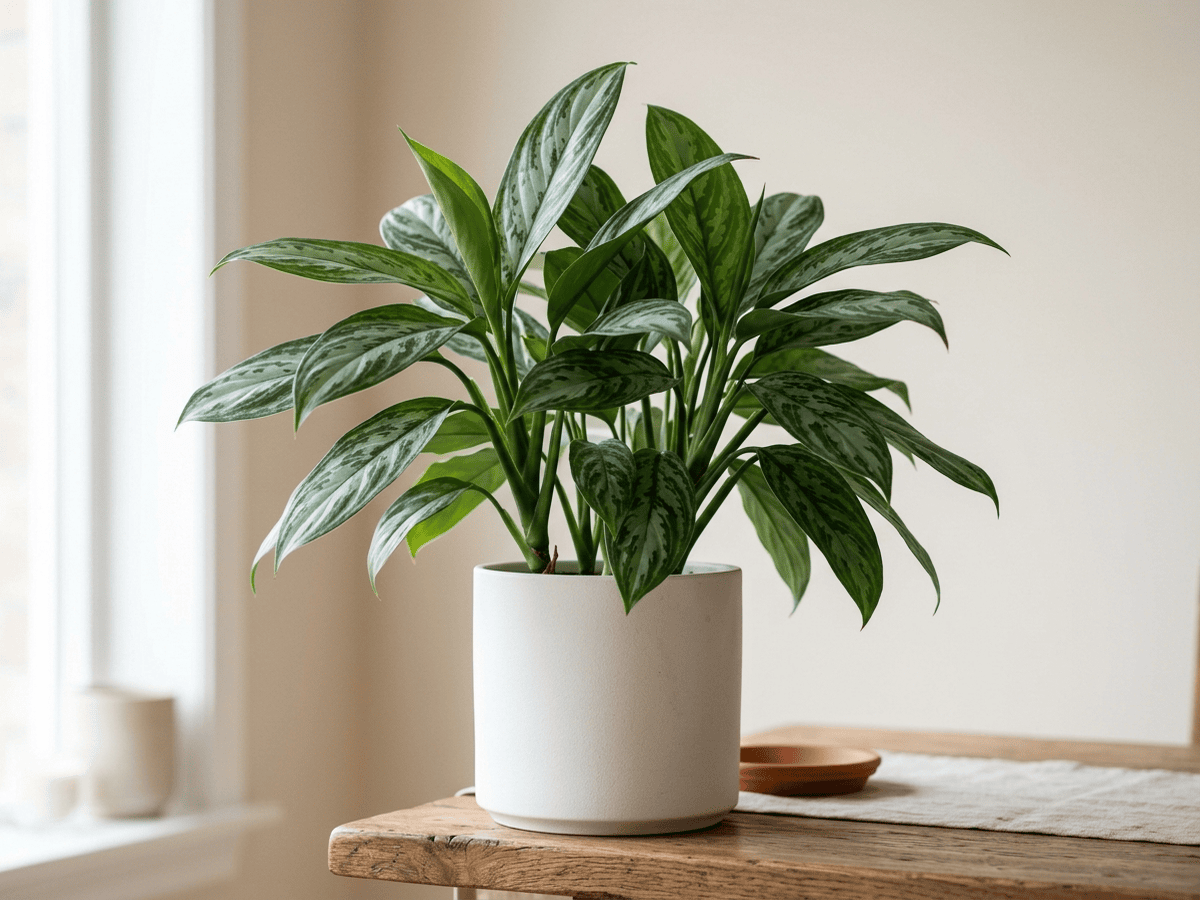 Philippine EvergreenAglaonema commutatum
 Sprenger's AsparagusAsparagus densiflorus
 Ponytail PalmBeaucarnea recurvata
 Tuberous BegoniaBegonia boliviensis
Frequently asked questions
How often should I water Emerald-Ripple Peperomia?
In summer, water about every 7 days; in winter, about every 21 days. Adjust for heat, pot size and drainage.
How much light does Emerald-Ripple Peperomia need?
Part shade: 2–4 hrs direct. Watch the leaves — scorching or stretching means the light needs adjusting.
Is Emerald-Ripple Peperomia toxic to cats or dogs?
No toxicity has been reported for this plant. Still, it is wise to keep pets from chewing on any houseplant. Educational information, not medical or veterinary advice. If exposure is suspected, contact a doctor or veterinarian.
Is Emerald-Ripple Peperomia easy to grow?
Yes — it is considered an easy, beginner-friendly plant.
Can Emerald-Ripple Peperomia be grown indoors?
Yes, it adapts well to indoor growing given the right light.
When does Emerald-Ripple Peperomia bloom?
It typically blooms Jun–Aug in the Northern Hemisphere.
YardMate
Identify any plant in seconds
Snap a photo — YardMate names the plant, diagnoses problems, and reminds you when to water.
Download on the App Store