 YardMate


Lewis' Mock Orange
Philadelphus lewisii
Easy · Beginner friendlyAbout Lewis' Mock Orange
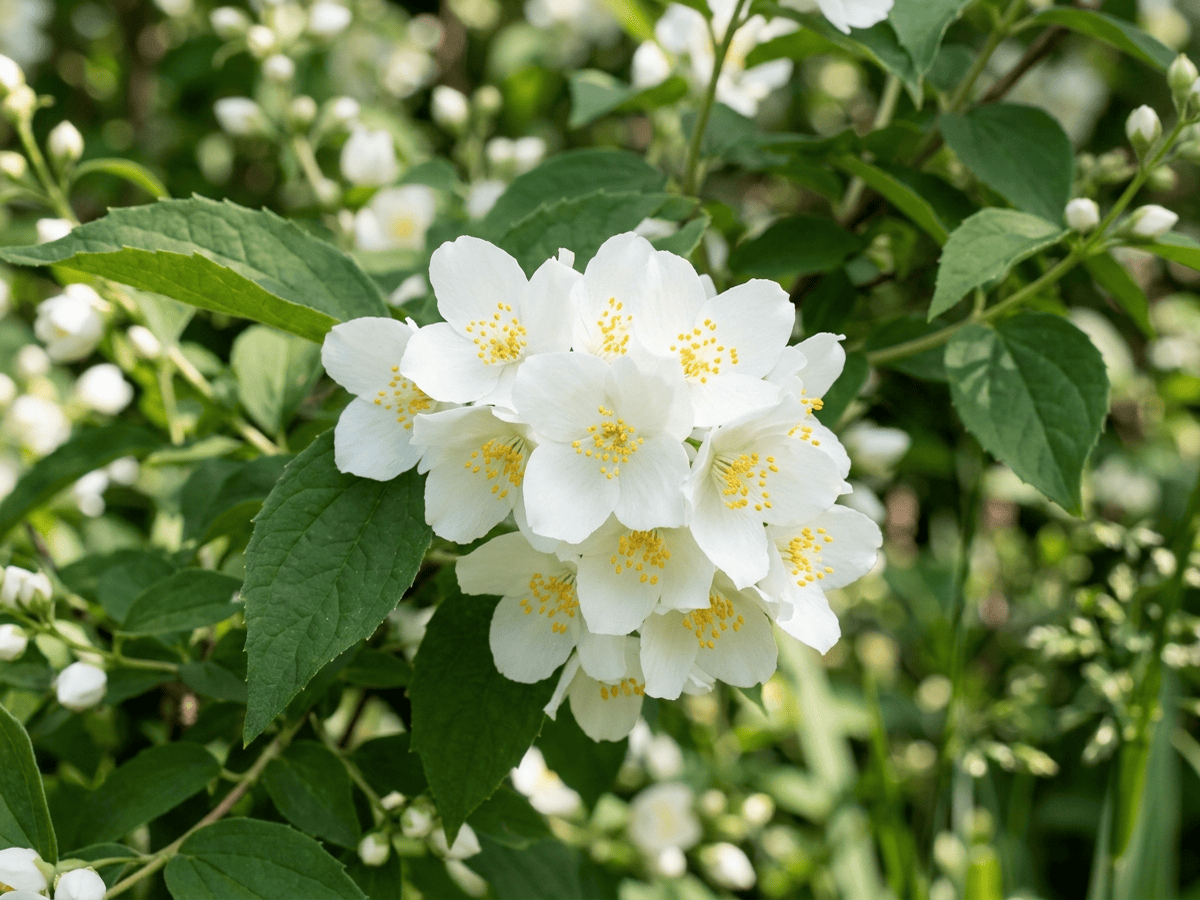
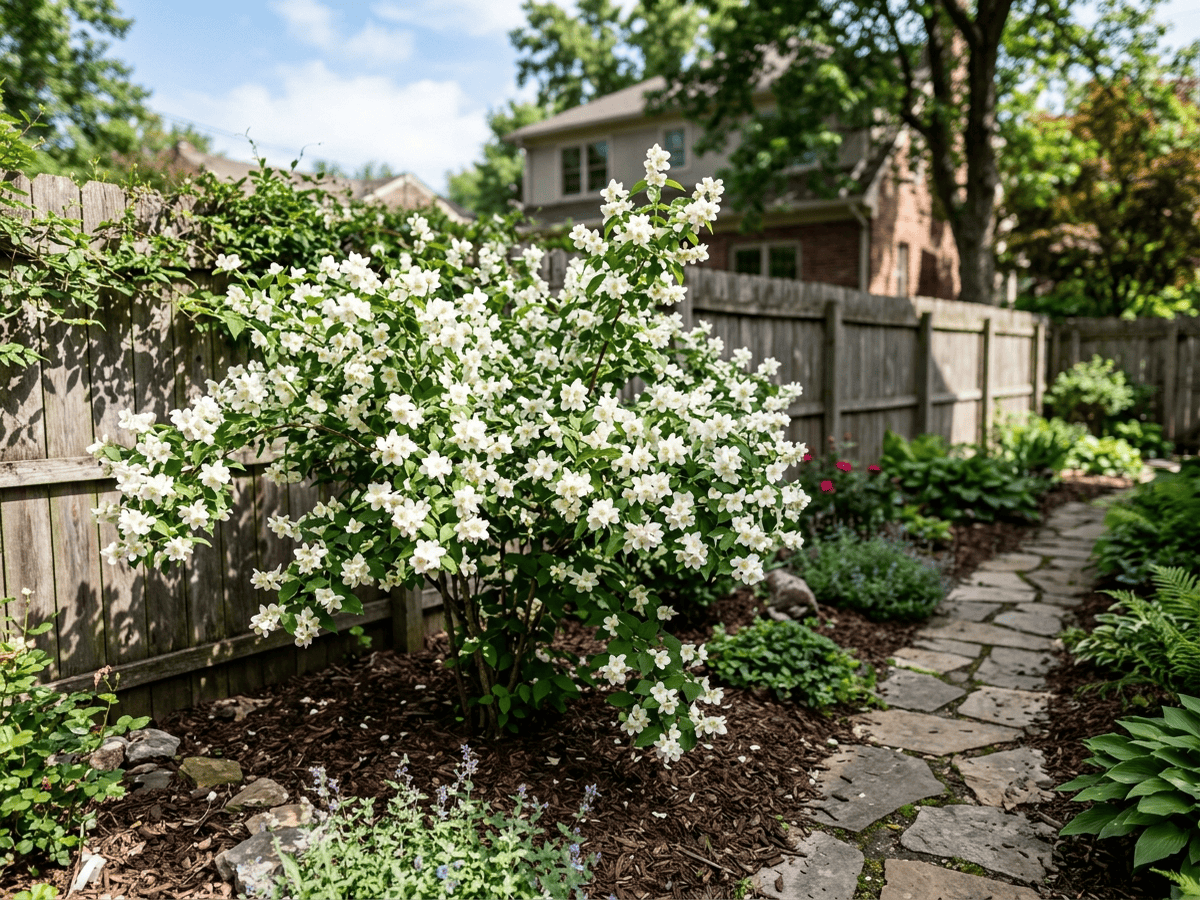
Lewis's Mock Orange is a western North American native deciduous shrub growing 6 to 12 feet tall, with showy clusters of fragrant four-petaled white flowers in late spring and early summer. The state flower of Idaho, native from British Columbia through California to Montana. A tough drought-tolerant native shrub valued in American water-wise landscapes and Pacific Northwest gardens.
- Fragrant
- Drought-tolerant
- Deer-resistant
- Native
How to care for Lewis' Mock Orange
Watering
- Springevery 5 days
- Summerevery 3 days
- Fallevery 7 days
- Winterevery 14 days
Soil · Rich & loamy
- Top dressingBark mulch15%
- Main mixRich loam + compost 3:170%
- DrainageGravel15%
Use fully finished compost — fresh compost burns roots.
FERTILIZER
- Springevery 45 days
- Summerevery 60 days
At a Glance
- NativeNorth America
- Height6–10 ft (1.8–3 m)
- Spread6–10 ft (1.8–3 m)
- Flower colorWhite
- Foliage colorGreen
- SoilLoamy, Well-drained
- LocationsYard
Bloom time
BLOOM CYCLE
Peak bloom
May–Jun
Fragrant white four-petaled clusters late spring to early summer
Fragrance
STRONG FRAGRANCE
The flowers have a strongly orange-blossom scented scent.
Toxicity
No toxicity has been reported for this plant. Still, it is wise to keep pets from chewing on any houseplant.
Educational information, not medical or veterinary advice. If exposure is suspected, contact a doctor or veterinarian.
DISTRIBUTION


- Native
- Introduced
- North America
History
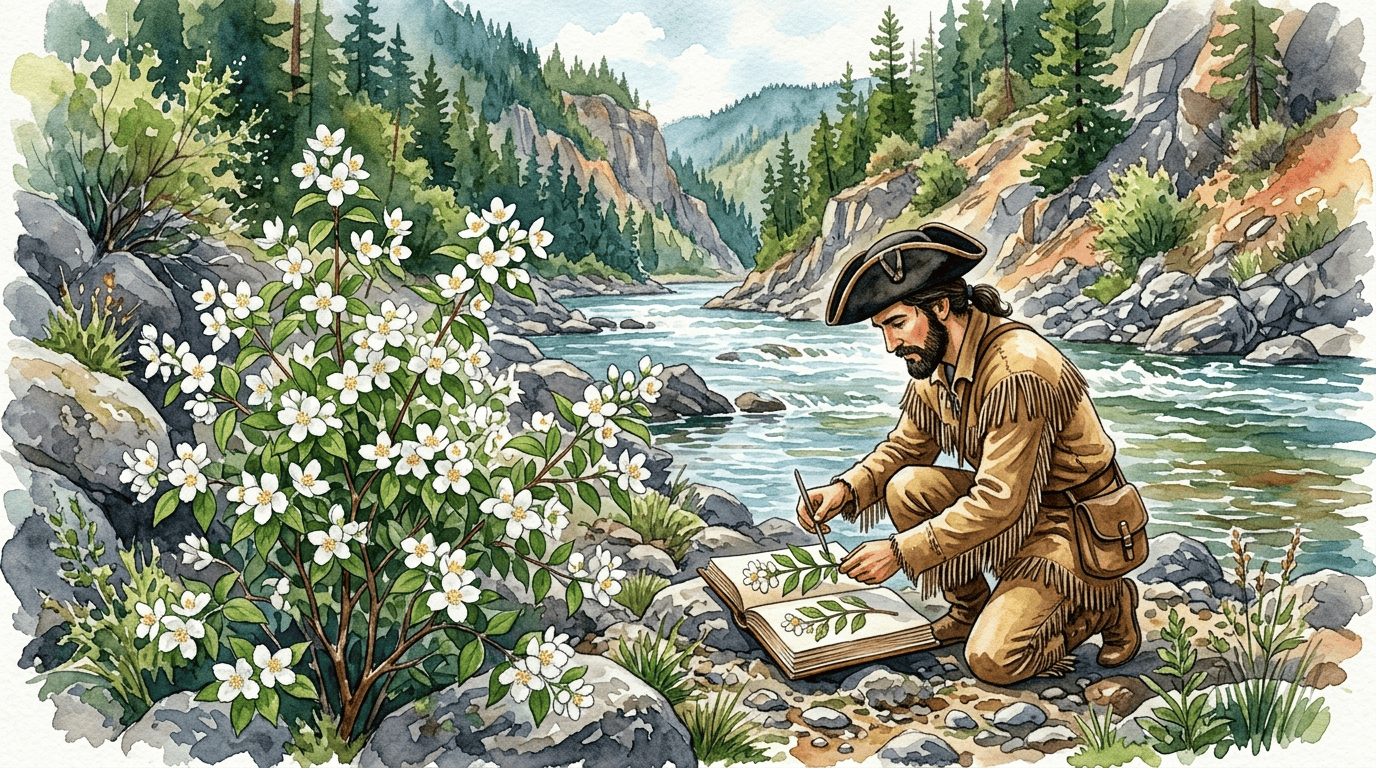
Philadelphus lewisii grows wild along rocky slopes and streambanks across the Pacific Northwest, from British Columbia south to northern California and east to Montana. Meriwether Lewis collected specimens in 1806 along the Clearwater River in present-day Idaho; the German-American botanist Frederick Pursh described the species in 1814 from those herbarium sheets and named it in Lewis's honor. The Nez Perce and Kalispel peoples valued the strong, straight stems for arrow shafts, tool handles, and combs, and used the leaves as a mild soap.
Idaho named it the state flower in 1931. Horticulturally it is the major North American mock orange; the double-flowered cultivar 'Blizzard' (selected at the Morden Research Station, Manitoba, c.1983) and 'Waterton' are cold-hardy landscape staples.
Native peoples used branches for arrow shafts, tobacco pipes, and combs, and the bark as soap. A foundation plant of Pacific Northwest native gardens.
Symbolism & meaning
What It Symbolizes
Lewis' Mock Orange carries pioneer heritage as a discovery of the Lewis and Clark Expedition, gathered from the rivers of the Pacific Northwest as the journey pushed west. It also embodies Idaho spirit, serving as the official state flower. Each fragrant white bloom carries both a botanist's notebook and a state seal in its perfume.
- Pioneer heritage — Lewis and Clark Expedition discovery
- Idaho spirit — state flower of Idaho
Where the Name Comes From
'lewisii' honors Meriwether Lewis (1774-1809) who first collected the species for Western science.
Uses & Fun Facts
- White flowers release sweet orange-blossom fragrance in early summer
- Mock-orange flowers attract bees and small butterflies
- Idaho state flower for native Pacific Northwest gardens
Related plants
More Philadelphus plants
 Sweet Mock OrangePhiladelphus coronarius
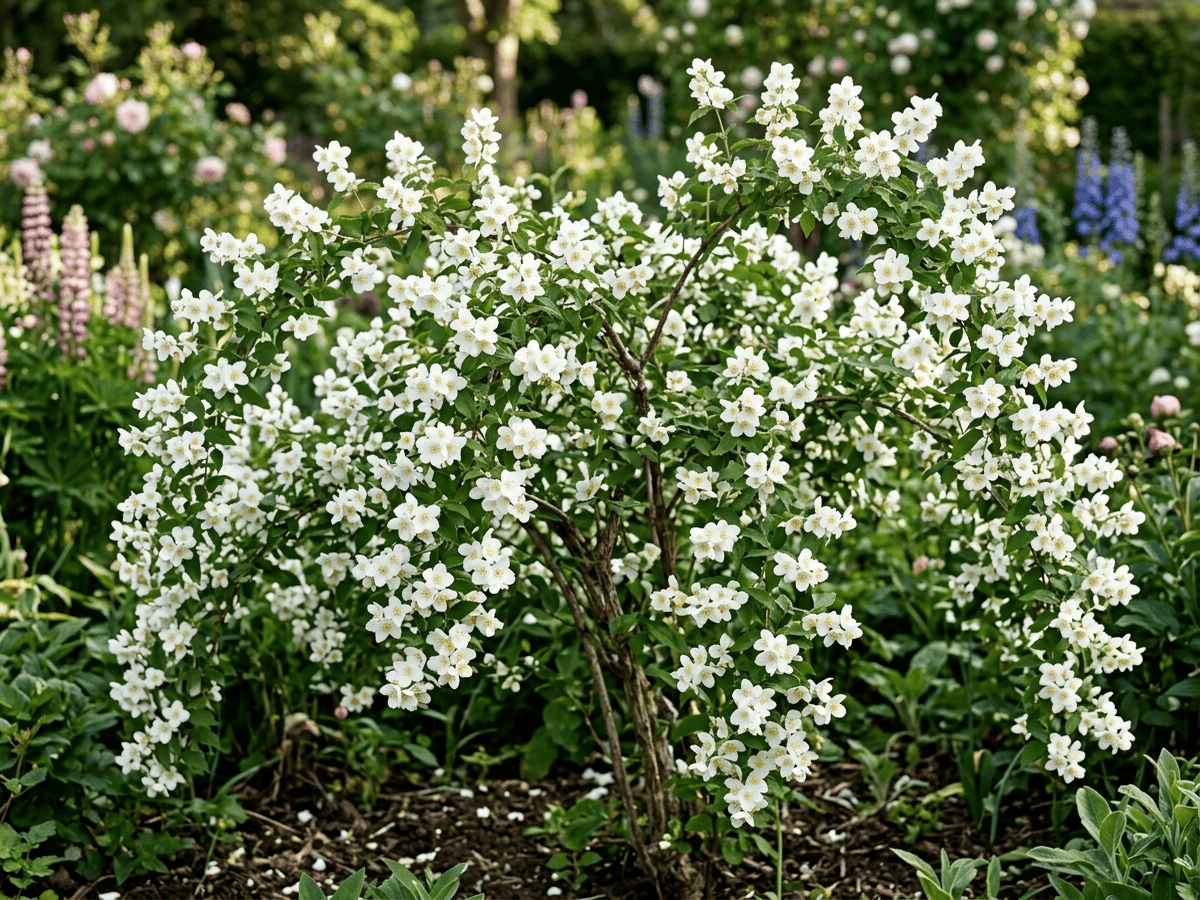 Mock OrangePhiladelphus x lemoinei
 Hairy Mock OrangePhiladelphus x virginalis
Plants with similar care
 Chinese AbeliaAbelia chinensis
 Fragrant AbeliaAbelia mosanensis
 Large-Flowered AbeliaAbelia uniflora
 Glossy AbeliaAbelia x grandiflora
Frequently asked questions
How often should I water Lewis' Mock Orange?
In summer, water about every 3 days; in winter, about every 14 days. Adjust for heat, pot size and drainage.
How much light does Lewis' Mock Orange need?
Full sun: 6+ hrs direct. Watch the leaves — scorching or stretching means the light needs adjusting.
Is Lewis' Mock Orange toxic to cats or dogs?
No toxicity has been reported for this plant. Still, it is wise to keep pets from chewing on any houseplant. Educational information, not medical or veterinary advice. If exposure is suspected, contact a doctor or veterinarian.
Is Lewis' Mock Orange easy to grow?
Yes — it is considered an easy, beginner-friendly plant.
When does Lewis' Mock Orange bloom?
It typically blooms May–Jun in the Northern Hemisphere.
YardMate
Identify any plant in seconds
Snap a photo — YardMate names the plant, diagnoses problems, and reminds you when to water.
Download on the App Store