 YardMate


Hairy Mock Orange
Philadelphus x virginalis
Easy · Beginner friendlyAbout Hairy Mock Orange
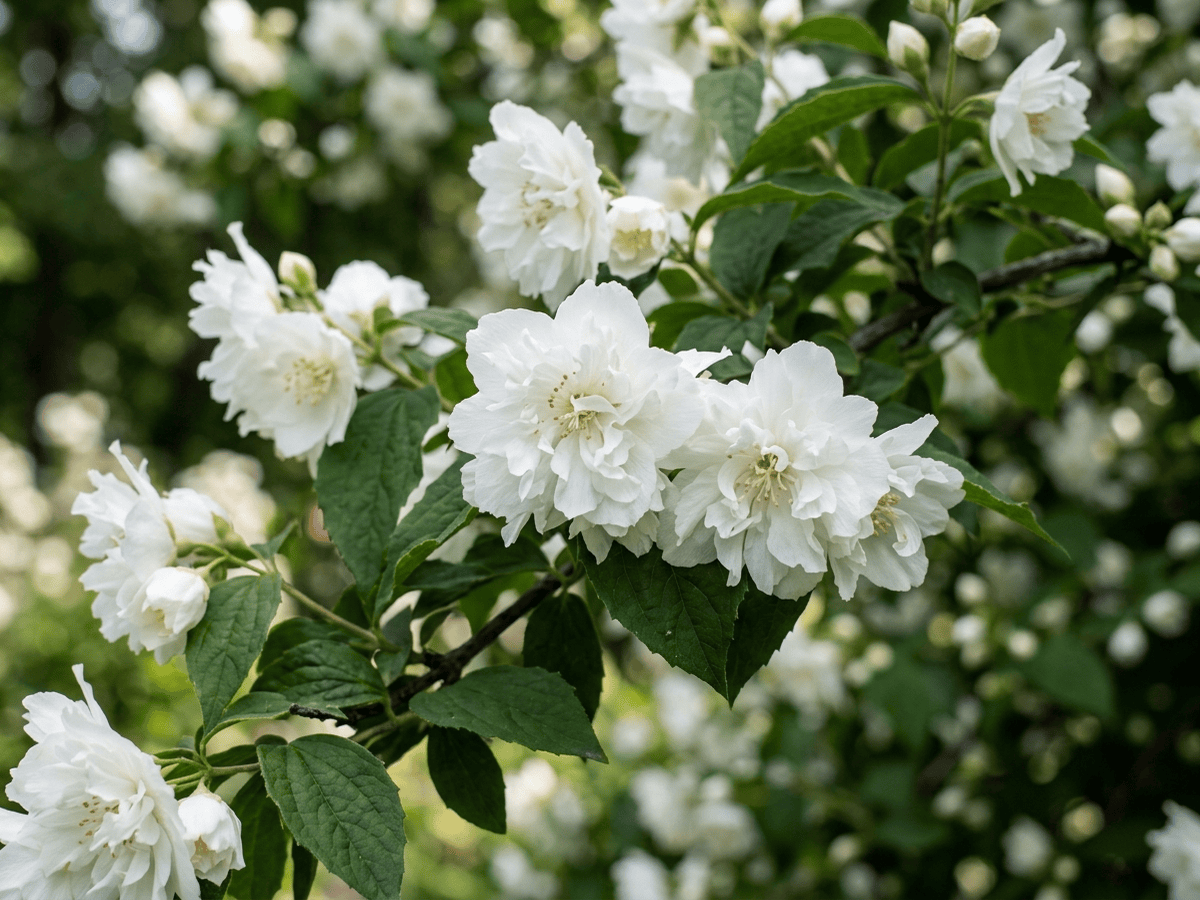
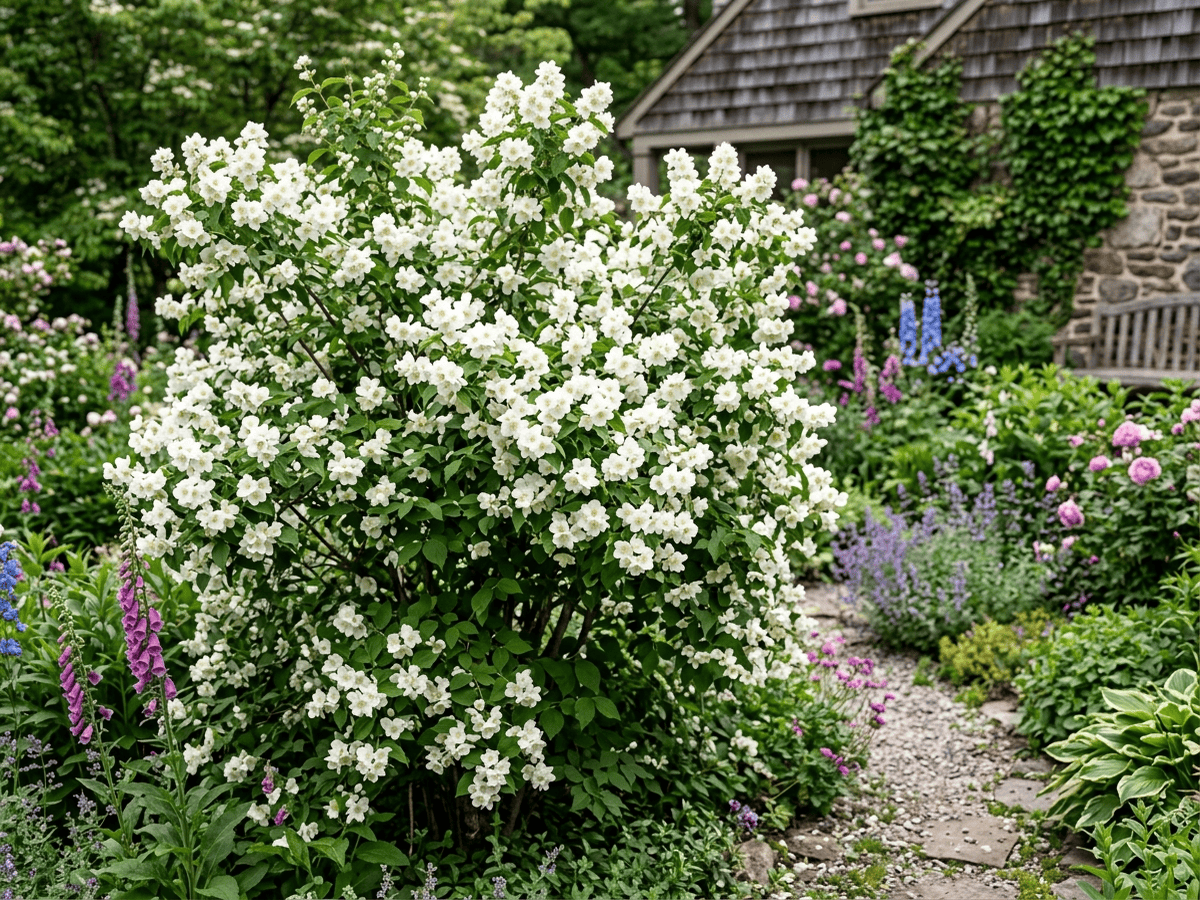
Virginal Mock Orange is a French hybrid deciduous shrub growing 6 to 10 feet tall, known for large pure-white semi-double to double fragrant flowers in late spring. The classic 'Virginal' cultivar remains one of the most fragrant mock oranges, with flowers 2 inches wide releasing a rich orange-blossom scent. A signature heirloom fragrance shrub in American gardens since the early 20th century.
- Fragrant
- Pollinator-friendly
How to care for Hairy Mock Orange
Watering
- Springevery 5 days
- Summerevery 3 days
- Fallevery 7 days
- Winterevery 14 days
Soil · Rich & loamy
- Top dressingBark mulch15%
- Main mixRich loam + compost 3:170%
- DrainageGravel15%
Use fully finished compost — fresh compost burns roots.
FERTILIZER
Balanced Feed 14-14-14
An even feed covers all three needs at once, keeping leaves, roots and blooms moving together with nothing pushed out of balance.
- Nitrogen · Leaves
- Phosphorus · Roots + Blooms
- Potassium · Strength
- Springevery 45 days
- Summerevery 60 days
At a Glance
- Height6–10 ft (1.8–3 m)
- Spread4–8 ft (1.2–2.4 m)
- Flower colorWhite
- Foliage colorGreen
- SoilLoamy, Well-drained, Moisture-retentive
- LocationsYard
Bloom time
BLOOM CYCLE
Peak bloom
May–Jun
Large semi-double fragrant white flowers in late spring
Fragrance
STRONG FRAGRANCE
The flowers have an intensely orange-blossom scented scent.
Toxicity
No toxicity has been reported for this plant. Still, it is wise to keep pets from chewing on any houseplant.
Educational information, not medical or veterinary advice. If exposure is suspected, contact a doctor or veterinarian.
History
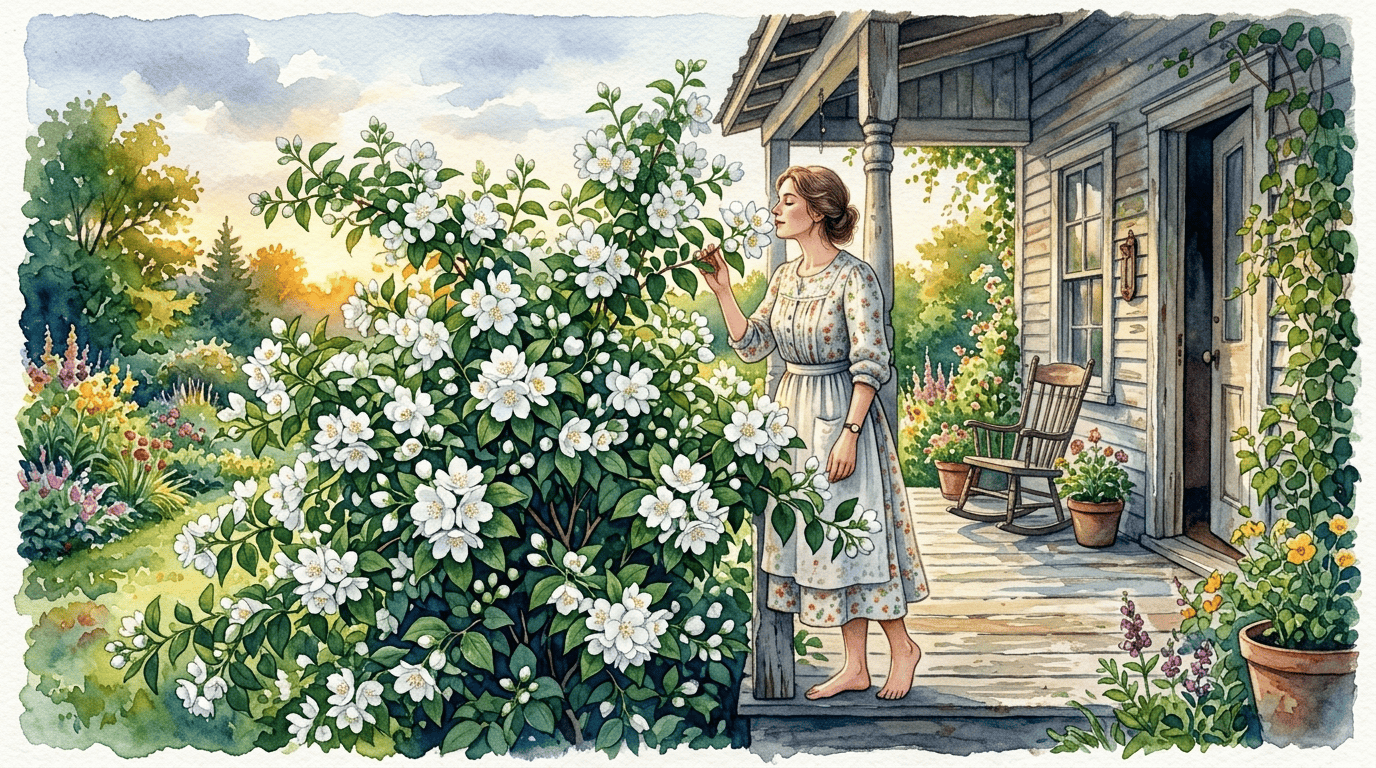
Philadelphus x virginalis was raised at the Lemoine nursery in Nancy, France, and introduced in 1909 as a complex backcross involving P. x lemoinei and P. x nivalis (itself derived from P. coronarius and P. pubescens). The original 'Virginal' clone bears large semi-double pure white flowers 4 cm across with heavy orange-blossom scent. It quickly became popular across Europe and North America.
The Lemoine nursery released many sister seedlings under this group name over the following two decades, including 'Argentine', 'Albâtre', 'Bouquet Blanc', and 'Glacier'. In the 1940s the British breeder A.M. Wilkie introduced 'Virginal Dwarf' and 'Buckley's Quill', while Canadian prairie breeders developed hardier backcrosses.
It remains a standard old-garden shrub valued for its reliable June bloom and penetrating perfume. Bred by French nurseryman Victor Lemoine in 1909, crossing Philadelphus x lemoinei with a double-flowered selection. The resulting 'Virginal' cultivar dominated American fragrance gardens through the 20th century and remains widely planted at old homesteads across the American Midwest and East.
Symbolism & meaning
What It Symbolizes
Mock Orange is pure devotion in unblemished white, its blossoms the bridal flower of countless nineteenth-century American weddings. It also carries heirloom fragrance — that intense orange-blossom-and-jasmine scent floating through June, a century-old gift from American garden classics. It is the shrub that arrives in early summer trailing the perfume of a wedding chapel that closed long ago.
- Pure devotion — unblemished white of ideal love
- Heirloom fragrance — century-old American garden classic
Where the Name Comes From
The name Hairy Mock Orange describes its hairy stems or leaves. 'virginalis' from Latin means virginal or pure white, for the unblemished white flower color.
Uses & Fun Facts
- Double white spring flowers release rich orange-blossom perfume
- Heirloom shrub for cottage borders and old-house gardens
- Fragrant white blossoms bring bees to woodland-edge plantings
Related plants
More Philadelphus plants
 Sweet Mock OrangePhiladelphus coronarius
 Lewis' Mock OrangePhiladelphus lewisii
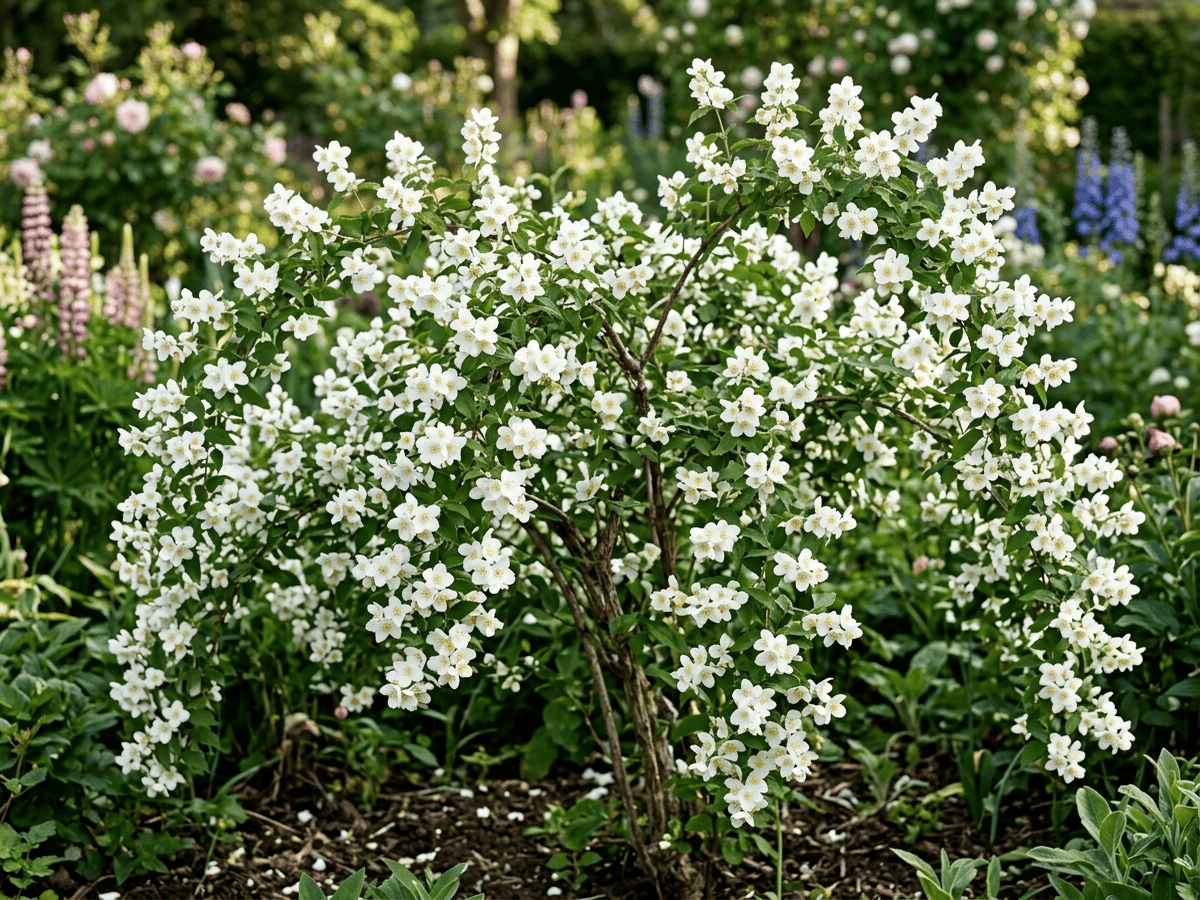 Mock OrangePhiladelphus x lemoinei
Plants with similar care
 Chinese AbeliaAbelia chinensis
 Fragrant AbeliaAbelia mosanensis
 Large-Flowered AbeliaAbelia uniflora
 Glossy AbeliaAbelia x grandiflora
Frequently asked questions
How often should I water Hairy Mock Orange?
In summer, water about every 3 days; in winter, about every 14 days. Adjust for heat, pot size and drainage.
How much light does Hairy Mock Orange need?
Full sun: 6+ hrs direct. Watch the leaves — scorching or stretching means the light needs adjusting.
Is Hairy Mock Orange toxic to cats or dogs?
No toxicity has been reported for this plant. Still, it is wise to keep pets from chewing on any houseplant. Educational information, not medical or veterinary advice. If exposure is suspected, contact a doctor or veterinarian.
Is Hairy Mock Orange easy to grow?
Yes — it is considered an easy, beginner-friendly plant.
When does Hairy Mock Orange bloom?
It typically blooms May–Jun in the Northern Hemisphere.
YardMate
Identify any plant in seconds
Snap a photo — YardMate names the plant, diagnoses problems, and reminds you when to water.
Download on the App Store