 YardMate

Mock Orange
Philadelphus x lemoinei
Easy · Beginner friendlyAbout Mock Orange
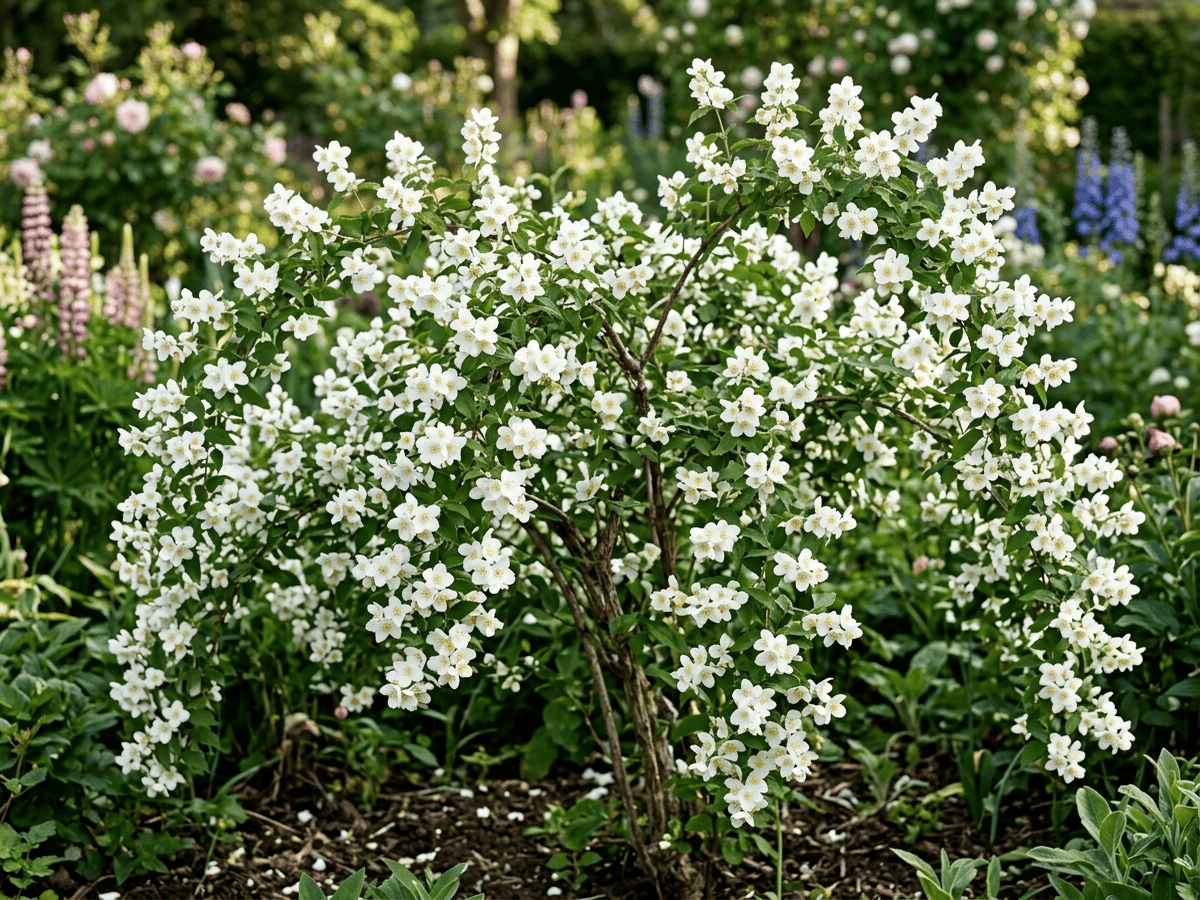
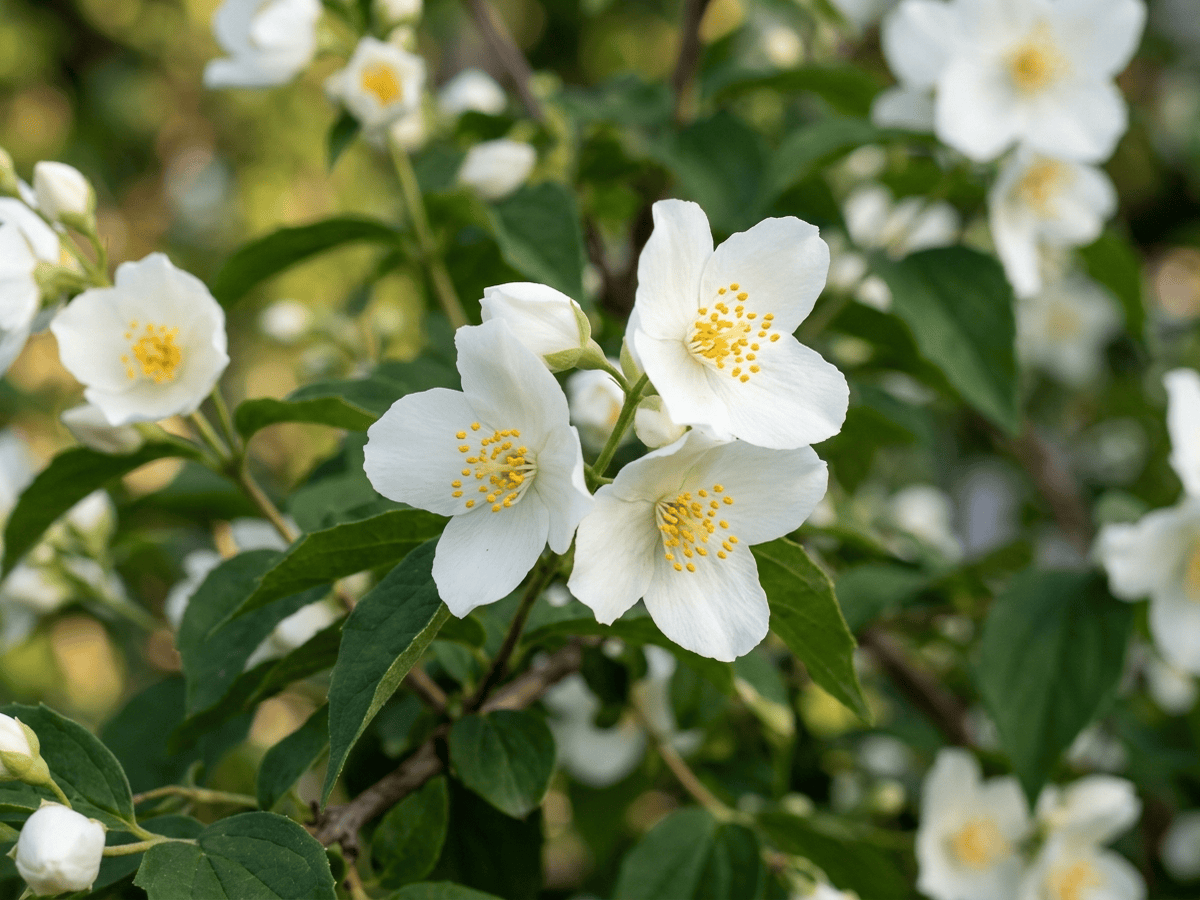
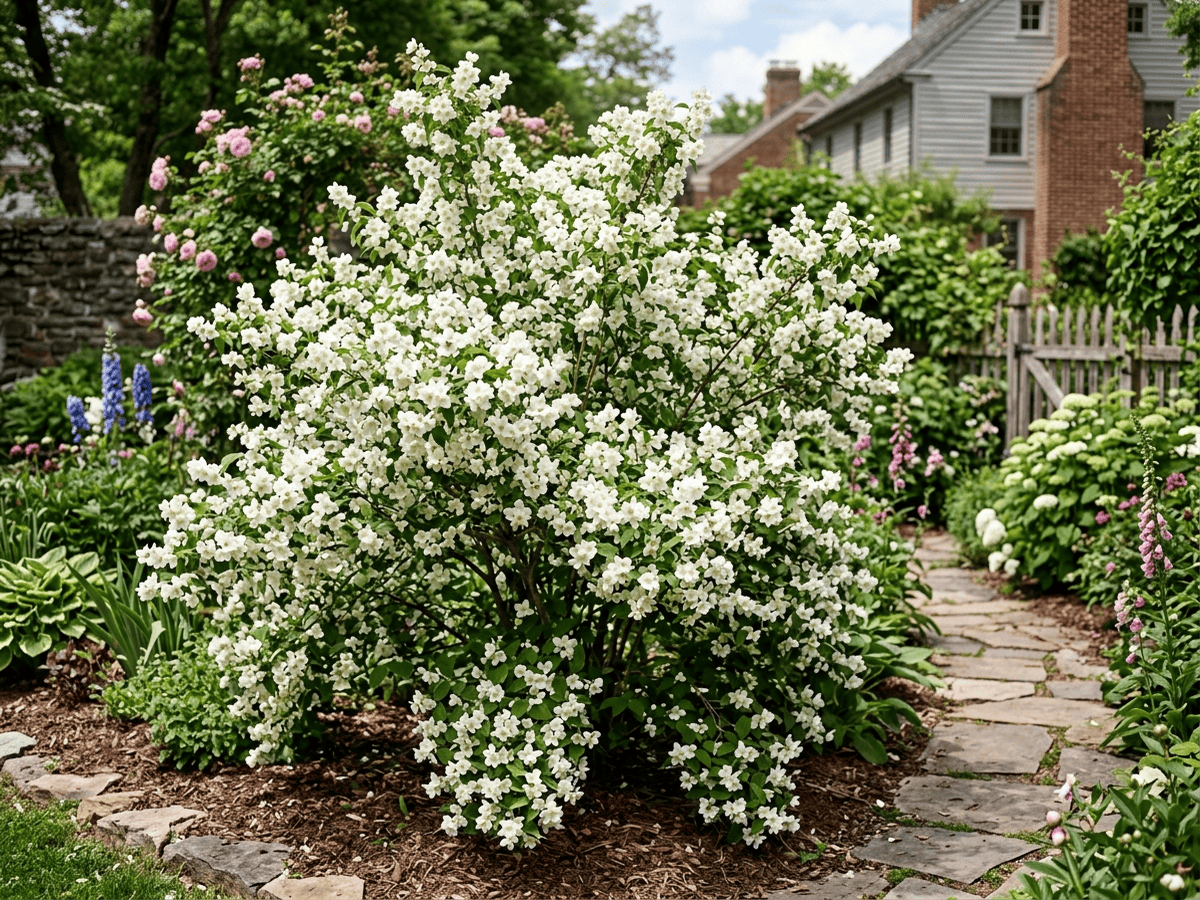
Lemoine Mock Orange is a hybrid deciduous shrub bred by French nurseryman Victor Lemoine, growing 4 to 6 feet tall with arching stems producing intensely fragrant white flowers in late spring. The rich orange-blossom fragrance made it a signature plant of American cottage and cutting gardens. Compact habit and heavy bloom distinguish it from the wilder Philadelphus species.
- Fragrant
- Deer-resistant
- Pollinator-friendly
How to care for Mock Orange
Watering
- Springevery 5 days
- Summerevery 3 days
- Fallevery 7 days
- Winterevery 14 days
Soil · Rich & loamy
- Top dressingBark mulch15%
- Main mixRich loam + compost 3:170%
- DrainageGravel15%
Use fully finished compost — fresh compost burns roots.
FERTILIZER
Balanced Feed 14-14-14
An even feed covers all three needs at once, keeping leaves, roots and blooms moving together with nothing pushed out of balance.
- Nitrogen · Leaves
- Phosphorus · Roots + Blooms
- Potassium · Strength
- Springevery 45 days
- Summerevery 60 days
At a Glance
- Height4–8 ft (1.2–2.4 m)
- Spread4–8 ft (1.2–2.4 m)
- Flower colorWhite
- Foliage colorGreen
- SoilWell-drained, Loamy
- LocationsYard
Bloom time
BLOOM CYCLE
Peak bloom
Mar–May
Intensely orange-scented white flowers in late spring
Fragrance
STRONG FRAGRANCE
Flowers intensely orange-blossom scented, a defining feature of the hybrid.
Toxicity
No toxicity has been reported for this plant. Still, it is wise to keep pets from chewing on any houseplant.
Educational information, not medical or veterinary advice. If exposure is suspected, contact a doctor or veterinarian.
History

Philadelphus x lemoinei originated at the Lemoine nursery in Nancy, France, around 1884, when Victor Lemoine crossed the intensely fragrant but small-flowered American species P. microphyllus with the taller European P. coronarius. The cross combined the parents' rich orange-blossom scent with larger, showier flowers on compact shrubs 1 to 1.5 m tall. Lemoine and his son introduced many cultivars over the next three decades, including 'Avalanche', 'Erectus', 'Manteau d'Hermine', 'Innocence', and 'Belle Étoile'.
These hybrids and their backcrosses to other species (known as P. × virginalis and P. × purpureomaculatus) form the backbone of modern garden mock oranges. Several cultivars, including 'Manteau d'Hermine' (1898), have held RHS Awards of Garden Merit for over a century.
Bred by Victor Lemoine of Nancy, France in the late 1800s through crosses of Philadelphus microphyllus and Philadelphus coronarius. The 'Avalanche' and 'Belle Etoile' cultivars became American cottage-garden essentials by the 1920s, prized for rich fragrance that perfumes entire yards on warm spring evenings.
Symbolism & meaning
What It Symbolizes
Mock Orange holds a memory of fragrance — its orange-blossom scent drifting through old American gardens carries generations of June afternoons. The Greek name behind philadelphus means brotherly love, a meaning grafted onto centuries of bridal arches and grandmother's hedges. Its message is layered: a French-bred shrub steeped in classical affection, perfuming the modern yard with the air of porches long disappeared.
- Memory of fragrance — scent evokes old American gardens
- Brotherly love — traditional Greek flower meaning
Where the Name Comes From
'Philadelphus' from Greek 'philadelphos' meaning brotherly love; 'lemoinei' honors French breeder Victor Lemoine (1823-1911).
Uses & Fun Facts
- White flowers release intense orange-blossom scent in early summer
- Open white blooms feed bees and small butterflies
- Arching mock-orange shrub anchors fragrant cottage borders
Related plants
More Philadelphus plants
 Sweet Mock OrangePhiladelphus coronarius
 Lewis' Mock OrangePhiladelphus lewisii
 Hairy Mock OrangePhiladelphus x virginalis
Plants with similar care
 Chinese AbeliaAbelia chinensis
 Fragrant AbeliaAbelia mosanensis
 Large-Flowered AbeliaAbelia uniflora
 Glossy AbeliaAbelia x grandiflora
Frequently asked questions
How often should I water Mock Orange?
In summer, water about every 3 days; in winter, about every 14 days. Adjust for heat, pot size and drainage.
How much light does Mock Orange need?
Full sun: 6+ hrs direct. Watch the leaves — scorching or stretching means the light needs adjusting.
Is Mock Orange toxic to cats or dogs?
No toxicity has been reported for this plant. Still, it is wise to keep pets from chewing on any houseplant. Educational information, not medical or veterinary advice. If exposure is suspected, contact a doctor or veterinarian.
Is Mock Orange easy to grow?
Yes — it is considered an easy, beginner-friendly plant.
When does Mock Orange bloom?
It typically blooms Mar–May in the Northern Hemisphere.
YardMate
Identify any plant in seconds
Snap a photo — YardMate names the plant, diagnoses problems, and reminds you when to water.
Download on the App Store