 YardMate


Pin Oak
Quercus palustris
Easy · Beginner friendlyAbout Pin Oak
Quercus palustris, the pin oak, is a fast-growing deciduous tree in the Fagaceae family native to eastern North America. Growing 18–25 m tall with a distinctive pyramidal shape—upper branches ascending, middle branches horizontal, lower branches drooping—it is one of the most widely planted oaks in the United States. The deeply cut, sharply pointed leaves turn brilliant scarlet to bronze in autumn.
Pin oak thrives in USDA zones 4–8 and uniquely tolerates wet, poorly drained soil (its name 'palustris' means 'of the marsh'). It transplants more easily than other oaks due to its fibrous root system (no deep taproot). Fast growth, reliable autumn colour, and tolerance of tough conditions have made it the go-to oak for urban and suburban landscapes.
However, pin oak has a significant limitation: it requires acidic soil (pH below 6.5). In alkaline soils, iron chlorosis causes yellow leaves with green veins—a chronic problem in many Midwestern cities. The persistent lower branches, while architecturally interesting, can be inconvenient in lawn and street settings. Despite these caveats, no other large oak establishes as quickly or provides such reliable autumn colour.
- Cold-hardy
- Fast-growing
- Native
How to care for Pin Oak
Watering
- Springevery 10 days
- Summerevery 7 days
- Fallevery 14 days
- Winterevery 45 days
Soil · Well-draining
- Top dressingPine bark mulch10%
- Main mixPotting soil + perlite 2:170%
- DrainageLECA / gravel20%
Never skip the drainage layer — standing water is the top cause of root rot.
FERTILIZER
Acid-Loving Feed 4-3-4
One bag does both jobs. An acid feed carries the usual nitrogen, phosphorus and potassium, plus the sulfur and iron that keep the soil sour enough for the roots to take them up at all.
- Nitrogen · Leaves
- Phosphorus · Roots + Blooms
- Potassium · Strength
- Springevery 60 days
At a Glance
- NativeNorth America
- Height50–80 ft (15.2–24.4 m)
- Spread30–50 ft (9.1–15.2 m)
- Flower colorYellow, Green
- Foliage colorGreen, Red
- SoilLoamy, Moisture-retentive, Acidic
- LocationsYard
Bloom time
BLOOM CYCLE
Peak bloom
Mar–May
Catkins in spring; small acorns take two years to mature and feed wildlife.
Fragrance
NO FRAGRANCE
No notable fragrance.
Toxicity
Humans Slight · Pets Moderate
tannins
Slight
- Acorn
- Ingestion
EXPOSURE Eating acorn.
EFFECT Tannic and leaching removes tannins.
NOTE Documented concern for humans: Tannic and leaching removes tannins.
Moderate
- Acorn
- Leaf
- Ingestion
EXPOSURE Eating acorn and leaves.
EFFECT Tannin toxicity.
NOTE ASPCA lists Quercus as toxic to pets.
Moderate
- Acorn
- Leaf
- Ingestion
EXPOSURE Eating acorn and leaves.
EFFECT Tannin toxicity.
NOTE ASPCA lists Quercus as toxic to pets.
Educational information, not medical or veterinary advice. If exposure is suspected, contact a doctor or veterinarian.
DISTRIBUTION


- Native
- Introduced
- North America
History

Quercus palustris is native to the central and eastern United States, from Massachusetts through North Carolina and west to Kansas. Its natural habitat is bottomland forests and floodplains (the specific epithet palustris means "of marshes"). Its straight central leader, rapid growth rate, and resistance to common urban stresses made it one of the most widely planted street and park trees in 20th-century North America.
Unfortunately, its need for acidic soil causes severe iron chlorosis (yellow leaves from iron deficiency) on the alkaline soils common in many cities, producing the familiar sight of yellowed pin oaks on urban streets. Modern urban forestry increasingly selects the closely related northern red oak (Q. rubra) or swamp white oak (Q. bicolor) over pin oak for this reason. Pin oak retains its characteristic persistent brown leaves through winter — a marcescence trait shared with beech.
Wild bottomland pin oak stands in the American Midwest supply significant volumes of hardwood to the flooring and furniture industry. Pin oak became America's most planted oak in the 20th century due to its fast growth, easy transplanting, and predictable form. It lines countless suburban streets and university campuses. The name 'pin oak' likely refers to the many short, pin-like dead branchlets along the trunk. Its tolerance of wet conditions makes it valuable for floodplain restoration.
Symbolism & meaning
What It Symbolizes
Pin Oak is determination — a fast-growing oak that thrives in heavy wet soils where most of it cousins refuse to root, an emblem of drive paired with adaptability. Lining American streets and university campuses, it has come to stand for community: the ordered rows of pin oaks shading civic spaces and student walks. It is the oak that built the postwar American shade canopy, one stubborn taproot at a time.
- Determination — Growing fast and thriving in difficult wet soils, pin oak symbolizes drive and adaptability
- Community — Lining streets and campuses across America, it represents shared civic spaces and togetherness
Where the Name Comes From
Quercus is Latin for oak; 'palustris' means of the marsh or swamp, describing its natural wet habitat.
Uses & Fun Facts
- Fast-growing pyramidal canopy delivers reliable urban street shade
- Acorns feed squirrels, deer, woodpeckers, and migratory waterfowl
- Russet-red autumn foliage persists into early winter
Related plants
More Quercus plants
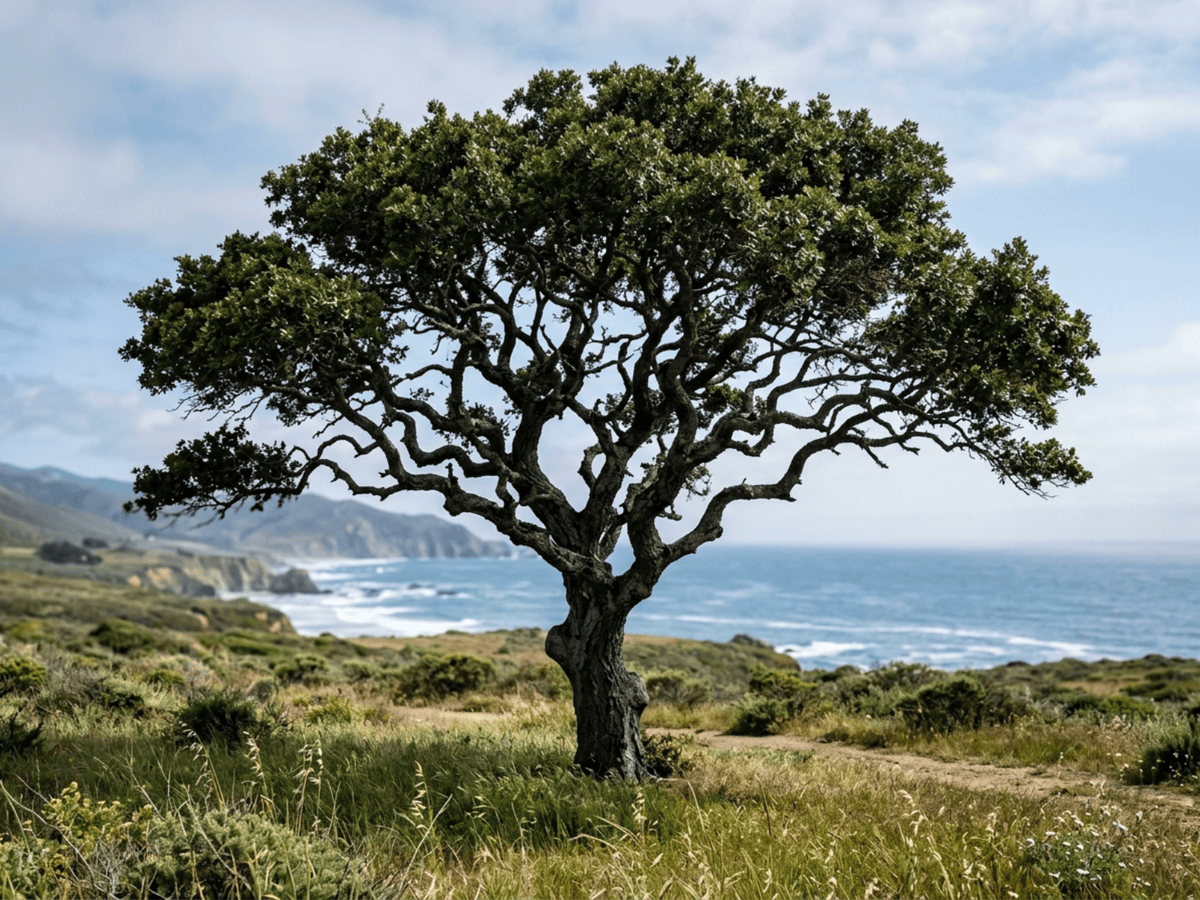 Coast Live OakQuercus agrifolia
 White OakQuercus alba
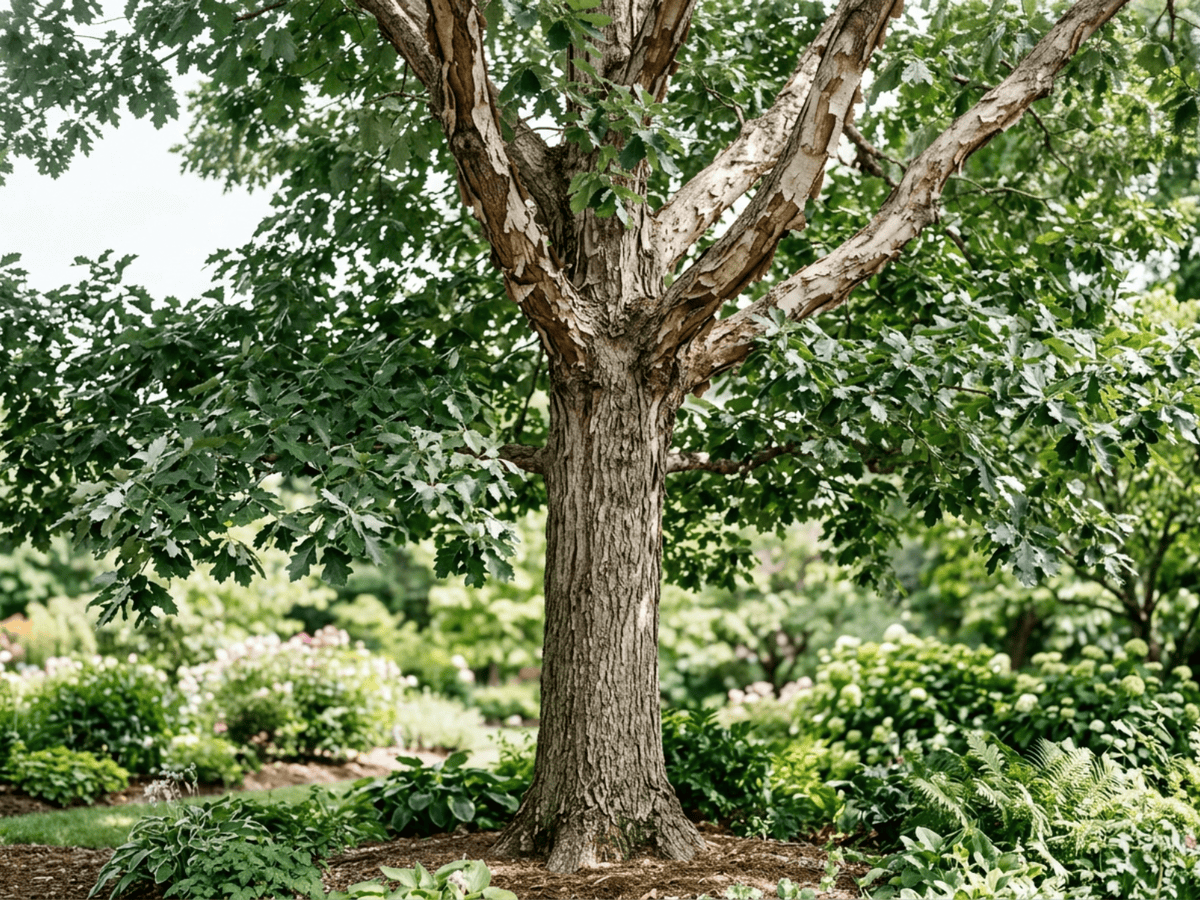 Swamp White OakQuercus bicolor
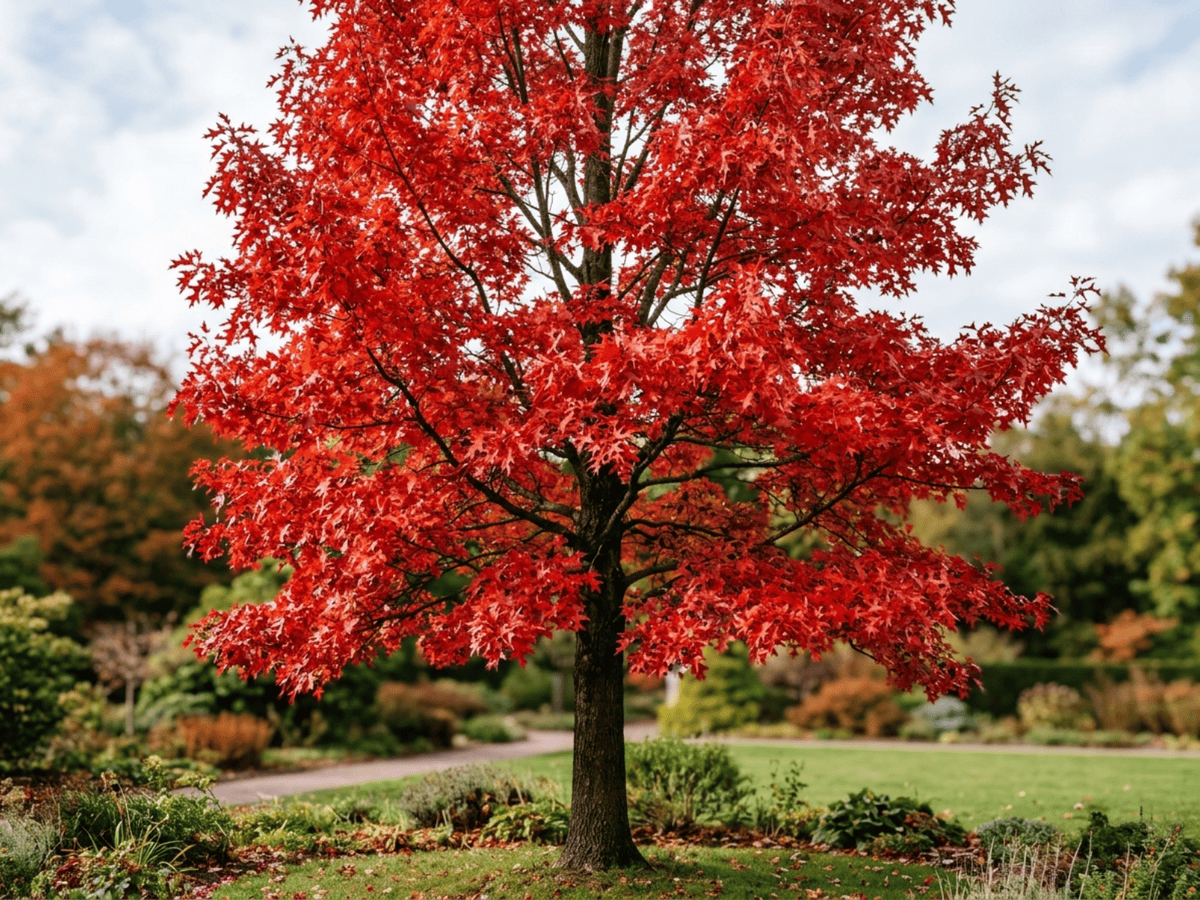 Scarlet OakQuercus coccinea
Plants with similar care
 Chinese AbeliaAbelia chinensis
 Fragrant AbeliaAbelia mosanensis
 Large-Flowered AbeliaAbelia uniflora
 Glossy AbeliaAbelia x grandiflora
Frequently asked questions
How often should I water Pin Oak?
In summer, water about every 7 days; in winter, about every 45 days. Adjust for heat, pot size and drainage.
How much light does Pin Oak need?
Full sun: 6+ hrs direct. Watch the leaves — scorching or stretching means the light needs adjusting.
Is Pin Oak toxic to cats or dogs?
Pets Moderate (Dogs Moderate · Cats Moderate) Educational information, not medical or veterinary advice. If exposure is suspected, contact a doctor or veterinarian.
Is Pin Oak easy to grow?
Yes — it is considered an easy, beginner-friendly plant.
When does Pin Oak bloom?
It typically blooms Mar–May in the Northern Hemisphere.
YardMate
Identify any plant in seconds
Snap a photo — YardMate names the plant, diagnoses problems, and reminds you when to water.
Download on the App Store