 YardMate

Coast Live Oak
Quercus agrifolia
Easy · Beginner friendlyAbout Coast Live Oak
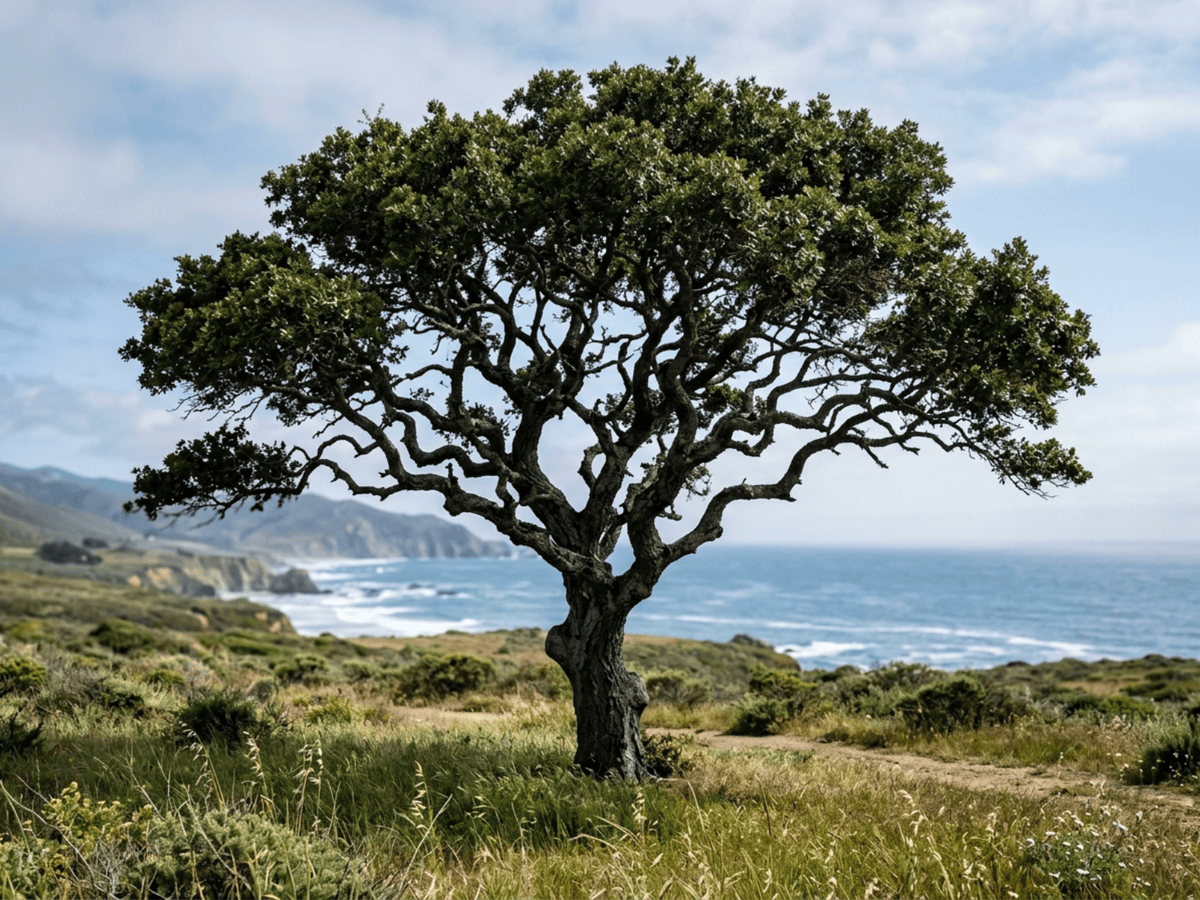
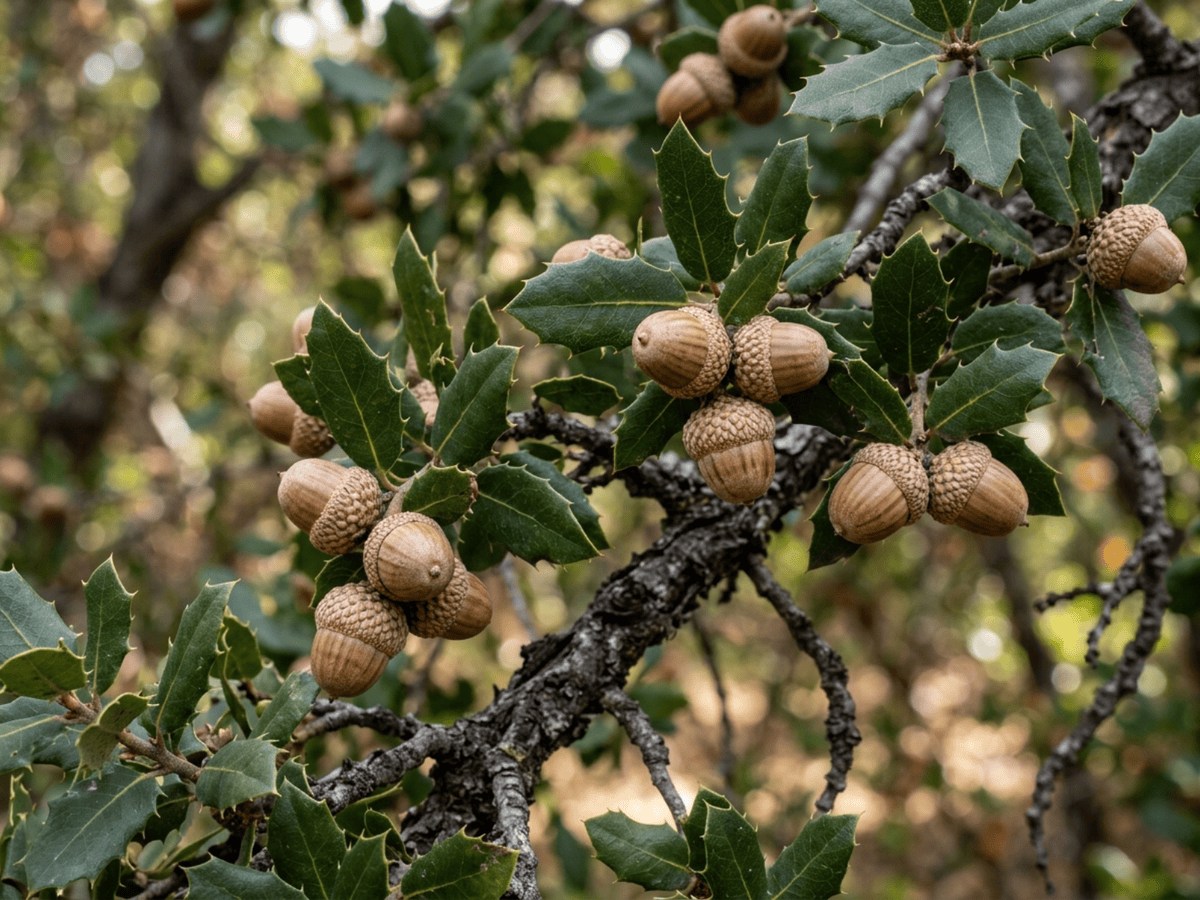
Coast Live Oak is the iconic evergreen oak of coastal California, reaching 30-80 feet with a massive spreading canopy that shelters entire ecosystems. Native from Mendocino to Baja California, its dark green holly-like leaves are leathery and cup-shaped. These majestic trees can live 200-250 years and serve as keystone species—supporting over 5,000 insect, bird, and mammal species. Iconic features of California's oak savannas and foothills.
- Drought-tolerant
- Evergreen
- Native
- Wildlife-friendly
How to care for Coast Live Oak
Watering
- Springevery 14 days
- Summerevery 30 days
- Fallevery 30 days
- Winterpause watering
Soil · Well-draining
- Top dressingPine bark mulch10%
- Main mixPotting soil + perlite 2:170%
- DrainageLECA / gravel20%
Never skip the drainage layer — standing water is the top cause of root rot.
FERTILIZER
This plant needs little to no feeding.
At a Glance
- NativeNorth America
- Height30–70 ft (9.1–21.3 m)
- Spread30–70 ft (9.1–21.3 m)
- Foliage colorGreen
- Fruit colorBrown
- SoilWell-drained, Loamy, Sandy
- LocationsYard
Bloom time
BLOOM CYCLE
Peak bloom
Mar–May
Inconspicuous catkins in spring
Fragrance
NO FRAGRANCE
No notable fragrance.
Toxicity
Humans Slight · Pets Moderate
tannins (gallotannins, ellagitannins)
Slight
- Acorn
- Ingestion
EXPOSURE Eating acorn.
EFFECT Raw acorns contain tannins and must be leached before eating. Processed acorn meal is a traditional Native Californian staple food.
NOTE Documented concern for humans: Raw acorns contain tannins and must be leached before eating. Processed acorn meal is a traditional Native Californian staple food.
Moderate
- Acorn
- Leaf
- Ingestion
EXPOSURE Eating acorn and leaves.
EFFECT Tannin toxicity: vomiting, diarrhea, abdominal pain, kidney stress with large acorn ingestion.
NOTE ASPCA lists oak acorns as toxic to dogs, cats, and horses when eaten in quantity. Processed (leached) acorns are safe and traditionally eaten by humans.
Moderate
- Acorn
- Leaf
- Ingestion
EXPOSURE Eating acorn and leaves.
EFFECT Same as dogs.
NOTE ASPCA lists oak acorns as toxic to dogs, cats, and horses when eaten in quantity. Processed (leached) acorns are safe and traditionally eaten by humans.
Educational information, not medical or veterinary advice. If exposure is suspected, contact a doctor or veterinarian.
DISTRIBUTION


- Native
- North America
History
Quercus agrifolia is native to the coastal mountain ranges and adjacent lowlands of California and northern Baja California, Mexico — essentially the area from Mendocino County south through Marin, the San Francisco Bay Area, the entire California coast south of there, and into northwest Baja California. It is the iconic dark-green evergreen oak of California coastal landscape and forms the canopy of coastal California oak woodland — one of the most ecologically diverse habitat types in the state, supporting hundreds of associated species. The tree grows 10-25 meters tall with spreading horizontal branches and a broad rounded crown; leaves are small (2-7 cm), glossy dark green above, paler below, with prickly holly-like margins.
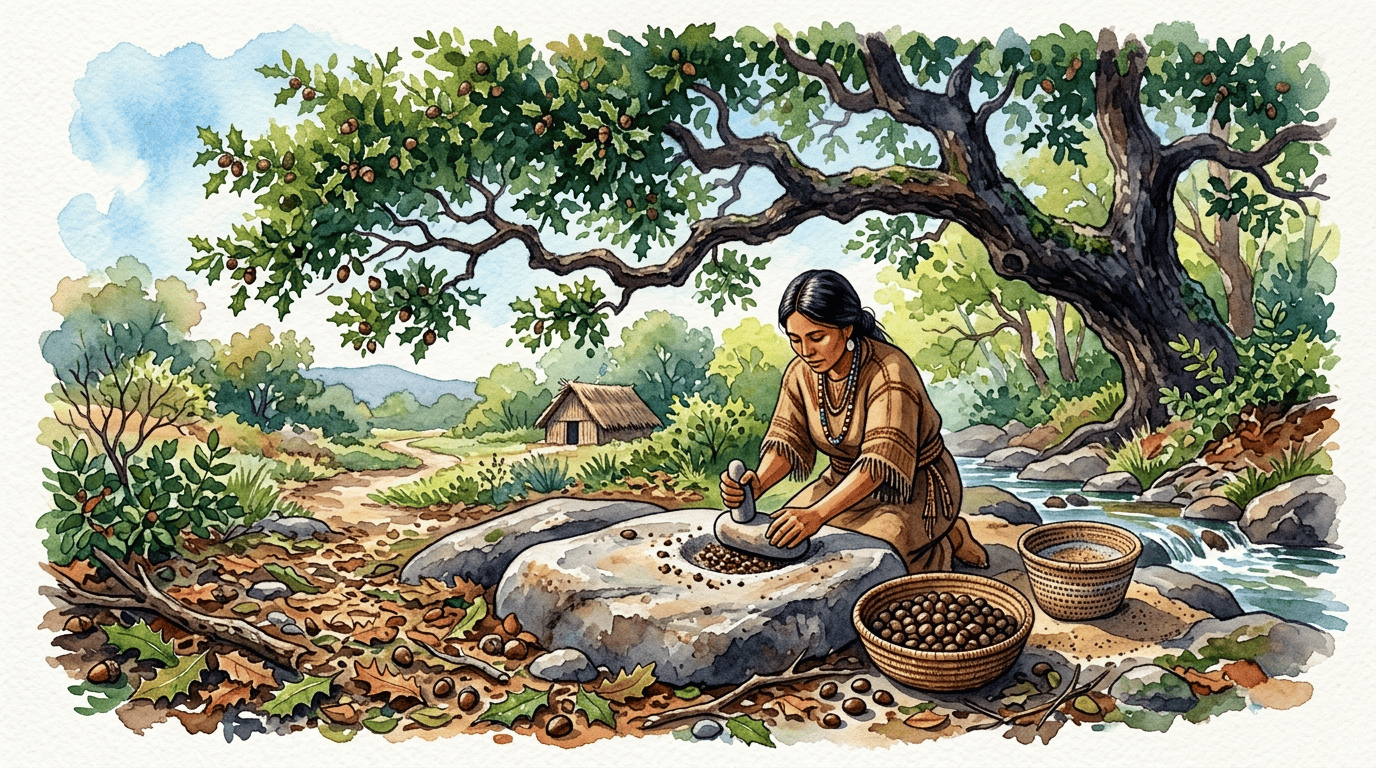
It produces acorns 2-3 cm long that have been a foundational food of Native Californian peoples for at least 10,000 years — essentially every tribe in the species' native range, including the Ohlone, Miwok, Pomo, Chumash, Tongva, Kumeyaay, and many others, processed acorns into meal through hulling, leaching (to remove tannins), and grinding into flour that formed a major portion of traditional diet. Acorn granaries, leaching pits, and grinding slicks are ubiquitous at ancient Native Californian village sites.
The tree is vulnerable to the exotic pathogen Sudden Oak Death (Phytophthora ramorum, arrived 1990s) and to an oak-decline syndrome linked to irrigated lawn areas around mature trees — summer water is toxic to coast live oak root systems, and heavily-irrigated suburban landscape has been a major cause of mature oak decline in California urban development. Acorns were the primary staple food for most California Indigenous peoples for thousands of years—each tribe had sophisticated methods for leaching tannins and processing acorn meal.
Symbolism & meaning
What It Symbolizes
The Coast Live Oak makes visible Strength — gnarled, evergreen, and centuries-patient, an enduring symbol of the California landscape. Its heritage runs deep into Indigenous history: acorns from these oaks sustained Ohlone, Chumash, and other peoples for thousands of years as a foundation food. A tree that is at once landscape, larder, and ancestor.
- Strength — enduring symbol of California's landscape
- Heritage — sustained California's Indigenous cultures for millennia
Where the Name Comes From
The name Coast Live Oak points to coastal habitats. 'Quercus' is the classical Latin name for oak; 'agrifolia' means 'sharp-leaved', referring to the spiny leaf margins.
Uses & Fun Facts
- Sprawling evergreen canopy defines California oak woodlands
- Acorns sustain woodpeckers, deer, and small mammals
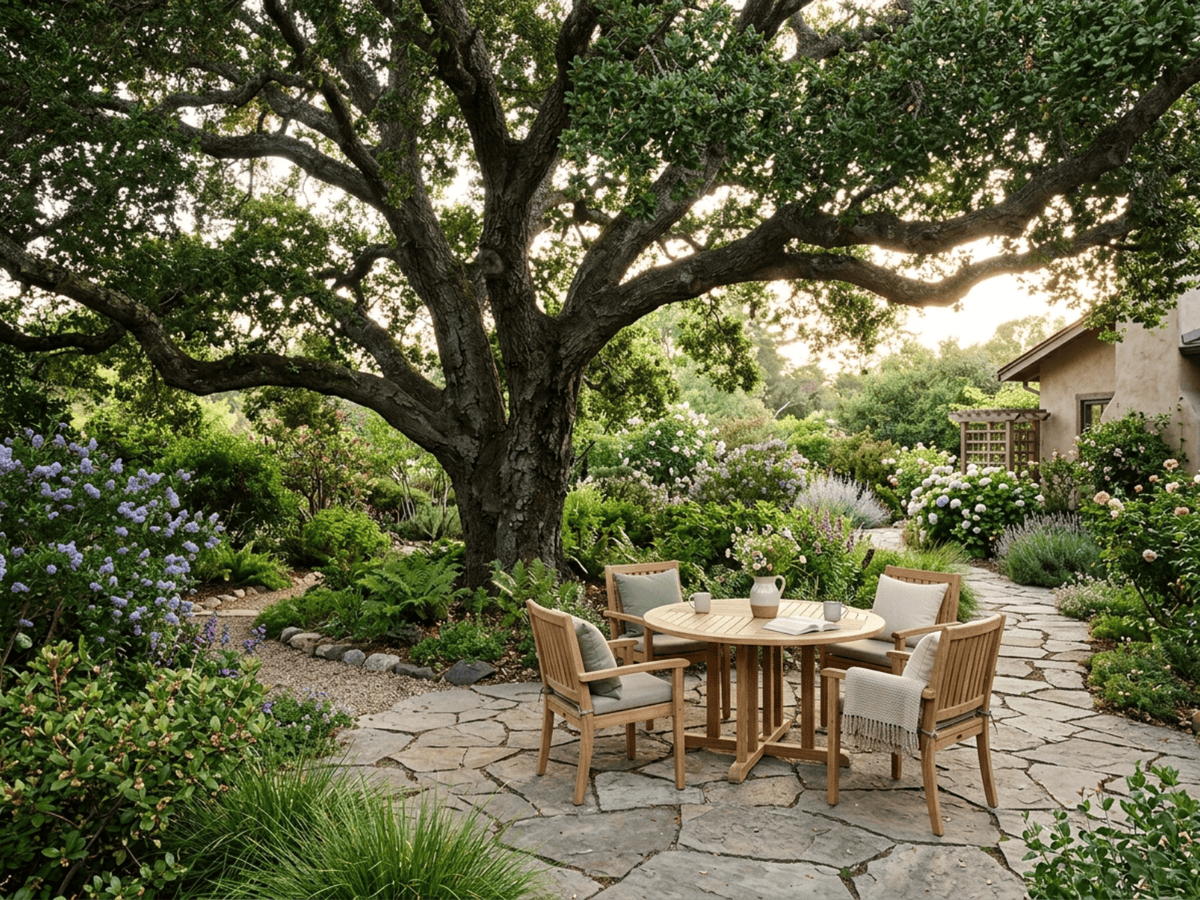
- Iconic native focal point for large California properties
Related plants
More Quercus plants
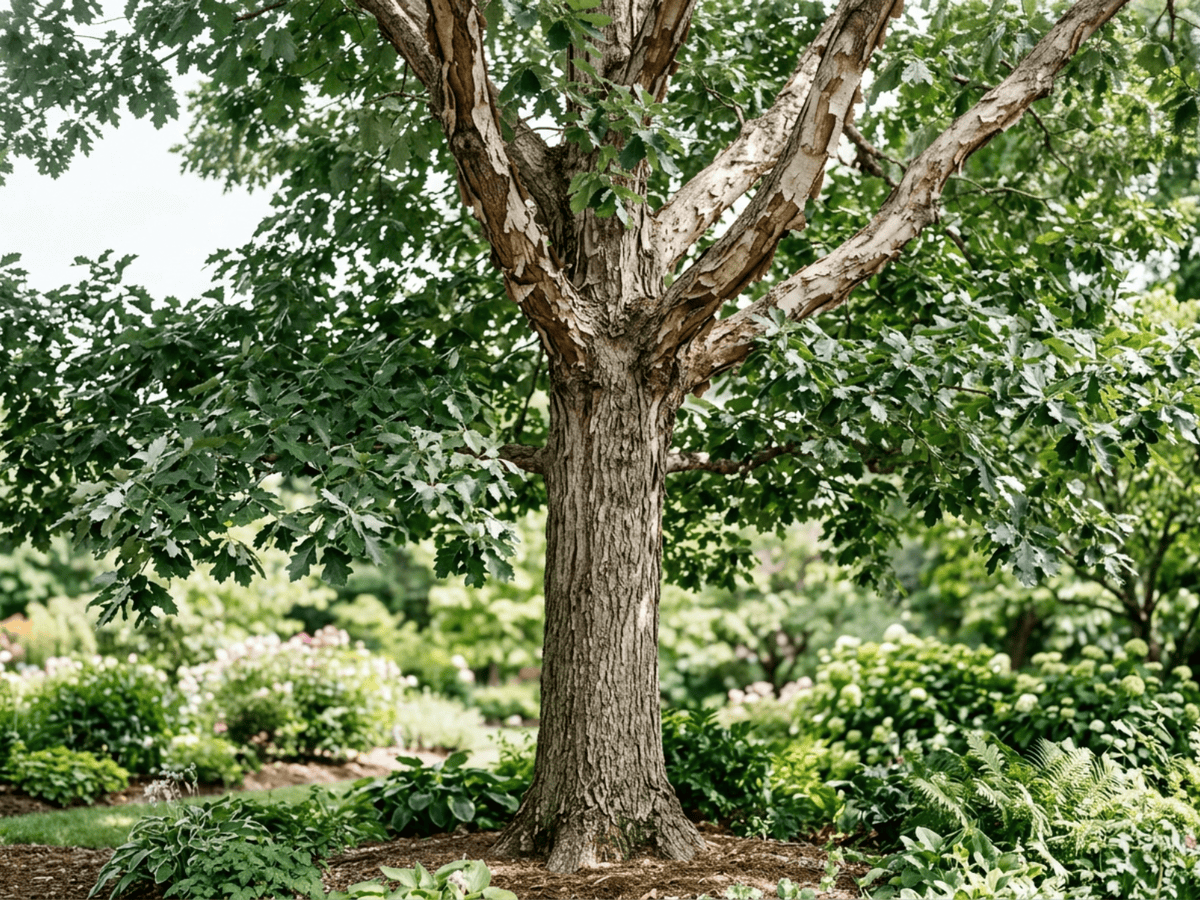
 White OakQuercus alba
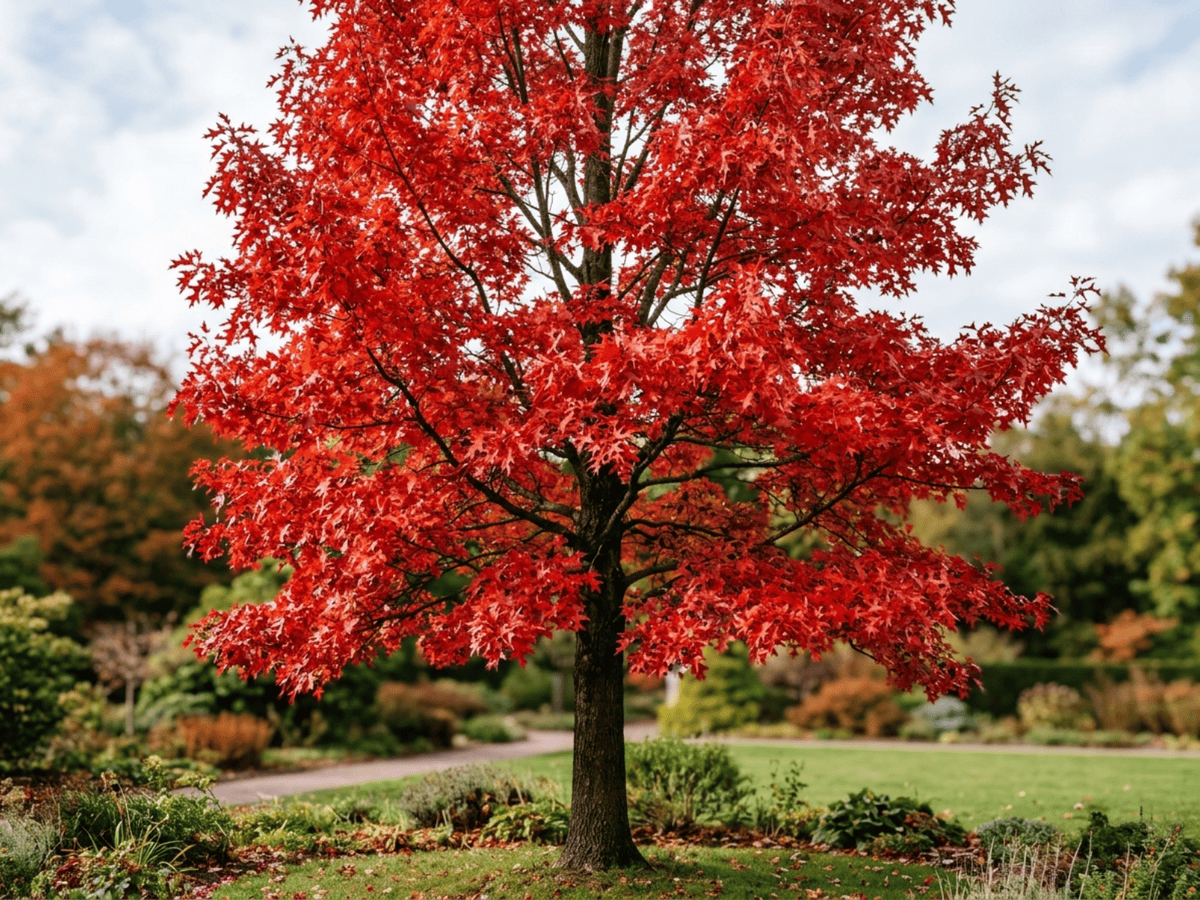
 Swamp White OakQuercus bicolor
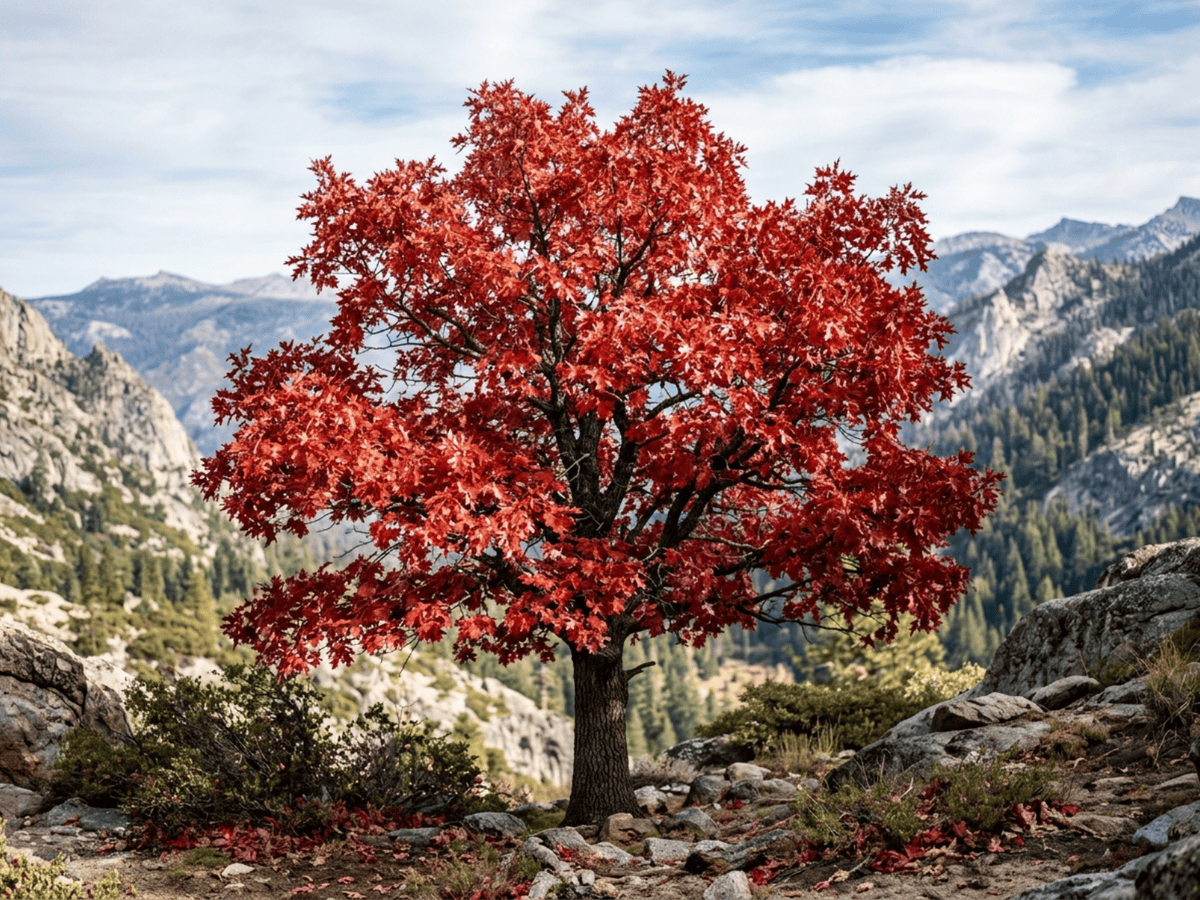
 Scarlet OakQuercus coccinea
 California Black OakQuercus kelloggii
Plants with similar care
 Chinese AbeliaAbelia chinensis
 Fragrant AbeliaAbelia mosanensis
 Large-Flowered AbeliaAbelia uniflora
 Glossy AbeliaAbelia x grandiflora
Frequently asked questions
How often should I water Coast Live Oak?
Water about every 14 days during the growing season, and always let excess water drain away.
How much light does Coast Live Oak need?
Full sun: 6+ hrs direct. Watch the leaves — scorching or stretching means the light needs adjusting.
Is Coast Live Oak toxic to cats or dogs?
Pets Moderate (Dogs Moderate · Cats Moderate) Educational information, not medical or veterinary advice. If exposure is suspected, contact a doctor or veterinarian.
Is Coast Live Oak easy to grow?
Yes — it is considered an easy, beginner-friendly plant.
When does Coast Live Oak bloom?
It typically blooms Mar–May in the Northern Hemisphere.
YardMate
Identify any plant in seconds
Snap a photo — YardMate names the plant, diagnoses problems, and reminds you when to water.
Download on the App Store