 YardMate


English Oak
Quercus robur
Easy · Beginner friendlyAbout English Oak
Quercus robur, the English oak or pedunculate oak, is a majestic deciduous tree in the Fagaceae family native to Europe, western Asia, and North Africa. Growing 20–40 m tall with a broad, spreading crown and deeply lobed leaves, it is one of the most iconic and long-lived trees in the Northern Hemisphere—some specimens are over 1,000 years old.
English oaks thrive in USDA zones 4–8 in deep, fertile, well-drained soil and full sun. They are slow to establish but ultimately become massive, enduring landscape trees. The acorns are an important food source for wildlife including jays, squirrels, deer, and wild boar. A single mature oak supports over 2,300 species of insects, lichens, fungi, and birds—more biodiversity than almost any other European tree.
The English oak is deeply woven into European culture and history. The Royal Navy was built from English oak ('Hearts of Oak'); the tree appears in coats of arms, folk tales (Robin Hood's Major Oak in Sherwood Forest), and national symbols. Oak wood is prized for furniture, wine barrels, and timber-frame construction. The tree represents strength, endurance, and the continuity of civilization itself.
- Cold-hardy
- Native
- Wildlife-friendly
How to care for English Oak
Watering
- Springevery 14 days
- Summerevery 10 days
- Fallevery 21 days
- Winterevery 60 days
Soil · Well-draining
- Top dressingPine bark mulch10%
- Main mixPotting soil + perlite 2:170%
- DrainageLECA / gravel20%
Never skip the drainage layer — standing water is the top cause of root rot.
FERTILIZER
Balanced Feed 14-14-14
An even feed covers all three needs at once, keeping leaves, roots and blooms moving together with nothing pushed out of balance.
- Nitrogen · Leaves
- Phosphorus · Roots + Blooms
- Potassium · Strength
- Springevery 60 days
At a Glance
- NativeEurope, Western Asia, Africa
- Height60–100 ft (18.3–30.5 m)
- Spread50–80 ft (15.2–24.4 m)
- Flower colorYellow, Green
- Foliage colorGreen, Yellow
- SoilLoamy, Well-drained
- LocationsYard
Bloom time
BLOOM CYCLE
Peak bloom
Apr–May
Inconspicuous catkins in spring; acorns mature in autumn — leave them for wildlife.
Fragrance
NO FRAGRANCE
No notable fragrance.
Toxicity
Humans Slight · Pets Moderate
tannins and gallotannins
Slight
- Acorn
- Ingestion
EXPOSURE Eating acorn.
EFFECT Raw acorns contain tannins causing GI upset and leaching removes tannins and acorns are edible.
NOTE Documented concern for humans: Raw acorns contain tannins causing GI upset and leaching removes tannins and acorns are edible.
Moderate
- Acorn
- Leaf
- Ingestion
EXPOSURE Eating acorn and leaves.
EFFECT Tannin toxicity: vomiting, diarrhea, kidney damage with quantity.
NOTE ASPCA lists Quercus as toxic to dogs, cats, horses; livestock tannin toxicity ("oak poisoning") is well-documented.
Moderate
- Acorn
- Leaf
- Ingestion
EXPOSURE Eating acorn and leaves.
EFFECT Tannin toxicity.
NOTE ASPCA lists Quercus as toxic to dogs, cats, horses; livestock tannin toxicity ("oak poisoning") is well-documented.
Educational information, not medical or veterinary advice. If exposure is suspected, contact a doctor or veterinarian.
DISTRIBUTION

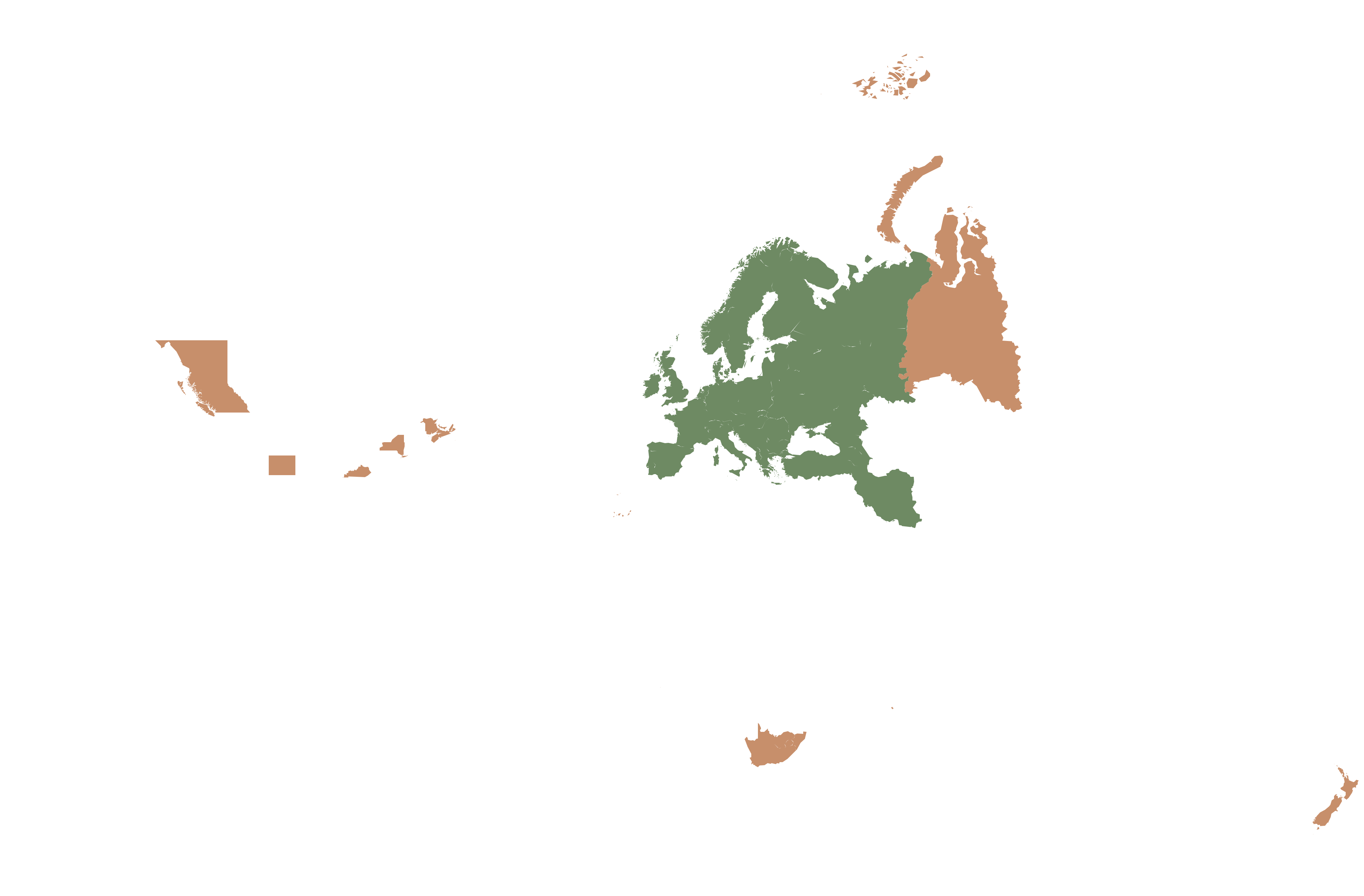
- Native
- Introduced
- Europe
- Western Asia
- Africa
History

Quercus robur is native to most of Europe and western Asia, and has been a defining cultural tree of European civilization. Celtic and Germanic peoples held oaks sacred; Druid priestly groves centered on oak (the name "druid" may derive from Proto-Celtic "daru-wid," oak-knower), and Thor / Donar in Germanic mythology is associated with the oak. Medieval English law recognized individual notable oaks; the Major Oak of Sherwood Forest is traditionally associated with Robin Hood.
Royal Navy construction through the 17th-19th centuries demanded enormous quantities of mature oak — HMS Victory, Nelson's flagship at Trafalgar (1805), required approximately 6,000 mature oak trees. The depletion of English oak for naval shipbuilding drove early forestry legislation and plantation programs. Oak remains the national tree of England, Germany, France, Estonia, Latvia, Romania, Poland, and several other European states.
Quercus robur typically lives 500-1,000 years; the Kongeegen oak in Denmark is estimated at 1,200+ years old. Modern oak is economically important for timber, barrels (wine, whisky, bourbon), and cork (though cork oak is a different species, Q. suber). The English oak built the Royal Navy, framed medieval cathedrals, and sheltered Robin Hood. The Major Oak in Sherwood Forest is estimated at 800–1,000 years old. Charles II hid in the Boscobel Oak after the Battle of Worcester (1651). Oak leaves appear on British coins, military insignia, and the logos of conservation organizations worldwide.
Symbolism & meaning
What It Symbolizes
The English Oak is strength in arboreal form, the mightiest tree of European folklore and the chosen seat of druidic worship in ancient sacred groves. For millennia it has signified power, endurance, and a deep-rooted wisdom drawn up through stone-thick taproots. To stand beneath one is to feel oneself, briefly, very small inside a very long story.
- Strength — The mightiest of European trees, the oak has symbolized power, endurance, and steadfastness for millennia
- Wisdom — Druids worshipped in oak groves; the tree represents deep-rooted knowledge and ancient authority
Where the Name Comes From
Quercus is Latin for oak; 'robur' means strength or hard timber in Latin — also the root of the word 'robust.'
Uses & Fun Facts
- Prized timber for wine barrels, furniture, and shipbuilding
- Massive spreading canopy serves as classic European shade tree
- Acorns and bark support hundreds of insect, bird, and mammal species
- National symbol across England, Germany, and other European nations
Related plants
More Quercus plants
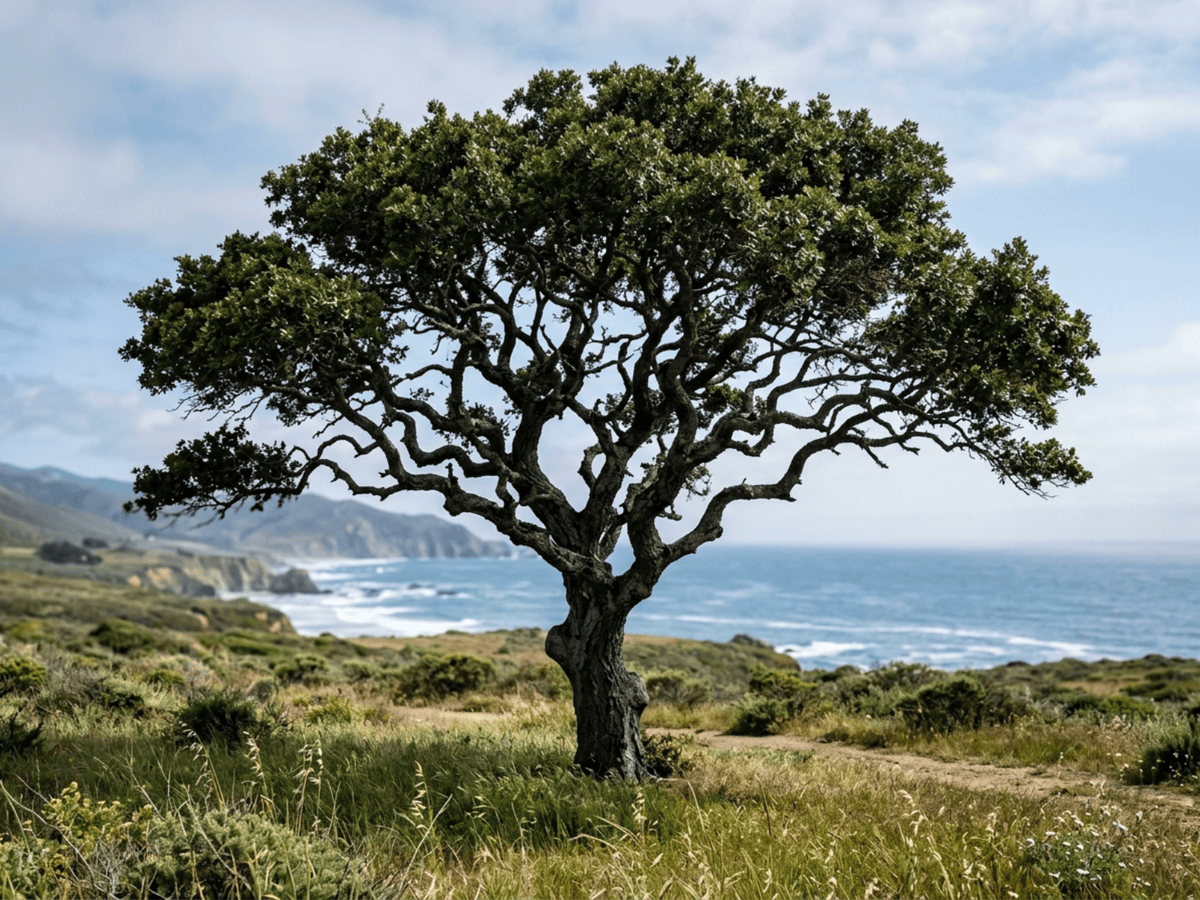 Coast Live OakQuercus agrifolia
 White OakQuercus alba
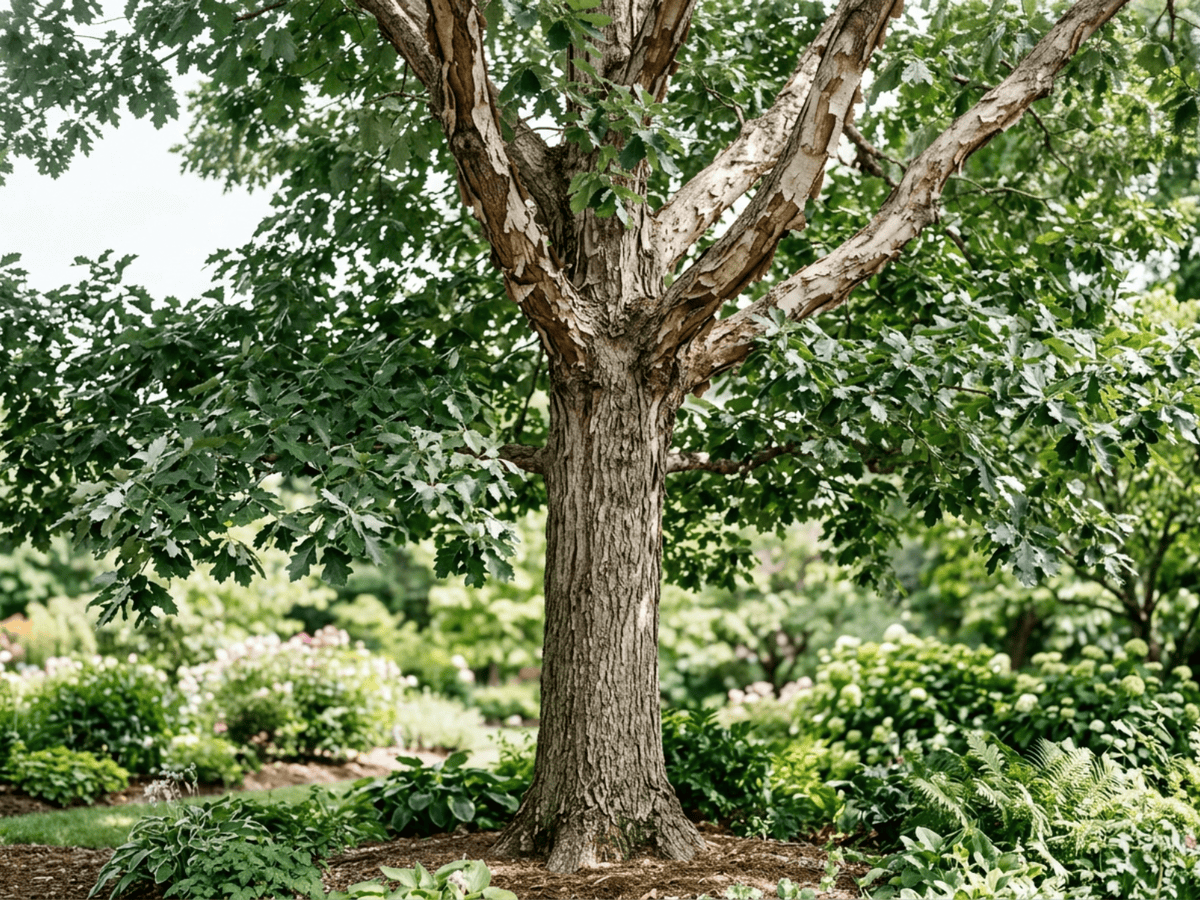 Swamp White OakQuercus bicolor
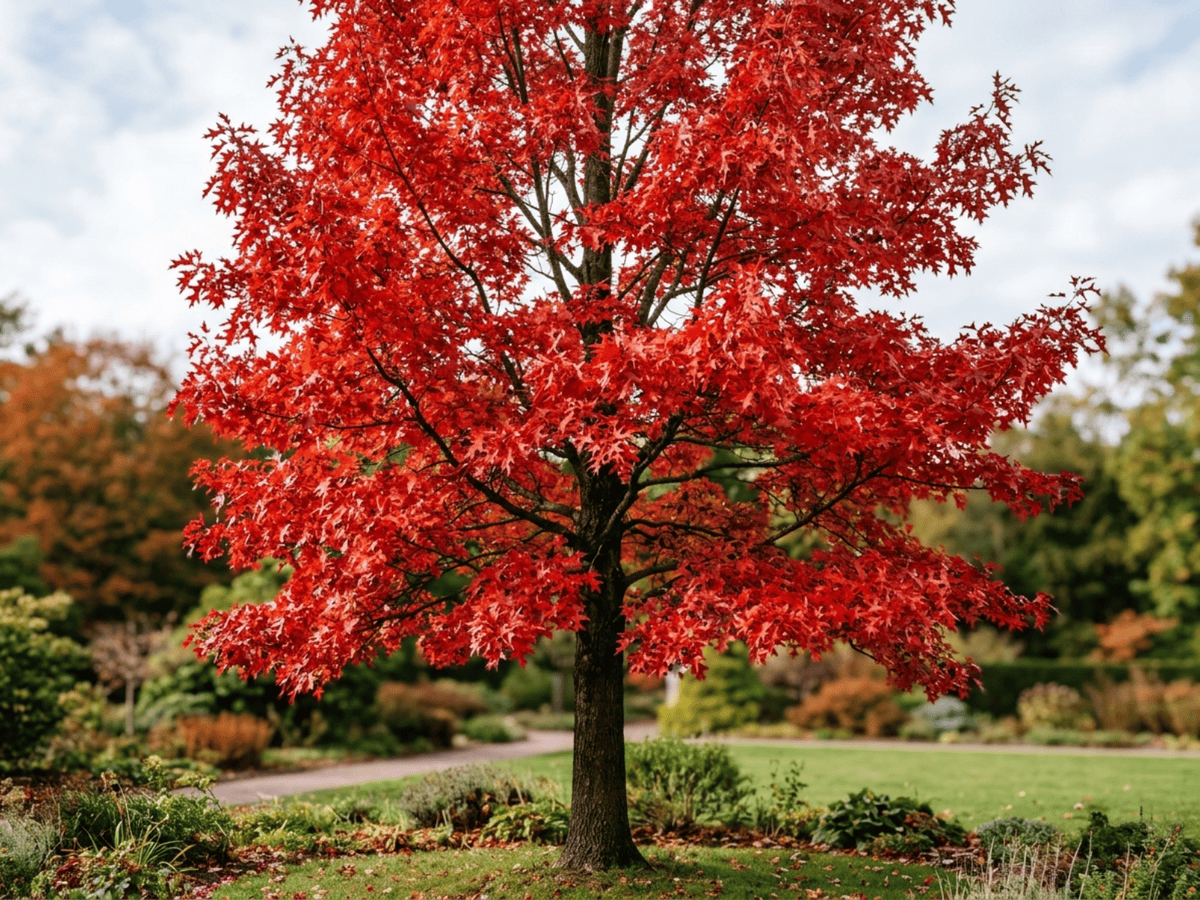 Scarlet OakQuercus coccinea
Plants with similar care
 Chinese AbeliaAbelia chinensis
 Fragrant AbeliaAbelia mosanensis
 Large-Flowered AbeliaAbelia uniflora
 Glossy AbeliaAbelia x grandiflora
Frequently asked questions
How often should I water English Oak?
In summer, water about every 10 days; in winter, about every 60 days. Adjust for heat, pot size and drainage.
How much light does English Oak need?
Full sun: 6+ hrs direct. Watch the leaves — scorching or stretching means the light needs adjusting.
Is English Oak toxic to cats or dogs?
Pets Moderate (Dogs Moderate · Cats Moderate) Educational information, not medical or veterinary advice. If exposure is suspected, contact a doctor or veterinarian.
Is English Oak easy to grow?
Yes — it is considered an easy, beginner-friendly plant.
When does English Oak bloom?
It typically blooms Apr–May in the Northern Hemisphere.
YardMate
Identify any plant in seconds
Snap a photo — YardMate names the plant, diagnoses problems, and reminds you when to water.
Download on the App Store