 YardMate
Marsh Labrador Tea
Rhododendron tomentosum
Hard · Experienced growersAbout Marsh Labrador Tea
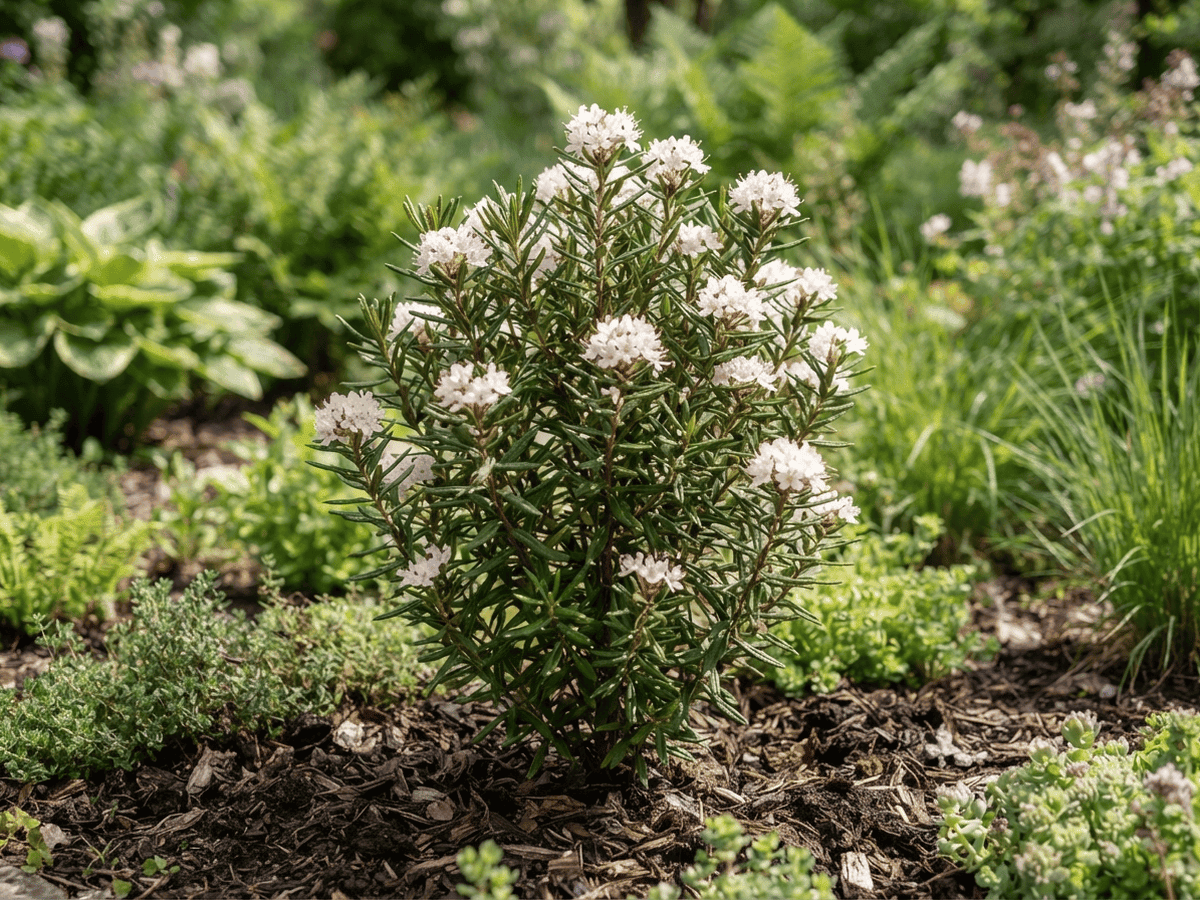
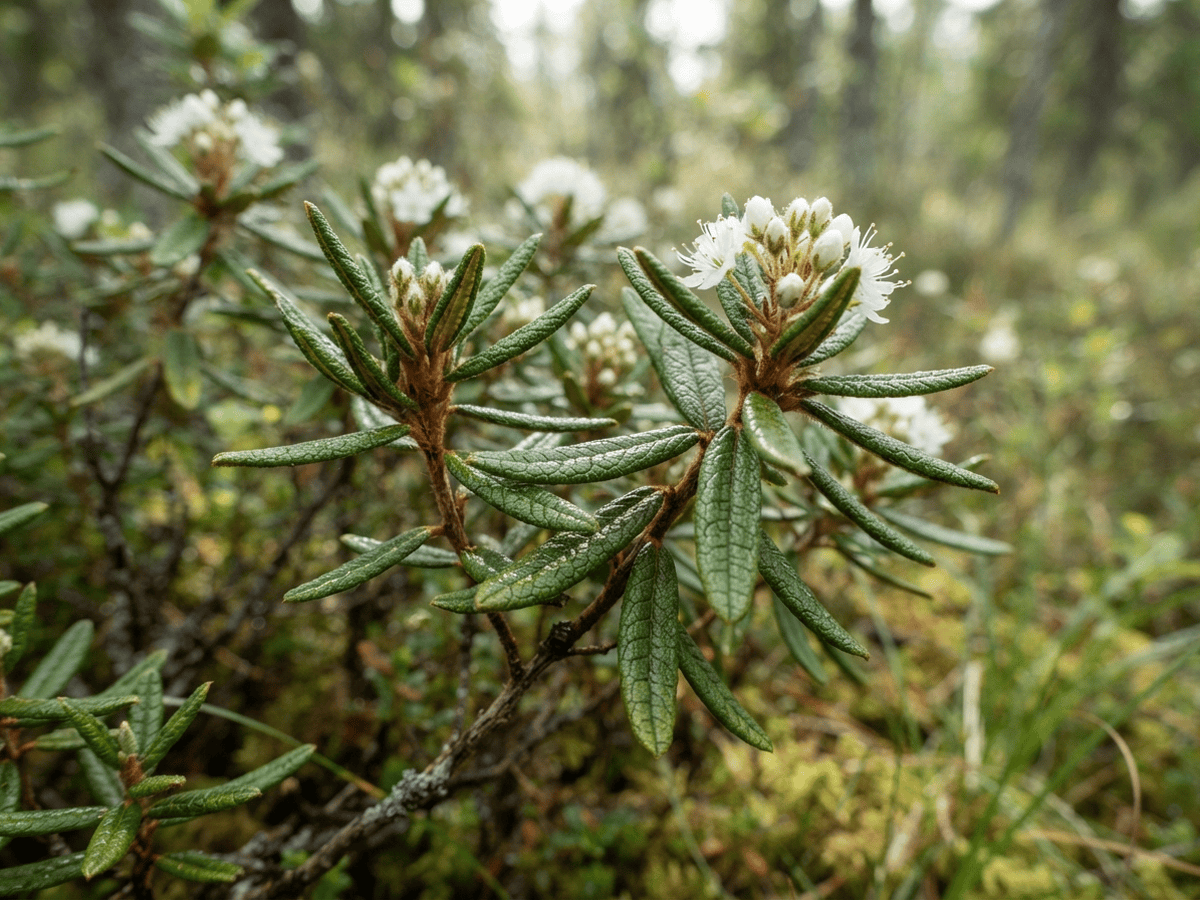
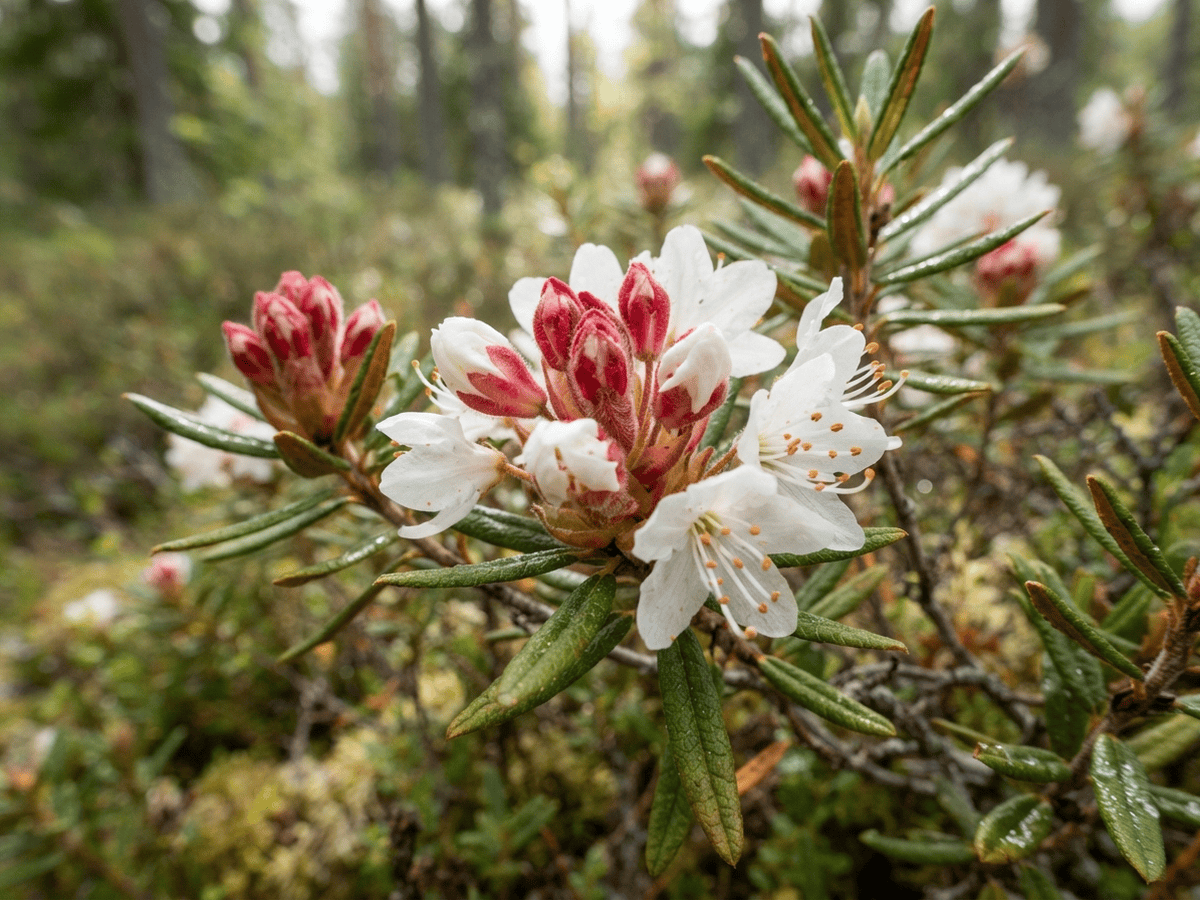
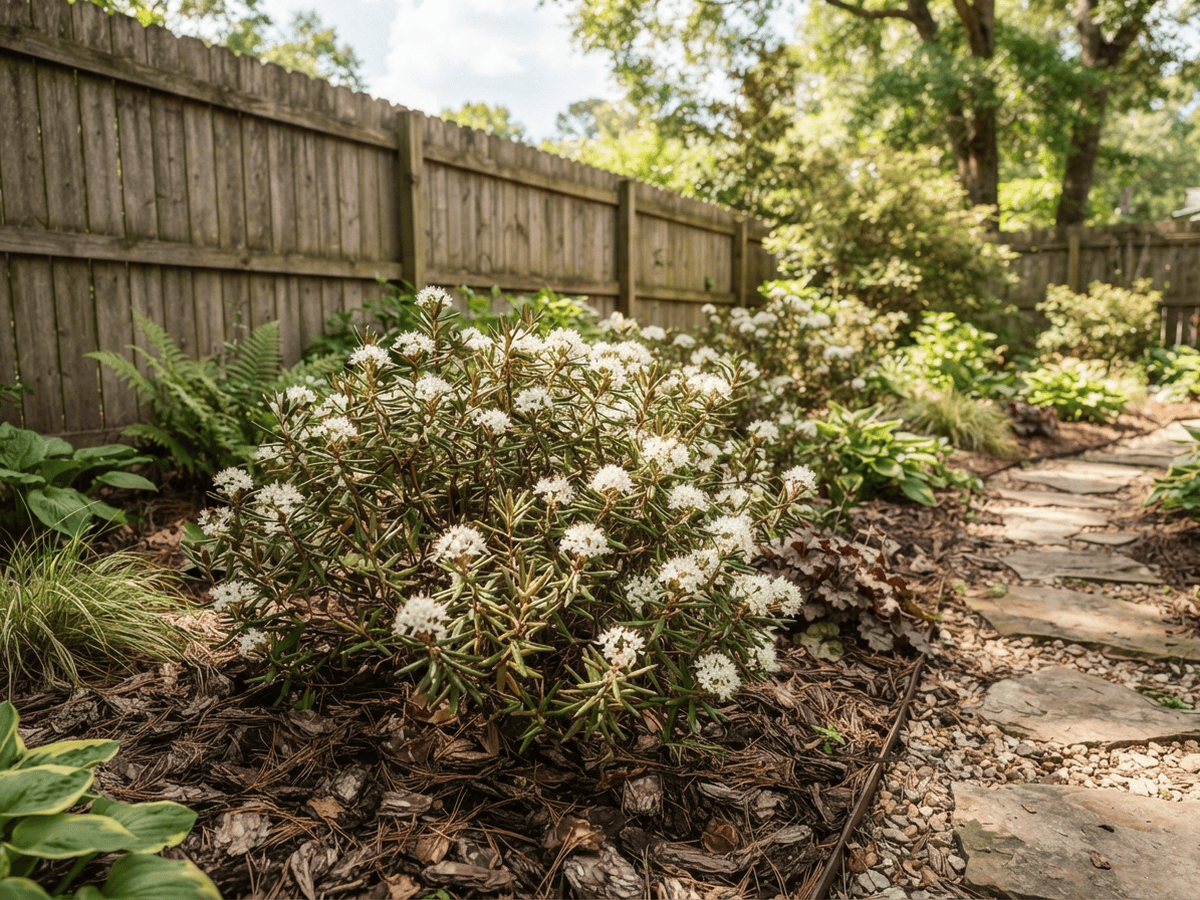
Marsh Labrador Tea is a low, evergreen shrub of the circumboreal bogs and damp coniferous forests spanning northern Europe, Siberia, and North America. Its narrow, leathery leaves curl slightly at the edges and wear a dense, rust-brown felt on their undersides, the trait behind the species name tomentosum, meaning "hairy." Crushed foliage releases a strong, resinous, almost camphor-like fragrance that can perfume an entire bog on a warm day. In late spring, clusters of small white star-shaped flowers open at the branch tips, drawing bees even though the plant itself is toxic. It thrives in acidic, waterlogged peat where few other shrubs can take hold, forming dense, spreading colonies.
- Evergreen
- Cold-hardy
- Fragrant
- Spreading
- Pollinator-friendly
How to care for Marsh Labrador Tea
Watering
- Springevery 10 days
- Summerevery 7 days
- Fallevery 15 days
- Winterevery 30 days
Soil · Acidic · pH 4.5–6
- Top dressingPine needle mulch10%
- Main mixAcid-lover mix + peat 3:175%
- DrainageGravel15%
Never add lime or wood ash — it cancels out the acidity.
FERTILIZER
Acid-Loving Feed 4-3-4
One bag does both jobs. An acid feed carries the usual nitrogen, phosphorus and potassium, plus the sulfur and iron that keep the soil sour enough for the roots to take them up at all.
- Nitrogen · Leaves
- Phosphorus · Roots + Blooms
- Potassium · Strength
- Springevery 30 days
- Summerevery 30 days
- Fallevery 30 days
At a Glance
- NativeEurope, Asia, North America
- Height3–5 ft (0.9–1.5 m)
- Spread3–5 ft (0.9–1.5 m)
- Foliage colorGreen
- SoilAcidic, Moist
- LocationsYard · Patio
Fragrance
STRONG FRAGRANCE
Crushed leaves give off a pungent, resinous, camphor-like aroma; the flowers add a lighter, sweet top note in bloom.
Toxicity
Humans Moderate · Pets Moderate
ledol and grayanotoxins
Moderate
- Leaf
- Flower
- Ingestion
- Contact
EXPOSURE Eating leaves and flowers. Touching leaves and flowers.
EFFECT Nausea and headache, abdominal cramps and vomiting, and in large quantities, narcotic and convulsant effects.
NOTE Contains ledol and grayanotoxin compounds; historically added to beer (gruit) for its narcotic effect, and Rhododendron/Ledum species are documented as toxic to humans and pets in significant quantity.
Moderate
- Leaf
- Flower
- Ingestion
EXPOSURE Eating leaves and flowers.
EFFECT Vomiting and diarrhea, excessive drooling, and weakness and, in severe cases, cardiac arrhythmia.
NOTE Contains ledol and grayanotoxin compounds; historically added to beer (gruit) for its narcotic effect, and Rhododendron/Ledum species are documented as toxic to humans and pets in significant quantity.
Moderate
- Leaf
- Flower
- Ingestion
EXPOSURE Eating leaves and flowers.
EFFECT Vomiting and diarrhea, drooling and weakness, and potential cardiac effects with significant ingestion.
NOTE Contains ledol and grayanotoxin compounds; historically added to beer (gruit) for its narcotic effect, and Rhododendron/Ledum species are documented as toxic to humans and pets in significant quantity.
Educational information, not medical or veterinary advice. If exposure is suspected, contact a doctor or veterinarian.
DISTRIBUTION


- Native
- Europe
- Asia
- North America
History
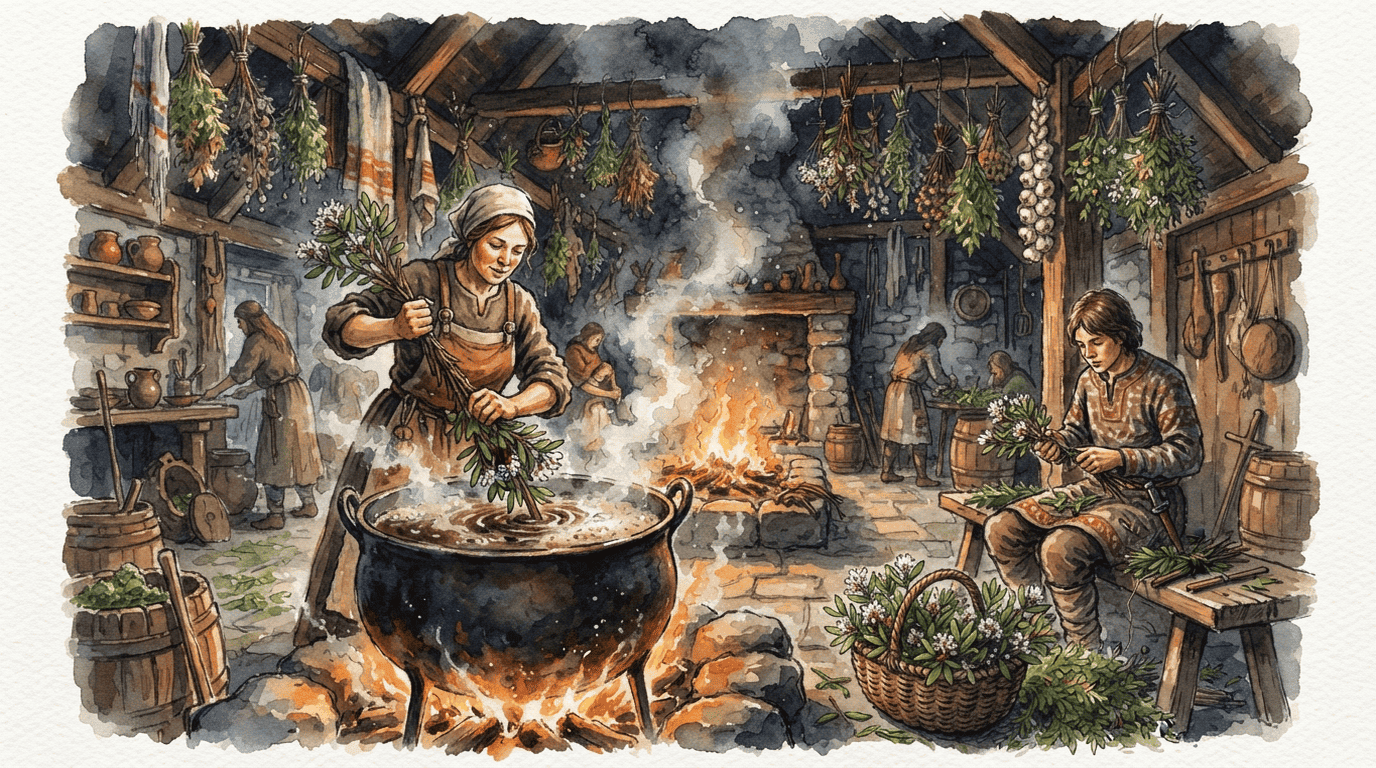
For centuries before hops became the standard bittering and preservative herb in beer, brewers across Scandinavia, the Baltic coast, and northern Russia turned to Marsh Labrador Tea, known in Old Norse and later Scandinavian dialects as "pors." Bundled sprigs were steeped into gruit, the mix of bittering herbs that flavored and preserved ale before widespread hop cultivation took hold in the late medieval period. The plant's leaves and flowering tops carry ledol and related grayanotoxin compounds, which lend a narcotic, faintly intoxicating edge quite unlike the mellow bitterness of hops. Some historians have suggested, cautiously, that pors-flavored gruit ale may have contributed to the frenzied, uninhibited behavior associated with berserker warriors, though this remains a debated theory rather than settled history. Beyond the brewing kettle, Sami, Scandinavian, and Siberian households prized the shrub's pungent, camphor-like oils as a practical household guard: dried sprigs were tucked into linen chests and clothing stores to repel moths and fleas, and foragers working the summer bogs rubbed crushed leaves on skin and clothing as an insect deterrent. Village herbalists also brewed the leaves into a bitter tea for coughs and rheumatic complaints, always in restrained doses, well aware that the same compounds that repelled insects and flavored ale could sicken anyone who drank too freely.
Symbolism & meaning
What It Symbolizes
Long before hops tamed the taste of beer, Marsh Labrador Tea grew wild in the very bogs where Norse brewers gathered their bittering herbs. Its resinous, faintly narcotic character made it prized and feared in equal measure, sweetening gruit ale while lending it an edge some historians believe could rouse the fury of berserker warriors. That same untamed potency, carried in a shrub that thrives where almost nothing else will grow, made it an emblem of wildness too stubborn to be domesticated.
- Untamed Spirit — Rooted in wild, unforgiving bogs and steeped into ale that stirred warriors to reckless courage, Marsh Labrador Tea has long stood for a wildness that resists taming.
- Protection — Tucked into clothing chests for centuries to ward off moths and fleas, the shrub also symbolizes quiet household protection.
Where the Name Comes From
The species name tomentosum comes from the Latin tomentum, meaning "stuffing" or "felt," describing the dense, woolly, rust-brown hairs covering the undersides of the leaves. The genus Rhododendron combines the Greek rhodon (rose) and dendron (tree). The plant was long classified as Ledum palustre, palustre meaning "of the marsh," a name still used in older texts and reflected in the common name Marsh Labrador Tea.
Uses & Fun Facts
- Crushed leaves release a strong, resinous scent once used to freshen and protect stored linens.
- Clusters of small white spring flowers draw bees and other pollinators to the bog edge.
- Dried sprigs were historically bundled into gruit, the bittering herb mix used to flavor beer before hops.
- Folk herbalists brewed the leaves into a bitter tea for coughs and rheumatic aches, always in small doses.
Related plants
More Rhododendron plants
 Smooth AzaleaRhododendron arborescens
 Augustine's RhododendronRhododendron augustinii
 Orange AzaleaRhododendron austrinum
 Mountain AzaleaRhododendron canescens
Plants with similar care
Frequently asked questions
How often should I water Marsh Labrador Tea?
In summer, water about every 7 days; in winter, about every 30 days. Adjust for heat, pot size and drainage.
How much light does Marsh Labrador Tea need?
Full shade: <2 hrs direct. Watch the leaves — scorching or stretching means the light needs adjusting.
Is Marsh Labrador Tea toxic to cats or dogs?
Pets Moderate (Dogs Moderate · Cats Moderate) Educational information, not medical or veterinary advice. If exposure is suspected, contact a doctor or veterinarian.
Is Marsh Labrador Tea easy to grow?
It is considered challenging and rewards experienced growers.
YardMate
Identify any plant in seconds
Snap a photo — YardMate names the plant, diagnoses problems, and reminds you when to water.
Download on the App Store