 YardMate

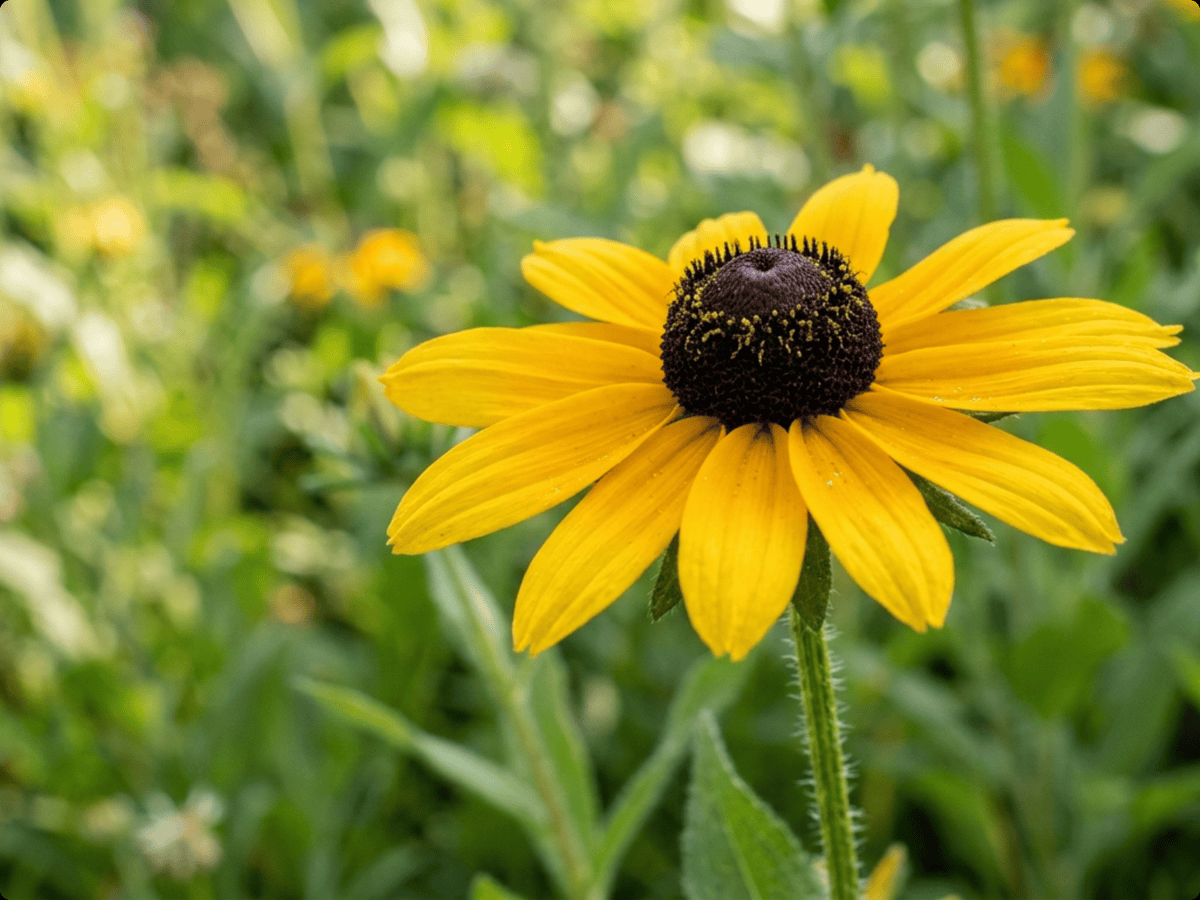


Black-Eyed Susan
Rudbeckia hirta
Easy · Beginner friendlyAbout Black-Eyed Susan
Rudbeckia hirta, the black-eyed Susan, is a cheerful native North American wildflower with golden-yellow daisy petals surrounding a prominent dark brown-black central cone. Growing 30–90 cm tall, it blooms prolifically from midsummer to frost. It is technically a short-lived perennial or biennial but self-seeds so reliably it behaves as a permanent garden presence. Drought-tolerant and thriving in poor soil, it is the backbone of prairie-style gardens and wildflower meadows. The 'Goldsturm' cultivar of the related R. fulgida is one of the world's most planted perennials.
- Drought-tolerant
- Native
- Pollinator-friendly
How to care for Black-Eyed Susan
Watering
- Springevery 10 days
- Summerevery 7 days
- Fallevery 14 days
- Winterevery 21 days
Soil · Well-draining
- Top dressingPine bark mulch10%
- Main mixPotting soil + perlite 2:170%
- DrainageLECA / gravel20%
Never skip the drainage layer — standing water is the top cause of root rot.
FERTILIZER
- Springevery 30 days
- Summerevery 30 days
At a Glance
- NativeNorth America
- Height2–3 ft (0.6–0.9 m)
- Spread1–2 ft (0.3–0.6 m)
- Flower colorYellow, Orange
- Foliage colorGreen
- Fruit colorBrown
- SoilLoamy, Well-drained
- LocationsYard
Bloom time
BLOOM CYCLE
Peak bloom
Sep–Nov
Self-seeds freely; tolerates poor soil; goldfinches eat seeds in autumn
Fragrance
NO FRAGRANCE
No notable fragrance.
Toxicity
Humans Slight · Pets Slight
sesquiterpene lactones
Slight
- Leaf
- Stem
- Contact
EXPOSURE Touching leaves and stems.
EFFECT Contact dermatitis reported in sensitive individuals and sap may irritate skin.
NOTE Documented concern for humans: Contact dermatitis reported in sensitive individuals and sap may irritate skin.
Slight
- All
- Ingestion
EXPOSURE Eating any part of the plant.
EFFECT Mild GI upset possible with large ingestion.
NOTE Not on ASPCA toxic list; generally considered low-risk.
Slight
- All
- Ingestion
EXPOSURE Eating any part of the plant.
EFFECT Mild GI upset possible with large ingestion.
NOTE Not on ASPCA toxic list; generally considered low-risk.
Educational information, not medical or veterinary advice. If exposure is suspected, contact a doctor or veterinarian.
DISTRIBUTION


- Native
- Introduced
- North America
History

Rudbeckia hirta is native to the tallgrass prairies, meadows, and open woods of North America. Linnaeus named the genus in 1753 in honor of Olaus Rudbeck the Younger, his mentor at Uppsala. Indigenous peoples including the Ojibwe and Potawatomi used root infusions for colds, worms, and snakebite, and the plant served as a dye source.
European colonists carried seed eastward, and by the 19th century it had naturalized across the continent. Maryland designated it the state flower in 1918, inspired by its colors echoing the state flag. Today it is valued both as a low-maintenance garden ornamental and as an important nectar and seed plant for bees, butterflies, and goldfinches.
Black-eyed Susan is named after a character in an 18th-century English poem by John Gay — 'Sweet William's Farewell to Black-Eyed Susan' (1720), about a sailor bidding goodbye to his love. The genus honors Olof Rudbeck the Elder and Younger, father-and-son Swedish botanists and teachers of Carl Linnaeus. In ecological restoration, Rudbeckia is often the first native wildflower to colonize disturbed soil, making it a pioneer species in prairie reconstruction projects across the American Midwest.
Symbolism & meaning
What It Symbolizes
Black-Eyed Susan can symbolize justice, a pioneer wildflower of disturbed ground that returns light and life to bulldozed lots, roadsides, and burned-over meadows. Wherever soil has been wounded, this rudbeckia helps make it whole again with sheets of golden bloom. To plant it is to participate in a small act of fair restoration — a wildflower that quietly puts the earth back into rightful order, one disturbed acre at a time.
- Justice — A pioneer of disturbed ground, representing fair restoration and balance
Where the Name Comes From
The name Black-Eyed Susan describes dark flower centers. Rudbeckia honors Olof Rudbeck (1630–1702), Swedish botanist and mentor to Linnaeus. Hirta means 'hairy,' for the rough stem hairs.
Uses & Fun Facts
- Black-Eyed Susan flowers nourish foraging bees and pollinators
Related plants
More Rudbeckia plants
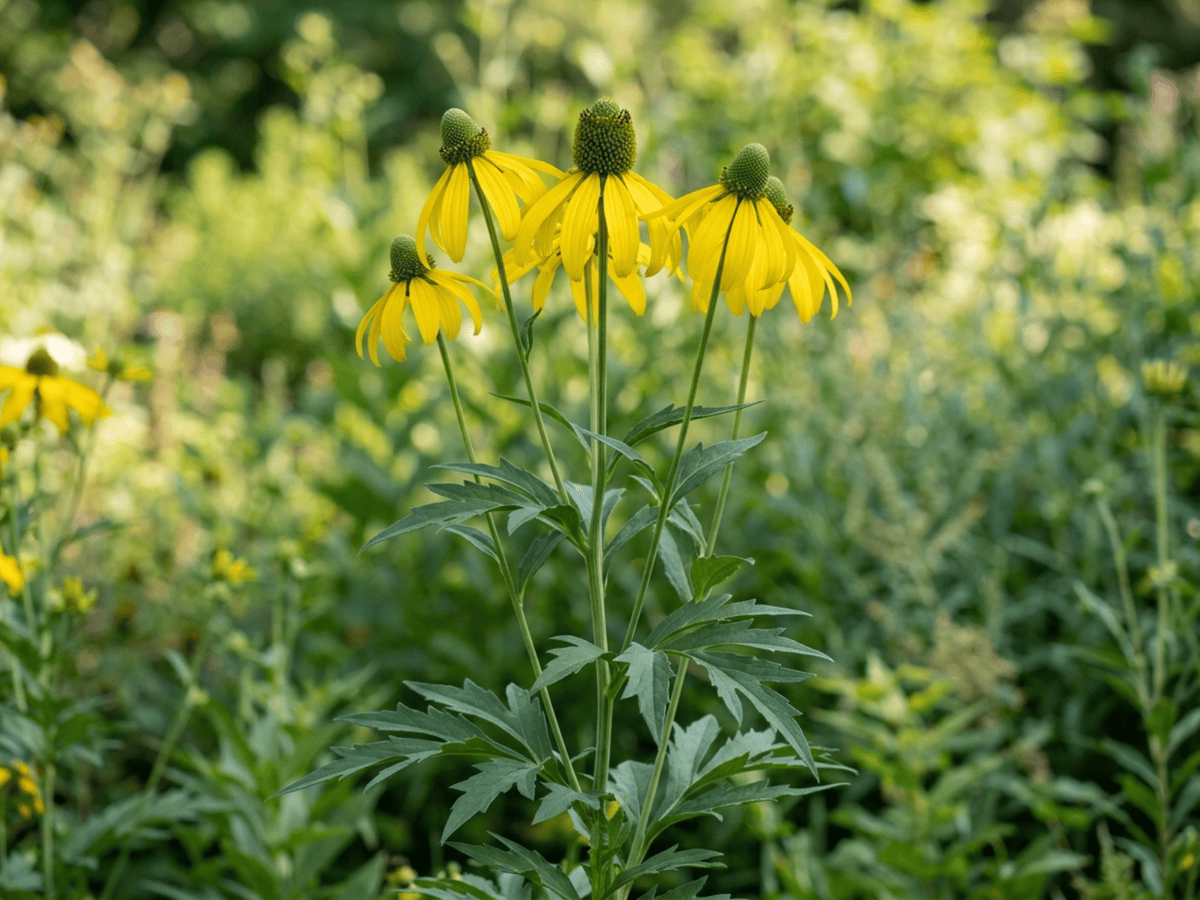 Cutleaf ConeflowerRudbeckia laciniata
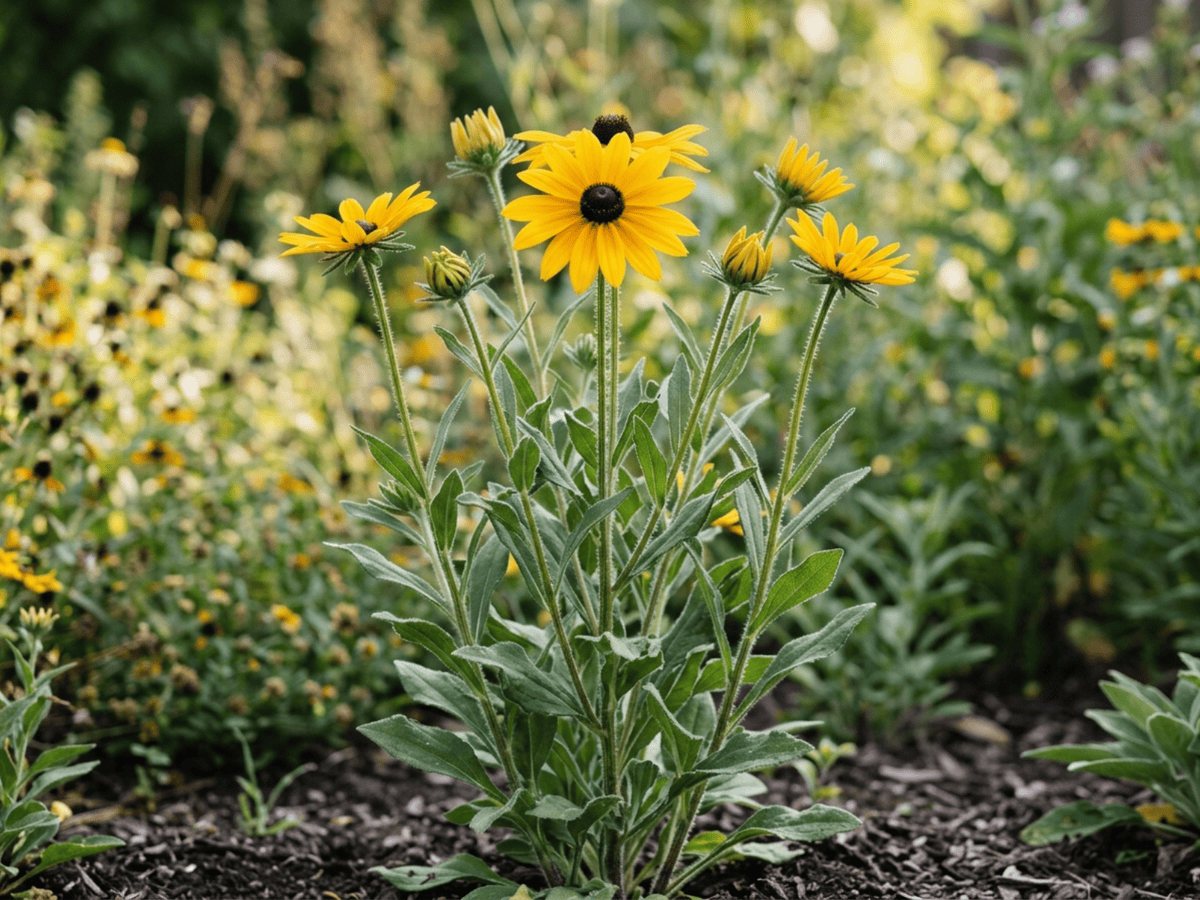 Sweet Black-Eyed SusanRudbeckia subtomentosa
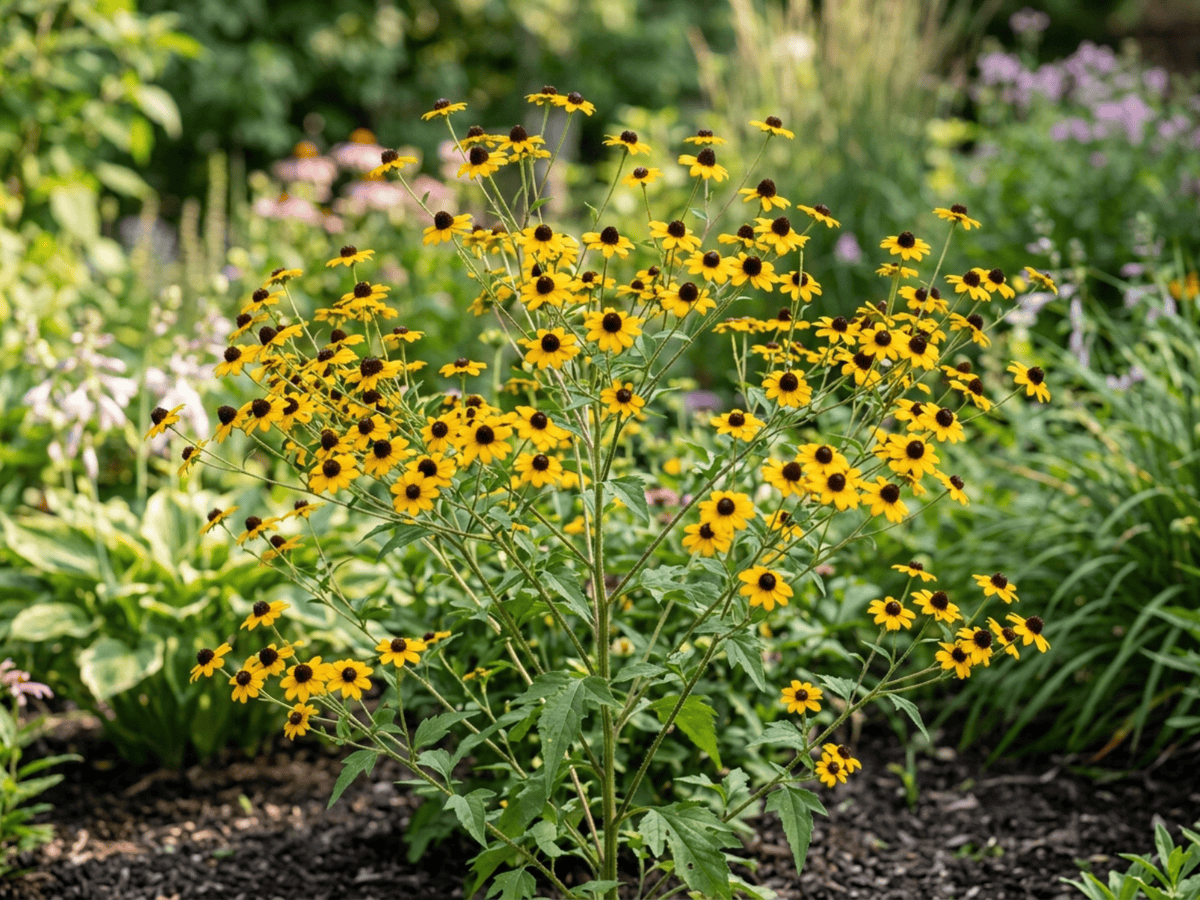 Brown-Eyed SusanRudbeckia triloba
Plants with similar care
 Chinese AbeliaAbelia chinensis
 Fragrant AbeliaAbelia mosanensis
 Large-Flowered AbeliaAbelia uniflora
 Glossy AbeliaAbelia x grandiflora
Frequently asked questions
How often should I water Black-Eyed Susan?
In summer, water about every 7 days; in winter, about every 21 days. Adjust for heat, pot size and drainage.
How much light does Black-Eyed Susan need?
Full sun: 6+ hrs direct. Watch the leaves — scorching or stretching means the light needs adjusting.
Is Black-Eyed Susan toxic to cats or dogs?
Pets Slight (Dogs Slight · Cats Slight) Educational information, not medical or veterinary advice. If exposure is suspected, contact a doctor or veterinarian.
Is Black-Eyed Susan easy to grow?
Yes — it is considered an easy, beginner-friendly plant.
When does Black-Eyed Susan bloom?
It typically blooms Sep–Nov in the Northern Hemisphere.
YardMate
Identify any plant in seconds
Snap a photo — YardMate names the plant, diagnoses problems, and reminds you when to water.
Download on the App Store