 YardMate


Cutleaf Coneflower
Rudbeckia laciniata
Easy · Beginner friendlyAbout Cutleaf Coneflower
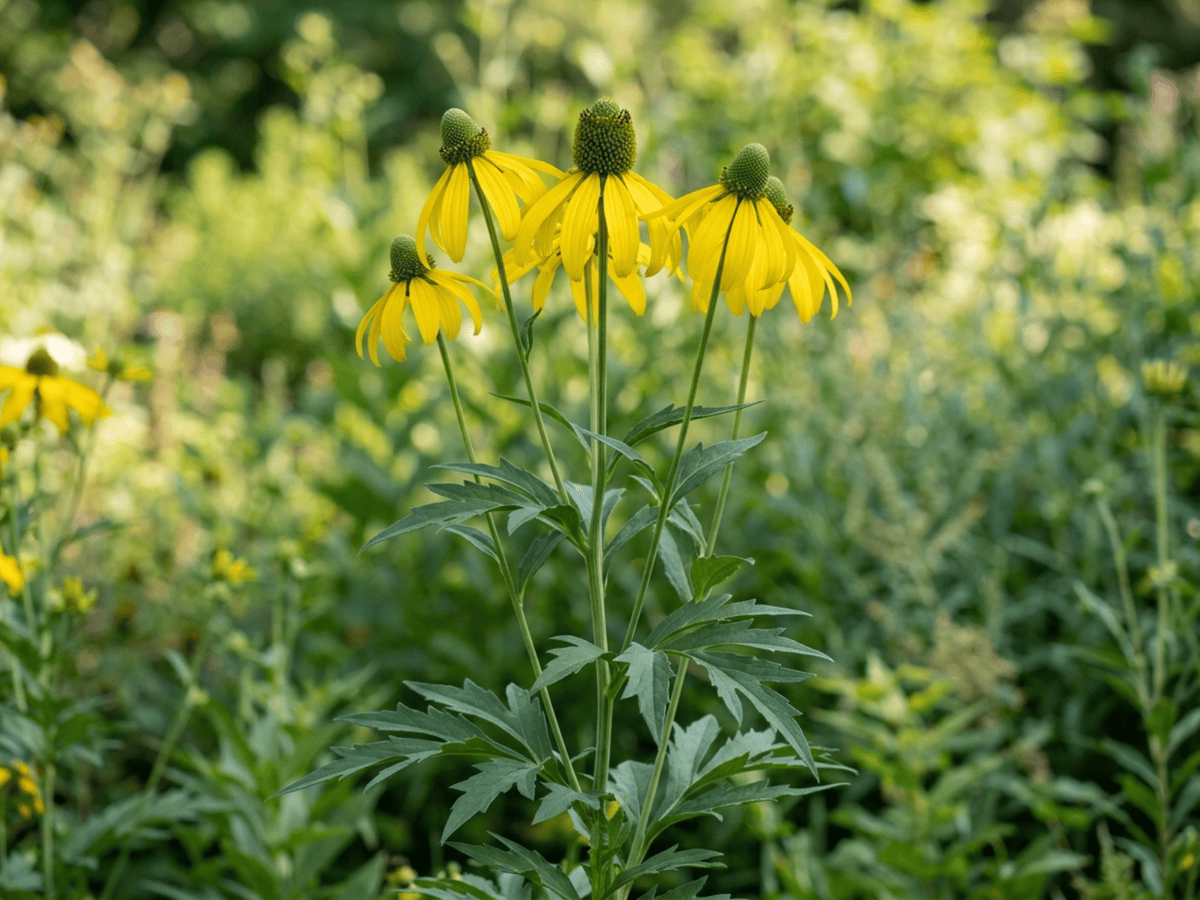
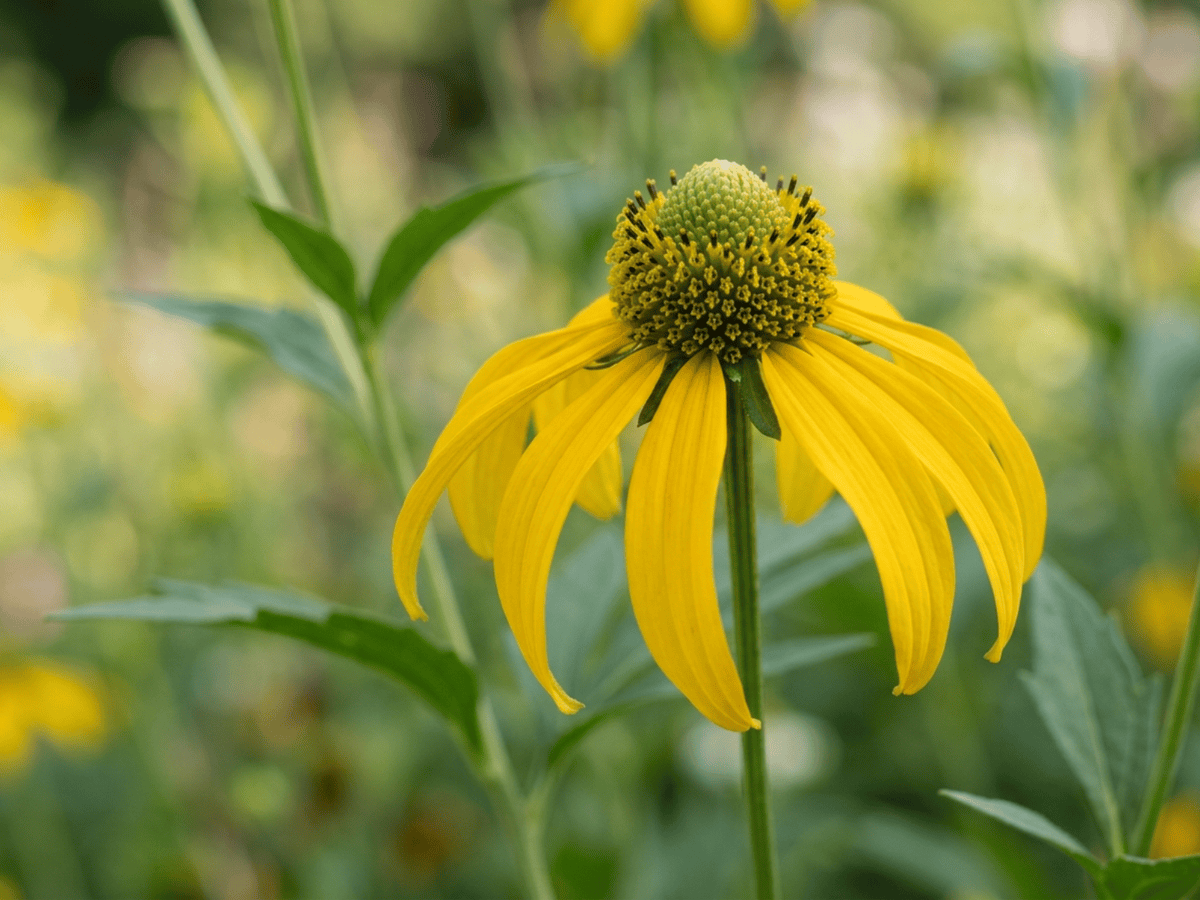
Cutleaf Coneflower is a tall North American native perennial, 4–8 feet tall, with deeply-lobed leaves and bright yellow daisy flowers with drooping petals and green central cones. Native from Quebec to Florida and west to the Rockies, it thrives in moist meadows and woodland edges. Classic heirloom 'Golden Glow' (double-flowered form) is a pass-along plant in generations of Midwestern and New England gardens. Blooms mid- to late summer.
- Deer-resistant
- Native
- Pollinator-friendly
How to care for Cutleaf Coneflower
Watering
- Springevery 4 days
- Summerevery 3 days
- Fallevery 5 days
- Winterevery 7 days
Soil · Well-draining
- Top dressingPine bark mulch10%
- Main mixPotting soil + perlite 2:170%
- DrainageLECA / gravel20%
Never skip the drainage layer — standing water is the top cause of root rot.
FERTILIZER
- Springevery 21 days
- Summerevery 30 days
At a Glance
- NativeNorth America
- Height5–8 ft (1.5–2.4 m)
- Spread3–4 ft (0.9–1.2 m)
- Flower colorYellow
- Foliage colorGreen
- SoilLoamy, Moisture-retentive
- LocationsYard
Bloom time
BLOOM CYCLE
Peak bloom
Jun–Sep
Yellow drooping-petal daisies mid- to late summer
Toxicity
Humans Slight · Pets Slight
sesquiterpene lactones
Slight
- All
- Ingestion
EXPOSURE Eating any part of the plant.
EFFECT Mild gastric upset if raw.
NOTE Young cooked shoots are edible (sochan); raw plant may irritate.
Slight
- All
- Ingestion
EXPOSURE Eating any part of the plant.
EFFECT Mild vomiting and diarrhea.
NOTE Young cooked shoots are edible (sochan); raw plant may irritate.
Slight
- All
- Ingestion
EXPOSURE Eating any part of the plant.
EFFECT Mild vomiting and diarrhea.
NOTE Young cooked shoots are edible (sochan); raw plant may irritate.
Educational information, not medical or veterinary advice. If exposure is suspected, contact a doctor or veterinarian.
DISTRIBUTION

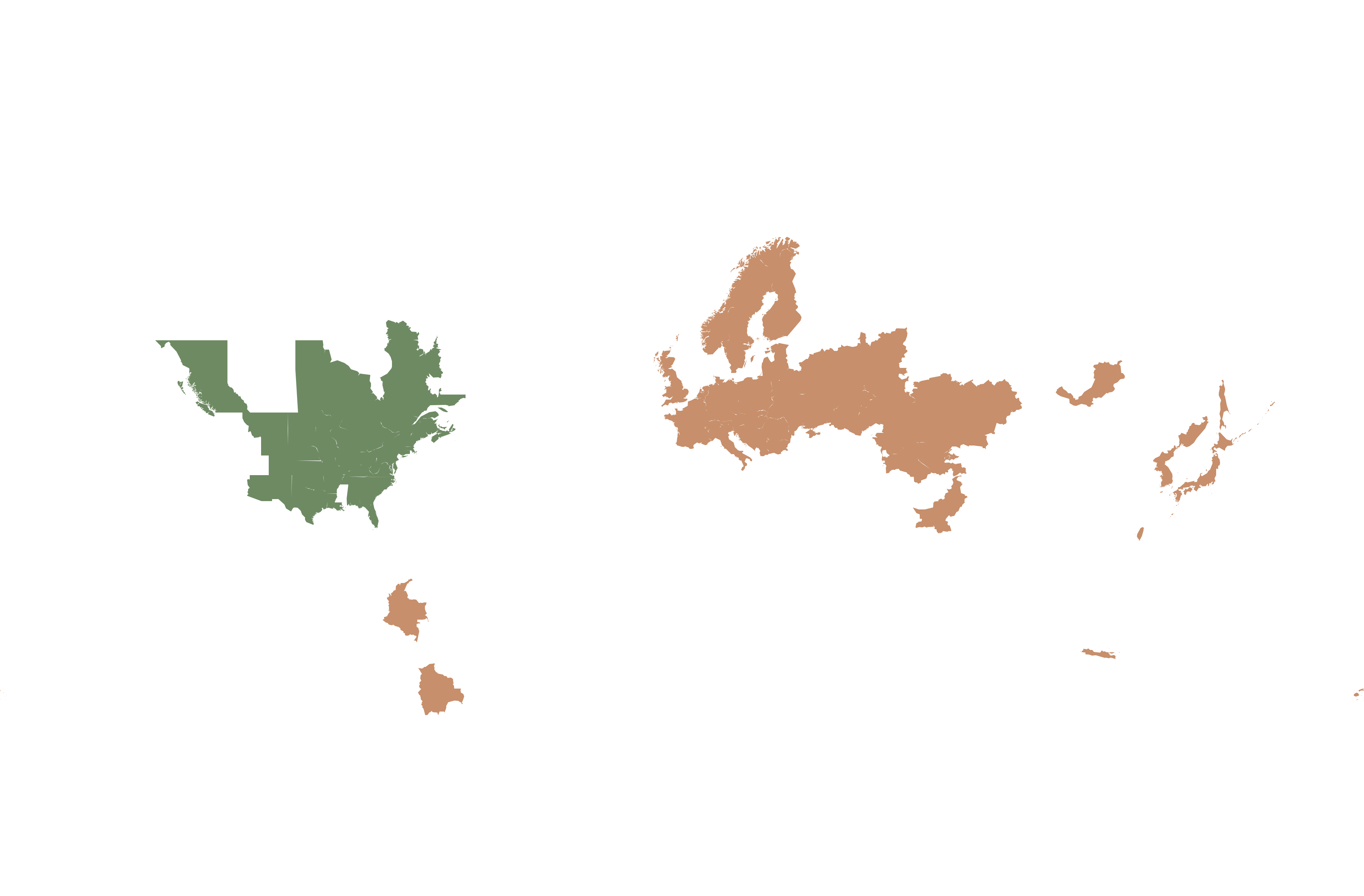
- Native
- Introduced
- North America
History

Rudbeckia laciniata is widespread across eastern and central North America along streams and in moist woodlands. The Cherokee cooked young spring shoots as a potherb called sochan, a traditional food that continues today. The Iroquois used root decoctions for indigestion and burns.
Linnaeus named the genus in 1753 to honor Swedish botanists Olaus Rudbeck the Elder and Younger, his predecessors at Uppsala. The double-flowered cultivar 'Hortensia' or 'Golden Glow' arose in France around 1894 and became wildly popular in Victorian and Edwardian gardens, sometimes escaping to naturalize. Modern selections like 'Herbstsonne' (Autumn Sun) remain garden staples.
An American native grown in early colonial gardens; the double-flowered heirloom 'Golden Glow' was introduced in the 1890s and became a beloved pass-along perennial spread across the Midwest and Northeast. Still shared among gardeners generations after its commercial debut. The species is considered invasive in parts of Europe and Asia.
Symbolism & meaning
What It Symbolizes
Cutleaf Coneflower carries the traditional Rudbeckia meaning of justice — a tall, upright golden flower that seems to stand for fair dealing in the late summer border. Paired with heritage, it is a classic pass-along plant in American families, divided and shared across yards and generations. To grow it is to keep both the meaning and the gift-giving tradition alive in one cheerful, towering perennial.
- Justice — traditional Rudbeckia meaning
- Heritage — pass-along plant in American families
Where the Name Comes From
The name Cutleaf Coneflower describes its raised cone-shaped centers. Genus honors Olof Rudbeck (1630–1702), Swedish botanist and teacher of Linnaeus; 'laciniata' means 'deeply-cut' for the leaves.
Uses & Fun Facts
- Tall yellow daisies feed bees and migrating monarch butterflies
- Towering Cutleaf Coneflower with drooping yellow petals for back of border
- Autumn seedheads feed goldfinches and other small songbirds
Related plants
More Rudbeckia plants
 Black-Eyed SusanRudbeckia hirta
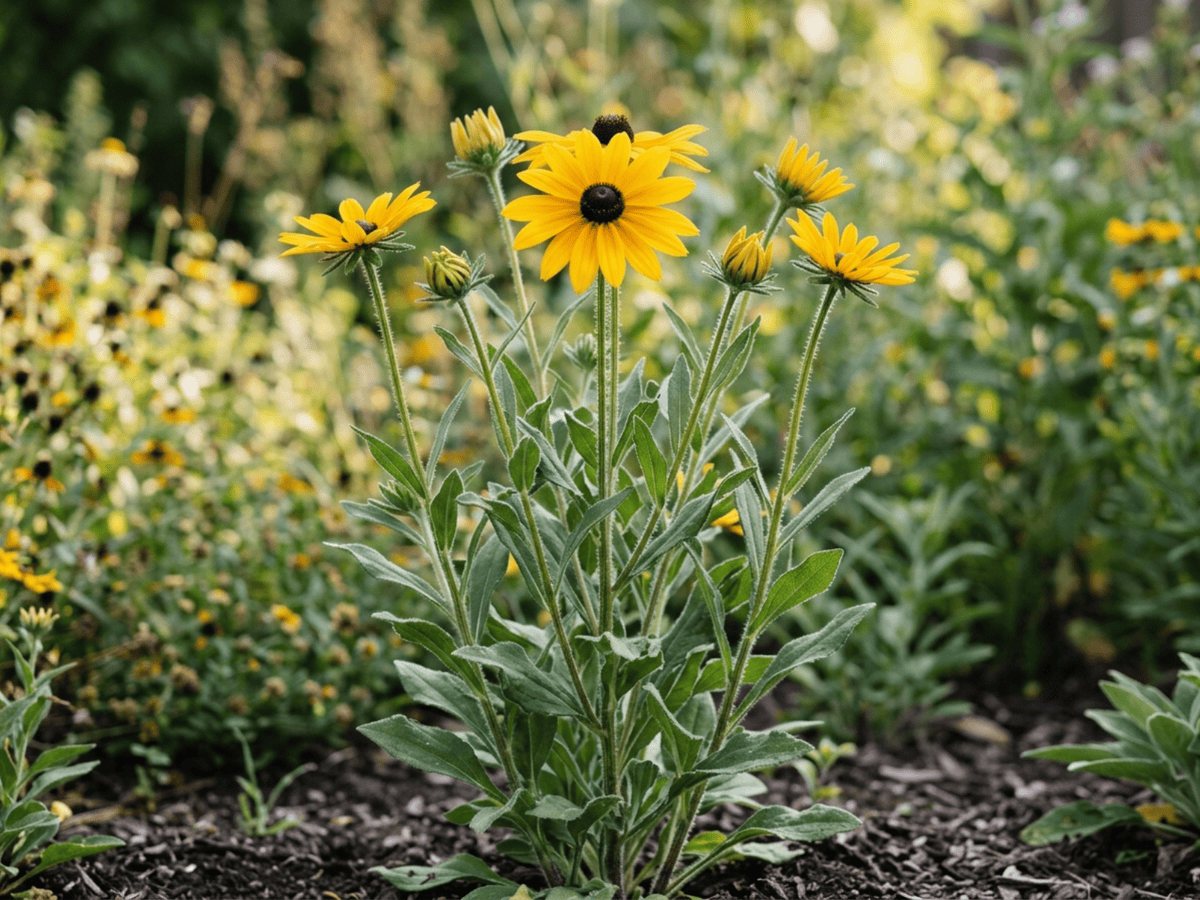 Sweet Black-Eyed SusanRudbeckia subtomentosa
 Brown-Eyed SusanRudbeckia triloba
Plants with similar care
 Chinese AbeliaAbelia chinensis
 Fragrant AbeliaAbelia mosanensis
 Large-Flowered AbeliaAbelia uniflora
 Glossy AbeliaAbelia x grandiflora
Frequently asked questions
How often should I water Cutleaf Coneflower?
In summer, water about every 3 days; in winter, about every 7 days. Adjust for heat, pot size and drainage.
How much light does Cutleaf Coneflower need?
Full sun: 6+ hrs direct. Watch the leaves — scorching or stretching means the light needs adjusting.
Is Cutleaf Coneflower toxic to cats or dogs?
Pets Slight (Dogs Slight · Cats Slight) Educational information, not medical or veterinary advice. If exposure is suspected, contact a doctor or veterinarian.
Is Cutleaf Coneflower easy to grow?
Yes — it is considered an easy, beginner-friendly plant.
When does Cutleaf Coneflower bloom?
It typically blooms Jun–Sep in the Northern Hemisphere.
YardMate
Identify any plant in seconds
Snap a photo — YardMate names the plant, diagnoses problems, and reminds you when to water.
Download on the App Store