 YardMate


Sweet Black-Eyed Susan
Rudbeckia subtomentosa
Easy · Beginner friendlyAbout Sweet Black-Eyed Susan
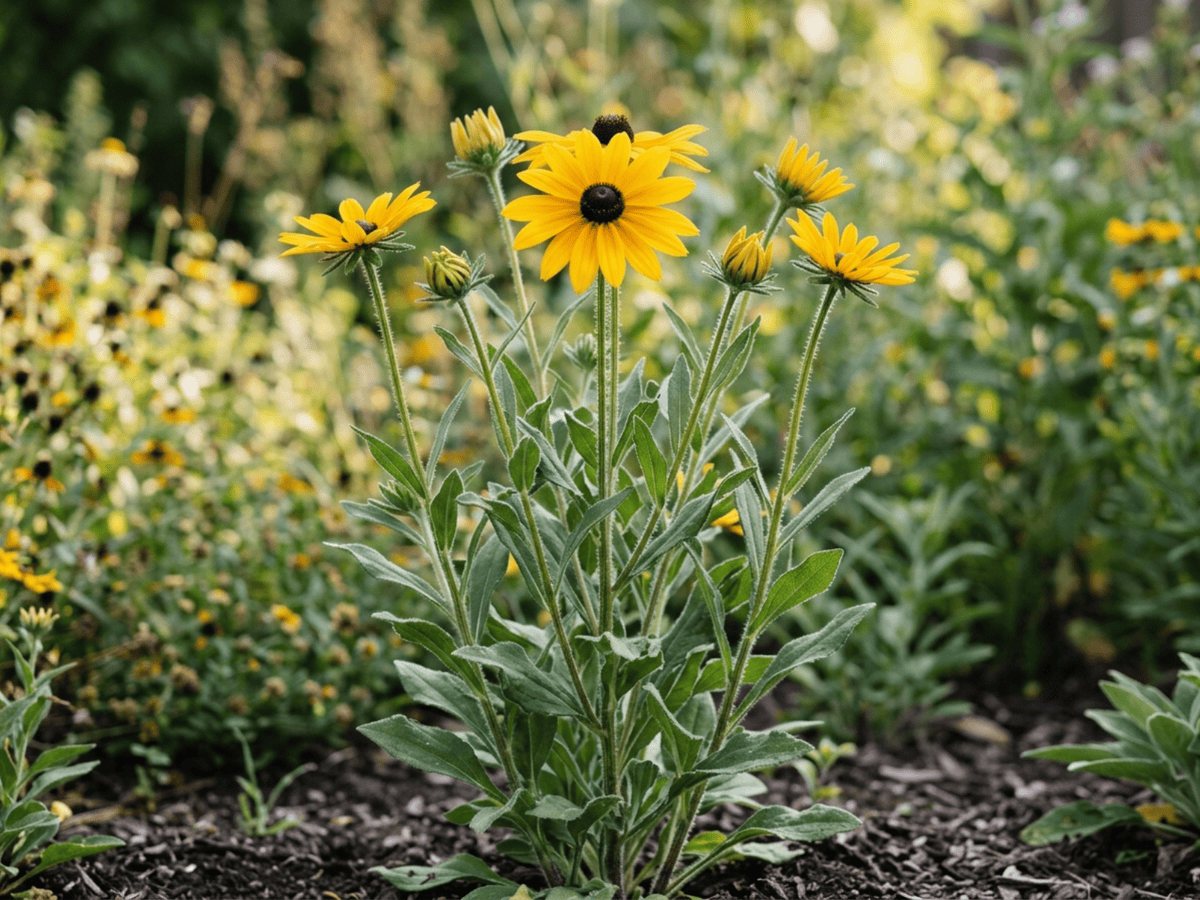
Sweet Coneflower is a native prairie perennial of the central US, 4–6 feet tall, with soft grey-green leaves and masses of bright yellow daisy flowers with dark brown centers in late summer and fall. Flowers are faintly vanilla-scented. The award-winning cultivar 'Henry Eilers' has unusual quill-like rolled petals and is widely grown in American prairie and pollinator gardens. Blooms when most perennials have faded.
- Drought-tolerant
- Deer-resistant
- Native
- Pollinator-friendly
How to care for Sweet Black-Eyed Susan
Watering
- Springevery 5 days
- Summerevery 4 days
- Fallevery 7 days
- Winterpause watering
Soil · Well-draining
- Top dressingPine bark mulch10%
- Main mixPotting soil + perlite 2:170%
- DrainageLECA / gravel20%
Never skip the drainage layer — standing water is the top cause of root rot.
FERTILIZER
- Springevery 30 days
- Summerevery 30 days
At a Glance
- NativeNorth America
- Height3–5 ft (0.9–1.5 m)
- Spread2–3 ft (0.6–0.9 m)
- Flower colorYellow
- Foliage colorGreen
- SoilLoamy, Moisture-retentive
- LocationsYard
Bloom time
BLOOM CYCLE
Peak bloom
Aug–Nov
Vanilla-scented gold daisies late summer to fall
Fragrance
MODERATE FRAGRANCE
The foliage has an anise, vanilla scent.
Toxicity
Humans Slight · Pets Slight
sesquiterpene lactones
Slight
- Leaf
- Contact
EXPOSURE Touching leaves.
EFFECT Mild skin irritation.
NOTE Low toxicity; foliage aromatic when crushed.
Slight
- All
- Ingestion
EXPOSURE Eating any part of the plant.
EFFECT Mild vomiting.
NOTE Low toxicity; foliage aromatic when crushed.
Slight
- All
- Ingestion
EXPOSURE Eating any part of the plant.
EFFECT Mild vomiting.
NOTE Low toxicity; foliage aromatic when crushed.
Educational information, not medical or veterinary advice. If exposure is suspected, contact a doctor or veterinarian.
DISTRIBUTION


- Native
- North America
History

Native to tallgrass prairies from Louisiana to Wisconsin, Rudbeckia subtomentosa was formally described by Frederick Pursh in 1813. Its common name references the anise-like scent released when foliage is crushed. The species remained a botanical curiosity until prairie restoration work in the late 20th century rediscovered its garden merit.
In 2003 Illinois naturalist Henry Eilers found an unusual form with quilled or rolled ray petals in a remnant prairie; nurseryman Larry Lowman propagated and introduced it as 'Henry Eilers' in 2007, which won multiple awards and transformed the species' market presence. The cultivar is now widely grown for its distinctive tubular petals and late bloom extending into October.
Native to the Midwestern tallgrass prairie from Michigan to Texas. The cultivar 'Henry Eilers' was discovered in an Illinois railroad prairie remnant by the Illinois botanist of the same name and introduced to the American perennial trade in the 2000s.
Symbolism & meaning
What It Symbolizes
Sweet Black-Eyed Susan embodies resilience, thriving in drought, poor soil, and the kinds of conditions that defeat most perennial flowers. Its prairie heritage runs deep, a relic of the vanished American tallgrass prairie that once stretched unbroken across the Midwest. It is often read as a flower of remembered grasslands, a Rudbeckia whose meaning is the persistence of native bloom in a landscape mostly converted, a small golden testimony to what the country used to look like.
- Resilience — thrives in drought and poor soil
- Prairie heritage — relic of vanished American tallgrass
Where the Name Comes From
The name Sweet Black-Eyed Susan describes its sweet scent or flavor. Genus honors Olof Rudbeck; 'subtomentosa' means 'somewhat fuzzy' for the slightly hairy leaves.
Uses & Fun Facts
- Tall yellow-and-brown daisies for prairie-style borders
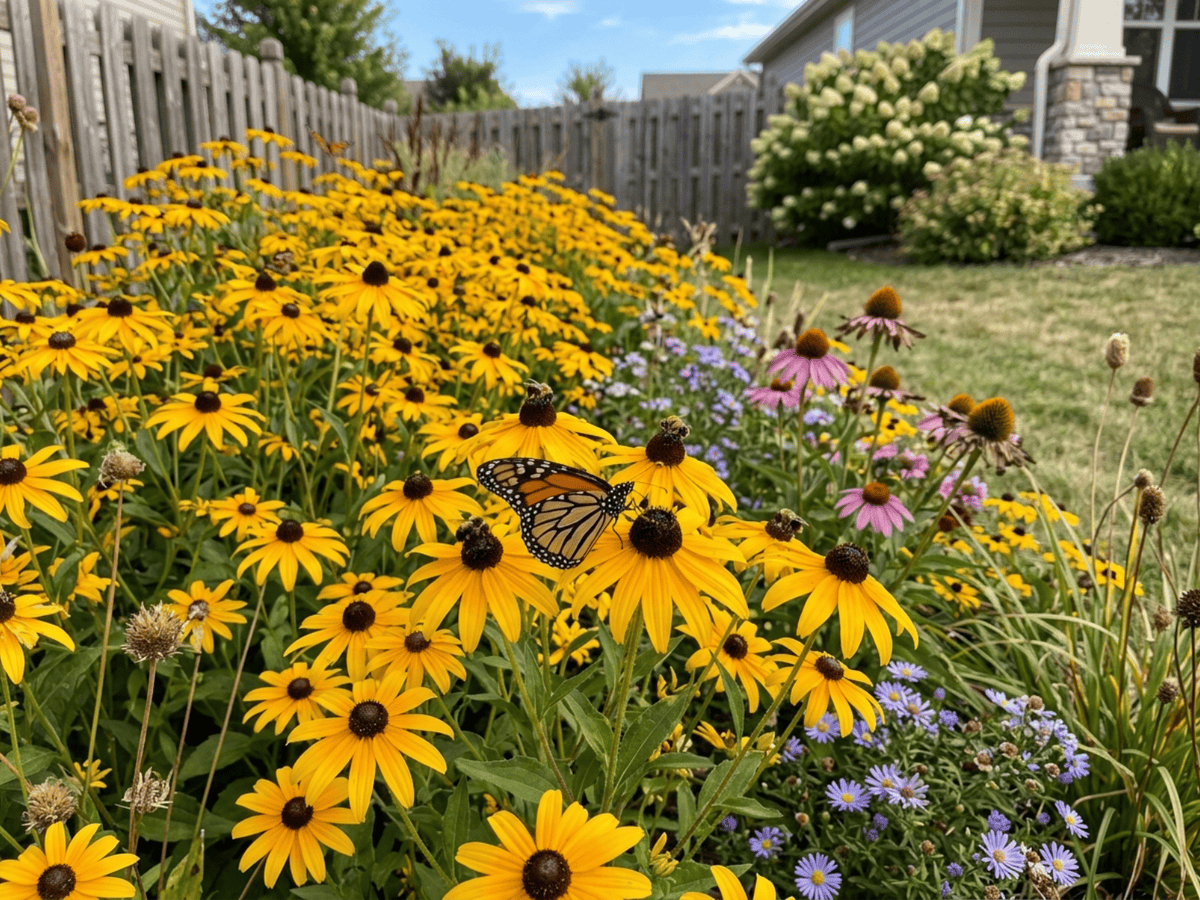
- Late-summer nectar feeds bees and migrating butterflies
- Seed heads feed goldfinches into winter
Related plants
More Rudbeckia plants
 Black-Eyed SusanRudbeckia hirta
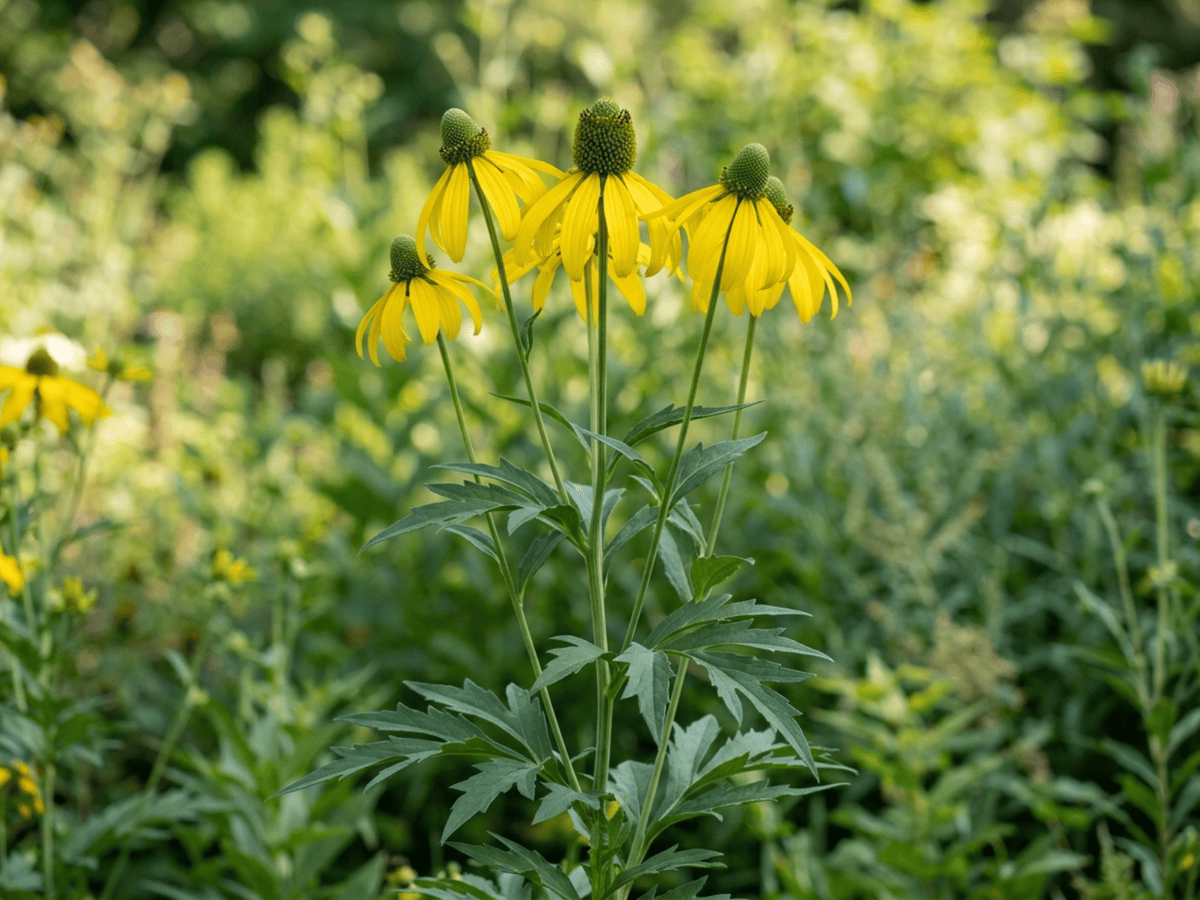 Cutleaf ConeflowerRudbeckia laciniata
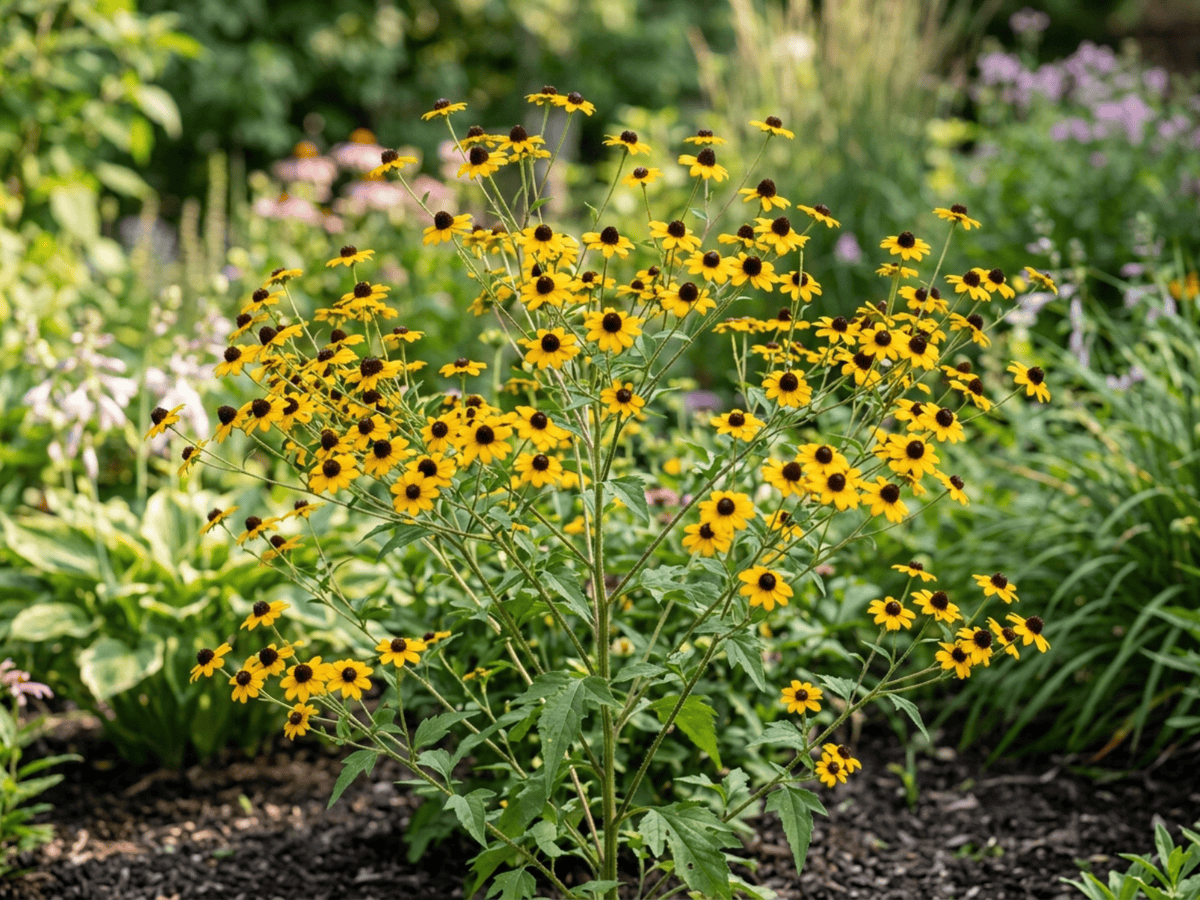 Brown-Eyed SusanRudbeckia triloba
Plants with similar care
 Chinese AbeliaAbelia chinensis
 Fragrant AbeliaAbelia mosanensis
 Large-Flowered AbeliaAbelia uniflora
 Glossy AbeliaAbelia x grandiflora
Frequently asked questions
How often should I water Sweet Black-Eyed Susan?
Water about every 5 days during the growing season, and always let excess water drain away.
How much light does Sweet Black-Eyed Susan need?
Full sun: 6+ hrs direct. Watch the leaves — scorching or stretching means the light needs adjusting.
Is Sweet Black-Eyed Susan toxic to cats or dogs?
Pets Slight (Dogs Slight · Cats Slight) Educational information, not medical or veterinary advice. If exposure is suspected, contact a doctor or veterinarian.
Is Sweet Black-Eyed Susan easy to grow?
Yes — it is considered an easy, beginner-friendly plant.
When does Sweet Black-Eyed Susan bloom?
It typically blooms Aug–Nov in the Northern Hemisphere.
YardMate
Identify any plant in seconds
Snap a photo — YardMate names the plant, diagnoses problems, and reminds you when to water.
Download on the App Store