 YardMate
Alder-Leaved Whitebeam
Sorbus alnifolia
Medium · Some experienceAbout Alder-Leaved Whitebeam
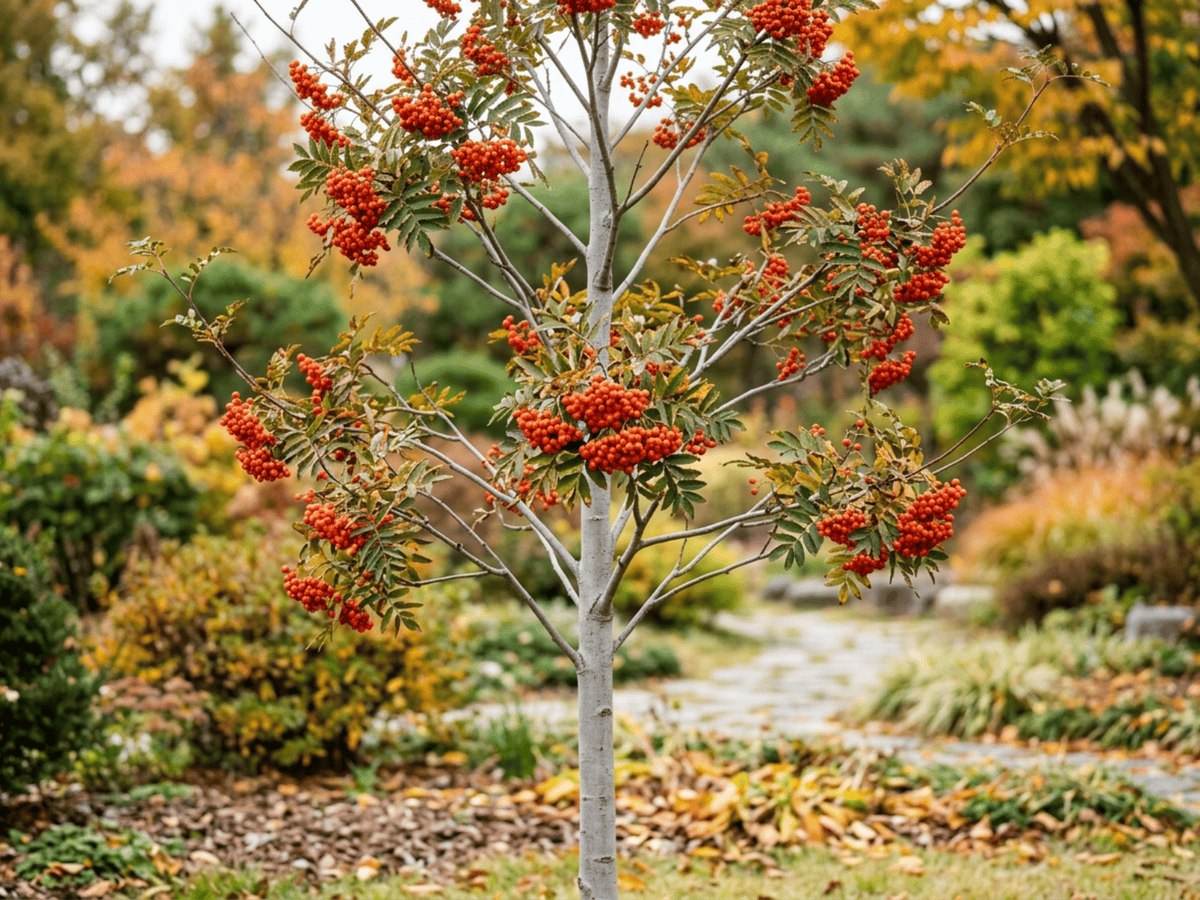
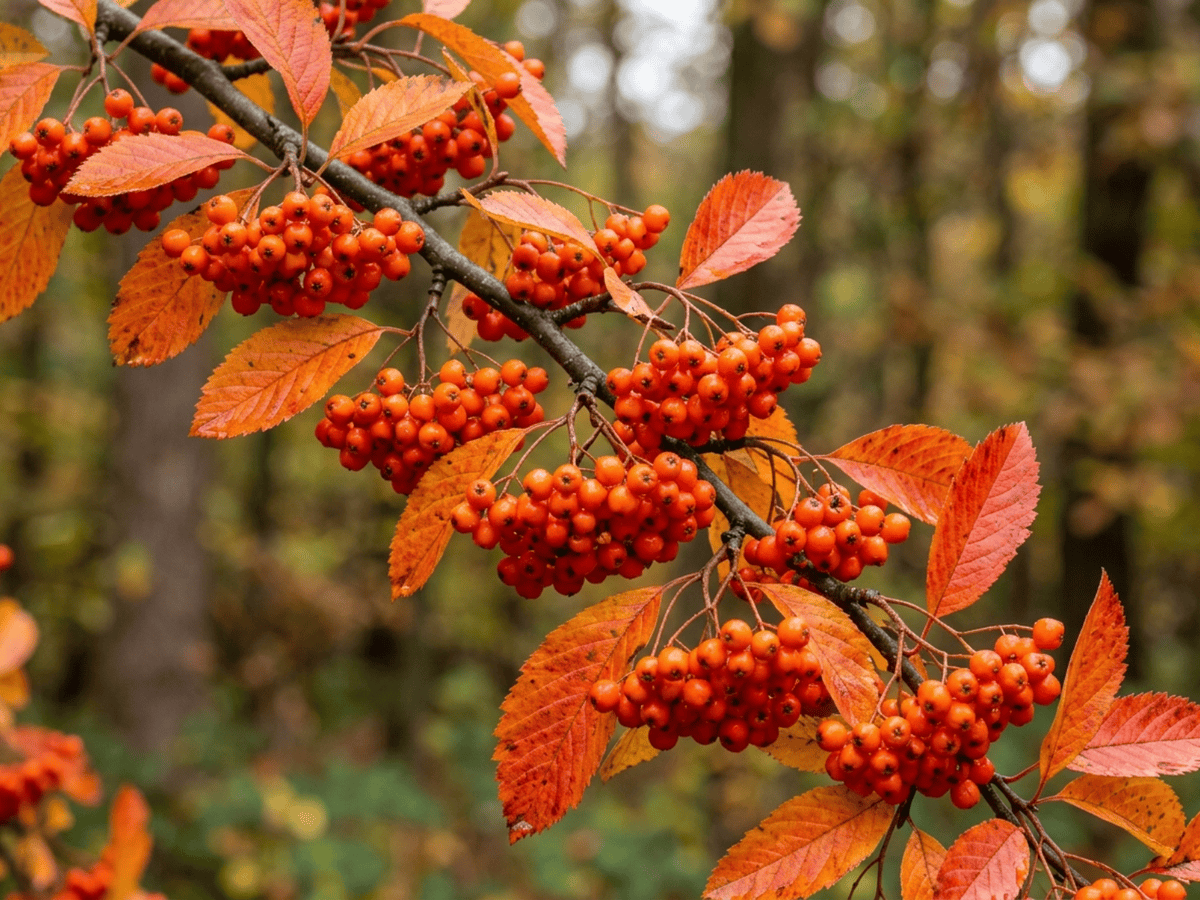
Korean Mountain Ash is a medium deciduous tree native to East Asia, reaching 25-40 feet, notable among mountain ashes for its simple (not compound) alder-like leaves. Clouds of white flowers in spring give way to abundant clusters of small pinkish-red berries that persist into winter, feeding birds. Clear yellow and orange fall color. A refined underused specimen or small shade tree for northern US gardens.
- Fall-color
- Wildlife-friendly
How to care for Alder-Leaved Whitebeam
Watering
- Springevery 10 days
- Summerevery 7 days
- Fallevery 14 days
- Winterevery 30 days
Soil · Well-draining
- Top dressingPine bark mulch10%
- Main mixPotting soil + perlite 2:170%
- DrainageLECA / gravel20%
Never skip the drainage layer — standing water is the top cause of root rot.
FERTILIZER
Balanced Feed 14-14-14
An even feed covers all three needs at once, keeping leaves, roots and blooms moving together with nothing pushed out of balance.
- Nitrogen · Leaves
- Phosphorus · Roots + Blooms
- Potassium · Strength
- Springevery 60 days
At a Glance
- NativeEast Asia
- Height30–60 ft (9.1–18.3 m)
- Spread20–40 ft (6.1–12.2 m)
- Flower colorWhite
- Foliage colorGreen, Red, Bronze, Yellow
- Fruit colorPink, Red
- SoilLoamy, Well-drained
- LocationsYard
Bloom time
BLOOM CYCLE
Peak bloom
May
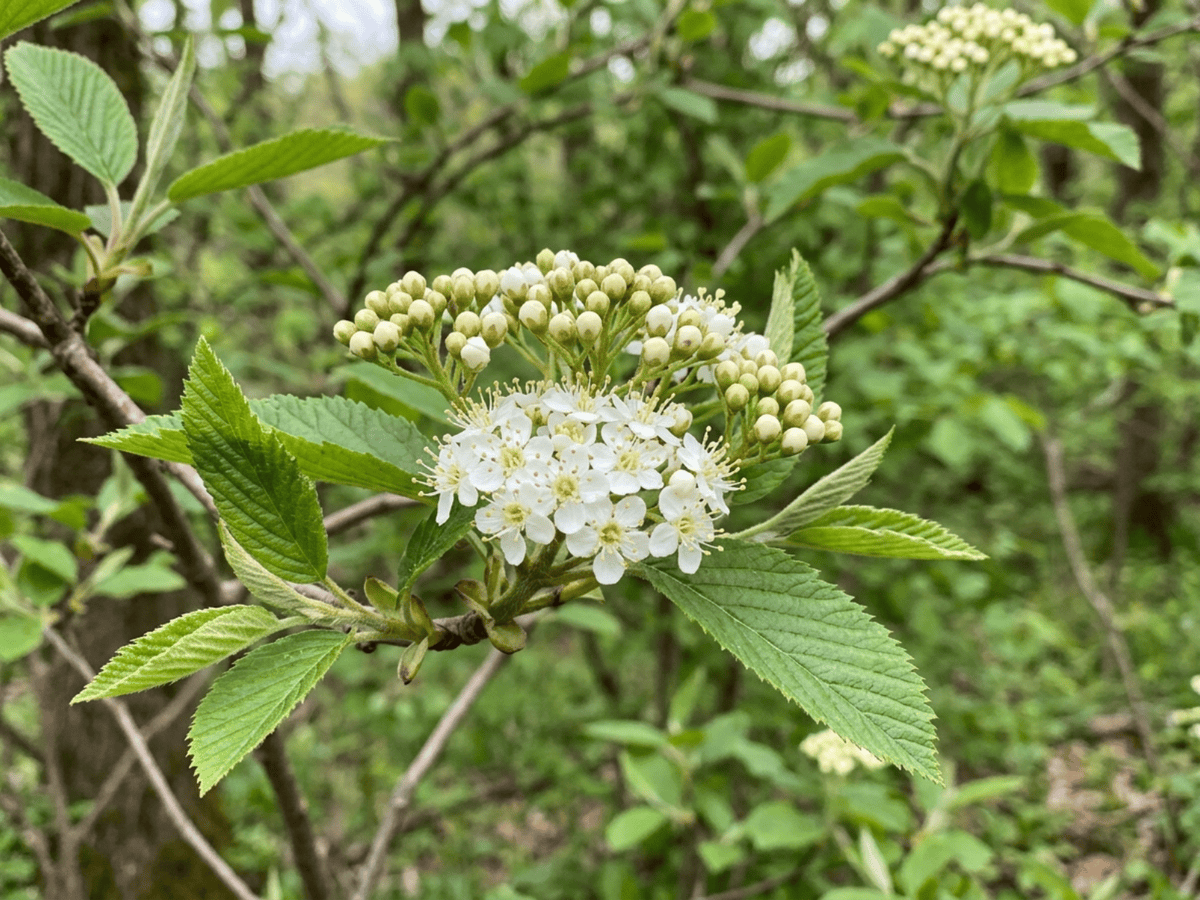
White flower clusters in May
Fragrance
LIGHT FRAGRANCE
The flowers have a mild hawthorn-like scent.
Toxicity
Humans Slight · Pets Slight
cyanogenic glycosides (in seeds)
Slight
- Seed
- Ingestion
EXPOSURE Eating seeds.
EFFECT Nausea from cyanogenic glycosides if seeds chewed in quantity.
NOTE Seeds of Sorbus contain small amounts of cyanogenic compounds typical of Rosaceae. Fruit flesh is not considered toxic.
Slight
- Seed
- Ingestion
EXPOSURE Eating seeds.
EFFECT Mild GI upset.
NOTE Seeds of Sorbus contain small amounts of cyanogenic compounds typical of Rosaceae. Fruit flesh is not considered toxic.
Slight
- Seed
- Ingestion
EXPOSURE Eating seeds.
EFFECT Mild GI upset.
NOTE Seeds of Sorbus contain small amounts of cyanogenic compounds typical of Rosaceae. Fruit flesh is not considered toxic.
Educational information, not medical or veterinary advice. If exposure is suspected, contact a doctor or veterinarian.
DISTRIBUTION


- Native
- East Asia
History
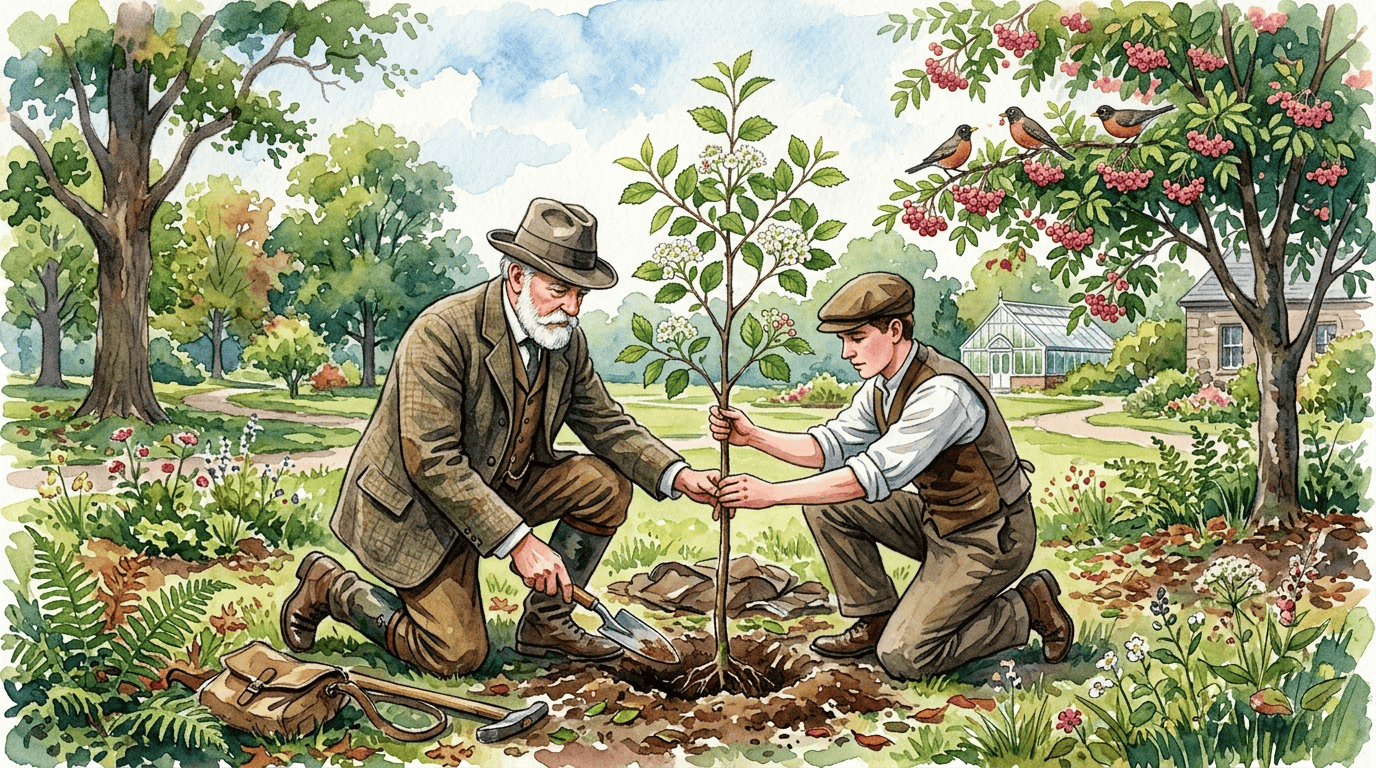
Sorbus alnifolia occurs naturally in Korea, Japan, and eastern China. German botanist Karl Heinrich Emil Koch described it in 1856 as Crataegus alnifolia, with alnifolia meaning alder-leaved for the simple doubly-serrate leaves resembling those of Alnus—distinct from the pinnately compound leaves of most Sorbus species. Koch later transferred it to Sorbus.
American botanist Charles Sprague Sargent introduced the species to Western cultivation at Harvard's Arnold Arboretum around 1892 following his East Asian expeditions. Unlike the typical pinnate-leaved rowans, this species resembles a serviceberry or pear in foliage. Clusters of white flowers in May give way to small pea-sized fruits that ripen pink-red to scarlet by September and persist after leaf drop, providing winter interest and bird food.
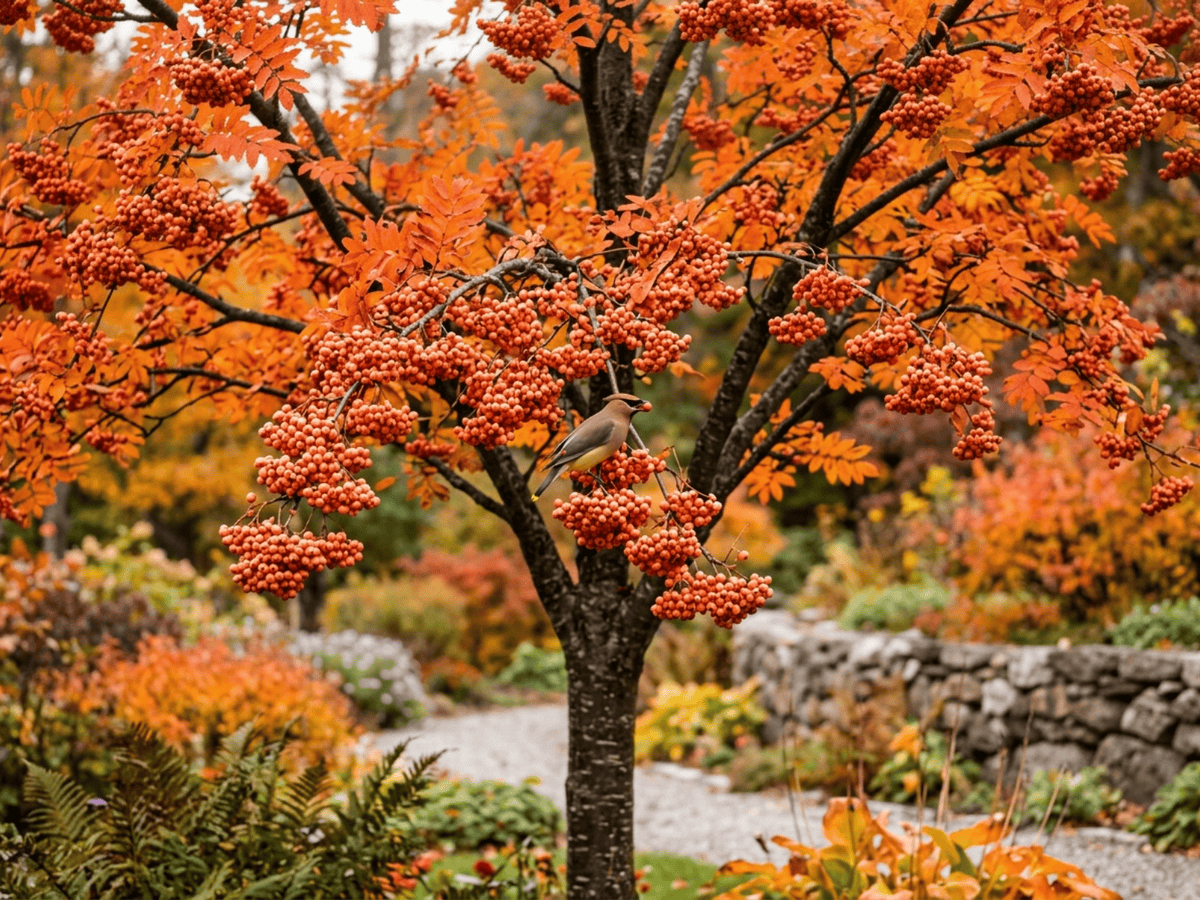
Fall color ranges from gold and orange to deep crimson. The species is considered one of the most ornamentally refined Sorbus and is less susceptible to fireblight than many European rowans. The species was championed by the Arnold Arboretum as a superior small tree for New England gardens. The berries persist through winter and are a critical late-season food source for robins and cedar waxwings.
Symbolism & meaning
What It Symbolizes
The alder-leaved whitebeam carries prudence in the rowan tradition — across northern Europe, related rowans were planted near doors as protective trees, their berries believed to guard the household. Its more practical generosity feeds songbirds: clusters of small fruit hang well into winter, sustaining cedar waxwings and robins through the lean months. A modest tree that combines folkloric watchfulness with literal hospitality.
- Prudence — traditional symbol in rowan lore
- Generosity — berries feed birds through winter
Where the Name Comes From
The common name highlights its white coloring. 'Sorbus' is Latin for the service tree; 'alnifolia' means 'with leaves like alder'.
Uses & Fun Facts
- Pink-flushed pomes and brilliant orange autumn foliage
- Small fruits feed cedar waxwings and migrating songbirds
- Four-season Korean mountain ash as small lawn focal point
Related plants
More Sorbus plants
Plants with similar care
 Mexican AbeliaAbelia floribunda
 Fraser FirAbies fraseri
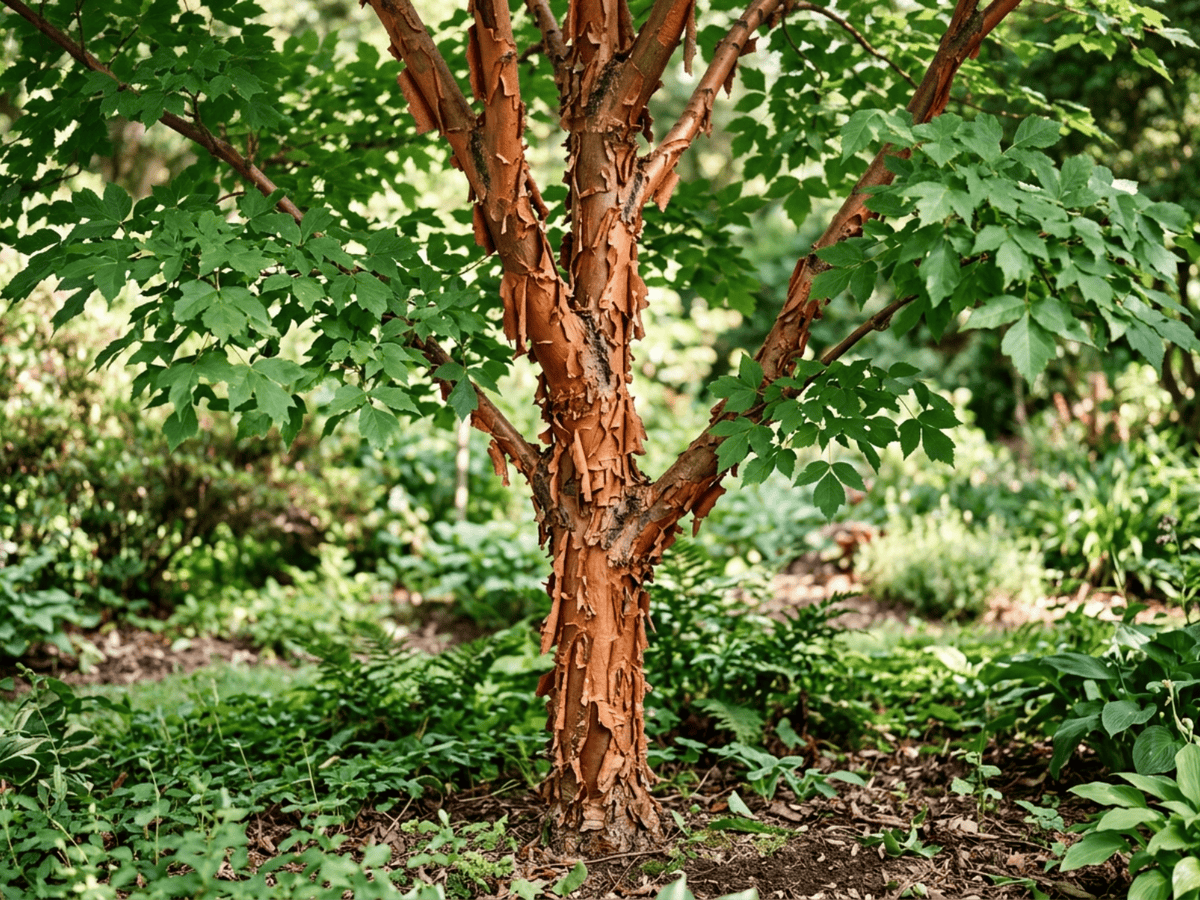 Paperbark MapleAcer griseum
 Sugar MapleAcer saccharum
Frequently asked questions
How often should I water Alder-Leaved Whitebeam?
In summer, water about every 7 days; in winter, about every 30 days. Adjust for heat, pot size and drainage.
How much light does Alder-Leaved Whitebeam need?
Full sun: 6+ hrs direct. Watch the leaves — scorching or stretching means the light needs adjusting.
Is Alder-Leaved Whitebeam toxic to cats or dogs?
Pets Slight (Dogs Slight · Cats Slight) Educational information, not medical or veterinary advice. If exposure is suspected, contact a doctor or veterinarian.
Is Alder-Leaved Whitebeam easy to grow?
It is moderately demanding: a good choice once you have a little experience.
When does Alder-Leaved Whitebeam bloom?
It typically blooms May in the Northern Hemisphere.
YardMate
Identify any plant in seconds
Snap a photo — YardMate names the plant, diagnoses problems, and reminds you when to water.
Download on the App Store