 YardMate
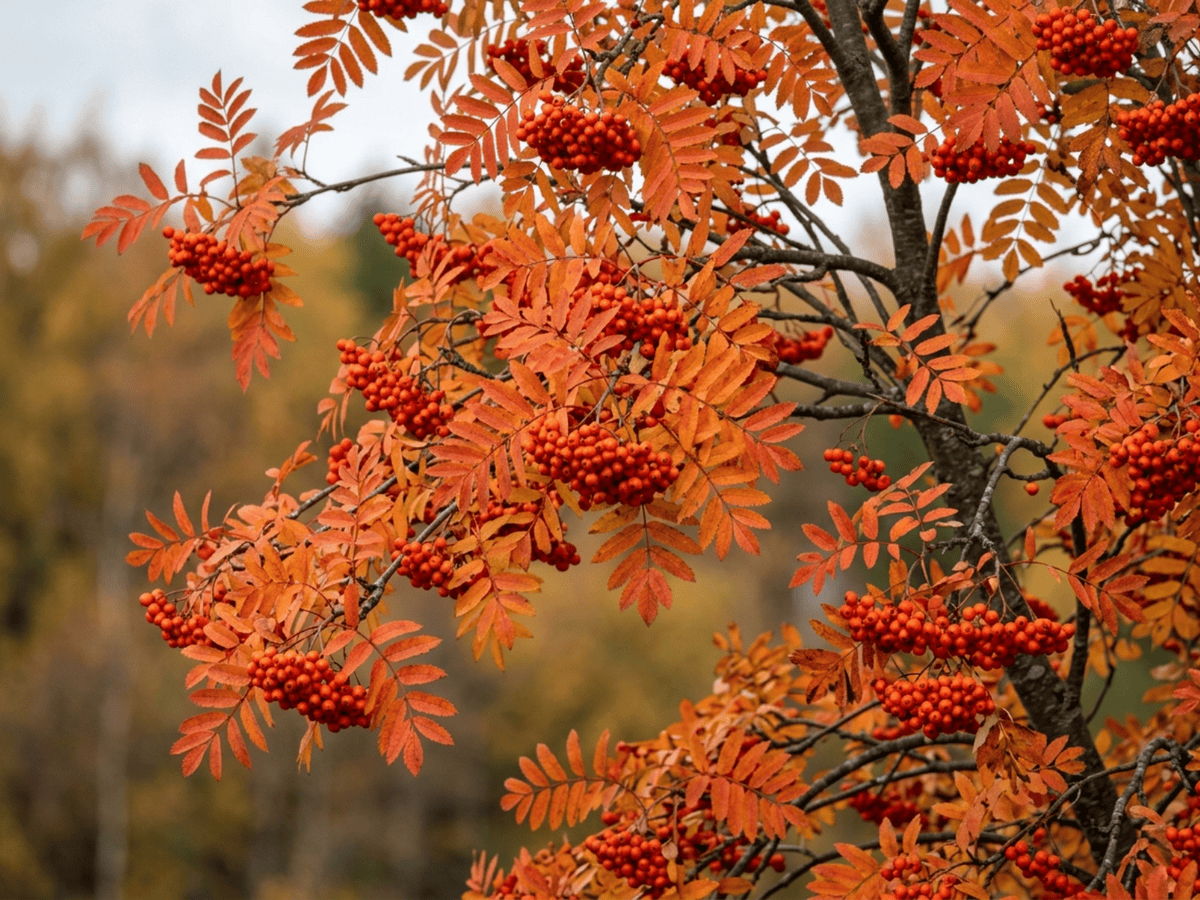


European Mountain Ash
Sorbus aucuparia
Easy · Beginner friendlyAbout European Mountain Ash
Sorbus aucuparia, the European mountain ash or rowan, is an elegant deciduous tree native across Europe and into western Asia. Growing 15 to 40 feet tall with an open, rounded crown, it is valued for its pinnate ash-like leaves, flat clusters of creamy-white flowers in late spring, and spectacular bunches of bright orange-red berries in autumn that persist into winter. The berries are mildly toxic when raw due to parasorbic acid but become safe and are traditionally used to make rowan jelly, a tart condiment served with game meats in Scotland and Scandinavia. The tree is extremely cold-hardy, thriving at high altitudes and northern latitudes where few other ornamental trees survive. It prefers cool, moist climates and can struggle in hot, dry conditions. Rowan has one of the deepest mythological associations of any European tree, long considered a powerful ward against witchcraft and enchantment. It grows relatively quickly but has a moderate lifespan of 80 to 120 years.
- Cold-hardy
- Native
- Wildlife-friendly
How to care for European Mountain Ash
Watering
- Springevery 5 days
- Summerevery 4 days
- Fallevery 10 days
- Winterevery 30 days
Soil · Well-draining
- Top dressingPine bark mulch10%
- Main mixPotting soil + perlite 2:170%
- DrainageLECA / gravel20%
Never skip the drainage layer — standing water is the top cause of root rot.
FERTILIZER
Balanced Feed 14-14-14
An even feed covers all three needs at once, keeping leaves, roots and blooms moving together with nothing pushed out of balance.
- Nitrogen · Leaves
- Phosphorus · Roots + Blooms
- Potassium · Strength
- Springevery 45 days
At a Glance
- NativeEurope, Western Asia, Africa
- Height20–40 ft (6.1–12.2 m)
- Spread15–25 ft (4.6–7.6 m)
- Flower colorWhite
- Foliage colorGreen, Yellow, Red
- SoilLoamy, Well-drained, Acidic
- LocationsYard
Bloom time
BLOOM CYCLE
Peak bloom
Mar–May
Flat clusters of creamy-white flowers in late spring; little pruning needed beyond shaping when young
Fragrance
MODERATE FRAGRANCE
Flowers have a strong, somewhat rank sweet scent, similar to hawthorn.
Toxicity
Humans Slight · Pets Slight
parasorbic acid and cyanogenic glycosides (seeds)
Slight
- Fruit
- Ingestion
EXPOSURE Eating fruit.
EFFECT Raw berries contain parasorbic acid and can cause stomach upset if eaten in large quantities and cooking renders safe.
NOTE Documented concern for humans: Raw berries contain parasorbic acid and can cause stomach upset if eaten in large quantities and cooking renders safe.
Slight
- Fruit
- Seed
- Ingestion
EXPOSURE Eating fruit and seeds.
EFFECT Raw berries and crushed seeds can cause gastrointestinal upset.
NOTE Not listed by ASPCA. Raw berries mildly toxic; cooked berries safe and used for rowan jelly.
Slight
- Fruit
- Seed
- Ingestion
EXPOSURE Eating fruit and seeds.
EFFECT Raw berries may cause gastrointestinal upset.
NOTE Not listed by ASPCA. Raw berries mildly toxic; cooked berries safe and used for rowan jelly.
Educational information, not medical or veterinary advice. If exposure is suspected, contact a doctor or veterinarian.
DISTRIBUTION


- Native
- Introduced
- Europe
- Western Asia
- Africa
History

Sorbus aucuparia is native across Europe and western Asia, thriving at high elevation and high latitude where few other trees grow — it is found as far north as the Arctic Circle in Scandinavia. In Celtic, Norse, and broader northern European folklore, the rowan is a powerful apotropaic tree: planted beside doorways and byres to repel witchcraft and protect livestock and milk. The Gaelic word "caorann" and Norse "reynir" both carry this protective meaning.
The bright orange-red berry clusters ("rowan berries") are a classic autumn image in northern landscapes and are a critical winter food for thrushes, fieldfares, and redwings — the species name "aucuparia" derives from Latin "auceps" (bird-catcher) because fowlers historically used the berries as bait. Raw rowan berries are astringent and mildly toxic due to parasorbic acid, but cooking converts this to harmless sorbic acid and neutralizes the astringency; traditional rowan jelly (served with game and lamb) is a Scottish and Scandinavian staple.
In Norse mythology, the rowan saved the god Thor from drowning in a raging river, and Viking longships often carried rowan branches for protection. Throughout Scotland and Scandinavia, rowan trees were planted beside homes to ward off witchcraft, a tradition so strong that felling a rowan was considered taboo. The tree is also a food plant for several Lepidoptera larvae.
Symbolism & meaning
What It Symbolizes
European Mountain Ash, the rowan, is one of the most powerful protective trees in Norse and Celtic folklore — its red berries believed to ward off ill intent, its wood used for runes and charms. Paired with wisdom, it was associated with druidic knowledge and mystical insight in Celtic tradition. To plant a rowan was, for centuries, to claim safety and a thread to old, woods-rooted lore.
- Protection — One of the most powerful protective trees in Norse and Celtic folklore
- Wisdom — Associated with druidic knowledge and mystical insight in Celtic tradition
Where the Name Comes From
The name European Mountain Ash points to Europe. 'Sorbus' is the classical Latin name for the service tree. 'Aucuparia' means 'bird-catching', from Latin 'aucupor' (to catch birds), as the berries were used to bait bird traps.
Uses & Fun Facts
- Tart orange-red rowan berries cooked into traditional jelly and liqueur
- Berries feed thrushes, waxwings, and overwintering songbirds
- Folklore-protective tree planted near doors in Celtic tradition
Related plants
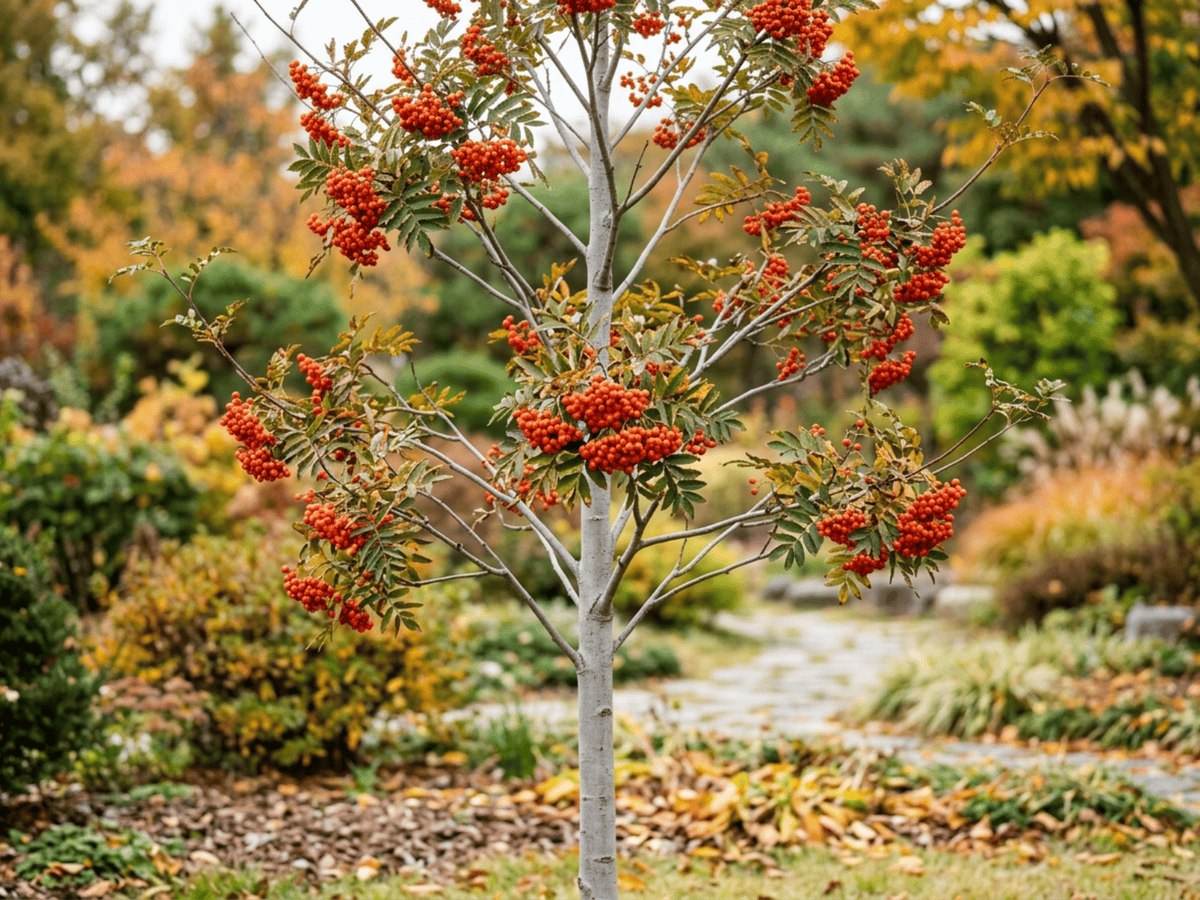
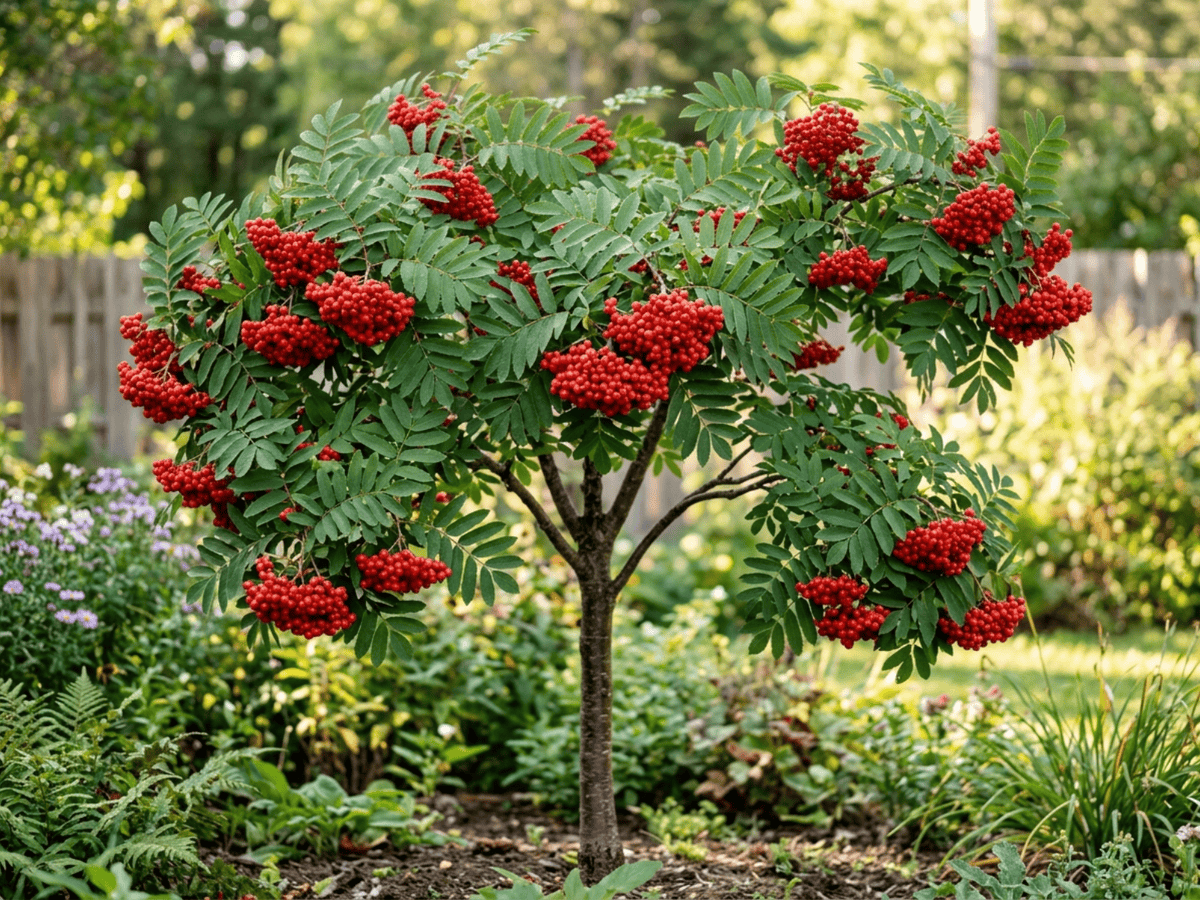
More Sorbus plants
Plants with similar care
 Chinese AbeliaAbelia chinensis
 Fragrant AbeliaAbelia mosanensis
 Large-Flowered AbeliaAbelia uniflora
 Glossy AbeliaAbelia x grandiflora
Frequently asked questions
How often should I water European Mountain Ash?
In summer, water about every 4 days; in winter, about every 30 days. Adjust for heat, pot size and drainage.
How much light does European Mountain Ash need?
Full sun: 6+ hrs direct. Watch the leaves — scorching or stretching means the light needs adjusting.
Is European Mountain Ash toxic to cats or dogs?
Pets Slight (Dogs Slight · Cats Slight) Educational information, not medical or veterinary advice. If exposure is suspected, contact a doctor or veterinarian.
Is European Mountain Ash easy to grow?
Yes — it is considered an easy, beginner-friendly plant.
When does European Mountain Ash bloom?
It typically blooms Mar–May in the Northern Hemisphere.
YardMate
Identify any plant in seconds
Snap a photo — YardMate names the plant, diagnoses problems, and reminds you when to water.
Download on the App Store