 YardMate


Japanese Spiraea
Spiraea x bumalda
Easy · Beginner friendlyAbout Japanese Spiraea
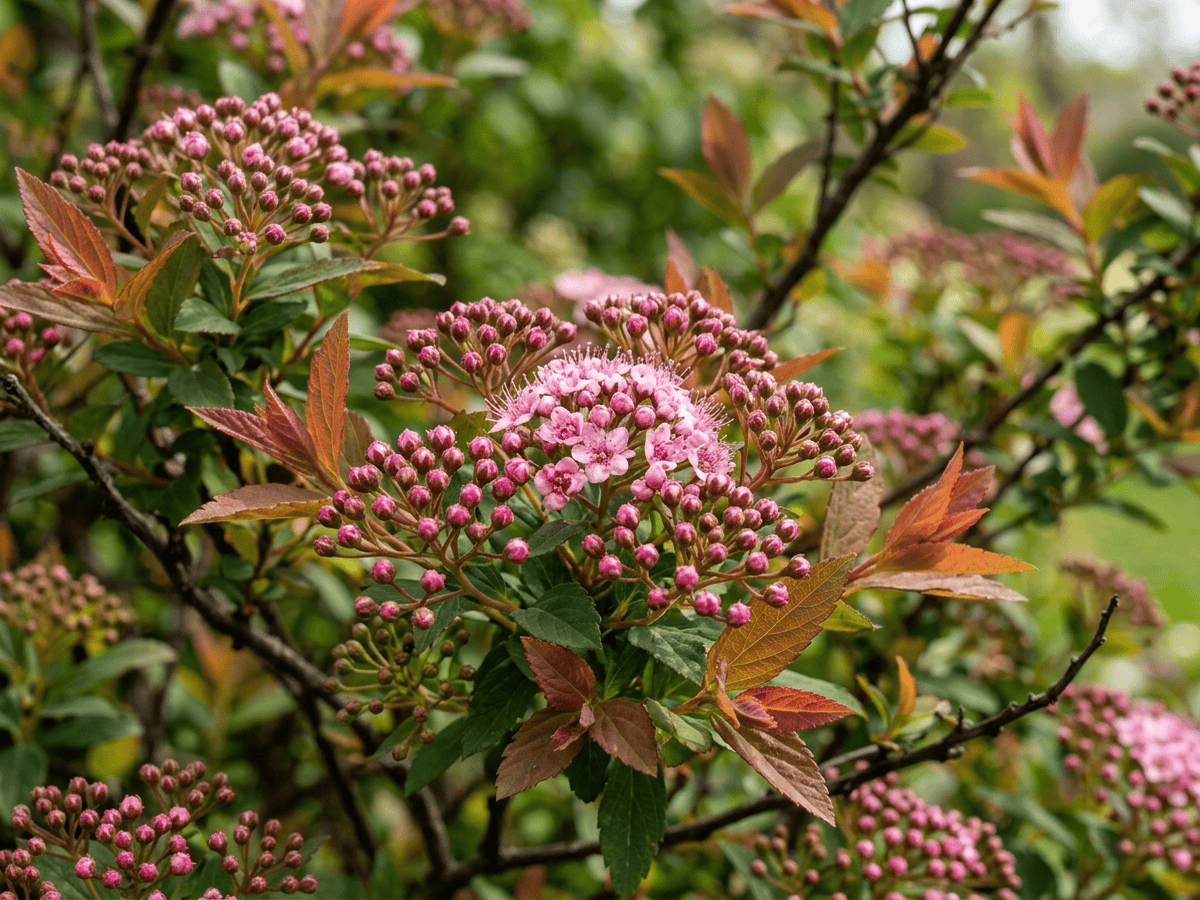
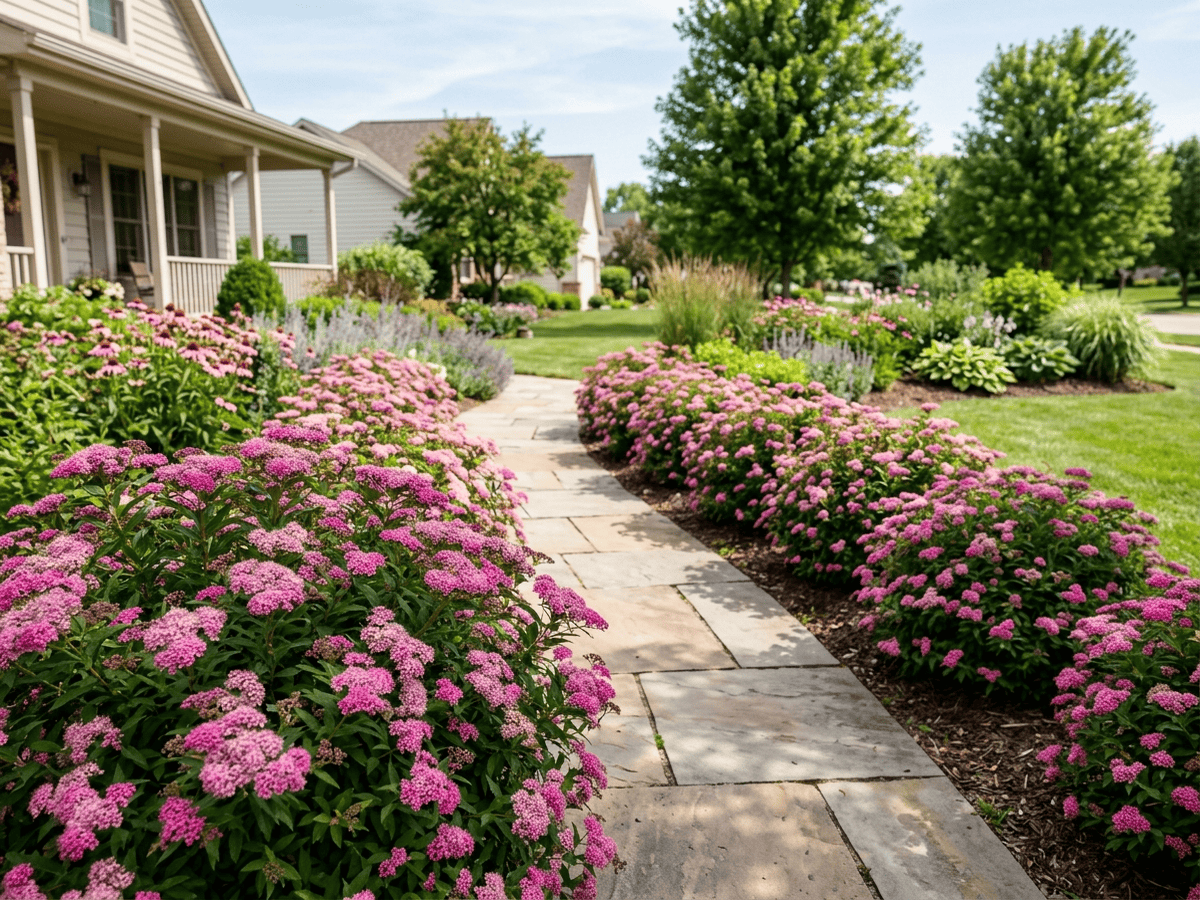
Bumald Spirea is a compact deciduous shrub growing 2-3 feet tall, a hybrid between S. japonica and S. albiflora. It produces flat-topped clusters of pink to crimson flowers from late spring through summer, with some cultivars reblooming into fall. New foliage often emerges bronze or reddish, adding multi-season interest. Extremely tough and adaptable, it is one of the most widely planted flowering shrubs in American suburban landscapes, thriving in everything from clay soil to urban pollution.
- Low-maintenance
- Drought-tolerant
- Compact
- Long-blooming
How to care for Japanese Spiraea
Watering
- Springevery 7 days
- Summerevery 5 days
- Fallevery 10 days
- Winterevery 21 days
Soil · Rich & loamy
- Top dressingBark mulch15%
- Main mixRich loam + compost 3:170%
- DrainageGravel15%
Use fully finished compost — fresh compost burns roots.
FERTILIZER
Balanced Feed 14-14-14
An even feed covers all three needs at once, keeping leaves, roots and blooms moving together with nothing pushed out of balance.
- Nitrogen · Leaves
- Phosphorus · Roots + Blooms
- Potassium · Strength
- Springevery 30 days
At a Glance
- Height2–3 ft (0.6–0.9 m)
- Spread3–5 ft (0.9–1.5 m)
- Flower colorPink, Red, White
- Foliage colorGreen, Yellow, Red
- SoilLoamy, Well-drained
- LocationsYard
Bloom time
BLOOM CYCLE
Peak bloom
Jun–Sep
Pink to crimson flat clusters June to September; deadhead for rebloom
Fragrance
LIGHT FRAGRANCE
The flowers have a mild honey-like scent.
Toxicity
No toxicity has been reported for this plant. Still, it is wise to keep pets from chewing on any houseplant.
Educational information, not medical or veterinary advice. If exposure is suspected, contact a doctor or veterinarian.
History

Spiraea x bumalda is a hybrid between Spiraea japonica and S. albiflora (the latter itself often now considered a form of S. japonica, making many modern authorities treat 'bumalda' cultivars as simply S. japonica selections). The cross was raised and named in Europe around 1880 in honor of the 17th-century Italian botanist Ovidio Montalbani, who wrote under the pseudonym Bumalda. The hybrid is compact (0.6-1.2 m), summer-blooming with flat-topped corymbs of rose-pink flowers, and notably long-flowering from June through September if deadheaded.
Its commercial success owes most to the cultivar 'Anthony Waterer', introduced in 1890 by English nurseryman John Waterer in Surrey—a dwarf plant with crimson-pink flowers and occasional cream or pink variegated leaves that has been one of the most widely planted flowering shrubs in Western gardens and public landscapes for over a century. This hybrid originated in European nurseries in the mid-1800s, crossing Japanese and white Japanese spirea.
Modern cultivars in the group include 'Goldflame', 'Gold Mound', 'Limemound', 'Magic Carpet', and 'Dakota Goldcharm' with yellow to chartreuse foliage.
Symbolism & meaning
What It Symbolizes
Japanese Spiraea can symbolize victory — ancient wreaths of spirea were said to crown Greek champions, the genus name lingering in our word 'aspiration.' Paired with persistence, it blooms continuously through summer heat when many shrubs pause. It is a small champion of long flowering, holding its laurel-like crown of pink even as the season grows hard.
- Victory — ancient wreaths of spirea crowned Greek champions
- Persistence — blooms continuously through summer heat
Where the Name Comes From
'Spiraea' from Greek 'speira' (wreath), as the flowers were used in garlands; 'bumalda' is of uncertain derivation, possibly honoring a botanist.
Uses & Fun Facts
- Pink flat flower clusters and bronze new foliage all summer
- Flat pink flower heads feed bees and small butterflies
- Compact mound clips into low informal flowering edging
Related plants
More Spiraea plants
 Birch-Leaved SpireaSpiraea betulifolia
 Reeve's SpireaSpiraea cantoniensis
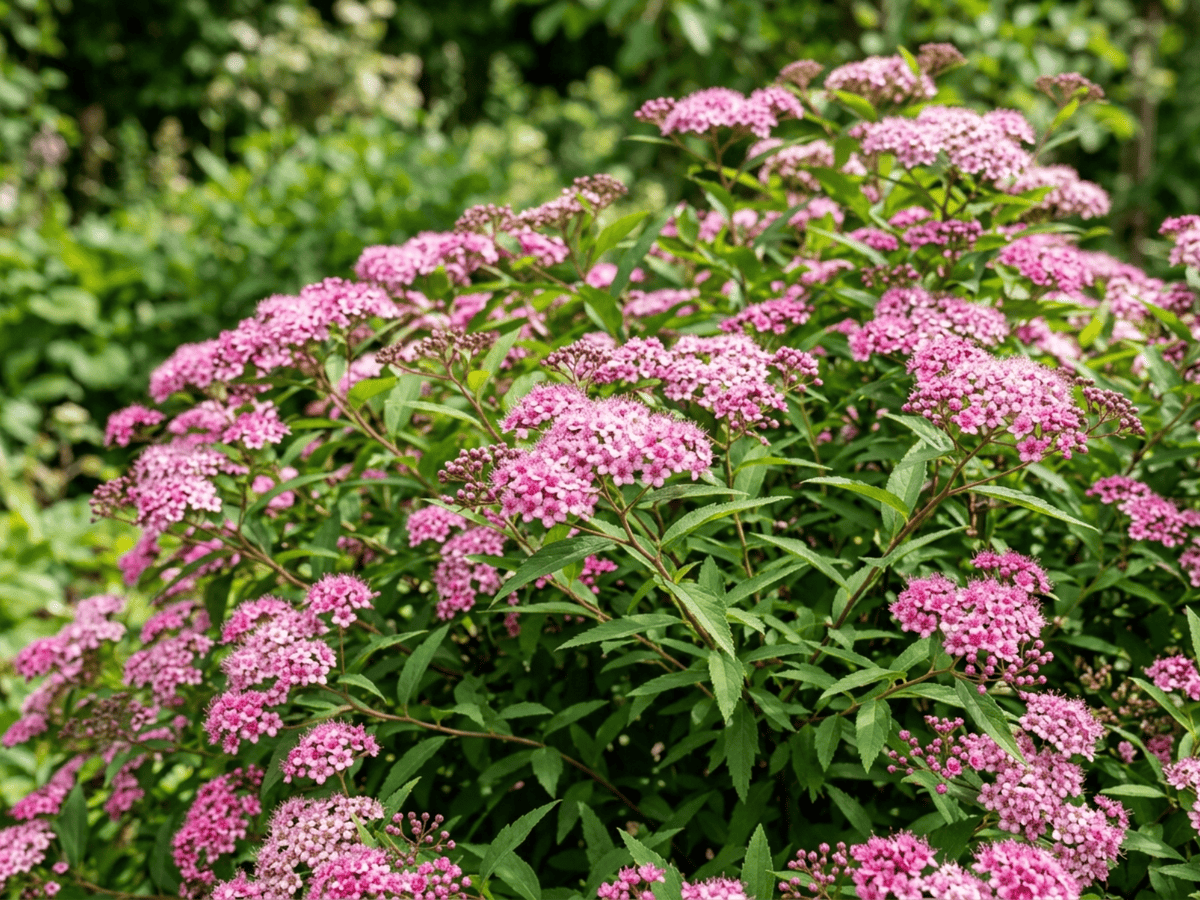 Japanese SpireaSpiraea japonica
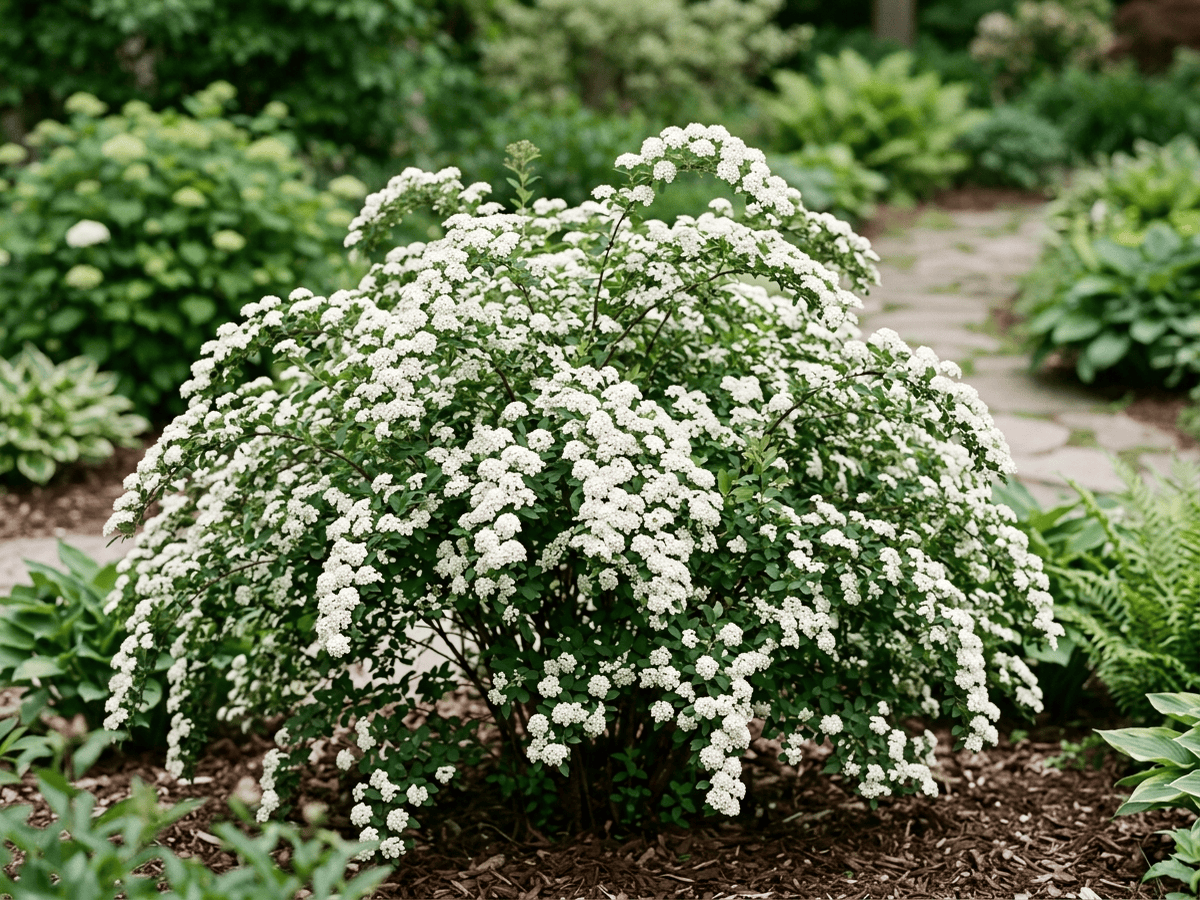 Snowmound SpireaSpiraea nipponica
Plants with similar care
 Chinese AbeliaAbelia chinensis
 Fragrant AbeliaAbelia mosanensis
 Large-Flowered AbeliaAbelia uniflora
 Glossy AbeliaAbelia x grandiflora
Frequently asked questions
How often should I water Japanese Spiraea?
In summer, water about every 5 days; in winter, about every 21 days. Adjust for heat, pot size and drainage.
How much light does Japanese Spiraea need?
Full sun: 6+ hrs direct. Watch the leaves — scorching or stretching means the light needs adjusting.
Is Japanese Spiraea toxic to cats or dogs?
No toxicity has been reported for this plant. Still, it is wise to keep pets from chewing on any houseplant. Educational information, not medical or veterinary advice. If exposure is suspected, contact a doctor or veterinarian.
Is Japanese Spiraea easy to grow?
Yes — it is considered an easy, beginner-friendly plant.
When does Japanese Spiraea bloom?
It typically blooms Jun–Sep in the Northern Hemisphere.
YardMate
Identify any plant in seconds
Snap a photo — YardMate names the plant, diagnoses problems, and reminds you when to water.
Download on the App Store