 YardMate


Aromatic Aster
Symphyotrichum oblongifolium
Easy · Beginner friendlyAbout Aromatic Aster
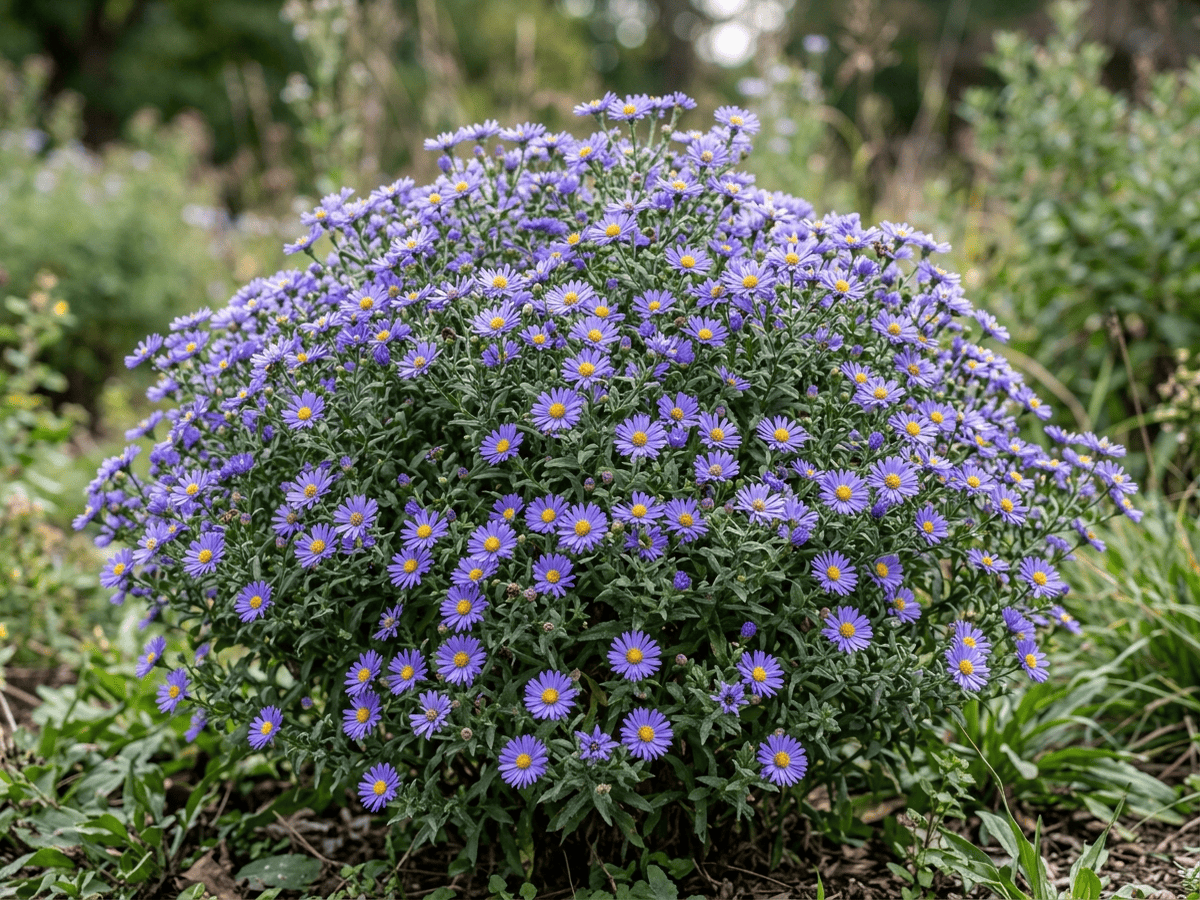
Aromatic Aster is a Great Plains and Midwestern native perennial producing a dense cloud of 1-inch blue-violet daisy flowers on bushy mounded plants in fall, later than most asters. Growing 1 to 3 feet tall with aromatic leaves that release a pleasant scent when brushed, it is more drought-tolerant than most asters and particularly loved in American native plant and xeric gardens.
- Fragrant
- Drought-tolerant
- Native
- Pollinator-friendly
How to care for Aromatic Aster
Watering
- Springevery 7 days
- Summerevery 5 days
- Fallevery 7 days
- Winterevery 14 days
Soil · Well-draining
- Top dressingPine bark mulch10%
- Main mixPotting soil + perlite 2:170%
- DrainageLECA / gravel20%
Never skip the drainage layer — standing water is the top cause of root rot.
FERTILIZER
- Springevery 45 days
- Summerevery 60 days
At a Glance
- NativeNorth America
- Height1.5–3 ft (0.5–0.9 m)
- Spread2–3 ft (0.6–0.9 m)
- Flower colorBlue, Purple
- Foliage colorGreen
- SoilSandy, Well-drained
- LocationsYard
Bloom time
BLOOM CYCLE
Peak bloom
Oct–Nov
Blue-violet daisies October into November, latest-blooming aster
Fragrance
MODERATE FRAGRANCE
Foliage strongly aromatic with a balsamic, turpentine-like scent when bruised.
Toxicity
No toxicity has been reported for this plant. Still, it is wise to keep pets from chewing on any houseplant.
Educational information, not medical or veterinary advice. If exposure is suspected, contact a doctor or veterinarian.
DISTRIBUTION


- Native
- Introduced
- North America
History
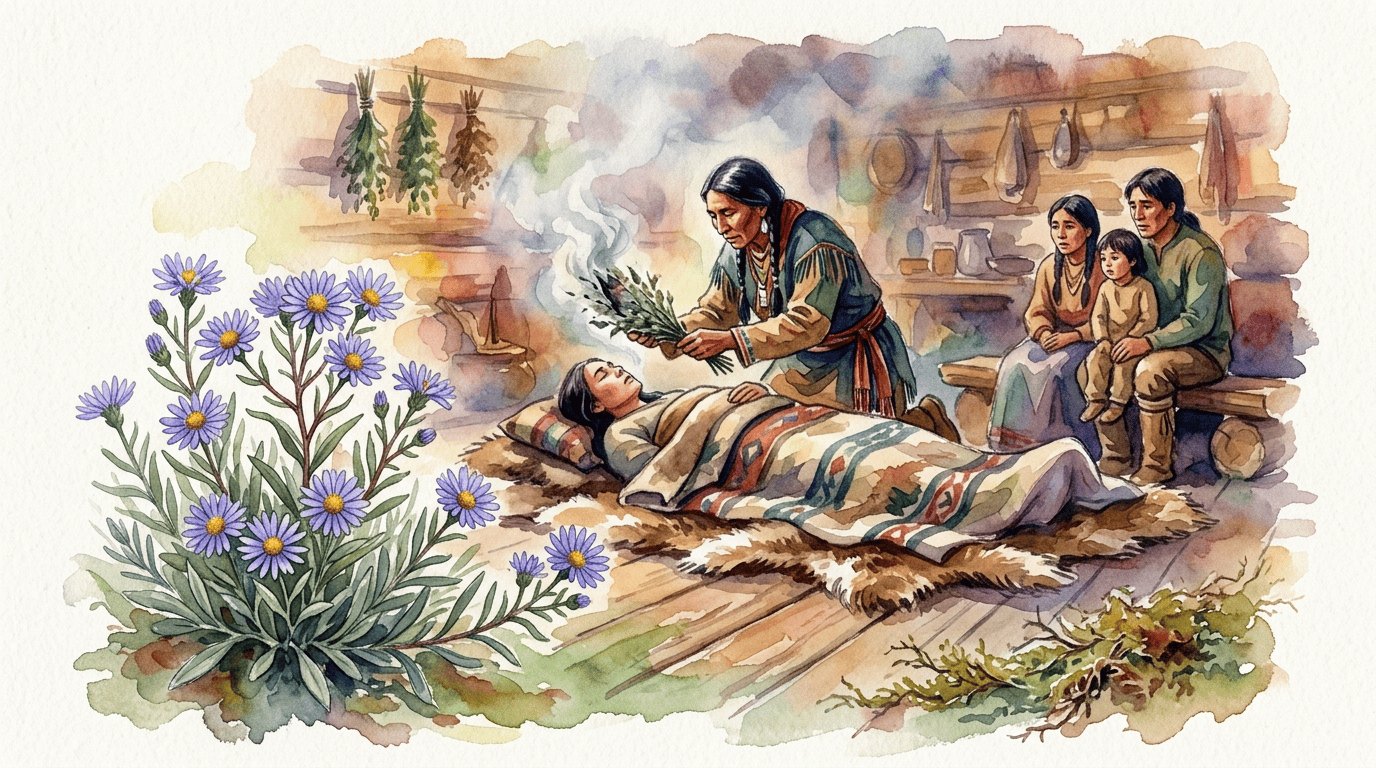
Symphyotrichum oblongifolium, the aromatic aster, grows naturally on limestone bluffs and dry prairies from the central United States east to the Appalachians. Thomas Nuttall described it as Aster oblongifolius in 1818. Meskwaki and other Great Lakes peoples reportedly burned the strongly scented leaves as a smudge and to revive unconscious patients.
Nineteenth-century settlers dug it from wild populations for farmhouse gardens. Horticultural interest surged in the late twentieth century when North Carolina's North Creek Nurseries and plantsman Raydon Alexander introduced 'Raydon's Favorite' (c.1990), followed by 'October Skies'. The 1994 reclassification to Symphyotrichum reflected molecular studies by Guy Nesom. Native from Manitoba and Montana south to Texas. It is now valued in sustainable plantings for deer resistance, drought tolerance, and late-October bloom.
Symbolism & meaning
What It Symbolizes
Aromatic Aster is the late gift of the meadow, blooming when nearly every other aster has faded — a final gesture of color before frost. Paired with aromatic grace, its leaves release a pleasant scent when brushed, an unexpected fragrance from a daisy-shaped flower. It is a plant whose meaning is generosity at the season's edge: the friend who shows up last, with something small and lovely.
- Late gift — blooms after all other asters fade
- Aromatic grace — leaves release pleasant scent
Where the Name Comes From
'oblongifolium' from Latin means oblong-leaved, for the leaf shape.
Uses & Fun Facts
- Crushed foliage releases distinctive balsam-mint Aromatic Aster scent
- Aromatic fall daisies feed bees and migrating monarchs in dry sunny borders
- Aromatic aster forms tidy mounds covered in purple autumn flowers
Related plants
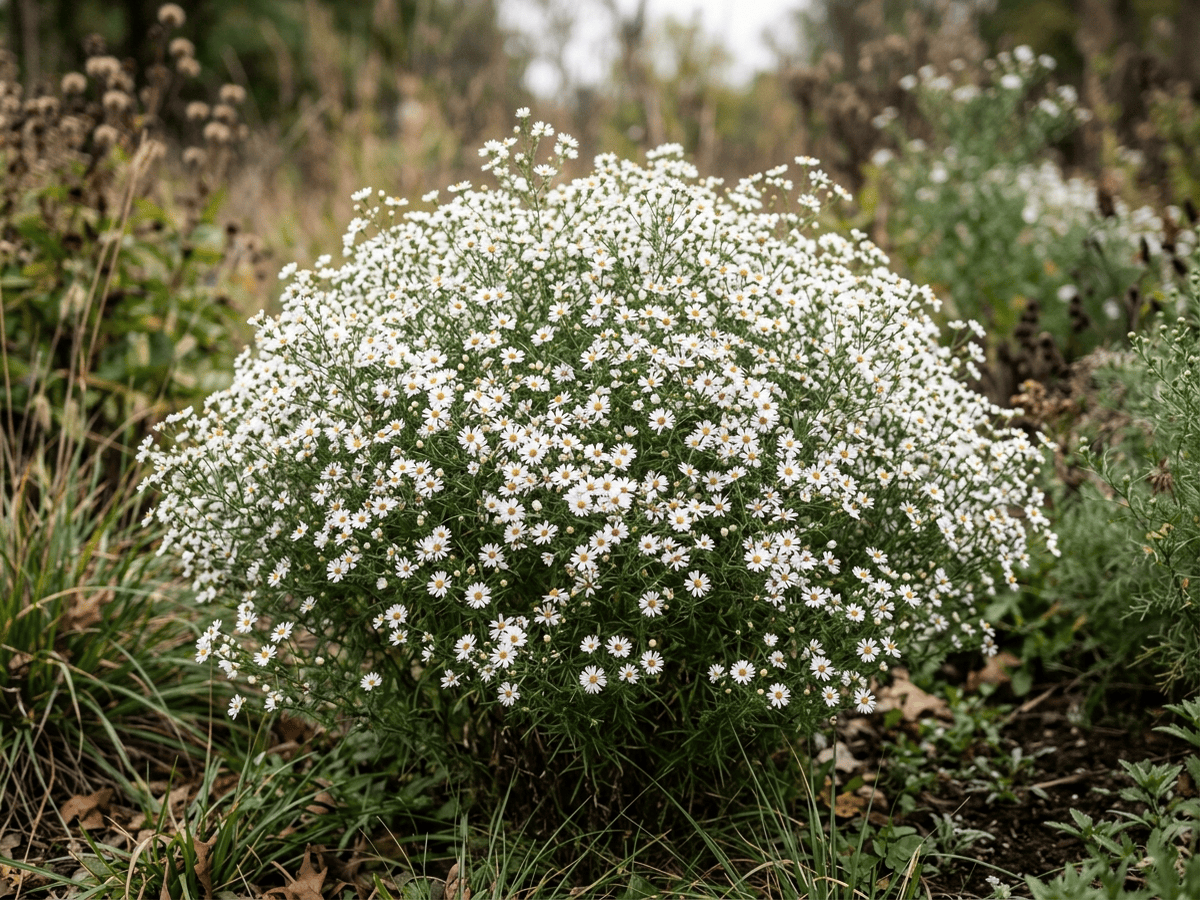
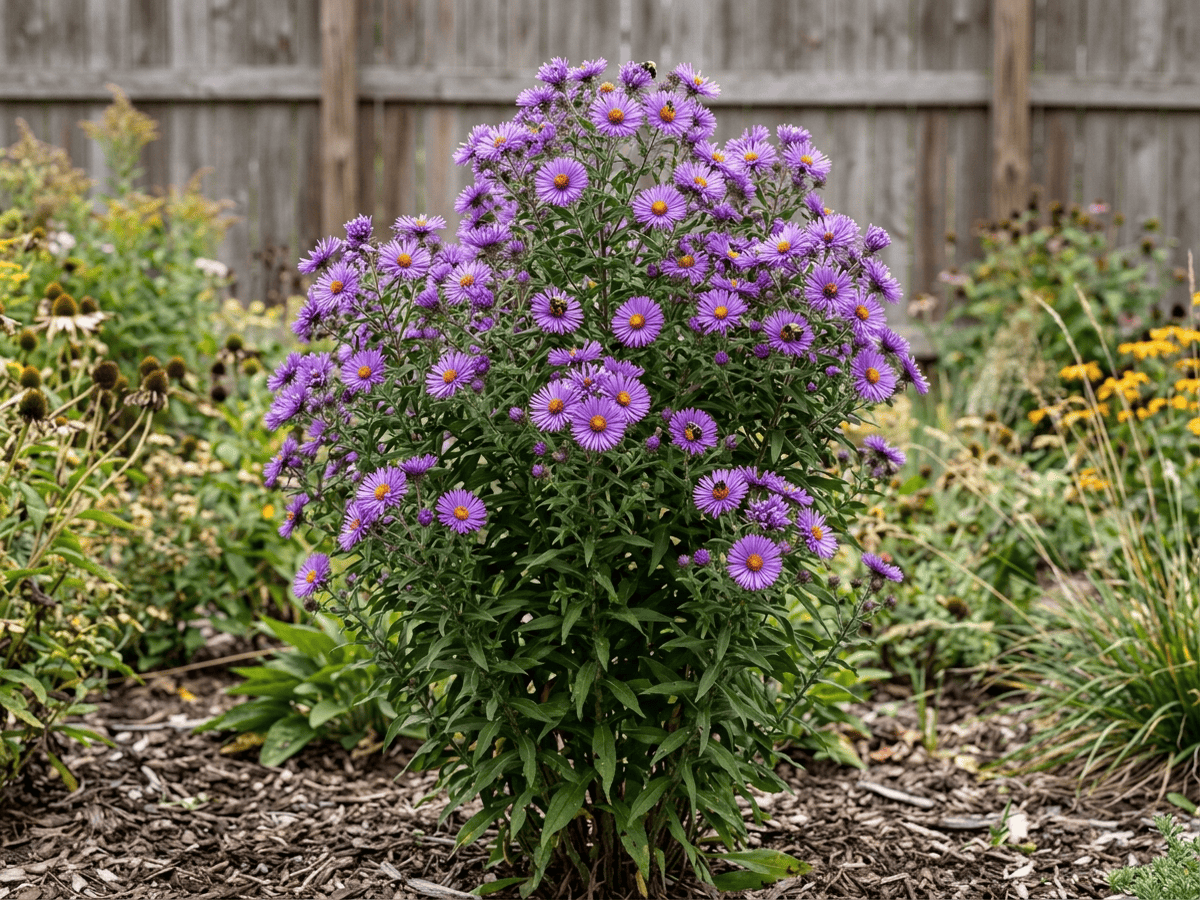
More Symphyotrichum plants
Plants with similar care
 Chinese AbeliaAbelia chinensis
 Fragrant AbeliaAbelia mosanensis
 Large-Flowered AbeliaAbelia uniflora
 Glossy AbeliaAbelia x grandiflora
Frequently asked questions
How often should I water Aromatic Aster?
In summer, water about every 5 days; in winter, about every 14 days. Adjust for heat, pot size and drainage.
How much light does Aromatic Aster need?
Full sun: 6+ hrs direct. Watch the leaves — scorching or stretching means the light needs adjusting.
Is Aromatic Aster toxic to cats or dogs?
No toxicity has been reported for this plant. Still, it is wise to keep pets from chewing on any houseplant. Educational information, not medical or veterinary advice. If exposure is suspected, contact a doctor or veterinarian.
Is Aromatic Aster easy to grow?
Yes — it is considered an easy, beginner-friendly plant.
When does Aromatic Aster bloom?
It typically blooms Oct–Nov in the Northern Hemisphere.
YardMate
Identify any plant in seconds
Snap a photo — YardMate names the plant, diagnoses problems, and reminds you when to water.
Download on the App Store