 YardMate


Garden Tulip
Tulipa gesneriana
Easy · Beginner friendlyAbout Garden Tulip
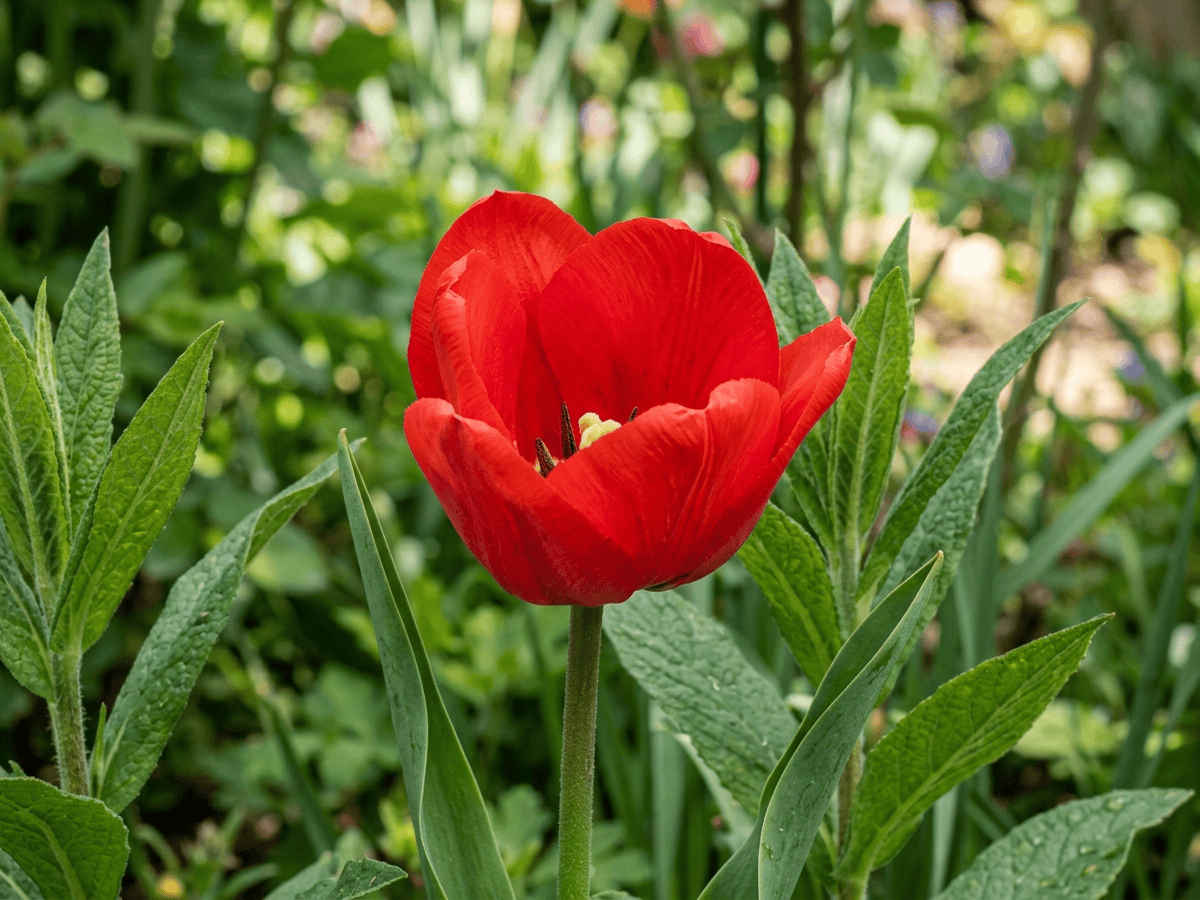
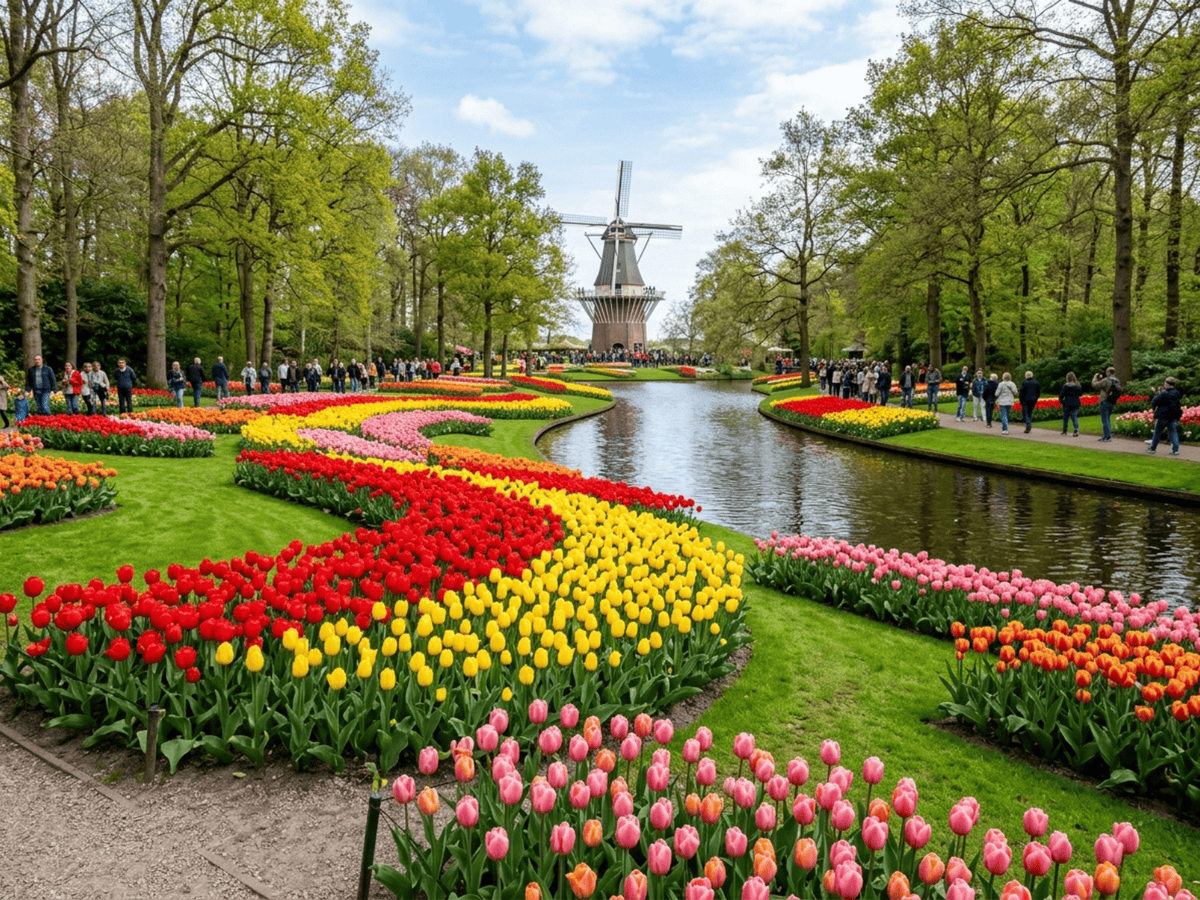
Tulipa gesneriana, the garden tulip, is the world's most commercially important spring bulb, producing iconic cup-shaped flowers in virtually every color and pattern. Originally from Central Asia, tulips were cultivated by the Ottoman Empire before sweeping into Europe via the Netherlands in the 1590s. Modern Dutch growers produce over 4 billion tulip bulbs annually. Tulips need winter chill to bloom and are planted in autumn. The flowers last 1–2 weeks in the garden. Thousands of registered cultivars exist, from single early types to fringed, parrot, double, and lily-flowered forms.
- Cut-flower
How to care for Garden Tulip
Watering
- Springevery 7 days
- Summerevery 30 days
- Fallevery 14 days
- Winterevery 30 days
Soil · Well-draining
- Main mixLoam + coarse sand 3:175%
- DrainageGravel25%
Sharp drainage matters most — bulbs rot in wet soil while dormant.
FERTILIZER
Bulb Feed 3-5-3
With bulbs, when matters more than what. One dose goes in the hole at planting, the second when shoots break ground.
- Nitrogen · Leaves
- Phosphorus · Roots + Blooms
- Potassium · Strength
- Springevery 30 days
- Fallevery 60 days
At a Glance
- NativeWestern Asia
- Height1–2 ft (0.3–0.6 m)
- Spread0.25–0.5 ft (0.1–0.2 m)
- Flower colorRed, Pink, Yellow, White
- Foliage colorGreen
- SoilLoamy, Well-drained, Neutral
- LocationsYard · Balcony
Bloom time
BLOOM CYCLE
Peak bloom
Mar–May
Plant bulbs in autumn 15cm deep; needs winter chill; brief but spectacular spring show
Fragrance
LIGHT FRAGRANCE
Most modern tulips are only lightly scented; some heirloom cultivars (particularly Double Early types) retain stronger fragrance.
Toxicity
Humans Moderate · Pets Moderate
tuliposide A, B and tulipalin A
Moderate
- Root
- Leaf
- Contact
- Ingestion
EXPOSURE Touching roots and leaves. Eating roots and leaves.
EFFECT 'Tulip finger' contact dermatitis common in florists and bulb handlers and bulbs are the toxic part, famously eaten under starvation during the Dutch Hongerwinter (1944–45) with severe GI consequences.
NOTE Toxicity is concentrated in the bulb; above-ground parts are far less dangerous.
Moderate
- Root
- Ingestion
EXPOSURE Eating roots.
EFFECT Intense GI irritation, drooling, depression, convulsions, cardiac abnormalities, bulb is most dangerous, and per ASPCA.
NOTE Toxicity is concentrated in the bulb; above-ground parts are far less dangerous.
Moderate
- Root
- Ingestion
EXPOSURE Eating roots.
EFFECT Intense GI irritation, drooling, depression, convulsions, cardiac abnormalities, bulb is most dangerous, and per ASPCA.
NOTE Toxicity is concentrated in the bulb; above-ground parts are far less dangerous.
Educational information, not medical or veterinary advice. If exposure is suspected, contact a doctor or veterinarian.
DISTRIBUTION


- Native
- Introduced
- Western Asia
History

Tulipa gesneriana is not a wild species but a cultigen of complex hybrid origin developed in Persia and Ottoman Turkey from multiple wild Central Asian Tulipa species over several centuries before 1500 CE. It reached Western Europe in the 1550s via Vienna, where the Holy Roman ambassador to Constantinople sent bulbs to the imperial gardens. By 1593 it had reached Leiden, where the botanist Carolus Clusius established it in the Netherlands and ignited the most famous asset bubble in economic history: between 1634 and February 1637, single rare 'broken' bulbs sold for the price of an Amsterdam canal house, before the market collapsed overnight in February 1637 in what Charles Mackay memorialized as Tulip Mania.
The Netherlands remains the world center of commercial tulip production, with spring bulb auctions around Aalsmeer still the global benchmark. Moderately toxic to pets. Tulipmania (1636–1637) remains history's most famous speculative bubble.
The 'broken' color patterns that commanded the highest prices were actually caused by a tulip-breaking virus transmitted by aphids. The Dutch crash wiped out fortunes overnight. Today, the Netherlands produces 77% of the world's flower bulbs, with tulips leading production. Keukenhof garden plants 7 million bulbs annually. In Turkey, the 'Lale Devri' (Tulip Period, 1718–1730) was an era of cultural flourishing named after the Ottoman passion for tulips.
Symbolism & meaning
What It Symbolizes
In Turkish and Persian tradition, the Garden Tulip is the great flower of declared love, and giving a red tulip is a clear declaration of passionate feeling. From Ottoman court culture to seventeenth-century Dutch tulip mania, it has carried romantic meaning across centuries. It is often read as a flower of public confession, a single bloom whose meaning is the moment a private feeling is finally placed openly in the hand of another.
- Declaration of love — In Turkish and Persian tradition, giving a red tulip declares passionate love
Where the Name Comes From
Tulipa likely from Turkish 'tülbend' (turban), for the flower shape. Gesneriana honors Conrad Gessner, 16th-century Swiss naturalist.
Uses & Fun Facts
- World's leading commercial spring cut bulb
- Iconic spring bedding in countless colors and forms
- Forced bulbs for spring patio and pot displays
Related plants
More Tulipa plants
 Queen of Night TulipTulipa 'Queen of Night'
 Lady TulipTulipa clusiana
 Greig's TulipTulipa greigii
 Waterlily TulipTulipa kaufmanniana
Plants with similar care
 Chinese AbeliaAbelia chinensis
 Fragrant AbeliaAbelia mosanensis
 Large-Flowered AbeliaAbelia uniflora
 Glossy AbeliaAbelia x grandiflora
Frequently asked questions
How often should I water Garden Tulip?
In summer, water about every 30 days; in winter, about every 30 days. Adjust for heat, pot size and drainage.
How much light does Garden Tulip need?
Full sun: 6+ hrs direct. Watch the leaves — scorching or stretching means the light needs adjusting.
Is Garden Tulip toxic to cats or dogs?
Pets Moderate (Dogs Moderate · Cats Moderate) Educational information, not medical or veterinary advice. If exposure is suspected, contact a doctor or veterinarian.
Is Garden Tulip easy to grow?
Yes — it is considered an easy, beginner-friendly plant.
When does Garden Tulip bloom?
It typically blooms Mar–May in the Northern Hemisphere.
YardMate
Identify any plant in seconds
Snap a photo — YardMate names the plant, diagnoses problems, and reminds you when to water.
Download on the App Store