 YardMate


Queen of Night Tulip
Tulipa 'Queen of Night'
Easy · Beginner friendlyAbout Queen of Night Tulip
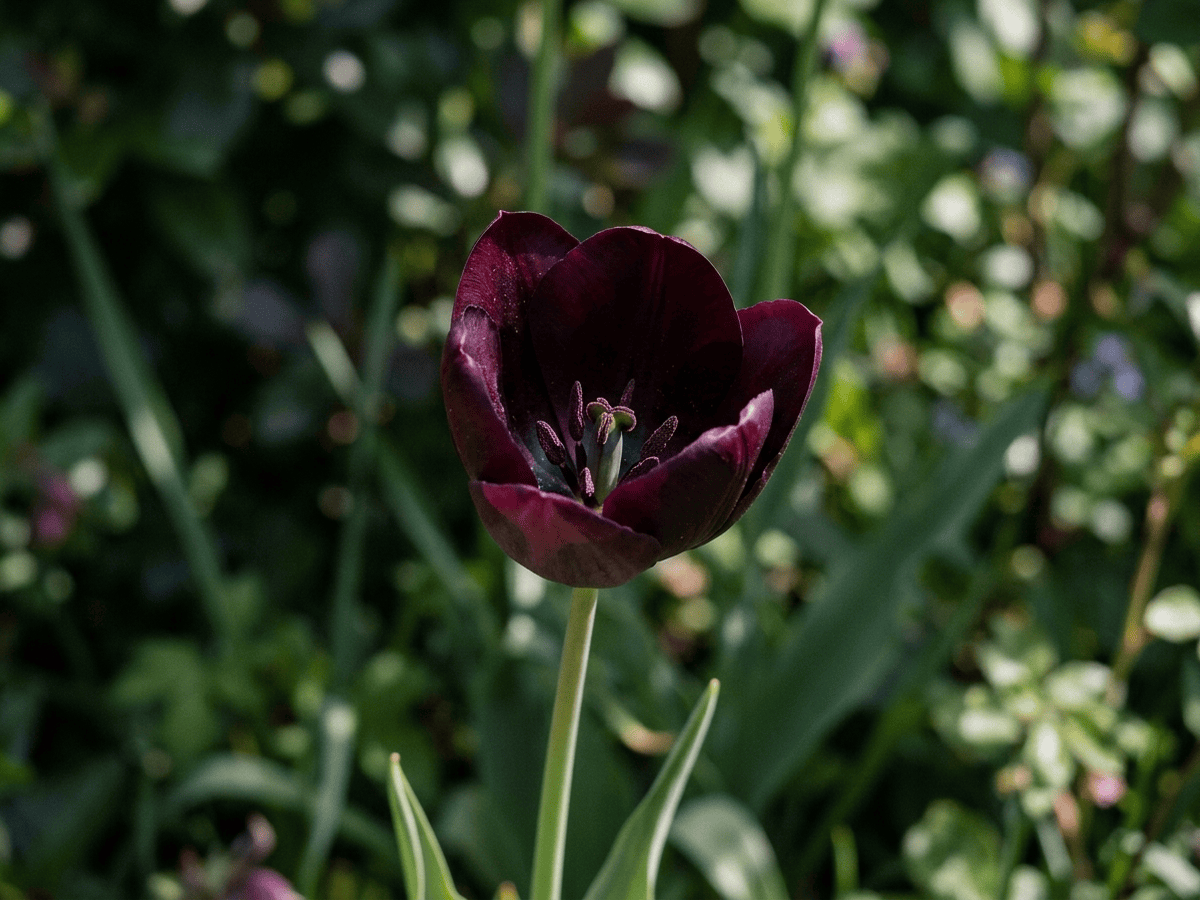
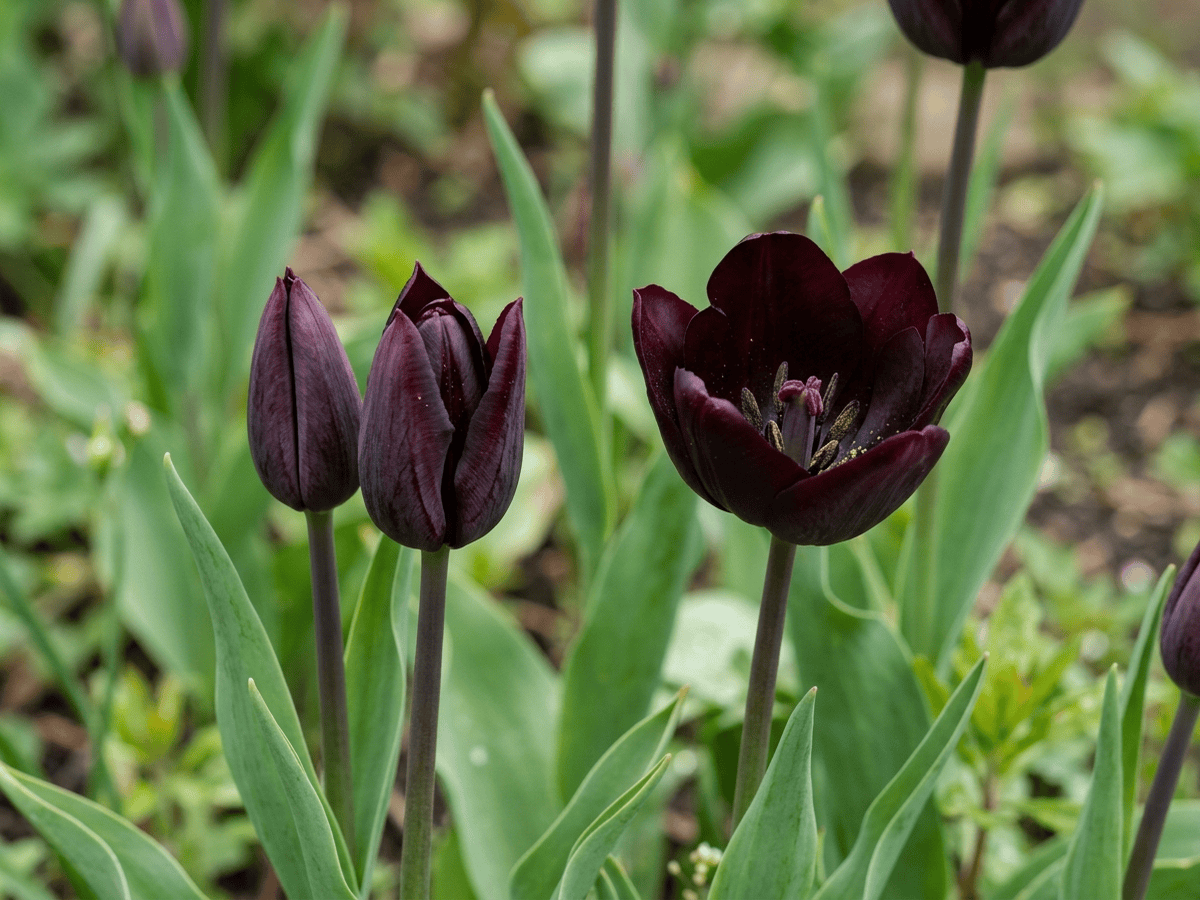
Tulipa 'Queen of Night' is the classic near-black tulip, a single late cultivar whose satin maroon-purple flowers read almost black in certain light. Stems rise about 60 cm in late spring, carrying elegant egg-shaped blooms that contrast sharply with fresh green foliage, white tulips, pale narcissus, or chartreuse perennials. Bred in the Netherlands in 1944 and widely distributed after the 1950s, it became the reference point for black-flower garden design and inspired darker descendants such as 'Black Hero' and 'Paul Scherer'. Plant bulbs deeply in autumn in full sun and well-drained soil. Like many tulips, it often performs best for one or two strong seasons, so many gardeners replant for drama.
- Cut-flower
How to care for Queen of Night Tulip
Watering
- Springevery 10 days
- Summerpause watering
- Fallevery 14 days
- Winterevery 30 days
Soil · Well-draining
- Main mixLoam + coarse sand 3:175%
- DrainageGravel25%
Sharp drainage matters most — bulbs rot in wet soil while dormant.
FERTILIZER
Bulb Feed 3-5-3
With bulbs, when matters more than what. One dose goes in the hole at planting, the second when shoots break ground.
- Nitrogen · Leaves
- Phosphorus · Roots + Blooms
- Potassium · Strength
- Springevery 30 days
- Fallevery 30 days
At a Glance
- NativeEurope
- Height2–2.5 ft (0.6–0.8 m)
- Spread0.5 ft (0.2 m)
- Flower colorPurple, Burgundy
- Foliage colorGreen, Blue-green
- SoilLoamy, Well-drained, Neutral
- LocationsYard · Indoor · Balcony
Bloom time
BLOOM CYCLE
Peak bloom
Mar–May
Satin deep-maroon flowers in late spring; plant 15 cm deep in well-drained soil.
Fragrance
NO FRAGRANCE
Not fragrant.
Toxicity
Humans Slight · Pets Moderate
tulipalin A and tulipalin B
Slight
- Bulb
- Sap
- Contact
- Ingestion
EXPOSURE Touching bulbs and sap. Eating bulbs and sap.
EFFECT Tulipalin causes skin dermatitis and GI upset if ingested.
NOTE Documented concern for humans: Tulipalin causes skin dermatitis and GI upset if ingested.
Moderate
- Bulb
- Ingestion
EXPOSURE Eating bulbs.
EFFECT Vomiting, drooling, depression and bulb has highest concentration.
NOTE ASPCA lists tulips as toxic to pets (especially bulbs). Florist dermatitis possible.
Moderate
- Bulb
- Ingestion
EXPOSURE Eating bulbs.
EFFECT Vomiting, drooling, depression.
NOTE ASPCA lists tulips as toxic to pets (especially bulbs). Florist dermatitis possible.
Educational information, not medical or veterinary advice. If exposure is suspected, contact a doctor or veterinarian.
DISTRIBUTION


- Native
- Europe
History

Tulipa 'Queen of Night' was bred in the Netherlands in 1944 by an unnamed Dutch grower (commercial documentation from the era is incomplete) and entered wider commercial distribution in the 1950s-60s. It belongs to the Single Late Tulip group (Division 5) — tall single-flowered tulips blooming at the end of the tulip season. The cultivar's popularity has endured for 80 years in commercial distribution, an extraordinary run.
Despite numerous attempts to breed a true-black tulip — including 'Black Hero' (double), 'Black Jewel,' 'Paul Scherer,' and various others — 'Queen of Night' remains the benchmark against which all dark tulips are measured. Alexandre Dumas's 1850 novel 'The Black Tulip,' set during the Dutch tulip mania of the 1630s, created much of Western cultural fascination with the idea of a truly black tulip; 'Queen of Night' is the closest living thing to the novel's fictional rarity. Plant bulbs 15 cm deep in full sun with well-drained soil in October-November.
Flowers last 1-2 weeks in spring arrangements. Like most hybrid tulips, returns declining over 2-3 years in garden conditions and is often treated as an annual bulb. Became the defining reference 'black' tulip worldwide. Still widely distributed and unrivaled as the dark-tulip benchmark.
Symbolism & meaning
What It Symbolizes
Queen of Night makes visible mystery and perfect love through satin near-black petals that gather darkness in their cups while still glowing with a velvety bloom. As the most famous deep-toned tulip, it makes visible four hundred years of Dutch heritage — generations of careful breeders chasing color ever closer to true black. This is the gothic romantic of the spring bulb world, a flower whose darkness only deepens its enchantment.
- Mystery — Satin near-black petals evoke gothic romance
- Dutch Heritage — Embodies 400 years of Dutch tulip breeding tradition
Where the Name Comes From
Tulipa from Turkish 'tulbent' (turban), from the flower shape; cultivar name refers to the satin-black appearance.
Uses & Fun Facts
- Satin maroon-black blooms anchor dramatic dark-flower spring bouquets
- Late-spring single tulip for high-contrast garden color schemes
Related plants
More Tulipa plants
 Lady TulipTulipa clusiana
 Garden TulipTulipa gesneriana
 Greig's TulipTulipa greigii
 Waterlily TulipTulipa kaufmanniana
Plants with similar care
 Chinese AbeliaAbelia chinensis
 Fragrant AbeliaAbelia mosanensis
 Large-Flowered AbeliaAbelia uniflora
 Glossy AbeliaAbelia x grandiflora
Frequently asked questions
How often should I water Queen of Night Tulip?
Water about every 10 days during the growing season, and always let excess water drain away.
How much light does Queen of Night Tulip need?
Full sun: 6+ hrs direct. Watch the leaves — scorching or stretching means the light needs adjusting.
Is Queen of Night Tulip toxic to cats or dogs?
Pets Moderate (Dogs Moderate · Cats Moderate) Educational information, not medical or veterinary advice. If exposure is suspected, contact a doctor or veterinarian.
Is Queen of Night Tulip easy to grow?
Yes — it is considered an easy, beginner-friendly plant.
Can Queen of Night Tulip be grown indoors?
Yes, it adapts well to indoor growing given the right light.
When does Queen of Night Tulip bloom?
It typically blooms Mar–May in the Northern Hemisphere.
YardMate
Identify any plant in seconds
Snap a photo — YardMate names the plant, diagnoses problems, and reminds you when to water.
Download on the App Store