 YardMate


Greig's Tulip
Tulipa greigii
Easy · Beginner friendlyAbout Greig's Tulip
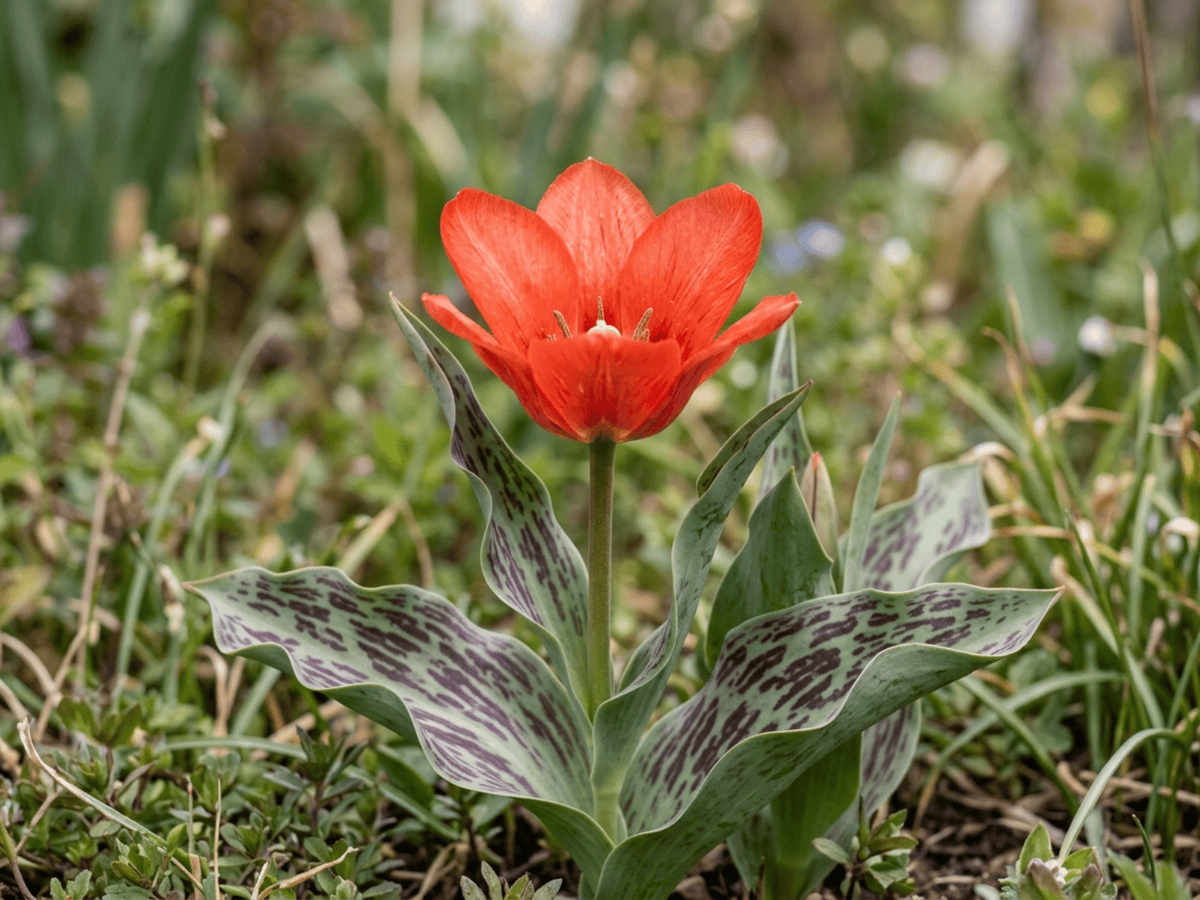
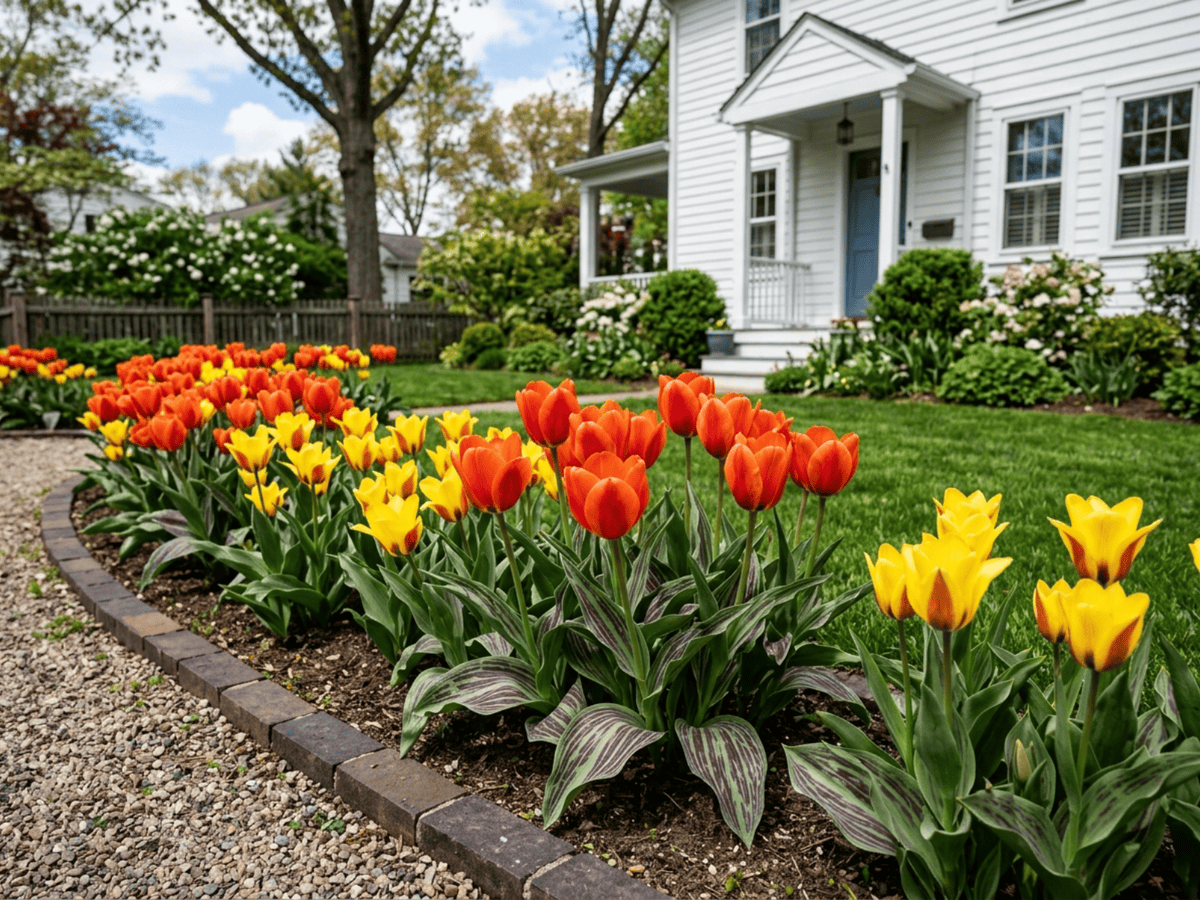
Greig's Tulip is a species tulip from Central Asia bearing large goblet-shaped flowers in fiery red, orange, yellow, or bicolor, held above distinctive foliage mottled with maroon-purple streaks and blotches. Growing 10-14 inches tall, it is dramatic from the moment leaves emerge. A parent of many popular Greigii Hybrid tulips, it is among the most reliable early-spring species tulips for American borders and rock gardens in USDA zones 3-8.
- Drought-tolerant
- Cold-hardy
How to care for Greig's Tulip
Watering
- Springevery 7 days
- Summerpause watering
- Fallevery 14 days
- Winterpause watering
Soil · Well-draining
- Main mixLoam + coarse sand 3:175%
- DrainageGravel25%
Sharp drainage matters most — bulbs rot in wet soil while dormant.
FERTILIZER
Bulb Feed 3-5-3
With bulbs, when matters more than what. One dose goes in the hole at planting, the second when shoots break ground.
- Nitrogen · Leaves
- Phosphorus · Roots + Blooms
- Potassium · Strength
- Springevery 30 days
- Fallevery 60 days
At a Glance
- NativeWestern Asia
- Height0.7–1.2 ft (0.2–0.4 m)
- Spread0.3–0.5 ft (0.1–0.2 m)
- Flower colorRed, Orange, Yellow
- Foliage colorGreen, Variegated, Red
- SoilLoamy, Well-drained
- LocationsYard
Bloom time
BLOOM CYCLE
Peak bloom
Apr
Red, orange, or yellow goblet flowers April
Fragrance
LIGHT FRAGRANCE
The flowers have a mild scent.
Toxicity
Humans Moderate · Pets Moderate
tulipalin A and tulipalin B
Moderate
- Bulb
- Contact
- Ingestion
EXPOSURE Touching bulbs. Eating bulbs.
EFFECT Dermatitis and gI upset.
NOTE Documented concern for humans: Dermatitis and gI upset.
Moderate
- Bulb
- Ingestion
EXPOSURE Eating bulbs.
EFFECT Vomiting, diarrhea, and depression.
NOTE ASPCA lists all tulips as toxic.
Moderate
- Bulb
- Ingestion
EXPOSURE Eating bulbs.
EFFECT Vomiting, diarrhea, and depression.
NOTE ASPCA lists all tulips as toxic.
Educational information, not medical or veterinary advice. If exposure is suspected, contact a doctor or veterinarian.
DISTRIBUTION


- Native
- Western Asia
History
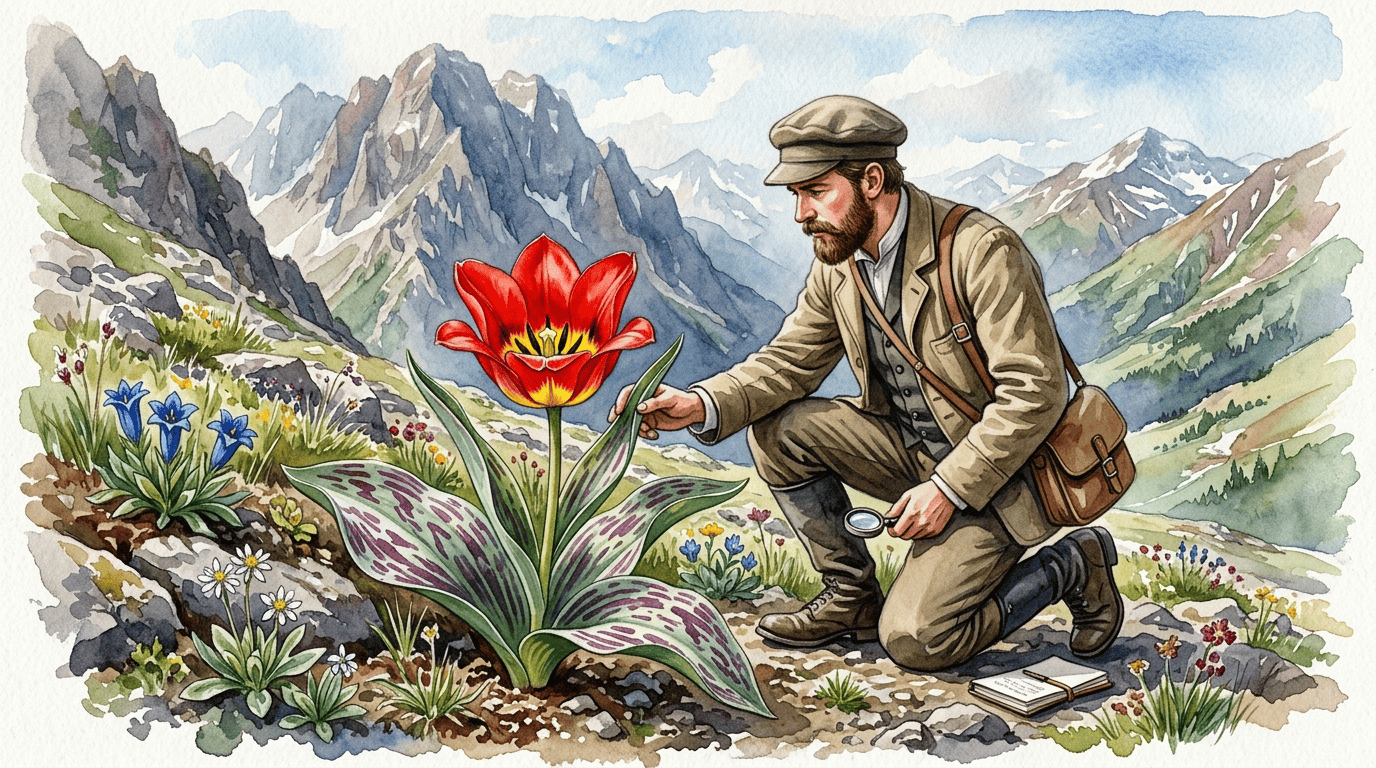
Tulipa greigii grows wild on stony slopes of the Tien Shan mountains in Kazakhstan and Kyrgyzstan. Russian botanist Eduard Regel described it in 1873 in honor of Samuel Alexeievich Greig, then president of the Imperial Russian Horticultural Society in St. Petersburg. Its most distinctive feature is striking purple-maroon striping or mottling on the foliage, unusual among tulips.
Large brilliant-red flowers appear in early-to-mid spring on 8-12 inch stems. Dutch breeders especially Van Tubergen used it extensively from the 1920s to breed the Greigii Group, prized both for flower color—scarlet, yellow, bicolor forms—and for the ornamental striped foliage. Classic cultivars include 'Red Riding Hood' (1953, AGM), 'Plaisir', and 'Oratorio'.
The Group extended tulip interest beyond flowers to the foliage stage. Native to the mountains of Turkestan and Kazakhstan. Greigii Hybrids like 'Red Riding Hood' and 'Cape Cod' have been American garden favorites since the mid-20th century for their early bloom and ornamental foliage.
Symbolism & meaning
What It Symbolizes
Greig Tulip embodies a declaration of love, drawing on the tulip's classic Persian and Ottoman associations with passionate, openhearted statement. It also carries vigor — a robust early spring performer whose mottled leaves and brilliant flowers reliably announce the season. A tulip species form whose ancient meaning is matched by a remarkably willing constitution in modern beds.
- Declaration of Love — traditional tulip meaning of passionate declaration
- Vigor — robust early spring performer
Where the Name Comes From
'Greigii' honors Samuel Greig (1827–1887), Russian general and horticultural patron.
Uses & Fun Facts
- Fiery cups above maroon-mottled foliage for early-spring borders
- Bright spring blooms cut for tulip bouquets
- Compact bulbs forced in patio pots for spring color
Related plants
More Tulipa plants
 Queen of Night TulipTulipa 'Queen of Night'
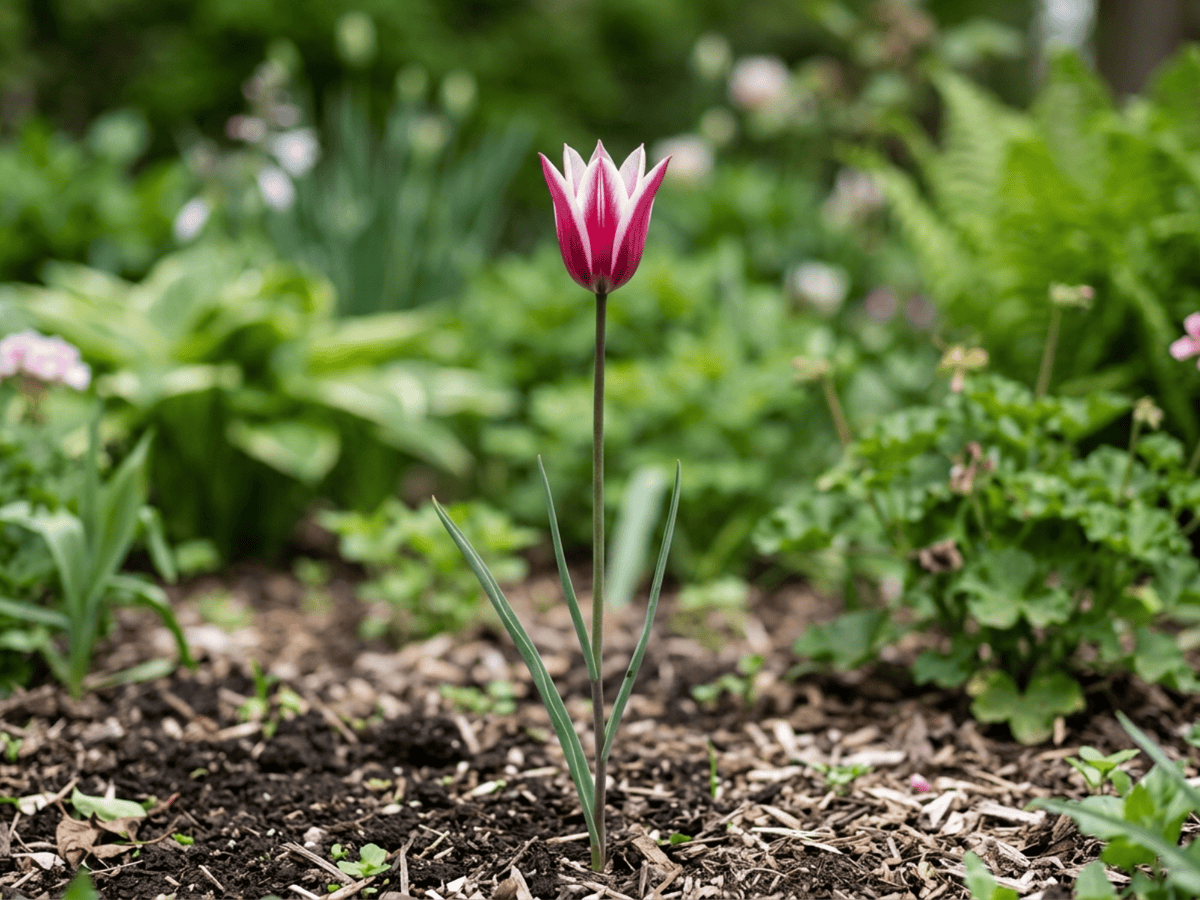 Lady TulipTulipa clusiana
 Garden TulipTulipa gesneriana
 Waterlily TulipTulipa kaufmanniana
Plants with similar care
 Chinese AbeliaAbelia chinensis
 Fragrant AbeliaAbelia mosanensis
 Large-Flowered AbeliaAbelia uniflora
 Glossy AbeliaAbelia x grandiflora
Frequently asked questions
How often should I water Greig's Tulip?
Water about every 7 days during the growing season, and always let excess water drain away.
How much light does Greig's Tulip need?
Full sun: 6+ hrs direct. Watch the leaves — scorching or stretching means the light needs adjusting.
Is Greig's Tulip toxic to cats or dogs?
Pets Moderate (Dogs Moderate · Cats Moderate) Educational information, not medical or veterinary advice. If exposure is suspected, contact a doctor or veterinarian.
Is Greig's Tulip easy to grow?
Yes — it is considered an easy, beginner-friendly plant.
When does Greig's Tulip bloom?
It typically blooms Apr in the Northern Hemisphere.
YardMate
Identify any plant in seconds
Snap a photo — YardMate names the plant, diagnoses problems, and reminds you when to water.
Download on the App Store