 YardMate


Bird's-Eye Speedwell
Veronica persica
Easy · Beginner friendlyAbout Bird's-Eye Speedwell
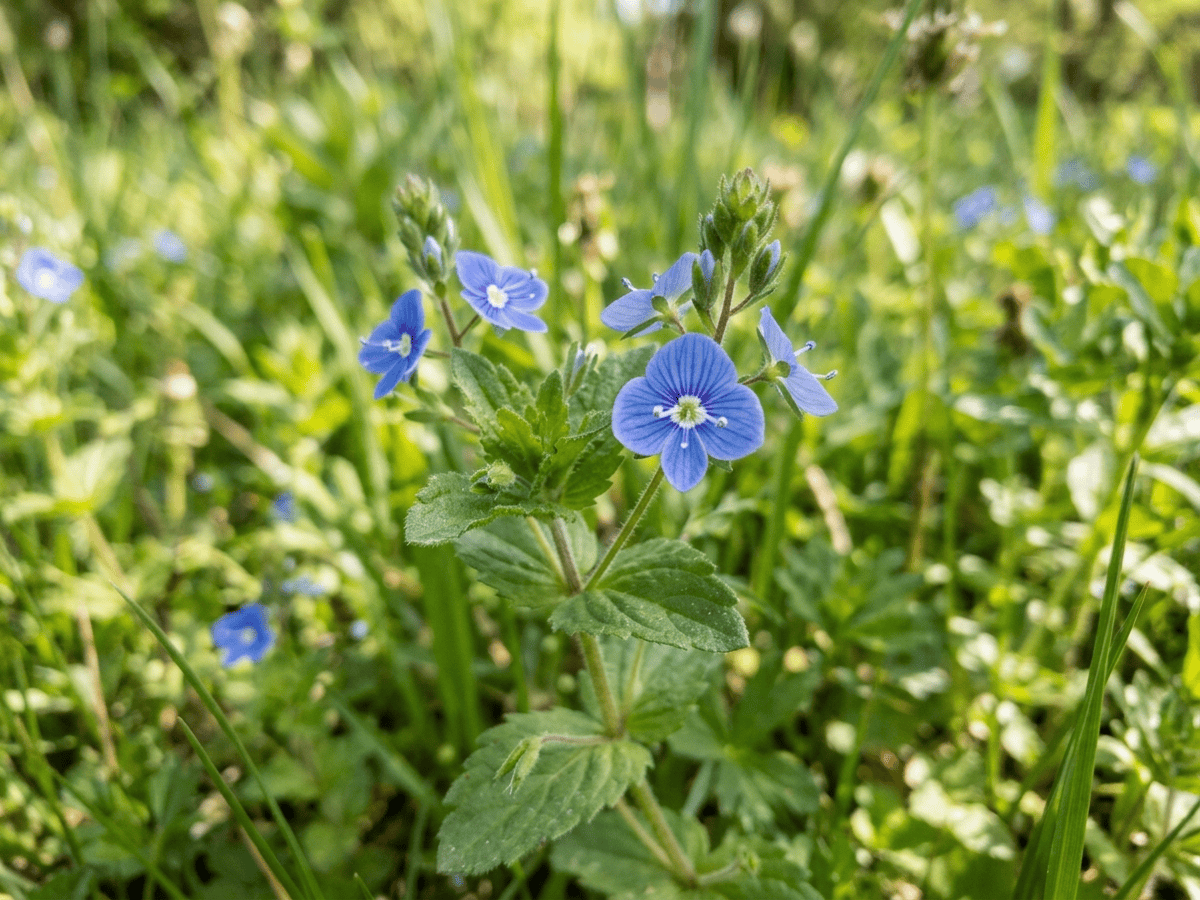
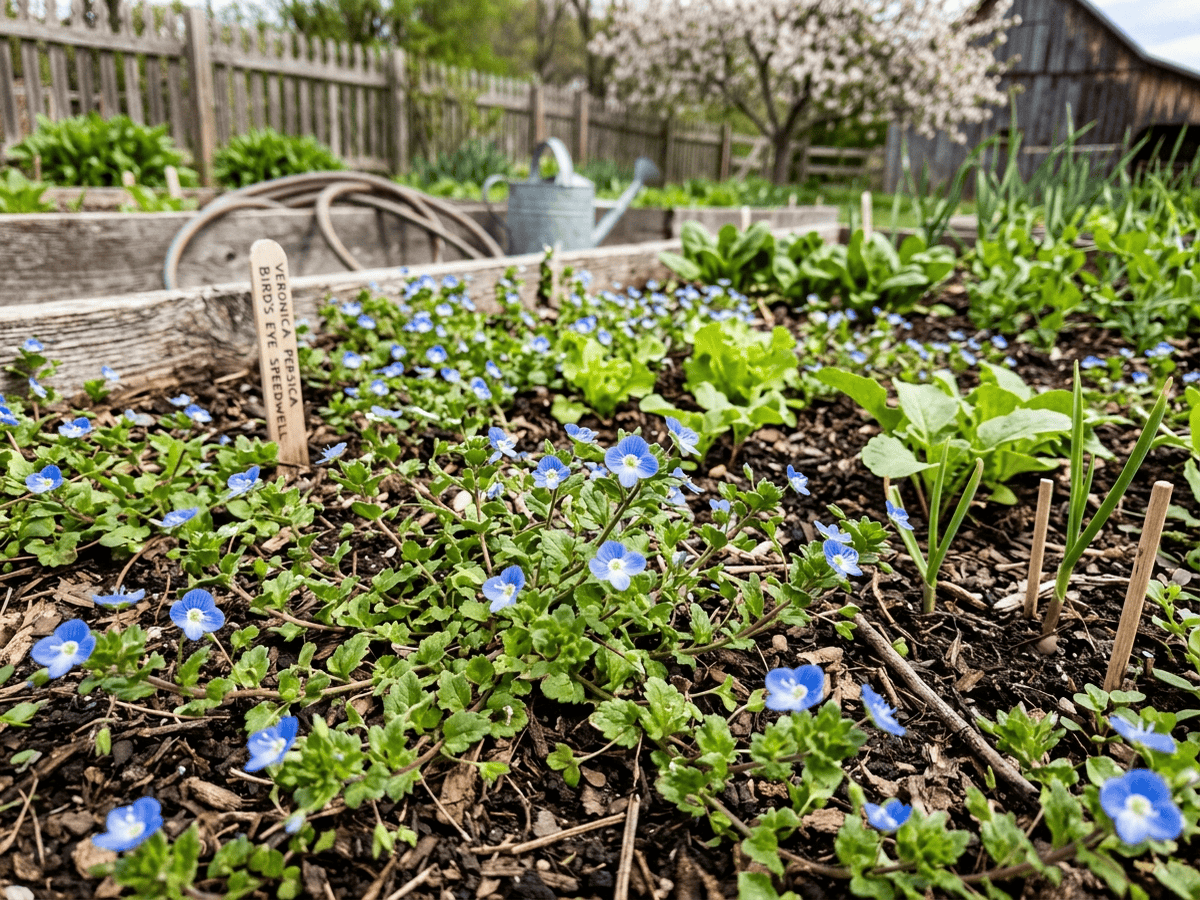
Bird's-Eye Speedwell or Persian Speedwell is a small Middle Eastern winter annual naturalized worldwide, forming spreading mats of rounded scalloped leaves with small sky-blue four-petal flowers with white centers blooming from late winter through spring. One of the most beautiful lawn weeds, but problematic as a pervasive invader of lawns, gardens, and crop fields across the US from the 1800s.
- Groundcover
- Pollinator-friendly
- Fast-growing
How to care for Bird's-Eye Speedwell
Watering
- Springevery 7 days
- Summerevery 5 days
- Fallevery 10 days
- Winterevery 14 days
Soil · Well-draining
- Top dressingPine bark mulch10%
- Main mixPotting soil + perlite 2:170%
- DrainageLECA / gravel20%
Never skip the drainage layer — standing water is the top cause of root rot.
FERTILIZER
This plant needs little to no feeding.
At a Glance
- NativeWestern Asia
- Height0.3–0.5 ft (0.1–0.2 m)
- Spread0.5–1 ft (0.2–0.3 m)
- Flower colorBlue, White
- Foliage colorGreen
- Fruit colorBrown
- SoilLoamy, Well-drained
- LocationsYard
Bloom time
BLOOM CYCLE
Peak bloom
Dec–May
Sky-blue four-petal flowers late winter through spring
Toxicity
No toxicity has been reported for this plant. Still, it is wise to keep pets from chewing on any houseplant.
Educational information, not medical or veterinary advice. If exposure is suspected, contact a doctor or veterinarian.
DISTRIBUTION

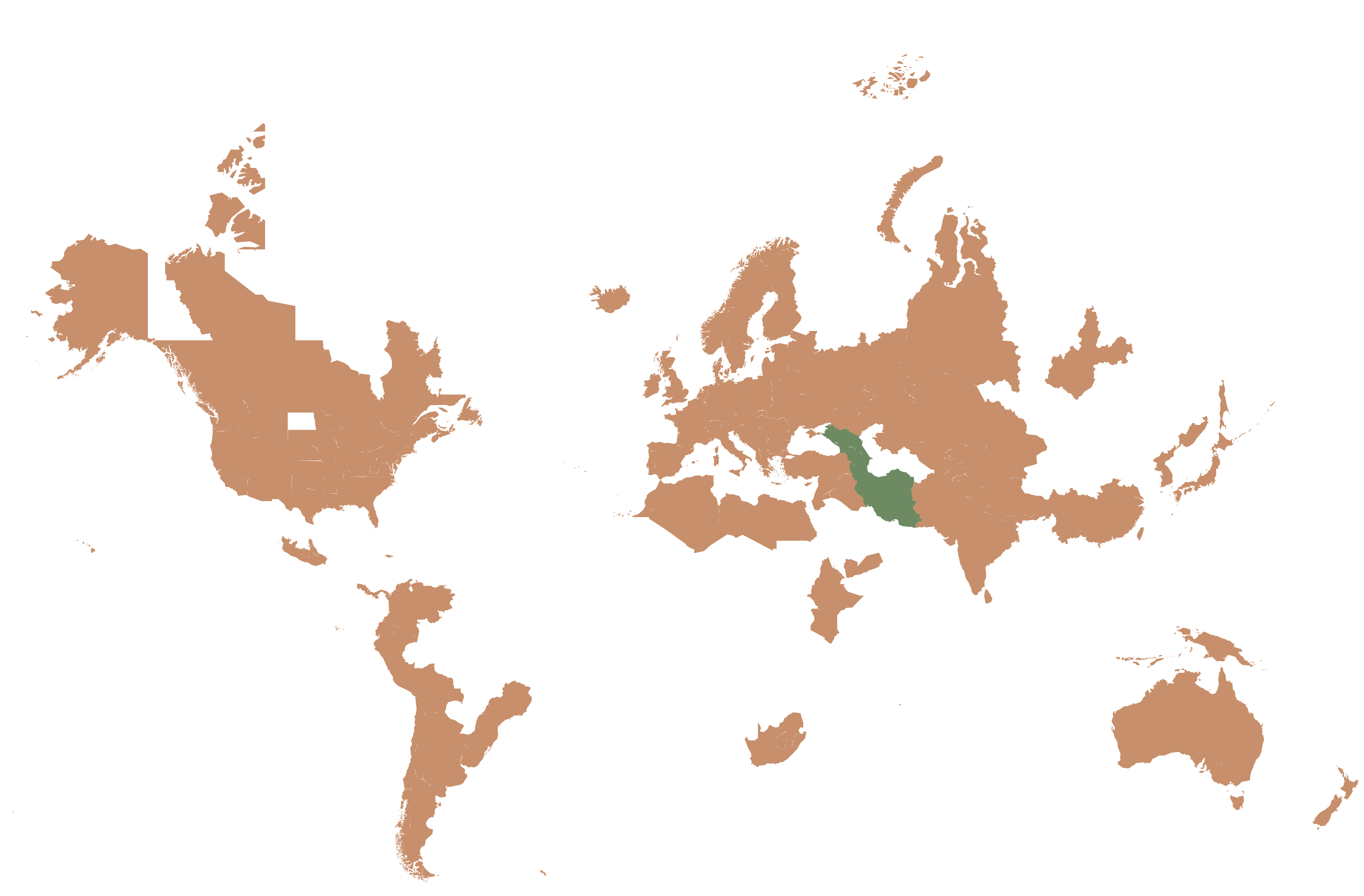
- Native
- Introduced
- Western Asia
History
Veronica persica originated in Iran and the Caucasus and has spread worldwide as a cool-season annual in the past two centuries, aided by agricultural seed contamination. The French botanist Jean-Louis-Marie Poiret described it in 1808. It reached Western Europe by the 1810s through Iranian seed imports and escaped to become a ubiquitous lawn and field weed.
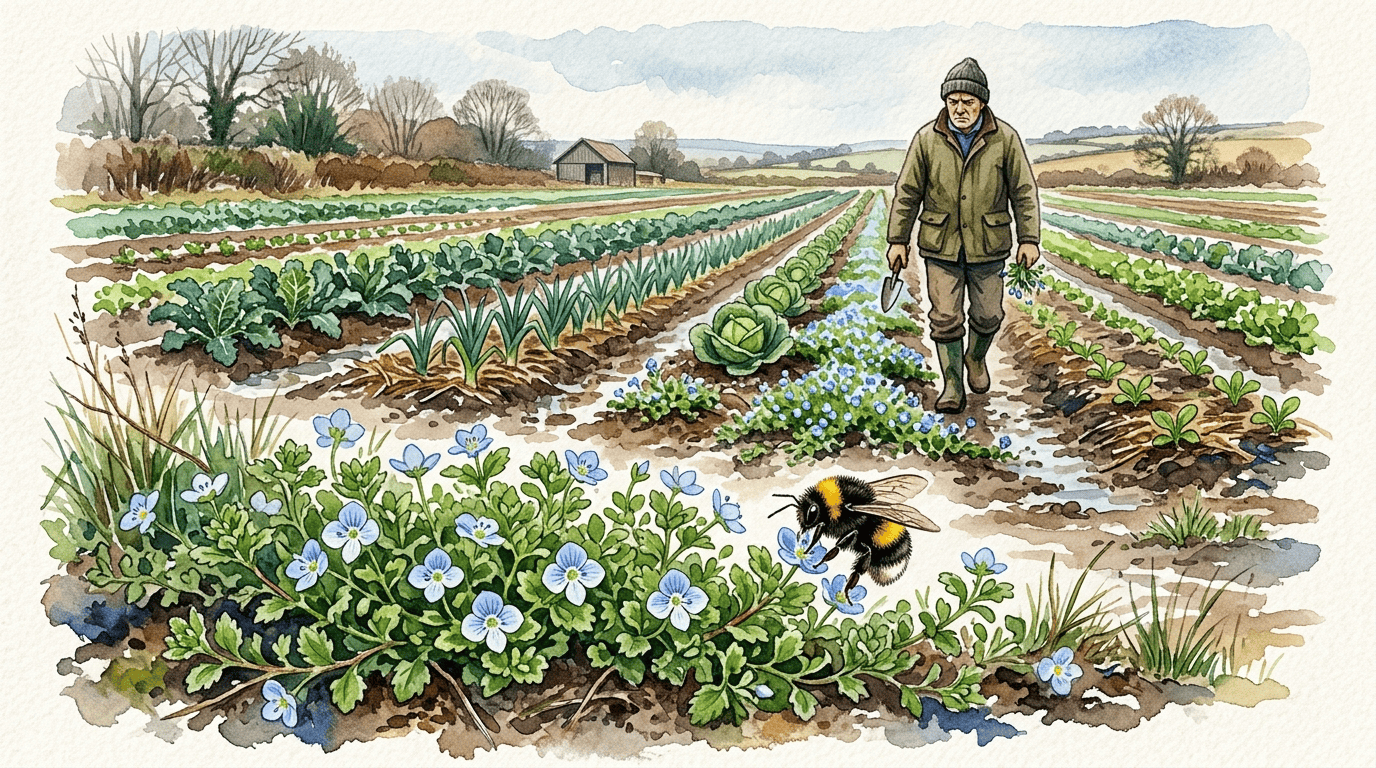
Unlike the older-established Veronica agrestis and V. polita, it has larger, showier flowers that have earned it a curious dual reputation — despised by lawn owners for its winter-green low mats yet genuinely admired by naturalist gardeners for its bright pale-blue quarter-inch blooms appearing from February onward. It is an important late-winter nectar source for bumblebees and honeybees.
Each plant produces over 7000 seeds that persist for decades in soil seed banks. Native to Iran and the Caucasus region, spread worldwide in the 1800s with crop seed and is now a universal agricultural and lawn weed. Despite its beauty, it is among the most difficult cool-season weeds in American vegetable gardens and winter wheat fields.
Symbolism & meaning
What It Symbolizes
Bird's-Eye Speedwell scatters little sky across late winter lawns, each tiny flower a clear, sky-blue glimpse from a problem plant. Beautiful and stubborn at once, it embodies the awkward blessing of a beautiful invader in low-mow turf. In its bright, disobedient stars, the line between weed and wildflower wobbles thoughtfully.
- Little sky — tiny sky-blue flowers dot winter lawns
- Beautiful invader — lovely flowers on a problematic weed
Where the Name Comes From
'Veronica' possibly from St. Veronica who wiped Christ's face, or from Latin 'vera-unica' meaning true-unique; 'persica' means Persian, for the native region.
Uses & Fun Facts
- Tiny sky-blue flowers offer minor early-season pollinator nectar
Related plants
More Veronica plants
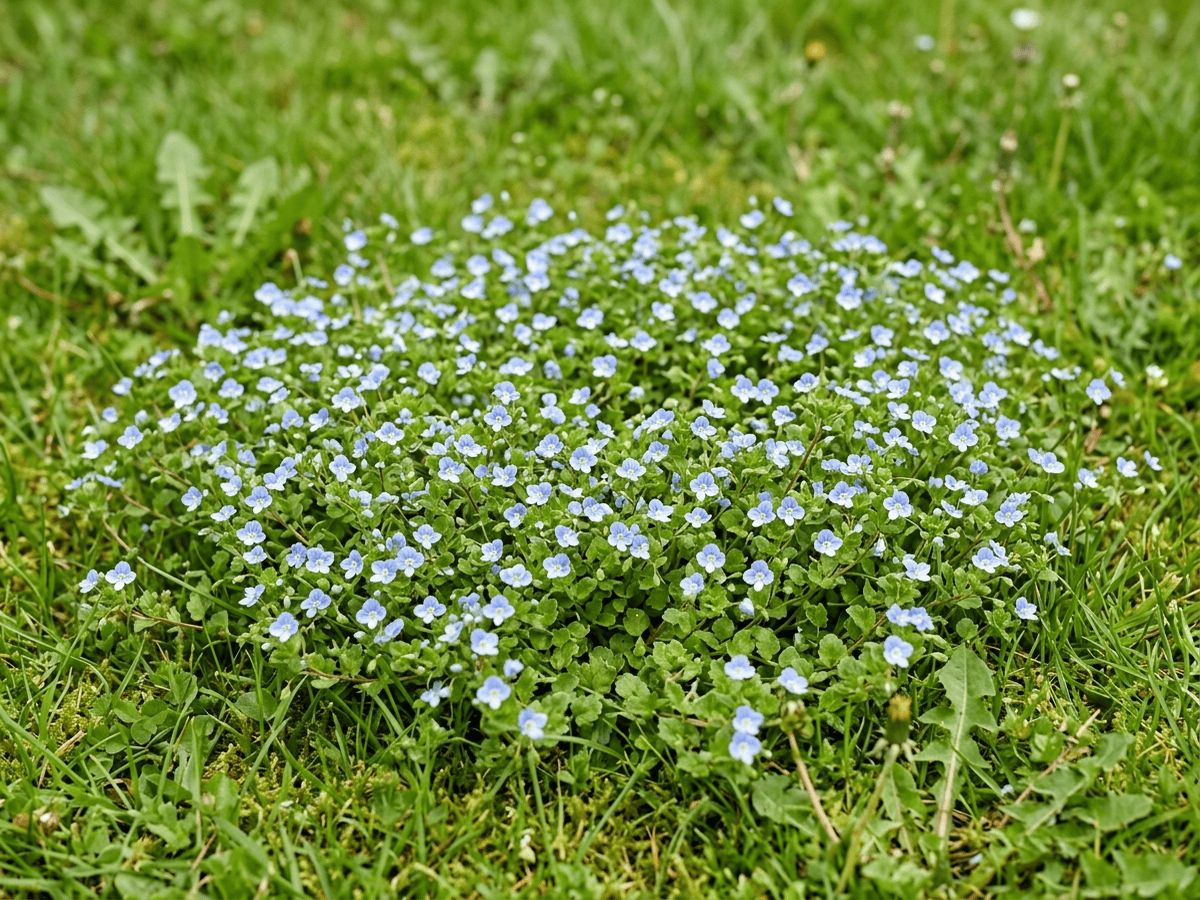 Slender SpeedwellVeronica filiformis
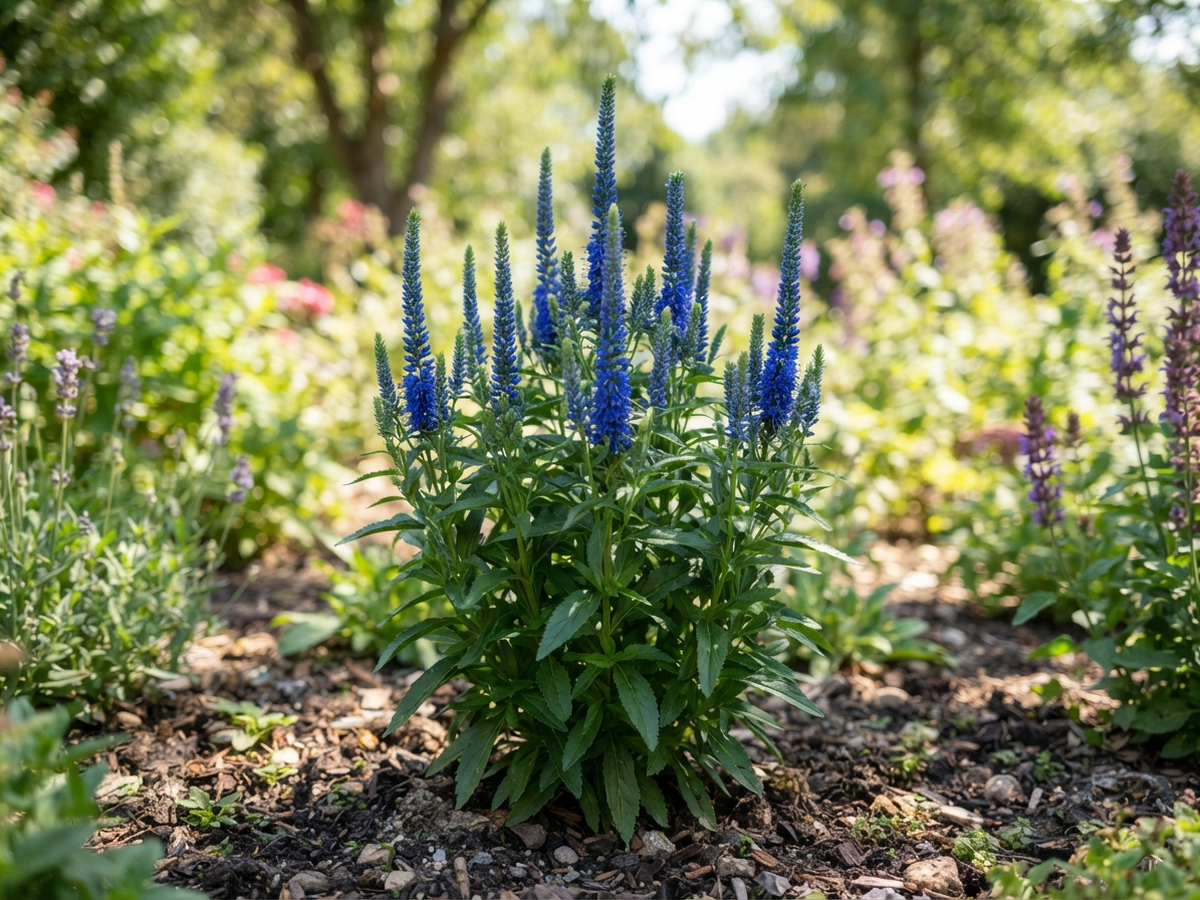 Longleaf SpeedwellVeronica longifolia
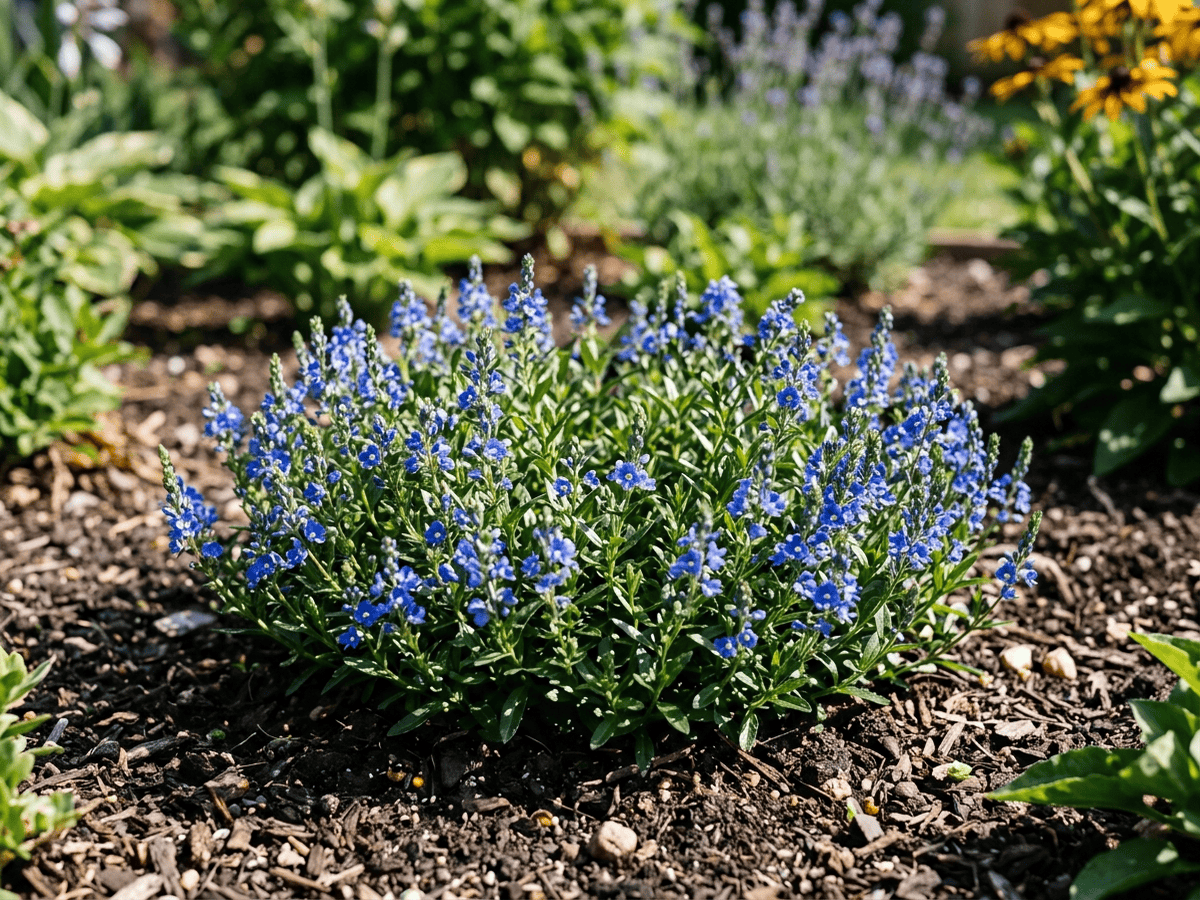 Prostrate SpeedwellVeronica prostrata
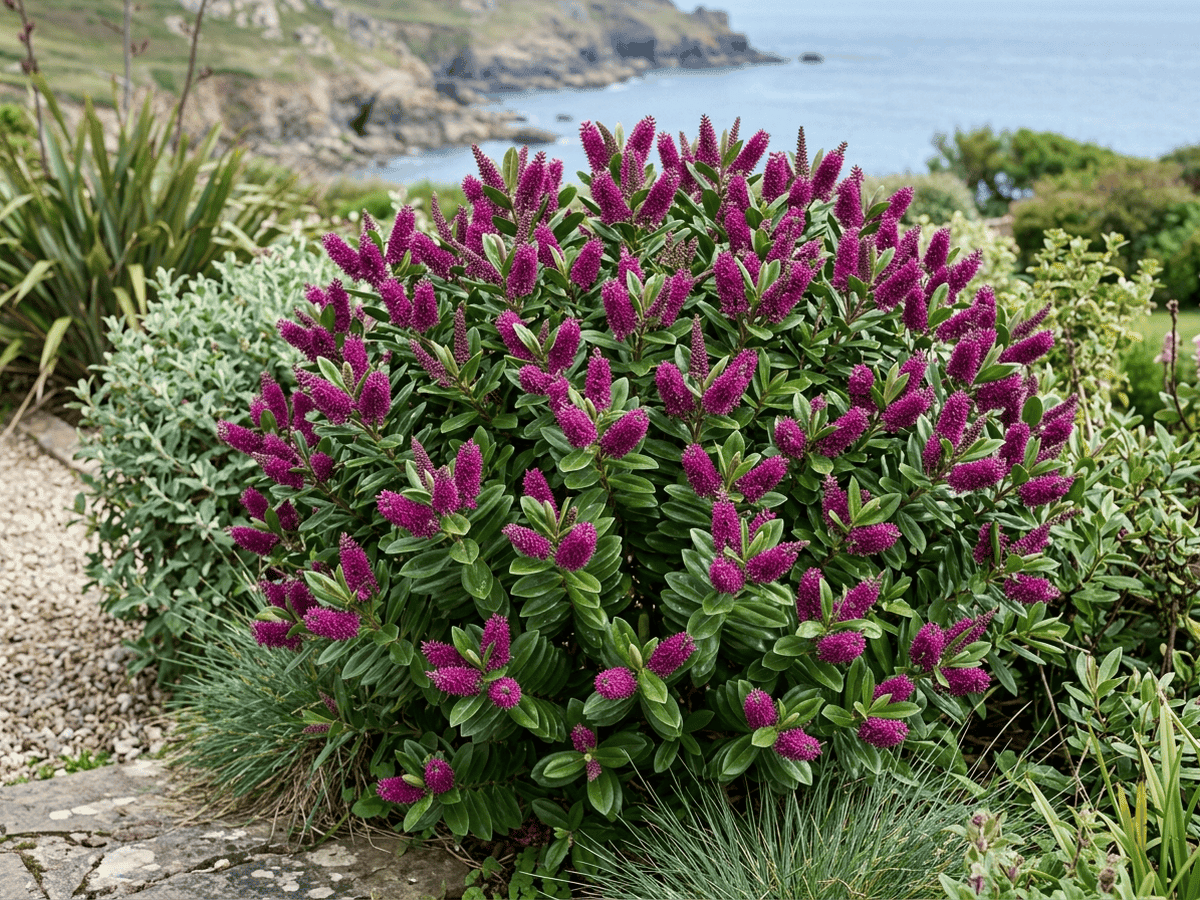 Showy SpeedwellVeronica speciosa
Plants with similar care
 Chinese AbeliaAbelia chinensis
 Fragrant AbeliaAbelia mosanensis
 Large-Flowered AbeliaAbelia uniflora
 Glossy AbeliaAbelia x grandiflora
Frequently asked questions
How often should I water Bird's-Eye Speedwell?
In summer, water about every 5 days; in winter, about every 14 days. Adjust for heat, pot size and drainage.
How much light does Bird's-Eye Speedwell need?
Full sun: 6+ hrs direct. Watch the leaves — scorching or stretching means the light needs adjusting.
Is Bird's-Eye Speedwell toxic to cats or dogs?
No toxicity has been reported for this plant. Still, it is wise to keep pets from chewing on any houseplant. Educational information, not medical or veterinary advice. If exposure is suspected, contact a doctor or veterinarian.
Is Bird's-Eye Speedwell easy to grow?
Yes — it is considered an easy, beginner-friendly plant.
When does Bird's-Eye Speedwell bloom?
It typically blooms Dec–May in the Northern Hemisphere.
YardMate
Identify any plant in seconds
Snap a photo — YardMate names the plant, diagnoses problems, and reminds you when to water.
Download on the App Store