 YardMate


Calla Lily
Zantedeschia aethiopica
Medium · Some experienceAbout Calla Lily
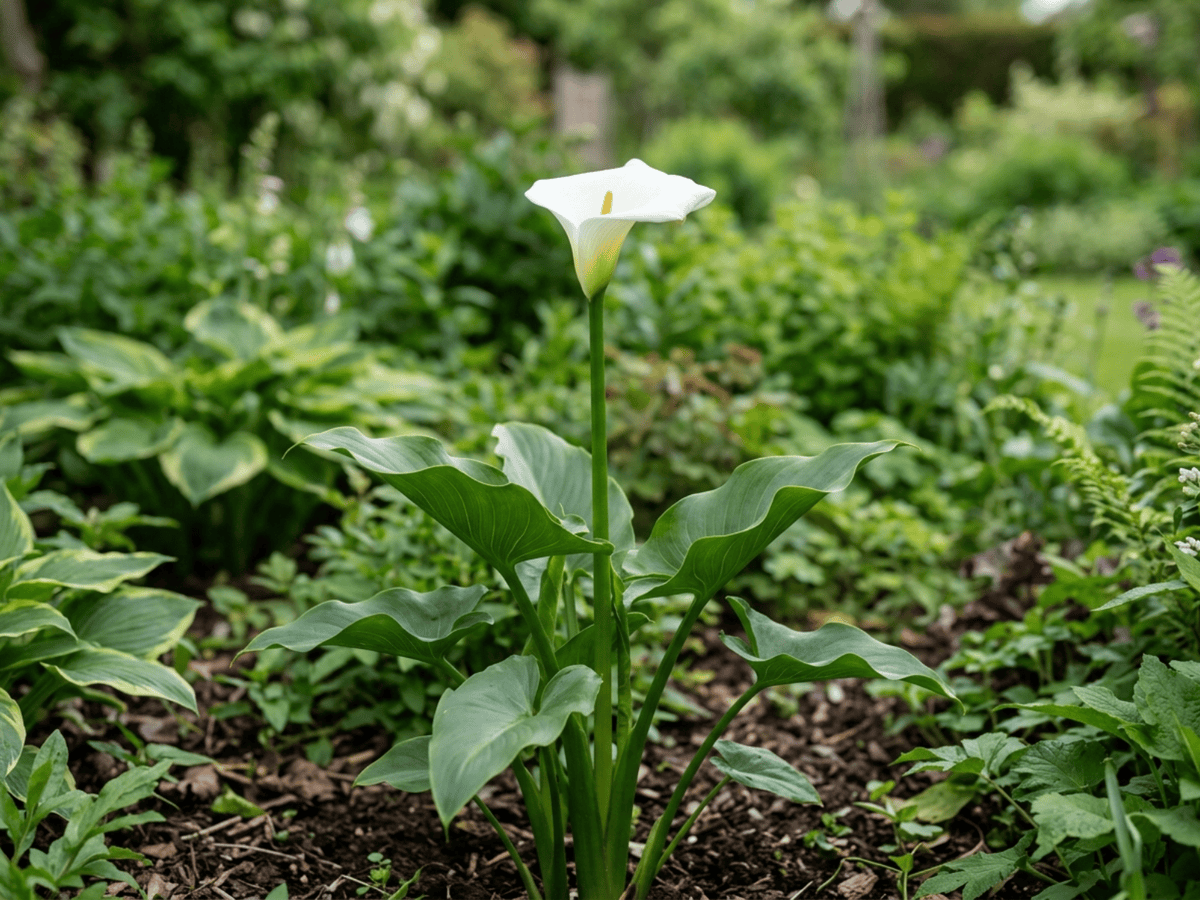
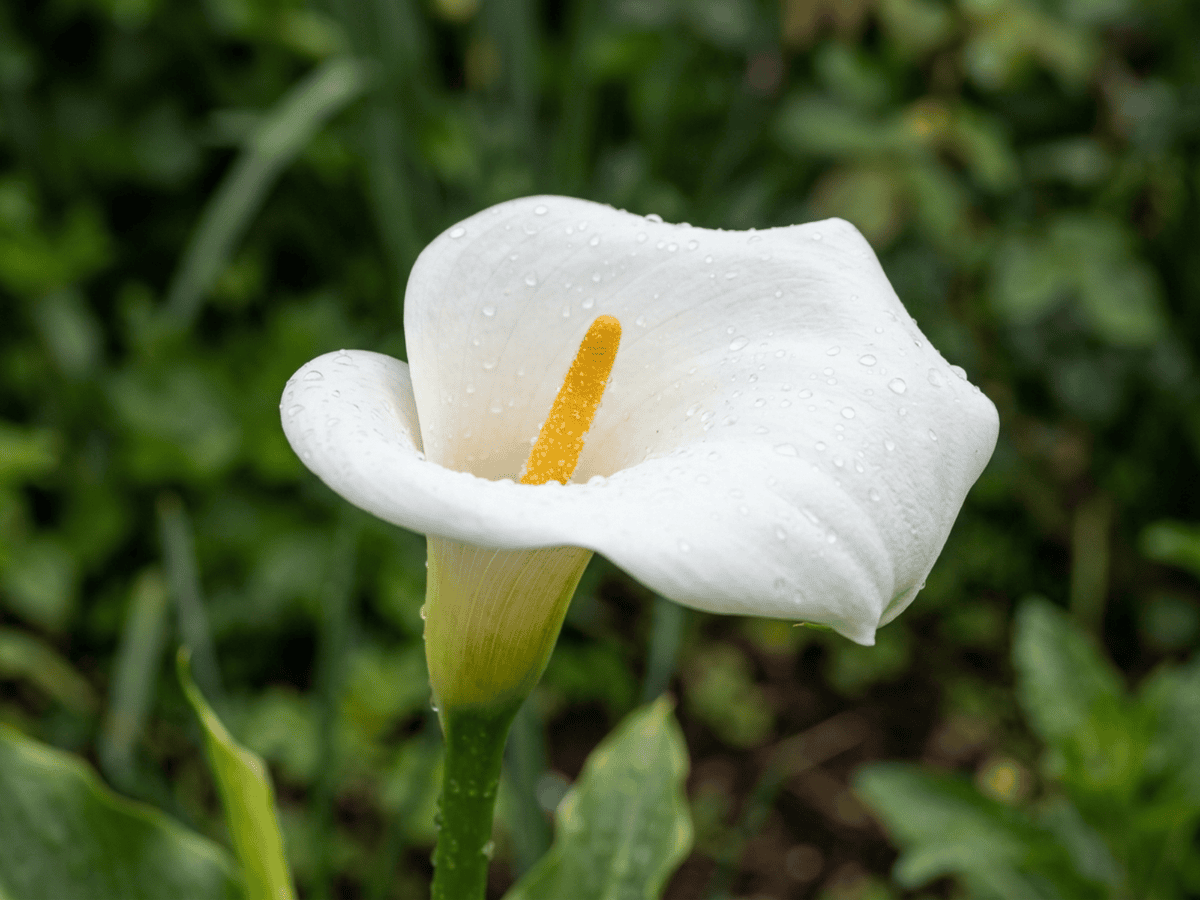
Zantedeschia aethiopica, the calla lily or arum lily, is a majestic semi-aquatic perennial from southern Africa, celebrated for its pure white funnel-shaped spathes surrounding a golden-yellow spadix. Growing 60–100 cm tall with large, glossy arrow-shaped leaves, it thrives in moist to waterlogged soils along streams and ponds. Despite its common name, it is not a true lily but belongs to the arum family. The plant blooms prolifically from late spring through summer and is evergreen in mild climates. It has become one of the world's most recognized flowers in bridal bouquets and funeral arrangements, symbolizing purity and rebirth. In its native South Africa, Australia, and New Zealand, it can become invasive in favorable conditions. The entire plant contains calcium oxalate crystals, making it toxic if ingested.
- Cut-flower
- Deer-resistant
How to care for Calla Lily
Watering
- Springevery 3 days
- Summerevery 2 days
- Fallevery 5 days
- Winterevery 14 days
Soil · Chunky & airy
- Top dressingBark chips10%
- Main mixBark + potting soil + perlite 1:1:170%
- DrainageLECA20%
Chunky pieces hold air pockets open so thick roots don't suffocate.
FERTILIZER
Balanced Feed 14-14-14
An even feed covers all three needs at once, keeping leaves, roots and blooms moving together with nothing pushed out of balance.
- Nitrogen · Leaves
- Phosphorus · Roots + Blooms
- Potassium · Strength
- Springevery 30 days
- Summerevery 30 days
At a Glance
- NativeAfrica
- Height2–3 ft (0.6–0.9 m)
- Spread1–2 ft (0.3–0.6 m)
- Flower colorWhite, Yellow, Pink, Purple
- Foliage colorGreen, Variegated
- SoilLoamy, Moisture-retentive
- LocationsYard · Indoor · Balcony
Bloom time
BLOOM CYCLE
Peak bloom
Mar–Aug
Classic white spathes bloom spring through summer; remove spent flowers to prolong blooming
Fragrance
LIGHT FRAGRANCE
The flowers have a light sweet scent.
Toxicity
Humans Moderate · Pets Moderate
insoluble calcium oxalate raphides
Moderate
- All
- Ingestion
EXPOSURE Eating any part of the plant.
EFFECT Calcium oxalate raphides: oral burning, swelling of mouth and throat, drooling.
NOTE Documented concern for humans: Calcium oxalate raphides: oral burning, swelling of mouth and throat, drooling.
Moderate
- All
- Ingestion
EXPOSURE Eating any part of the plant.
EFFECT Oral pain, drooling, vomiting.
NOTE ASPCA lists calla lily as toxic to dogs and cats — typical Araceae oxalate toxicity.
Moderate
- All
- Ingestion
EXPOSURE Eating any part of the plant.
EFFECT Same as dogs.
NOTE ASPCA lists calla lily as toxic to dogs and cats — typical Araceae oxalate toxicity.
Educational information, not medical or veterinary advice. If exposure is suspected, contact a doctor or veterinarian.
DISTRIBUTION


- Native
- Introduced
- Africa
History
Zantedeschia aethiopica is native to southern Africa — primarily South Africa (where it is called "arum lily" and is common in the western and eastern Cape regions) and Lesotho — and has naturalized across much of the world after centuries of ornamental cultivation. The species epithet "aethiopica" is an old European botanical Latin term meaning "of Africa south of the equator" (not specifically Ethiopia). Despite its English common names "calla lily" and "arum lily," the plant is neither a true calla (genus Calla, family Araceae — a quite different aquatic) nor a true lily (Liliaceae) — it is its own distinct genus in the arum family, Araceae.
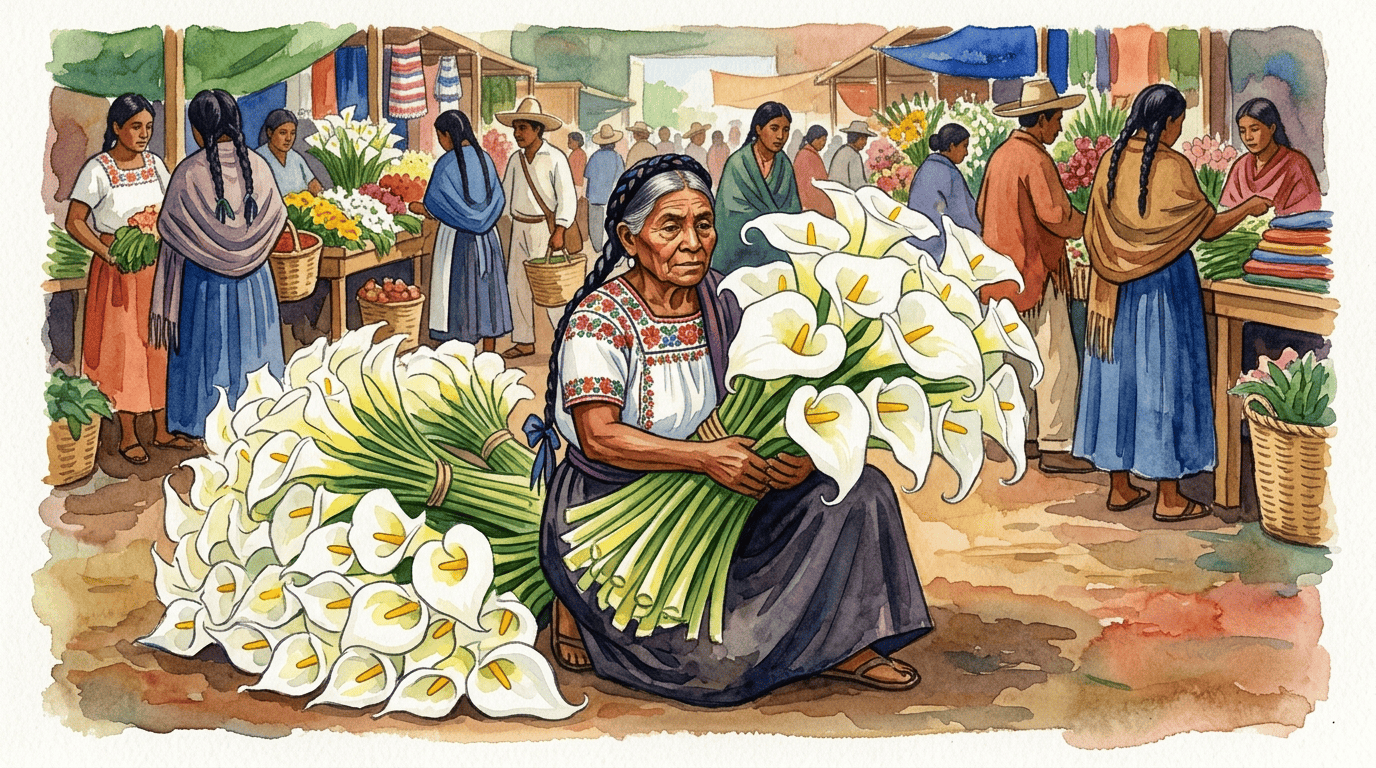
The plant was introduced to European horticulture in the 17th century and has since become one of the most universally cultivated cut flowers in the world, with commercial production concentrated in the Netherlands, California, and Colombia. Its elegant simple white spathe (the "flower" — actually a modified leaf-like bract) surrounding a bright yellow spadix made it the signature flower motif of Art Nouveau (turn of the 20th century) and Art Deco (1920s-30s) floral design, and of American artist Diego Rivera's famous "Flower Seller" paintings of the 1930s-40s.
In New Zealand's North Island and in coastal California the species has become a moderate invasive of damp woodland and streamside habitat. All parts contain calcium oxalate and are toxic if chewed.
Symbolism & meaning
What It Symbolizes
The calla lily is purity in living sculpture — its pristine white spathe folded around a single golden spadix, the very image of innocence and virtue in countless wedding bouquets. Yet it carries rebirth in its other life, regularly chosen for funerals as an emblem of the soul's resurrection. Elegance ties both meanings together, the sculptural form bringing sophistication and grace to every occasion it attends.
- Purity — the pristine white spathe represents innocence and virtue
- Rebirth — commonly used in funerals to symbolize the soul's resurrection
- Elegance — its sculptural form embodies sophistication and grace
Where the Name Comes From
The name Calla Lily describes its lily-like flowers. Named after Italian botanist Giovanni Zantedeschi (1773–1846). 'Aethiopica' is an old botanical term loosely meaning 'from Africa.'
Uses & Fun Facts
- Elegant white spathes prized for weddings and formal bouquets
- Glossy arrow-shaped foliage with pure white flower spathes
- Rhizomatous calla grown in pots in cool conservatories
Related plants
More Zantedeschia plants
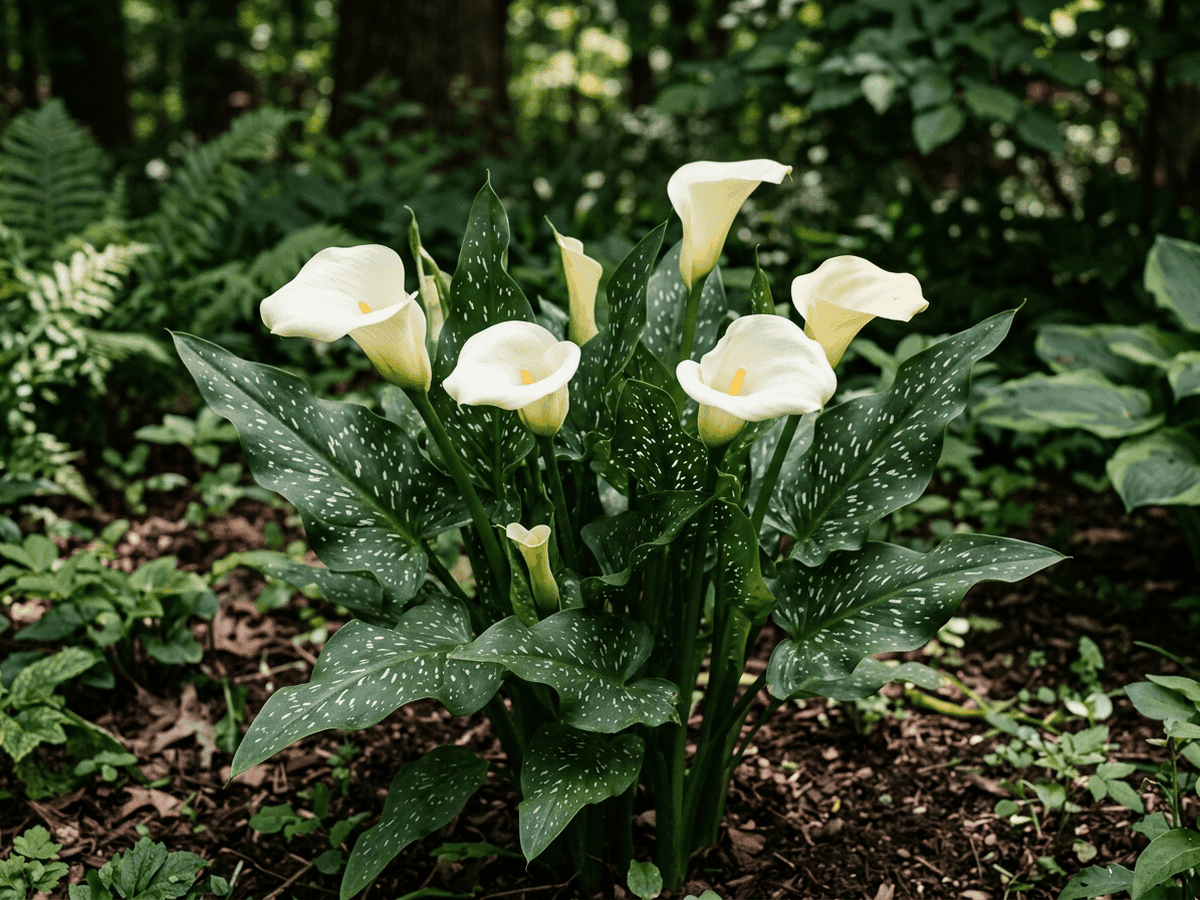 Spotted Calla LilyZantedeschia albomaculata
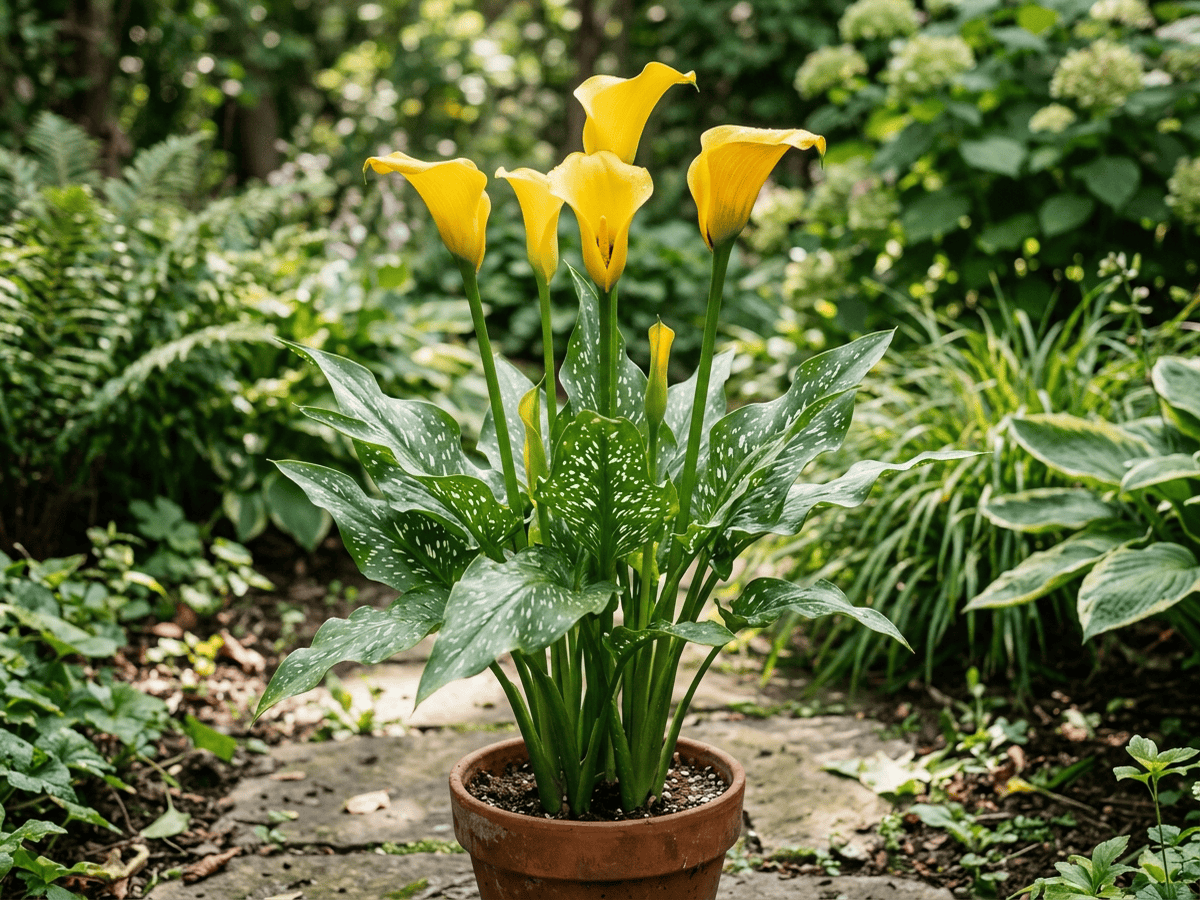 Yellow ArumZantedeschia elliottiana
 Pink ArumZantedeschia rehmannii
Plants with similar care
 Japanese MapleAcer palmatum
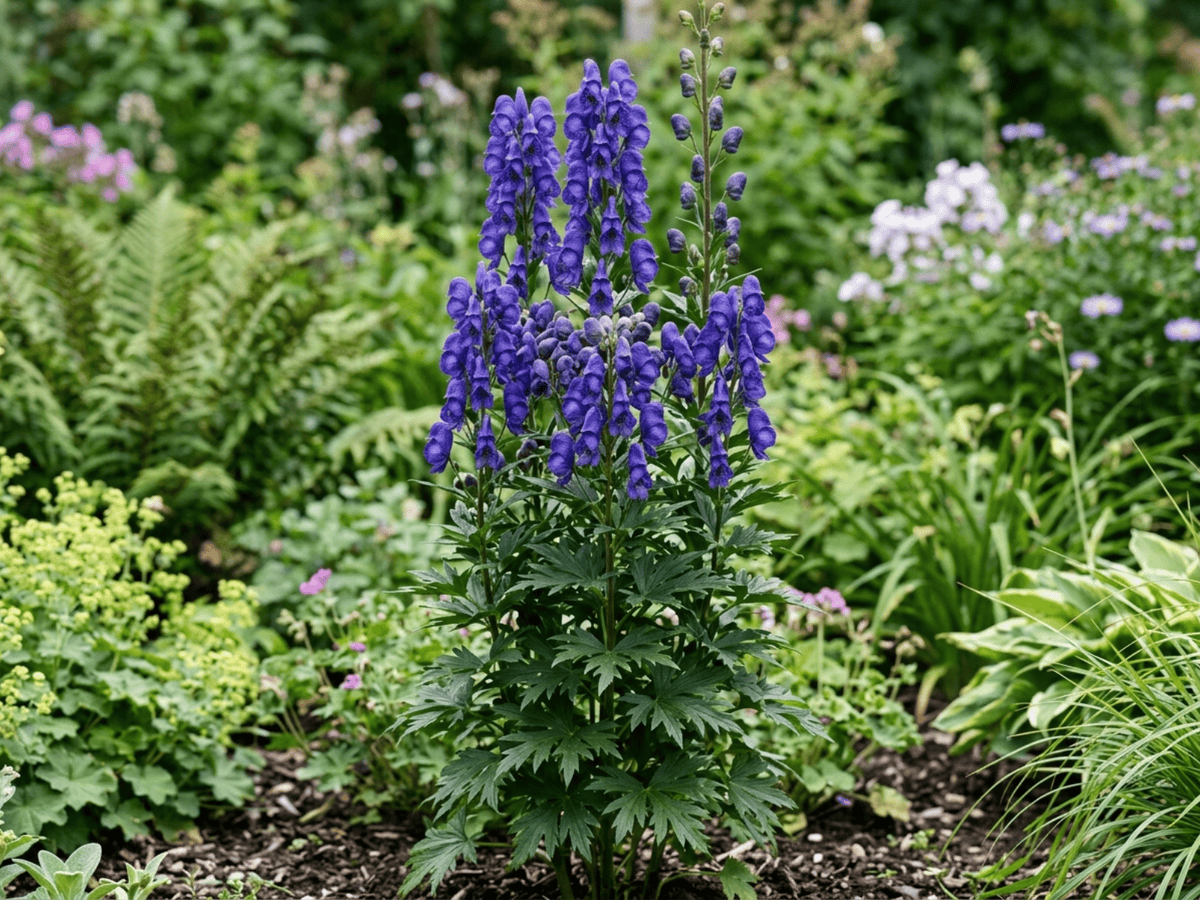 Azure MonkshoodAconitum carmichaelii
 Florida HobblebushAgarista populifolia
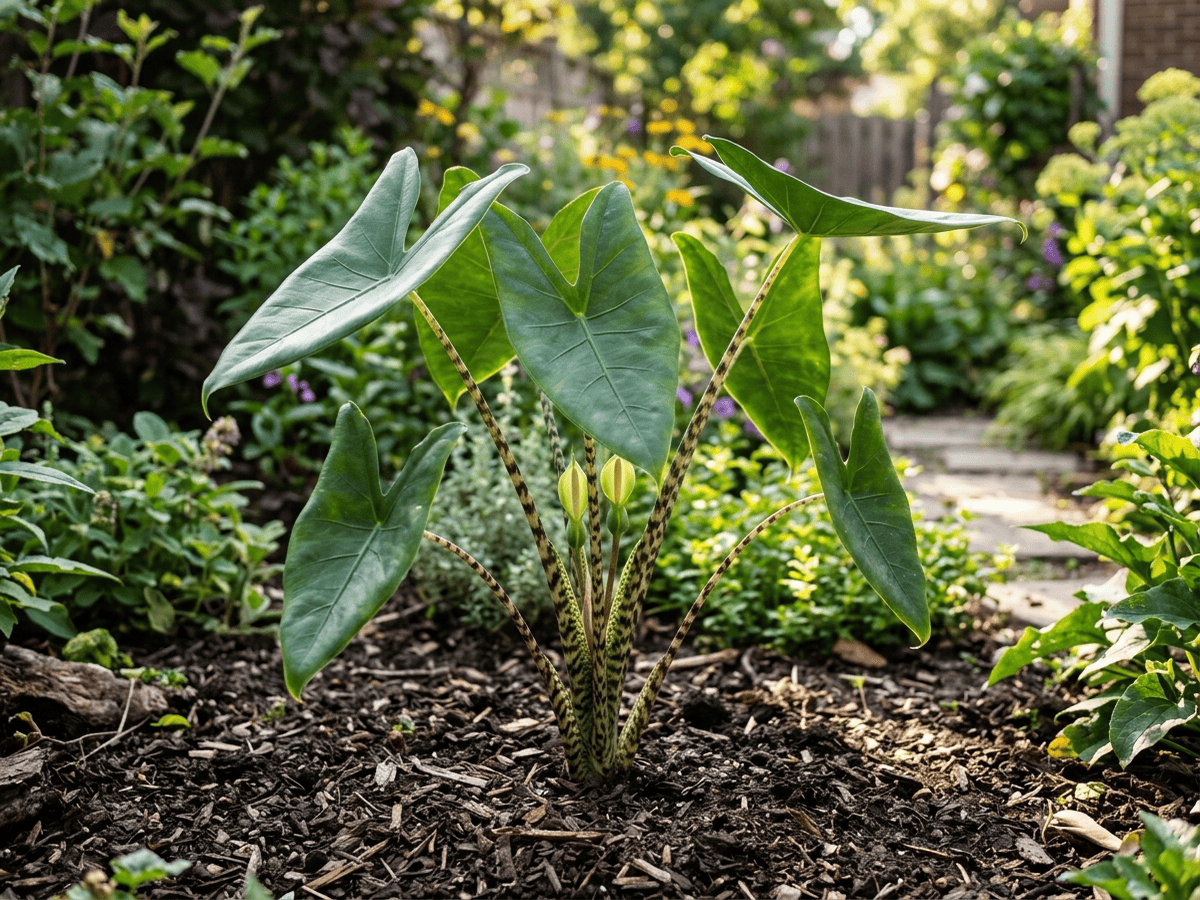 Alocasia zebrinaAlocasia zebrina
Frequently asked questions
How often should I water Calla Lily?
In summer, water about every 2 days; in winter, about every 14 days. Adjust for heat, pot size and drainage.
How much light does Calla Lily need?
Part shade: 2–4 hrs direct. Watch the leaves — scorching or stretching means the light needs adjusting.
Is Calla Lily toxic to cats or dogs?
Pets Moderate (Dogs Moderate · Cats Moderate) Educational information, not medical or veterinary advice. If exposure is suspected, contact a doctor or veterinarian.
Is Calla Lily easy to grow?
It is moderately demanding: a good choice once you have a little experience.
Can Calla Lily be grown indoors?
Yes, it adapts well to indoor growing given the right light.
When does Calla Lily bloom?
It typically blooms Mar–Aug in the Northern Hemisphere.
YardMate
Identify any plant in seconds
Snap a photo — YardMate names the plant, diagnoses problems, and reminds you when to water.
Download on the App Store