 YardMate
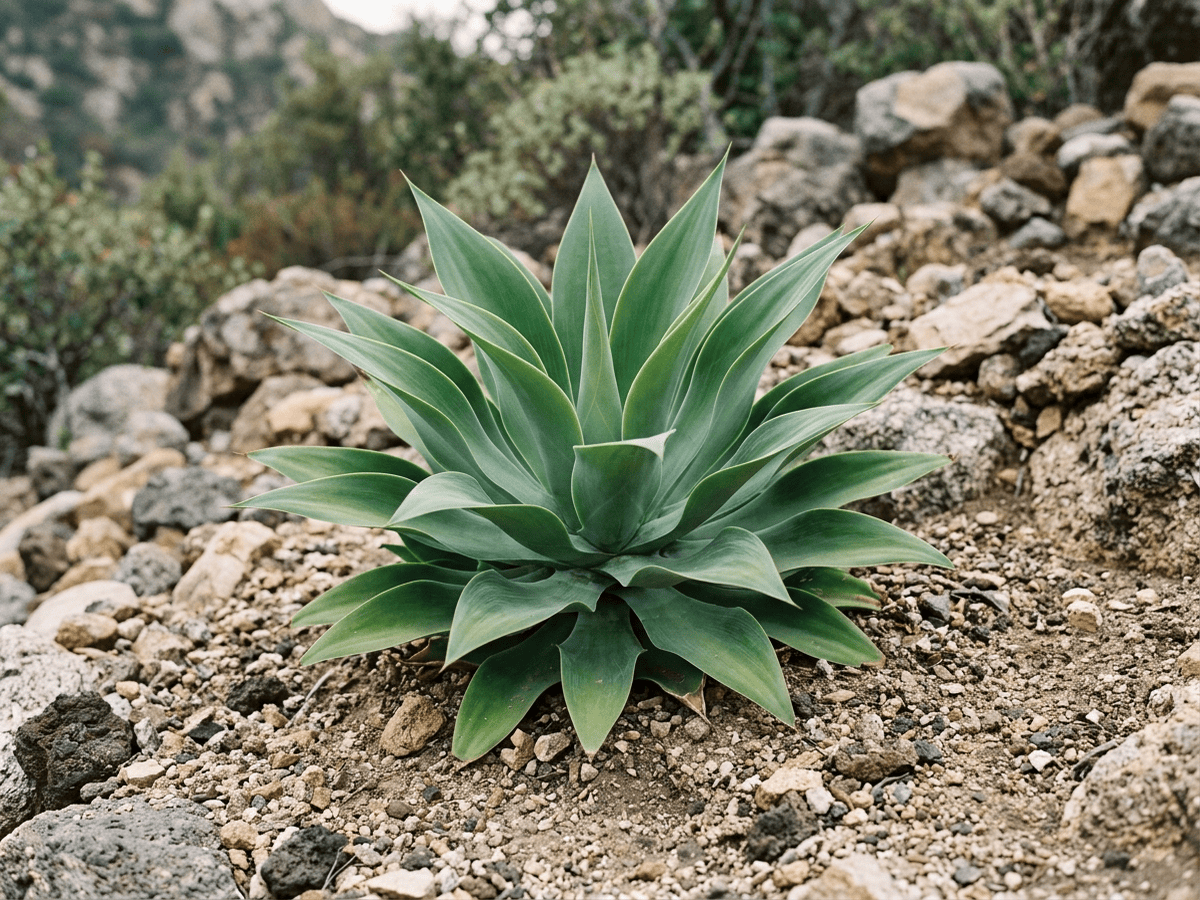


Swan-Neck Agave
Agave attenuata
Easy · Beginner friendlyAbout Swan-Neck Agave
The Foxtail Agave is a soft, spineless agave from the highlands of central Mexico, prized for its approachable elegance and dramatic flowering display. Unlike most agaves, it lacks the fearsome terminal spine, making it garden- and family-friendly. Its pale gray-green rosette of gracefully recurving leaves reaches about four feet across, often perched atop a short trunk that develops with age. The common name comes from its extraordinary flower stalk — a dense, curved spike up to ten feet long that arches outward like a giant foxtail, packed with greenish-yellow flowers. While technically monocarpic, it produces abundant offsets both at the base and along the flower stalk, ensuring the colony persists. It cannot tolerate hard frost, limiting outdoor cultivation to mild coastal and subtropical climates. In frost-free areas it has become one of the most popular landscape agaves, lining driveways, filling median strips, and gracing resort gardens from California to Australia.
- Drought-tolerant
- Architectural
How to care for Swan-Neck Agave
Watering
- Springevery 14 days
- Summerevery 14 days
- Fallevery 21 days
- Winterevery 45 days
Soil · Fast-draining
- Main mixSand + pumice + soil 1:1:150%
- DrainagePumice / gravel50%
Keep grit at half the mix or more — this soil is meant to dry out fast.
FERTILIZER
Balanced Feed 14-14-14
An even feed covers all three needs at once, keeping leaves, roots and blooms moving together with nothing pushed out of balance.
- Nitrogen · Leaves
- Phosphorus · Roots + Blooms
- Potassium · Strength
- Springevery 60 days
- Summerevery 60 days
At a Glance
- NativeNorth America
- Height4–5 ft (1.2–1.5 m)
- Spread6–8 ft (1.8–2.4 m)
- Flower colorGreen, Yellow
- Foliage colorGreen, Blue-green
- SoilSandy, Well-drained
- LocationsYard
Fragrance
NO FRAGRANCE
No notable fragrance.
Toxicity
Humans Moderate · Pets Moderate
saponins and calcium oxalate raphides
Moderate
- Sap
- Contact
EXPOSURE Touching sap.
EFFECT Sap can cause dermatitis in sensitive individuals and less severe than A. americana.
NOTE Documented concern for humans: Sap can cause dermatitis in sensitive individuals and less severe than A. americana.
Moderate
- All
- Ingestion
EXPOSURE Eating any part of the plant.
EFFECT Vomiting, diarrhea, skin irritation.
NOTE ASPCA lists Agave as toxic to pets.
Moderate
- All
- Ingestion
EXPOSURE Eating any part of the plant.
EFFECT Vomiting, diarrhea, skin irritation.
NOTE ASPCA lists Agave as toxic to pets.
Educational information, not medical or veterinary advice. If exposure is suspected, contact a doctor or veterinarian.
DISTRIBUTION


- Native
- Introduced
- North America
History

Agave attenuata is native to central Mexico, particularly the states of Jalisco, Hidalgo, and México. Described by Salm-Dyck in 1834, it differs from most of the genus in lacking terminal spines and having softer, non-toothed leaf margins — a trait that made it a landscape favorite for areas with foot traffic, children, and pets. The species' dramatic arching flower stalk, reaching 3-4 meters and curving gracefully rather than standing upright, inspired the common name "fox tail."
Mid-20th century California designers including Lotusland and Roger's Gardens popularized it widely; its tolerance for coastal conditions and mild frost made it a fixture of Mediterranean-climate modernist architecture from Los Angeles to the Australian Gold Coast to the French Riviera. Agave attenuata was first described by Augustin Pyramus de Candolle around 1834 but remained relatively obscure until the 20th century.
Ironically, while potentially rare in the wild, it has become one of the most widely cultivated agaves globally. Its lack of dangerous spines made it the first agave embraced by mainstream landscape designers, and it now appears in countless public spaces from Beverly Hills to Sydney. Unlike most agaves it can tolerate some shade.
Symbolism & meaning
What It Symbolizes
The Swan-Neck Agave evokes grace — a rare softness in a famously spiny family, its spineless arching form embodying elegance without aggression. Yet it also carries quiet adaptability, thriving in gardens worldwide even as it grows scarce in its native Mexican wilds. Its meaning is gentleness joined to survival: a reminder that strength need not show its thorns.
- Grace — its spineless, flowing form embodies elegance without aggression
- Adaptability — thrives worldwide despite being nearly extinct in the wild
Where the Name Comes From
'Agave' from Greek 'agauos' (noble). 'Attenuata' from Latin 'attenuatus' meaning tapered or narrowed, referring to the gradually tapering leaf tips that lack a terminal spine.
Uses & Fun Facts
- Spineless arching rosette as focal point in coastal Mediterranean gardens
- Drought-tolerant patio specimen in large terracotta pots
- Towering arched flower spike feeds hummingbirds and bats
Related plants
More Agave plants
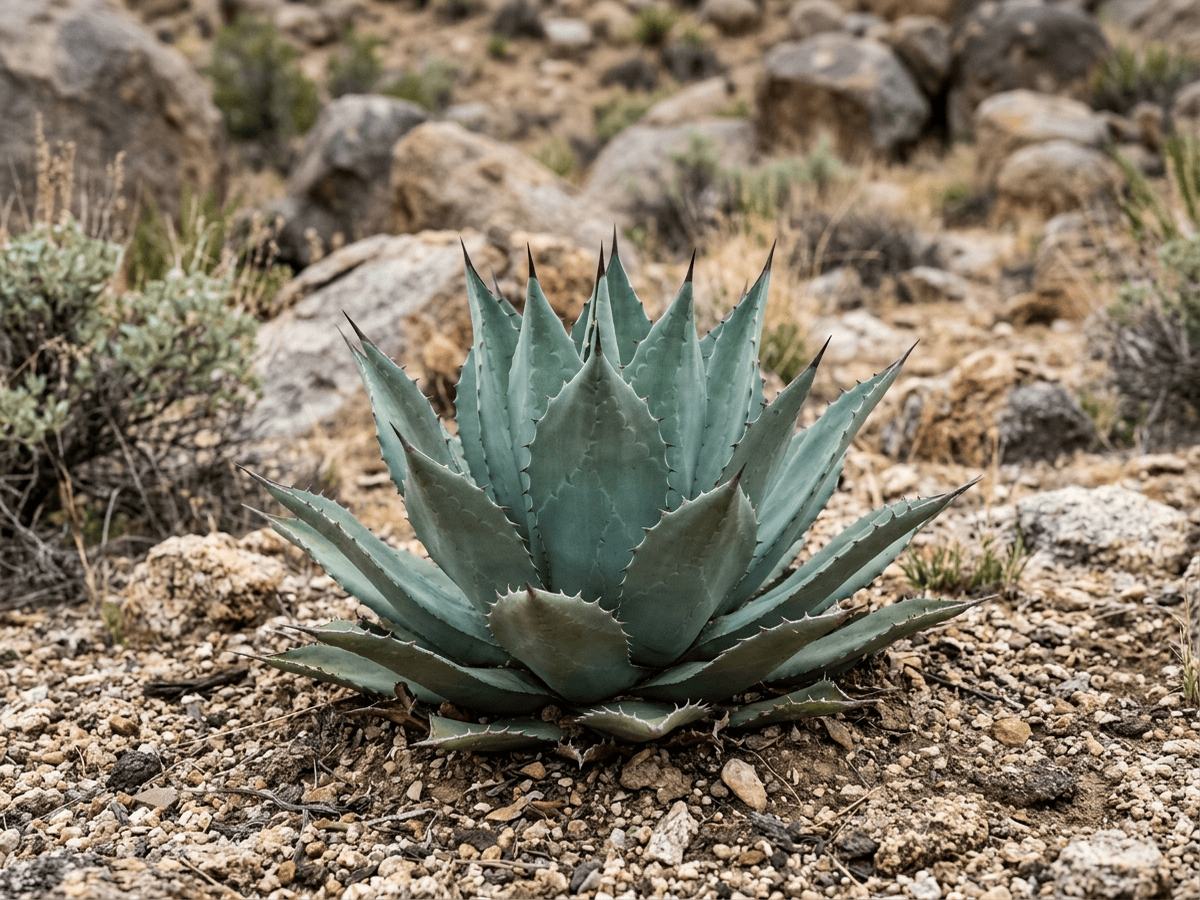 American Century PlantAgave americana
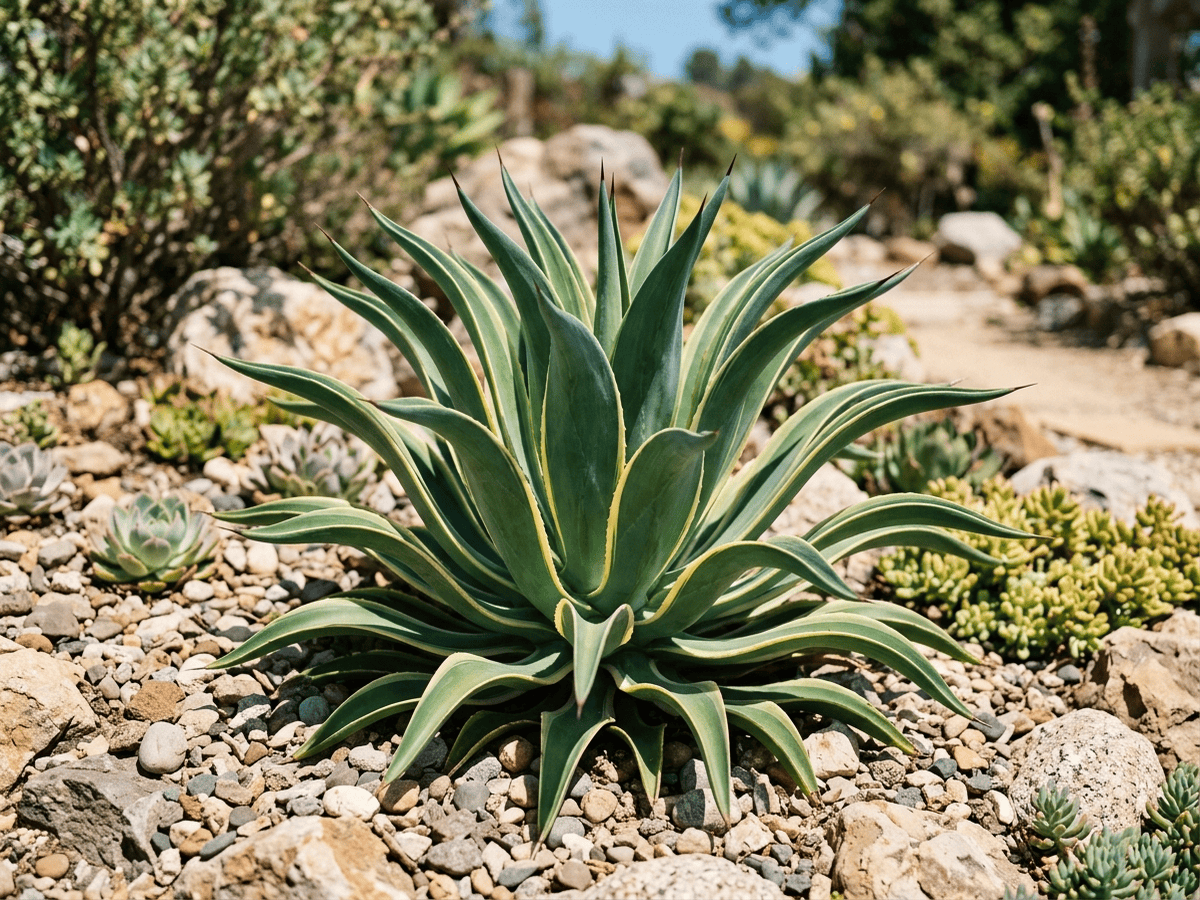 Smooth AgaveAgave desmettiana
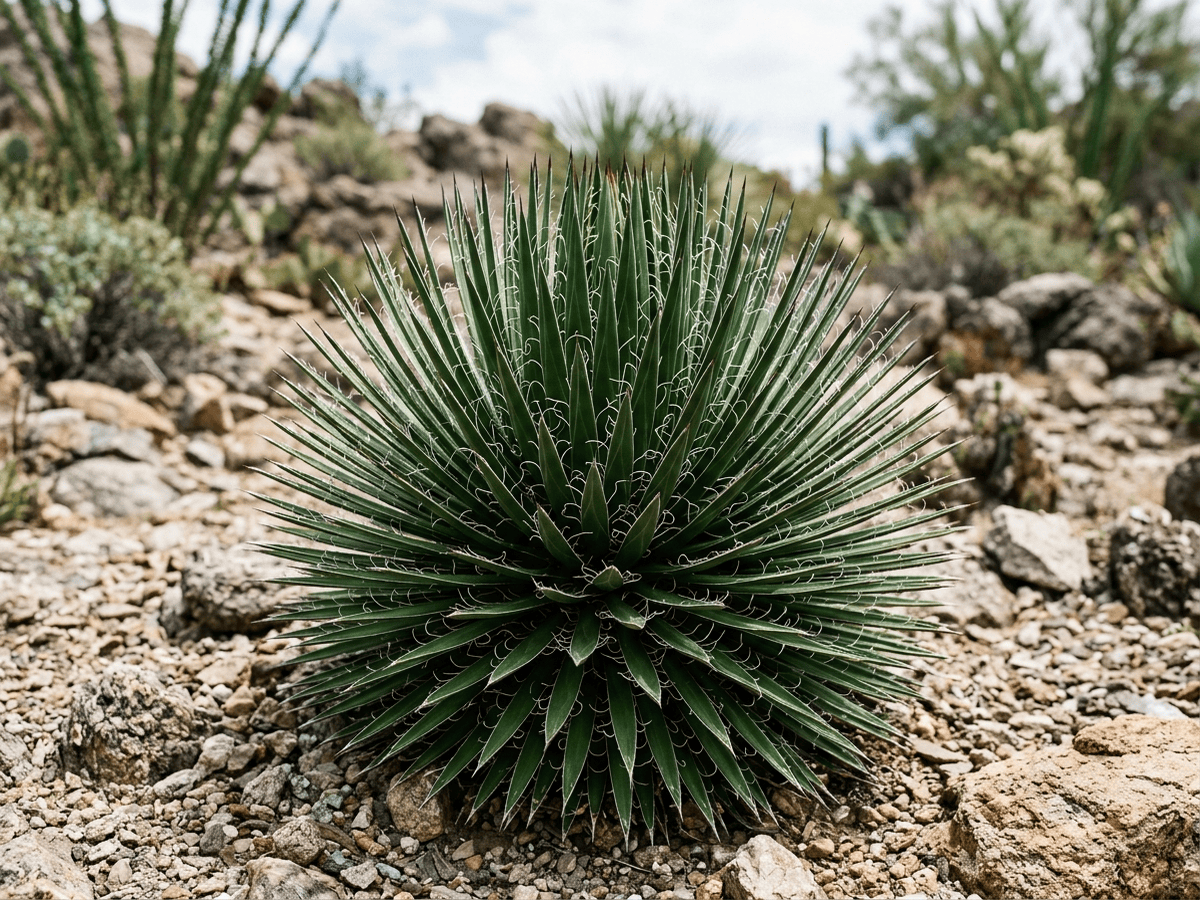 Twin-Flowered AgaveAgave geminiflora
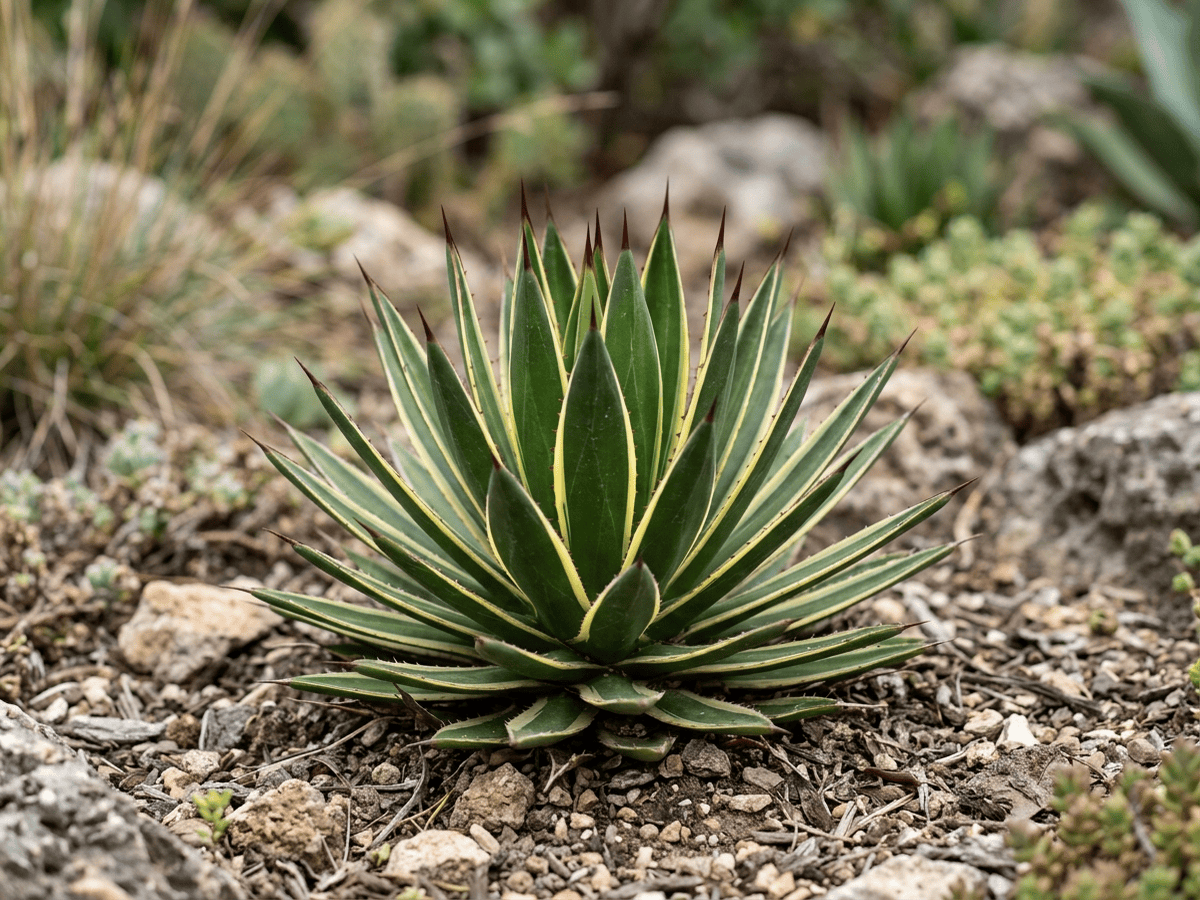 Thorn-Crested AgaveAgave lophantha
Plants with similar care
 Chinese AbeliaAbelia chinensis
 Fragrant AbeliaAbelia mosanensis
 Large-Flowered AbeliaAbelia uniflora
 Glossy AbeliaAbelia x grandiflora
Frequently asked questions
How often should I water Swan-Neck Agave?
In summer, water about every 14 days; in winter, about every 45 days. Adjust for heat, pot size and drainage.
How much light does Swan-Neck Agave need?
Full sun: 6+ hrs direct. Watch the leaves — scorching or stretching means the light needs adjusting.
Is Swan-Neck Agave toxic to cats or dogs?
Pets Moderate (Dogs Moderate · Cats Moderate) Educational information, not medical or veterinary advice. If exposure is suspected, contact a doctor or veterinarian.
Is Swan-Neck Agave easy to grow?
Yes — it is considered an easy, beginner-friendly plant.
YardMate
Identify any plant in seconds
Snap a photo — YardMate names the plant, diagnoses problems, and reminds you when to water.
Download on the App Store