 YardMate
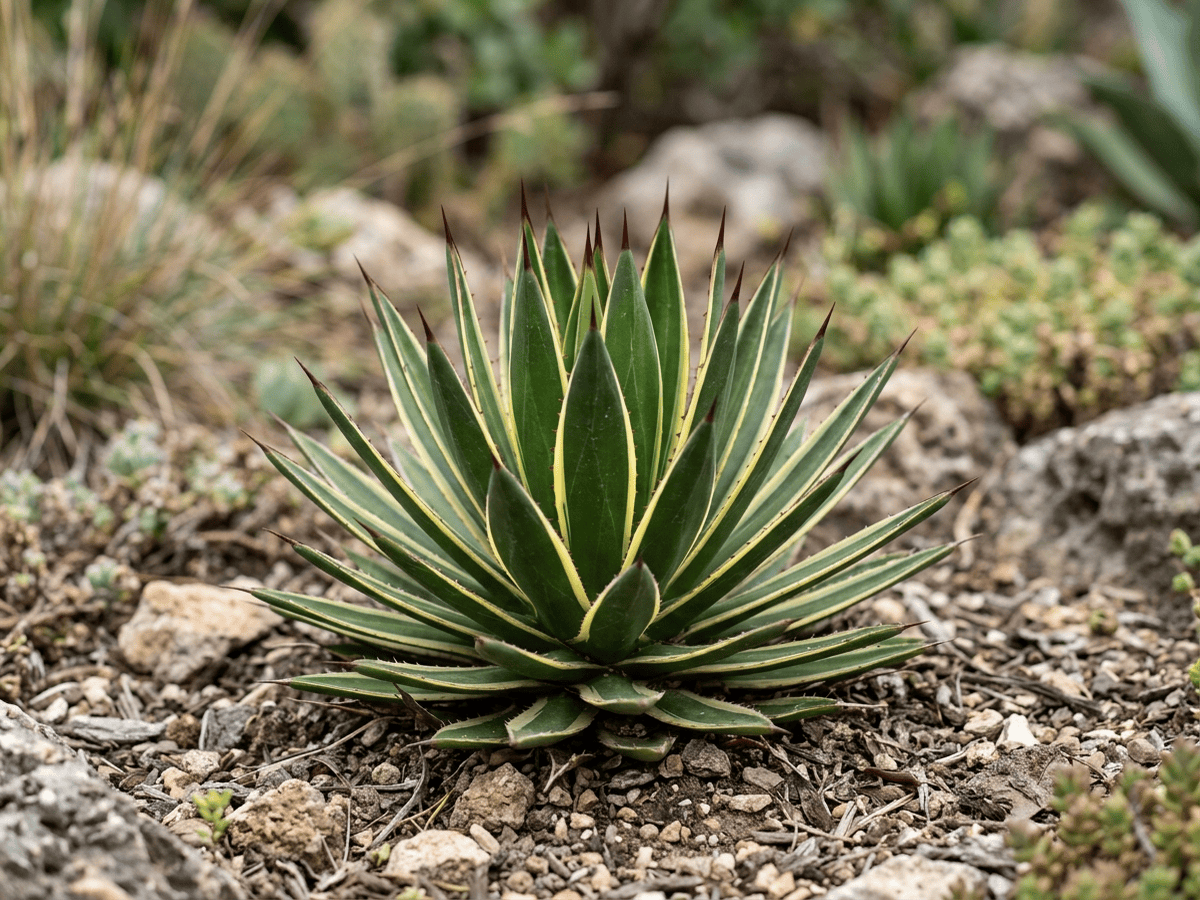


Thorn-Crested Agave
Agave lophantha
Easy · Beginner friendlyAbout Thorn-Crested Agave
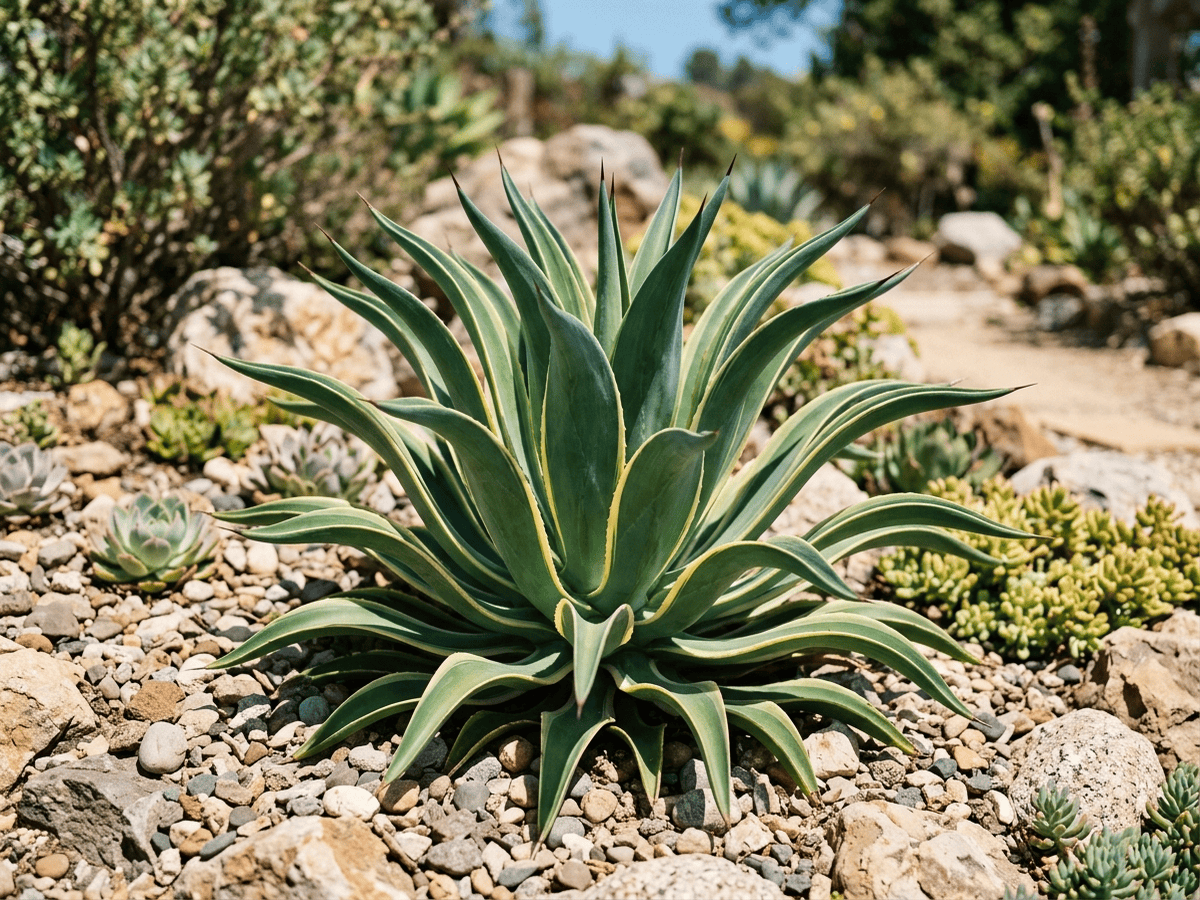
Thorn-Crested Agave is a clustering medium succulent reaching 18-24 inches tall and 2-3 feet wide, native to Texas and northeastern Mexico. Its narrow dark green leaves bear distinctive raised midstripes and sharp marginal teeth, with a heavy terminal spine. The cultivar 'Quadricolor' shows striking yellow, cream, and dark green variegation that flushes pink in cold weather—now one of the most collected variegated agaves in American gardens.
- Drought-tolerant
- Cold-hardy
- Evergreen
How to care for Thorn-Crested Agave
Watering
- Springevery 21 days
- Summerevery 21 days
- Fallevery 30 days
- Winterevery 60 days
Soil · Fast-draining
- Main mixSand + pumice + soil 1:1:150%
- DrainagePumice / gravel50%
Keep grit at half the mix or more — this soil is meant to dry out fast.
FERTILIZER
- Springevery 60 days
At a Glance
- NativeNorth America
- Height1.5–2.5 ft (0.5–0.8 m)
- Spread2–4 ft (0.6–1.2 m)
- Flower colorGreen
- Foliage colorDark-green, Variegated
- SoilSandy, Well-drained
- LocationsYard · Balcony
Bloom time
BLOOM CYCLE
Peak bloom
Jun–Aug
Greenish-yellow flowers on 10+ ft stalk after 10-15 years
Toxicity
Humans Moderate · Pets Moderate
calcium oxalate raphides and saponins
Moderate
- Leaf
- Sap
- Contact
- Ingestion
EXPOSURE Touching leaves and sap. Eating leaves and sap.
EFFECT Contact dermatitis and puncture wounds.
NOTE Documented concern for humans: Contact dermatitis and puncture wounds.
Moderate
- Leaf
- Sap
- Ingestion
EXPOSURE Eating leaves and sap.
EFFECT Oral irritation and vomiting.
NOTE Agave listed by ASPCA as toxic.
Moderate
- Leaf
- Sap
- Ingestion
EXPOSURE Eating leaves and sap.
EFFECT Oral irritation and vomiting.
NOTE Agave listed by ASPCA as toxic.
Educational information, not medical or veterinary advice. If exposure is suspected, contact a doctor or veterinarian.
DISTRIBUTION


- Native
- Introduced
- North America
History
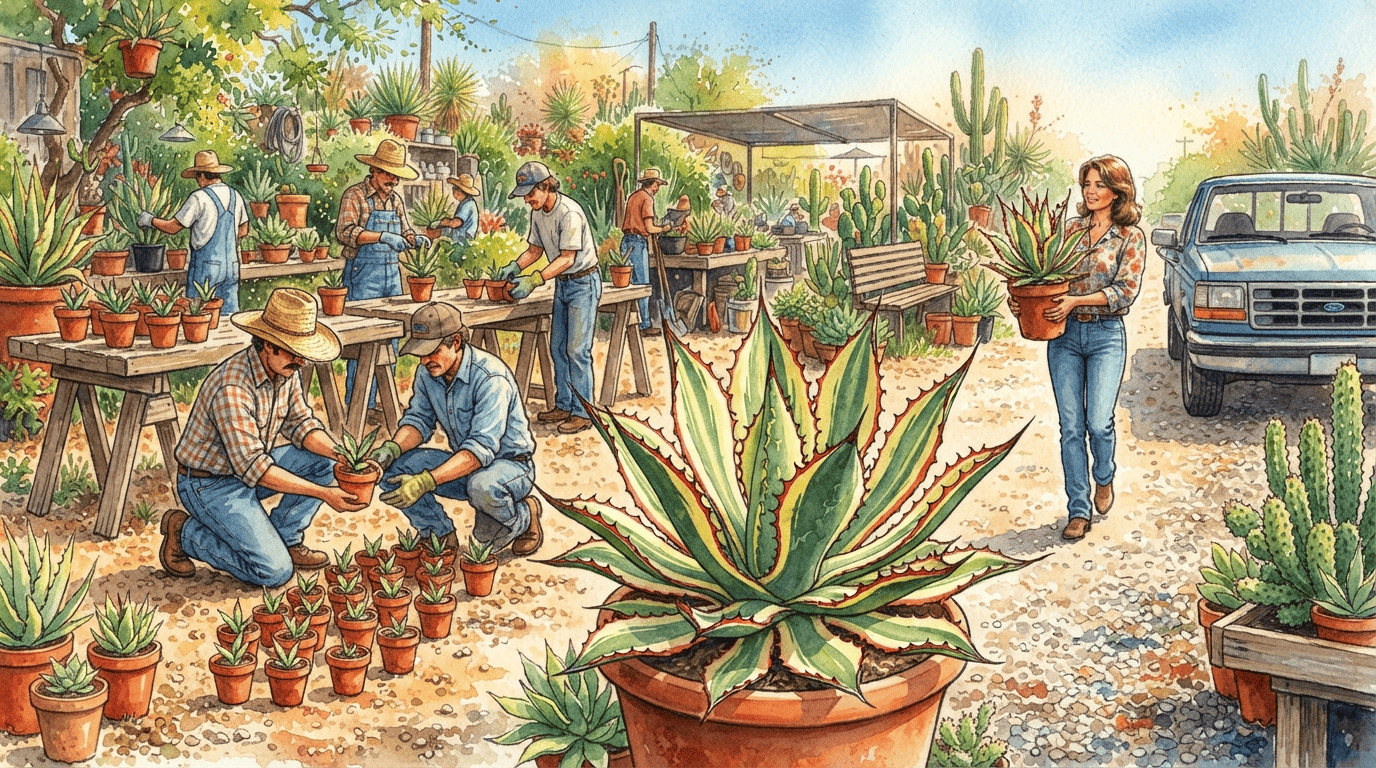
Agave lophantha, commonly called thorn-crested agave, is a medium-sized suckering agave native to limestone and sandy soils of northeastern Mexico (Tamaulipas, Nuevo León, San Luis Potosí, Querétaro) and extreme southern Texas. German botanist Christian Julius Wilhelm Schiede collected the type and published the species in 1829. The rosette forms 40-70 cm tall offsetting clumps of 20-30 narrow linear-lanceolate dark green leaves usually bearing a prominent pale green or yellow central stripe and sharp upward-pointing marginal teeth with a stout terminal spine.
Yellowish-green flowers appear on a 3-5 meter spike after 10-15 years, and the parent rosette dies but is readily replaced by offsets. The striking variegated cultivar 'Quadricolor' with red-edged green, cream, and yellow stripes has become one of the most popular small ornamental agaves in cultivation.
The species is closely related to the economically important fiber-producing lechuguilla, A. lechuguilla. Described in 1842 by Charles Lemaire. The 'Quadricolor' variegated cultivar emerged in the late 20th century and was popularized by Yucca Do Nursery in Texas, becoming a defining plant of modern Southwestern garden design.
Symbolism & meaning
What It Symbolizes
Thorn-Crested Agave is a study in resilience, equally at home in desert heat and sudden hard freezes that would fell softer succulents. Its toothed, ribboned leaves arch out in symmetrical rosettes, and the variegated forms count among the most prized beauties in cultivation. Grown in a pot or planted at a doorway, it evokes toughness made ornamental — survival rendered as living sculpture.
- Resilience — tolerates both desert heat and freezing winters
- Beauty — variegated forms among the most prized in cultivation
Where the Name Comes From
'Lophantha' from Greek 'lophos' (crest) and 'anthos' (flower), referring to the crested flower arrangement.
Uses & Fun Facts
- Architectural rosette grown in patio pots and rockeries
- Spiny crested leaves form striking xeric focal point
Related plants
More Agave plants
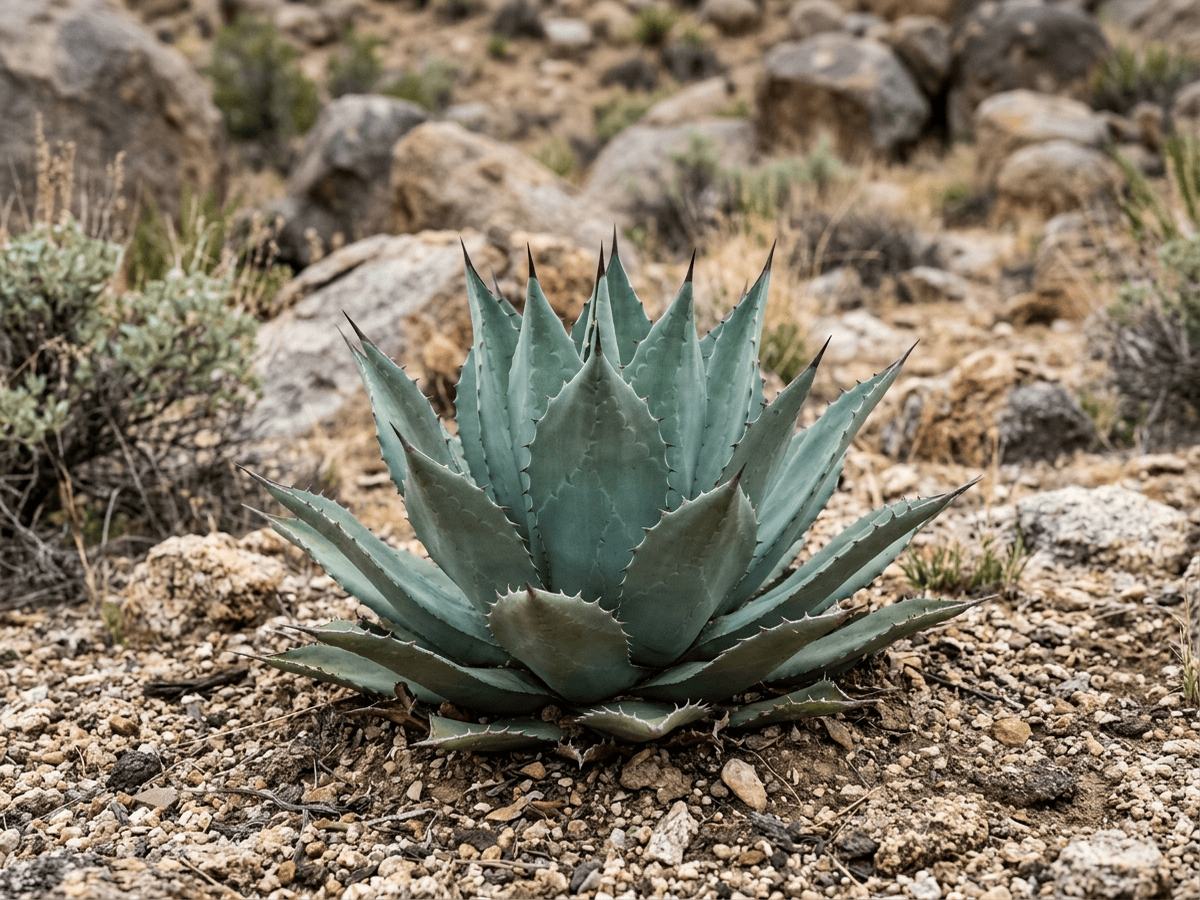 American Century PlantAgave americana
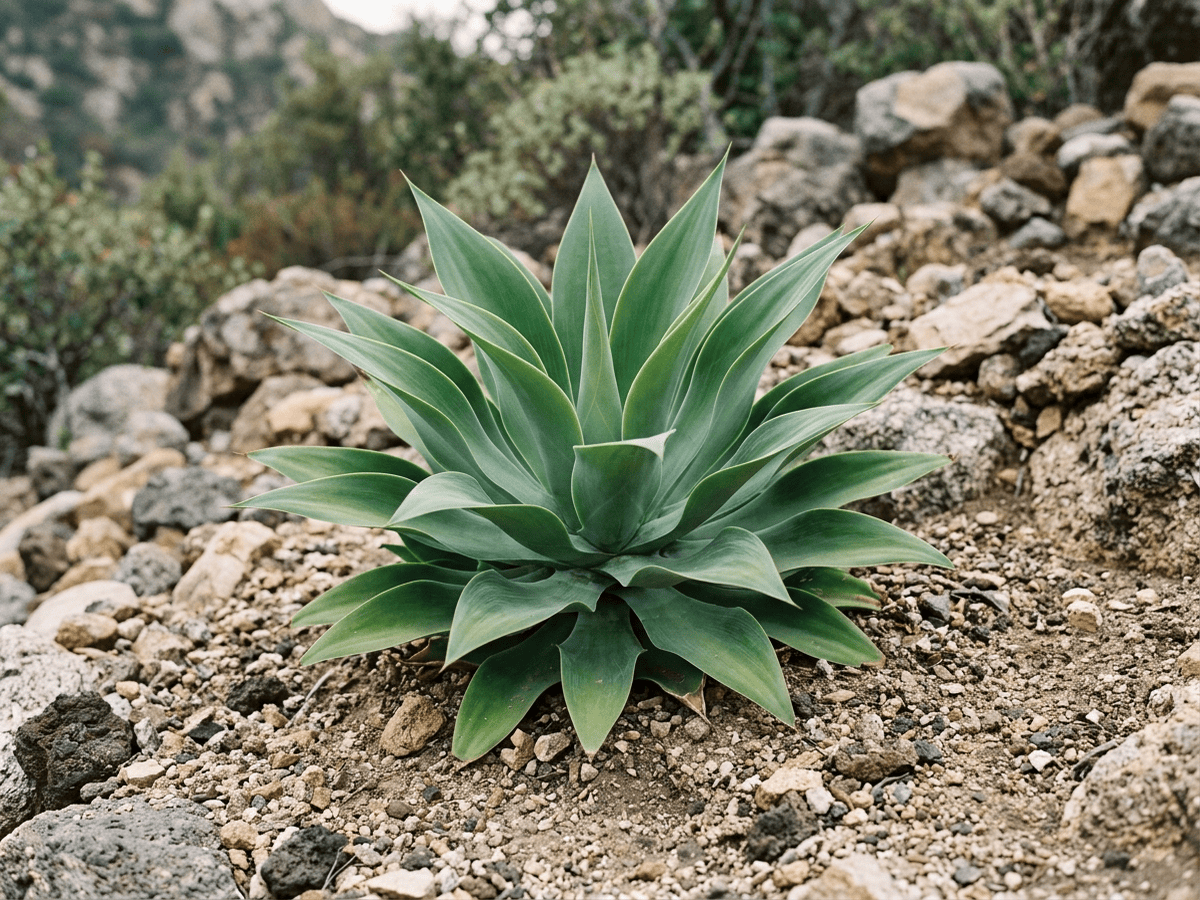 Swan-Neck AgaveAgave attenuata
 Smooth AgaveAgave desmettiana
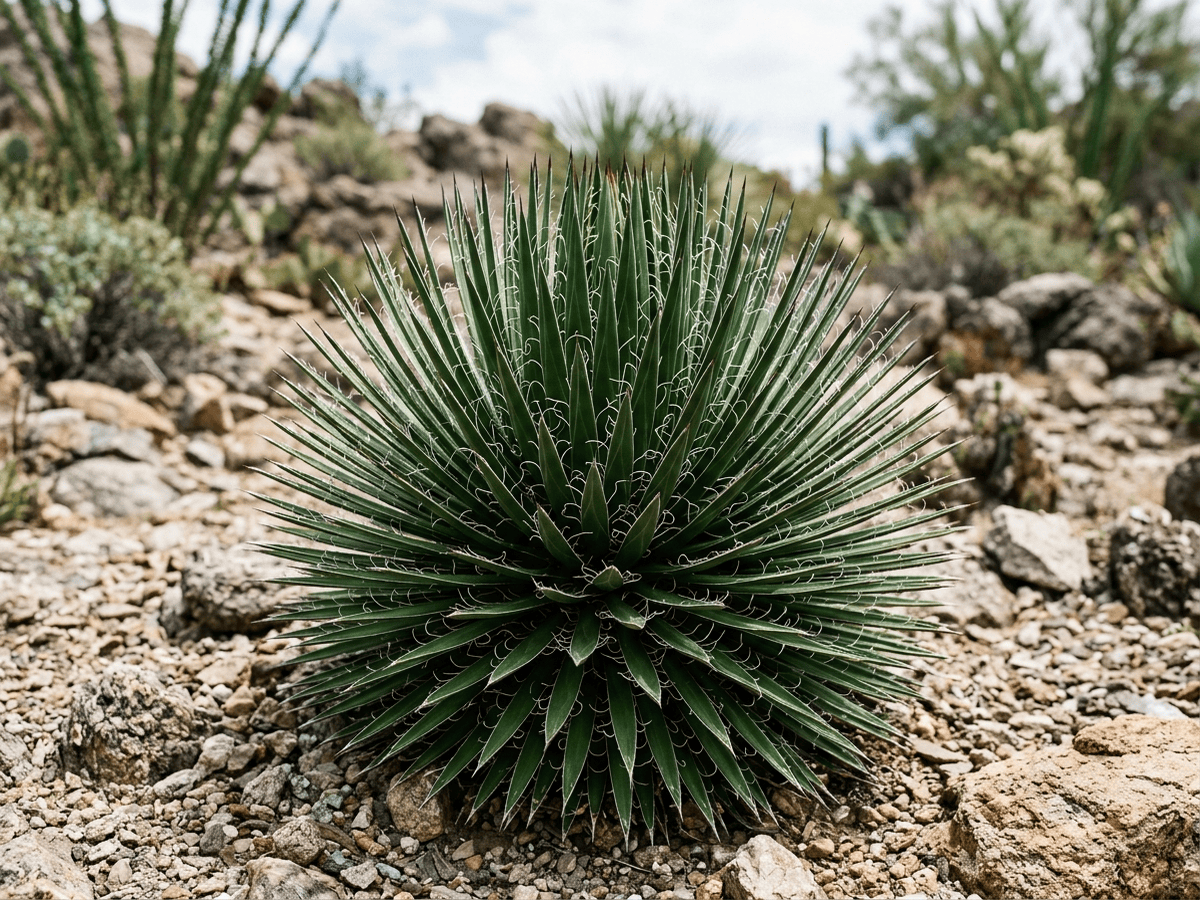 Twin-Flowered AgaveAgave geminiflora
Plants with similar care
 Chinese AbeliaAbelia chinensis
 Fragrant AbeliaAbelia mosanensis
 Large-Flowered AbeliaAbelia uniflora
 Glossy AbeliaAbelia x grandiflora
Frequently asked questions
How often should I water Thorn-Crested Agave?
In summer, water about every 21 days; in winter, about every 60 days. Adjust for heat, pot size and drainage.
How much light does Thorn-Crested Agave need?
Full sun: 6+ hrs direct. Watch the leaves — scorching or stretching means the light needs adjusting.
Is Thorn-Crested Agave toxic to cats or dogs?
Pets Moderate (Dogs Moderate · Cats Moderate) Educational information, not medical or veterinary advice. If exposure is suspected, contact a doctor or veterinarian.
Is Thorn-Crested Agave easy to grow?
Yes — it is considered an easy, beginner-friendly plant.
When does Thorn-Crested Agave bloom?
It typically blooms Jun–Aug in the Northern Hemisphere.
YardMate
Identify any plant in seconds
Snap a photo — YardMate names the plant, diagnoses problems, and reminds you when to water.
Download on the App Store