 YardMate
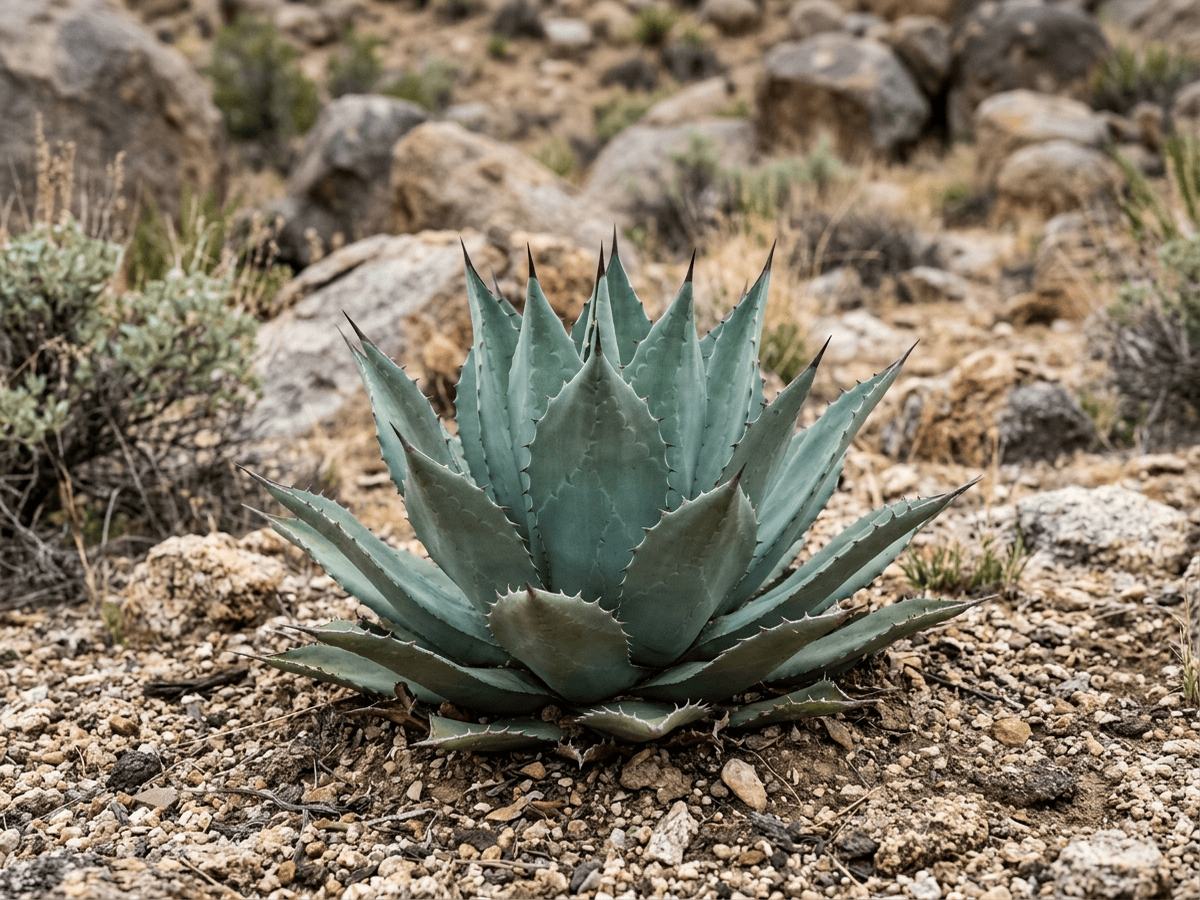


American Century Plant
Agave americana
Easy · Beginner friendlyAbout American Century Plant
The Century Plant is a monumental succulent native to Mexico that has become one of the most widely planted agaves across the globe. Its massive rosette of thick, blue-gray leaves — each tipped with a formidable dark spine and edged with curved teeth — can reach six feet tall and ten feet wide. Despite its common name, it does not take a century to bloom, but rather twenty to thirty years, after which it sends up a spectacular flowering stalk up to thirty feet tall resembling a giant candelabra. After flowering and setting seed, the parent rosette dies, leaving behind offsets (pups) to continue the colony. It is the primary source plant for mezcal and pulque, traditional Mexican spirits with thousands of years of history. The fibers from its leaves have been used for rope, textiles, and paper since pre-Columbian times. Naturalized across the Mediterranean, it has become a defining element of southern European and North African landscapes.
- Drought-tolerant
- Architectural
How to care for American Century Plant
Watering
- Springevery 14 days
- Summerevery 14 days
- Fallevery 21 days
- Winterevery 45 days
Soil · Fast-draining
- Main mixSand + pumice + soil 1:1:150%
- DrainagePumice / gravel50%
Keep grit at half the mix or more — this soil is meant to dry out fast.
FERTILIZER
Balanced Feed 14-14-14
An even feed covers all three needs at once, keeping leaves, roots and blooms moving together with nothing pushed out of balance.
- Nitrogen · Leaves
- Phosphorus · Roots + Blooms
- Potassium · Strength
- Springevery 60 days
- Summerevery 60 days
At a Glance
- NativeNorth America
- Height3–6 ft (0.9–1.8 m)
- Spread6–10 ft (1.8–3 m)
- Foliage colorBlue-green, Green, Variegated
- SoilSandy, Well-drained
- LocationsYard
Fragrance
NO FRAGRANCE
No notable fragrance.
Toxicity
Humans Moderate · Pets Moderate
saponins and calcium oxalate raphides
Moderate
- Sap
- Leaf
- Contact
EXPOSURE Touching sap and leaves.
EFFECT Sap causes severe contact dermatitis with blistering and photosensitive burns in sensitive individuals.
NOTE Documented concern for humans: Sap causes severe contact dermatitis with blistering and photosensitive burns in sensitive individuals.
Moderate
- All
- Ingestion
- Contact
EXPOSURE Eating any part of the plant. Touching any part of the plant.
EFFECT Vomiting, diarrhea, skin irritation.
NOTE ASPCA lists Agave as toxic to pets. Terminal spines also cause mechanical injury.
Moderate
- All
- Ingestion
- Contact
EXPOSURE Eating any part of the plant. Touching any part of the plant.
EFFECT Vomiting, diarrhea, skin irritation.
NOTE ASPCA lists Agave as toxic to pets. Terminal spines also cause mechanical injury.
Educational information, not medical or veterinary advice. If exposure is suspected, contact a doctor or veterinarian.
DISTRIBUTION


- Native
- Introduced
- North America
History
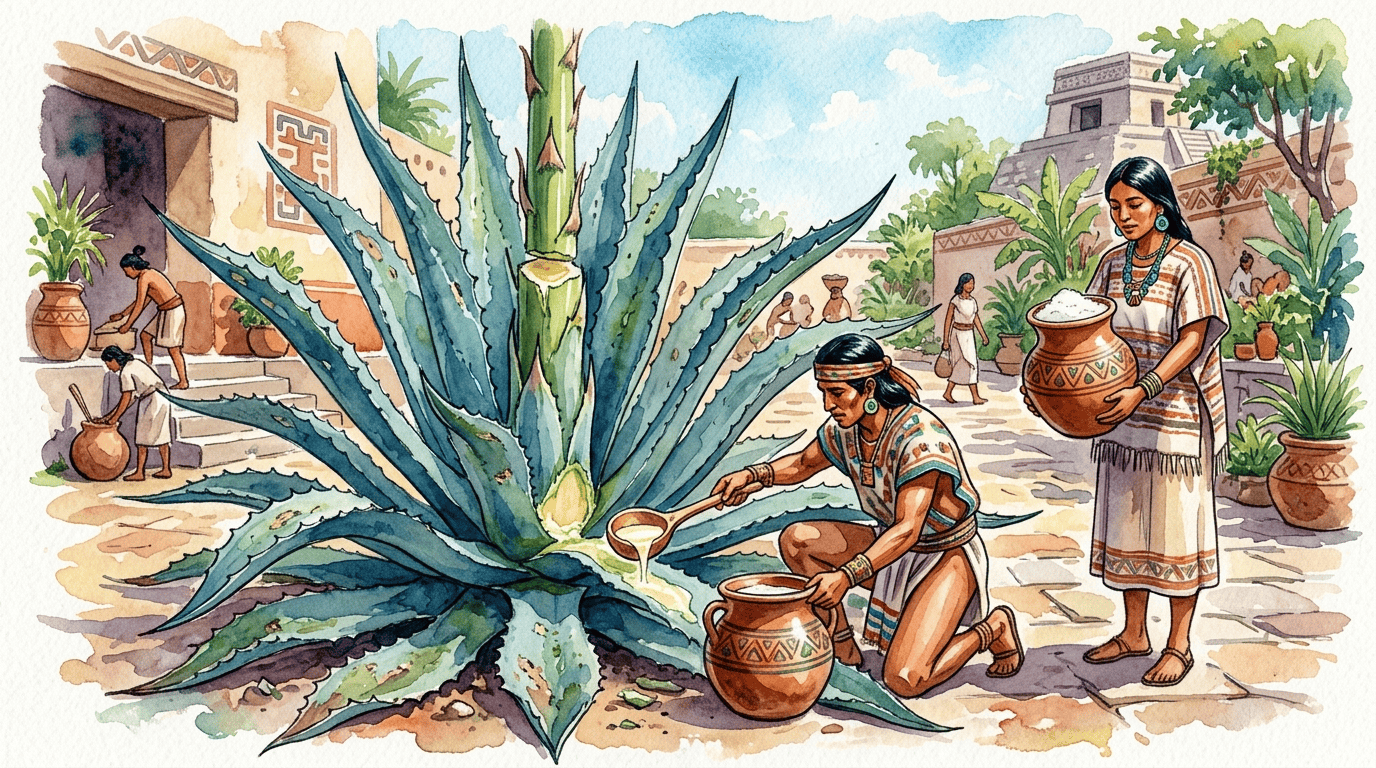
Agave americana is native to Mexico and adjacent parts of Arizona, New Mexico, and Texas. It has been cultivated by Indigenous Mesoamerican peoples for at least 7,000 years, providing strong sisal-like fiber for rope, cloth, sandals, and paper (amatl); food from the roasted heart (piñas) and leaf bases; and sap fermented into pulque, the predominant pre-Columbian Mesoamerican alcoholic beverage. Sixteenth-century Spanish ships carried the plant to Europe as a botanical curiosity. By the 18th and 19th centuries, Agave had naturalized widely across the Mediterranean Basin, North Africa, the Canary Islands, South Africa, and Australia.
The plant's name "century plant" reflects the old belief that it flowers once every hundred years — actually 10 to 30 years, after which the entire rosette dies (monocarpic). Despite dramatic-looking spiky leaves, it is not true to be "century-patient.". Agave americana has been central to Mexican culture for at least 10,000 years.
The Aztecs called it 'metl' and revered it as a gift from the goddess Mayahuel, who was depicted with 400 breasts to represent pulque's nourishing qualities. Spanish conquistadors distilled the fermented sap to create mezcal, the ancestor of tequila. Carl Linnaeus named it in 1753, making it one of the first New World succulents formally described by Western science. The plant reached Europe by the 16th century and naturalized so thoroughly around the Mediterranean that many Europeans assume it is native. Its fibers, called sisal or pita, were once Mexico's most valuable non-food export.
Symbolism & meaning
What It Symbolizes
The American Century Plant makes visible legacy through a single magnificent act of bloom. After decades of patient endurance, it raises a towering flower stalk skyward and then surrenders its life — a quiet sacrifice that gives rise to the next generation of pups at its base. In Mexican tradition, this is the plant of the long view, of devotion measured in generations rather than seasons.
- Legacy — blooms once magnificently then passes life to the next generation
- Sacrifice — gives its life to flower, embodying selfless devotion
- Endurance — decades of patient growth before a single spectacular act
Where the Name Comes From
'Agave' from Greek 'agauos' meaning noble or illustrious, a name chosen by Linnaeus to honor the plant's grandeur. 'Americana' simply means 'of the Americas.'
Uses & Fun Facts
- Bold rosettes anchor dry gardens, courtyards, and large architectural pots
- Stems and bark processed into fiber and cordage
Related plants
More Agave plants
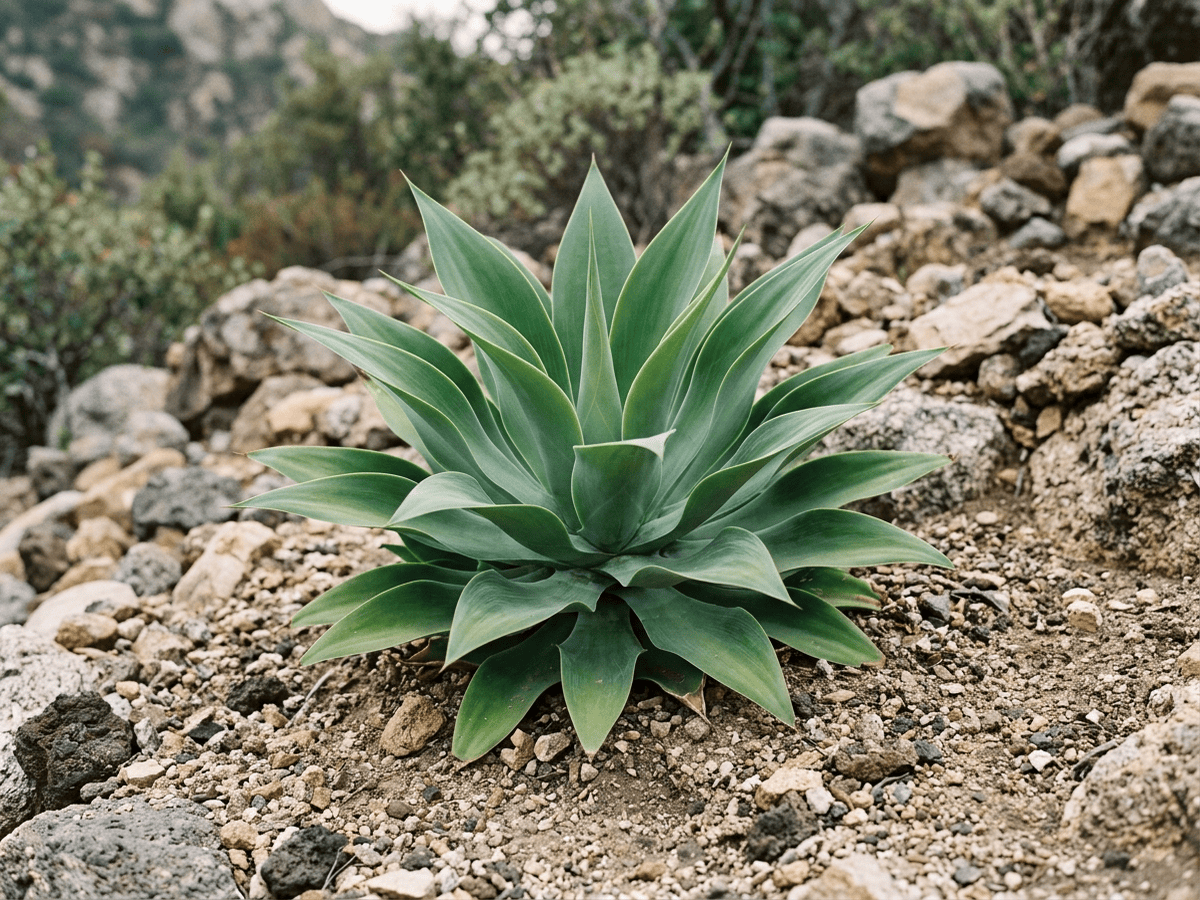 Swan-Neck AgaveAgave attenuata
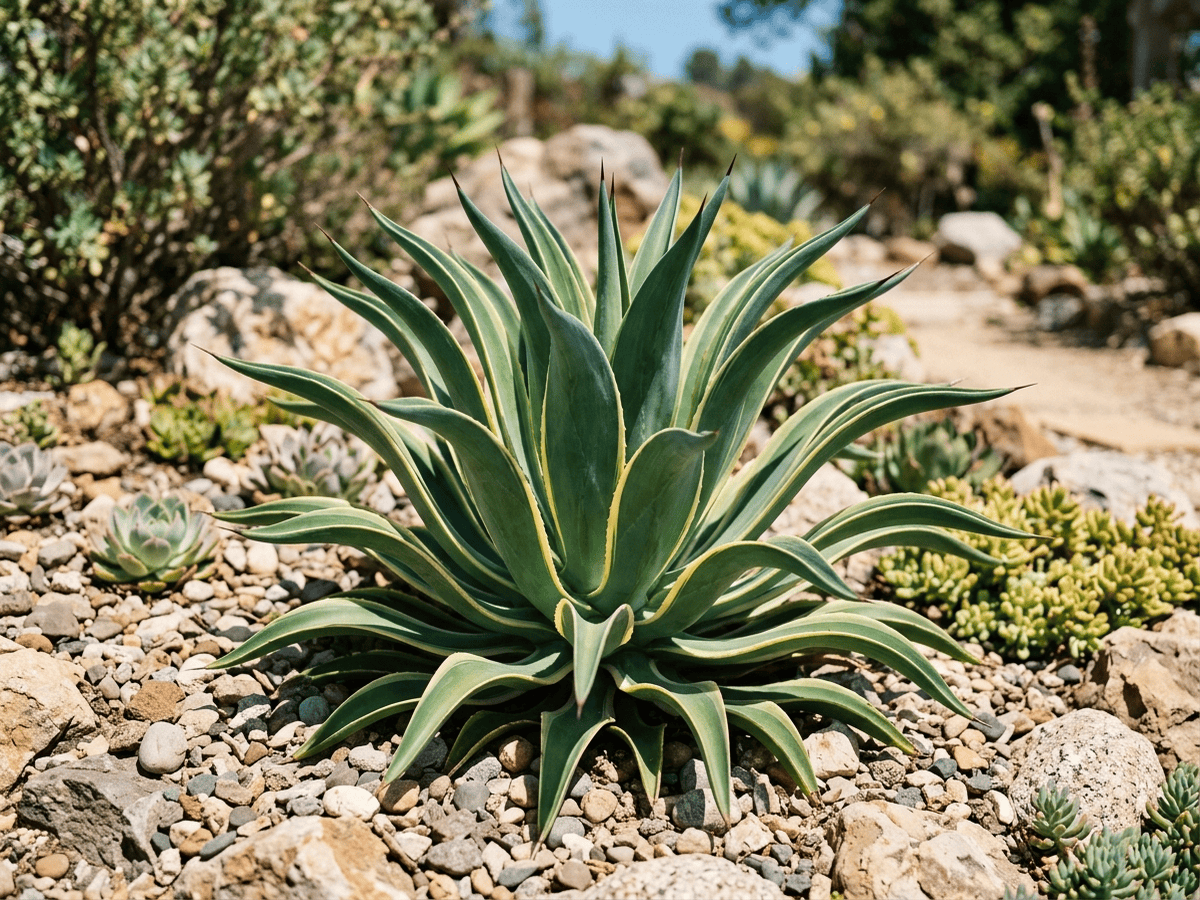 Smooth AgaveAgave desmettiana
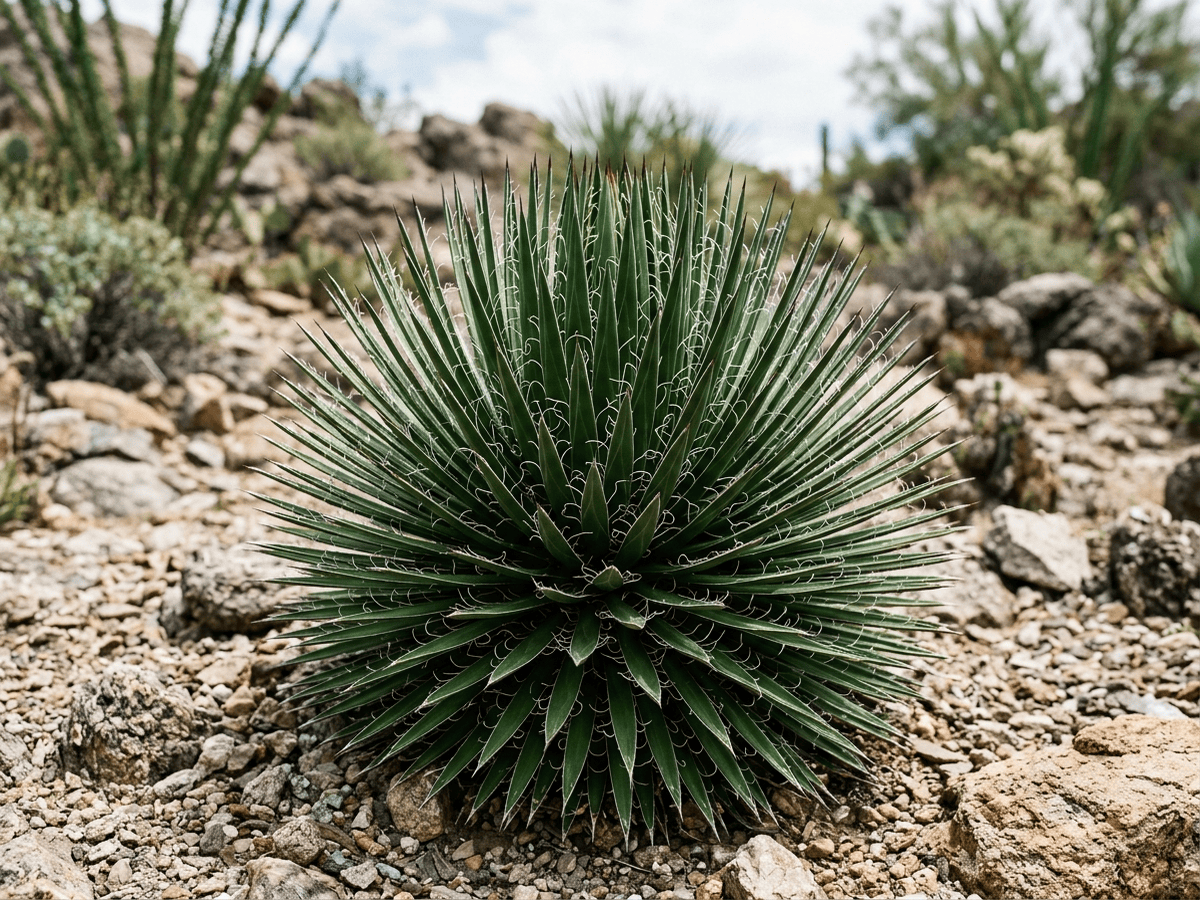 Twin-Flowered AgaveAgave geminiflora
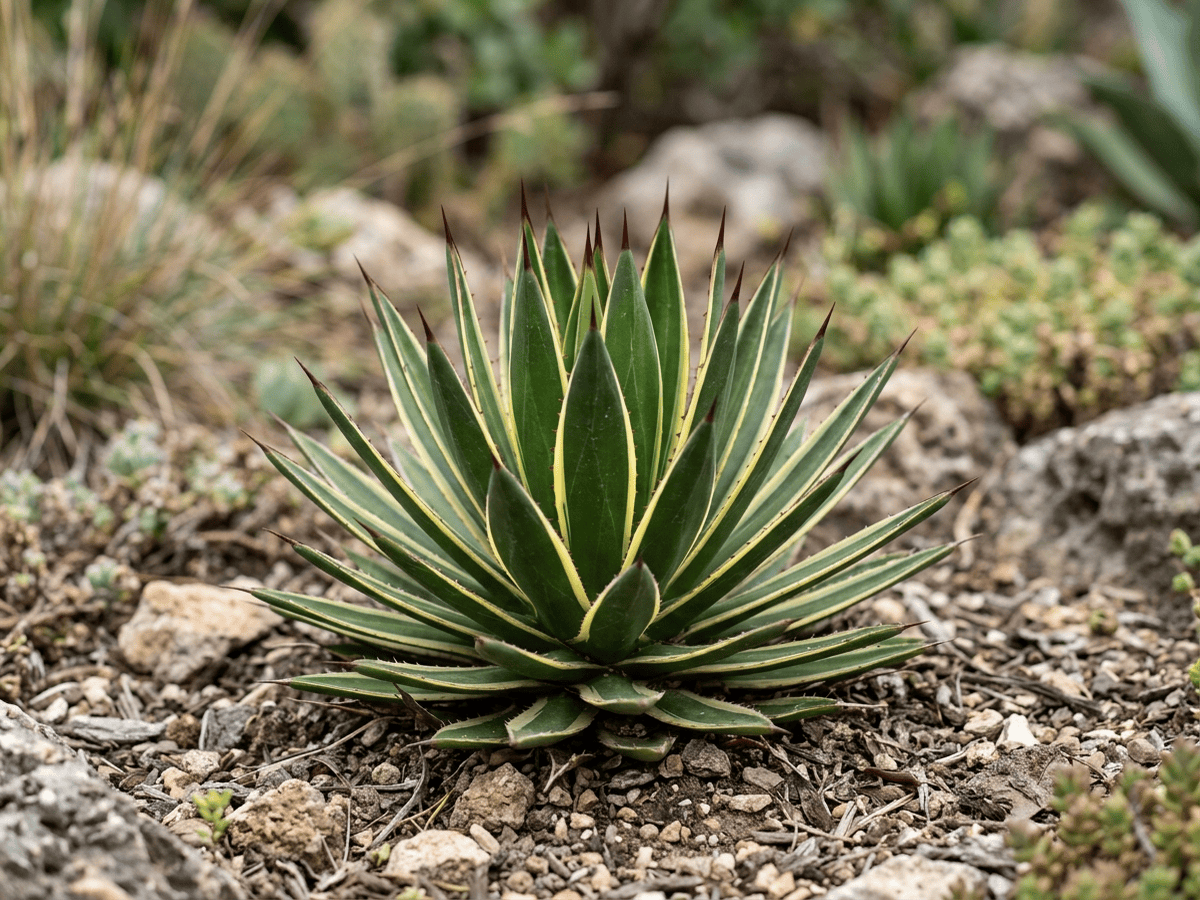 Thorn-Crested AgaveAgave lophantha
Plants with similar care
 Chinese AbeliaAbelia chinensis
 Fragrant AbeliaAbelia mosanensis
 Large-Flowered AbeliaAbelia uniflora
 Glossy AbeliaAbelia x grandiflora
Frequently asked questions
How often should I water American Century Plant?
In summer, water about every 14 days; in winter, about every 45 days. Adjust for heat, pot size and drainage.
How much light does American Century Plant need?
Full sun: 6+ hrs direct. Watch the leaves — scorching or stretching means the light needs adjusting.
Is American Century Plant toxic to cats or dogs?
Pets Moderate (Dogs Moderate · Cats Moderate) Educational information, not medical or veterinary advice. If exposure is suspected, contact a doctor or veterinarian.
Is American Century Plant easy to grow?
Yes — it is considered an easy, beginner-friendly plant.
YardMate
Identify any plant in seconds
Snap a photo — YardMate names the plant, diagnoses problems, and reminds you when to water.
Download on the App Store