 YardMate


Weber's Century Plant
Agave weberi
Easy · Beginner friendlyAbout Weber's Century Plant
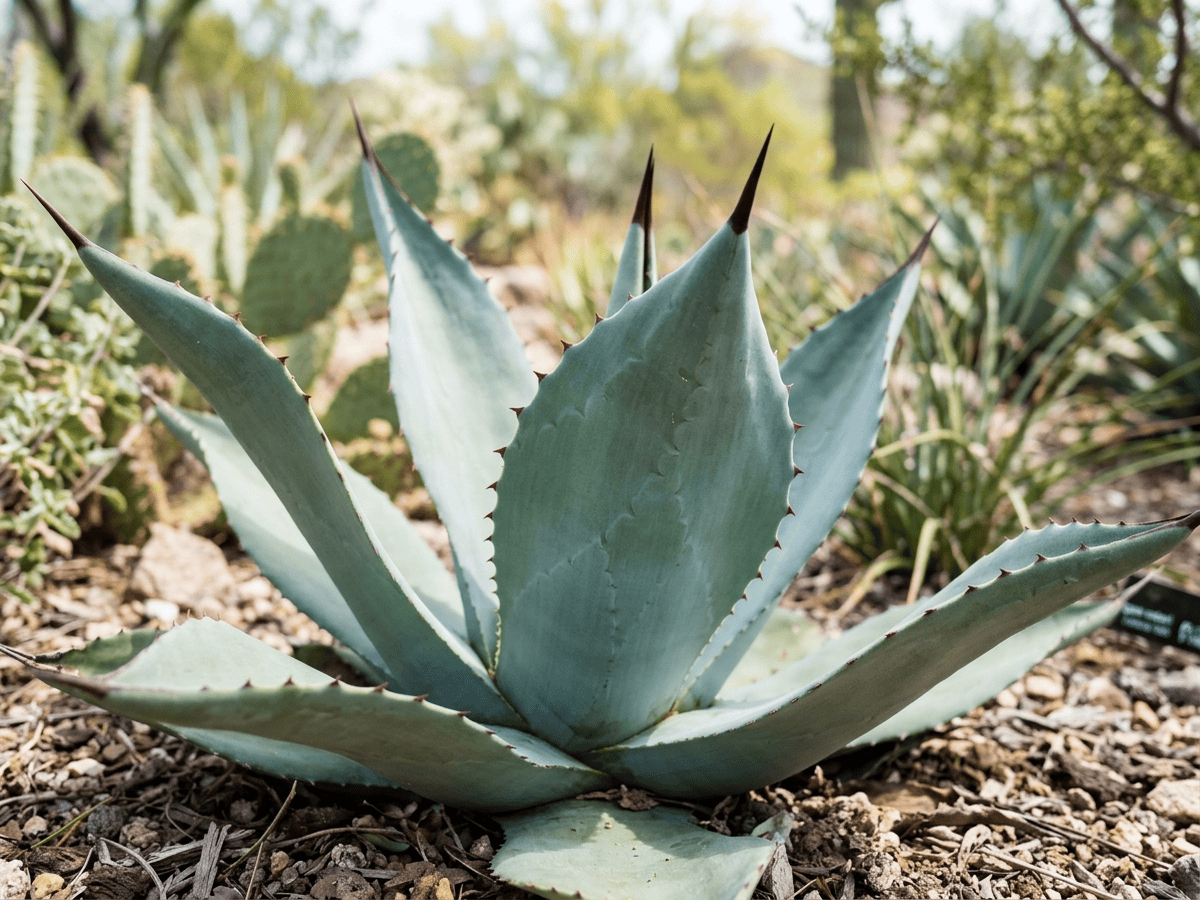
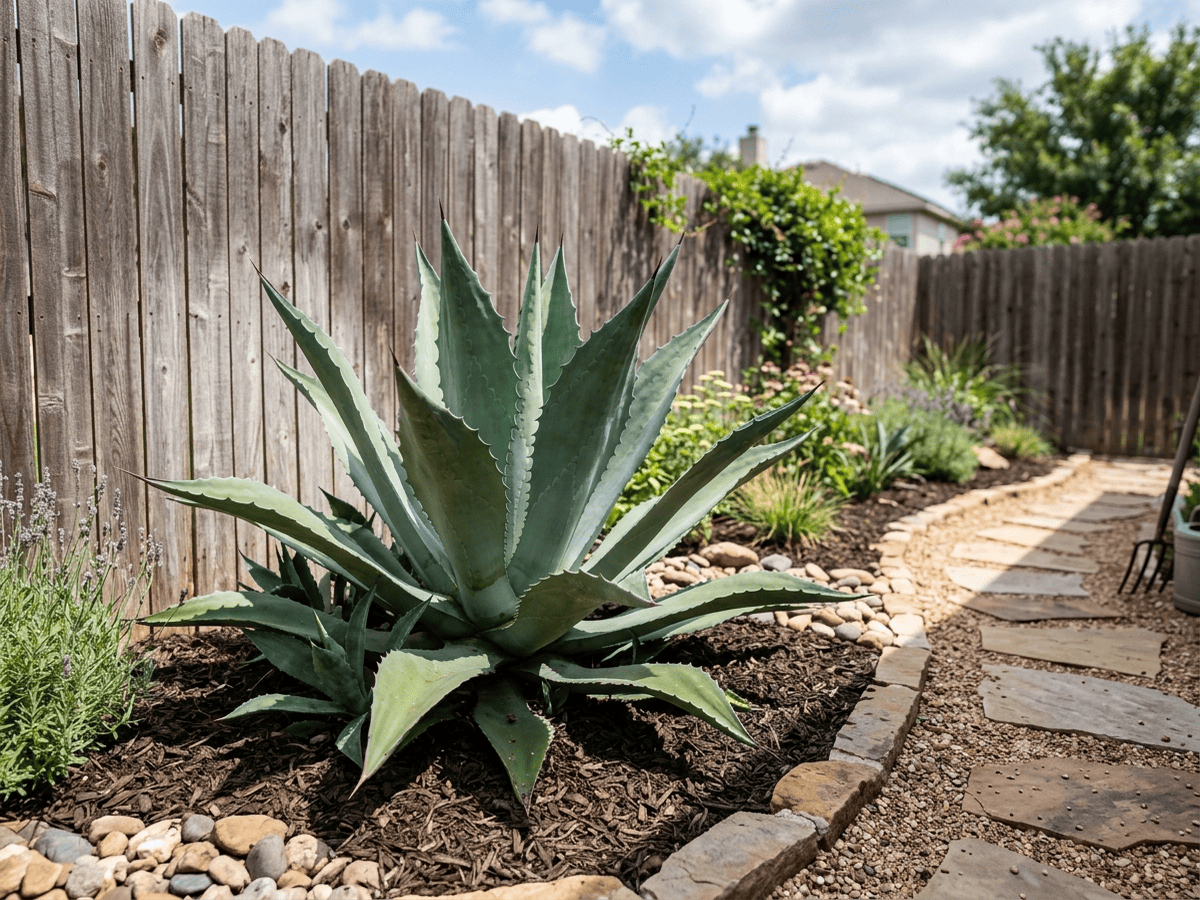
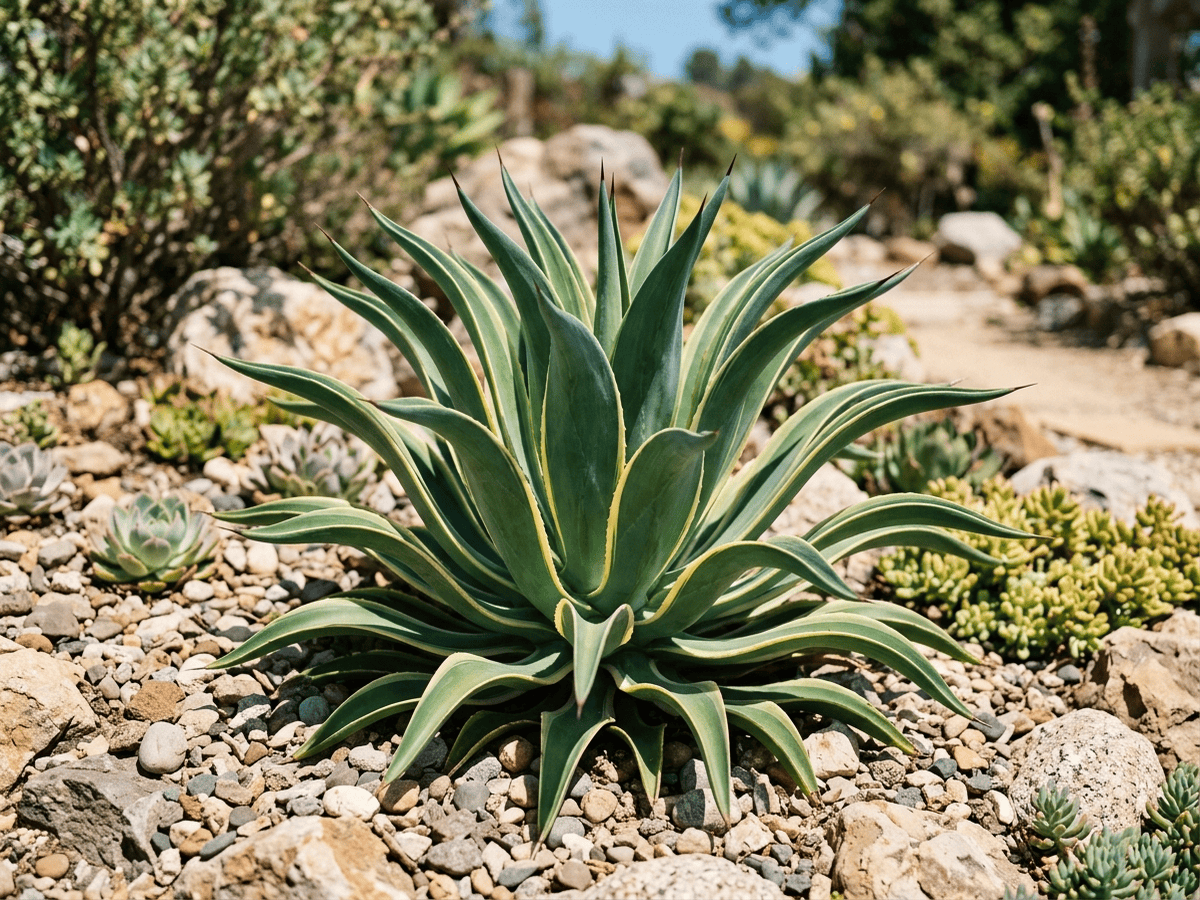
Weber Agave is a large gracefully arching rosette succulent reaching 4-5 feet tall and 8-10 feet wide, with smooth blue-gray leaves and minimal marginal teeth. Native to northeastern Mexico and naturalized through the Gulf coastal region, it is one of the most elegant large agaves with a softer appearance than most spiny species. Highly tolerant of heat, drought, salt spray, and even occasional flooding.
- Drought-tolerant
- Architectural
- Evergreen
How to care for Weber's Century Plant
Watering
- Springevery 21 days
- Summerevery 21 days
- Fallevery 30 days
- Winterevery 60 days
Soil · Fast-draining
- Main mixSand + pumice + soil 1:1:150%
- DrainagePumice / gravel50%
Keep grit at half the mix or more — this soil is meant to dry out fast.
FERTILIZER
- Springevery 60 days
At a Glance
- NativeNorth America
- Height4–6 ft (1.2–1.8 m)
- Spread8–10 ft (2.4–3 m)
- Flower colorYellow
- Foliage colorBlue-green
- SoilSandy, Well-drained
- LocationsYard
Bloom time
BLOOM CYCLE
Peak bloom
May–Jul
Greenish-yellow flowers on 20+ ft stalk after 15-25 years
Toxicity
Humans Moderate · Pets Moderate
calcium oxalate raphides and saponins
Moderate
- Leaf
- Sap
- Contact
- Ingestion
EXPOSURE Touching leaves and sap. Eating leaves and sap.
EFFECT Contact dermatitis.
NOTE Documented concern for humans: Contact dermatitis.
Moderate
- Leaf
- Sap
- Ingestion
EXPOSURE Eating leaves and sap.
EFFECT Oral irritation and vomiting.
NOTE Agave listed by ASPCA as toxic. Sap traditionally fermented for pulque/mezcal.
Moderate
- Leaf
- Sap
- Ingestion
EXPOSURE Eating leaves and sap.
EFFECT Oral irritation and vomiting.
NOTE Agave listed by ASPCA as toxic. Sap traditionally fermented for pulque/mezcal.
Educational information, not medical or veterinary advice. If exposure is suspected, contact a doctor or veterinarian.
DISTRIBUTION


- Native
- Introduced
- North America
History

Agave weberi, Weber agave, is a large monocarpic succulent long known only from cultivation in northeastern Mexico and the southern United States, though recent work has documented wild populations in the Sierra Madre Oriental foothills of Tamaulipas and San Luis Potosí. French horticulturists Jules Émile Poisson (for Cels nursery) formally described it in 1901, honoring German physician and naturalist Friedrich Weber (1781-1823), a student of agaves. The rosette forms a majestic 1.2-1.8 meter tall and 2-3 meter wide fountain of smooth broad lanceolate leaves in soft blue-green with pale margins and only scattered small marginal teeth and a short terminal spine—one of the largest 'friendly' agaves for landscape use.
Yellow flowers on a 7-9 meter panicle appear after 15-25 years. The species has long been cultivated for its sweet sap to produce pulque and mezcal in Mexico, and is also a major ornamental in Mediterranean and arid landscapes worldwide.
Described in 1905 by French botanist Jean-Baptiste Cels and named for Frédéric Weber, a Parisian dentist and agave specialist.
Symbolism & meaning
What It Symbolizes
Weber's Century Plant stands for majesty, its broad blue-gray leaves arching outward like the spokes of a living crown that dominates whatever landscape holds it. In rural Mexico it has long served as a living fence, marking boundaries and offering shelter, so it also carries a quieter meaning of hospitality. To grow agave is to invite a slow, regal presence into the garden, one that gathers its strength for decades before its single, spectacular bloom.
- Majesty — imposing graceful form dominating the landscape
- Hospitality — traditional living fence in rural Mexico
Where the Name Comes From
The name Weber's Century Plant describes its long wait before a dramatic flowering stalk. Honors Frédéric Albert Constantin Weber (1830-1903), French agave taxonomist.
Uses & Fun Facts
- Massive blue-gray rosette anchors xeric courtyards
- Architectural evergreen form for desert and Mediterranean beds
Related plants
More Agave plants
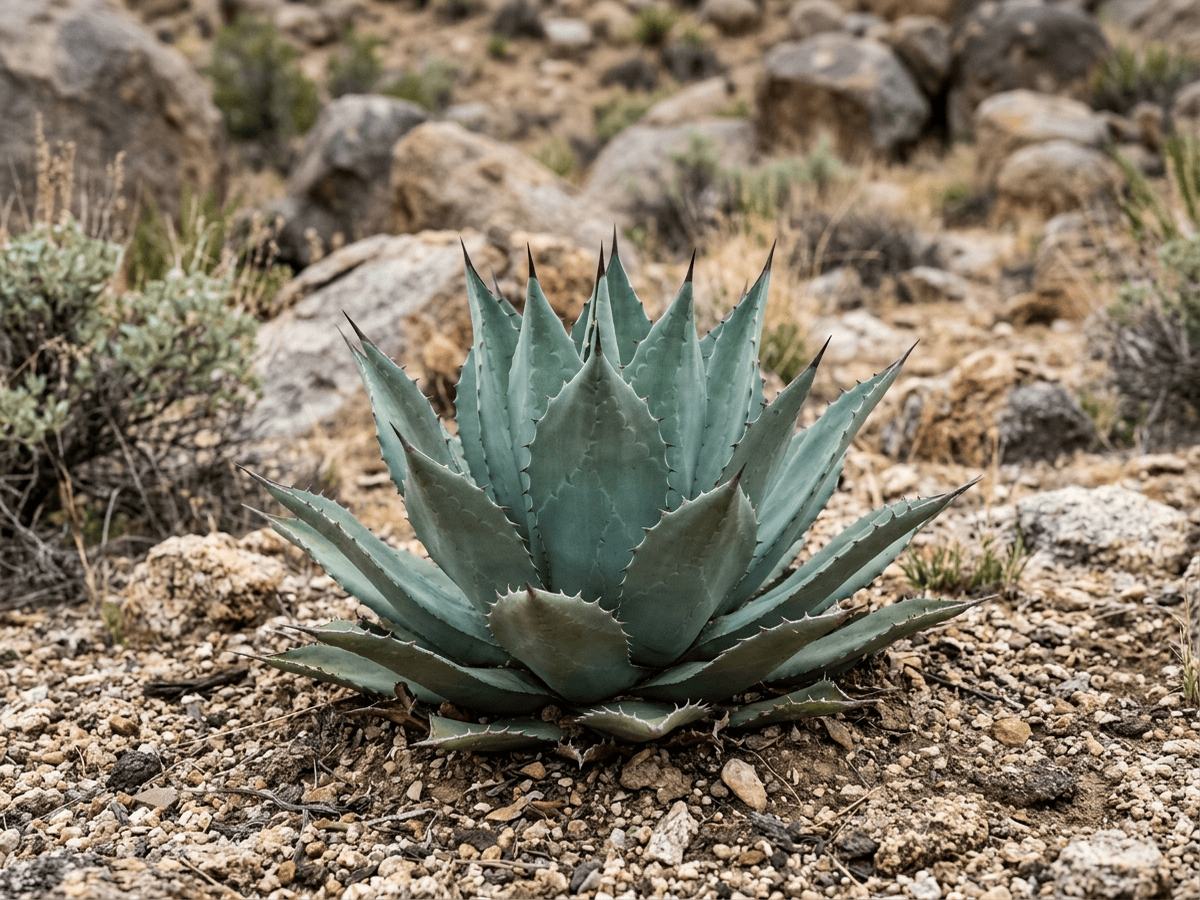 American Century PlantAgave americana
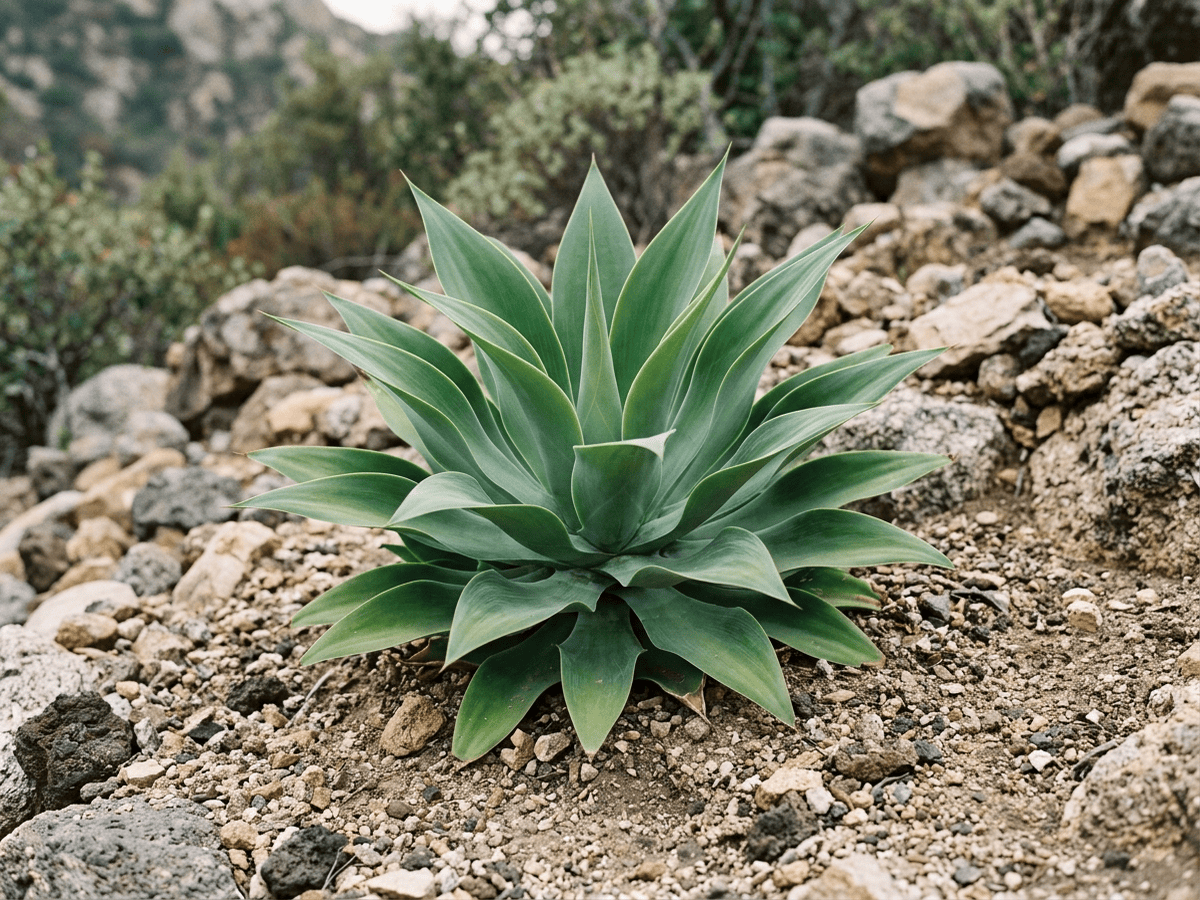 Swan-Neck AgaveAgave attenuata
 Smooth AgaveAgave desmettiana
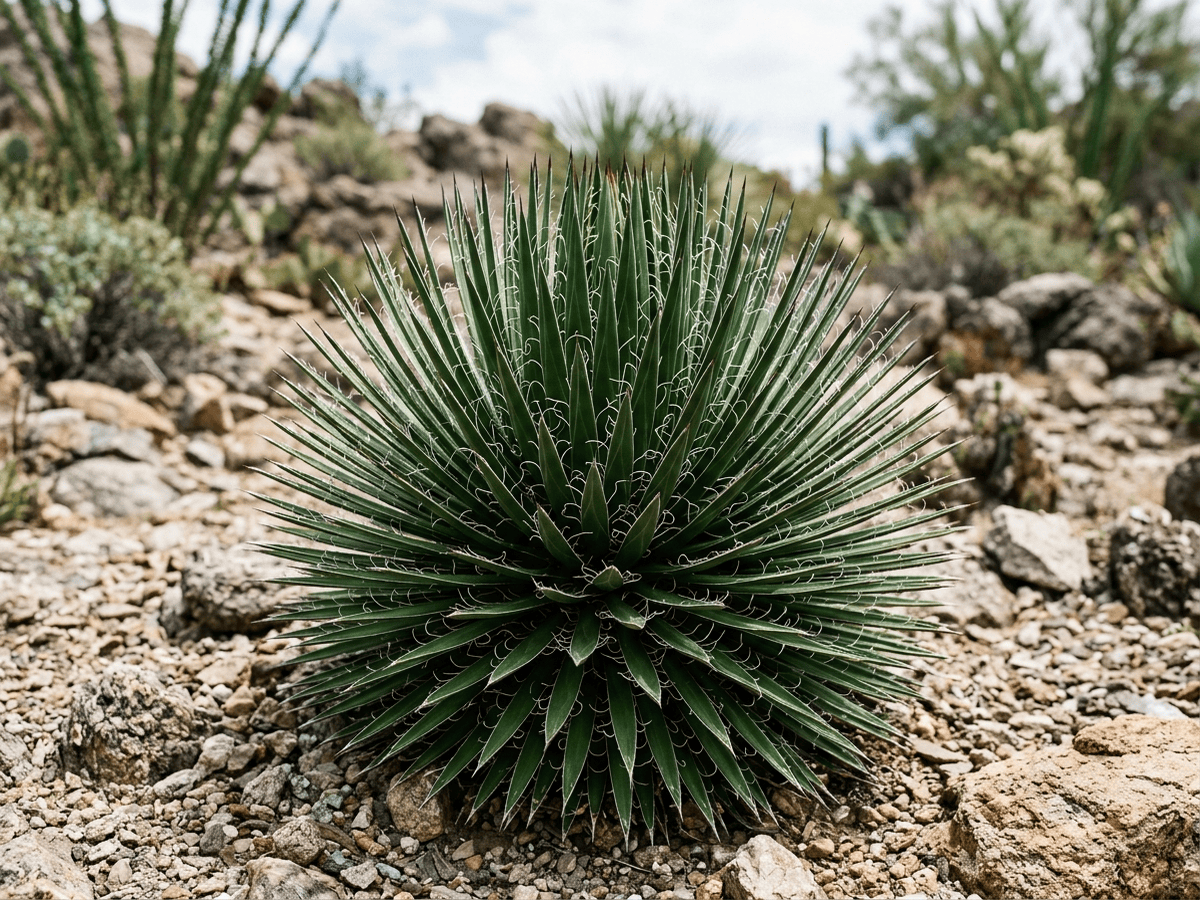 Twin-Flowered AgaveAgave geminiflora
Plants with similar care
 Chinese AbeliaAbelia chinensis
 Fragrant AbeliaAbelia mosanensis
 Large-Flowered AbeliaAbelia uniflora
 Glossy AbeliaAbelia x grandiflora
Frequently asked questions
How often should I water Weber's Century Plant?
In summer, water about every 21 days; in winter, about every 60 days. Adjust for heat, pot size and drainage.
How much light does Weber's Century Plant need?
Full sun: 6+ hrs direct. Watch the leaves — scorching or stretching means the light needs adjusting.
Is Weber's Century Plant toxic to cats or dogs?
Pets Moderate (Dogs Moderate · Cats Moderate) Educational information, not medical or veterinary advice. If exposure is suspected, contact a doctor or veterinarian.
Is Weber's Century Plant easy to grow?
Yes — it is considered an easy, beginner-friendly plant.
When does Weber's Century Plant bloom?
It typically blooms May–Jul in the Northern Hemisphere.
YardMate
Identify any plant in seconds
Snap a photo — YardMate names the plant, diagnoses problems, and reminds you when to water.
Download on the App Store