 YardMate
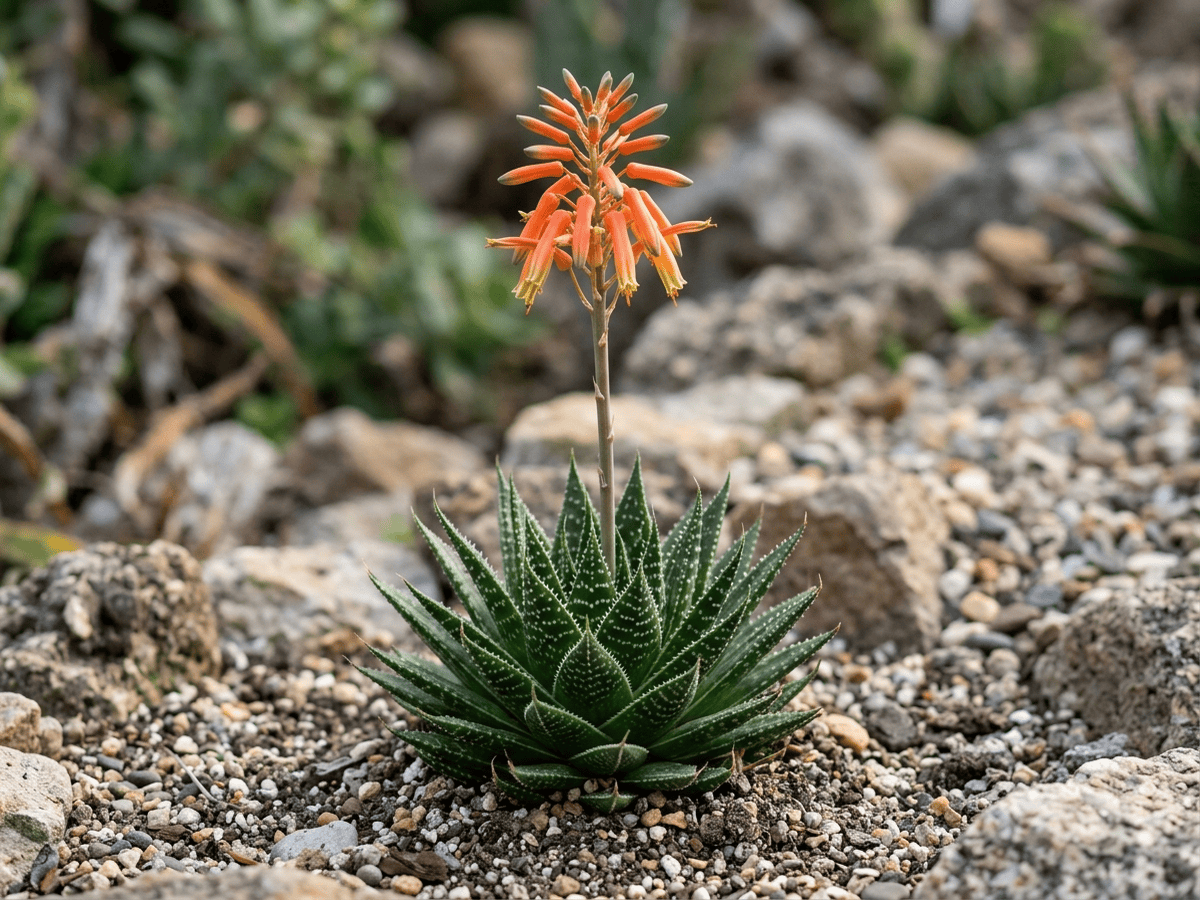


Lace Aloe
Aloe aristata
Easy · Beginner friendlyAbout Lace Aloe
Aloe aristata, the lace aloe, is a compact, stemless succulent forming dark green rosettes densely covered with soft white spots and tipped with delicate hair-like bristles ('arista'). Native to South Africa and Lesotho, it is one of the hardiest aloes, tolerating temperatures down to -7°C. In autumn, it sends up tall stalks bearing tubular orange-red flowers that attract hummingbirds. Unlike Aloe vera, it stays small (10–15 cm) and produces numerous offsets, forming dense clumps. It is an excellent choice for succulent gardens in cooler climates.
- Drought-tolerant
- Cold-hardy
- Compact
How to care for Lace Aloe
Watering
- Springevery 14 days
- Summerevery 10 days
- Fallevery 21 days
- Winterevery 30 days
Soil · Fast-draining
- Main mixSand + pumice + soil 1:1:150%
- DrainagePumice / gravel50%
Keep grit at half the mix or more — this soil is meant to dry out fast.
FERTILIZER
Cactus & Succulent Feed 2-7-7
Hold the nitrogen back and growth stays compact instead of soft and stretched. Phosphorus and potassium carry the roots and the flowering.
- Nitrogen · Leaves
- Phosphorus · Roots + Blooms
- Potassium · Strength
- Springevery 60 days
- Summerevery 60 days
At a Glance
- NativeAfrica
- Height0.5–1 ft (0.2–0.3 m)
- Spread1–1.5 ft (0.3–0.5 m)
- Flower colorOrange, Red
- Foliage colorGreen, Variegated
- SoilSandy, Well-drained
- LocationsIndoor · Balcony · Yard
Bloom time
BLOOM CYCLE
Peak bloom
Sep–Nov
Tubular orange-red flowers on tall stalks in autumn
Fragrance
NO FRAGRANCE
Not notably fragrant.
Toxicity
Humans Slight · Pets Slight
anthraquinone glycosides
Slight
- Leaf
- Ingestion
EXPOSURE Eating leaves.
EFFECT Cramping, diarrhea from latex and gel is relatively safe.
NOTE Same toxic profile as Aloe vera at lower concentrations.
Slight
- Leaf
- Ingestion
EXPOSURE Eating leaves.
EFFECT Vomiting, diarrhea, depression and per Aloe genus ASPCA listing.
NOTE Same toxic profile as Aloe vera at lower concentrations.
Slight
- Leaf
- Ingestion
EXPOSURE Eating leaves.
EFFECT Vomiting, diarrhea, depression and per Aloe genus ASPCA listing.
NOTE Same toxic profile as Aloe vera at lower concentrations.
Educational information, not medical or veterinary advice. If exposure is suspected, contact a doctor or veterinarian.
DISTRIBUTION


- Native
- Introduced
- Africa
History

Aloe aristata is native to a wide area of South Africa and the highlands of Lesotho, where it grows in grasslands at higher elevations than most aloes, giving it a cold tolerance unusual in the genus. A 2014 molecular study showed it was genetically distinct enough from other aloes to justify a new monotypic genus, and it was renamed Aristaloe aristata, though the old Aloe name still dominates commerce. Its densely spotted small rosettes and manageable size make it one of the more popular small Aloe-relatives for indoor and outdoor cultivation.
It produces tubular orange-red flowers on tall stalks in late winter. Unlike tropical aloes, it has adapted to the cold highland regions of Lesotho and the Drakensberg mountains, surviving frost and even snow cover.
It was first described in 1825 and became popular in European rock gardens where most aloes would perish in winter. Now reclassified as Aristaloe aristata by some botanists. Mildly toxic if ingested, similar to other Aloe relatives.
Symbolism & meaning
What It Symbolizes
Lace Aloe is a small emblem of resilience, surviving frost and snow where other aloes would surely perish. Its lace-edged rosettes hold their shape through hardships that defeat its tender cousins. To keep one is to honor the quiet toughness of beauty under pressure — a reminder that the most ornamental forms are sometimes the most stubborn survivors.
- Resilience — Surviving frost and snow where other aloes cannot, it represents toughness in adversity
Where the Name Comes From
Aloe from Arabic 'alloeh' (bitter), for the bitter leaf sap. Aristata means 'awned' or 'bearded,' referring to the hair-like leaf tips.
Uses & Fun Facts
- Compact white-spotted rosette ideal for windowsill succulent pots
- Tooth-edged dark rosette adds texture to mixed succulent plantings
Related plants
More Aloe plants
 Short-Leaved AloeAloe brevifolia
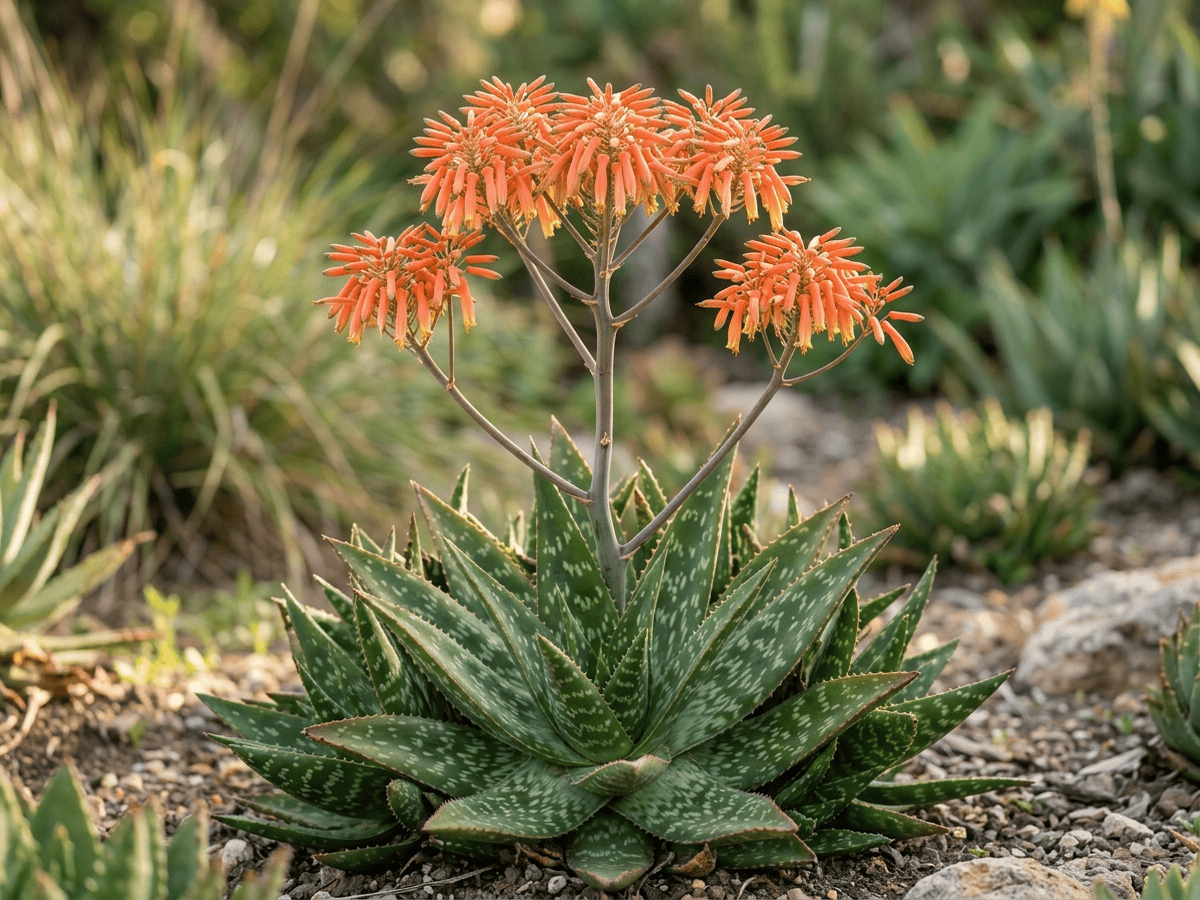 Soap AloeAloe maculata
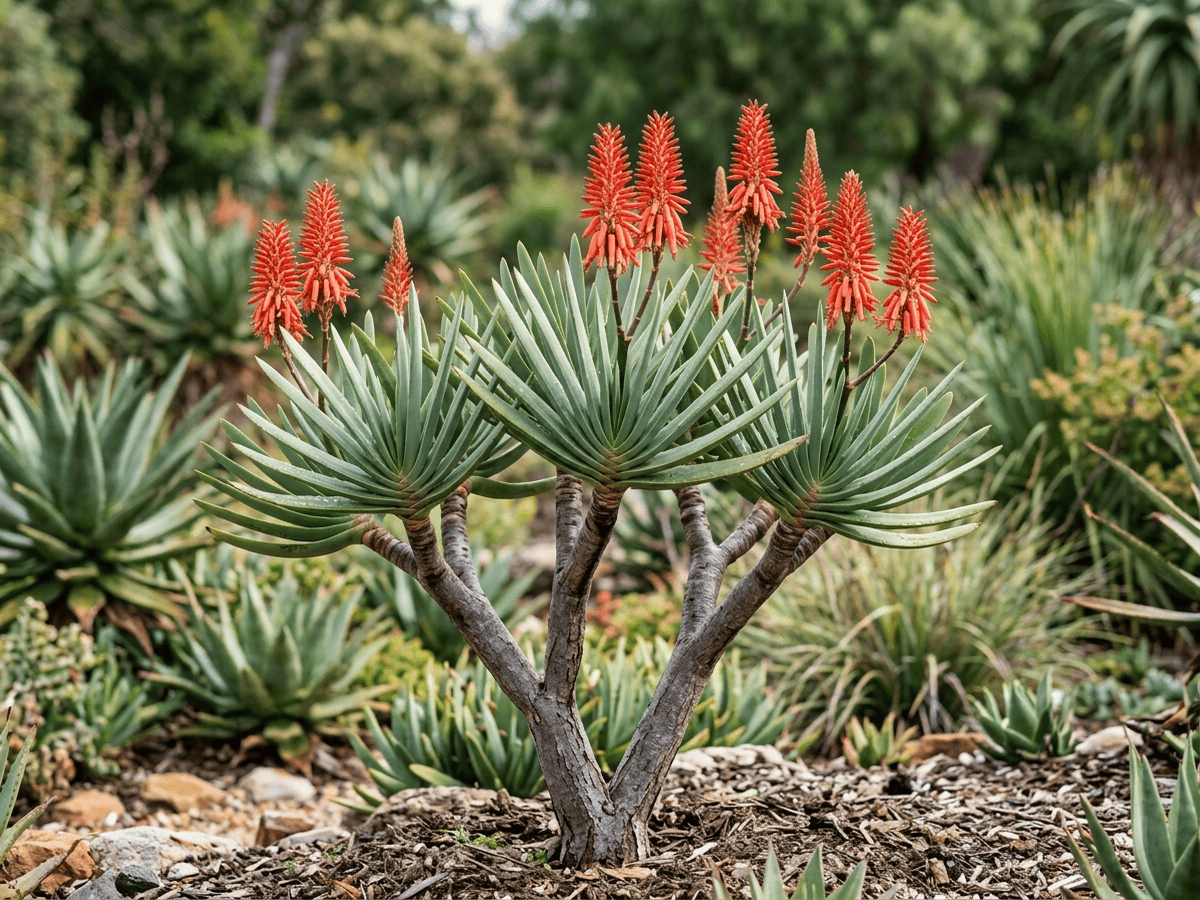 Fan AloeAloe plicatilis
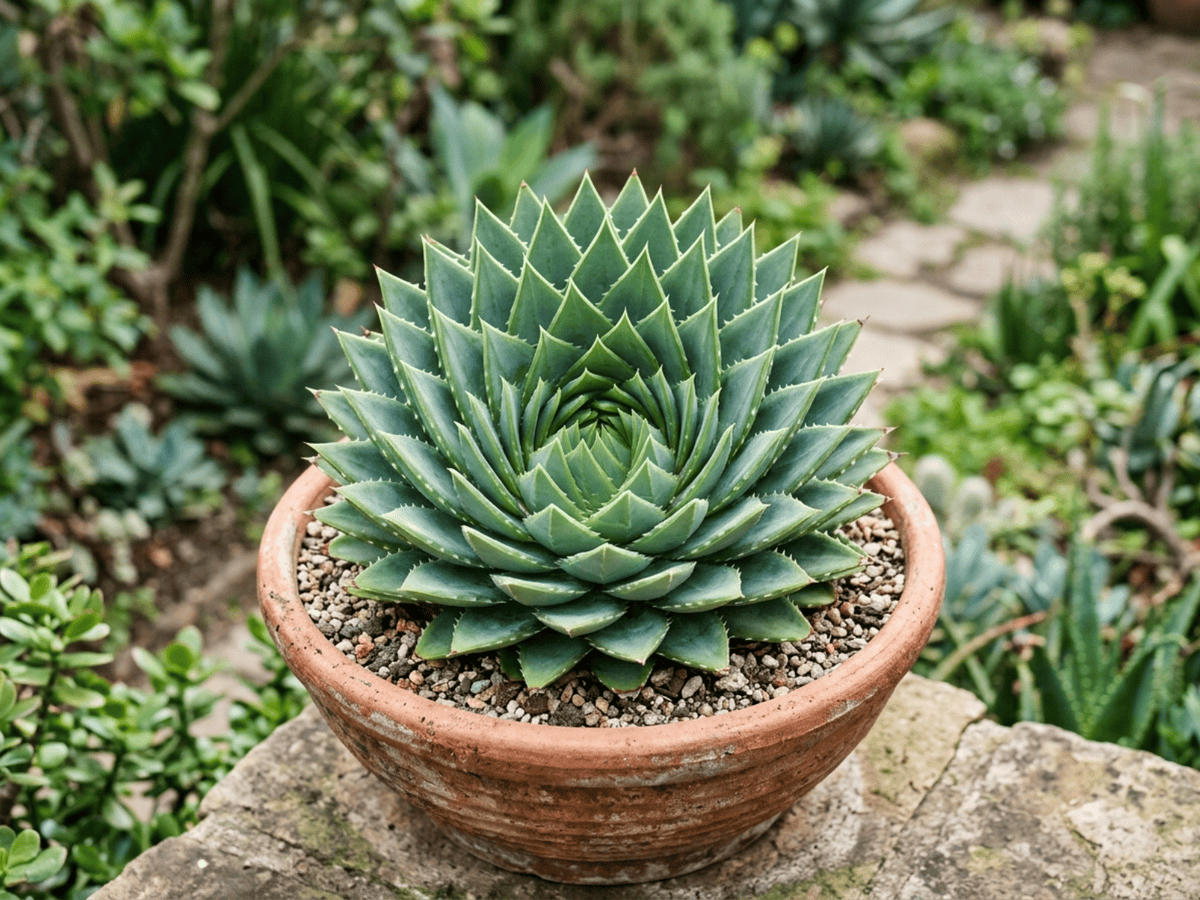 Spiral AloeAloe polyphylla
Plants with similar care
 Chinese AbeliaAbelia chinensis
 Fragrant AbeliaAbelia mosanensis
 Large-Flowered AbeliaAbelia uniflora
 Glossy AbeliaAbelia x grandiflora
Frequently asked questions
How often should I water Lace Aloe?
In summer, water about every 10 days; in winter, about every 30 days. Adjust for heat, pot size and drainage.
How much light does Lace Aloe need?
Full sun: 6+ hrs direct. Watch the leaves — scorching or stretching means the light needs adjusting.
Is Lace Aloe toxic to cats or dogs?
Pets Slight (Dogs Slight · Cats Slight) Educational information, not medical or veterinary advice. If exposure is suspected, contact a doctor or veterinarian.
Is Lace Aloe easy to grow?
Yes — it is considered an easy, beginner-friendly plant.
Can Lace Aloe be grown indoors?
Yes, it adapts well to indoor growing given the right light.
When does Lace Aloe bloom?
It typically blooms Sep–Nov in the Northern Hemisphere.
YardMate
Identify any plant in seconds
Snap a photo — YardMate names the plant, diagnoses problems, and reminds you when to water.
Download on the App Store