 YardMate


Hardy Aloe
Aloe striatula
Easy · Beginner friendlyAbout Hardy Aloe
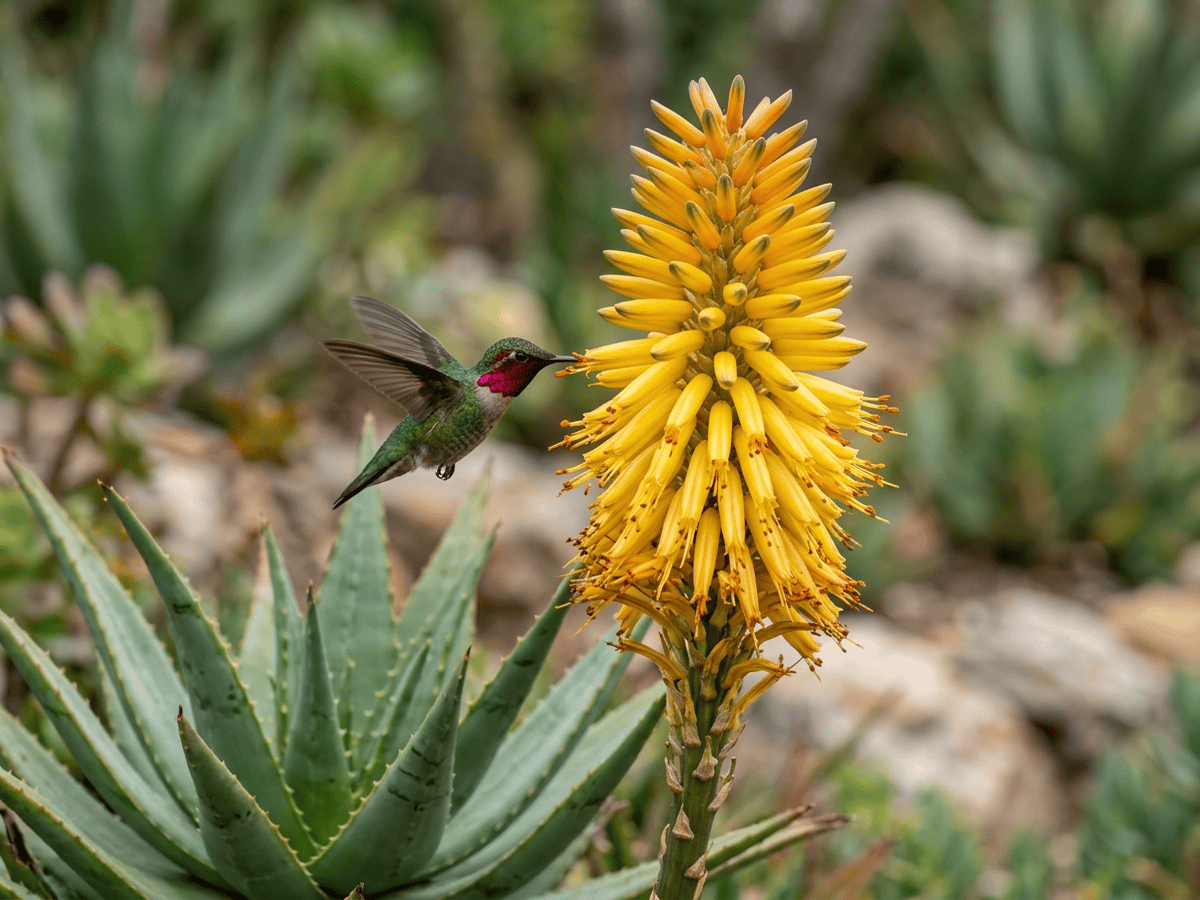
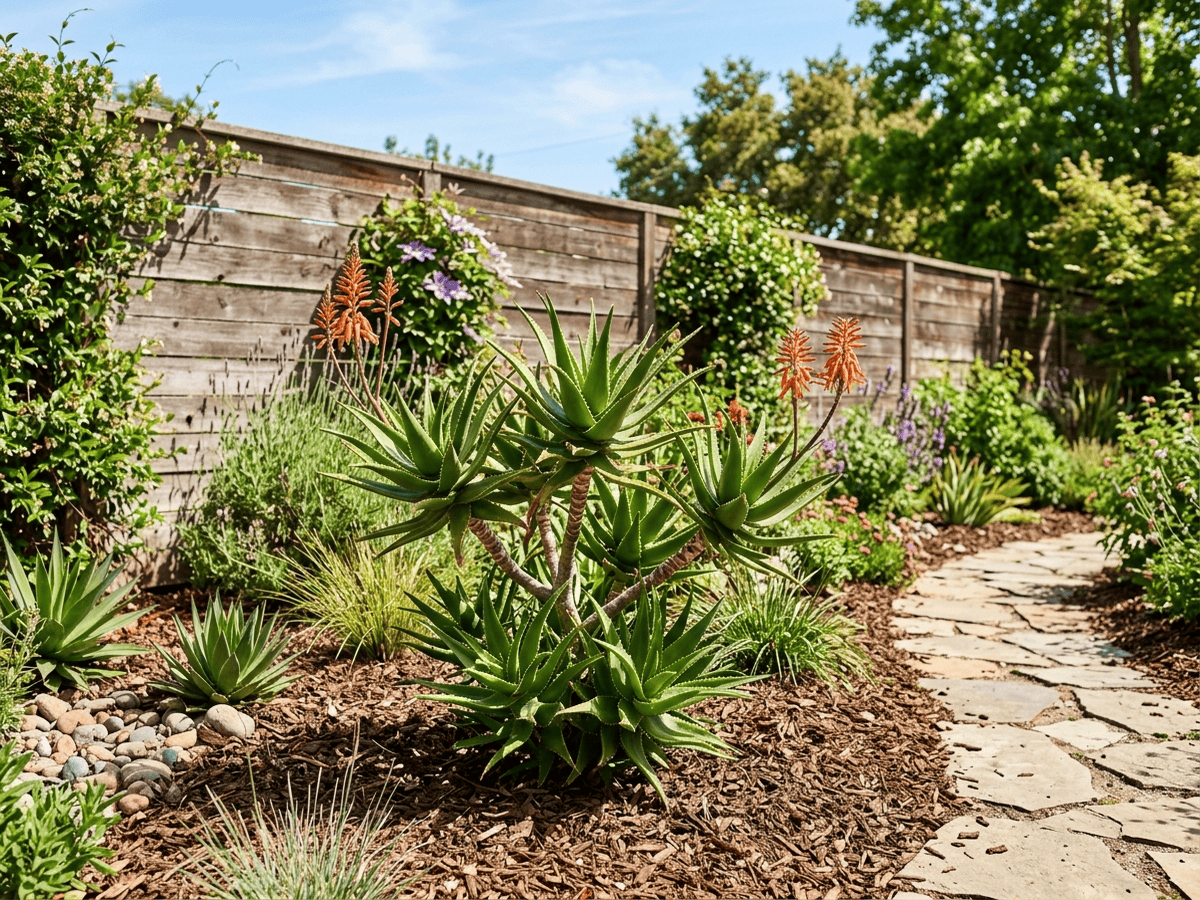
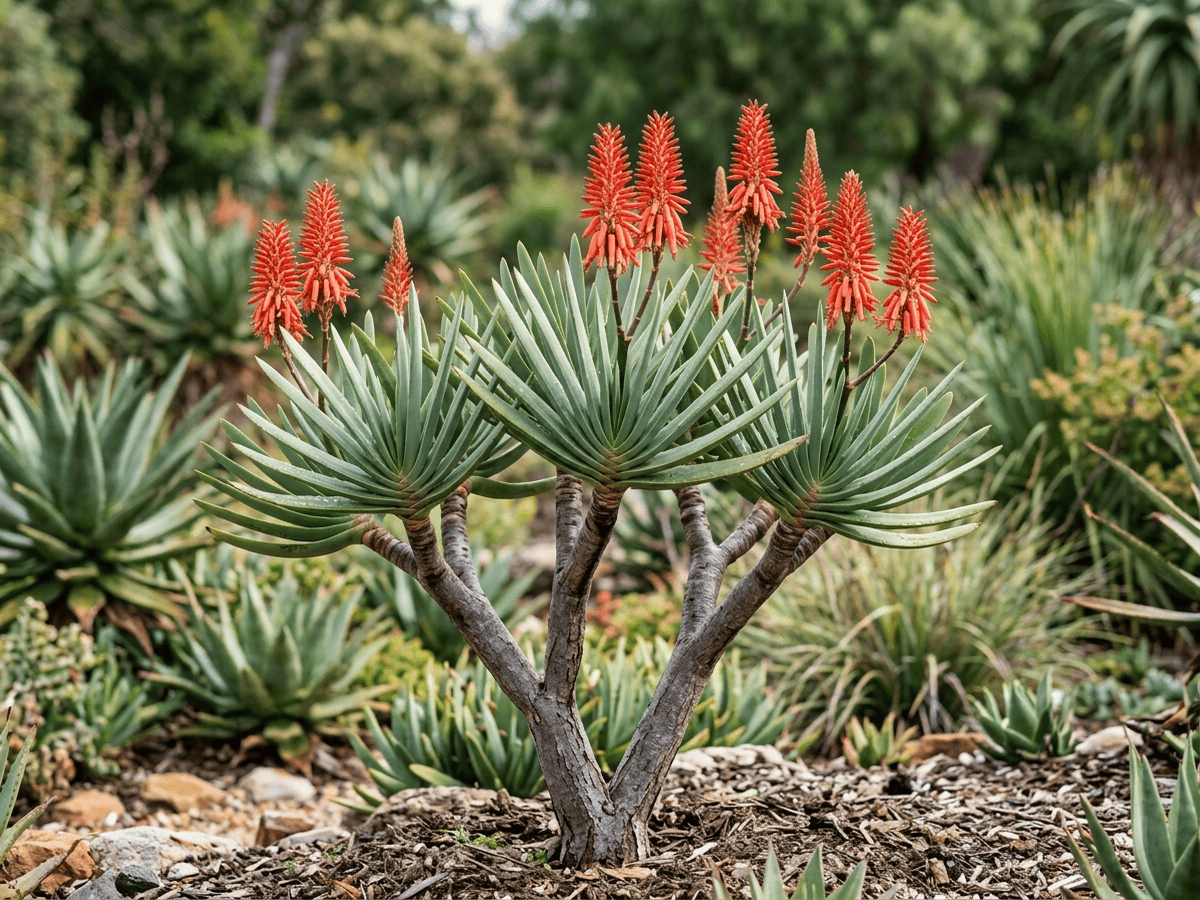
Hardy Aloe is a shrubby South African aloe reaching 4-6 feet tall, distinguished by slender striped green stems and arching narrow leaves. Unlike most aloes it forms a branching shrub rather than a basal rosette, making it useful as a structural plant in dry borders. Topped by bright yellow conical flower spikes in late spring, it is among the most cold-hardy aloes, surviving brief frosts to 15°F and thriving across coastal California and the Pacific Northwest.
- Drought-tolerant
- Cold-hardy
- Evergreen
- Pollinator-friendly
How to care for Hardy Aloe
Watering
- Springevery 14 days
- Summerevery 21 days
- Fallevery 21 days
- Winterevery 45 days
Soil · Fast-draining
- Main mixSand + pumice + soil 1:1:150%
- DrainagePumice / gravel50%
Keep grit at half the mix or more — this soil is meant to dry out fast.
FERTILIZER
- Springevery 60 days
At a Glance
- NativeAfrica
- Height3–6 ft (0.9–1.8 m)
- Spread3–5 ft (0.9–1.5 m)
- Flower colorYellow
- Foliage colorGreen
- SoilSandy, Well-drained
- LocationsYard
Bloom time
BLOOM CYCLE
Peak bloom
Mar–May
Bright yellow flower spikes in late spring
Toxicity
Humans Slight · Pets Moderate
anthraquinones, saponins, and aloin
Slight
- Leaf
- Sap
- Ingestion
EXPOSURE Eating leaves and sap.
EFFECT Gastrointestinal upset.
NOTE Documented concern for humans: Gastrointestinal upset.
Moderate
- Leaf
- Sap
- Ingestion
EXPOSURE Eating leaves and sap.
EFFECT Vomiting, diarrhea, and lethargy.
NOTE Aloe species listed by ASPCA as toxic to dogs and cats due to anthraquinones causing vomiting and diarrhea.
Moderate
- Leaf
- Sap
- Ingestion
EXPOSURE Eating leaves and sap.
EFFECT Vomiting, diarrhea, and lethargy.
NOTE Aloe species listed by ASPCA as toxic to dogs and cats due to anthraquinones causing vomiting and diarrhea.
Educational information, not medical or veterinary advice. If exposure is suspected, contact a doctor or veterinarian.
DISTRIBUTION


- Native
- Introduced
- Africa
History

Aloe striatula, hardy aloe, is an unusually cold-tolerant shrubby aloe native to the high Drakensberg escarpment of the Eastern Cape, Lesotho, and adjacent South Africa at 1200-2500 meters elevation. British botanist Adrian Hardy Haworth described the species in 1825. Based on molecular phylogenetic work by Grace, Klopper, Smith and others (2013), many authorities now place it and related sprawling aloes in the segregate genus Aloiampelos as Aloiampelos striatula, though horticultural trade retains Aloe.
Unlike typical stemless aloe rosettes, this species forms sprawling shrubs with 1-2 meter branching woody stems tipped with loose rosettes of slender striped green leaves. Dense conical racemes of tubular yellow flowers appear from late winter through spring.
The species is among the hardiest aloes, tolerating brief dips to -10°C (14°F) once established, which has made it important in UK, northwestern European, and upper-Mediterranean gardens where few other aloes survive outdoors. Introduced widely to California in the late 20th century where its hardiness and shrub form filled a unique niche in waterwise garden design.
Symbolism & meaning
What It Symbolizes
Hardy Aloe keeps the aloe family's cool, fleshy composure but adds an unexpected gift: the ability to face real winter. Its symbolism is resilience with tenderness, a rosette that stores warmth in its leaves and then answers the cold season with coral bloom. It is survival without hardness.
- Healing — shares the medicinal heritage of all aloes
- Resilience — rare cold-hardy aloe for temperate climates
Where the Name Comes From
'Aloe' from Arabic 'alloeh' for the plant; 'striatula' refers to the fine stripes on the stems.
Uses & Fun Facts
- Hardy shrubby aloe with striped stems and yellow spikes
- Tubular blooms draw bees and hummingbirds in late spring
- Architectural accent for dry Mediterranean-style gardens
Related plants
More Aloe plants

Plants with similar care
 Chinese AbeliaAbelia chinensis
 Fragrant AbeliaAbelia mosanensis
 Large-Flowered AbeliaAbelia uniflora
 Glossy AbeliaAbelia x grandiflora
Frequently asked questions
How often should I water Hardy Aloe?
In summer, water about every 21 days; in winter, about every 45 days. Adjust for heat, pot size and drainage.
How much light does Hardy Aloe need?
Full sun: 6+ hrs direct. Watch the leaves — scorching or stretching means the light needs adjusting.
Is Hardy Aloe toxic to cats or dogs?
Pets Moderate (Dogs Moderate · Cats Moderate) Educational information, not medical or veterinary advice. If exposure is suspected, contact a doctor or veterinarian.
Is Hardy Aloe easy to grow?
Yes — it is considered an easy, beginner-friendly plant.
When does Hardy Aloe bloom?
It typically blooms Mar–May in the Northern Hemisphere.
YardMate
Identify any plant in seconds
Snap a photo — YardMate names the plant, diagnoses problems, and reminds you when to water.
Download on the App Store