 YardMate


Begonia Tuberosa Hybrids
Begonia x tuberhybrida
Medium · Some experienceAbout Begonia Tuberosa Hybrids
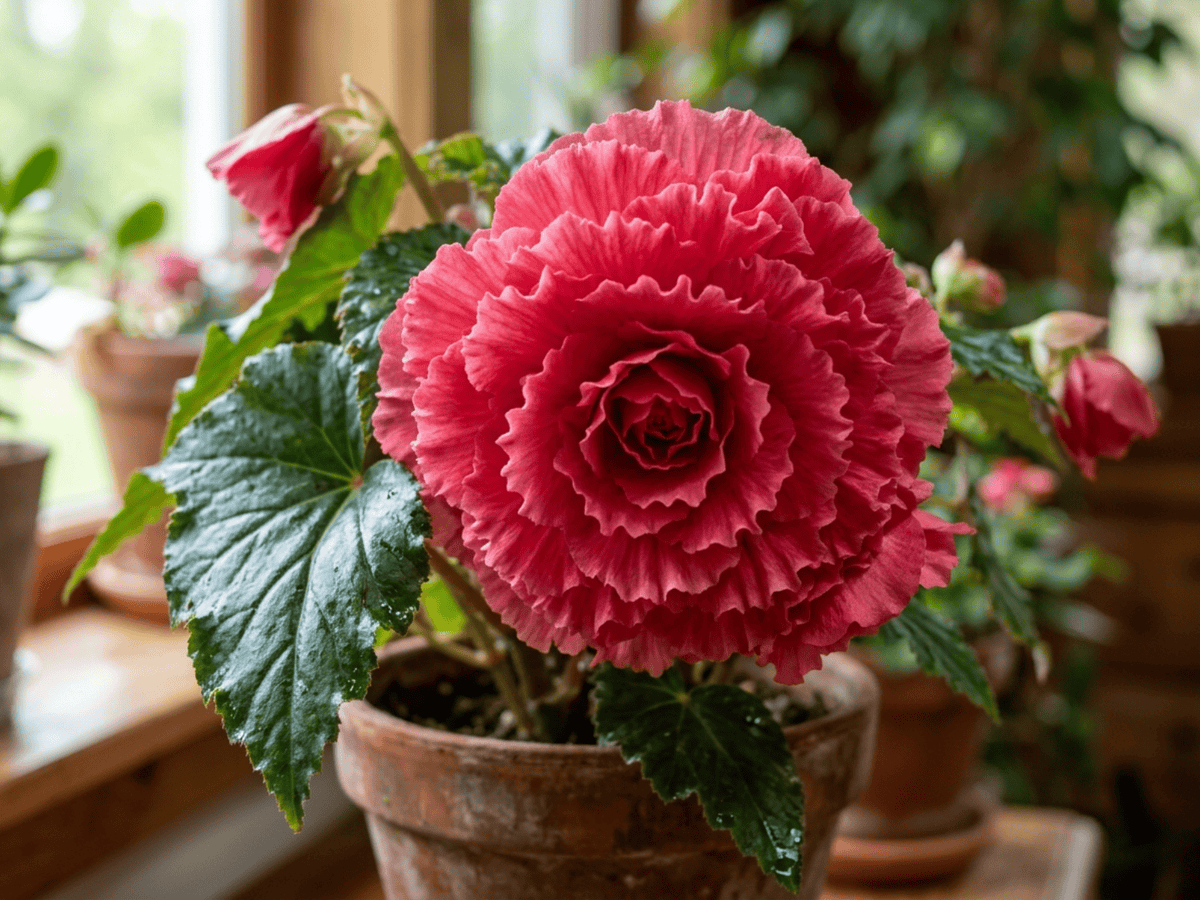
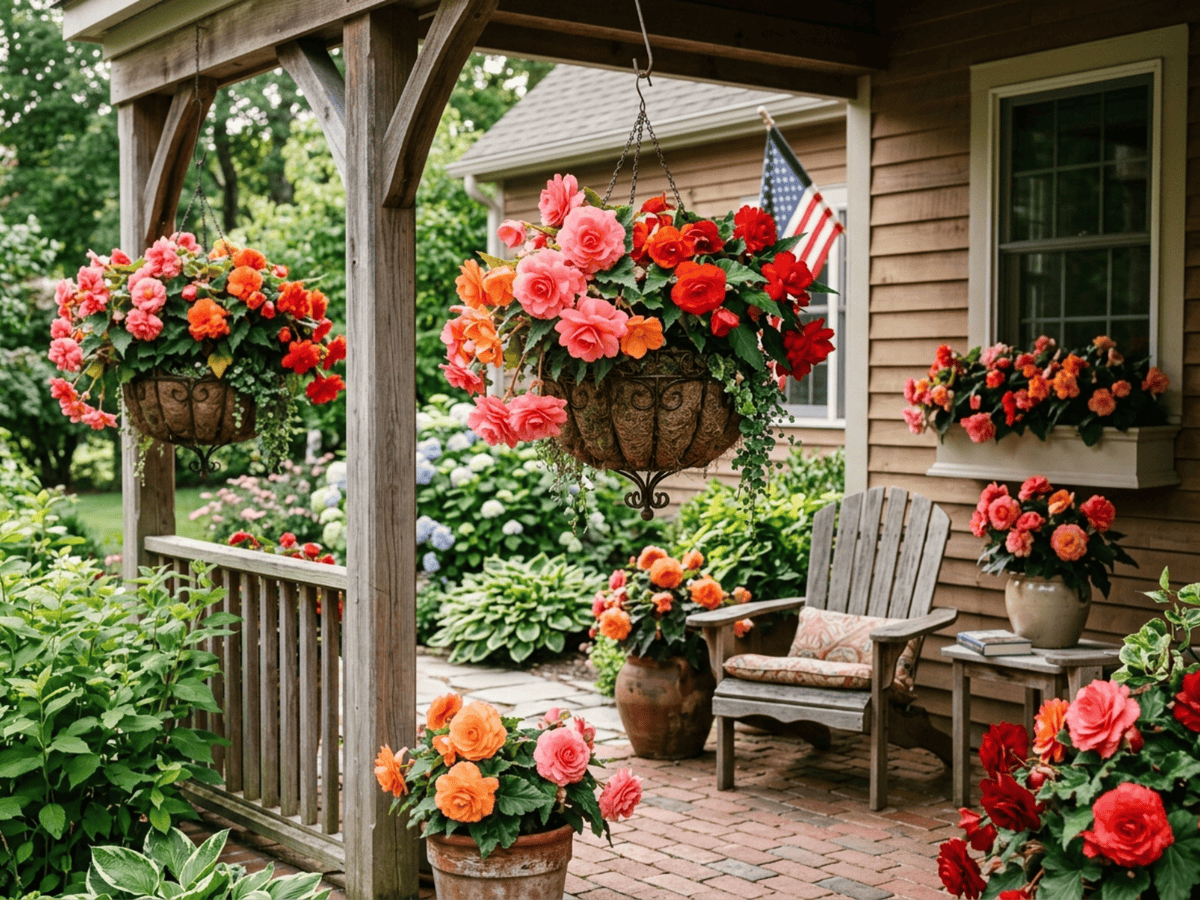
Tuberous Begonia is a shade-loving summer bulb bearing large camellia- or rose-like blooms in white, pink, orange, red, and yellow. Grown from tubers planted in spring after frost, it flourishes in cool, moist, partially-shaded sites—particularly excellent in Pacific Northwest and New England summers. Plants reach 8–18 inches with fleshy stems and asymmetric leaves. Tubers are dug and stored indoors for winter in cold zones, then replanted each spring for repeat bloom.
- Shade-tolerant
- Container-friendly
How to care for Begonia Tuberosa Hybrids
Watering
- Springevery 3 days
- Summerevery 2 days
- Fallevery 5 days
- Winterpause watering
Soil · Well-draining
- Main mixLoam + coarse sand 3:175%
- DrainageGravel25%
Sharp drainage matters most — bulbs rot in wet soil while dormant.
FERTILIZER
Balanced Feed 14-14-14
An even feed covers all three needs at once, keeping leaves, roots and blooms moving together with nothing pushed out of balance.
- Nitrogen · Leaves
- Phosphorus · Roots + Blooms
- Potassium · Strength
- Springevery 14 days
- Summerevery 14 days
- Fallevery 30 days
At a Glance
- NativeSouth America
- Height0.8–1.5 ft (0.2–0.5 m)
- Spread0.8–1.5 ft (0.2–0.5 m)
- Flower colorWhite, Cream, Yellow, Orange
- Foliage colorGreen, Bronze
- SoilLoamy, Well-drained, Rich
- LocationsYard · Balcony · Indoor
Bloom time
BLOOM CYCLE
Peak bloom
Jun–Sep
Rose-like flowers summer through early fall
Fragrance
NO FRAGRANCE
Most cultivars unscented; a few have faint rose fragrance.
Toxicity
Humans Slight · Pets Moderate
soluble calcium oxalates
Slight
- All
- Ingestion
EXPOSURE Eating any part of the plant.
EFFECT Oxalate crystals: mild oral irritation, GI upset.
NOTE Documented concern for humans: Oxalate crystals: mild oral irritation, GI upset.
Moderate
- Tuber
- All
- Ingestion
EXPOSURE Eating tubers and any part of the plant.
EFFECT Oral irritation, vomiting, drooling and tuber is the most toxic part.
NOTE ASPCA lists Begonia as toxic to dogs and cats.
Moderate
- Tuber
- All
- Ingestion
EXPOSURE Eating tubers and any part of the plant.
EFFECT Same as dogs.
NOTE ASPCA lists Begonia as toxic to dogs and cats.
Educational information, not medical or veterinary advice. If exposure is suspected, contact a doctor or veterinarian.
DISTRIBUTION

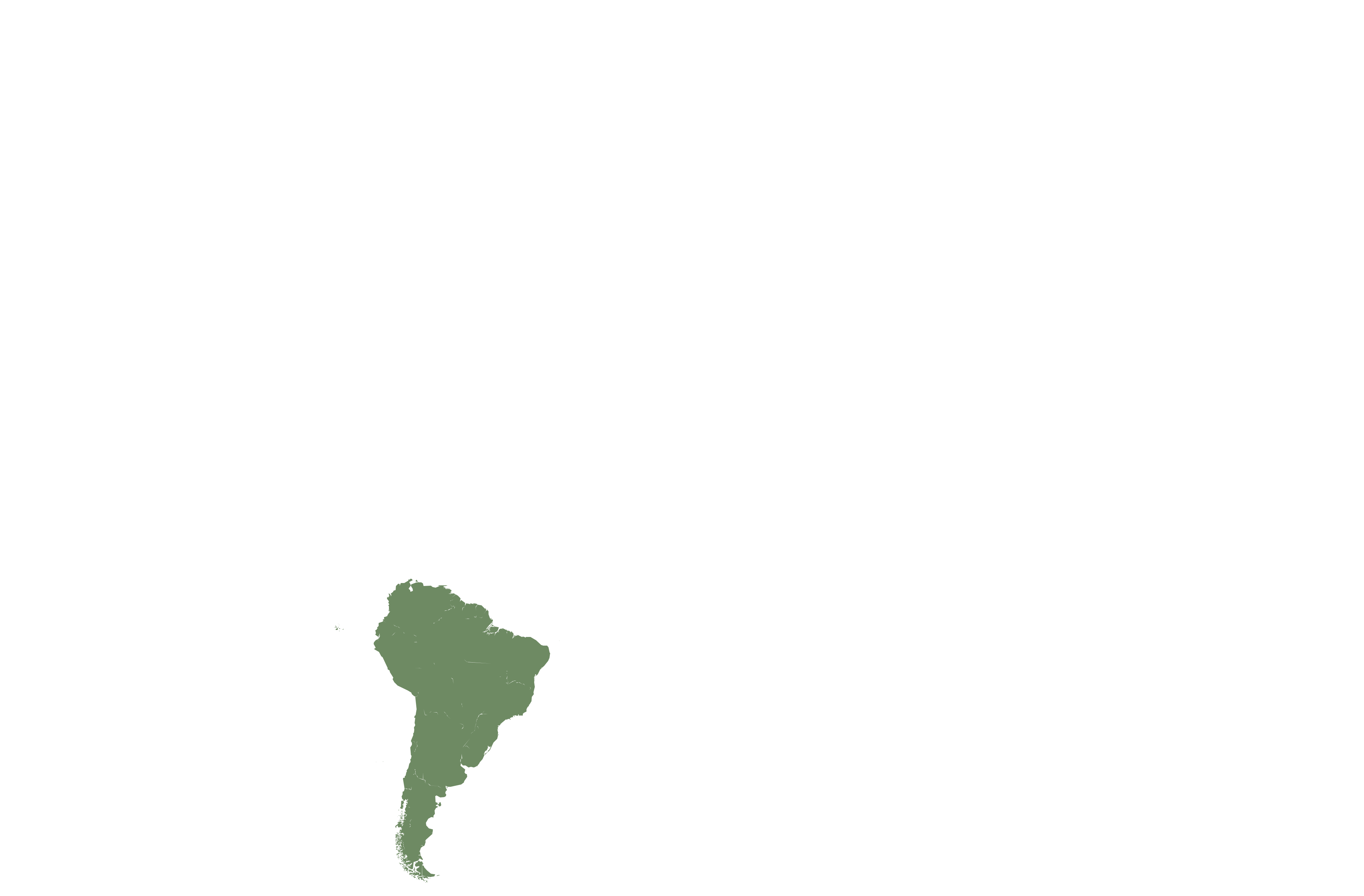
- Native
- South America
History
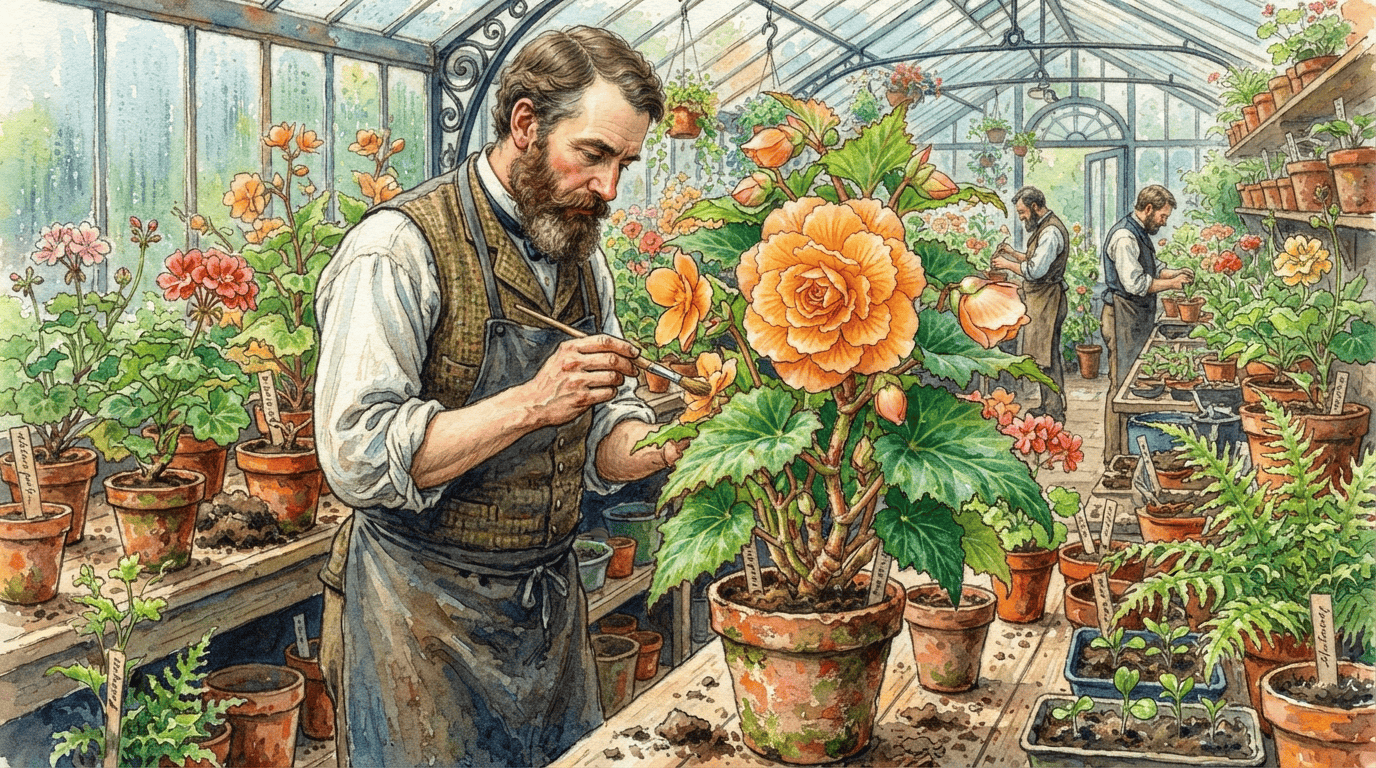
Begonia x tuberhybrida is a complex hybrid group developed from multiple tuberous Begonia species native to the Andes Mountains of South America. The foundational breeding work was done by John Seden, chief hybridizer at the James Veitch and Sons Nursery of Chelsea, London, beginning in 1868 — crossing the recently-introduced Andean species Begonia boliviensis (1864), B. veitchii (1867), B. pearcei (1865), B. clarkei (1867), and later B. davisii. Seden's first hybrid B. x sedenii was exhibited in 1870 and set off a decades-long breeding program at Veitch and other English nurseries that produced the modern tuberous begonia hybrids. Modern cultivars produce spectacular large flowers — up to 15-20 cm across in the "Non-Stop" and "Fortune" large-flowered bedding series, reaching 20-25 cm in exhibition "Picotee" and "Rose Form" show cultivars — in the entire warm color range (white, cream, yellow, gold, apricot, orange, salmon, pink, red, and bicolored picoteed forms).
Flower forms include single, double (camellia-like), rose-form (scrolled rose-like petals), carnation-form, ruffled, picoteed (with contrasting color edges), and pendulous hanging-basket forms. The plants grow from rounded underground tubers, die down in winter, and are typically lifted and stored dry in cool frost-free conditions for replanting the following spring in cold climates. Shade-loving and heat-intolerant, they perform best in cool mild summer conditions — particularly prized in the Pacific Northwest, British Isles, and New Zealand where cool moist summers suit their Andean native heritage.
Developed in the late 19th century by European breeders crossing several Andean Begonia species. The Portland, Oregon area hosts one of the largest US tuberous begonia shows each August.
Symbolism & meaning
What It Symbolizes
The Tuberous Begonia carries the begonia's traditional meaning of deep thoughts — a Victorian flower for moments of reflection and gentle warning. Sent in nineteenth-century bouquets as a token of gratitude, it was the polite way to say thank you when words felt too plain. Its layered, rose-form blooms still suit the same purpose: a thoughtful gift for someone who has been quietly kind.
- Deep thoughts — traditional begonia symbolism of reflection
- Gratitude — given as a thank-you flower in Victorian times
Where the Name Comes From
Genus honors Michel Bégon (1638–1710), French governor of Saint-Domingue; 'tuberhybrida' refers to its tuberous hybrid origin.
Uses & Fun Facts
- Camellia-like blooms fill shaded patio pots and hanging baskets
- Cool-summer shade bedding plant for moist Pacific Northwest gardens
Related plants
More Begonia plants
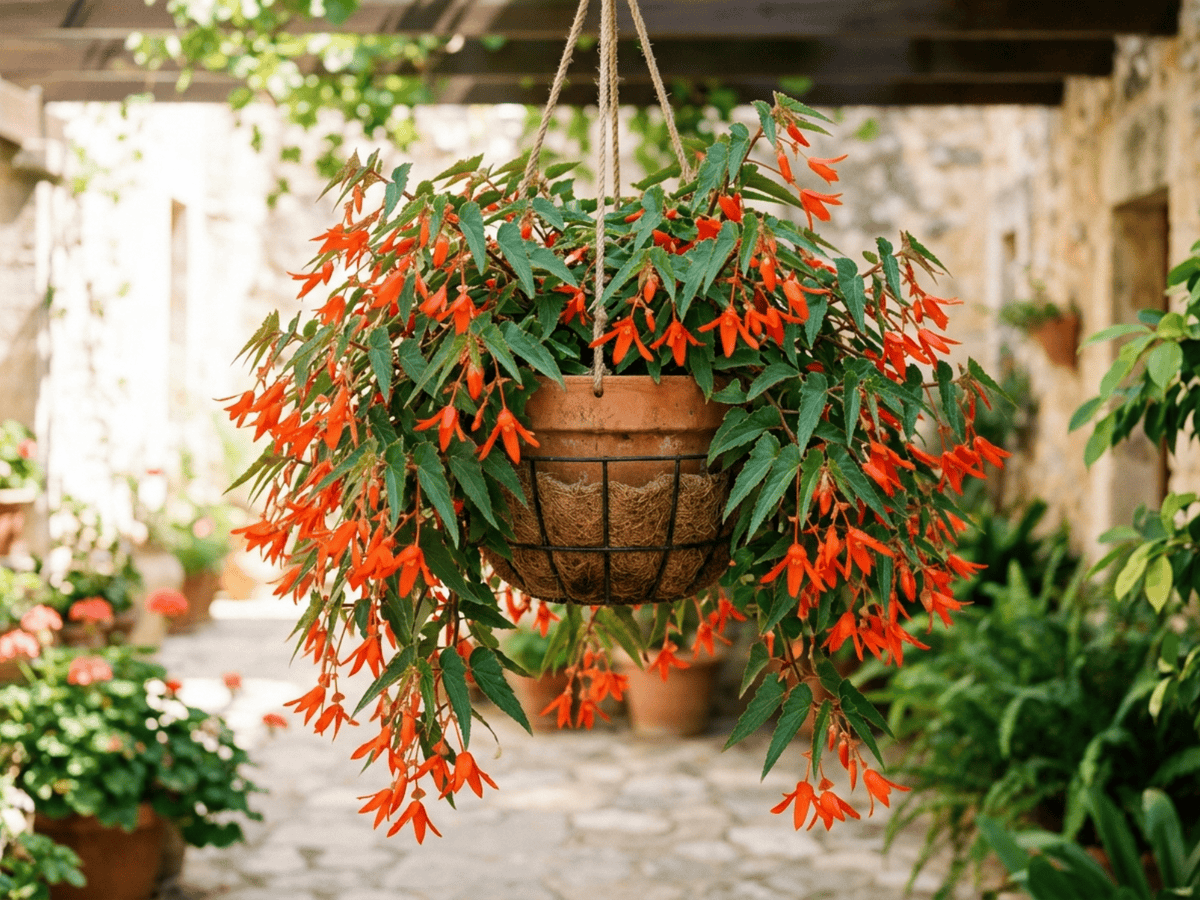 Tuberous BegoniaBegonia boliviensis
 Hardy BegoniaBegonia grandis
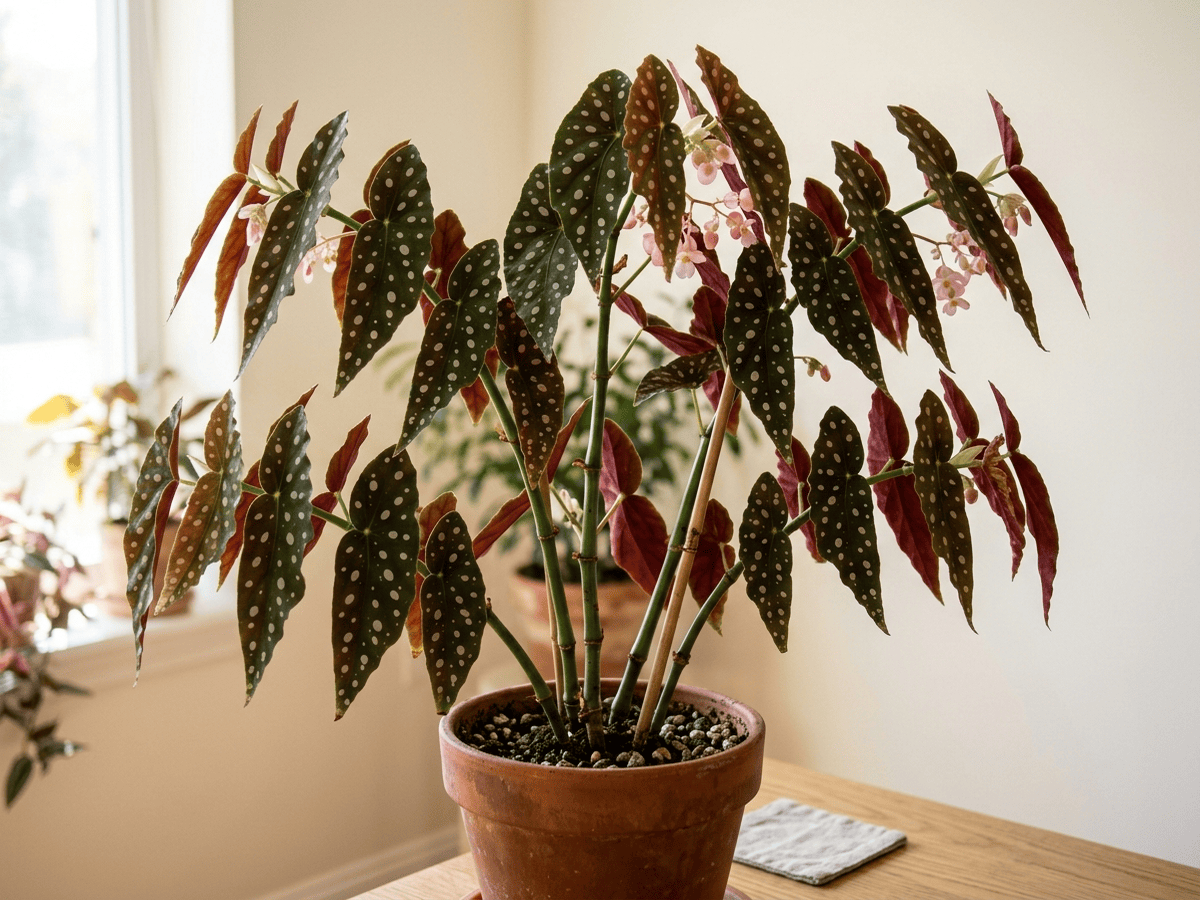 Polka Dot BegoniaBegonia maculata
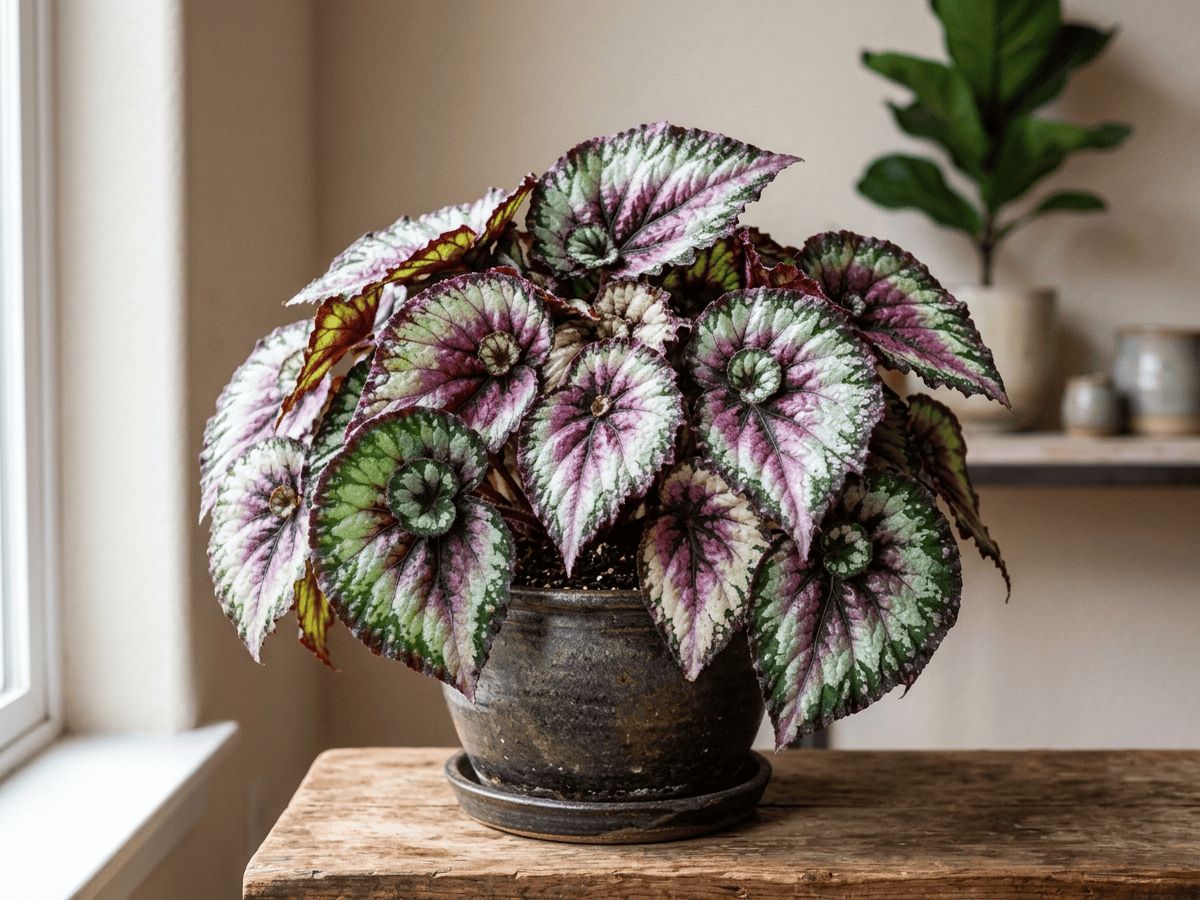 King BegoniaBegonia rex
Plants with similar care
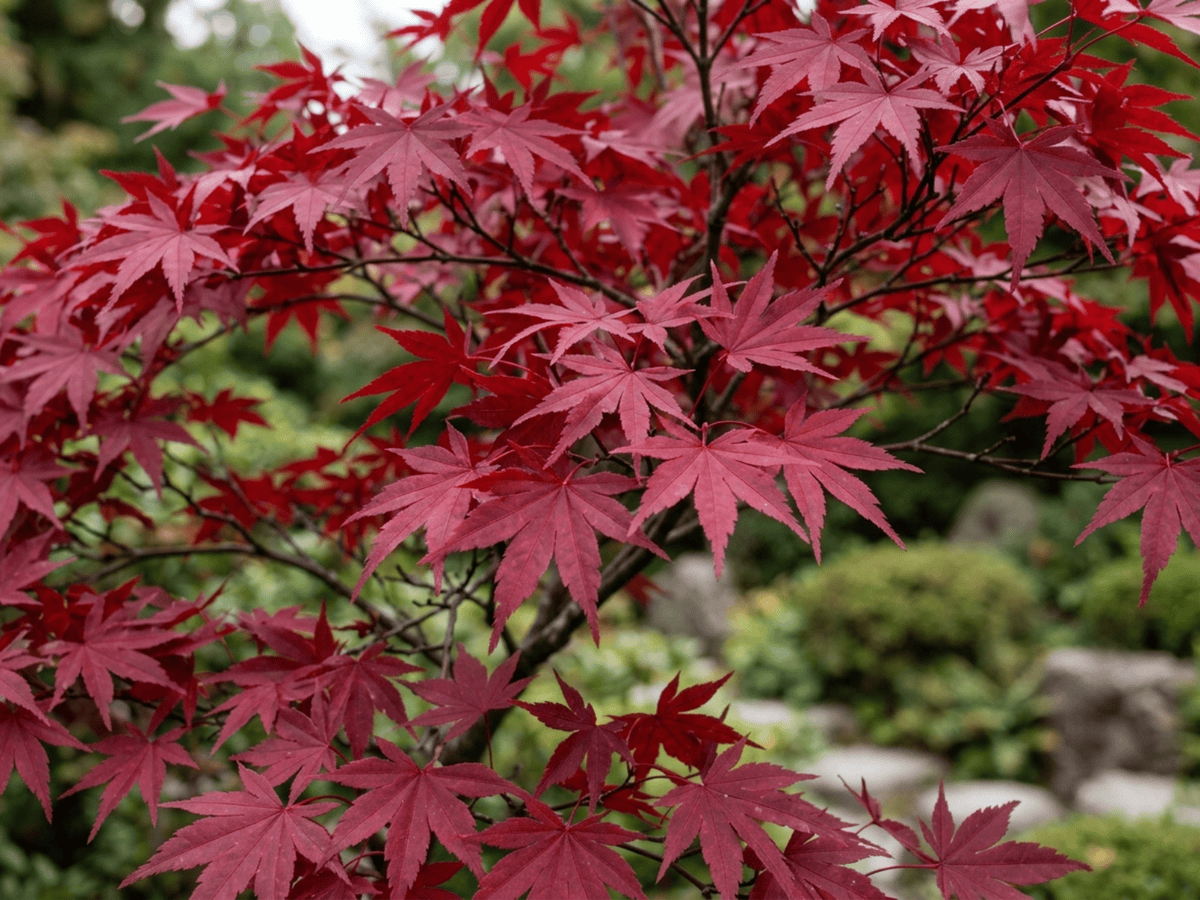 Japanese MapleAcer palmatum
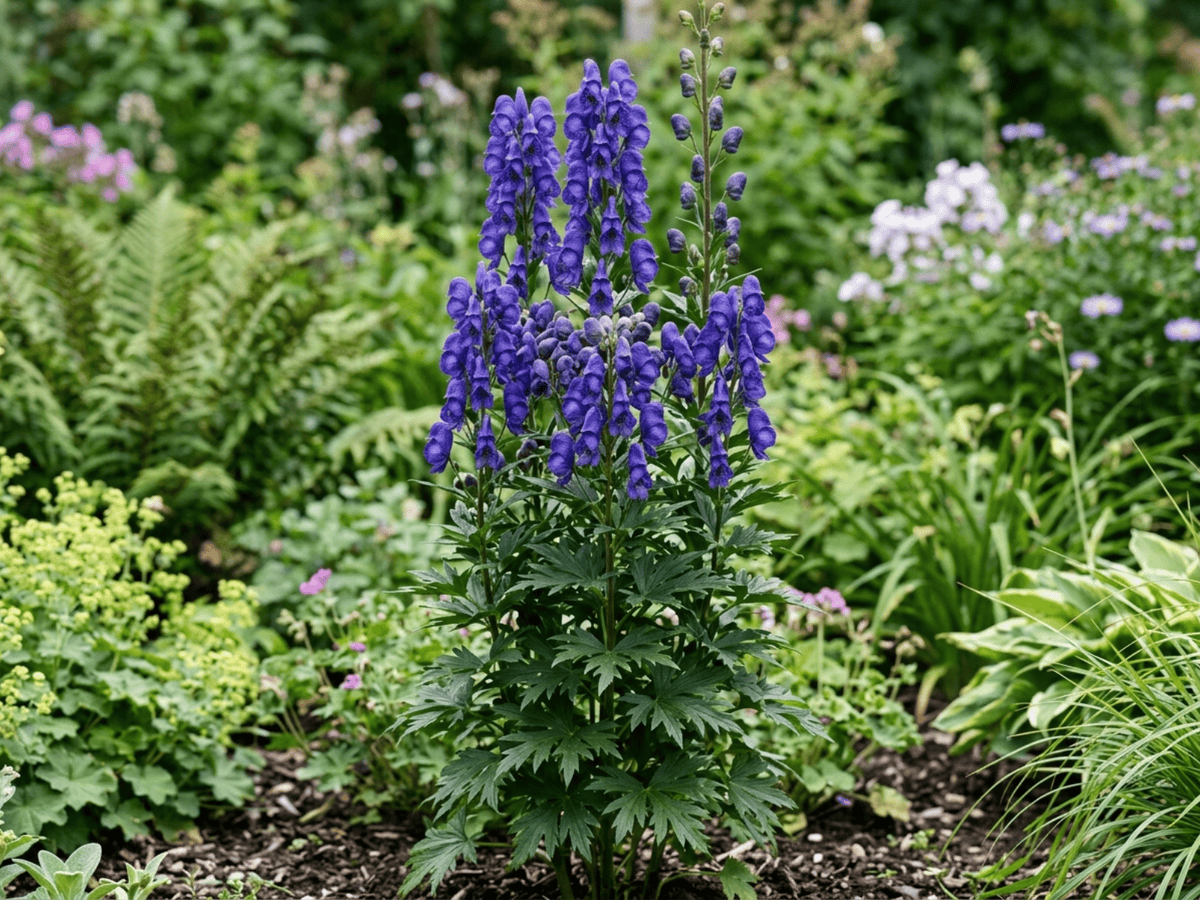 Azure MonkshoodAconitum carmichaelii
 Florida HobblebushAgarista populifolia
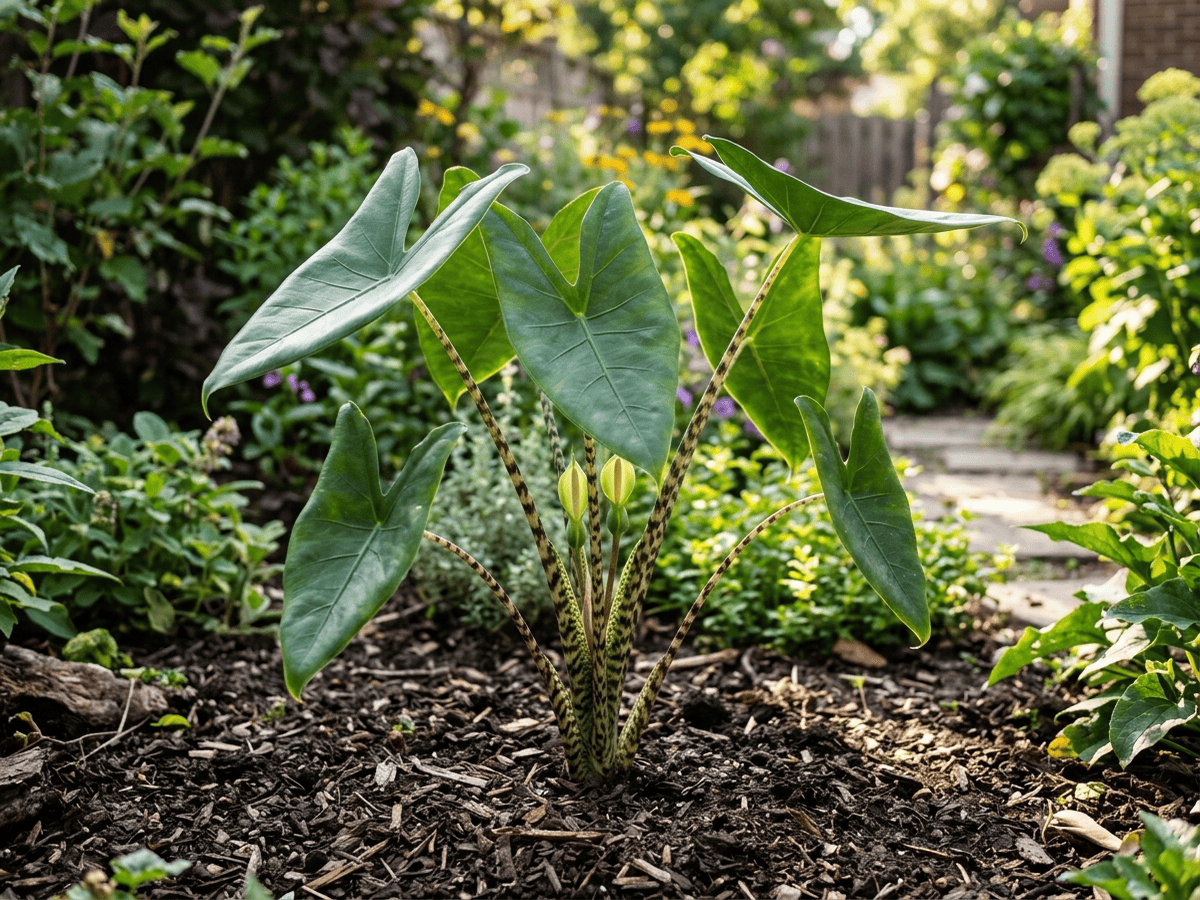 Alocasia zebrinaAlocasia zebrina
Frequently asked questions
How often should I water Begonia Tuberosa Hybrids?
Water about every 3 days during the growing season, and always let excess water drain away.
How much light does Begonia Tuberosa Hybrids need?
Part shade: 2–4 hrs direct. Watch the leaves — scorching or stretching means the light needs adjusting.
Is Begonia Tuberosa Hybrids toxic to cats or dogs?
Pets Moderate (Dogs Moderate · Cats Moderate) Educational information, not medical or veterinary advice. If exposure is suspected, contact a doctor or veterinarian.
Is Begonia Tuberosa Hybrids easy to grow?
It is moderately demanding: a good choice once you have a little experience.
Can Begonia Tuberosa Hybrids be grown indoors?
Yes, it adapts well to indoor growing given the right light.
When does Begonia Tuberosa Hybrids bloom?
It typically blooms Jun–Sep in the Northern Hemisphere.
YardMate
Identify any plant in seconds
Snap a photo — YardMate names the plant, diagnoses problems, and reminds you when to water.
Download on the App Store