 YardMate

American Beautyberry
Callicarpa americana
Easy · Beginner friendlyAbout American Beautyberry
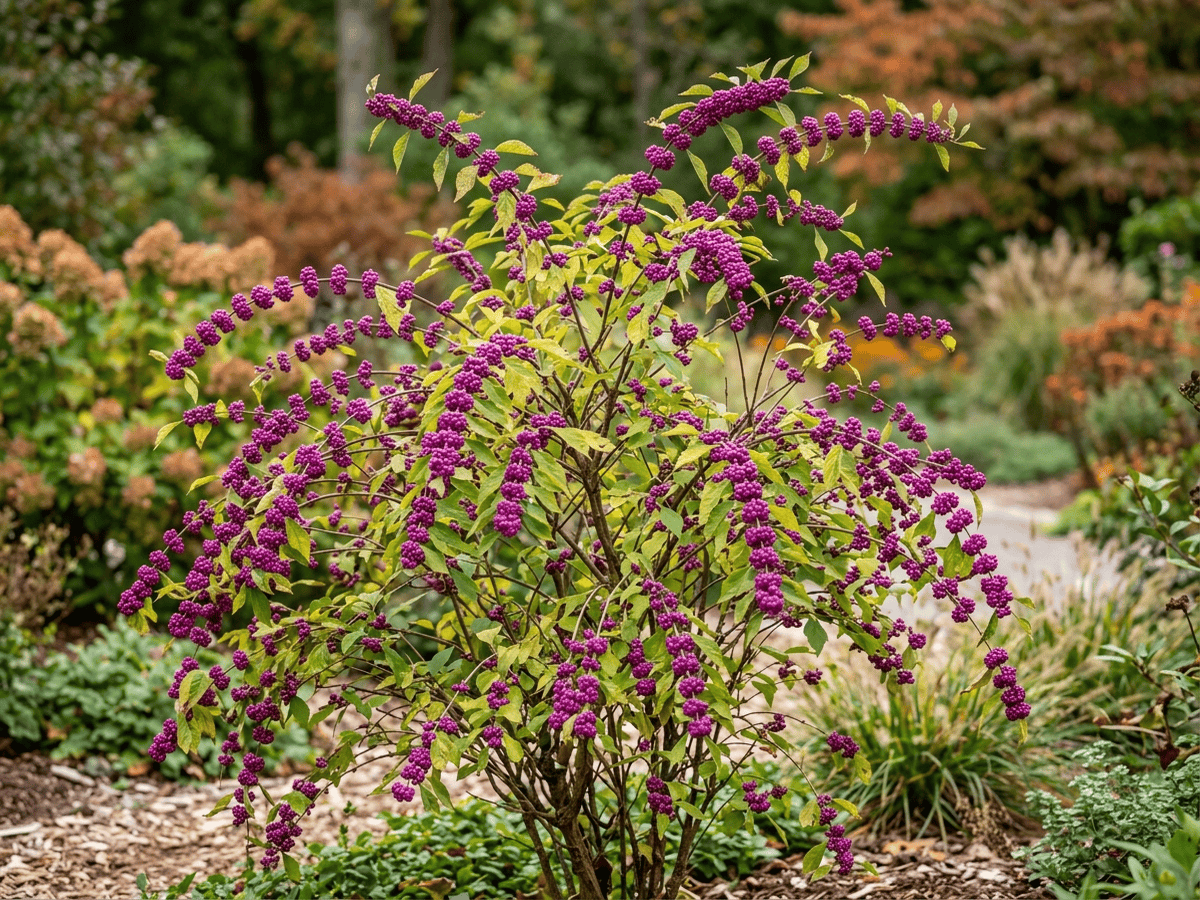
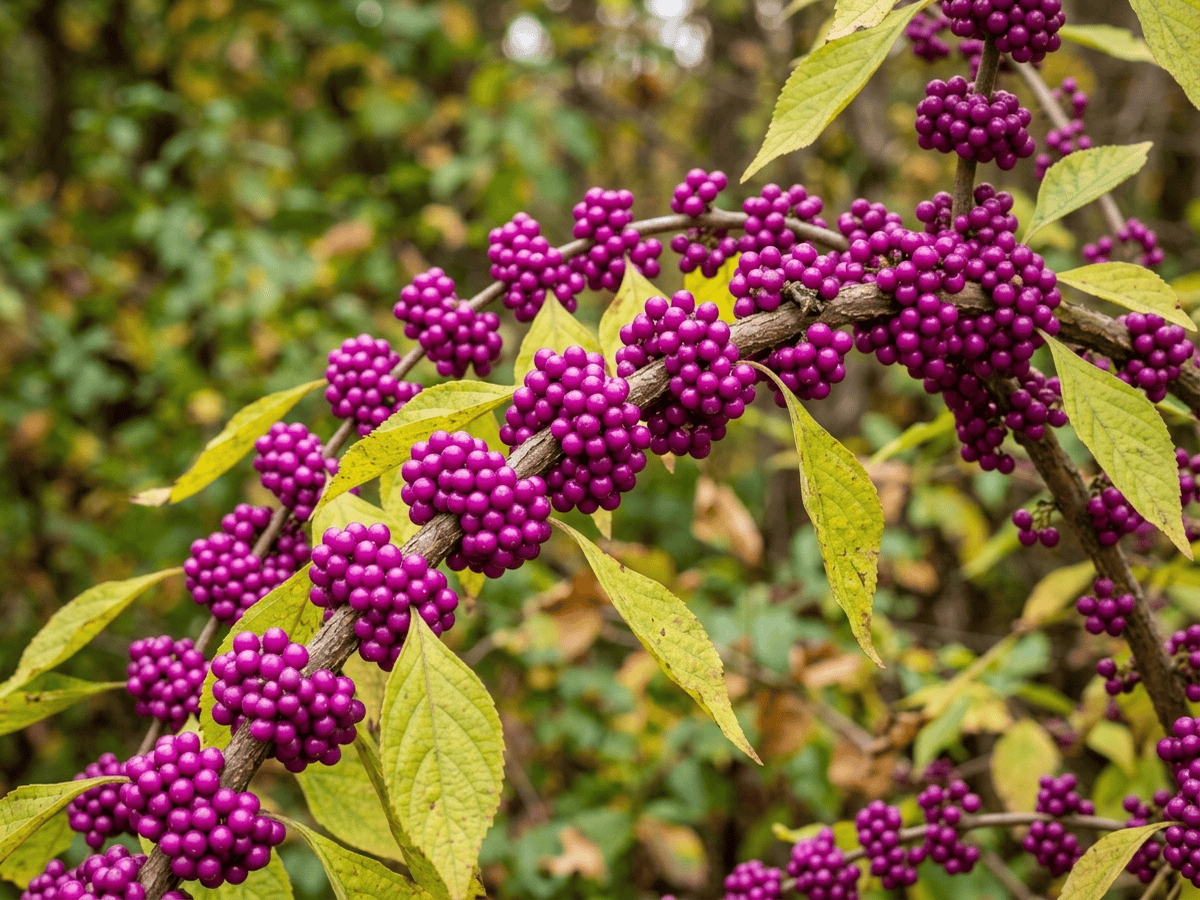
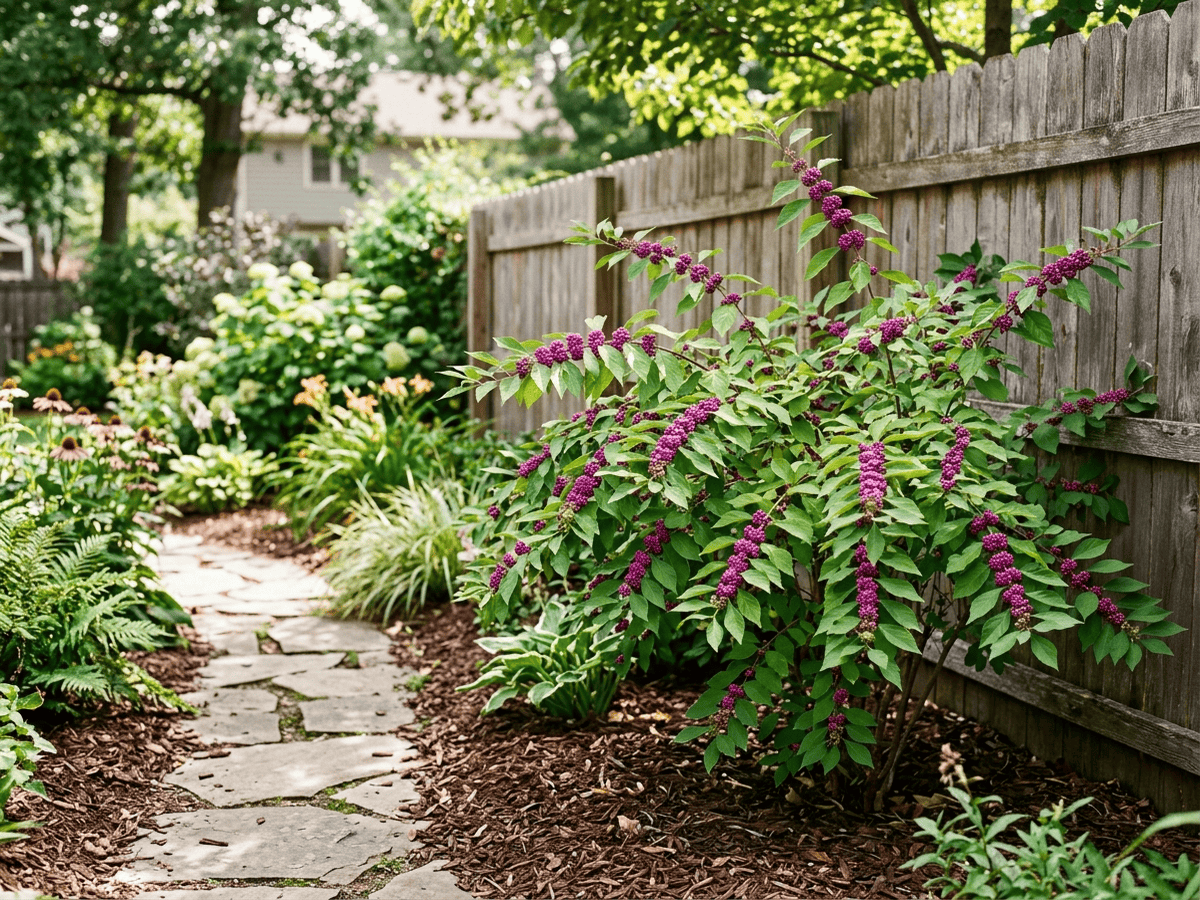
American Beautyberry is a Southeastern American native deciduous shrub reaching 4-8 feet tall and wide, with broad green leaves and inconspicuous lavender summer flowers followed by spectacular dense clusters of vivid bright purple-magenta berries that ring the stems in fall. Native from Maryland to Texas, it is among the most ornamental and wildlife-valuable native shrubs of the Southeast. The crushed leaves contain natural mosquito-repellent compounds traditionally used as folk remedies.
- Native
How to care for American Beautyberry
Watering
- Springevery 7 days
- Summerevery 5 days
- Fallevery 10 days
- Winterevery 14 days
Soil · Rich & loamy
- Top dressingBark mulch15%
- Main mixRich loam + compost 3:170%
- DrainageGravel15%
Use fully finished compost — fresh compost burns roots.
FERTILIZER
- Springevery 90 days
At a Glance
- NativeNorth America, Central America
- Height3–8 ft (0.9–2.4 m)
- Spread4–8 ft (1.2–2.4 m)
- Flower colorPink, Purple
- Foliage colorGreen, Yellow
- Fruit colorPurple
- SoilLoamy, Well-drained, Moisture-retentive
- LocationsYard
Bloom time
BLOOM CYCLE
Peak bloom
Jun–Aug
Inconspicuous lavender flower clusters in summer
Fragrance
LIGHT FRAGRANCE
Leaves release a mild herbal scent when crushed.
Toxicity
No toxicity has been reported for this plant. Still, it is wise to keep pets from chewing on any houseplant.
Educational information, not medical or veterinary advice. If exposure is suspected, contact a doctor or veterinarian.
DISTRIBUTION


- Native
- North America
- Central America
History
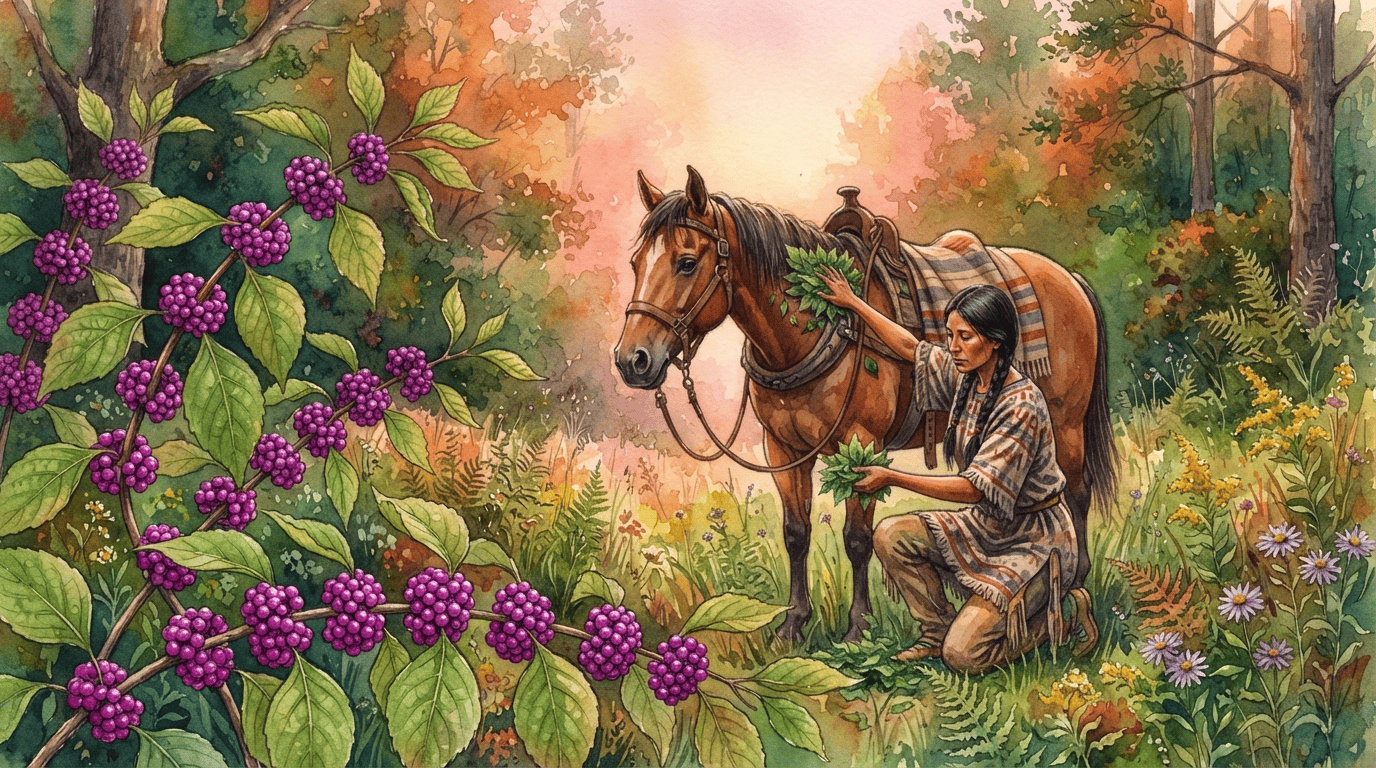
Callicarpa americana, the American beautyberry, is a deciduous shrub native to the southeastern United States from Maryland to Texas, also found in Mexico, Cuba, and Bermuda. Mark Catesby illustrated it in the 1730s as one of the showiest autumn shrubs of the region. Indigenous peoples including the Alabama, Choctaw, and Seminole crushed its aromatic leaves and rubbed them on skin and under harnesses to repel mosquitoes and biting flies.
In the early 2000s USDA chemist Charles Cantrell isolated callicarpenal and intermedeol from the leaves and confirmed their mosquito-repellent activity, validating the Indigenous practice. The plant is now popular in native plant gardens and wildlife landscapes, where more than 40 bird species feed on the dense magenta fruit clusters from late summer through winter.
The crushed leaves were used by Indigenous peoples and rural Southerners as a natural mosquito repellent—modern research has identified the active compound callicarpenal. Among the most ornamental native shrubs of the Southeast, increasingly available nationwide.
Symbolism & meaning
What It Symbolizes
American Beautyberry waits until autumn to reveal its joke on restraint. For months it is a quiet native shrub; then metallic violet berries appear in clusters so bright they seem invented. Its symbolism is surprise abundance: the woodland's reminder that modest plants may be saving their brilliance for later.
- Joy — vivid purple berries delight in autumn
- Heritage — traditional Southern mosquito-repellent plant
Where the Name Comes From
'Callicarpa' from Greek meaning beautiful fruit; 'americana' refers to its native range.
Uses & Fun Facts
- Bright purple berries feed songbirds well into winter
- Magenta berry clusters ring bare stems in southeastern gardens
Related plants
More Callicarpa plants
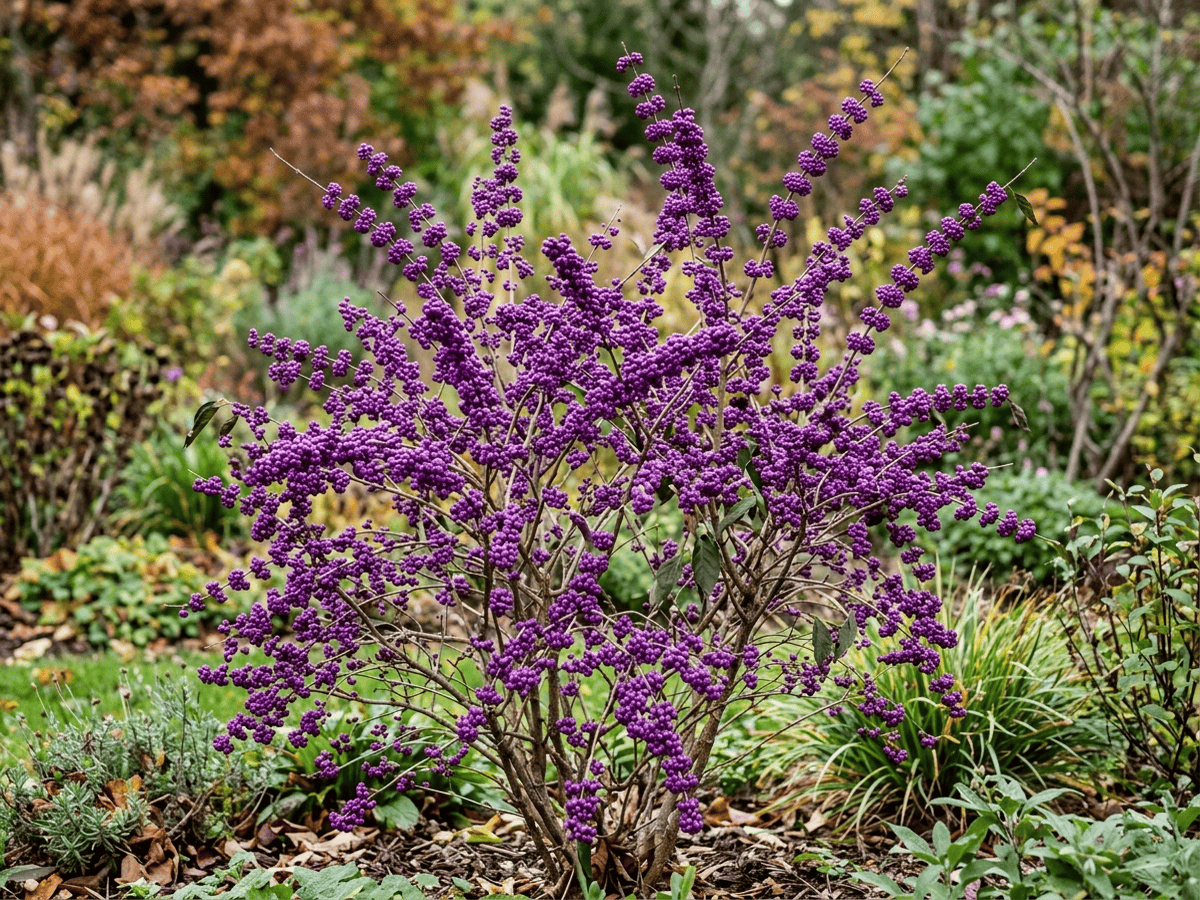 Bodinier's BeautyberryCallicarpa bodinieri
 Purple BeautyberryCallicarpa dichotoma
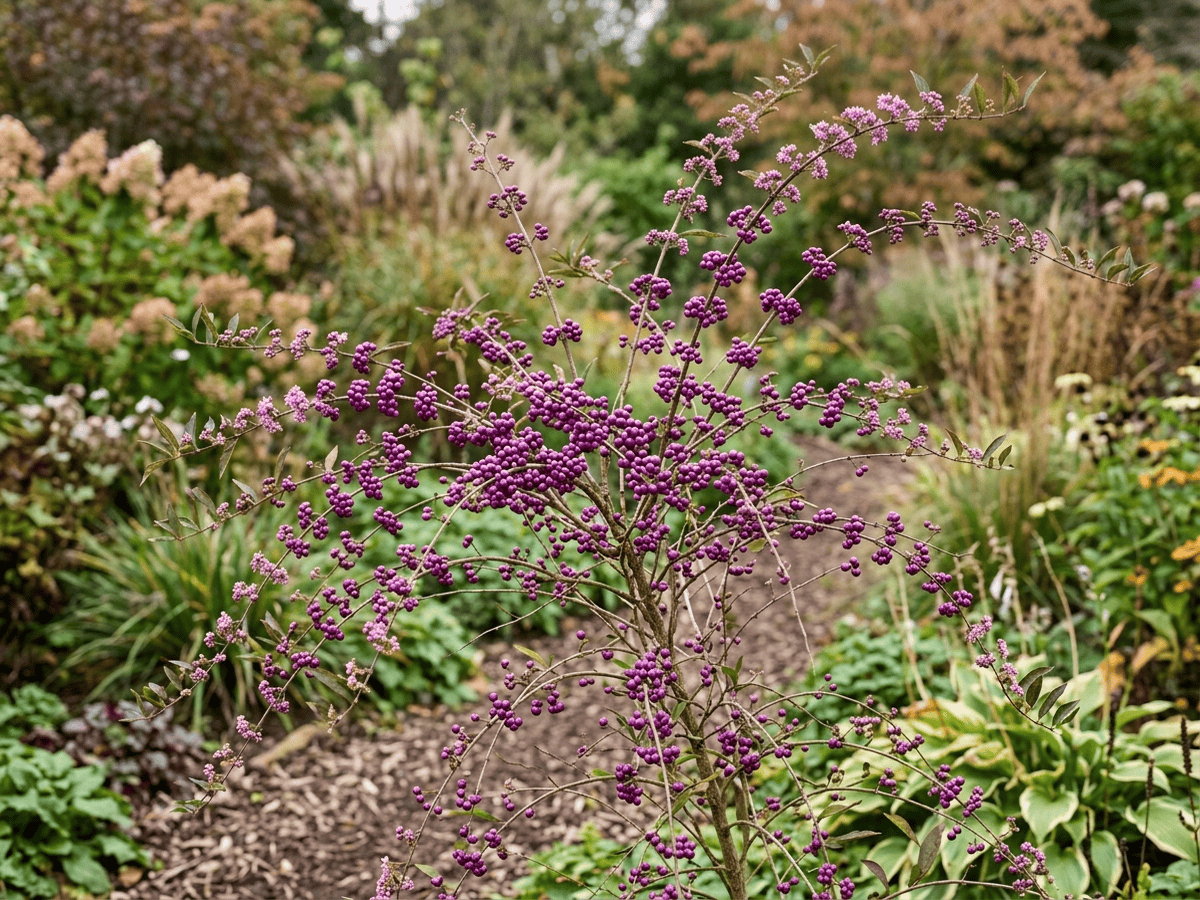 Callicarpa giraldiiCallicarpa giraldii
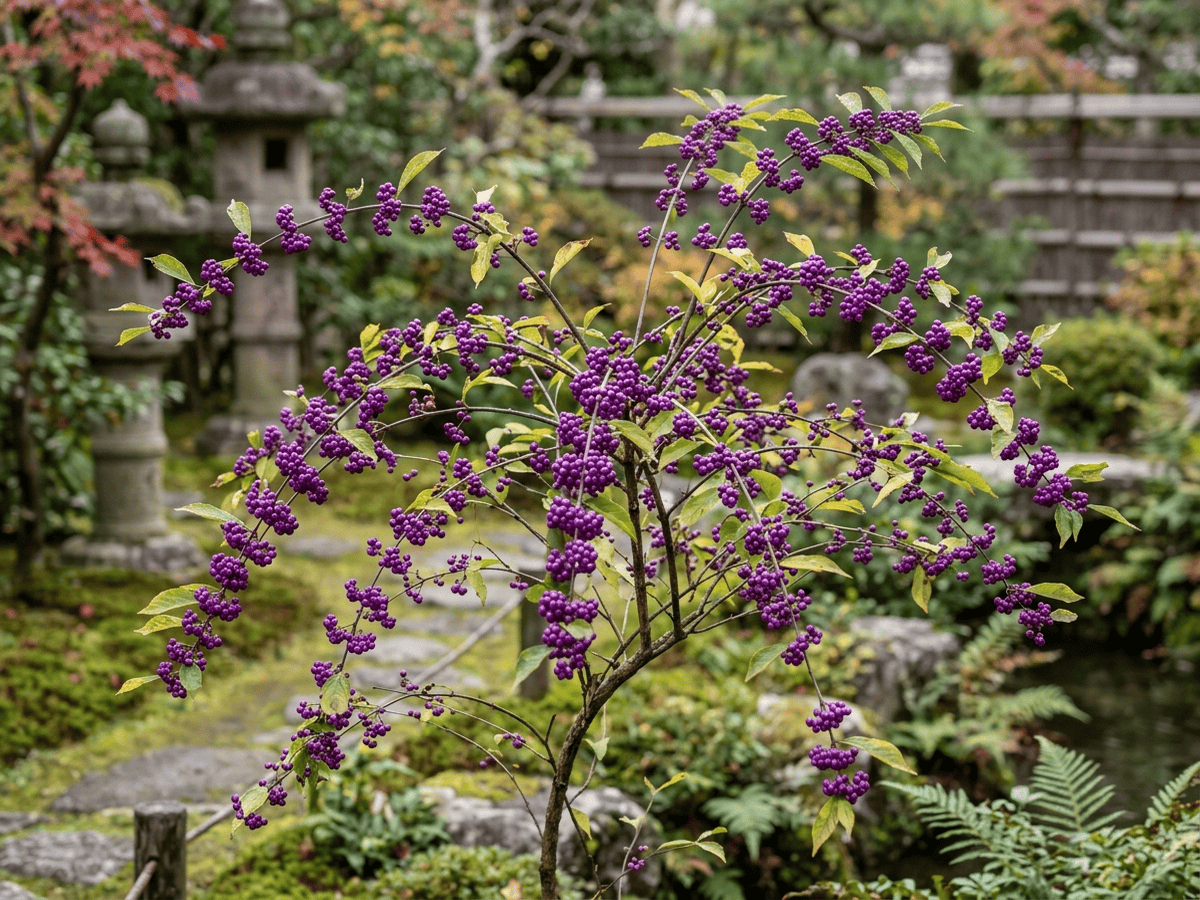 Japanese BeautyberryCallicarpa japonica
Plants with similar care
 Chinese AbeliaAbelia chinensis
 Fragrant AbeliaAbelia mosanensis
 Large-Flowered AbeliaAbelia uniflora
 Glossy AbeliaAbelia x grandiflora
Frequently asked questions
How often should I water American Beautyberry?
In summer, water about every 5 days; in winter, about every 14 days. Adjust for heat, pot size and drainage.
How much light does American Beautyberry need?
Full sun: 6+ hrs direct. Watch the leaves — scorching or stretching means the light needs adjusting.
Is American Beautyberry toxic to cats or dogs?
No toxicity has been reported for this plant. Still, it is wise to keep pets from chewing on any houseplant. Educational information, not medical or veterinary advice. If exposure is suspected, contact a doctor or veterinarian.
Is American Beautyberry easy to grow?
Yes — it is considered an easy, beginner-friendly plant.
When does American Beautyberry bloom?
It typically blooms Jun–Aug in the Northern Hemisphere.
YardMate
Identify any plant in seconds
Snap a photo — YardMate names the plant, diagnoses problems, and reminds you when to water.
Download on the App Store