 YardMate

Bodinier's Beautyberry
Callicarpa bodinieri
Easy · Beginner friendlyAbout Bodinier's Beautyberry
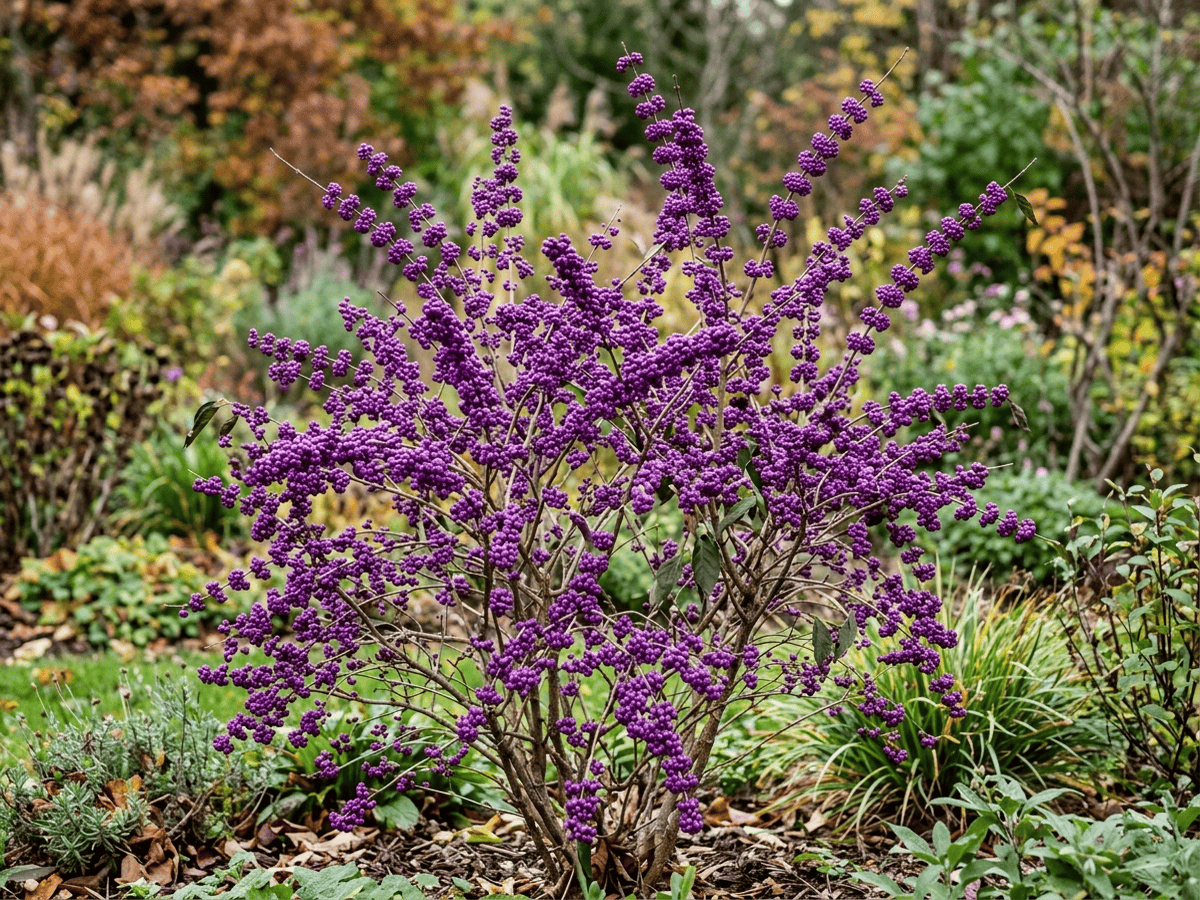
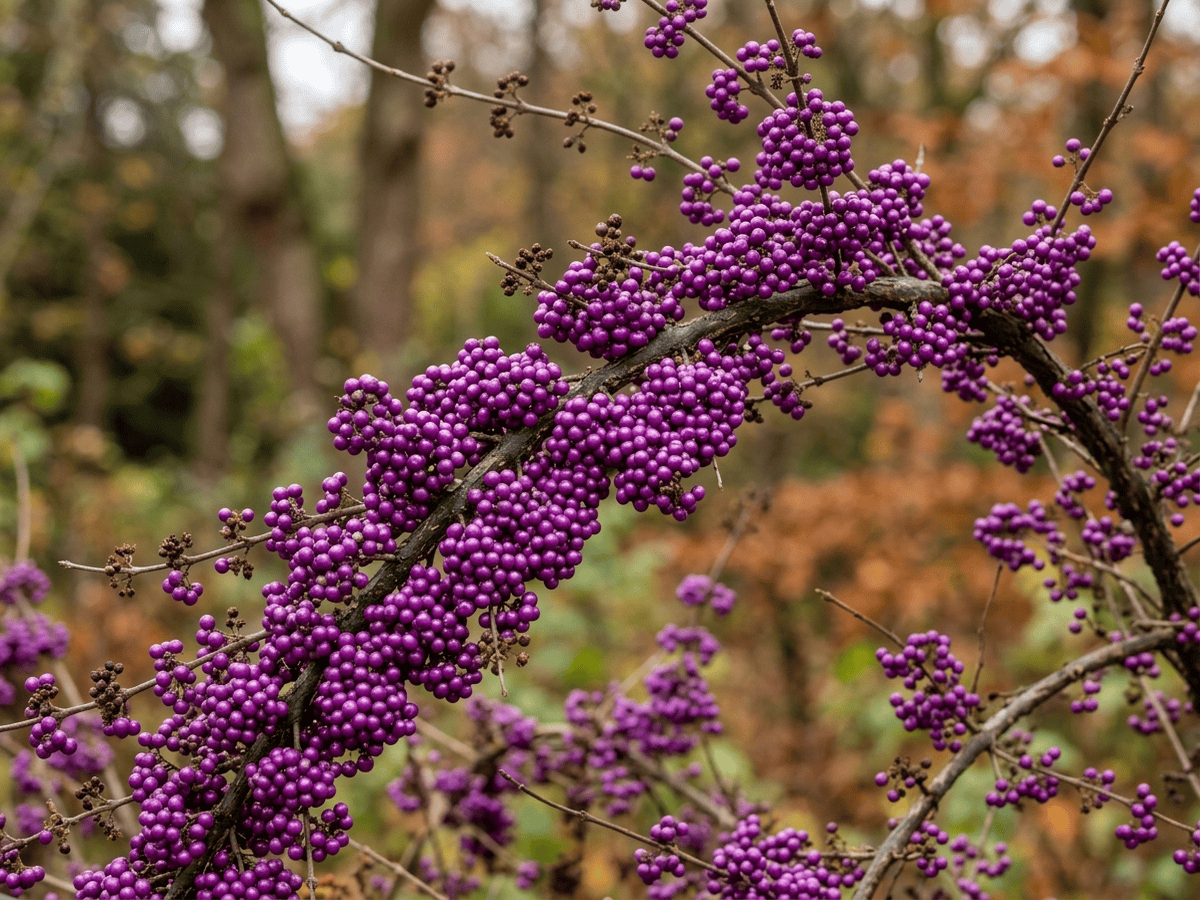
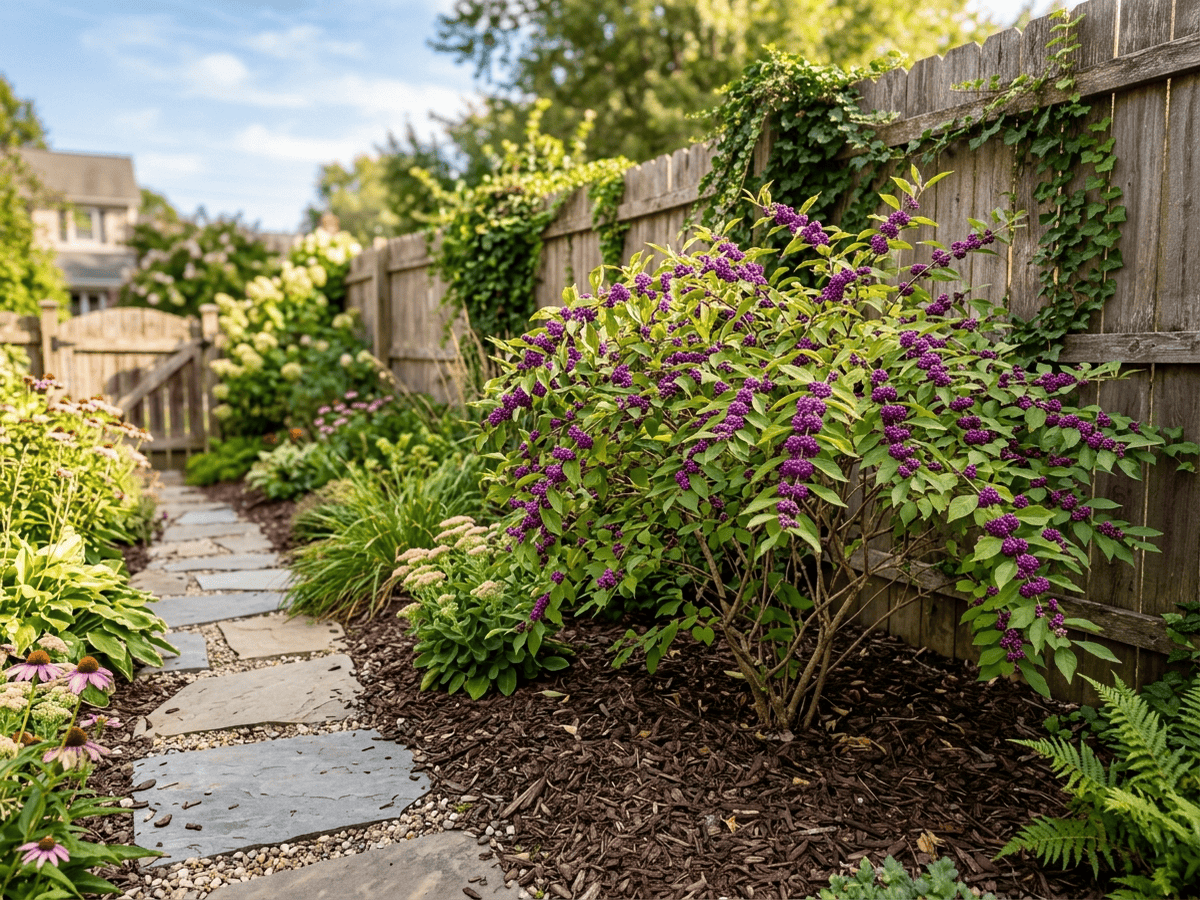
Bodinier's Beautyberry is a central and western Chinese deciduous shrub growing 6 to 10 feet tall, famed for producing the most intensely purple-violet berries of all beautyberries. The cultivar 'Profusion' is one of the most berry-prolific, heavily clustered along arching stems after leaf drop in fall. A premier winter-interest and wildlife shrub in American gardens.
- Deer-resistant
- Fall-color
- Wildlife-friendly
- Pollinator-friendly
How to care for Bodinier's Beautyberry
Watering
- Springevery 5 days
- Summerevery 3 days
- Fallevery 7 days
- Winterevery 14 days
Soil · Rich & loamy
- Top dressingBark mulch15%
- Main mixRich loam + compost 3:170%
- DrainageGravel15%
Use fully finished compost — fresh compost burns roots.
FERTILIZER
Balanced Feed 14-14-14
An even feed covers all three needs at once, keeping leaves, roots and blooms moving together with nothing pushed out of balance.
- Nitrogen · Leaves
- Phosphorus · Roots + Blooms
- Potassium · Strength
- Springevery 45 days
- Summerevery 60 days
At a Glance
- NativeEast Asia
- Height6–10 ft (1.8–3 m)
- Spread5–8 ft (1.5–2.4 m)
- Flower colorPink, Purple
- Foliage colorGreen, Purple
- Fruit colorPurple
- SoilWell-drained, Loamy, Neutral
- LocationsYard
Bloom time
BLOOM CYCLE
Peak bloom
Jun–Aug
Small pale-pink flower clusters midsummer
Toxicity
No toxicity has been reported for this plant. Still, it is wise to keep pets from chewing on any houseplant.
Educational information, not medical or veterinary advice. If exposure is suspected, contact a doctor or veterinarian.
DISTRIBUTION


- Native
- East Asia
History
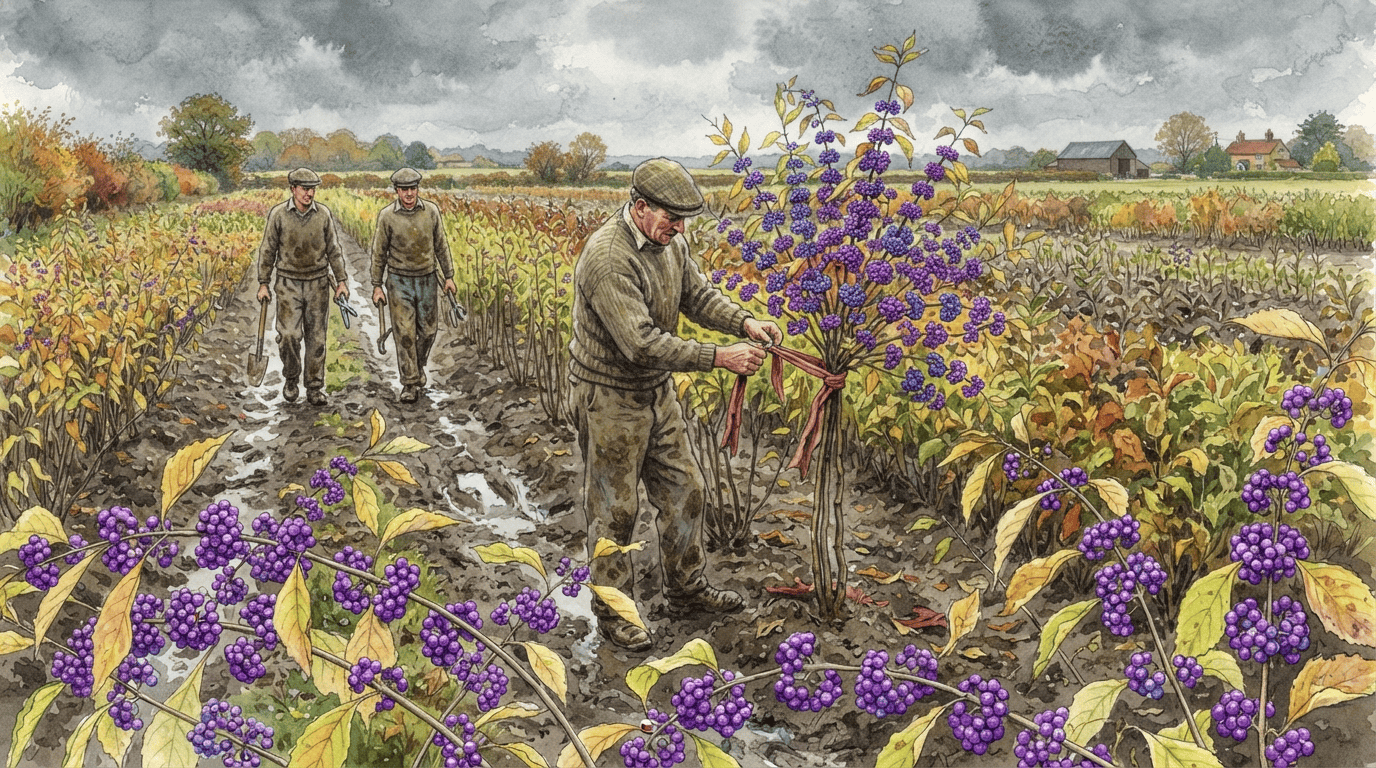
Callicarpa bodinieri grows wild in mountain forests of Guizhou, Hubei, Sichuan, and Yunnan in southwestern China. The French missionary Émile-Marie Bodinier collected the type specimen in the late 19th century; Hector Léveillé described the species in 1911. Ernest Henry Wilson introduced seeds to the Veitch Nursery and the Arnold Arboretum around 1907.
The variety giraldii (often treated as a separate species) proved especially hardy. In 1962 the Notcutts Nursery in Suffolk selected a heavily fruiting seedling and named it 'Profusion', which earned the RHS Award of Garden Merit and is now grown globally for its spectacular autumn display of tightly clustered violet-purple berries persisting into December. Later cultivars include 'Magical Snowstar' (white fruit, 2012) and 'Purple Beautyberry'. Named for French missionary-botanist Emile Bodinier who explored southwestern China in the late 1800s.
Symbolism & meaning
What It Symbolizes
Bodinier's Beautyberry is the autumn jewel of the shrub border — clusters of impossibly violet berries lit against fading leaves, brighter than anything else in the fall garden. It also embodies a Bird's abundance, one of the heaviest-fruiting beautyberries, feeding mockingbirds and finches deep into winter. Each branch is part ornament, part open table.
- Autumn jewel — gem-like purple berries light up fall
- Bird's abundance — one of the heaviest-fruiting beautyberries
Where the Name Comes From
'bodinieri' honors Emile Bodinier (1842-1901), French missionary-botanist in China.
Uses & Fun Facts
- Vivid violet berry clusters line bare autumn stems
- Late-season fruit feeds songbirds through winter
- Berried branches used in fall floral displays
Related plants
More Callicarpa plants
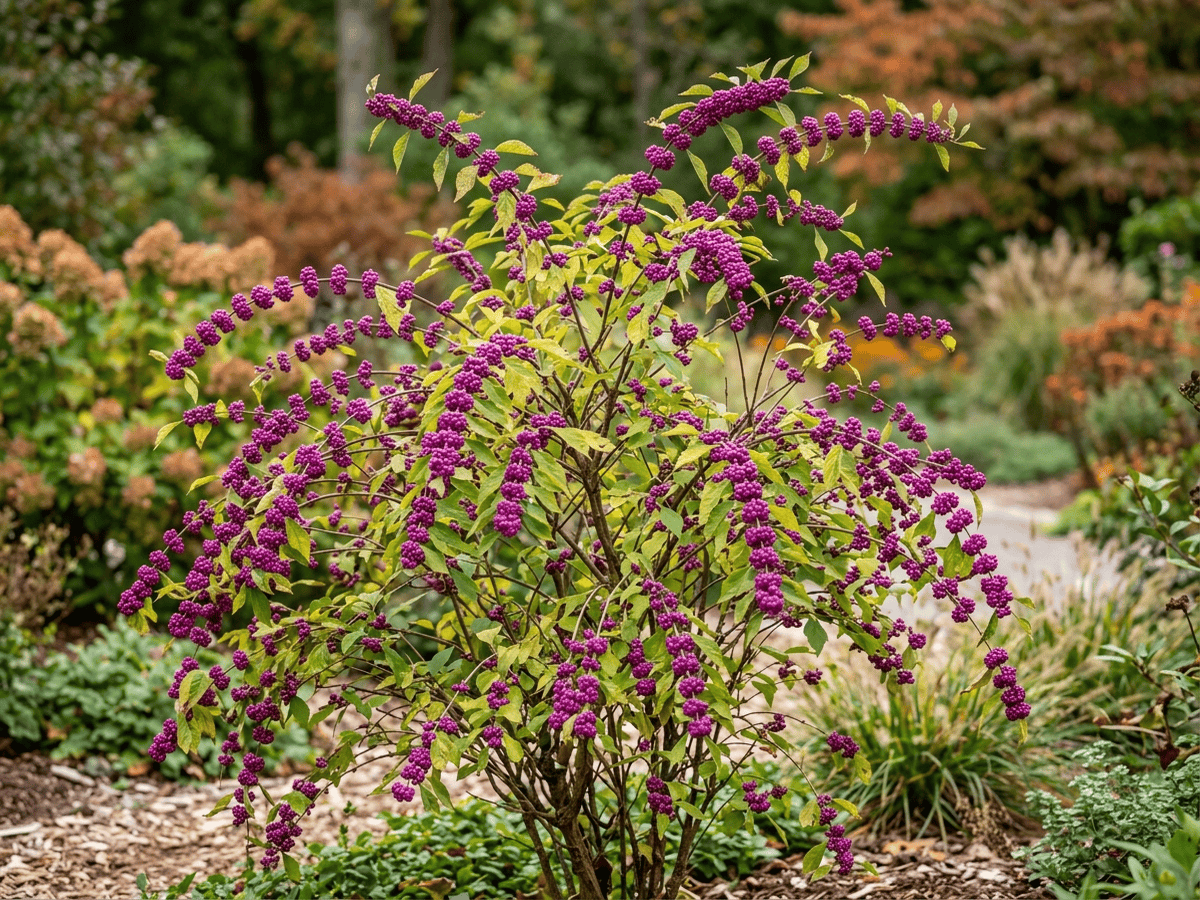 American BeautyberryCallicarpa americana
 Purple BeautyberryCallicarpa dichotoma
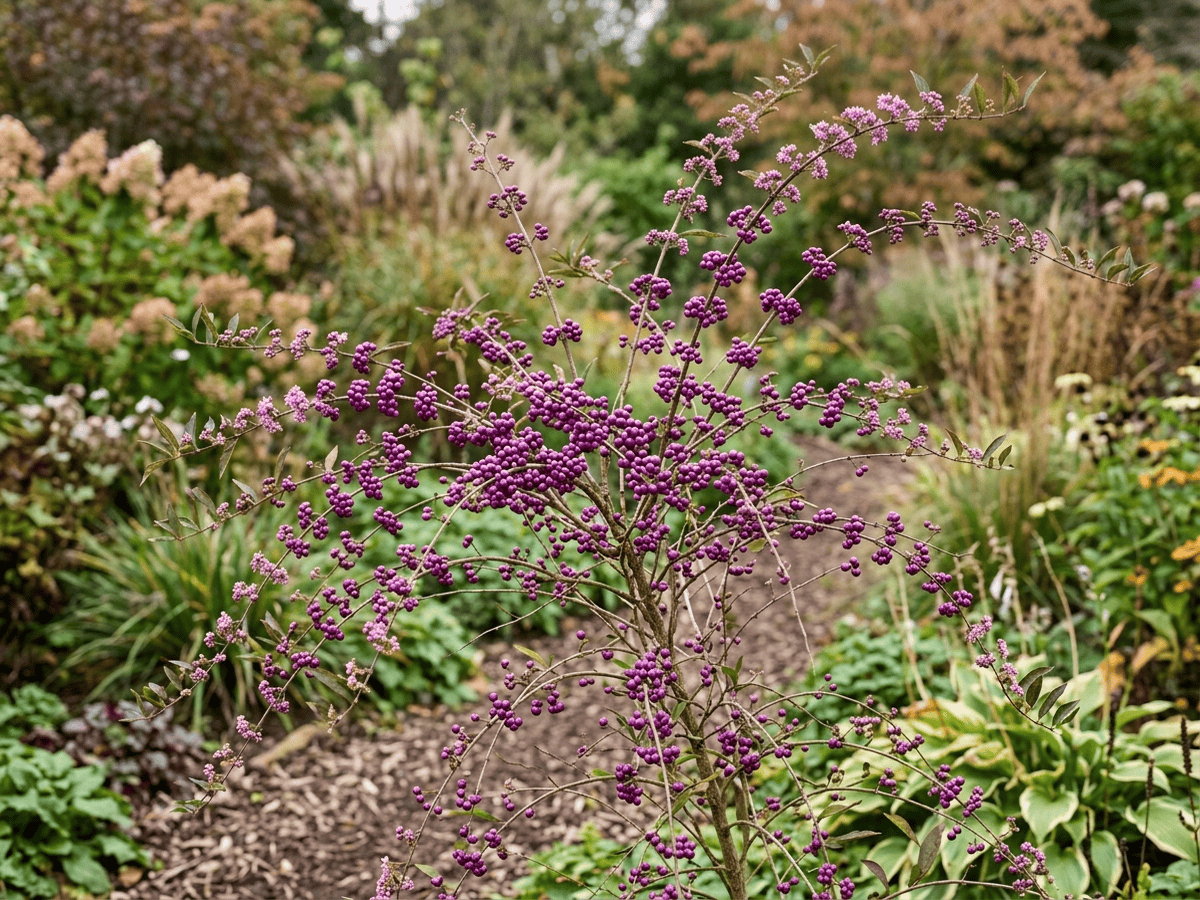 Callicarpa giraldiiCallicarpa giraldii
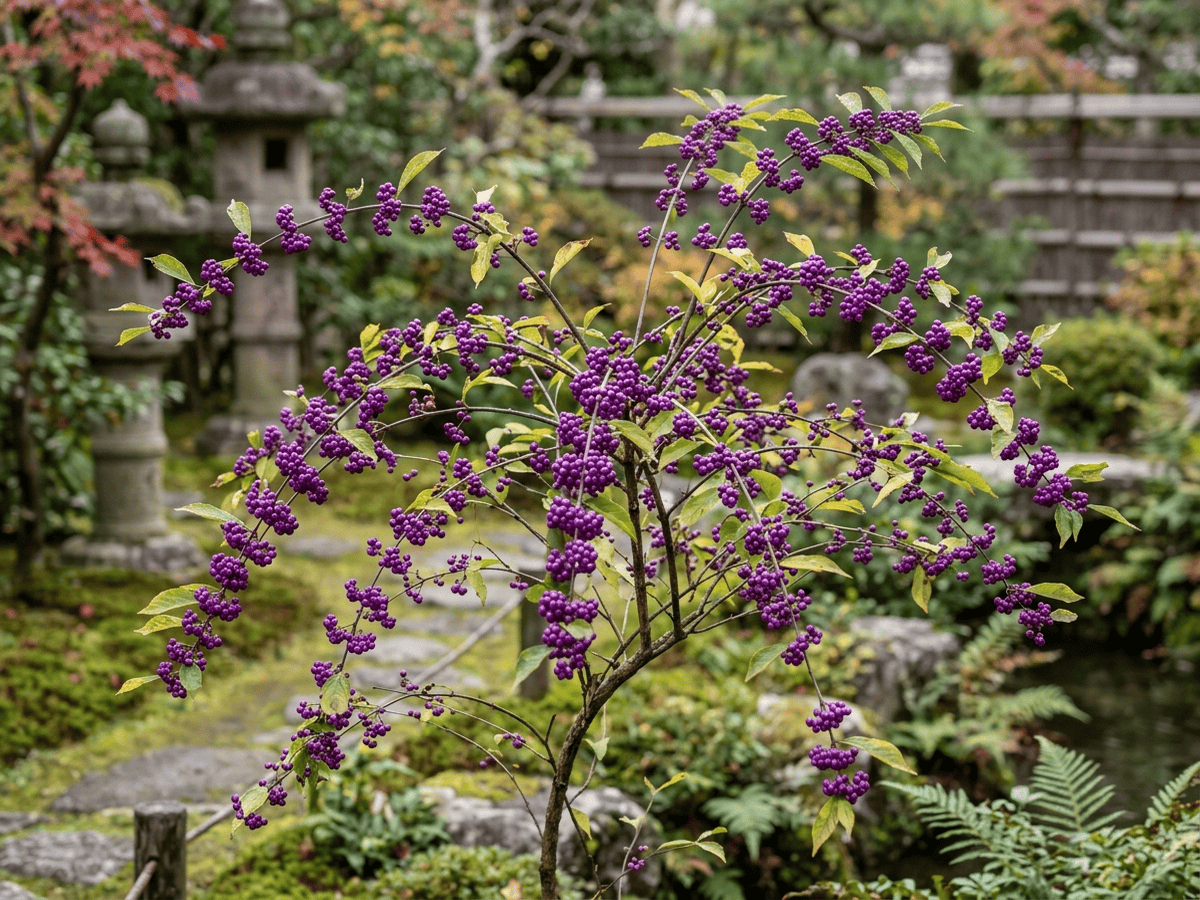 Japanese BeautyberryCallicarpa japonica
Plants with similar care
 Chinese AbeliaAbelia chinensis
 Fragrant AbeliaAbelia mosanensis
 Large-Flowered AbeliaAbelia uniflora
 Glossy AbeliaAbelia x grandiflora
Frequently asked questions
How often should I water Bodinier's Beautyberry?
In summer, water about every 3 days; in winter, about every 14 days. Adjust for heat, pot size and drainage.
How much light does Bodinier's Beautyberry need?
Full sun: 6+ hrs direct. Watch the leaves — scorching or stretching means the light needs adjusting.
Is Bodinier's Beautyberry toxic to cats or dogs?
No toxicity has been reported for this plant. Still, it is wise to keep pets from chewing on any houseplant. Educational information, not medical or veterinary advice. If exposure is suspected, contact a doctor or veterinarian.
Is Bodinier's Beautyberry easy to grow?
Yes — it is considered an easy, beginner-friendly plant.
When does Bodinier's Beautyberry bloom?
It typically blooms Jun–Aug in the Northern Hemisphere.
YardMate
Identify any plant in seconds
Snap a photo — YardMate names the plant, diagnoses problems, and reminds you when to water.
Download on the App Store