 YardMate


Purple Beautyberry
Callicarpa dichotoma
Easy · Beginner friendlyAbout Purple Beautyberry
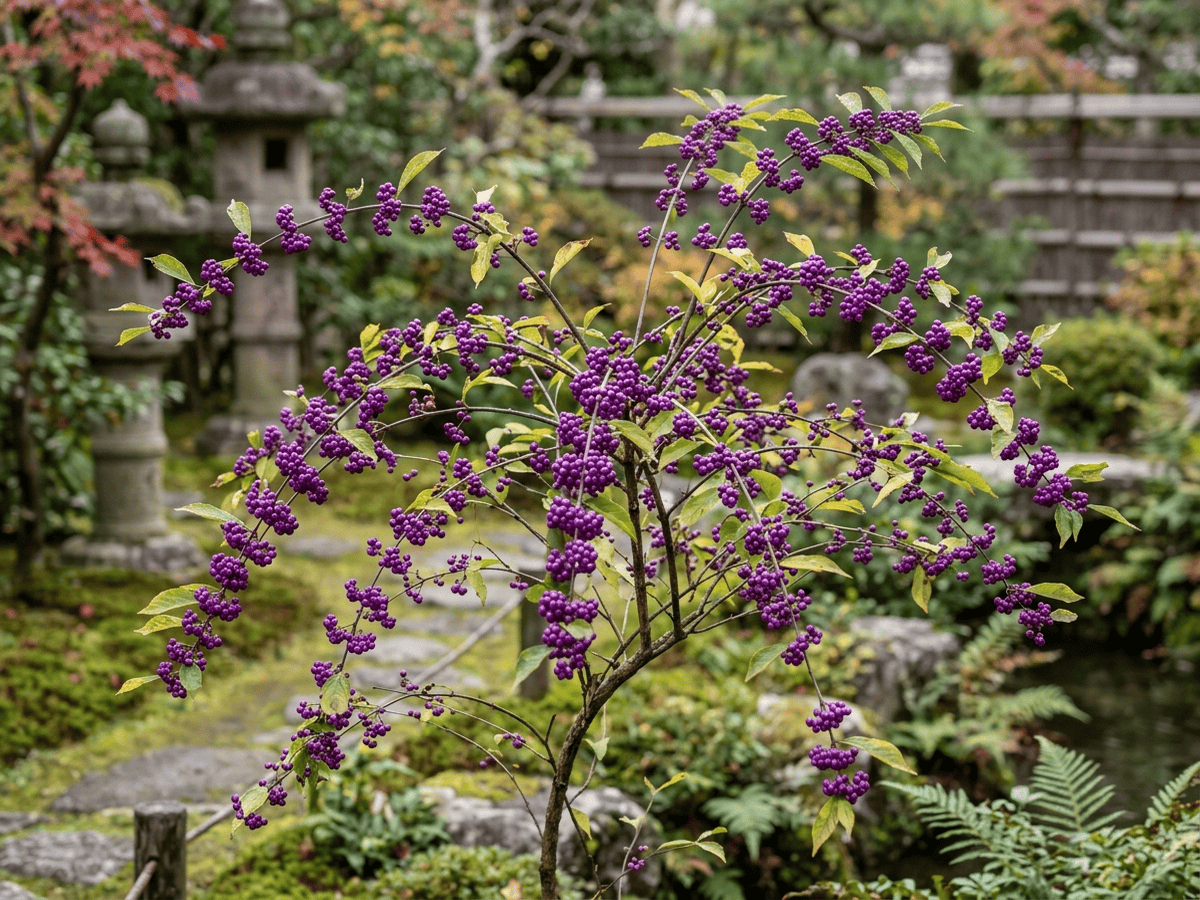
Purple Beautyberry is an East Asian deciduous shrub reaching 3-4 feet tall, with arching graceful branches bearing finely toothed green leaves and small lavender summer flowers followed by abundant clusters of vivid bright purple berries lining the stems in fall. More compact and refined than its American native relative, it is widely grown in American landscapes for its dramatic fall berry display. The 'Early Amethyst' cultivar produces berries earlier than the species.
- Compact
- Wildlife-friendly
How to care for Purple Beautyberry
Watering
- Springevery 7 days
- Summerevery 5 days
- Fallevery 10 days
- Winterevery 14 days
Soil · Rich & loamy
- Top dressingBark mulch15%
- Main mixRich loam + compost 3:170%
- DrainageGravel15%
Use fully finished compost — fresh compost burns roots.
FERTILIZER
- Springevery 90 days
At a Glance
- NativeEast Asia
- Height3–4 ft (0.9–1.2 m)
- Spread4–5 ft (1.2–1.5 m)
- Flower colorPink, Purple
- Foliage colorGreen, Yellow
- Fruit colorPurple
- SoilLoamy, Well-drained
- LocationsYard
Bloom time
BLOOM CYCLE
Peak bloom
Jun–Aug
Small lavender flower clusters in summer
Toxicity
No toxicity has been reported for this plant. Still, it is wise to keep pets from chewing on any houseplant.
Educational information, not medical or veterinary advice. If exposure is suspected, contact a doctor or veterinarian.
DISTRIBUTION


- Native
- Introduced
- East Asia
History
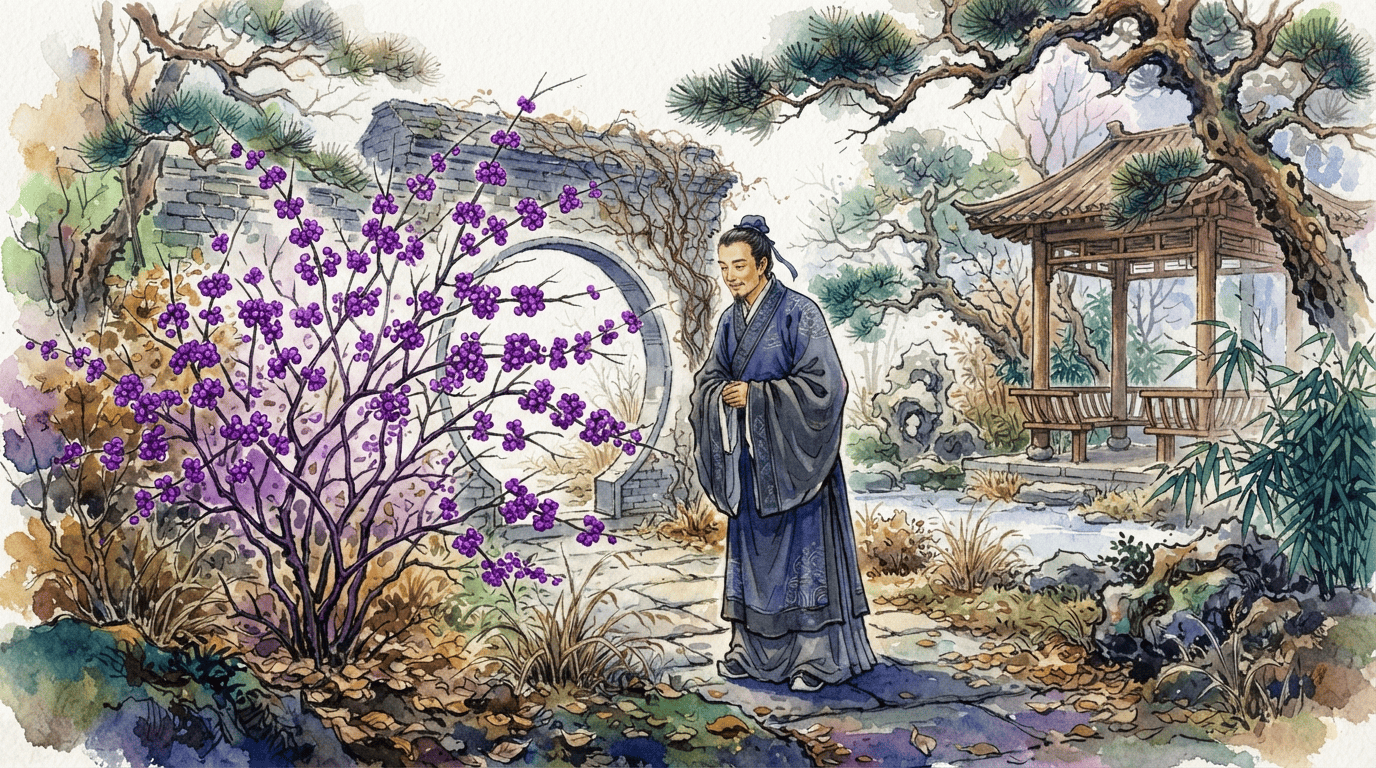
Callicarpa dichotoma, known as purple beautyberry or Chinese beautyberry, is native to China, Korea, Japan, Vietnam, and Taiwan, where it grows in open woodlands and thickets. East Asian gardeners valued the plant for centuries for its graceful arching form and the startling violet-purple fruits that adorn bare branches into early winter; it features in Qing-dynasty garden manuals and Edo-period Japanese plant guides. German botanist Ernst Amadeus Zuccarini and Philipp Franz von Siebold documented Japanese specimens in the 1840s, and the shrub soon entered European and American horticulture.
Compact cultivars such as Issai have since become mainstays of small gardens. Unlike its American cousin its berries are smaller and produced on tighter cymes, but the color is equally striking.
Introduced to American horticulture in the early 20th century. The compact arching form and bright purple berries have made it a defining fall-interest shrub of modern American landscape design—particularly the popular 'Early Amethyst' cultivar.
Symbolism & meaning
What It Symbolizes
Purple Beautyberry holds beauty along bare autumn stems, every node clustered with jewel-like violet berries that seem too brilliant to be real. More compact and refined than its American cousin, it brings restraint to a wildly colored display. In its quiet architecture, the year's last surprise is delivered: a refined shrub finishing the season in unrepeatable hue.
- Beauty — stems lined with jewel-like purple berries
- Refinement — more compact than American native
Where the Name Comes From
The common name highlights its purple coloring. 'Dichotoma' from Greek meaning forked, referring to the branching pattern.
Uses & Fun Facts
- Vivid purple berry clusters line arching stems in fall
- Late-season berries feed songbirds into early winter
- Compact deciduous shrub for foundation and mixed borders
Related plants
More Callicarpa plants
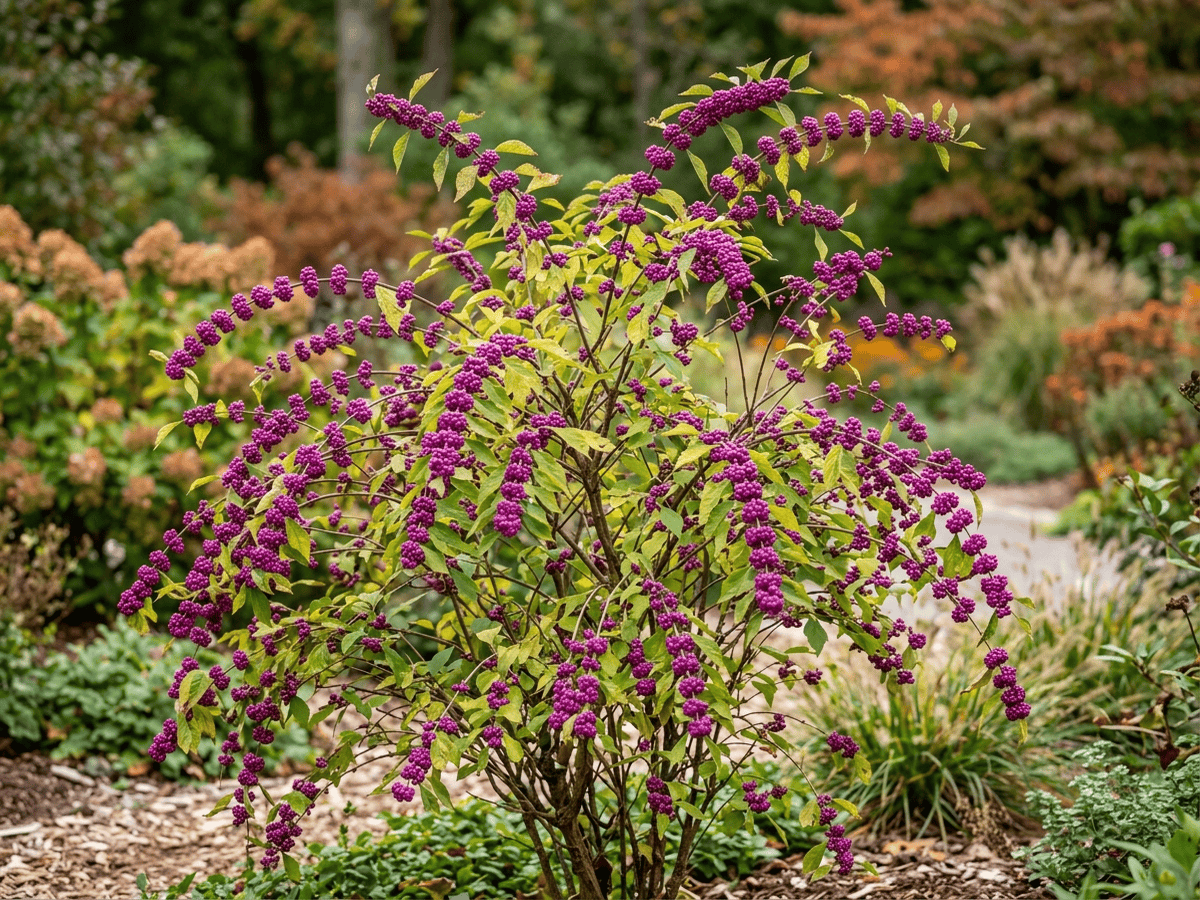 American BeautyberryCallicarpa americana
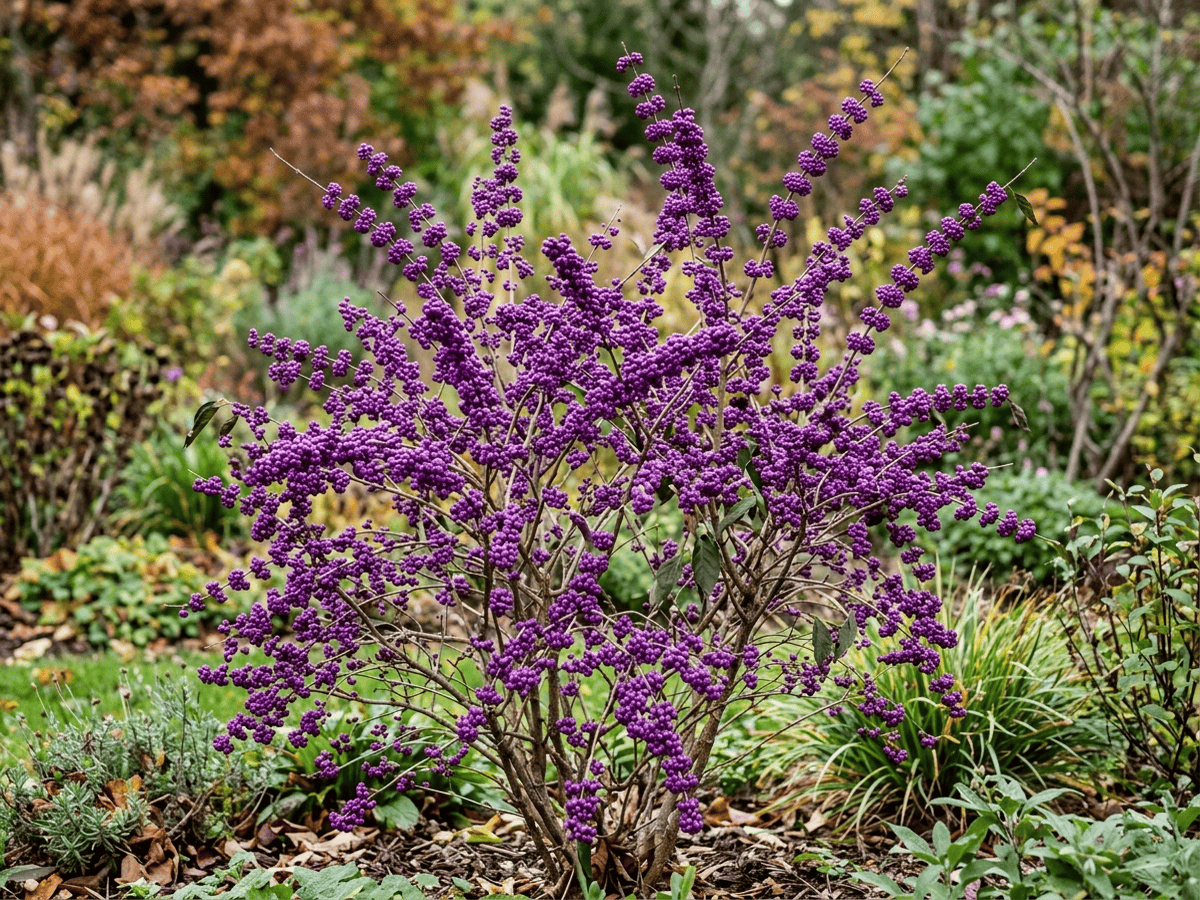 Bodinier's BeautyberryCallicarpa bodinieri
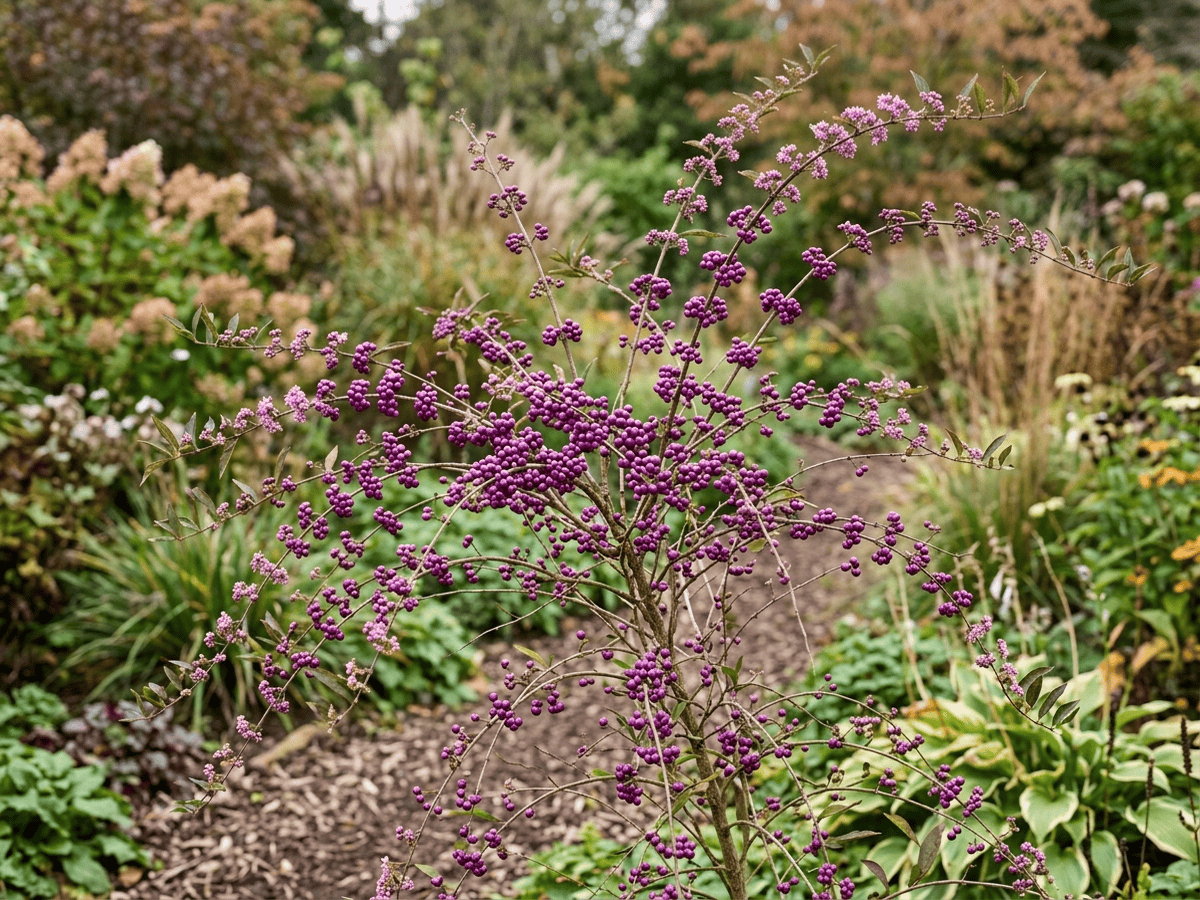 Callicarpa giraldiiCallicarpa giraldii
 Japanese BeautyberryCallicarpa japonica
Plants with similar care
 Chinese AbeliaAbelia chinensis
 Fragrant AbeliaAbelia mosanensis
 Large-Flowered AbeliaAbelia uniflora
 Glossy AbeliaAbelia x grandiflora
Frequently asked questions
How often should I water Purple Beautyberry?
In summer, water about every 5 days; in winter, about every 14 days. Adjust for heat, pot size and drainage.
How much light does Purple Beautyberry need?
Full sun: 6+ hrs direct. Watch the leaves — scorching or stretching means the light needs adjusting.
Is Purple Beautyberry toxic to cats or dogs?
No toxicity has been reported for this plant. Still, it is wise to keep pets from chewing on any houseplant. Educational information, not medical or veterinary advice. If exposure is suspected, contact a doctor or veterinarian.
Is Purple Beautyberry easy to grow?
Yes — it is considered an easy, beginner-friendly plant.
When does Purple Beautyberry bloom?
It typically blooms Jun–Aug in the Northern Hemisphere.
YardMate
Identify any plant in seconds
Snap a photo — YardMate names the plant, diagnoses problems, and reminds you when to water.
Download on the App Store