 YardMate


Callicarpa giraldii
Callicarpa giraldii
Easy · Beginner friendlyAbout Callicarpa giraldii
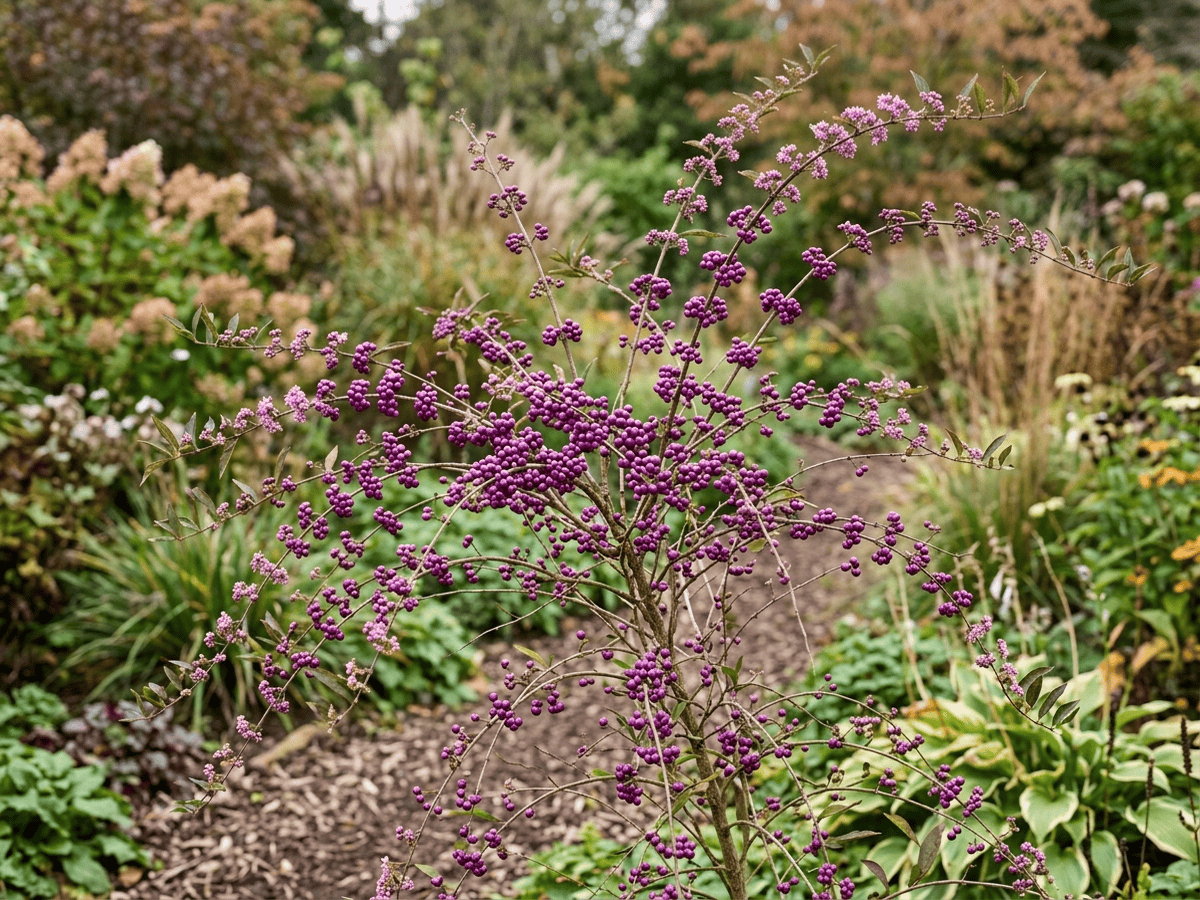
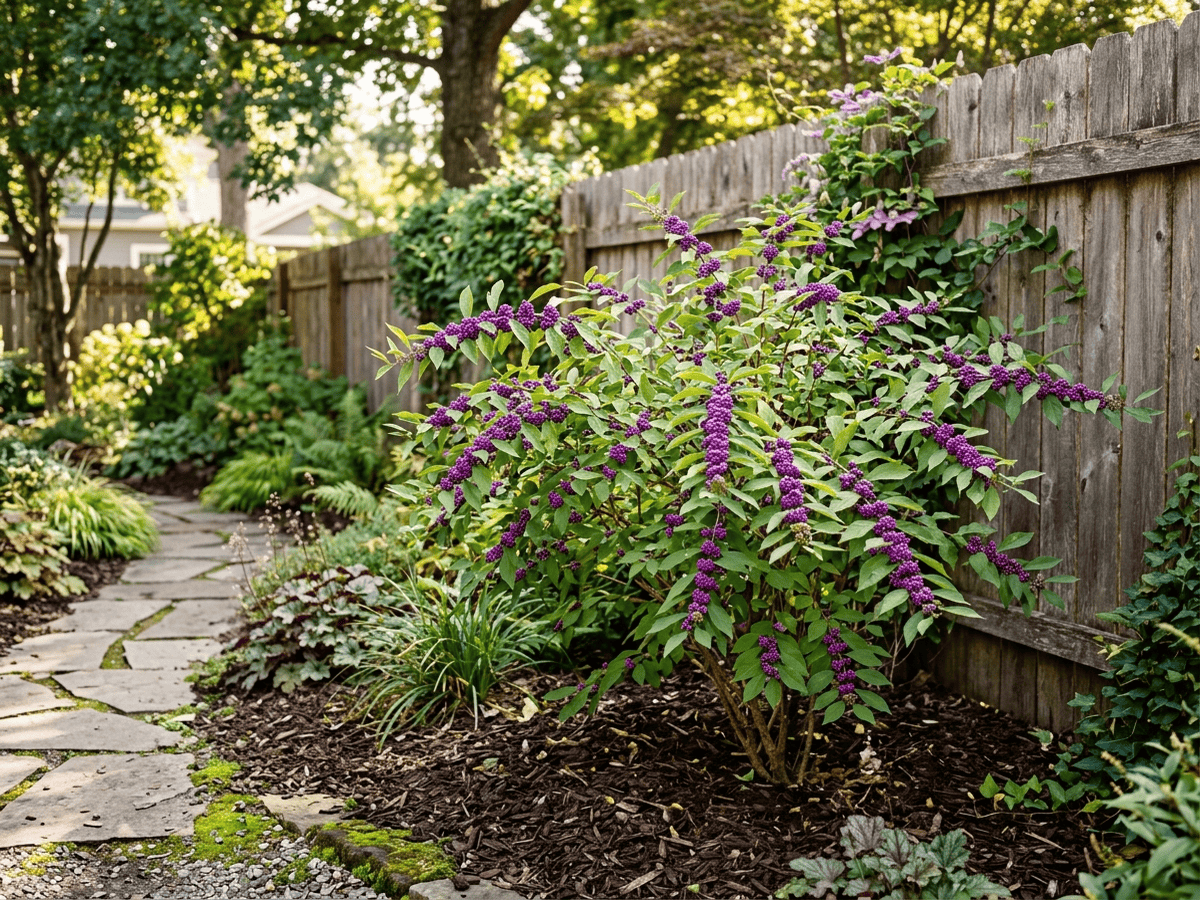
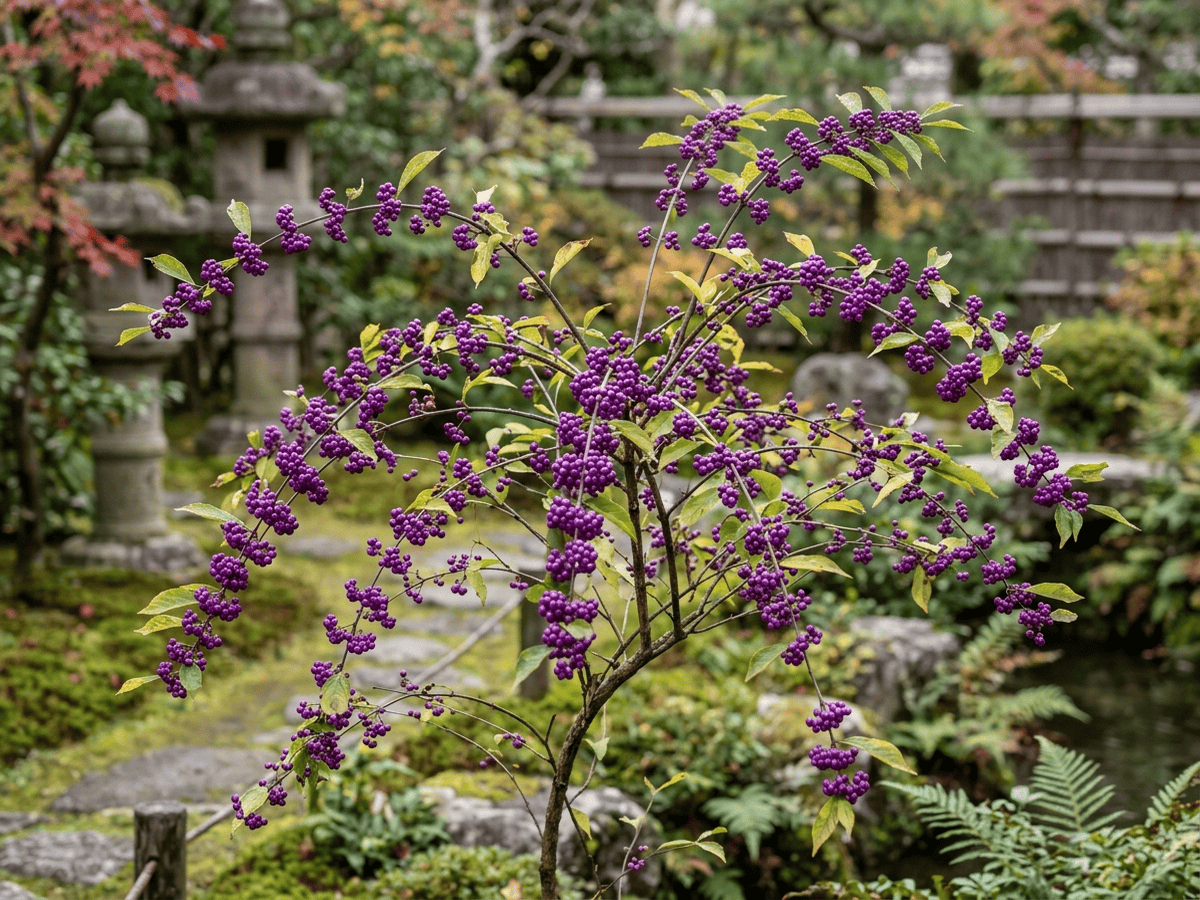
Giraldi's Beautyberry is a Chinese deciduous shrub growing 6 to 10 feet tall, grown for masses of bright purple-violet berries clustered along bare stems after leaf drop in fall. Small pink flowers in midsummer are followed by the showy berries that persist into early winter. A collector's favorite for its outstanding fall-winter fruit display in American shrub gardens.
- Deer-resistant
- Fall-color
- Pollinator-friendly
- Wildlife-friendly
How to care for Callicarpa giraldii
Watering
- Springevery 5 days
- Summerevery 3 days
- Fallevery 7 days
- Winterevery 14 days
Soil · Rich & loamy
- Top dressingBark mulch15%
- Main mixRich loam + compost 3:170%
- DrainageGravel15%
Use fully finished compost — fresh compost burns roots.
FERTILIZER
Balanced Feed 14-14-14
An even feed covers all three needs at once, keeping leaves, roots and blooms moving together with nothing pushed out of balance.
- Nitrogen · Leaves
- Phosphorus · Roots + Blooms
- Potassium · Strength
- Springevery 45 days
- Summerevery 60 days
At a Glance
- NativeEast Asia
- Height6–10 ft (1.8–3 m)
- Spread6–10 ft (1.8–3 m)
- Flower colorPink, Purple
- Foliage colorGreen, Yellow
- Fruit colorPurple
- SoilLoamy, Well-drained
- LocationsYard
Bloom time
BLOOM CYCLE
Peak bloom
Jun–Aug
Small pink flower clusters in midsummer
Toxicity
No toxicity has been reported for this plant. Still, it is wise to keep pets from chewing on any houseplant.
Educational information, not medical or veterinary advice. If exposure is suspected, contact a doctor or veterinarian.
DISTRIBUTION


- Native
- East Asia
History

Callicarpa giraldii grows in mountain forests of Hubei, Shaanxi, Sichuan, and surrounding provinces of central China. The Italian Franciscan missionary Giuseppe Giraldi collected the type specimens in the 1890s while based in Shaanxi Province. The German nurseryman Hermann Hesse described the species in 1904 from his Weener nursery in Germany.
Its slender arching stems bear lilac flowers in summer followed by tight clusters of brilliant violet-purple berries in autumn that persist long after leaf fall. It proved hardier than the related Japanese C. japonica and entered European and American gardens after 1909.
Recent genetics work has merged it as a variety under C. bodinieri, but nurseries commonly still sell it as C. giraldii. The cultivar 'Profusion' is ubiquitous. The 'Profusion' cultivar selected at Hillier Nurseries in England brought this species to wider American gardens in the 1970s, where it remains a top choice for outstanding fall-winter berry display.
Symbolism & meaning
What It Symbolizes
Callicarpa giraldii surprises the autumn garden with clusters of bright violet berries, and so its meaning is the gift of color, an unexpected jewel arriving when most shrubs grow dull. The same berries become a bird feast, fuel for migrating songbirds making their long passages south. In the language of native and near-native shrubs, callicarpa suggests generosity that is also a spectacle, a plant that gives one season's beauty straight into another season's flight.
- Gift of color — unexpected bright purple fall berries
- Bird feast — supports migrating songbirds
Where the Name Comes From
'Callicarpa' from Greek 'kallos-karpos' meaning beautiful-fruit; 'giraldii' honors Giuseppe Giraldi (1848-1901), Italian missionary in China.
Uses & Fun Facts
- Vivid violet berry clusters feed migrating songbirds
- Pale summer flowers attract bees and small butterflies
- Striking purple beautyberry display in autumn
Related plants
More Callicarpa plants
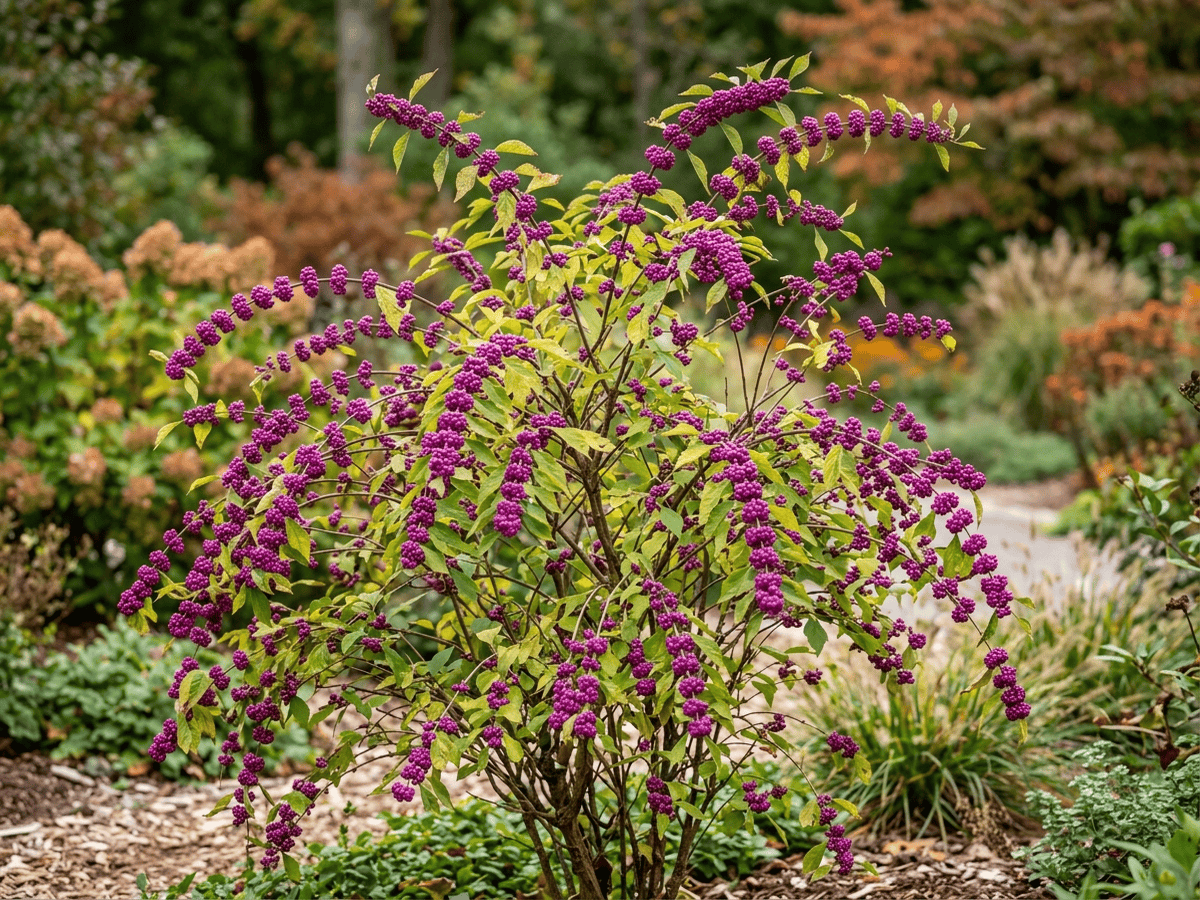 American BeautyberryCallicarpa americana
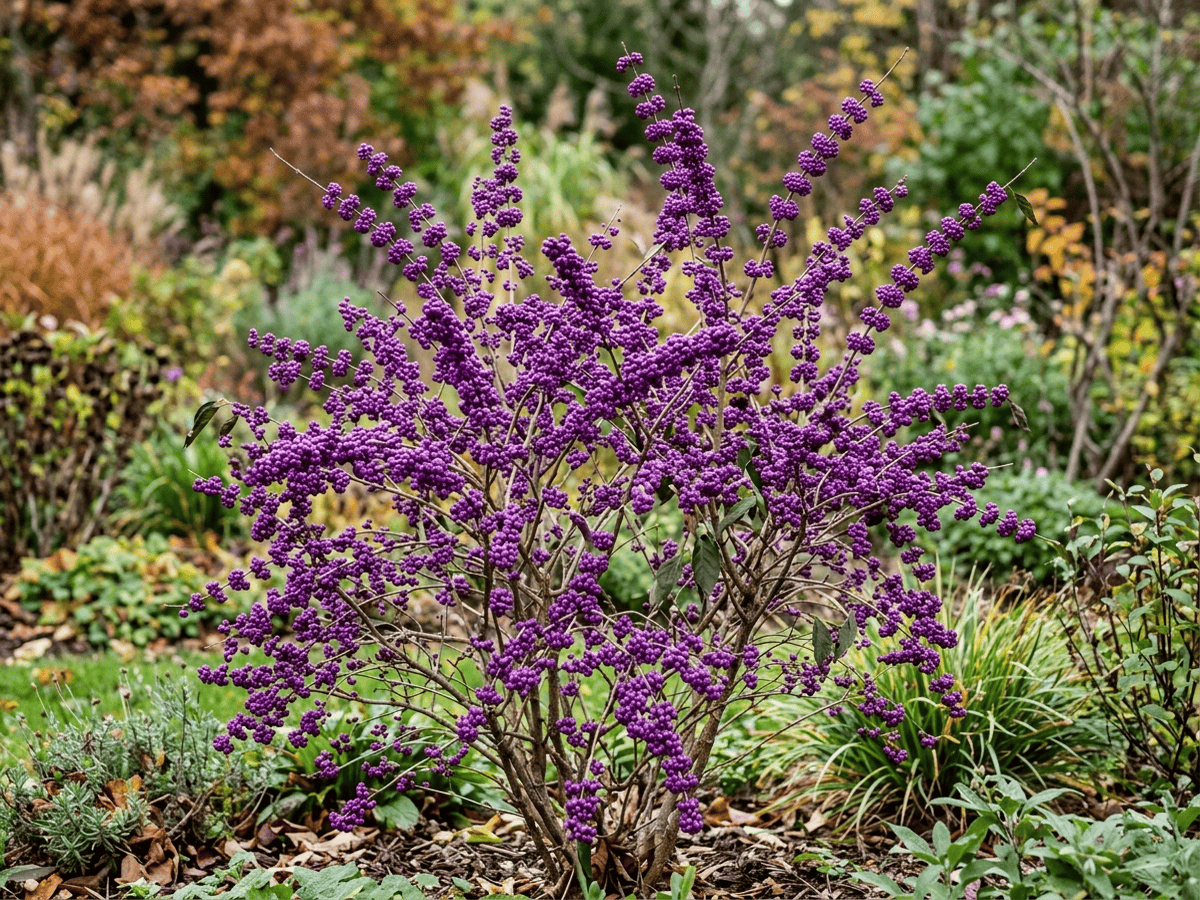 Bodinier's BeautyberryCallicarpa bodinieri
 Purple BeautyberryCallicarpa dichotoma
 Japanese BeautyberryCallicarpa japonica
Plants with similar care
 Chinese AbeliaAbelia chinensis
 Fragrant AbeliaAbelia mosanensis
 Large-Flowered AbeliaAbelia uniflora
 Glossy AbeliaAbelia x grandiflora
Frequently asked questions
How often should I water Callicarpa giraldii?
In summer, water about every 3 days; in winter, about every 14 days. Adjust for heat, pot size and drainage.
How much light does Callicarpa giraldii need?
Full sun: 6+ hrs direct. Watch the leaves — scorching or stretching means the light needs adjusting.
Is Callicarpa giraldii toxic to cats or dogs?
No toxicity has been reported for this plant. Still, it is wise to keep pets from chewing on any houseplant. Educational information, not medical or veterinary advice. If exposure is suspected, contact a doctor or veterinarian.
Is Callicarpa giraldii easy to grow?
Yes — it is considered an easy, beginner-friendly plant.
When does Callicarpa giraldii bloom?
It typically blooms Jun–Aug in the Northern Hemisphere.
YardMate
Identify any plant in seconds
Snap a photo — YardMate names the plant, diagnoses problems, and reminds you when to water.
Download on the App Store