 YardMate


Shepherd's-Purse
Capsella bursa-pastoris
Easy · Beginner friendlyAbout Shepherd's-Purse
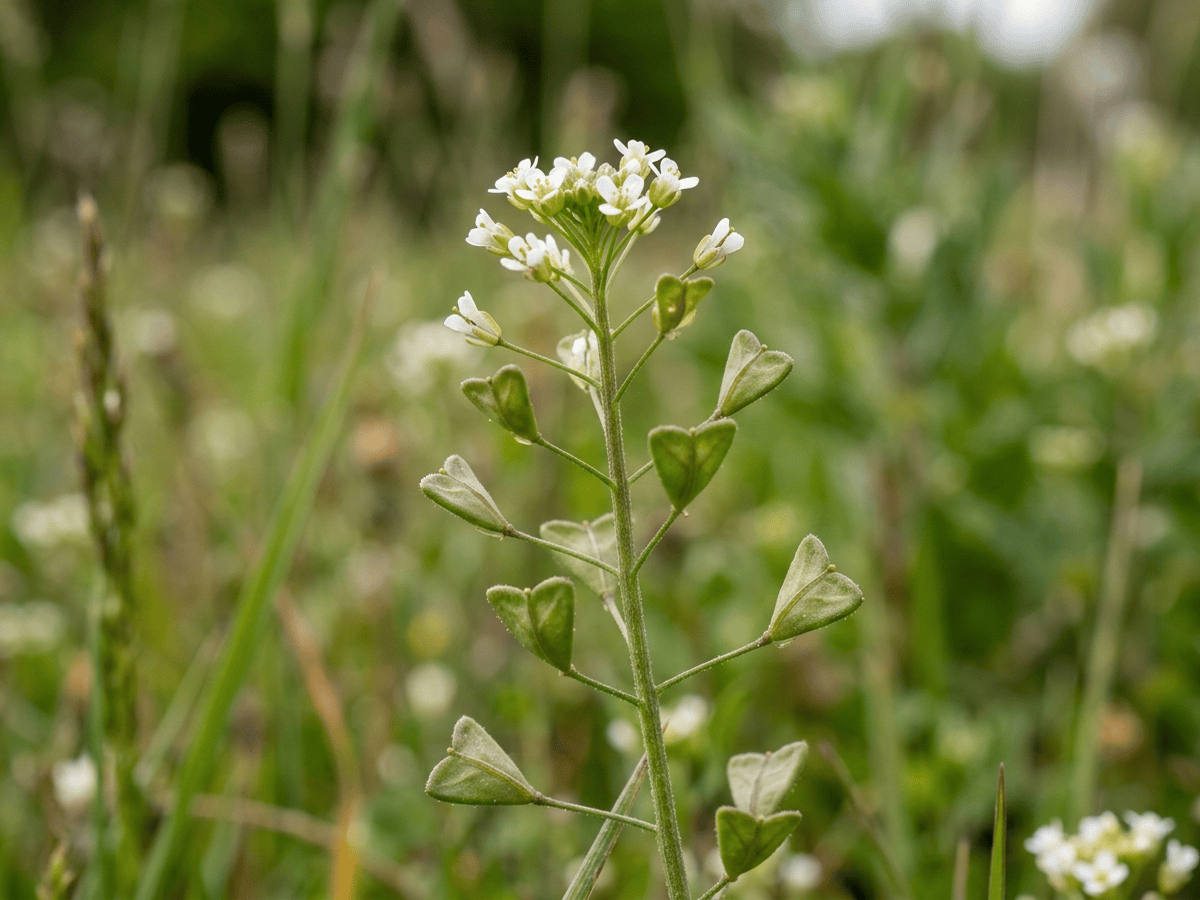
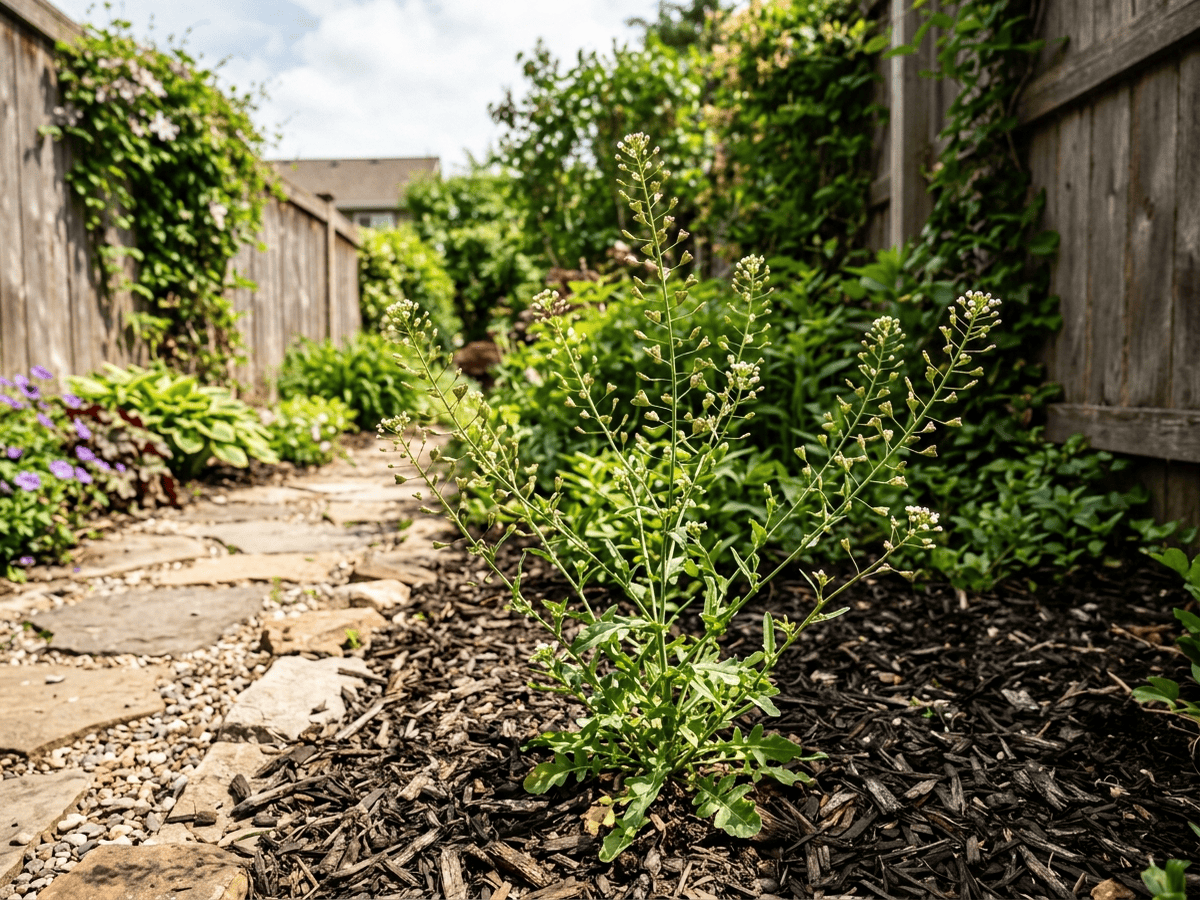
Shepherd's Purse is a small European annual mustard naturalized throughout the US, producing a basal rosette of dandelion-like toothed leaves and a tall slender stem lined with tiny white four-petal flowers followed by distinctive heart-shaped flat seed pods resembling tiny purses. Universal weed of lawns, gardens, sidewalks, and crop fields everywhere humans disturb soil.
- Edible
- Medicinal
How to care for Shepherd's-Purse
Watering
- Springevery 7 days
- Summerevery 5 days
- Fallevery 10 days
- Winterevery 14 days
Soil · Rich & well-draining
- Top dressingCompost10%
- Main mixPotting soil + compost 3:180%
- DrainageGravel10%
Top up the compost layer each season.
FERTILIZER
This plant needs little to no feeding.
At a Glance
- NativeEurope, Western Asia, Africa
- Height0.5–1.5 ft (0.2–0.5 m)
- Spread0.5–1 ft (0.2–0.3 m)
- Flower colorWhite
- Foliage colorGreen
- Fruit colorGreen, Brown
- SoilLoamy, Well-drained
- LocationsYard
Bloom time
BLOOM CYCLE
Peak bloom
Jan–Dec
Tiny white flowers and heart-shaped seed pods nearly year-round
Toxicity
No toxicity has been reported for this plant. Still, it is wise to keep pets from chewing on any houseplant.
Educational information, not medical or veterinary advice. If exposure is suspected, contact a doctor or veterinarian.
DISTRIBUTION

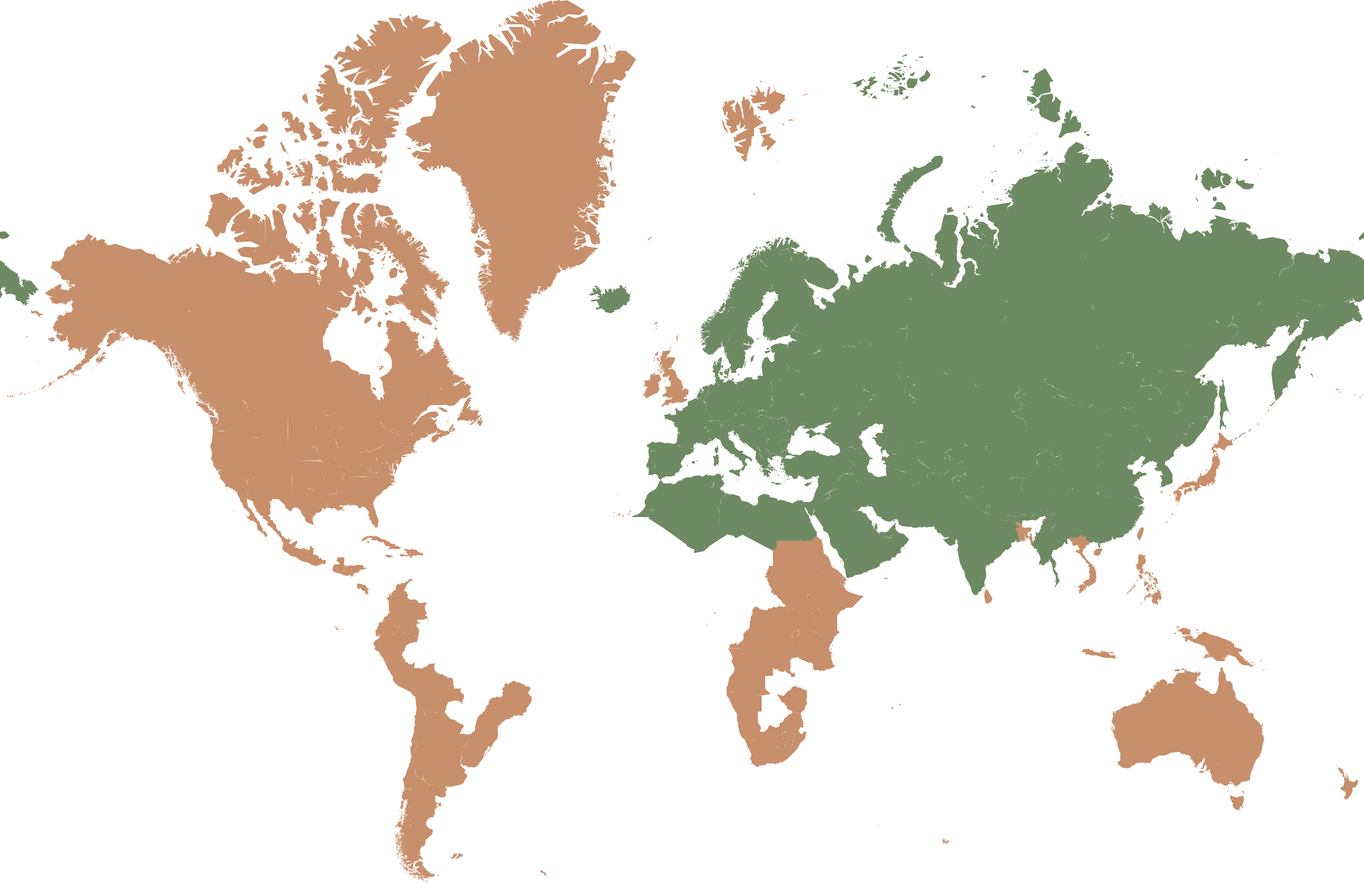
- Native
- Introduced
- Europe
- Western Asia
- Africa
History
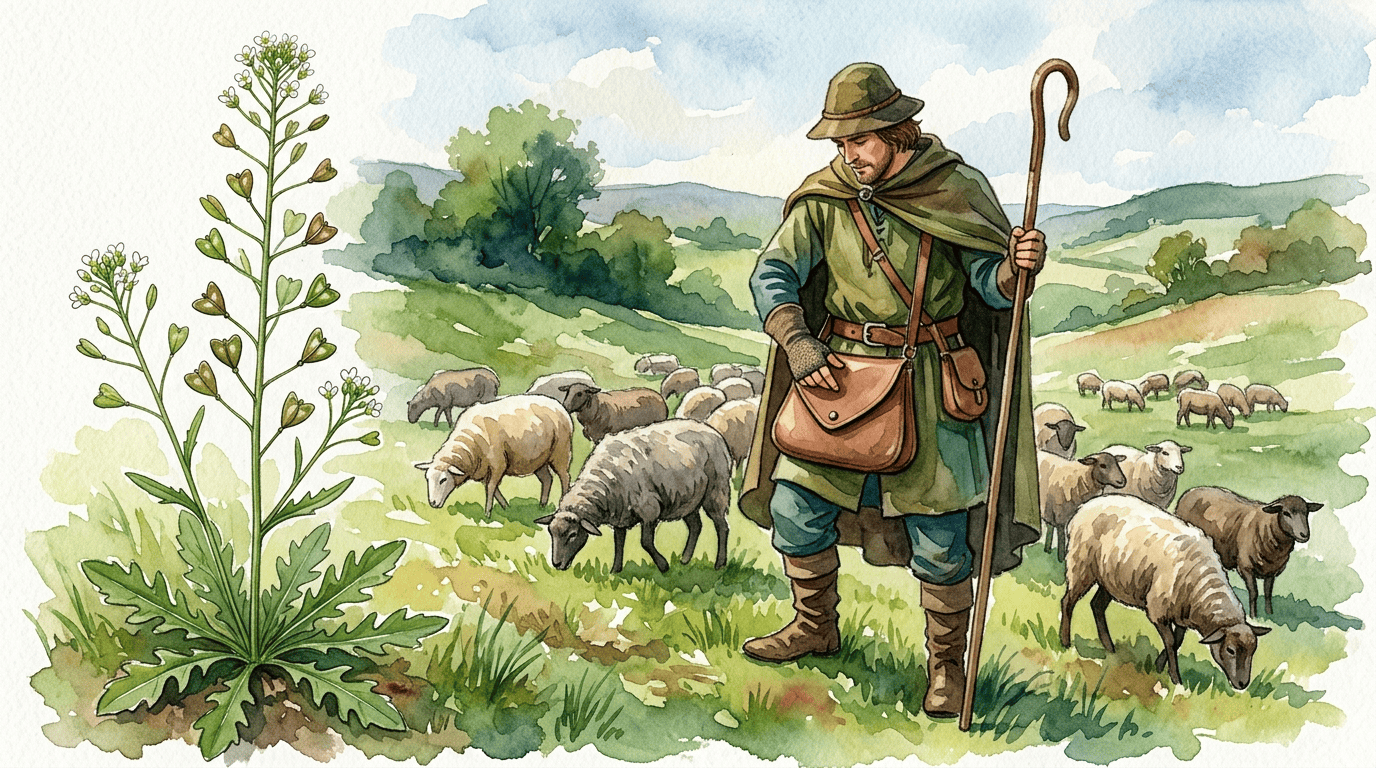
Capsella bursa-pastoris is a cool-season annual native to Europe, western Asia, and North Africa, now spread worldwide. Linnaeus described it as Thlaspi bursa-pastoris in 1753, and Medikus transferred it to Capsella in 1792. The name, meaning 'shepherd's purse', refers to the flat, heart-shaped seedpods resembling the leather pouches medieval shepherds wore on their belts.
It is among the most successful weeds on Earth, growing from the equator to the sub-Arctic. Medicinally, the Greek physician Dioscorides recorded its use as a hemostatic to stop nosebleeds and uterine bleeding in the 1st century CE; traditional Chinese medicine (ji cai) has used it similarly for at least 2000 years. Modern pharmacology confirms its hemostatic activity from fumaric acid and peptides.
In Japan it is one of the seven herbs of the spring nanakusa festival ('pen-pen-gusa'). Native to Europe and Asia Minor, spread worldwide with human agriculture and now one of the most widespread plants on Earth. One of the seven spring herbs of Japanese nanakusa-gayu rice porridge tradition. Traditional Western and Chinese medicine used it as a styptic herb for uterine and other bleeding.
Symbolism & meaning
What It Symbolizes
Shepherd's-purse scatters small blessings through every spring meadow, its tiny heart-shaped seedpods earning the name from the leather pouches medieval shepherds wore at their belts. As a universal plant it has followed humans nearly everywhere on Earth, sprouting in cracks from Iceland to New Zealand. Modest, edible, and stubbornly companionable, it is one of those weeds whose long association with humanity feels less like invasion than friendship.
- Small blessings — tiny purses dot spring meadows
- Universal plant — among the most widespread plants on Earth
Where the Name Comes From
'Capsella' from Latin means small case; 'bursa-pastoris' from Latin means shepherd's purse, for the distinctive heart-shaped flat seed pods resembling medieval purses.
Uses & Fun Facts
- Young rosette leaves eaten as wild peppery salad green
- Traditional herbal remedy used to staunch postpartum bleeding
Related plants
Plants with similar care
 Chinese AbeliaAbelia chinensis
 Fragrant AbeliaAbelia mosanensis
 Large-Flowered AbeliaAbelia uniflora
 Glossy AbeliaAbelia x grandiflora
Frequently asked questions
How often should I water Shepherd's-Purse?
In summer, water about every 5 days; in winter, about every 14 days. Adjust for heat, pot size and drainage.
How much light does Shepherd's-Purse need?
Full sun: 6+ hrs direct. Watch the leaves — scorching or stretching means the light needs adjusting.
Is Shepherd's-Purse toxic to cats or dogs?
No toxicity has been reported for this plant. Still, it is wise to keep pets from chewing on any houseplant. Educational information, not medical or veterinary advice. If exposure is suspected, contact a doctor or veterinarian.
Is Shepherd's-Purse easy to grow?
Yes — it is considered an easy, beginner-friendly plant.
When does Shepherd's-Purse bloom?
It typically blooms Jan–Dec in the Northern Hemisphere.
YardMate
Identify any plant in seconds
Snap a photo — YardMate names the plant, diagnoses problems, and reminds you when to water.
Download on the App Store