 YardMate

Yellow Star-Thistle
Centaurea solstitialis
Easy · Beginner friendlyAbout Yellow Star-Thistle
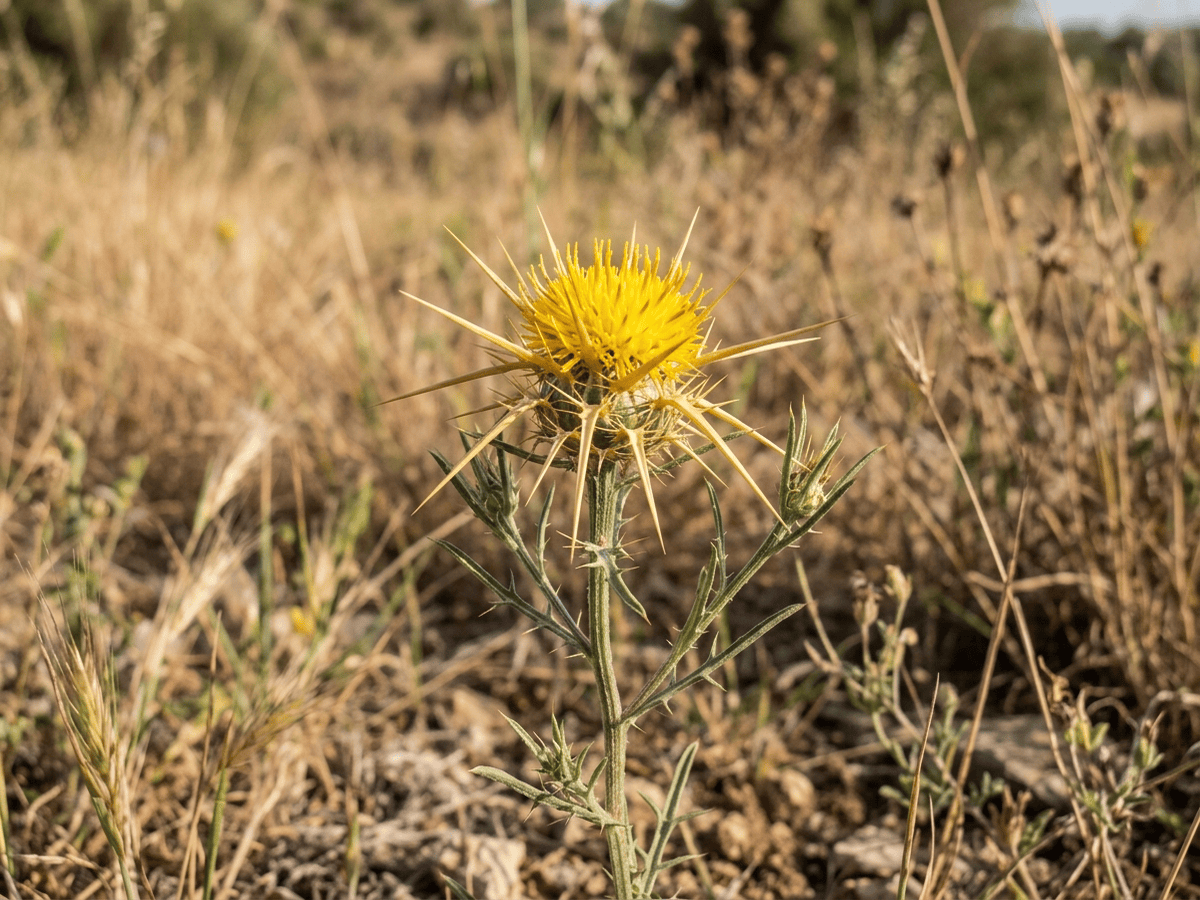
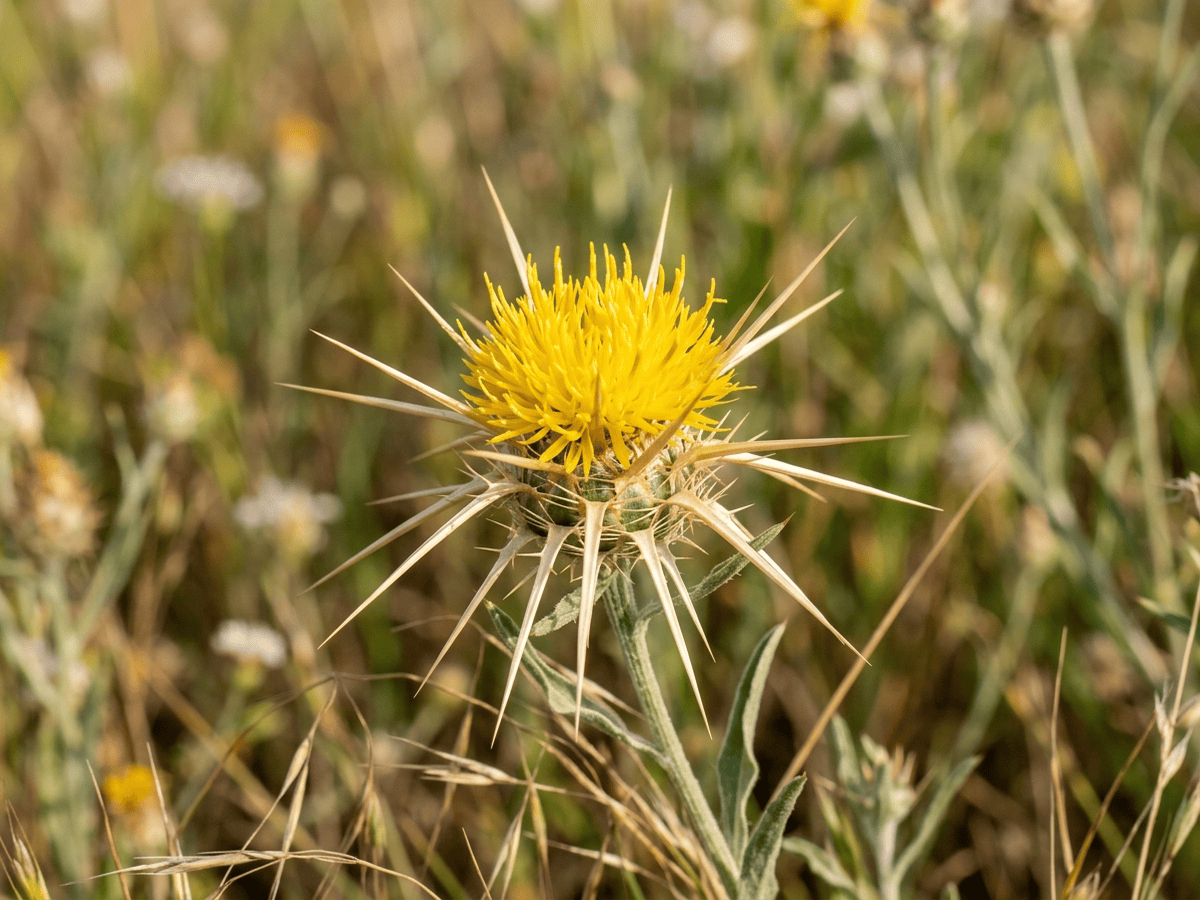
Yellow Starthistle is a Mediterranean annual thistle now one of the most destructive rangeland weeds in California and the American West. Growing 1 to 5 feet tall with gray-green branching stems and yellow flower heads surrounded by 1-inch sharp yellow spines, it dominates millions of acres of western grasslands and grazing land. Listed noxious in most western states and uniquely toxic to horses, causing fatal 'chewing disease' chewing paralysis.
- Drought-tolerant
- Pollinator-friendly
- Fast-growing
- Heat-tolerant
How to care for Yellow Star-Thistle
Watering
- Springevery 14 days
- Summerevery 14 days
- Fallevery 14 days
- Winterpause watering
Soil · Well-draining
- Top dressingPine bark mulch10%
- Main mixPotting soil + perlite 2:170%
- DrainageLECA / gravel20%
Never skip the drainage layer — standing water is the top cause of root rot.
FERTILIZER
This plant needs little to no feeding.
At a Glance
- NativeMediterranean
- Height1–3 ft (0.3–0.9 m)
- Spread1–2 ft (0.3–0.6 m)
- Flower colorYellow
- Foliage colorGreen, Silver
- SoilSandy, Well-drained
- LocationsYard
Bloom time
BLOOM CYCLE
Peak bloom
Jun–Nov
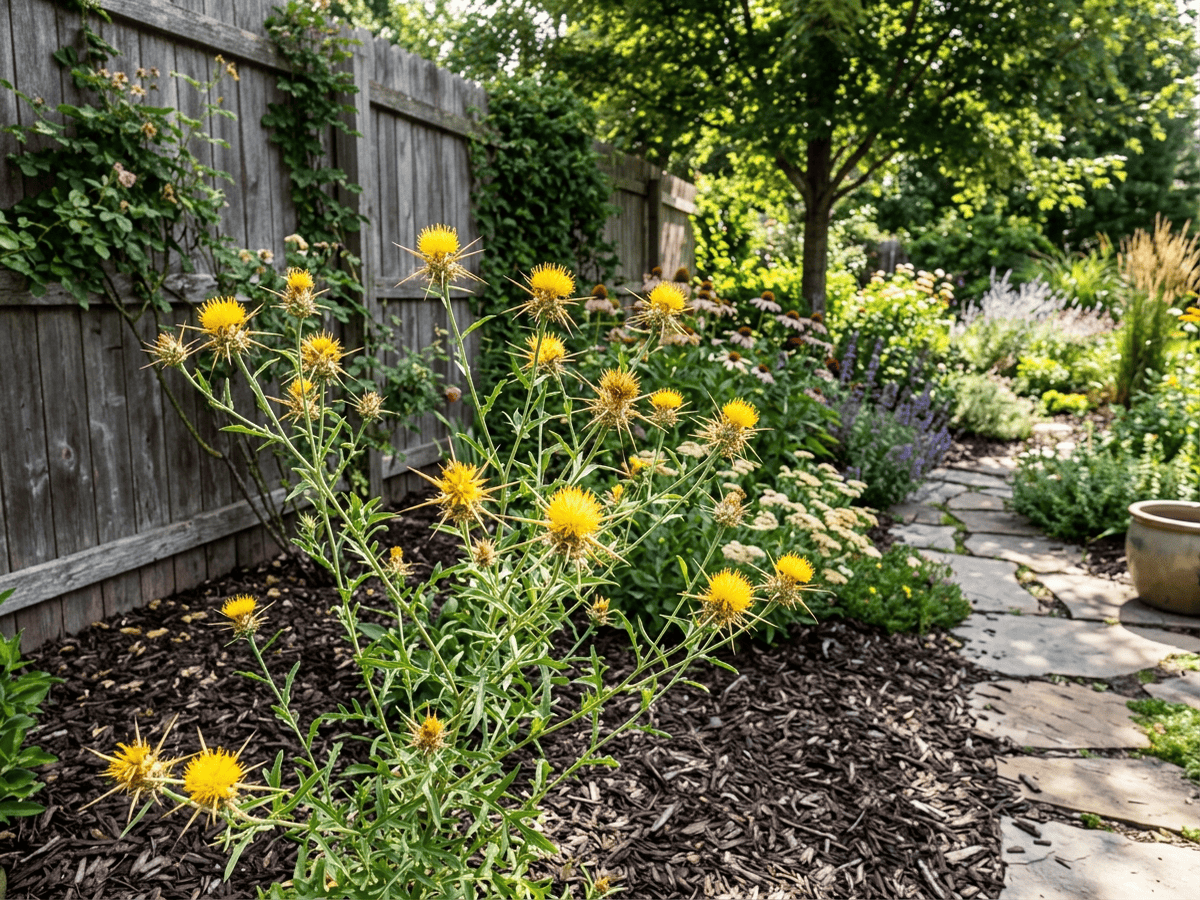
Yellow flower heads ringed with sharp spines summer to fall
Toxicity
Humans Slight
sesquiterpene lactones and repin
Slight
- Flower
- Contact
EXPOSURE Touching flowers.
EFFECT Pricks from spines.
NOTE Documented concern for humans: Pricks from spines.
Safe
EXPOSURE No exposure route is reported.
EFFECT No toxic effect is reported.
NOTE Listed as non-toxic for dogs; avoid eating ornamental plants unless confirmed edible.
Safe
EXPOSURE No exposure route is reported.
EFFECT No toxic effect is reported.
NOTE Listed as non-toxic for cats; avoid eating ornamental plants unless confirmed edible.
Educational information, not medical or veterinary advice. If exposure is suspected, contact a doctor or veterinarian.
DISTRIBUTION

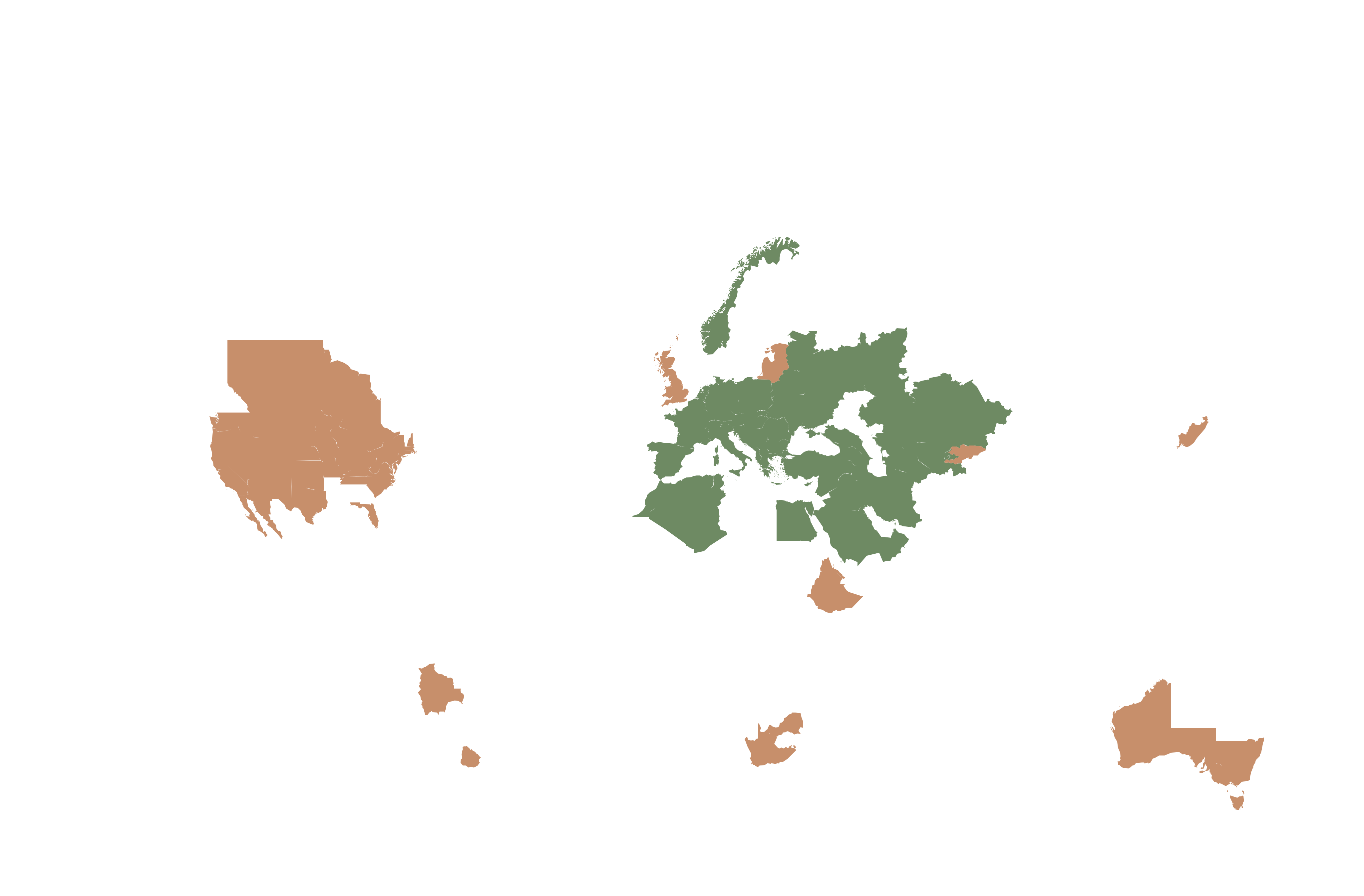
- Native
- Introduced
- Mediterranean
History
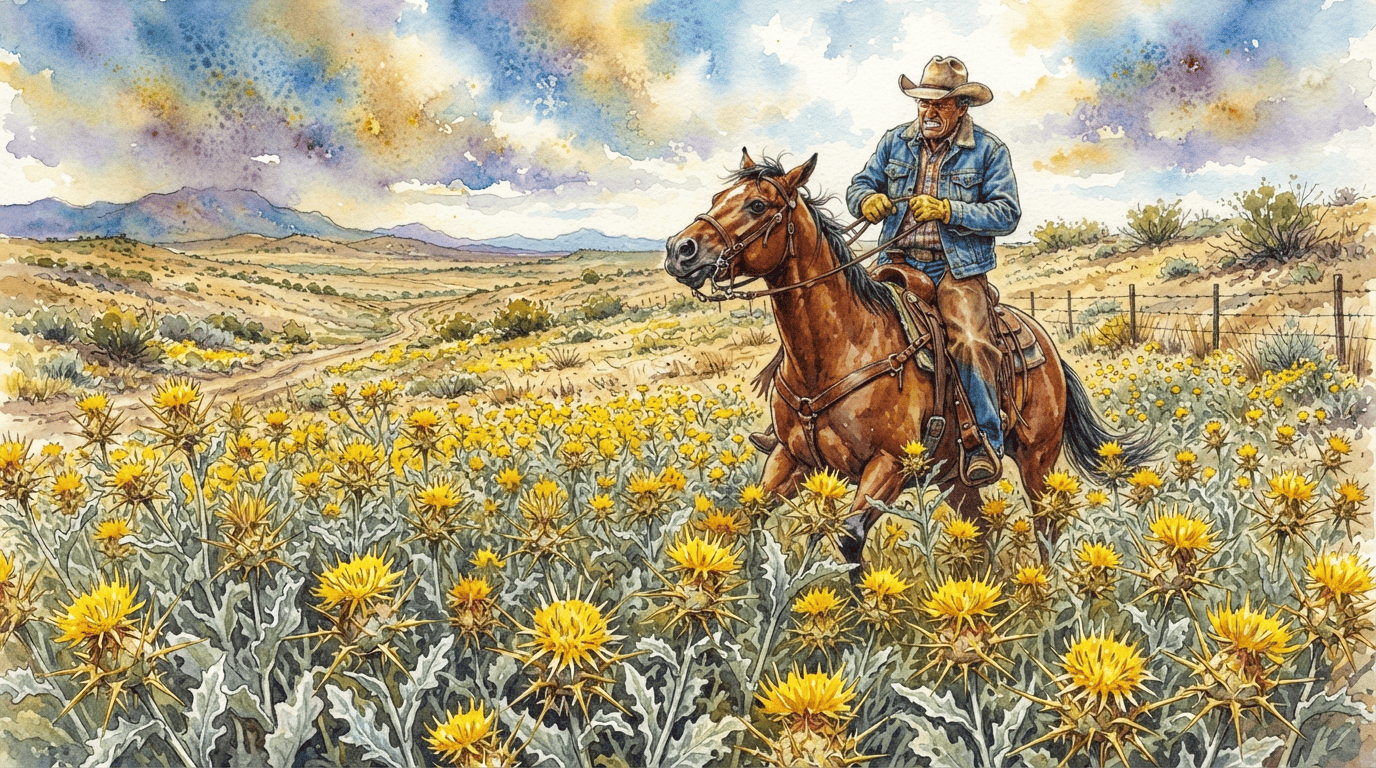
Centaurea solstitialis, yellow starthistle, is a deep-taprooted annual composite native to the Mediterranean basin and western Asia. It arrived in California before 1860 in contaminated alfalfa seed shipped from Chile, spread rapidly through Gold Rush livestock movements, and now infests over five million hectares of rangeland in the western United States, representing perhaps the worst agricultural weed invasion on the North American continent. Each mature flowerhead is ringed with rigid straw-yellow spines up to two centimeters long that deter grazing and injure hikers.
Horses that graze the plant for prolonged periods develop an irreversible neurological syndrome called nigropallidal encephalomalacia or chewing disease. Classical biological control has released six insect species since 1969 with modest results, and integrated management combining grazing timing, fire, and herbicides remains the standard approach.
Native to Mediterranean Europe, Yellow Starthistle arrived in California in contaminated Chilean alfalfa seed around 1850 and now dominates 15 million acres of California grasslands. Listed noxious across the American West, it is toxic to horses and reduces rangeland forage value to near zero in infested areas.
Symbolism & meaning
What It Symbolizes
Yellow Star-Thistle is persistence with a hard ecological cost. Armed flower heads, drought tolerance, and relentless seed set allow it to turn open rangeland into near-monotony and endanger grazing horses. Its symbolism is a warning about imbalance: toughness becomes harm when a plant escapes the checks that once shaped it.
- Deadly persistence — spines, toxicity, and competitive vigor
- Rangeland destroyer — dominates 15M+ acres of California
Where the Name Comes From
The common name highlights its yellow coloring. 'solstitialis' from Latin means of the summer solstice, for its midsummer flowering time.
Related plants
More Centaurea plants
 CornflowerCentaurea cyanus
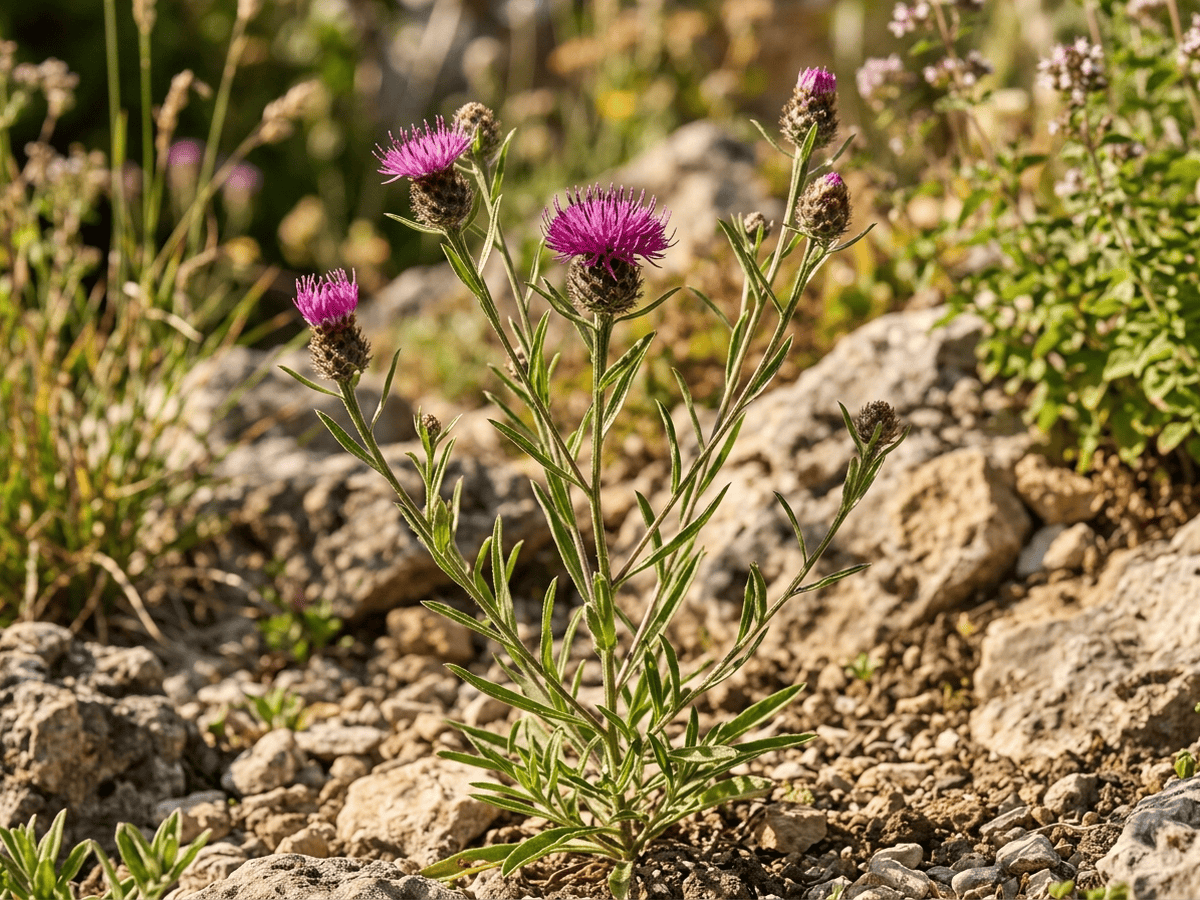 Lyon KnapweedCentaurea lugdunensis
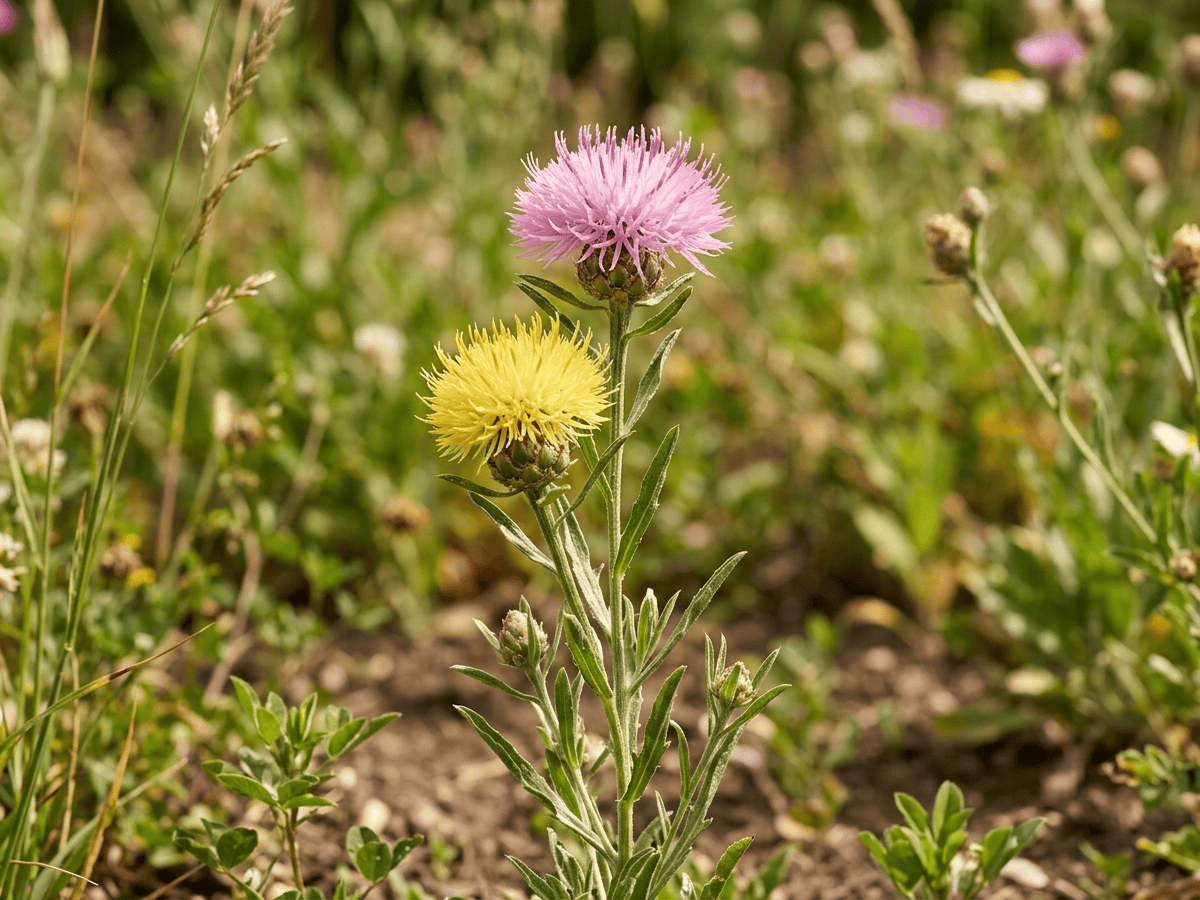 Sweet SultanCentaurea moschata
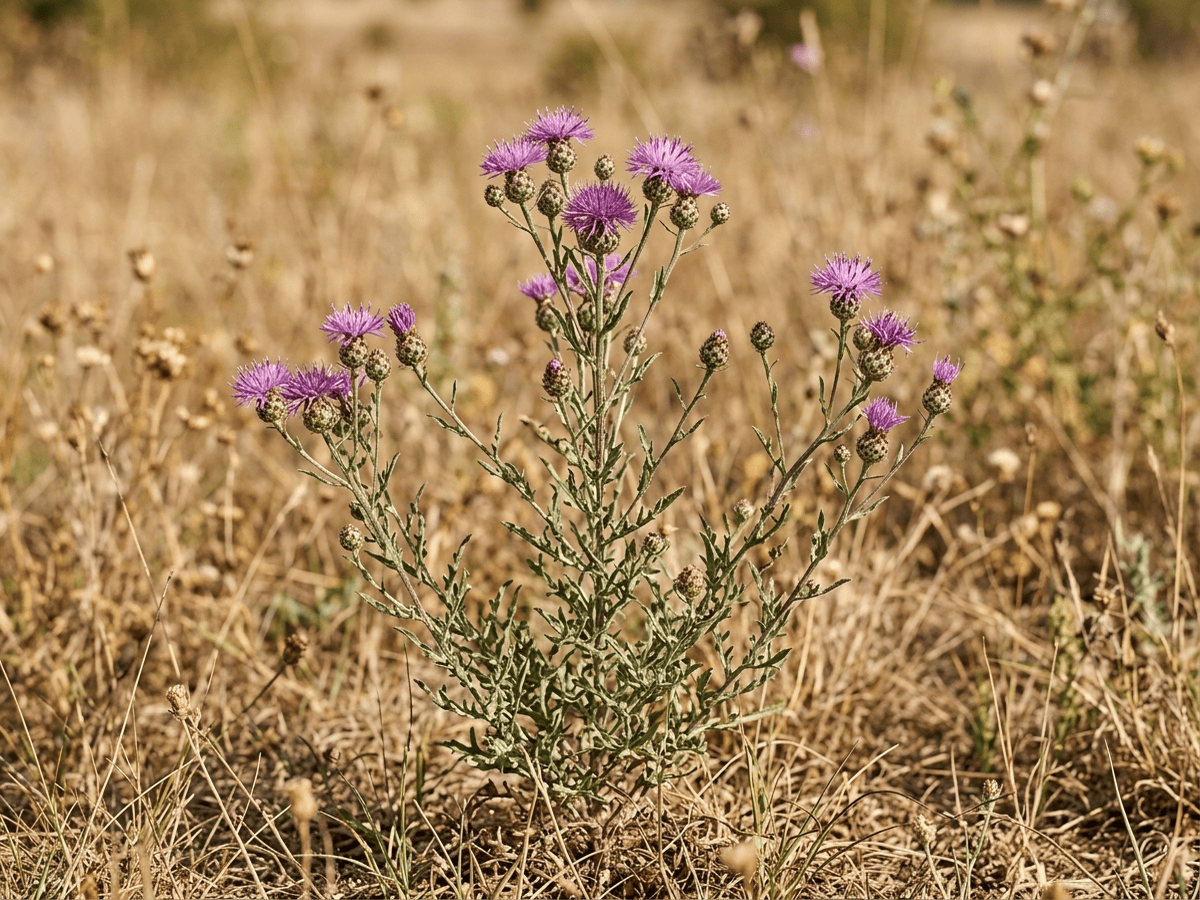 Spotted KnapweedCentaurea stoebe
Plants with similar care
 Chinese AbeliaAbelia chinensis
 Fragrant AbeliaAbelia mosanensis
 Large-Flowered AbeliaAbelia uniflora
 Glossy AbeliaAbelia x grandiflora
Frequently asked questions
How often should I water Yellow Star-Thistle?
Water about every 14 days during the growing season, and always let excess water drain away.
How much light does Yellow Star-Thistle need?
Full sun: 6+ hrs direct. Watch the leaves — scorching or stretching means the light needs adjusting.
Is Yellow Star-Thistle toxic to cats or dogs?
Pets Safe (Dogs Safe · Cats Safe) Educational information, not medical or veterinary advice. If exposure is suspected, contact a doctor or veterinarian.
Is Yellow Star-Thistle easy to grow?
Yes — it is considered an easy, beginner-friendly plant.
When does Yellow Star-Thistle bloom?
It typically blooms Jun–Nov in the Northern Hemisphere.
YardMate
Identify any plant in seconds
Snap a photo — YardMate names the plant, diagnoses problems, and reminds you when to water.
Download on the App Store