 YardMate


Cornflower
Centaurea cyanus
Easy · Beginner friendlyAbout Cornflower
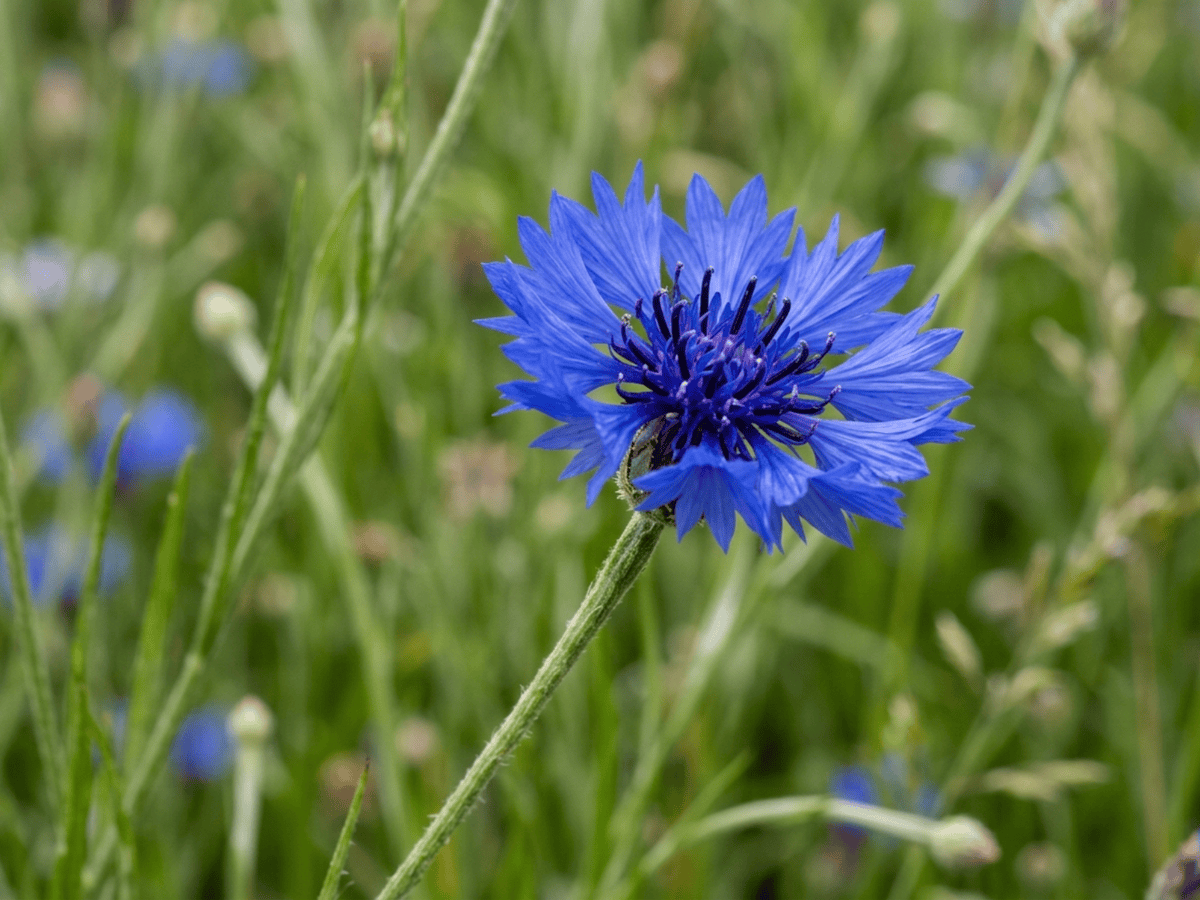
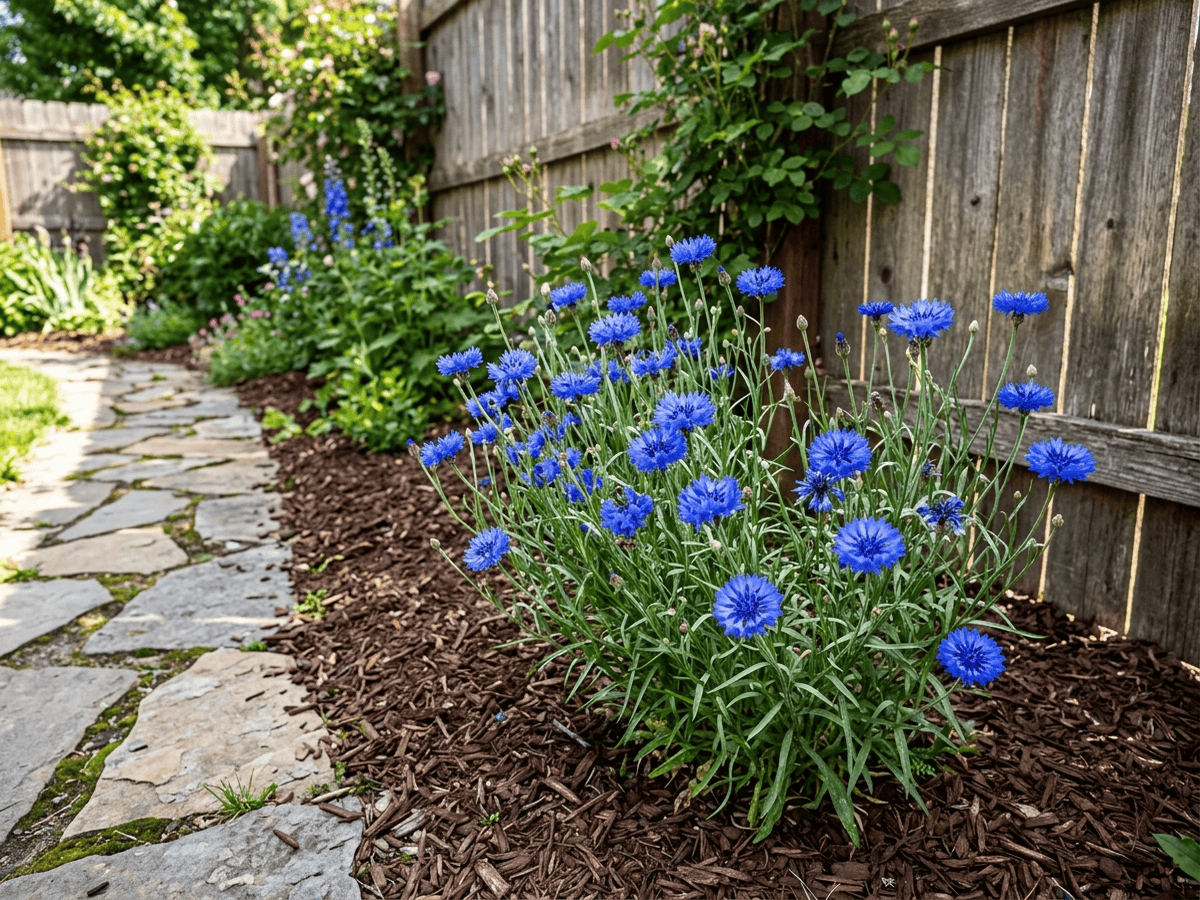
Centaurea cyanus, the cornflower or bachelor's button, is a beloved annual wildflower native to Europe with intense, true-blue flowers that have captivated humans for millennia. Growing 30 to 90 cm tall on slender, wiry stems, it produces papery, fringed flower heads in an electric blue rarely matched by other plants. Once an abundant weed of European grain fields, modern herbicides have made it increasingly rare in the wild, earning it conservation concern in several countries. The cornflower holds special national significance in France, where the 'Bleuet de France' serves as a remembrance symbol for veterans — equivalent to the British red poppy. It was also the favorite flower of Kaiser Wilhelm I and became a symbol of Prussia and Germany. The plant thrives in full sun and poor, well-drained soil, blooming from late spring through summer. It self-sows reliably and makes an excellent cut flower, lasting up to a week in a vase. The edible flowers are used as garnishes and in herbal teas.
- Edible
- Cut-flower
How to care for Cornflower
Watering
- Springevery 5 days
- Summerevery 4 days
- Fallevery 10 days
- Winterpause watering
Soil · Rich & well-draining
- Top dressingCompost10%
- Main mixPotting soil + compost 3:180%
- DrainageGravel10%
Top up the compost layer each season.
FERTILIZER
This plant needs little to no feeding.
At a Glance
- NativeEurope
- Height2–3 ft (0.6–0.9 m)
- Spread0.5–1 ft (0.2–0.3 m)
- Flower colorBlue, Pink, White, Purple
- Foliage colorGreen, Silver
- SoilLoamy, Well-drained, Neutral
- LocationsYard · Indoor · Balcony
Bloom time
BLOOM CYCLE
Peak bloom
Mar, Apr, May, Sep, Oct, Nov
Sow directly in fall or early spring for strongest plants; deadhead for continuous blooming
Fragrance
NO FRAGRANCE
No notable fragrance.
Toxicity
No toxicity has been reported for this plant. Still, it is wise to keep pets from chewing on any houseplant.
Educational information, not medical or veterinary advice. If exposure is suspected, contact a doctor or veterinarian.
DISTRIBUTION


- Native
- Introduced
- Europe
History
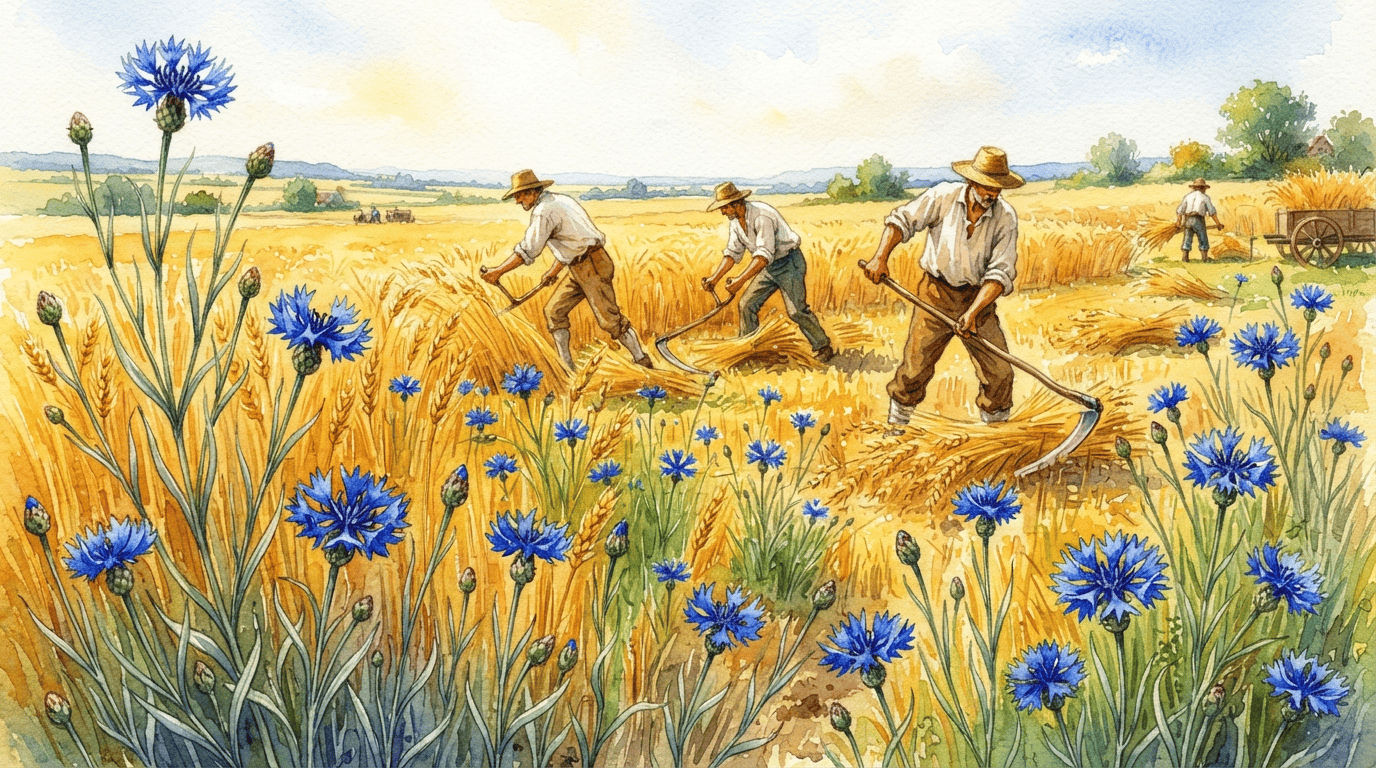
Centaurea cyanus is native to Europe, where it was for centuries one of the most familiar weeds of grain fields — its startlingly pure cornflower-blue flowers blooming amid wheat, rye, and barley harvests made it an iconic image of European rural summer, featured in countless medieval and Renaissance grain-field illuminations, Impressionist paintings, and folk traditions. "Bachelor's button" as a common name derives from Victorian English flower-language tradition, in which an unmarried young man might wear a cornflower in his lapel to signify his availability — or if the flower stayed fresh, to signal returned love. During the 20th century, intensified grain farming, including heavy herbicide use (particularly 2,4-D and similar broadleaf herbicides), caused dramatic declines of the species throughout its native European range; in the UK it is now essentially extinct as a wild grain-field plant and listed as a species of conservation concern.
Despite its scarcity in the wild, cornflower remains widely grown from seed as a garden annual. The species is a national cultural symbol in multiple European countries: in France, the blue "bleuet de France" (paired with the red poppy in Britain and the Commonwealth) is the remembrance-flower honoring WWI veterans; in Germany and Austria the Kornblume has various historical political associations; and in Estonia it is the national flower.
Symbolism & meaning
What It Symbolizes
In old European custom, young men wore the Cornflower in their lapels when courting, and a faded bloom was said to mean their love was unreturned, making it the emblem of fidelity. In France it became the Bleuet, worn each November to honor the fallen, a national symbol of remembrance and gratitude. It is the small blue flower that carries both private vows and public mourning.
- Fidelity — Young men wore cornflowers when courting, pledging romantic faithfulness
- Remembrance — The Bleuet de France honors fallen soldiers, a national symbol of gratitude and memory
Where the Name Comes From
Centaurea references the centaur Chiron of Greek mythology, who was said to have used the plant on wounds. Cyanus comes from Greek 'kyanos' meaning dark blue.
Uses & Fun Facts
- True-blue petals garnish salads and cakes
- Wiry-stemmed bachelor's button classic in fresh bouquets
- Wildflower meadow staple drawing bees and butterflies
Related plants
More Centaurea plants
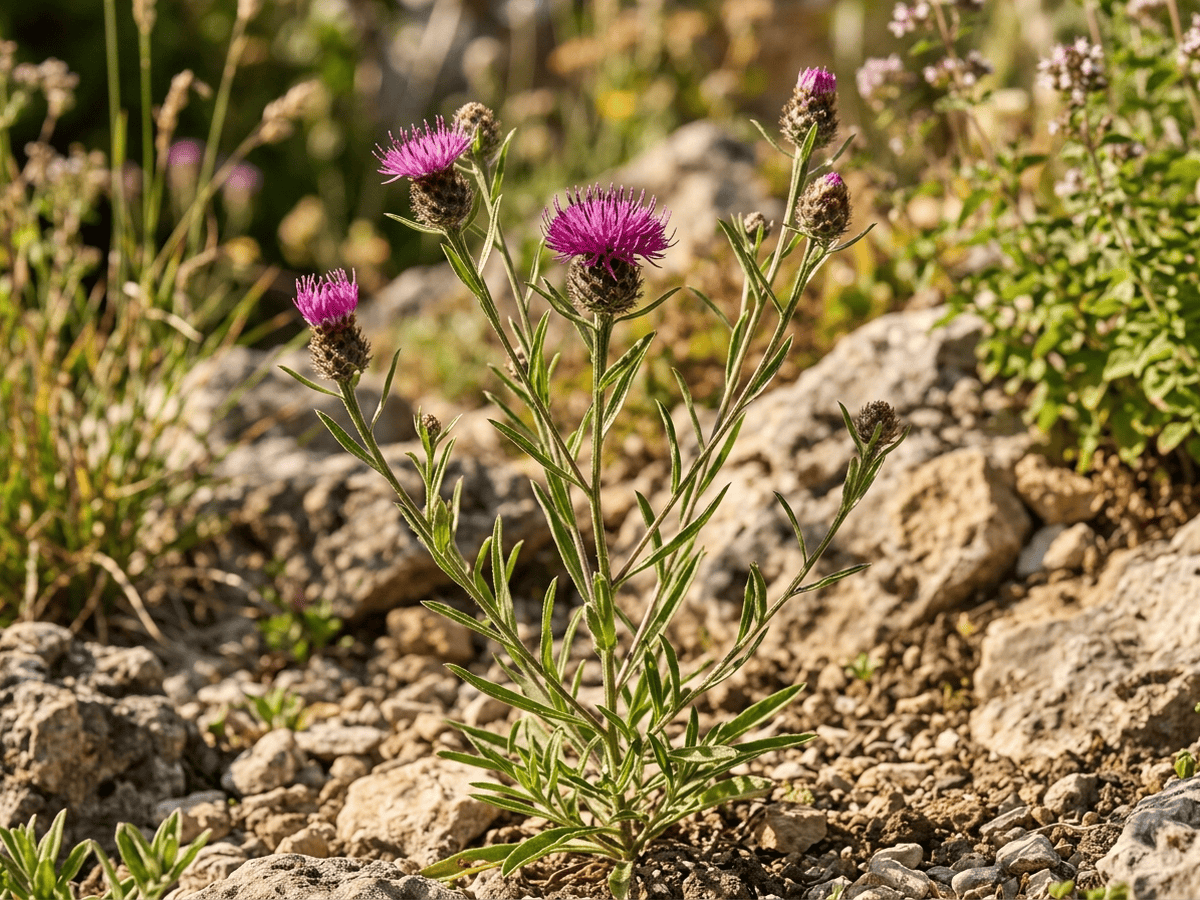 Lyon KnapweedCentaurea lugdunensis
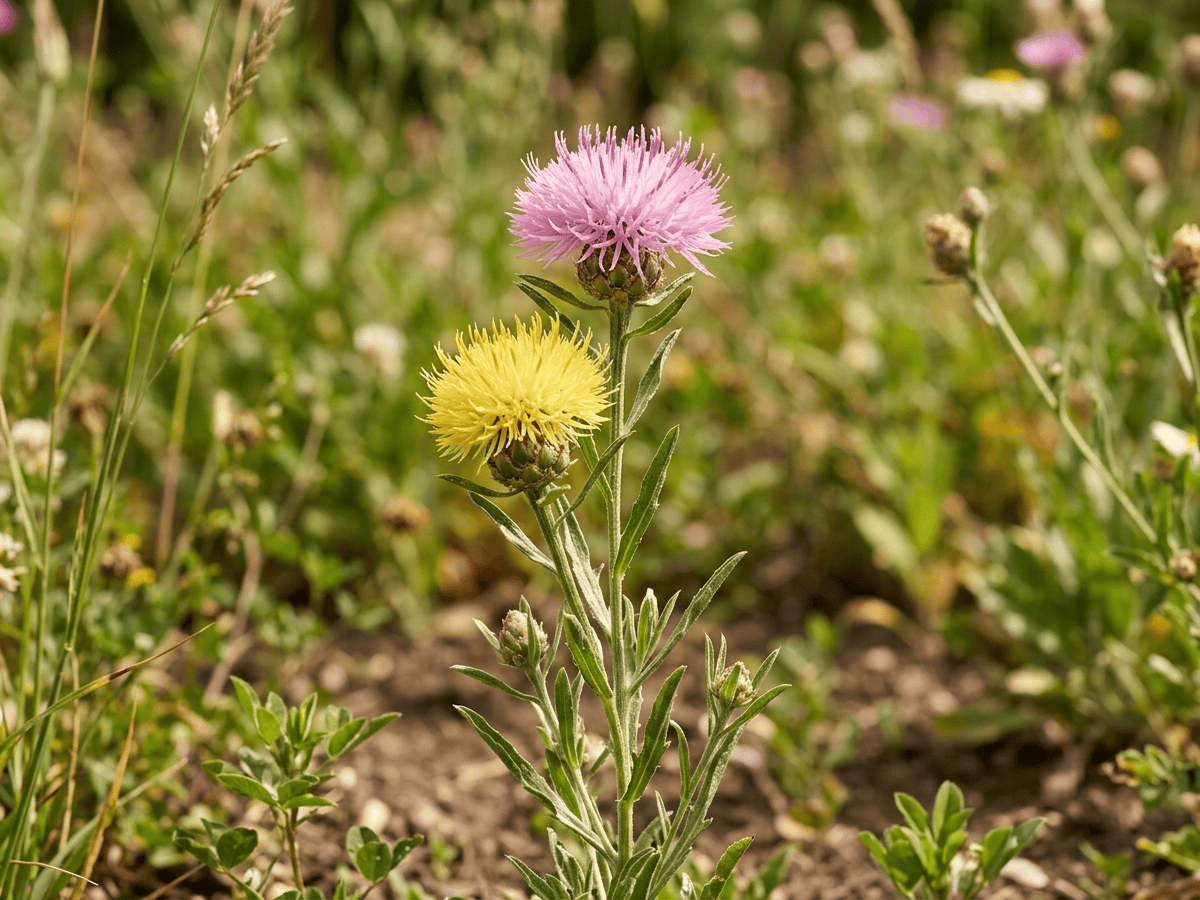 Sweet SultanCentaurea moschata
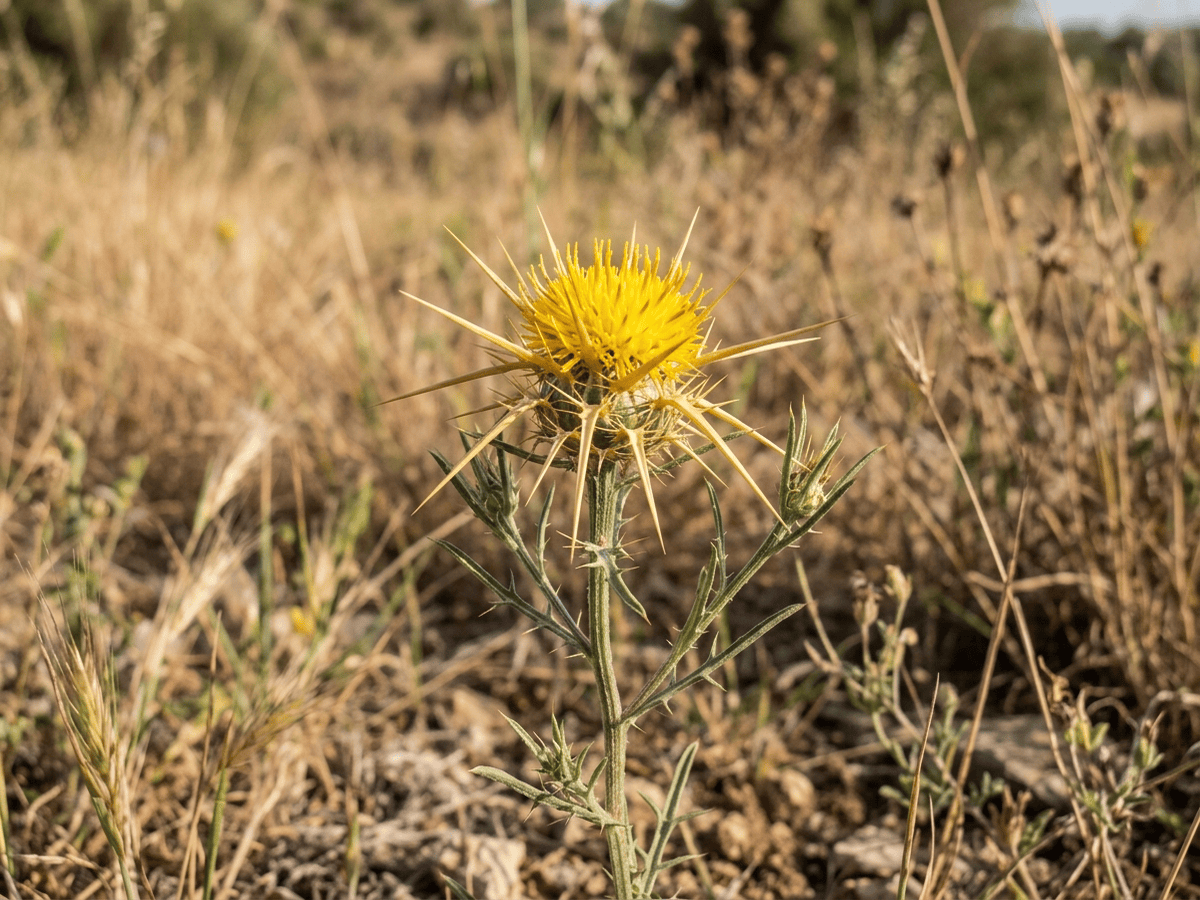 Yellow Star-ThistleCentaurea solstitialis
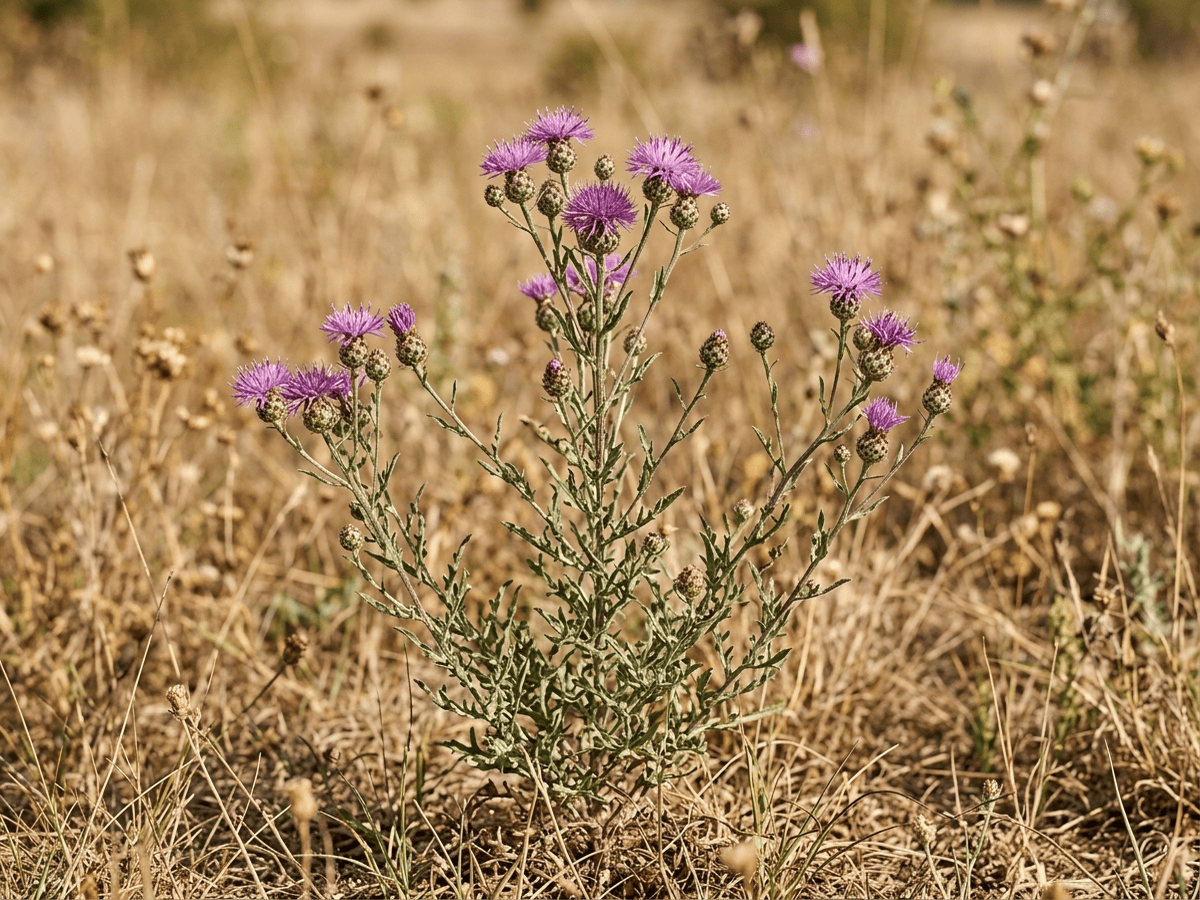 Spotted KnapweedCentaurea stoebe
Plants with similar care
 Chinese AbeliaAbelia chinensis
 Fragrant AbeliaAbelia mosanensis
 Large-Flowered AbeliaAbelia uniflora
 Glossy AbeliaAbelia x grandiflora
Frequently asked questions
How often should I water Cornflower?
Water about every 5 days during the growing season, and always let excess water drain away.
How much light does Cornflower need?
Full sun: 6+ hrs direct. Watch the leaves — scorching or stretching means the light needs adjusting.
Is Cornflower toxic to cats or dogs?
No toxicity has been reported for this plant. Still, it is wise to keep pets from chewing on any houseplant. Educational information, not medical or veterinary advice. If exposure is suspected, contact a doctor or veterinarian.
Is Cornflower easy to grow?
Yes — it is considered an easy, beginner-friendly plant.
Can Cornflower be grown indoors?
Yes, it adapts well to indoor growing given the right light.
When does Cornflower bloom?
It typically blooms Mar, Apr, May, Sep, Oct, Nov in the Northern Hemisphere.
YardMate
Identify any plant in seconds
Snap a photo — YardMate names the plant, diagnoses problems, and reminds you when to water.
Download on the App Store