 YardMate


Japanese Quince
Chaenomeles japonica
Easy · Beginner friendlyAbout Japanese Quince
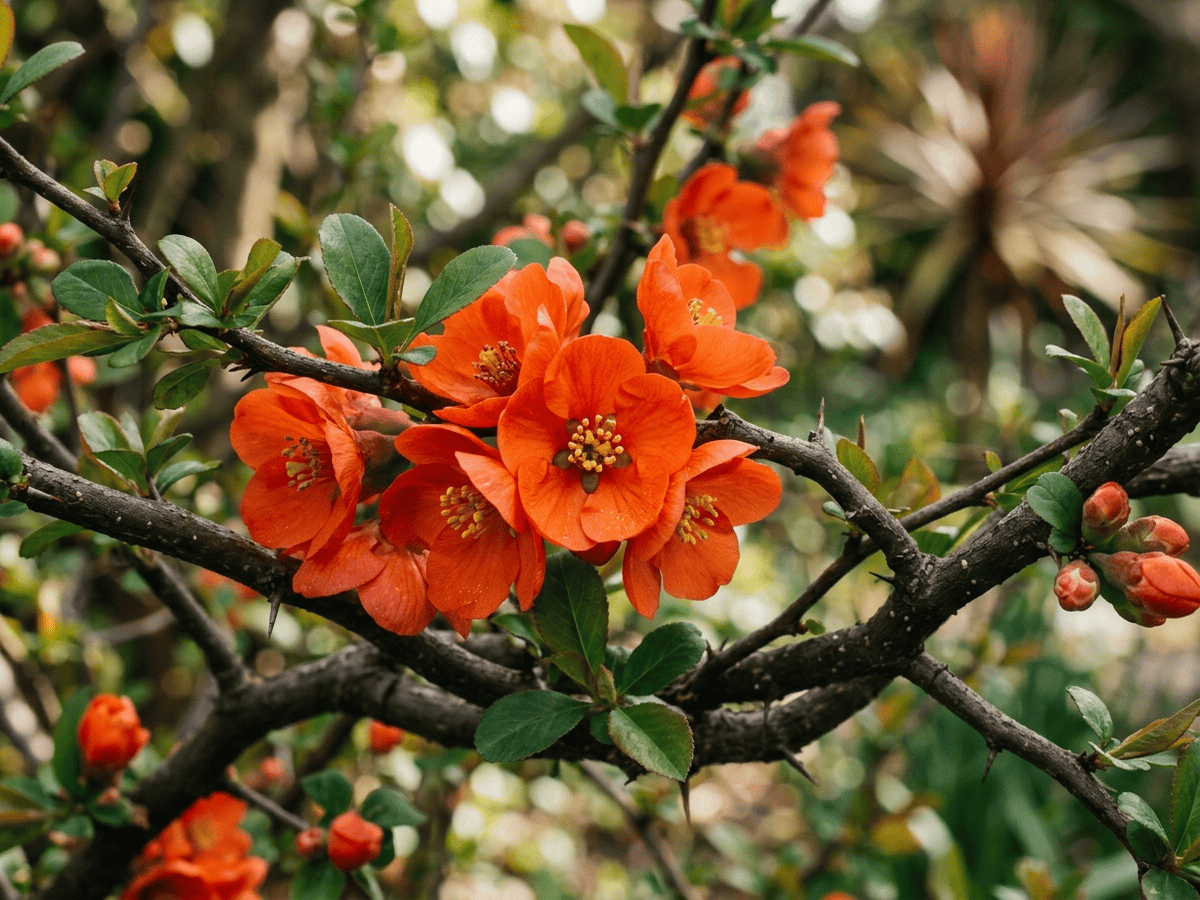
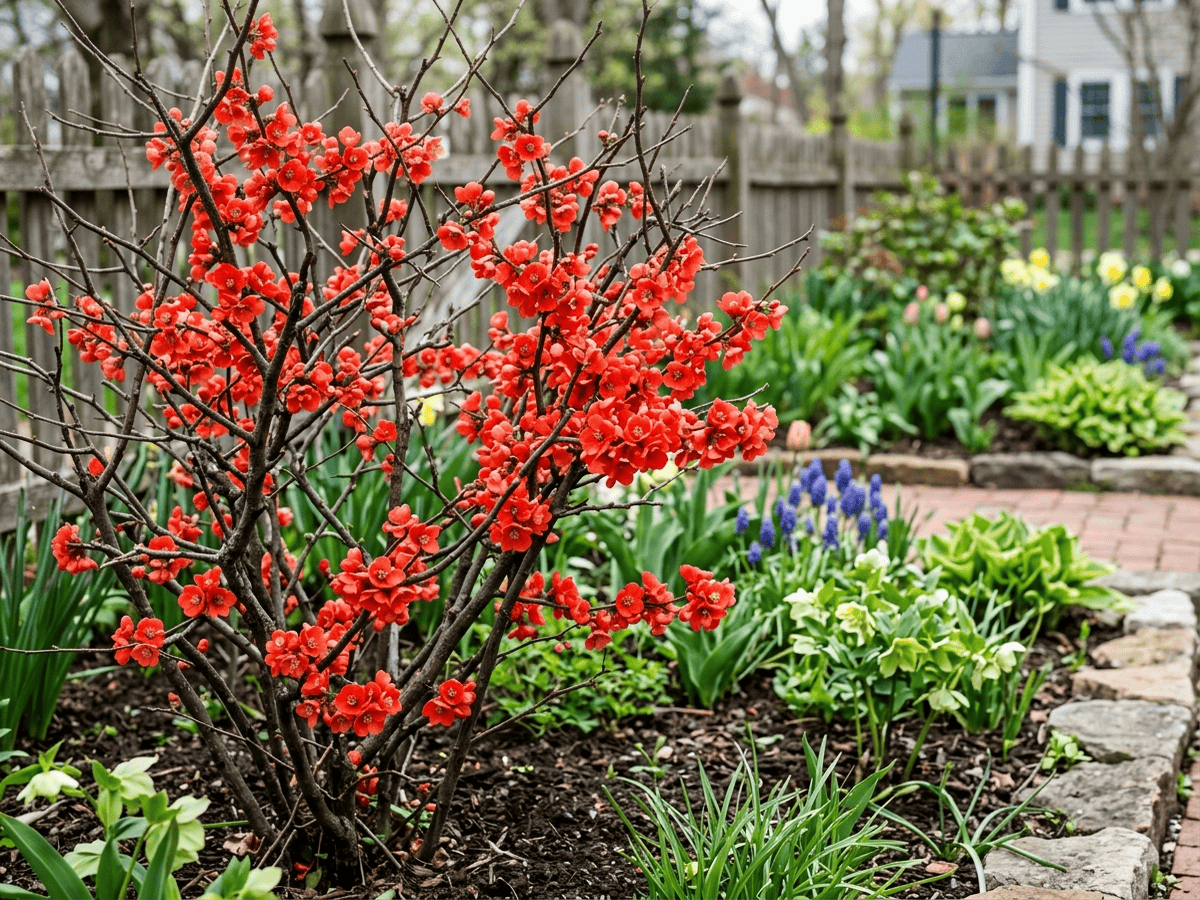
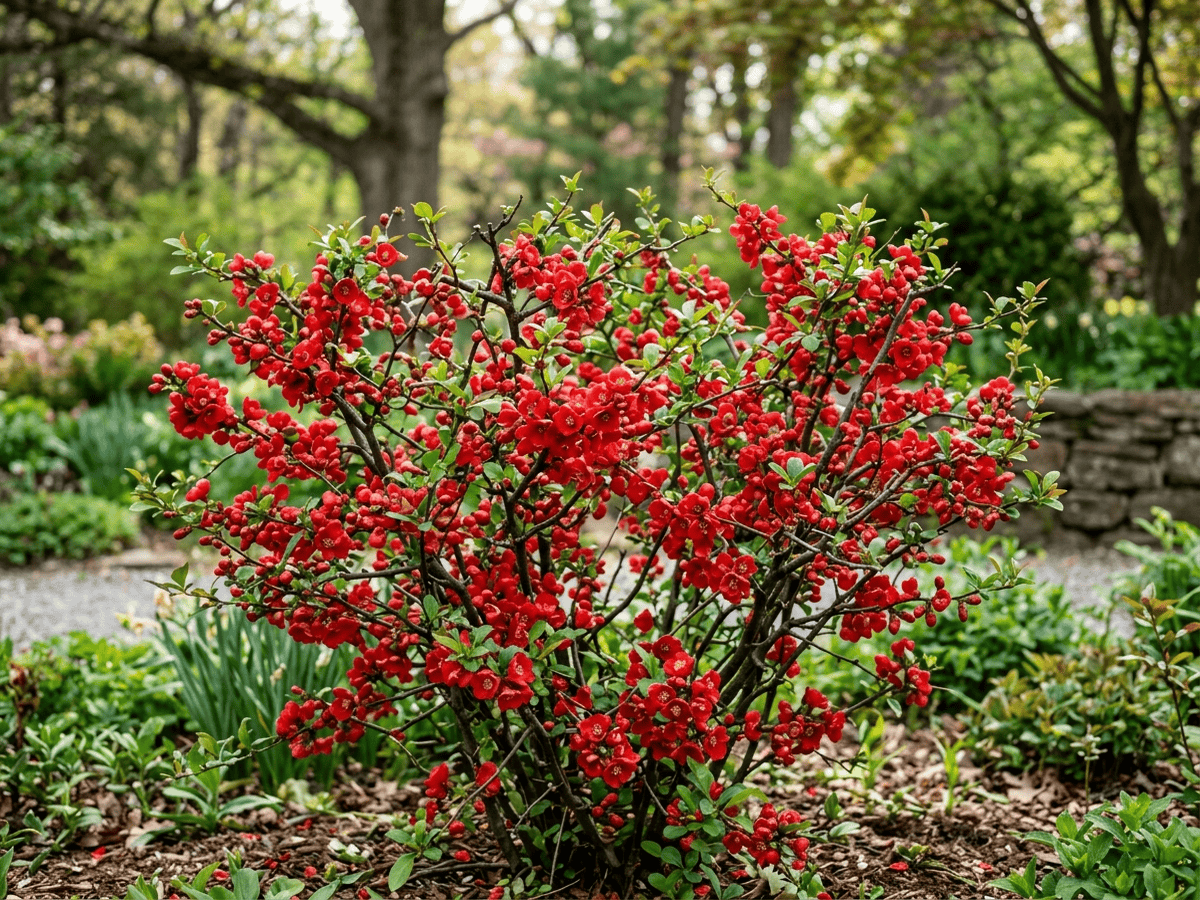
Japanese Flowering Quince or Maule's Quince is a low-growing Japanese deciduous shrub reaching 2 to 3 feet tall with spreading habit, producing bright orange-red flowers on bare stems in early spring before leaves emerge. Small yellow-green aromatic quince-like fruits follow, usable for preserves. A classic Japanese-garden and rock-garden shrub in American plantings, smaller and tidier than the common Chaenomeles speciosa.
- Edible
- Drought-tolerant
- Deer-resistant
- Pollinator-friendly
How to care for Japanese Quince
Watering
- Springevery 5 days
- Summerevery 3 days
- Fallevery 7 days
- Winterevery 14 days
Soil · Rich & well-draining
- Top dressingCompost10%
- Main mixPotting soil + compost 3:180%
- DrainageGravel10%
Top up the compost layer each season.
FERTILIZER
Balanced Feed 14-14-14
An even feed covers all three needs at once, keeping leaves, roots and blooms moving together with nothing pushed out of balance.
- Nitrogen · Leaves
- Phosphorus · Roots + Blooms
- Potassium · Strength
- Springevery 45 days
- Summerevery 60 days
At a Glance
- NativeEast Asia
- Height3–5 ft (0.9–1.5 m)
- Spread4–6 ft (1.2–1.8 m)
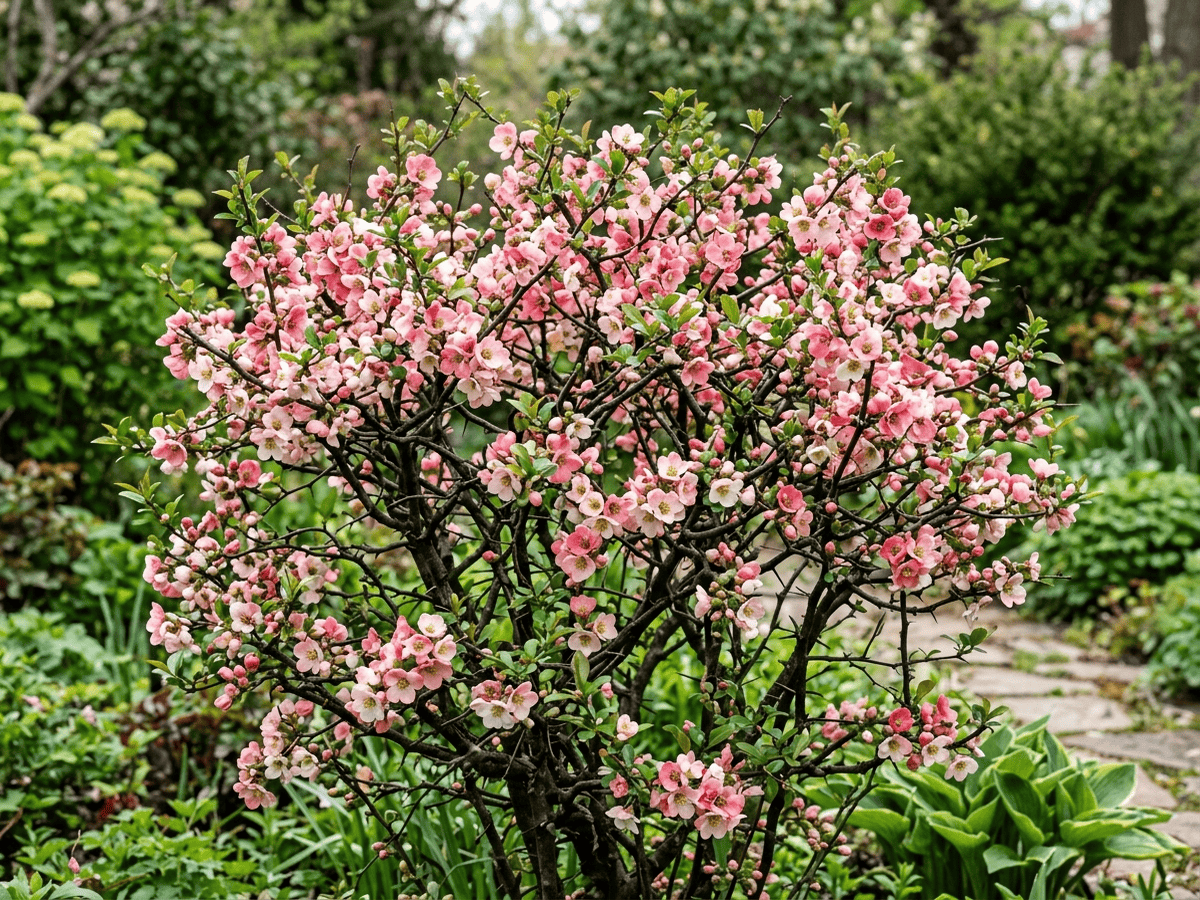
- Flower colorRed, Orange, Pink
- Foliage colorGreen
- Fruit colorYellow, Green
- SoilLoamy, Well-drained
- LocationsYard
Bloom time
BLOOM CYCLE
Peak bloom
Mar–Apr
Orange-red flowers on bare stems in early spring
Fragrance
LIGHT FRAGRANCE
Flowers lightly fragrant; ripe fruit strongly aromatic.
Toxicity
No toxicity has been reported for this plant. Still, it is wise to keep pets from chewing on any houseplant.
Educational information, not medical or veterinary advice. If exposure is suspected, contact a doctor or veterinarian.
DISTRIBUTION

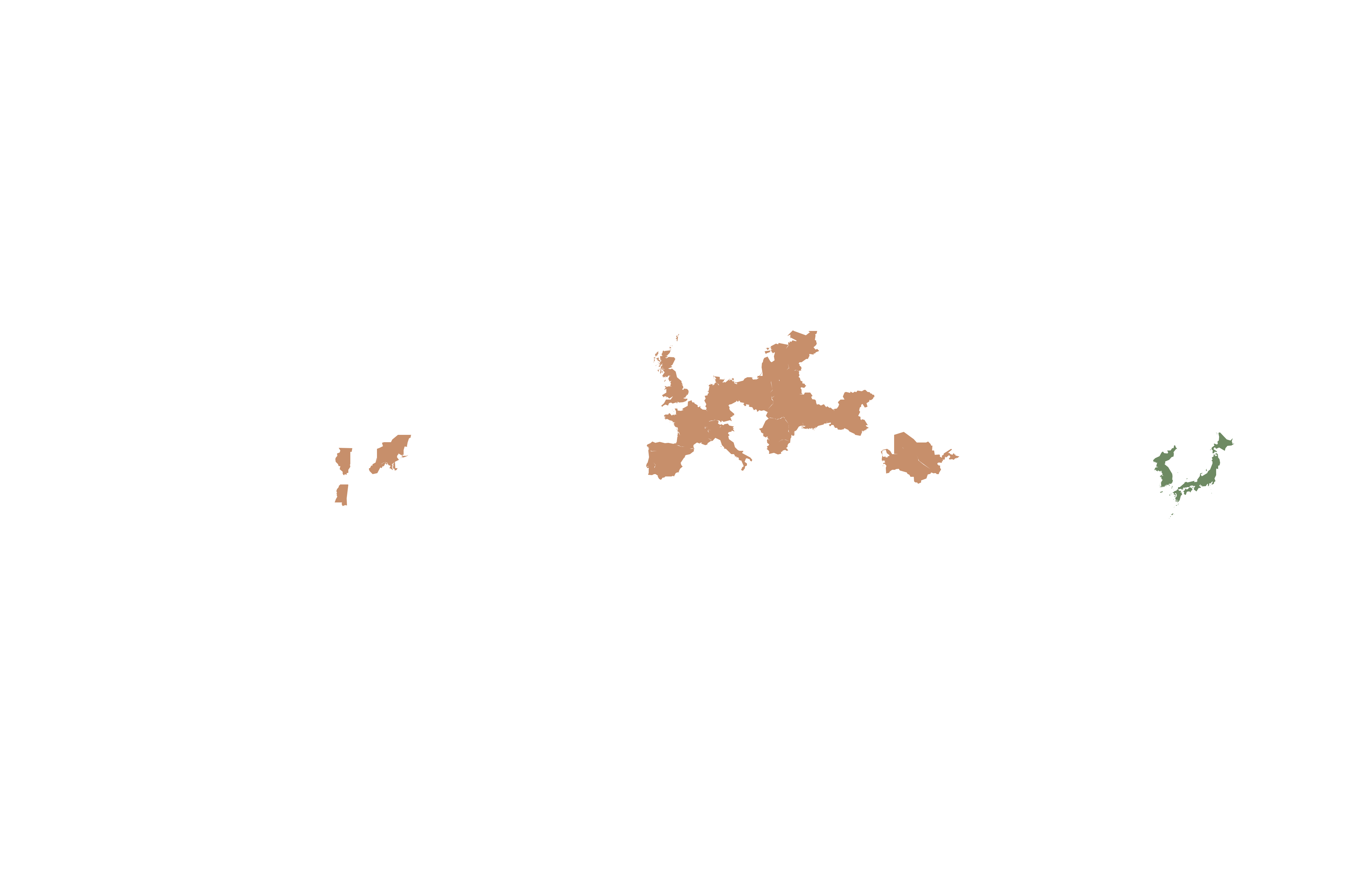
- Native
- Introduced
- East Asia
History

Chaenomeles japonica grows wild on hillsides across Japan, particularly Honshu and Kyushu. The Swedish botanist Carl Peter Thunberg described it in Flora Japonica (1784) as Pyrus japonica based on his 1775-1776 Dejima collections. John Lindley established the genus Chaenomeles in 1822 from Greek chaino (to gape) and mela (apple), referring to the fruits.
It reached English gardens in 1869 via Wentworth Buller of Strete Raleigh. Unlike the taller C. speciosa from China, it forms a low, spiny mound to 1 m tall and bears orange-red to rose flowers in early spring, followed by small aromatic yellow-green quince fruits high in pectin and vitamin C — traditionally used in Japanese preserves, jellies, and medicinal syrups. Horticulturally it is a parent of the widely grown hybrid C. x superba group including 'Crimson and Gold' and 'Fire Dance'.
Native to Japan and cultivated there for centuries, introduced to Western gardens in 1874 by the Arnold Arboretum. Known in Japanese as 'kusa-boke' meaning ground quince, distinguishing it from the taller Chaenomeles speciosa. Widely used in traditional ikebana flower arranging for its sculptural early-spring branches.
Symbolism & meaning
What It Symbolizes
Japanese Quince offers an early promise, its coral and scarlet blooms opening on bare branches while the rest of the garden still sleeps. Long prized in ikebana, its angular twigs and luminous flowers carry centuries of Japanese floral heritage into a single cut stem. To meet it in February is to be told, on the authority of an ancient art, that spring has decided to begin.
- Early promise — among first shrubs to bloom in spring
- Ikebana heritage — classical Japanese flower arranging material
Where the Name Comes From
The name Japanese Quince points to Japan. 'Chaenomeles' from Greek 'chaino-mele' meaning to split open apple-like, for splitting fruit; 'japonica' refers to Japan.
Uses & Fun Facts
- Aromatic yellow fruits cooked into preserves and jellies
- Orange-red flowers cover bare stems in earliest spring
- Low thorny branches form informal barrier or rock-garden hedge
- Early blooms provide critical nectar for emerging bees
Related plants
More Chaenomeles plants
Plants with similar care
 Chinese AbeliaAbelia chinensis
 Fragrant AbeliaAbelia mosanensis
 Large-Flowered AbeliaAbelia uniflora
 Glossy AbeliaAbelia x grandiflora
Frequently asked questions
How often should I water Japanese Quince?
In summer, water about every 3 days; in winter, about every 14 days. Adjust for heat, pot size and drainage.
How much light does Japanese Quince need?
Full sun: 6+ hrs direct. Watch the leaves — scorching or stretching means the light needs adjusting.
Is Japanese Quince toxic to cats or dogs?
No toxicity has been reported for this plant. Still, it is wise to keep pets from chewing on any houseplant. Educational information, not medical or veterinary advice. If exposure is suspected, contact a doctor or veterinarian.
Is Japanese Quince easy to grow?
Yes — it is considered an easy, beginner-friendly plant.
When does Japanese Quince bloom?
It typically blooms Mar–Apr in the Northern Hemisphere.
YardMate
Identify any plant in seconds
Snap a photo — YardMate names the plant, diagnoses problems, and reminds you when to water.
Download on the App Store