 YardMate


Cathay Quince
Chaenomeles cathayensis
Easy · Beginner friendlyAbout Cathay Quince
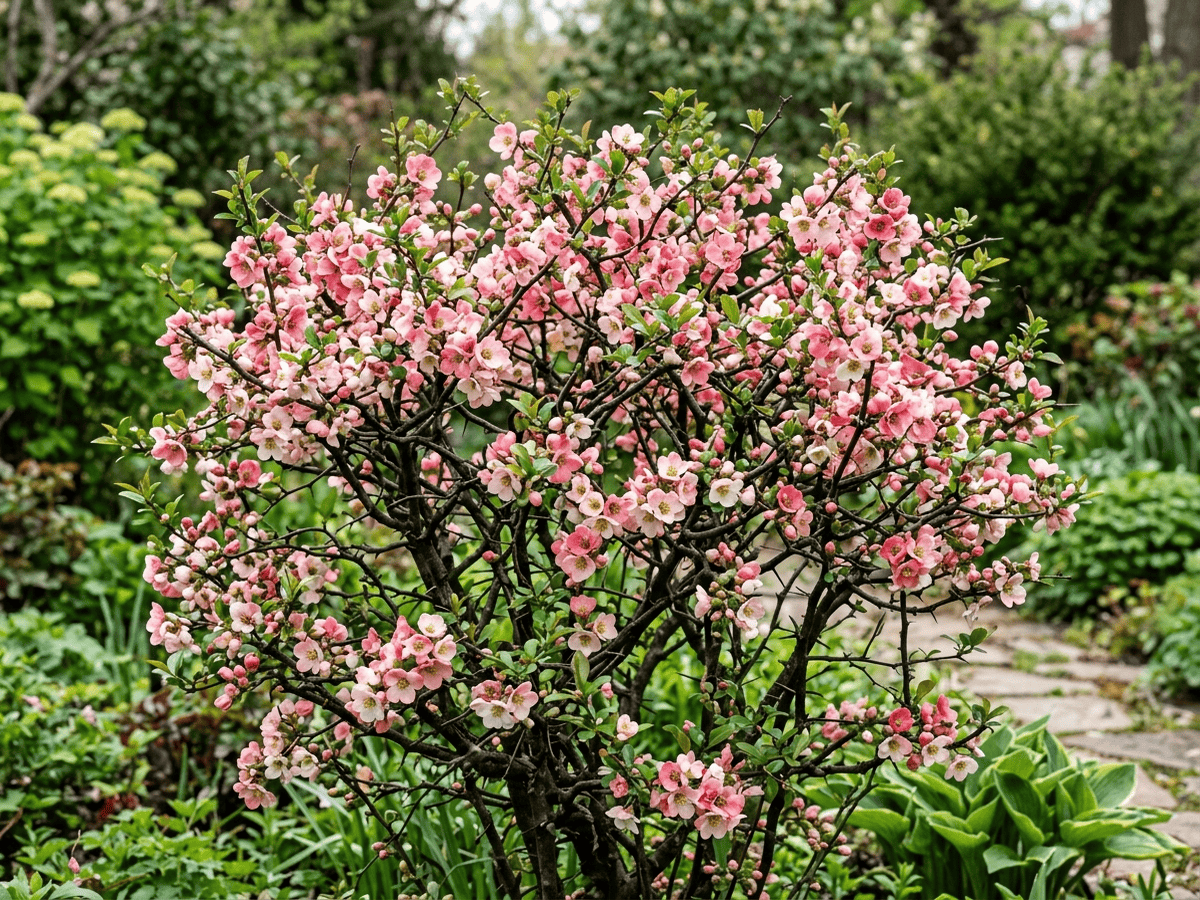
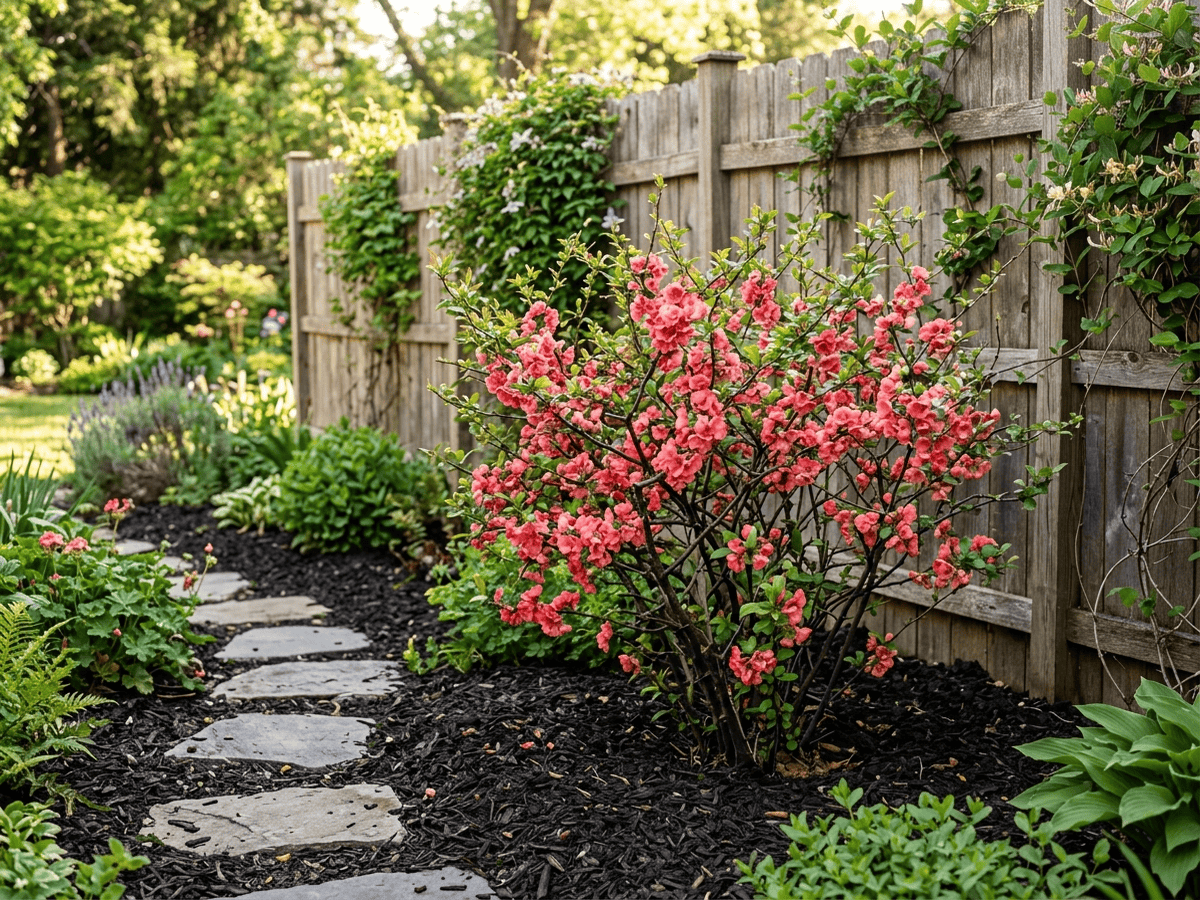
Chinese Flowering Quince is a large thorny deciduous shrub or small tree reaching 10-15 feet, native to central China. It produces clusters of white to pale pink flowers on bare branches in early spring, followed by large fragrant fruit up to 6 inches long that ripen to golden yellow in autumn. The fruit, while too astringent to eat raw, is prized for making quince paste, jelly, and liqueur. More vigorous and larger-fruited than the common flowering quince.
- Edible
- Drought-tolerant
How to care for Cathay Quince
Watering
- Springevery 7 days
- Summerevery 5 days
- Fallevery 10 days
- Winterevery 21 days
Soil · Rich & loamy
- Top dressingBark mulch15%
- Main mixRich loam + compost 3:170%
- DrainageGravel15%
Use fully finished compost — fresh compost burns roots.
FERTILIZER
Balanced Feed 14-14-14
An even feed covers all three needs at once, keeping leaves, roots and blooms moving together with nothing pushed out of balance.
- Nitrogen · Leaves
- Phosphorus · Roots + Blooms
- Potassium · Strength
- Springevery 30 days
At a Glance
- NativeEast Asia
- Height8–15 ft (2.4–4.6 m)
- Spread6–10 ft (1.8–3 m)
- Flower colorWhite, Pink
- Foliage colorGreen, Yellow
- Fruit colorYellow, Green
- SoilWell-drained, Loamy, Neutral
- LocationsYard
Bloom time
BLOOM CYCLE
Peak bloom
Mar–Apr
White to pale pink flowers on bare branches March to April
Fragrance
MODERATE FRAGRANCE
Ripe fruits emit a powerful sweet quince-pineapple aroma.
Toxicity
Humans Slight · Pets Slight
cyanogenic glycosides (in seeds)
Slight
- Seed
- Ingestion
EXPOSURE Eating seeds.
EFFECT GI upset from cyanogenic glycosides if raw seeds chewed.
NOTE Seeds of Rosaceae contain small amounts of cyanogenic compounds; fruit flesh is edible when cooked. Thorns pose physical hazard.
Slight
- Seed
- Ingestion
EXPOSURE Eating seeds.
EFFECT Mild GI upset.
NOTE Seeds of Rosaceae contain small amounts of cyanogenic compounds; fruit flesh is edible when cooked. Thorns pose physical hazard.
Slight
- Seed
- Ingestion
EXPOSURE Eating seeds.
EFFECT Mild GI upset.
NOTE Seeds of Rosaceae contain small amounts of cyanogenic compounds; fruit flesh is edible when cooked. Thorns pose physical hazard.
Educational information, not medical or veterinary advice. If exposure is suspected, contact a doctor or veterinarian.
DISTRIBUTION


- Native
- East Asia
History
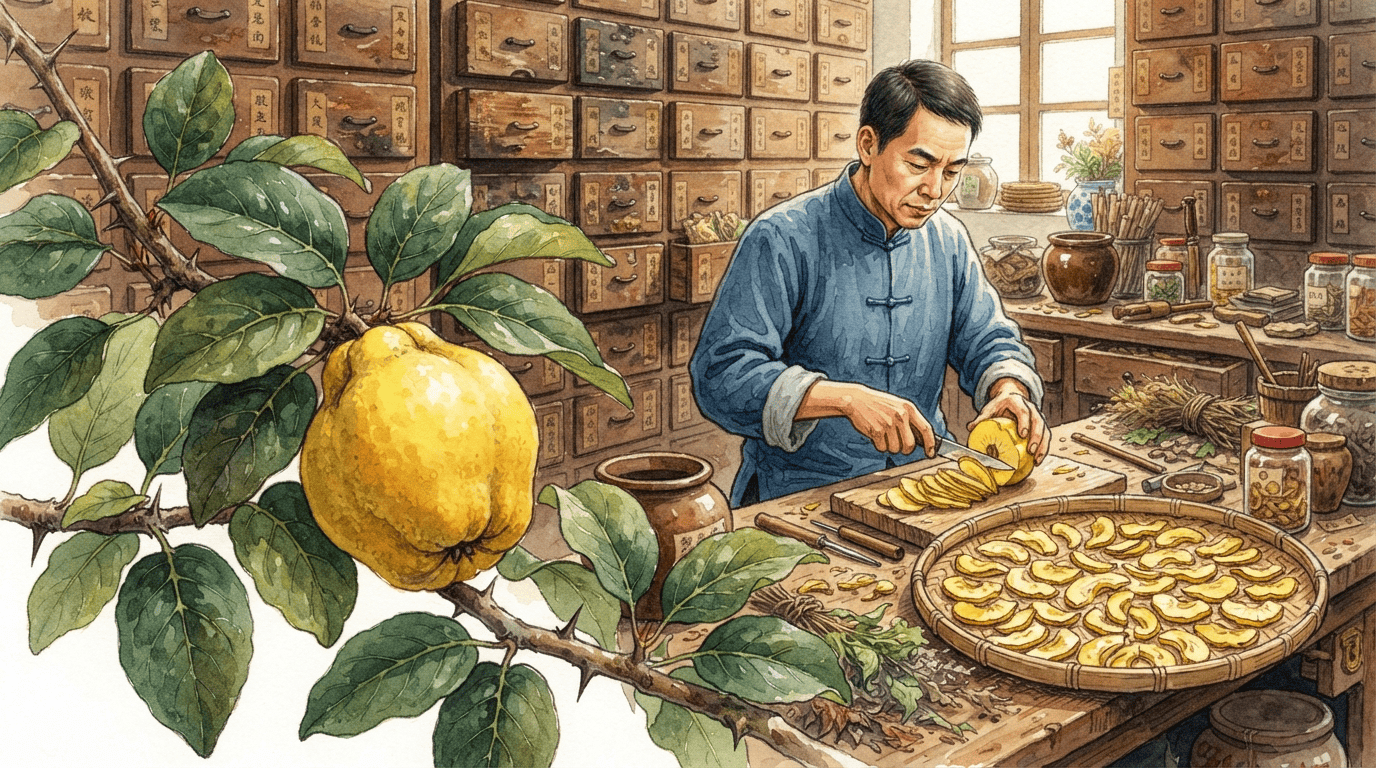
Chaenomeles cathayensis grows in central and southern China, especially mountain regions of Sichuan, Hubei, Hunan, Jiangxi, Guangxi, Guizhou, and Yunnan. Camillo Karl Schneider formalized the species in 1906, and Ernest Henry Wilson introduced it to Western cultivation around 1900. Larger and more tree-like than the familiar Japanese flowering quince, it can reach 5-6 meters, with spiny branches, pale spring flowers, and the largest fruits in the genus.
Those golden, fragrant fruits, sometimes 15 cm long, were historically valued as xuan mu gua, dried quince slices used in Chinese medicine for rheumatic pain, cramps, digestion, and astringent formulas. Raw fruit is hard and tart, but it makes excellent jelly, preserves, and aromatic liqueurs.
Its story sits at the meeting point of medicine, kitchen craft, and plant exploration: a mountain fruit tree collected by Wilson but already long known in Chinese practice.
Symbolism & meaning
What It Symbolizes
Cathay Quince offers Temptation in golden, fragrant fruit — hard, perfumed apples that scent ancient Chinese orchards and rooms where they are set in bowls. Its Abundance comes late, autumn branches weighed with more fruit than any household can use. Each quince is part fragrance, part promise of jelly, part old Chinese still life.
- Temptation — fragrant golden fruit evokes ancient Chinese orchards
- Abundance — prolific fruiting in autumn
Where the Name Comes From
'Chaenomeles' from Greek 'chaino' (to gape) and 'melon' (apple), referring to the fruit; 'cathayensis' means 'from Cathay (China)'.
Uses & Fun Facts
- Early spring pink-white flowers on bare thorny branches
- Aromatic hard fruits used for jams and preserves
- Thorny growth makes effective barrier planting
Related plants
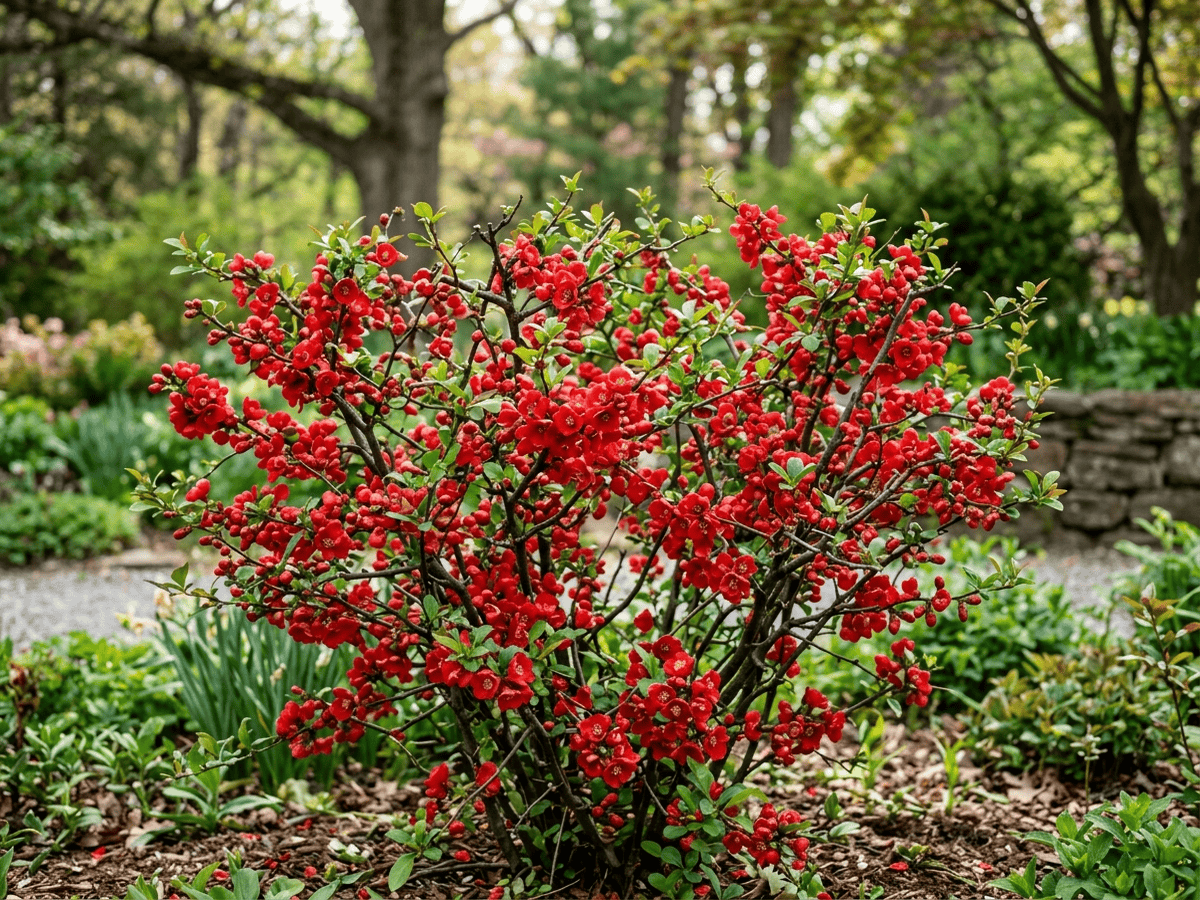
More Chaenomeles plants

Plants with similar care
 Chinese AbeliaAbelia chinensis
 Fragrant AbeliaAbelia mosanensis
 Large-Flowered AbeliaAbelia uniflora
 Glossy AbeliaAbelia x grandiflora
Frequently asked questions
How often should I water Cathay Quince?
In summer, water about every 5 days; in winter, about every 21 days. Adjust for heat, pot size and drainage.
How much light does Cathay Quince need?
Full sun: 6+ hrs direct. Watch the leaves — scorching or stretching means the light needs adjusting.
Is Cathay Quince toxic to cats or dogs?
Pets Slight (Dogs Slight · Cats Slight) Educational information, not medical or veterinary advice. If exposure is suspected, contact a doctor or veterinarian.
Is Cathay Quince easy to grow?
Yes — it is considered an easy, beginner-friendly plant.
When does Cathay Quince bloom?
It typically blooms Mar–Apr in the Northern Hemisphere.
YardMate
Identify any plant in seconds
Snap a photo — YardMate names the plant, diagnoses problems, and reminds you when to water.
Download on the App Store